


4,99 €
4,99 €
oder
-100%
Sammeln Sie Punkte in unserem Gutscheinprogramm und kaufen Sie E-Books und Hörbücher mit bis zu 100% Rabatt.
Mehr erfahren.
Mehr erfahren.
- Herausgeber: POSAG International Ltd
- Kategorie: Fachliteratur
- Sprache: Englisch
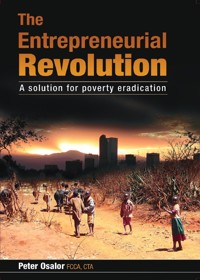
This book discusses entrepreneurship and the entrepreneurial revolution, reviews the history of entrepreneurship in Africa, assesses the challenges and opportunities for the African entrepreneurial revolution, and provides blueprints for governments and encouragement for individuals to pursue the entrepreneurial revolution. This book provides the vision and lays out the means whereby vision can become reality. This is not an arcane academic treatise, but a call to action.
Das E-Book können Sie in Legimi-Apps oder einer beliebigen App lesen, die das folgende Format unterstützen:
Veröffentlichungsjahr: 2023
0,0
Bewertungen werden von Nutzern von Legimi sowie anderen Partner-Webseiten vergeben.
Legimi prüft nicht, ob Rezensionen von Nutzern stammen, die den betreffenden Titel tatsächlich gekauft oder gelesen/gehört haben. Wir entfernen aber gefälschte Rezensionen.
Ähnliche















The Entrepreneurial Revolution
A Solution for Poverty Eradication
Peter Osalor
Contents
PREFACE
FOREWORD
FOREWORD
ACKNOWLEDGEMENTS
CHAPTER ONE
INTRODUCTION:
CHAPTER TWO
AFRICA’S ECONOMIC HISTORY AND ASPIRATIONS
CHAPTER THREE
NIGERIA’S ECONOMY AND ENTREPRENEURIAL DEVELOPMENT
CHAPTER FOUR
ENTREPRENEURSHIP AND GLOBAL ECONOMIC RECOVERY FROM THE CRASH OF 2008
CHAPTER FIVE
CHALLENGES AND OPPORTUNITIES FOR AFRICA’S ENTREPRENEURS
CHAPTER SIX
THE ENTREPRENEURIAL REVOLUTION: THE WAY FORWARD FOR NIGERIA
CHAPTER SEVEN
BUILDING THE ENTREPRENEURIAL REVOLUTION AND ERADICATING POVERTY: A SECTORAL ANALYSIS
CHAPTER EIGHT
JOIN THE ENTREPRENEURIAL REVOLUTION TO ERADICATE POVERTY
PREFACE
“If it is going to happen, it is up to you. Accept responsibility for your life.”
- Anonymous
“Destiny is not a matter of chance; it is a matter of choice. It is not a thing tobe waitedfor; it is a thing tobe achieved.”
Jeremy Kitson
My Life’s Journey and Motivation
I was born into a family of sixin the mid-1950's in Warri, DeltaState,Nigeria.Welivedinamudhousewheretherewasnoelectricity and it was difficult to access drinkable water. My fatherwas always in and out of menial jobs and at times, it was challenging for us to get a decent meal to eat. From an early age, I began to fendfor my family by going to the water side to collect firewood to sell.Unlike us, neighbours and friends did not have to struggle to eat,some took their security to ready available food for granted and theirparents would even discipline them or buy them multivitamins whenthey refused to eat.
I quickly realised that knowledge was key and began to dig deep, as I wanted to satisfy my growing curiosity on the big social differencesin society. Why where some living in affluence and others in abjectpoverty?Ihadtastedpovertyandhatedit.Itwasthishatethat fuelled my choice to live a life dedicated to finding out exactly whythe world works the way it does.
I went to college as a house boy to a teacher because we could notafford to pay the school fees and that was the best the college coulddoforme.AftercollegeIwenttoworkforPanalpinaWorldTransportation Company in Kano.I bought a house for my motherandestablishedahotelforher.ThenIboughtataxi,startedataxi firm and began to buy more vehicles,however I was not satisfiedwith my level of knowledge.I wanted more.I wanted to become aglobal entrepreneur, not merely a local one. I left for Britain in 1983,where I studied accountancy. While there, I took exams to become an accountant and began to apply the knowledge I acquired to variousbusinesses. By 1991 I was a chartered accountant and a charteredtax advisor. As I was investing in my global education in Britain, my wife and I bought two shops in 1995 but had to sell them by 1999 inorder to fight bankruptcy. In 2000, we established East London ITEC an IT and accountancy training institute. From 2001-3, I establishedbranches of Peter Osalor and Co. in Port Harcourt, Warri, Yenagoa,and Lagos.
We truly became a multinational global enterprise.Believing I could make a difference of the state of affairs in Nigeria, I ran for governor of Delta state in 2007 but was not elected. Throughout my entirejourney, I have gained extensive experience in teaching, accounting,management, capacity and business building. Over time, I began tonotice the consistent, predictable patterns and principles that appearto accompany and govern all business and career success. The mostimportant of these principles is having an entrepreneurial attitude.This is what I aim to teach within the pages of this book. It is mydesiretoguideandmentoryoutoyourpathofbecomingasuccessful entrepreneur.
My purpose in life has been the same for more than thirty years. It isto liberate the in-built potentials of individuals by giving them ideasand strategies to fast-track the benefits and rewards they can achieveas successful entrepreneurs. I intend to motivate people by makingthemrealisethatsuccessisachoicetheyhavetomakeandANYBODY CAN BE SUCCESSFUL if theychoose tobe.
Putting into practice my vision for entrepreneurial development inAfrica, I have established several initiatives:
•I have established Success in Your Business, a UKregistered charity working in partnership with the Federal Government of Nigeria, committed to eradicating povertyby empowering citizens with the right skills and throughthe development of an entrepreneurial spirit.
•I have an on-line TV program
•As part of my awareness creation strategy forentrepreneurship, I run a weekly TV program calledSuccess in Your Business on African IndependentTelevision, Abuja. A program formerly aired on Ben TV London, NTA Warri and Port-Harcourt.
•I amthe CEO of Posag Consulting - a financialconsultancy and business advisory service provider with offices in Nigeria, the United States of America andEurope.
•I have a business blog site
•I am a regular columnist for the Vanguard Newspaper,commenting on the Nigerian economy and policy needs.
•I am a founding member of the African and Nigerian Entrepreneurs.com
•I am a regular and proactive author in enzinesarticles.com
Africa’s Way Forward
I believe that the present poverty and conflict in Africa as a wholeand, specifically, in Nigeria can be significantly reduced by growingthe numbers and strengthening the capabilities of local entrepreneurswhopursuethebusinessopportunitiesavailabletothem.Thisentrepreneurialdevelopmentwillgenerateself-employmentandgrowthelabourmarket,helpingtoalleviatepovertyandsocialunrest. In order to widen private-sector employment opportunities we must improve the access to rural areas and low income adults andyouth to business development resources; improve the abilities ofentrepreneurs to manage their businesses and market their goods andservices;growagriculture-basedruralbusinessespursuingopportunities for value-added processing; and expand governmentassistance programs for MSMEs. We can do this in the form ofpublic-privateinitiativesofferingbusinesstrainingandsupportservices, including
•Entrepreneurial Training
•Accountancy and IT Training
•Business Start-up and Development
•Agro-Business Development
•Micro-financing and Small Business Loans
•Marketing Support
•Export Promotion Support
•Produce storage facilities development
Benefits of these entrepreneurship initiatives will include:
•Encouraging and supporting women and young entrepreneurs.
•Increased provision of government services to and regulation of the informal businesssector.
•Growing rural economic infrastructure and opportunities.
•Grant fund buy-ins from national and internationaldevelopment agencies and NGOs committed to povertyalleviation, youth's empowerment, private sector business development, fair trade, etc.
•Enhancing the quality and competitiveness of Nigerian business.
•Increased capacity to adopt new business technologies.
•Strengthening the organisational and business linkages between the formal andinformal sectors.
•Creating and enhancing economic opportunities for school leavers and university and college graduates
This book is written specifically to inspire individuals to start theirownbusinessesandtourgeAfricangovernmentstosupportentrepreneurial development.
FOREWORD
Peter Osalor has in this book 'The Entrepreneurial Revolution: Asolution For Poverty Eradication' boosted the literature and ideas onentrepreneurialstudies.Theauthorwrotehavinginmindtheacademia, students, political, economic and business managers. Hemovedthesubjectmattertoglobal,continentalandnationaldialectics.Thereaderiscarriedonfromunderstandingthedifferences in applied meanings of terms like “entrepreneur” and“entrepreneurism’’ to historical and economic dynamism of Africa,Nigeriaandtheplaceoftheentrepreneurandoperation,entrepreneurism is securing prosperity and wealth of nations andindividuals.
This book is highly recommended for researchers, policy makers,businessmen and women and for teaching and enriching the syllabusofentrepreneurialstudiesinAfricatertiaryinstitutions.IntheNigerian and African situation the book addressed the challenges ofentrepreneurship, poverty alleviation and the way out of the malady.It also addressed specific enterprises such as fishing, livestock, andagriculture broadly defined. Empowerment methodology for variouspopulations cohorts especially women and youth were also handledby the author.
These are general issues and matters addressed to make the book acompel to read and own in every one’s and institutional libraries.
Prof Park .O. Idisi
Departments of Agricultural Economics and Extension
Economics, University of Abuja
FOREWORD
The economic turbulence in our world today which has made jobsecuritiestobevolatilehasprobablycreatedagroundswellfor interest in business ownership and the expression of entrepreneurialskills.Inspiteofthepresenceofuniversityeducationinourworld for almost 1000 years, no school offered a degree in entrepreneurship untilthe1970s.Inthe70stherewereonly16universitiesthatoffered courses in entrepreneurship in the whole of the USA, today,over1,600do.Priortothat,everycoursedirectedpeopletolearn how to manage a business on behalf of others. There are severalreasons why the ownership of business is preferable to job seeking or the pursuit of employment.
A business gives you the opportunity to take your future in your own hands. Like they say in Latin Carpe Diem seize the moment. Abusiness quite unlike employment can be inherited by your children,therefore giving you the opportunity to create generational blessingsand prosperity for your family. That is why today we see the FordMotor companies, Heinz, Rolls Royce, which was started by Mr.Rolls and Mr. Royce. The examples are endless.The best that cancome out of employment is a salary and a possible pension. Whereas, a business can help you to build equity into the future. At a particular age,thestatutorylawsofemploymentofacountrymakeyourdeparture from gainful employment mandatory. While in your ownbusiness, you can continue torun inyour golden age.
Furthermore, if anything makes the desire to have a business evenmore likable,it will be the fact that you can make a difference inyourworldasyourcompanygetsinvolvedincorporatesocialresponsibilitiesthroughtheuseofitsprofitormoniessetapartto help meet social needs. You are able to provide employment forothers and become part of the solution in your world. We might justrest our argument for business by saying that it helps you to leave alegacy.
However,what is the use havingsucha desire torunbusiness and yet be poorly informed on how, why and which way to run it.
The author of this book, Mr. Peter Osalor takes us into the world ofbusiness by introducing to us four books that can set us in motion tostart, perpetuate and run asuccessful business.
•Why andHow to start your own business
•How to prepare a business plan
•How to identify and fund your business
•Theentrepreneurialrevolution–asolutionforpoverty eradication.
He brings in a fresh insight on the modalities for starting a businessthatwilllast.Yes,businessesthatwilllastbecause80%ofbusinesses started here in the UK for example fail within 5 years.However, Peter has helped us with the effective steps that can help asuccessful business. He gives us a step by step guide on how toprepare a business plan and how to run it effectively.
Many businesses also die because they do not know how to leverageby seeking for funds that would make such vision run well. Using his training as a chartered Accountant and Tax specialist, Peter helps usto grasp the possibilities of a successful business as he gives us tradesecrets for succeeding in theworld of entrepreneurship.
The books of Peter Osalor come highly recommended firstly because of his educated mind. Secondly, because of the practical experiencehe has had with over 30 years of involvement in business and thirdlyas a man who has opened up business in Europe andacross Africa.
His experience traverses continents and any investment in this workswill be more than value for money.
Matthew Ashimolowo
Speaker, Entrepreneur, Philanthropist
ACKNOWLEDGEMENTS
To start with, I would like to thank God for enabling me make thisbookareality,toHimalonebeallthegloryandhonour.Myprofound thanks goes to my family, most especially my wife Mrs.Eudora Osalor who has always given me the support I have needed,every time I need it; your inestimable help is deeply appreciated. MydaughterPeace Ani andher husbandChijokeAni.
MythanksalsogotoJosephAkpebu,akeymemberofmyorganisation for the relentless effort you have shown towards theproduction of this book, thank you so much. I would also like tothank Johnson Akpebu forhis time andeffort.
My sincere thanks also to Dr Abiodun Awomolo and Dr HashimGibrill both of Atlanta, USA, for their efforts in critically reviewingand helpingput this booktogether.Mrs AdeD’Almeida for hercontribution and inspiration and Pastor Matthew Ashimolowo myspiritual father and pastor, who has been a great source of inspiration in the writing of thisbook.
My sincere gratitude to Harry Koranteng, “my right hand man” forhis time and effort.
To all my staff in London, Port-Harcourt, Warri, Yenagoa, Abuja and to Joseph and Hikmot Ademosu, I say many thanks for your supportand commitment; you’re all very much appreciated. Limitation ofspacedoesnotpermitmetoindividuallyacknowledgetheinnumerable number of friends and well wishers, thank you so much.
My message to you all is that this is just the beginning; the sky cannever be our limit but only our starting point. Let’s keep the fireburning.
Thank you
INTRODUCTION
This book concerns the critical role of entrepreneurship in addressing thepovertycrisisinAfricaandotherregionsofthedeveloping world. The analysis presented makes clear that if Africa is to escapethe current cycle of poverty in which more than half of its billioninhabitantsliveonlessthan$2perday,thenitmustcommitwholeheartedly to pursuing an entrepreneurial revolution. There is no other way.
TheEntrepreneurialRevolutionarguesthatgovernmentsacrossAfrica must refocus their policy agendas to encourage the start-upandgrowthofsmallandmediumenterprises(SMEs)thatwillprovideself-employmentopportunities,createjobs,anddiversify economies. The world’s largest economy, the United States, is basedonencouragingthepassionsandtalentsofentrepreneurs.Theworld’s second largest economy, China, whose population exceedsthat of the African continent, has been able to achieve explosivegrowth and lift millions out of poverty because of an entrepreneurialrevolution. India has also done likewise. From Asia to Latin America to Central Europe, governments have come to realise that they mustcreate the environment in terms of infrastructure, legal structures,financialsupports,training,andresearchthatwillfacilitateentrepreneurship.Thesegovernmentsrecognisethatpreviouspolicieshavefailedtoalleviatepoverty:largescalegovernmentownedenterprises(parastatals)havenotdoneit,privatisationwithoutencouragingindividualstoseizeopportunitiestopursueentrepreneurshiphasnot done it,relying ongovernment handoutsand charitable endeavours, no matter how well intentioned, has notdone it. Individuals must be empowered to lift themselves and theircommunitiesoutofabaresubsistencelifestyle,andtaketheireconomicdestinyintotheirownhands.Thisiswhatanentrepreneurial revolution can achieve.This is not wishful thinkingorcrassideologicalposturing.Asiahasbeentransformedbyan entrepreneurialrevolutionandAfricacanbesimilarlytransformed.
Such a revolution will build on Africa’s human and natural resources to grow and diversify Africa’s economy and, thereby, finally addressthe poverty crisis. This kind of revolution can and will not happenovernight, but it can happen. If governments and individuals do notdevelop the correct mindset and will to pursue this entrepreneurialrevolution thenwe will fail to see it take place.
UsingNigeria,Africa’smostpopulousnationandthirdlargesteconomy, as a case study this book discusses entrepreneurship andtheentrepreneurialrevolution,reviewsthehistoryofentrepreneurship in Africa, assesses the challenges and opportunitiesfor theAfrican entrepreneurial revolution, andprovides blueprintsfor governments and encouragement for individuals to pursue theentrepreneurial revolution. The Entrepreneurial Revolution providesthevision,andlaysoutthemeanswherebyvisioncanbecomereality.This is not an arcane academic treatise, but rather a call toaction. If Africa is to realise its immense potential and do what isfittingforitsmillionsofpoverty-strickencitizens,thenanENTREPRENEURIAL REVOLUTION is the surest way – the onlyaway – to achievesucha goal.
CHAPTER ONE
INTRODUCTION:
THE ENTREPRENEURIAL IMPERATIVE
“Some people dream of great accomplishments, while others stay awake anddo them.”
Anonymous
ThecoreargumentofthisbookisthatthepresentwidespreadpovertyandconflictinNigeria,andAfricaasawhole,canbesignificantly reduced by growing the numbers and strengthening thecapabilities of local entrepreneurs. In order to bring this about anentrepreneurialrevolutionmustbeundertakenthatencompassesindividualentrepreneurshipandsharplyfocusedsupportivegovernment policies and actions. This entrepreneurial revolution will createself-employment,providejobs,growanddiversifytheeconomy, and, as a direct result, diminish poverty and it's relatedeconomic misery and social unrest. This is a grand argument; itsfundamental truth is detailed in the pages that follow.
Definitions and Debates
Wewillbeginbylookingattheentrepreneurialrevolutionandpovertyalleviationbyaddressingthefollowingfundamentalquestions:
Who is an Entrepreneur? What does he or she do? What are thepsychological and social characteristics of entrepreneurs?
What is Entrepreneurship? What activities does it involve? Whatdoes it contribute to society?
What is Entrepreneurialism? Is it universal across time and space,from society to society? What social and political factors support orhinder entrepreneurialism? What impact does it have on economicdevelopment?
What is an Entrepreneurial Revolution? What are its key features?How canit be achieved?What impacts will it have?
What are the causes and dimensions of poverty in Africa?
Is it an exaggeration to say that anybody can be an entrepreneur? Ishaving the right attitude all it takes to become an entrepreneur? As apractising entrepreneur, I believe an entrepreneur is someone whousestheircreativitytocreateeconomicvalueforthebenefitofthemselves and society.The word entrepreneur was first applied inFrancetoindividualswho“entered”(entre)andtookcharge(preneur). These individuals were those who took charge of theirdestiny.
Others define an entrepreneur as:
Someone who assumes the financial risk of the initiation, operationand management of a business (Entrepreneur.com);
A person who habitually creates and innovates to build something ofrecognised value around perceived opportunities (Kotelnikov)
Those individuals who launch enterprises that commercialise newproducts, services, or processes that contribute to economic growth.(Baumol)
[those who] Bring the new technologies and the new concepts intoactive commercial use. They are the change agents of capitalism.(Lester Thurow)
The person who perceives the market opportunity and then has themotivation, drive and ability to mobilise resources to meet it(Di-Masi)
Apersonwhoundertakesawealth-creatingandvalue-addingprocess, through incubating ideas, assembling resources and makingthings happen(Tan, quoting Kao)
We can therefore state that an entrepreneur is a person who is driventoestablishabusinesstotakeadvantageofthefinancialopportunities and personal fulfilment offered, by pursuing their owndreams and shaping their own destiny in local, national, and globaleconomies.
There is broad agreement that characteristically an entrepreneur is:
• Self confident and multi-skilled.
• Confident in the face of difficulties and discouraging circumstances.
• Not an 'inventor' in the traditional sense but one who is able to carve out a new niche in the market place, often invisible to others.
• Results-oriented: To be successful requires the drive that only comes from setting goals and targets and obtainingpleasure from achieving them.
• A risk-taker: To succeed means takingmeasured risks.
• A risk-assessor: In today’s economic climate starting abusiness can be less risky than conventional employment.
• Totally committed: a person who will do whatever it takes to be successful in business: Hard work, energy and single-mindedness are essential elements in the entrepreneurialprofile.
• Visionary and optimistic: In new and emerging businesses, the person who starts the business is often an entrepreneur who believes that with the right resources anything can beachieved.
• A participant, not anobserver; a player, not afan.
• A course-setter: The entrepreneurlikes to be in control of his or her future (Di-Masi; Entrepreneur.com)
What do these characteristics mean for Mr. or Mrs. Anybody whowants to be an entrepreneur?It means he or she must have a changeof attitude.He or she must go from begging for a job, a contract, ahand out, or food to following their talent to meet the needs of others inordertogenerateprofit.Thequintessential,renownedentrepreneur RichardBranson states:
Entrepreneurshipisnotaboutgettingoneoveronthecustomer.It'snotaboutworkingonyourown.It'snotaboutlookingoutfornumberone.It'snotnecessarilyaboutmaking a lot of money. It is absolutely not about lettingwork take over your life. On the contrary, it's about turning whatexcites you in life into capital, so that you can do more of itand move forward with it. I think Entrepreneurship is ournatural state – a big adult word that probably boils down tosomething much more obvious like playfulness (Branson).
Anentrepreneurmustshuntheunpatrioticattitudeofnepotism,trying to get ahead through family and other connections.If oneseeks to provide a good product or service then people will buy it –regardless of ethnicity, age, or gender.You don’t have to be aninventor or create a new product to make it in the market; simplyhave a product you are passionate about and youwill findbuyers.
As an entrepreneur, you will need to set goals and stick to them.Therewillbedayswheneverythinggoeswell,anddayswhenyou arechallenged;regardlessofthetypeofdayyouarehaving,you must press on to achieve your goals.You cannot blame anybody foryour failure and you cannot afford to neglect your own future.Intoday’sworld,therearenojobsbeenhandedoutandevenifyouget ajobtoday,it'slikelythatitwillnotbetheretomorrow.Anentrepreneur is an active participant both in his or her success andalso in society’s progression.If you take the leap to becoming anentrepreneur, there are copious experiences that await you.
Entrepreneurship
Entrepreneurship is an elusive concept.Analysts note that “definingentrepreneurshipisnotaneasytask.Therearealmostasmanydefinitions of entrepreneurship as there are scholarly books on thesubjects.”(FAO)Atcore,entrepreneurshipinvolvesboththeactions and outlook of entrepreneurs.Beginning with the earliestknowndefinition in the eighteenthcentury, entrepreneurship is saidto involve risk-taking, bringing together the factors of production,businessinnovation,andenterprisestart-up.(Di-Masi) Entrepreneurship is also described as“the art of finding creativeprofitable solutions to problems.” (Kotelnikov)
Benefits and Challenges of Entrepreneurship
Thereareseveralbenefitstotakingtherisk,becominganentrepreneur, and opening up your own business venture. There arealso a lot of challengesinvolved in entrepreneurshipincluding theriskfactorandthechanceoffailure,bothofwhicharegreatlyincreased when the surroundings for your business are not ideal,however, the freedom, the financial success and the job security are a few. The benefits outweigh the challenges. Any business person must assess the internal and external factors that may contribute to thesuccess orfailure of their businessbefore deciding to gothroughwith the venture. Being an entrepreneur requires a great amount ofsales and marketing skill. This may put some people off for the fearof being labelleda 'salesperson'.
Notwithstanding the connotations of this term, there is no businessthat can progress without an aggressive sales strategy. It is necessaryfrom time to time to conduct frequent reviews of how the business isfaring in order to make a progress rating. As entrepreneurship isdynamic, much thought has to be invested in coming up with newinnovations to enhance business. Consumers' needs change so often,therefore, new strategies need to be put in place and old methodsreviewed regardingtheir effectiveness.
A recent study, the Making of a Successful Entrepreneur, (Wadhwa,et al, 2009) reveals some very interesting, key findings about themotivations, challenges, and mindset of U.S. entrepreneurs.
According to entrepreneurs surveyed:
Corechallengesinstartingandrunningasuccessfulbusiness arethetimeandeffortrequired,capital,financing,and experience in running a business.
Reasons why individuals may not pursue entrepreneurship includelack of willingness or of ability to take risks, and to devote the timeandeffort;difficultyinraisingcapital;deficienciesinbusinessmanagementskills,knowledgeofhowtostartabusiness,andknowledge about the industry and markets; and family or financialpressures tokeep a traditional, steadyjob.
Sources of funding for entrepreneurial endeavours are derived firstand foremost from founders’ personal savings, thisis especiallysofor first-time businesses; it becomes easier for some entrepreneurs toraiseangelandventurefundingaftertheyhavestartedmorecompanies.Otherfactorsmentioned,pointingtothemindsetsof successful entrepreneurs,are faith and God, hard work, perseverance or determination, timing, spouse forbearance and support, optimism,naivety, and a willingness torisk everything.




