


18,99 €
Mehr erfahren.
- Herausgeber: John Wiley & Sons
- Kategorie: Geisteswissenschaft
- Serie: War and Conflict in the Modern World
- Sprache: Englisch
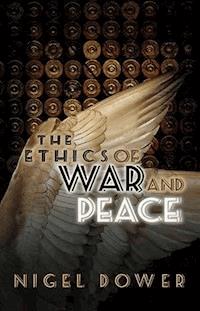
This book presents a clear and comprehensive introduction to the diverse and wide-ranging ethical aspects of war and peace. In a fair-minded and engaging analysis, Nigel Dower introduces the different ethical theories in traditional and contemporary debates ? realism, just war theory and pacifism ? and subjects each to detailed critical scrutiny. He frames these debates within a related but distinct framework of three approaches to international relations, namely skeptical realism, internationalism and cosmopolitanism. The book also identifies and evaluates two further important perspectives, militarism and pacificism. Whilst analyzing the advantages and disadvantages of the different outlooks, Dower makes a strong case for a cosmopolitan pacificist position, arguing that we need to see peace in more positive terms than merely the absence of war. The book uses a wide range of examples from across the world and includes discussion of nuclear weapons, new wars, terrorism, humanitarian intervention and human security.
Written as a textbook for students who have no prior knowledge of philosophical ethics, The Ethics of War and Peace is designed to help students understand and see the relevance of how a professional philosopher can engage ethically with the world. Each chapter contains a helpful survey of its contents at the beginning and a set of questions for individual reflection or group discussion at the end.
This book will be essential reading for students of security studies, conflict resolution, peace studies, philosophy and political theory and anyone interested in the ethical questions which arise from the study of war and peace.
Sie lesen das E-Book in den Legimi-Apps auf:
Seitenzahl: 488
Veröffentlichungsjahr: 2013
Ähnliche




















Table of Contents
Cover
Title page
Copyright page
PREFACE
1 THE ETHICS OF WAR AND PEACE: PRELIMINARY CONSIDERATIONS
1 Introduction
2 What are war and peace?
3 Classifications in the ethics of war
4 Approaches to the ethics of international relations
5 The three traditional approaches to the ethics of war
6 Cosmopolitan approaches
7 Two further considerations concerning the nature of ethical analysis
8 Survey of war/peace issues in the modern era
9 The plan for the rest of the book
Questions
2 REALISM AND MILITARISM
1 The realist view of war
2 Sources of the realist approach
3 Militarism
4 Critique of realism
5 Critique of Militarism
Questions
3 INTERNATIONALISM AND COSMOPOLITANISM
1 Internationalism
2 Cosmopolitanism
3 Cosmopolitanism and internationalism: some contrasts
4 Further considerations: justifications of internationalism
5 Further considerations: justifications of cosmopolitanism
Questions
4 THE JUSTIFICATION OF WAR
1 Just war and tradition
2 Ius ad bellum: more detailed analysis and justifications
3 What are the issues raised by ius in bello?
4 A note on internationalism and cosmopolitanism
5 Objections
Questions
5 PACIFISM, NONVIOLENCE AND THE WAY OF PEACE
1 Introduction
2 Nonviolence
3 Pacifism
4 The way of peace
Questions
6 PEACE AND PACIFICISM
1 Peace
2 Pacificism
3 Criticisms of pacificism
Questions
7 MODERN ISSUES
1 Nuclear war and deterrence
2 Contemporary wars
3 Terrorism
4 Humanitarian intervention
5 Security and human security
Questions
8 CONCLUSION
1 The main goals of the book
2 Religion, war and peace
3 The future
Questions
REFERENCES
Index
Copyright © Nigel Dower 2009
The right of Nigel Dower to be identified as Author of this Work has been asserted in accordance with the UK Copyright, Designs and Patents Act 1988.
First published in 2009 by Polity Press
Polity Press
65 Bridge Street
Cambridge CB2 1UR, UK
Polity Press
350 Main Street
Malden, MA 02148, USA
All rights reserved. Except for the quotation of short passages for the purpose of criticism and review, no part of this publication may be reproduced, stored in a retrieval system, or transmitted, in any form or by any means, electronic, mechanical, photocopying, recording or otherwise, without the prior permission of the publisher.
ISBN-13: 978-0-7456-4167-6
ISBN-13: 978-0-7456-4168-3 (pb)
ISBN-13: 978-0-7456-5832-2 (Single-user ebook)
ISBN-13: 978-0-7456-5831-5 (Multi-user ebook)
A catalogue record for this book is available from the British Library.
The publisher has used its best endeavours to ensure that the URLs for external websites referred to in this book are correct and active at the time of going to press. However, the publisher has no responsibility for the websites and can make no guarantee that a site will remain live or that the content is or will remain appropriate.
Every effort has been made to trace all copyright holders, but if any have been inadvertently overlooked the publisher will be pleased to include any necessary credits in any subsequent reprint or edition.
For further information on Polity, visit our website: www.politybooks.com
PREFACE
A word about how I came to write this book and my perspective in it may help the reader. While the content of a book cannot be judged by reference to the author’s (auto)biography – an example of the genetic fallacy – this account may shed light on why I have focused on certain things. This book has two goals: its first and main goal, as should be the case with a textbook, is to indicate fairly and clearly the main arguments and positions taken up on the issues of war and peace; its second goal is to advocate a particular point of view about the ethics of war and peace. This may be summed up as ‘cosmopolitan pacificism’. In most of my writings I have combined analysis with advocacy. I believe academics should be committed academics, not people who are academics and also committed people.
At the age of sixty-six I have been fortunate to have lived a wholly peaceful life. Although I have lived in countries such as the UK, the USA and Zimbabwe at times when these countries have been at war, where I have lived has been peaceful. I have never experienced war at first hand. I have never faced killing violence or had to respond to it. So you may feel that that disqualifies me from thinking about these issues. I hope not, since I have had occasion to reflect on war issues on many occasions.
My first memory of thinking about war was the Suez crisis in 1956, when my father was passionately opposed to the British response. In my teens I went to Quaker summer schools where, since conscription was still operating, the issue of conscientious objection was often discussed. I remember even then thinking there was something rather simplistic and unfair about the reported use of the ‘Would you stop someone attacking your wife?’ question as a way of undermining the objection to joining the military (an issue I take up later in the book). By the time I was seventeen I was deeply concerned about nuclear weapons and supported, though not very actively, the Campaign for Nuclear Disarmament (CND). I was as a postgraduate in the mid-1960s also opposed to the American involvement in Vietnam. In the 1970s I was mainly involved in organizations to do with world poverty, but these included the United Nations Association, and, through its literature and my attendance at its conferences, I became more engaged with peace and war issues. I found myself, though not at the time for reasons which I conceived of as pacifist, wholly opposed to the Falklands ‘war’, and I have been opposed ever since to all the UK’s major military operations (the Gulf War of 1991, Kosovo in 1999, Afghanistan in 2001, Iraq in 2003). By 1981 I was teaching a special subject called ‘Ethics and international relations’, which in one form or another I taught most years until 2004, when I took early retirement, and which included material on many of the issues discussed in this book.
Where do I stand now on the pacifism issue? I feel it is less misleading to say that I am a pacifist than that I am not, but the matter is complex. I am more, in the language of Ceadel (1987), a pacificist and someone committed to what I call the way of peace, which is not just about personal lifestyle norms and attitudes (including the avoidance of violence, except perhaps in extremis), but about working for the conditions of peace in a variety of ways. I am clear that I could not myself join an army and train to kill (that is, it would be wrong for me to do so), though, as the world stands now, there is a limited role for armed forces, not least in UN-regulated roles, so it is not wrong for some people to join an army. (It will be apparent that I do not think the simple ‘universalizability’ test ‘If it is wrong for A to do x it must wrong for everyone else similarly placed to do x’ actually has much grip in these complex cases.) I also accept that an ordered society needs law-enforcement, which in the last resort requires the possibility of violence for its imposition (though we ought to encourage a culture that makes it really a last resort). I hope that in any personal conflict situation I would do all I could to tackle it nonviolently, but I recognize that, in extremis, I probably would use killing force against a direct attack on myself and my loved ones (and it may be that such action would be justified as the lesser of two evils). For reasons I will go into later, the common argument from personal self-defence to national defence is problematic.
While I can see a role for armed forces at some limited level – at least for the foreseeable future – I am deeply opposed to any country – certainly the UK – possessing nuclear weapons or any other weapons of mass destruction. And if the UK’s position in the world partly depends on its wielding nuclear weapons, then we ought to accept a reduced status (but I do not think that a country such as Denmark is really any worse off for not being a nuclear power). It is painfully apparent to me anyway that the kind of life-conditions which I have enjoyed, along with the majority of UK citizens (I say the majority because there is an unacceptable inequality within our country too), is built on a legacy of past colonialism in which the colonial project was only possible because of the power of the gun, and is maintained by a continued economic will to make the world economy work to our own advantage and to the disadvantage of the poor of the world.
I do not lie awake at night fretting about these facts, nor do I recommend others to do so, but it is important that we who are privileged do what we can as citizens of the world to compensate for all this. My saying ‘citizens of the world’ is not a marginal claim. My whole account is cosmopolitan in an explicit way. My thesis is that we need to be in earnest about creating the conditions of peace not just for ourselves but for everyone else in the world, and that the desire for peace, which we all feel, needs to become a will for peace that transforms the whole way we think of ourselves, in particular, by escaping the undue levels of commitment to the nation-states to which we belong and which are the source of much of the conflict in the world.
I write this book as a philosopher trained in the analytic tradition in the 1960s. In the mid-1970s I found where my intellectual energy lay, which was in engaging in ethical thinking about global issues such as world poverty, development, the environment, international relations, human rights, and war and peace. (This kind of ethical engagement is sometimes called applied ethics, but the phrase is misleading in an oversimplifying and marginalizing way.) I have gained much over the last thirty years from the many classes I have taught on ethics and international relations and related issues. My approach is also significantly influenced by my Quaker background. I became a Quaker in 1980, but the influence of Quakerism goes back much further than that. It is important to make clear, as I have done in other books, that the kinds of arguments I am interested in here are genuinely accessible to anyone, of different faith and of none, who is willing to think about ethical issues in a calm and reflective way. There are no hidden religious premises or agendas – or at least none of which I am conscious. Of course each person will interpret their ethics and be motivated in what they do through different understandings of the world. In my case the Quaker idea of ‘answering that of God in everyone’ informs and energizes what I do. For each person a different account may be given. Indeed that is part of my wider view: that we can find many areas of ethical convergence with people whose personal worldviews may be different, and that, indeed, it is in this possibility that the prospects of greater peace in the world partly lie.
I am well aware of the book’s inadequacies. Since the Polity Press in inviting me in 2006 to write this book wanted a textbook which would be accessible to a wide student audience, I have not taken, except occasionally, the philosophical analysis very far. For those wanting more advanced philosophical analysis there are a number of books available, such as Norman (1995), Paskins and Dockrill (1979), Rodin (2002) and the classic Walzer (1977), as well as many collections, such as Cohen et al. (1974), Coppieters and Fotion (2002), Evans (2005), Sorabji and Rodin (2006) and Wasserstrom (1970). I am also aware that the more I have read, the more I realize I have not read, and while I have, especially in the last two years, read more books than I have actively made explicit use of and they have influenced me indirectly in getting me ‘ready’ to write, I hope the critical engagement I have had with some of these texts has been sufficient to give an adequate and clear analysis of the field.
The book has been constructed in such a way that each chapter should be useable without prior acquaintance with others. This has involved a certain amount of repetition of key ideas, distinctions and arguments, for instance in chapters 4 and 5, where the criticisms of the just war approach from a pacifist point of view in chapter 4 become the arguments for pacifism in chapter 5 and vice versa. Chapter 1 is no doubt more substantial than some introductory chapters are, but it presents the key distinctions and the key elements of the approach of the book in such a way that it could be useful to students without their having to look at the more detailed developments later on. Each chapter concludes with questions for discussion.
The text was completed while I was teaching at Colorado State University, and I was able to ‘test-drive’ parts of it with my class on ‘War, peace and the ethics of global responsibility’. One reason why I refer on a number of occasions to Iain Atack’s book The Ethics of Peace and War (2005) is because I decided to use it as the main text on war/peace issues. His volume, like mine, adopts a cosmopolitan approach and, while at times I have been critical of some of his arguments discussed in the class, I believe it to be an important complementary approach to my own. I am most grateful to members of the class for their lively discussions of the ideas, and I am sure the book has benefited from these. I should also like to thank a number of people who took time to look at my drafts and offered useful advice and criticism: Jim Boyd, Gayle Dower, Hugh Dower, Mary Dower, Jim Martell, Salvor Nordal, Bill Shaw, Josh Shepherd, Wim Vandekerckhove, the Polity Press’s commissioning editors Louise Knight and Emma Hutchinson and the referees for the book proposal and first draft. This book is dedicated to my mother, Jean, who understood and appreciated the idea when I started work on it but sadly now cannot appreciate its final production. But, as she understood it herself, ‘she’ lives on in the ideas she helped to create over a lifetime of discussing these and many other issues.
Nigel Dower
November 2008
1
THE ETHICS OF WAR AND PEACE: PRELIMINARY CONSIDERATIONS
1 Introduction
In 1989 the communist political orders collapsed in Eastern Europe, and for a short while many optimistically spoke of a ‘peace dividend’ through which the world would become more peaceful and the vast sums spent on armaments would get diverted to more socially useful purposes, such as increased aid to reduce world poverty. These hopes were short-lived. Various major wars took place, such as the Gulf War of 1991 to reverse Saddam Hussein’s invasion of Kuwait, the NATO bombings of Kosovo in 1999 to stop Serbian atrocities against the Albanian Kosovans, the invasion of Afghanistan in 2001 to topple the Taliban regime because of its links with al-Qaeda, which had been responsible for the major attacks on the American mainland on ‘9/11’, and then, in 2003, the invasion of Iraq to topple Saddam Hussein. Alongside these there have been numerous other conflicts, such as regional wars in the Congo, various wars within and between the countries in the former Yugoslavia, genocide in Rwanda and Burundi, the action of militias in places such as Darfur and border conflicts such as that between India and Pakistan over Kashmir. And there is the continuing conflict with terrorists in the so-called war against terror. Although some reduction of the arsenals of the nuclear weapons held by the major nuclear powers has taken place, nuclear weapons remain, and an increasing number of countries are acquiring them.
1.1 The relevance of ethics
The ethical challenges of war that confront us now may seem peculiarly modern, but in fact they arise out of a tradition of thinking about the ethics of war that goes back for many centuries. This has been called the just war tradition. As Norman notes, it has been ‘the dominant intellectual tradition of thought about the morality of war’ (Norman 1995: 117). As we will see when I analyse it fully, it provides a sophisticated account of the circumstances in which it is morally right to go to war, involving such principles as just cause, legitimate authority and last resort, and it also provides rules which ought to be followed in fighting wars – the most well known being the principle of non-combatant immunity, that is, that in wars soldiers may not directly attack non-combatants.
One of the issues to be faced in this book is whether modern developments in war have rendered the rules traditionally accepted no longer relevant. For instance, do nuclear weapons render the distinction between combatants and non-combatants irrelevant? Do responses to terrorists who clearly attack anyone need to be restrained by care not to attack those not involved? Does the totalization of war both in terms of the weapons developed and in terms of the democratic involvement of everyone – at least everyone adult and entitled to vote – render the traditional restraints in war irrelevant? Do the so-called new wars (as witnessed in the break-up of Yugoslavia) render the whole traditional ethical framework pointless?
Lesen Sie weiter in der vollständigen Ausgabe!
Lesen Sie weiter in der vollständigen Ausgabe!
Lesen Sie weiter in der vollständigen Ausgabe!
Lesen Sie weiter in der vollständigen Ausgabe!
Lesen Sie weiter in der vollständigen Ausgabe!
Lesen Sie weiter in der vollständigen Ausgabe!
Lesen Sie weiter in der vollständigen Ausgabe!
Lesen Sie weiter in der vollständigen Ausgabe!
Lesen Sie weiter in der vollständigen Ausgabe!




