


6,99 €
Mehr erfahren.
- Herausgeber: tredition
- Kategorie: Gesellschafts- und Liebesromane
- Sprache: Englisch
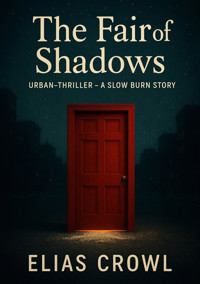
"The fair of Shadows" is a literary psychological thriller set in Manhattan that begins quietly and lingers in the mind. In Elias Crowl's New York novel, the everyday tilts into the uncanny: a rectangular window that shows only a ladder and sky. A hallway that says "nothing's happening." Characters who observe their author. With poetic precision and slow-burn suspense, the text delves deep into urban rituals, the edges of perception, and that quiet dread one hears in old radiators, stairwells, and nighttime hallways. The result is an urban thriller with a horror edge—atmospheric, contemporary, and unique: a literary thriller, quiet horror, a New York novel, and Manhattan literature. Elias, a writer in Manhattan, keeps his world in check with routines—two cups of coffee, a window open a crack, a rectangle of ladder and sky. But in the manuscript, "The fair of Shadows," Mr. Grins, Lilalu, and the old woman become forces that write back. Doors remain closed, sounds become quieter, the city responds – until a small, round sticker "HERE" shifts everything. This novel is both a meta-mystery and a big-city psychogram: precise, uncanny, deeply human. Anyone who loves novels of perception, metafiction, urban psychological thrills, and New York atmosphere will find a book here that doesn't scream – it whispers and lingers. In short, why "The fair of Shadows" is compelling: Urban thrills: without fountains of blood – tension through sound, rhythm, and sight. Unique imagery (window rectangle, "Small Stage," map: NOW). Psychological depth: control, fear, holding on – and the courage to say "not today." Brilliant conclusion: surprising, logical, touching – an ending you feel. This "literary psychological thriller" is ideal for readers of subtle suspense, book clubs with a taste for symbolism, and anyone who wants to experience New York as a sonic space. "Carnival of Shadows" combines quiet horror with poetic thrills – a novel that shows how much reality we can endure without inventing it. Discover now: Manhattan, metafiction, suspense – in a recognizable voice.
Das E-Book können Sie in Legimi-Apps oder einer beliebigen App lesen, die das folgende Format unterstützen:
Seitenzahl: 334
Veröffentlichungsjahr: 2025
Ähnliche



















The Fair of Shadows
Urban Thriller – A Slow Burn Story
© 2025 Elias Crowl
Druck und Distribution im Auftrag des Autors:
tredition GmbH, Heinz-Beusen-Stieg 5, 22926 Ahrensburg, Germany
Das Werk, einschließlich seiner Teile, ist urheberrechtlich geschützt. Für die Inhalte ist der Autor verantwortlich. Jede Verwertung ist ohne seine Zustimmung unzulässig. Die Publikation und Verbreitung erfolgen im Auftrag des Autors, zu erreichen unter: tredition GmbH, Abteilung "Impressumservice", Heinz-Beusen-Stieg 5, 22926 Ahrensburg, Deutschland
Kontaktadresse nach EU-Produktsicherheitsverordnung: [email protected]
Table of Contents
The Call
The Sample
The wave plan
The edge
The crack
The line
The circle
The rebellion
The threshold
Afterword of things
About the author
The Fair of Shadows
Urban Thriller – A Slow Burn Story
„New York is not real.
It`s the brainchild of a gang of psychopaths.“
Elias Crowl
The Call
The mugs on the kitchen table have rims that look like tiny solar eclipses. Three brown moons, one black, one with a lip of milky dust. Elias pushes them together with the back of his hand, as if he could stack and shove time away, but the tabletop sticks to his fingers. Sugar. Coffee. A hint of something metallic, maybe just his imagination—or the spoon he hasn’t washed in two days.
In the corner, Anna’s photo leans against the toaster, too big for a picture frame that doesn’t exist. Her smile is frozen in the moment between two steps, the shadow of her arm brushing the shadow of another dancer whose face you can’t see. “Just one more time,” Anna had said back then. “Just one more performance before we head to the sea.”
Elias rubs the back of his neck with the heel of his hand. His hair’s gotten longer than it should, teasing his skin. The laptop screen waits, blue-white and cautious. He’s written two sentences and deleted five. A cursor blinks. He blinks back and thinks the blinking tempo is odd. Too fast? No. It’s normal. Probably normal.
The phone rings. A tone too bright for this apartment.
“Yeah,” he says, clearing his throat as if it’s a password.
“Elias.” Claire’s voice has that mix of warmth and edge he’s known for years. “You ease into the day okay?”
“I…” He glances at the window. Outside, New York is, as always, a machine that never shuts off. Cars somewhere. A voice on the street, rising and falling like a radio signal. “It’s fine.”
“Good. Listen, I don’t want to stress you, but the quarter’s slipping away. Stores are setting up fall titles; by December, no one’s doing launches. If we want to keep the pace, we need a solid outline and three tight chapters in two—no, let’s say three weeks.”
He says nothing. His fingers find the spoon, though he cursed it just moments ago.
“I know,” Claire goes on, “the last book was big. The readers are hungry. You’re hungry—”
“I barely eat,” he says, startled that it slips out loud. “I mean, I’m working on it.”
“Elias.” That voice. Half a step in, half a step out. “I’m on your side. We just can’t lose momentum. People are watching.”
He laughs briefly, without it feeling like a laugh. “Who?”
“Everyone. Bloggers, booksellers, the sales team. And chance.” A breath from her. “Tell me: what’s it about?
What’s the spark?”
He looks at Anna. Then at the sink, as if an answer might be there.
“A traveling fair,” he says. “A small town. They arrive at night. It’s… a fair. But not one that celebrates. One that… devours.”
As always, when he says what he’s writing out loud, a calm settles in. The sentences align, like someone clicked “sort.”
“Devours?”
“Not flesh. Not exactly. More like—” He lets the word melt on his tongue. “—empathy. They peel off masks. Show what’s rotting underneath. And it’s not the people’s fault, but in the end, no one’s innocent.”
“Okay,” Claire says. “Dark, but not a bloodbath. Psychological. You can do that. Who’s leading?”
“Mr. Grins,” he says, surprised at how easily the syllable leaps from his teeth. “A clown who laughs until you laugh along, even though nothing’s funny. And an observer. Someone who sees. And Lilalu, the dancer—” He falters, the spoon slipping from his fingers, clinking like a small, wicked bell in the sink. “—she spins dreams. Weaves them. You dance, and only too late do you realize they’re threads.”
“It sounds big.” Claire lets the word sit, as if she knows big can be both a promise and a threat. “I need meat. Scenes. An opening that grabs. What’s the holdup?”
“Nothing,” he says too quickly. “Just… I hear what they want, but…” He glances at the cursor. It blinks. “The first sentences are always—”
“—clunky until they land. I know.” A bright smile in her voice. “Set a minimum today. Say, two pages. Tomorrow, show me something. An excerpt. Something that breathes.”
“Tomorrow,” he repeats, feeling the word expand inside him. Tomorrow is a city you watch in the rain without having to step inside.
“Elias.” Claire lets air into the silence. “You sound… distant.”
“Just tired.”
“Then eat. Drink water. Get out if you can. And—” Her voice softens. “You don’t have to carry it all alone again.”
He nods, though she can’t see. “Thanks.”
“Tomorrow,” she says, and when Claire says it, the word isn’t a weight but a handle.
The call ends. The apartment collapses around him, as if it had been holding its breath. Elias sits with the phone to his ear, though it’s silent now. Finally, he sets it down like something warm that’s allowed to cool.
It’s just him and the screen again. And Anna. And the spoon, which stirred something in him he doesn’t want to name.
He opens the document, already titled The fair of Shadows, though it holds only one sentence, living like a lone animal in a cage too big.
The fair came at night, and with it the shadows that whispered.
He reads the sentence ten times, and on the eleventh, the word whispered echoes. An echo he mistakes for a typo for a second. He doesn’t delete it. He smiles at this small illogic, as if a child played a trick on him.
“Not funny,” he says into the room, immediately relieved that nothing answers.
He stands, grabs the kettle, its cord jutting out at an angle that looks old. As the water heats, he stares at the glowing coil, thinking of the spirals in the sugar pretzels from the fairs he used to hate because they left his fingers sticky. He was never one for festivals. Too many faces. Too many eyes.
“They’re watching us,” Claire had said, almost offhand. He laughs, this time out loud. “Who’s they?” he mutters. “The observer?”
Anna would’ve said, “Open the window, Eli. Let some air in. Otherwise, your thoughts spin in circles and turn into beasts.” Anna knew things. Things he didn’t want to hear back then, and then it was too late.
He pours water over the coffee and watches the brown foam act like it’s breathing. “Two pages,” he says. “Tomorrow.”
He sits again, and because promises feel better when you start them right away, he writes.
He writes of a small town that doesn’t exist on maps, only in stories whispered when the living room light is off and the kitchen suddenly feels vast. He writes of trucks rolling in at night, as quiet as snowfall, tarps lifting like curtains before a dream. He writes of Mr. Grins, whose laugh you smell first: popcorn and something scorched, like plastic too close to a lamp. And he writes of eyes growing on tentpoles, as if the poles were trees, and in the bark-eyes, the town reflects.
He types faster. The words follow him, and that’s rare. Maybe, he thinks, this isn’t a fight at all. Maybe it’s a dance, and he just needs to learn the steps he made up himself.
His phone buzzes. Claire.
Claire: “Just one sentence for me? :)”
He snaps a photo of the screen with its single sentence and sends it without thinking.
Claire: “Good. Scent, mood, pressure. Now please: a scene. Show me a door that opens.”
He sets the phone down. “A door,” he says, glancing at the apartment door, its paint worn thin by countless tenants’ hands. He knows how the front door sounds when Harold shoves the mail through: a half-hearted clack, then silence. He knows it too well.
Elias types Excerpt on a new line, only to delete it. No. No markers. No excuses. He breathes. He lets the small town go still, and then he opens a door.
Excerpt from the novel: The tents were up before anyone could say who built them. Mornings smelled of damp wood, evenings of sugar.
A man with a pipe wrote names in a book that wasn’t paper. “Only those written down come out whole,” he said, and people laughed because no one believed you had to come out whole.
Mr. Grins leaned against a post, practicing how to coil his laugh until it was just a twitch under his skin. Children kept their distance, not out of fear but courtesy. You know clowns have work to do, even if no one gets it.
A woman stopped, tilted her head as if hearing music that hadn’t played yet. The wind lifted her hair. “Do you hear that?” she asked. “Hear what?” asked no one.
Elias feels a chill creep over his arms while typing, as if someone opened the window without touching the latch. He doesn’t look. Focus, he tells himself. He’s a pro. Everything else is… creativity under stress. Nothing more.
He saves. The cursor blinks. Once. Twice. He blinks along. Blinking is normal. Sometimes he feels the cursor blinks faster when he looks at it. That’s nonsense, of course. Obviously.
His stomach growls. Good news: the body’s still there. He finds cereal, long since opened, and eats it dry from the box. His teeth crunch, too loud, like walking on dry wood. The apartment joins the silence. It’s a friendly silence, he thinks. One that doesn’t push.
The phone buzzes again. Claire sends a heart. Unusual for her. He leaves it unanswered and feels guilty for no reason.
He returns to the table, which now feels like a compass pointing nowhere. “One more scene,” he says. “Just one more.”
He picks the small town, sets it in a twilight that’s not evening but an early morning where no one’s rested. A boy searches for his mother, hands always a little sticky. He follows a trail of red paper scraps. At its end stands a mirror tent, mirrors uncleaned since the town began. The boy steps inside and sees himself as he wishes to be: taller, braver, in a jacket that fits. The mirror smiles at him. He smiles back, but the smile stays in the glass when he closes his mouth.
Elias pushes his chair back. He goes to the window, leaky in winter but letting summer through now, and presses his forehead to the glass. “Good,” he says. “Good start.”
He looks at Anna, caught mid-step in the photo. “I know,” he says. “I know you hate when I use you. But I need you. Just a little.”
The glass is warm. The city breathes through an open maw. Someone sings. Someone shouts. Someone laughs, somewhere in the hall, that echoing laugh running up the stairwell. It’s ordinary night music, the kind everyone knows, and he decides that’s what it is. Ordinary. Loud neighbors. No reason to breathe faster.
The laptop pings. A system alert, meaningless. He exhales. He has a page. Almost two. Claire won’t be satisfied, but she’ll send the heart, and that’s enough for today.
The clock above the stove shows 2:37 PM, a time that feels like a liminal world. He thinks about a walk, then remembers walks dilute ideas. Better to stay put. Better to hold the threads while they’re visible.
He sits. Considers briefly if the spoon belongs back in its place. Leaves it where it is.
“One more door,” he says quietly. “For Claire.”
And as his fingers touch the keys, a thought appears, so light he mistakes it for a dust mote at first: Someone’s watching. Not a specific someone, no address. Just a feeling, like knowing you didn’t lock the apartment door, even though you’re sure you did.
He snorts, almost amused. “Sales, bloggers, chance,” he says, grinning into the room that doesn’t grin back.
The city, he thinks. The city is the observer. New York has eyes everywhere. That’s all. That’s reasonable.
He keeps writing. The words come. Some run, some limp, but they come, and that’s enough.
The afternoon folds at an edge you can’t see. Somewhere in the massive building that answers to five streets, a door slams shut, and the sound settles over Elias’ apartment like thin sheet metal. He types. He deletes. He types again until a paragraph stands firm, refusing to leave him.
Then he draws a breath that tastes of old dust.
He decides to empty the sink. Not because it matters, but precisely because it doesn’t. Small victories are the best kind.
The faucet spits lukewarm. The mugs spin in his hands like dented planets. He takes a sponge, once green maybe, and scrubs at a coffee stain that looks like a tiny coastline. The scrubbing becomes a rhythmic swipe, oddly soothing, and in that rhythm, another sound intrudes: a faint scratching, like paper shifting. He pauses. Listens.
Nothing.
“Elias, you’re alone, and everything’s quiet,” he says half-loud, so his body hears it. “That was the sponge’s voice.”
He laughs at the sentence, which sounds like it belongs in a children’s book. He rinses the mug, sets it upside down on a towel that smells of lemon cleaner, though no lemon has touched it in weeks. Two more mugs, a plate, a knife with a crust of loaf—some spread that doesn’t recall its exact date. Progress. The world is weighed, the world is doable.
He returns to the table, brushing crumbs into his hand with his forearm and letting them rain into the trash. The laptop waits like a dog that won’t bark. He sits, writes Door on a scrap of paper, and circles it, as if it’s an enemy to surround.
The apartment door makes a sound.
Not the “half-hearted clack” Harold makes when he shoves in the mail. More like a soft “Hh,” as if the door exhaled.
He freezes. “Don’t take everything,” he thinks. “Not every sound is for a sentence.”
Still, he gets up. He walks down the narrow hallway, past the three nails stuck in the wall since the last tenant vanished somewhere, past the dark stain no cleaner knows the origin of. He rests his hand on the doorknob. Hesitates. Opens.
The hallway is where it always is: too narrow, too long, with a carpet pretending to be red. The air is cooler than in the apartment. Someone’s left fresh footprints on the runner, crisscrossing, sole patterns from a thousand shoes all telling the same story.
No Harold.
But there’s a letter. Not in the mailbox, on the floor, as if someone slid it across. It’s not an official envelope, just a folded sheet, its edge clean as the start of a new year.
Elias bends down. His back doesn’t protest. He picks up the sheet, feels its surface cold, as if the hallway gave it something the apartment lacks.
The envelope has no stamp, no address. Just his name: Elias. Neatly written. No flourishes. No trace of haste.
He hears himself say “no” as he unfolds the sheet.
Inside, a single line:
We’ll see you tonight. – H.
He stares at the letter at the end, an H that could mean anything. Harold, he thinks, then feels foolish. Harold doesn’t write notes. Harold communicates by lingering in the stairwell, talking about the Yankees’ season or the trash schedule or his sister who “finally ditched that guy.” A note from Harold would look different. It’d have mustard smudges.
“H as in…” he says, finding no word that doesn’t sound ridiculous. H as in heaven, H as in hound, H as in stop it already.
He flips the sheet over. Blank. He holds it to the light. Just paper fibers.
A tingle runs down his neck to his shoulder blades. He decides he won’t remember this. Notes happen. People write letters sometimes. H. Why not. Maybe the H means nothing. Maybe it’s half an M that got tired.
He folds the sheet, sets it on the dresser by the empty key tray, and shuts the door until it clicks properly. The lock confirms reality with a sound he knows.
Back at the table, he sees the cursor has stopped blinking. Of course it hasn’t. He stopped looking. The cursor does what cursors do: it waits. We’ll see you tonight. He exhales slowly, as if the sentence could leave with his breath.
“Harold,” he says and laughs again because it’s so clearly wrong. “Harold, you old romantic.”
He types to shake off the laugh.
Door: Someone knocks. Three times. Then silence. Then the sound of a key sticking in a lock. He writes it in. He gives the door a cold handle and the room behind it a lamp that flickers, though it’s new. He lets the narrator—the observer—walk to the door and open it, and outside there’s nothing you can see. Just a smell, like a smile you can’t place. Popcorn. Sugar.
A hint of lamp dust.
He stops. His arms prickle with goosebumps he didn’t order.
“You’re not in the book,” he tells himself. “You’re in the room.”
He grabs his notebook, where Anna once left a list (“Things that live only here: the heater’s clank; the neighbor who never coughs but always inhales; the bathroom stain that’s a cat if you stare long enough”).
He adds: Note in the hallway – H. He puts a question mark, then two, and decides not to give the mark more weight than it deserves. Maybe it’s a kid’s bad joke. Maybe someone got the name wrong. Maybe it fell from upstairs, a letter for “Hector,” “Hannah,” or
“Harris,” gravity playing literary.He keeps writing.
Excerpt – The fair of Shadows: It was the hour when the street held its breath. The front doors lay like cards on a table no one dared flip. Mr. Grins stood before a red door and knocked. One. Two. Three. Then he pressed his ear to the wood. He heard no heart behind it. People think doors have hearts. Most just have hinges. “We’ll see you,” he said, not loud, not soft, so the cracks had to hear it.
And something in the door—just wood, just paint, just the cold breath of old years—answered by giving way slightly, as if bowing to a joke it didn’t get.
Elias lets his fingers rest. The word hinges drives into his head like a small machine switching itself on. He realizes he’s not done with the word. He writes it in capitals in the margin. HINGES. Hinge is a good word. A word in two parts: hinge (sounds like a cut) and hinge (sounds like something alive inside). He shakes his head at himself for reading into words what isn’t there, and yet: it helps. It aligns him like a compass.
A knock.
Not a book knock. Present.
He spins around, and though he knows readers would clench their fists here, wanting monsters, he sees only: the door. The real one. The one with a number and a peephole gone blind since someone smeared soap in it.
He walks to it again. Doesn’t open right away. “Yeah?” he asks through the wood, because the wood knows him.
“Harold,” a voice says, and for a moment, Elias is so relieved he feels a flush of heat. “Got something that ended up with me by mistake.” Then a short laugh. “It’s nothing. But you know me, I’m a stickler.”
Harold, then. No H. Or maybe. He breathes into the hallway and opens the door.
Harold stands there, baseball cap in hand, as if the air inside is pricey and there’s a tax for stepping in. He has the age spots of a man who’s been sparing with the sun and the hands of one who’s carried too much anyway. In his left hand, he holds an envelope with a window through which Elias’ name peers, neatly printed.
“Mail,” Harold says, as if stating the obvious is needed to nudge the hallway to its proper length. “Was in my box. We oughta get those boxes…” He makes a vague gesture meaning “oiled,” “but the landlord… you know.”
Elias nods. “Thanks.”
Harold rocks on his soles, like he’s on a ship that knows just enough about the Atlantic as he does. “You good?”
“Yeah.” The answer comes faster than it’s true. “I’m writing.”
Harold’s face shifts. He likes simple sentences. “That’s good. Write something with a happy ending, yeah? My sister said your last thing… well, she cried like a sheep in the rain. In a good way! Just, you know, I like it when someone buys a house at the end.”
“I’ll see what I can do.” He takes the envelope. Electric bill. “Thanks, Harold.”
“No problem. And…” Harold scratches his ear. “You get a weird note? One slipped under my door. No stamp, no nothing. Just: We’ll see you tonight. – H.” He laughs, a laugh that doesn’t quite hit the mark. “Bet it’s those kids upstairs. The skateboard ones. Or art students. They’ll do anything.”
Elias’ hands grow heavy. “I… yeah. I got one too.”
“Ha! See? I’m tossing mine. You should too. Otherwise, you’ll talk yourself into something.” He tips his cap. “Don’t stare at the screen too long, alright? Sunlight, vitamin D, I always say. Even if I forgot what D stands for.”
“Deal,” Elias says. They smile at each other, the way men do when they don’t know how to smile about anything else, and then Harold’s gone, the hallway long again.
Elias shuts the door and rests his forehead against it briefly. The wood is warm from the stairwell’s sun. “Tonight,” he says, and the word suddenly sounds silly. Night’s just the other half of day. He sets the electric bill aside. Then picks up the note with the H again, though he’d decided to ignore it. “Art students,” he says. “Sure.”
Back at the table, he sits. Only now does he notice he’d stepped back at Harold’s mention, as if the note were a blade. He forces his body into the chair. Types.
He types like typing is a password that sorts thoughts otherwise tangled.
The fair – Door Scene, continued: The boy with sticky fingers stands before the mirror tent, thinking he’s alone. The town knows better. When he touches the tarp, a gust slips through, so thin it’s like a flute. The mirror that showed him his taller self fogs over. He writes his name in it, but the M he tries to draw becomes an H. He laughs and flicks his hand away, as if someone tapped him.
Elias pauses. Sometimes a wire connects what’s real to what he writes. He knows this. It’s not a sign, just a quirk. He sips cold coffee and grimaces, because cold likes to be bitter.
The apartment decides to creak. Wood settles, water in the pipes speaks a language only plumbers understand. He tucks it all into a mental drawer labeled Probably.
He writes again, and this time the scene slides into something closer:
A man sits at a kitchen table, writing a novel about a fair, and knows someone outside is playing a bad joke. He decides not to RSVP.
He decides to cook something.
Cooking rarely works out for him, but he has noodles and a sauce with a label waving an Italian flag, as if origin guarantees flavor. Water on, salt in, wait until it rages like a small sea. In the waiting, he checks his phone. An email from Claire—just the subject: Breathe. He doesn’t open it. He knows roughly what it says. “Get out. Drink water. Don’t forget you’re a brain with a body.” There’s a love in it that works; it’s a love that’s work.
The steam fogs his glasses. He takes them off. The kitchen becomes a soft world without sharp edges. For a second, he likes it: boundlessness as rest. Then he puts the glasses back on, feels how this simple on-and-off settles something in him. Control. Edges back. Good.
He stirs the pan, adds sauce, drains, mixes, tastes, burns his tongue, and curses as kindly as cursing allows. It tastes of tomato and sugar and something that smells like plastic, though it isn’t. Food is food. He sits, eats, while the screen reminds him it exists. With each bite, he thinks he might, just for a bit, go for a walk later. Or play music. Or listen to Claire’s voice message he’s never played. “Later,” he says. Later is where nothing bad happens.
As he washes the bowl, he notices his hands are steadier than before. That’s a good sign. Not because hands say anything, but because they do something.
He returns to the table. The words wait. He spares a glance for Anna. “You’d call me ‘Eli,’” he says. “And then you’d say: You twist the world to save it, but the world doesn’t save itself with twists.” He smiles at her. “Then you’d steal a cigarette, even though you quit.” He gently shifts the photo so Anna’s gaze doesn’t hit him directly. He needs her voice, not her eyes.
The bell rings again.
Not the phone. The door.
Three knocks, more like a test than a demand. He stays seated for a moment, as if stillness could be a spell. Then he stands. Walks slower this time, counts his steps (one, two, three, four, five, six), opens.
No one. Just the hallway, smelling—he never knew of what. Today it smells like someone left a sack of sugar open.
Under the door lies something that’s not a note: a ticket. Old, worn, edges like they’ve been chewed. It reads: Admit One – The fair. A retro thing, the kind shops call “vintage” to charge more. The number’s faded, but you can guess: 00017. Or 00071. Or 00011, if you turn it upside down.
“Harold,” he says into the hallway, but he knows it wasn’t Harold. Harold doesn’t play pranks that cost money. Harold’s pranks are words, because words are free and both can laugh when they fall.
He picks up the ticket, turns it over. On the back, a smudged stamp—a crown, maybe, or a grinning mouth. A black ring at the edge, like someone set a mug on it. He holds it beside the coffee stains on the kitchen table and feels, briefly, as if an invisible book has laid its pages over his apartment.
“Art students,” he says again, but the word sticks dry in his throat.
He places the ticket next to the H. Two things are less dangerous than one, he thinks, because they cancel each other out. Then he sits and types, and suddenly the typing isn’t easy anymore. It works, but not easily. The words come, but they come from a room where someone’s propped a chair against the door.
He writes anyway.
The fair – Ticket: At the entrance stood a woman with a ticket puncher that didn’t punch. It pinched instead. Once into the air, once into flesh, once into thoughts. “Admit One,” she said, “but ten go inside. The head’s a bus.” People laughed, thinking they knew what she meant. “The bus drives in circles,” she added, “and in the end, you’re back where you started, just missing a little something you’ll notice later.”
He notices he has to blink longer to see the sentence. He rubs his eyes, remembering Claire once said: “Stare at the same pixel for over an hour, and every pixel turns into a mirror.” He stands. Stretches his back. Extends his arms until his shoulders pop, satisfying like bubble wrap.
He opens the window. The street rushes in: fryer grease, gasoline, a hint of something sweet. He wants the breeze to probe the apartment and confirm: Nothing here but air and things he knows.
Then he hears it. Not from the street. Not from the hallway. From the apartment door. Not a knock. A soft, fluid scraping. Like something small trying to slip under, shapeless for the peephole.
“Cats,” he says, though he knows no one in the building has cats—the landlord forbids it, and those who sneak them learn mice get cleverer when cats are contraband.
He walks back to the door. He doesn’t even know how many times he’s gone between table and door today. Make it a scene, he thinks. Let the observer walk. Give him a forehead pressed against wood. Give him a smell that shouldn’t be.
He opens.
Nothing. Just the building’s soundtrack. A man descending the stairs, as if the steps are carrying him. A radio playing the wrong music. A woman saying, “No, no,” without anger. And again: sugar, faint, slight, like a bag burst somewhere.
Under the door now lies a second note, a map. A sketch of the Hudson area, crude yet accurate, with an X where no intersection exists. Next to the X, a doodle. Before it: Midnight. And again, an H.
His body moves faster than his head. His body goes: door shut, bolt locked, shoulder against it, like a man under siege. His head says: “You’re a man being baited.”He laughs. Loud and brief. It sounds like a siren that never practiced.
“No,” he says then. “Not tonight. Not midnight. Not me.”
He carries the ticket, map, and H to the kitchen, opens the drawer with the tinfoil where he stashes things that don’t fit the system, and tucks them under the corkscrew and broken scissors. He slides the drawer shut, slowly, so the world below doesn’t notice.
Back at the table, he switches perspectives, because a shift helps when something gets too close. He slips into the observer, gives him a rhythm he can hear, and writes:
Observer – Note, 1: You can tell when someone thinks they’re being watched. It’s usually in the small things, the things that have nothing to do with eyes. They breathe differently. They test the floor like it’s new. They hold their hand in the air a moment before touching a doorknob, as if they know doorknobs keep memoirs.Sometimes they’re not followed. Sometimes they’re just tired. Tiredness makes shadows longer than they are.
He sits for a while, chin in hand, and notices the apartment has grown quieter. Not silent. Quieter, like a stage before the show.
He pulls up Claire’s email, needing something to tether him to a web of routine. He opens Breathe.
Claire: “Get out once, Eli. Ten minutes. Don’t listen, don’t think. Just count your legs. Also: a glass of water. Then send me five sentences you like to read. And one you hate but want to keep.”
He smiles, despite it all. Claire has a trick with sentences you hate. Often, they’re the ones someone quotes later. He drinks water, which makes his throat new, like pulling a cloth through.
“Ten minutes,” he says. “Then door.”
He slips on shoes lying behind the mat at the entrance, feeling like two half-apologies. Jacket. Keys. His hand lingers on the bolt, which feels real for the first time today. Then he turns it. Opens. Steps into the hallway, now smelling like gum in a movie theater where no one laughs.
He descends the stairs, the steps counting along: “Yeah, yeah, yeah.” Downstairs, the guy from the ground floor, who never greets, nods today and says, “Nice day,” as if the weather’s something he planned.
Outside, it’s brighter than he thought. The city does what it always does: watches itself through people who think they’re invisible. He walks. Left past the deli, where the owner calls everyone “friend” without meaning anyone; right past the woman with the dog that looks unsure if it wants to be a dog; straight past the playground with the squeak that comes from metal but pulls at your ears like a memory.
He counts steps, then stops counting. The air isn’t a story, and that’s good. After five blocks, he feels something in him power down. Like someone dimmed the brightness of his inner screen. It’s pleasant. It’s healthy. He’d text Claire about it if he were the kind of person who pulls out their phone while walking. He’s not.
He turns back at the seventh block. When he’s in front of his building again, he sees Harold on the steps, carrying a plastic bag with a plant that looks like it’s died three times and is aiming for a fourth.
“For my sister,” Harold says, unprompted. “A graveyard, but with hope. You know.”
“Nice,” Elias says. “Say hi to her.”
“Will do. And…” Harold leans in, voice lower, “if those kids make noise tonight, call me. I’ll go up and tell ‘em midnight’s a time, not an excuse.”
“I’ll call,” Elias says, and Harold nods, pleased to have something to do.
Upstairs, the apartment’s air feels different. Not worse. Just… used. He shuts the door, turns the bolt, hangs the jacket like a flag for safety. The drawer with the ticket stays closed, the H under metal. He sits, and because Claire wants it, he writes sentences he likes to read:
The fair came at night, and with it the shadows that whispered.
Hinges are hearts with a decision.
Children know where not to look when you want to see.
Some doors only open when you don’t mean them to.
You know a laugh is false when it starts in your back.
And one he hates but wants to keep:
The bus drives in circles, and in the end, you’re back where you started, just missing a little something you’ll notice later.
He sends it to Claire, without comment. Immediately, the three dots.
Then:
Claire: “Yeah. 2, 4, 5 are big. Keep 6 warm, it’ll haunt you. How’s it going?”
He types: “I got mail.” Deletes it. Types: “I opened a door. No one was there.” Deletes that too. Finally types: “I was outside for ten minutes. It helped.”
Claire: “Good. Shut it down early tonight, loud and early tomorrow. And if you can: a scene that stands alone. A small town. A door. A person who’s late.”
“A person who’s late,” he repeats. He knows who that could be. He knows it so well that he flips the photo on the toaster, just for a moment.
He starts. This time, he writes a piece that feels like an ending, though it’s the beginning. A scene you could print if the rest burns. He gives it a time (11:58 PM), a street (its name changes depending on who says it), a woman who runs though she never runs, and a tent that glimmers in the wrong light. He gives her a name he doesn’t want to say. He writes it anyway: Lilalu.
And as he types the syllable that dances, he pauses, as if the word unrolls a carpet you should only walk on if you can dance.
He walks. He writes.
He writes Lilalu into it, as if she were a movement, not a person.
Lilalu wears a dress that belongs to no color because it’s soaked up a trace of every color. It rustles like walking across a stage of old programs. She’s late because time in this town has holes people fall through without falling. 11:58 PM, the air laced with sugar, the streetlights like tongues. She stops before a red door, hung in the night without a house, and raises her hand as if to knock and dance at the same time.
“Don’t,” he says softly, not realizing he says it in the room, not the text. “Wait.”
He lets her hand drop. He gives her a breath that can do a lot: laugh, cry, count. He gives her an ear that hears music not yet played.
Excerpt – The fair of Shadows: Lilalu placed her hand on the door and felt a pulse that wasn’t hers. The door had a heart—not everywhere, only under her hand. “Who’s there?” she asked, not loudly, and the wood was smooth as skin before a performance. Behind the door, something moved, maybe a laugh or a wind that forgot to be cold. “We’ll see each other,” something whispered, the words like silk pulled over an edge.
He stops. The sentence We’ll see each other hangs in the room. He thinks of the card, the H, the ticket. He types the word Midnight and deletes it, as if it’s too heavy for the paragraph. He glances at the oven clock. 10:41 PM. Still time for reason, he tells himself. Still time to close this day like a proper book.
He stands, fills a glass of water, drinks until swallowing becomes a small machine. He sets the glass down. It leaves a ring on the table—a clean circle he likes because it’s his.
He sits, but his gaze drifts to the door, as if something there wants to see if he’s looking. He forces his eyes back to the text, to the town, to the tents.
He writes the Observer near Lilalu, invisible, as is their way:
Observer – Note, 2: Some steps are late because they wait for the ground to call them. Lilalu stepped down, and the ground said “now.” You can hear it if you’ve learned to read the pauses, not the notes.
Elias notices he hits Enter too often, as if every thought needs a margin. He leaves the spacebar alone. He lets the sentences sit closer, to keep their warmth.
He writes Lilalu into the mirror tent, though he knows it’s a risk, because mirrors are boundless. He lets her stand before the canvas, which in the night feels a bit like water that’s learned to stand. He lets her enter.
Excerpt – Mirror Tent: Inside, it smelled of metal and dust and the hands that had hesitated here. The mirrors weren’t clean because no one wanted to be seen clearly. Lilalu stepped before a mirror that wasn’t hers and saw herself as she could be when no one was watching: small and big, calm and fast. She raised her hand, and her reflection raised its hand later. So late it wasn’t a parody but a promise.
He stops typing because a sound comes from behind him. Not a knock. A shift. Like someone sliding a heavy book across a table he doesn’t own.
“Breathe,” he says. “Water. You’re here. This is a kitchen, a table, a photo, a spoon.”
He turns. The apartment is an apartment. He stands, takes a step, only to realize the sound must have come from the hallway. Maybe the woman from the second floor dropped her bag. Maybe someone dragged the trash. Maybe. Probably.
He sits. He writes on, now with a hurry that’s not unkind, but like rushing to catch a bus you know.
He gives Lilalu a line that could be quoted later and hates it the moment he writes it:
“You think you’re seeing yourself, and realize too late you’re being seen.”
He lets her laugh, a laugh she keeps quiet so it’s not heard. He lets her lean against a mirror that gives way. He lets her feel that sometimes you can walk through glass if you stop calling it glass.
He saves. A reflex that suits him.
The phone rings.
It’s a tone too bright for the apartment. It’s not Claire. It’s Unknown.
He stares at the word like it’s an insect to be identified. He lets it ring twice, three times. On the fourth, he picks up, because picking up is a kind of order.
“Yeah?” he says. His voice sounds like an ingredient not planned for.
Silence. Then breathing. Not heavy, not sick. A breath that wants nothing. The line has the grain of old films.
“Hello?” he says.
A sound, like someone covering a microphone that isn’t one. Then a voice, quieter than its own echo. It says: “Admit one.”
He could laugh, if his skin didn’t suddenly feel too tight on his arms. “Who’s this?”
The silence sorts itself. Then, almost friendly:
“We’ll see each other.”
The call cuts off. No beep. No classic end. Just absence. He holds the phone to his ear a second too long, as if there’s warmth to be used, then sets it down, slowly, as if haste could trigger something better left asleep.
“Okay,” he says into the room, and his voice doesn’t carry the word far. “Okay.”
He sits. He’s still sitting. He notices he’s standing. He doesn’t know why. He notices he’s walking to the drawer with the ticket, the card, the H. He opens it. He looks at the items like they’re props for a play someone else is rehearsing.
He places the card on the table, next to the water. The squiggle by the Hudson looks like a drawn mouth. Midnight is written there, not too big, not too small.
“No,” he says, and it’s a good no: calm, without drama. “Not today.”
He folds the card, puts it back. He tucks the ticket under Anna’s photo so it doesn’t look so alone. “It’s just paper,” he says. “Just paper.”
He sits. He writes, because writing is what he does when he doesn’t know what else to do.
The fair – Night Piece




