


8,39 €
Mehr erfahren.
- Herausgeber: ONE
- Kategorie: Gesellschafts- und Liebesromane
- Sprache: Englisch
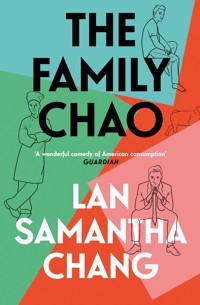
A REMARKABLE FAMILY NOVEL ABOUT RACISM, COMMUNITY AND JUDGEMENT, FOR READERS OF CELESTE NG, C PAM ZHANG, BRIT BENNETT AND JEFFREY EUGENIDES 'An insightful comedy of the American immigrant experience, and of a small town's inner workings' JOHN IRVING 'One of the finest and most ambitious novels about America I've read' YIYUN LI 'A gorgeous and gripping literary mystery. . . reflecting themes of family, betrayal, passion, race, culture and the American Dream. . . A masterpiece' JEAN KWOK ____________ For years, the residents of Lake Haven, Wisconsin ignored the whispered troubles about the Chao family, if only to keep eating at the best restaurant in town. But when tyrannical patriarch Big Chao is found frozen to death in the family's meat freezer, scandalous events force the community to turn its attention to the three Chao sons. Dagou - presupposed heir to the business. Ming - accomplished city lawyer, determined to sever ties with Haven's Asian community once and for all. James - naive college student, who is only just learning of his family's past. When the family's dog mysteriously disappears, and Dagou 'Dog Eater' Chao is held on trial for his father's murder, the Chaos' turbulent history spills into the public eye, while a small town looks on in disbelief. . . AN INVENTIVE COMIC MYSTERY ABOUT THE UNDERCURRENTS OF AN UNFORTUNATE DEATH AND A TIMELESS TALE ABOUT DISTRUST, JUDEGEMENT AND CONDEMNATION ____________ MORE PRAISE FOR THE FAMILY CHAO 'With nuance and slyness, wit and empathy, Chang turns the desires and deceits of one unhappy family into a moving and compelling saga of that classic American illness: ambition' VIET THANH NGUYEN 'At once a brilliant reimagining of Dostoevsky and a wholly original and gripping story about the passions, rivalries and searing pressures that roil a singular immigrant family' JESS WALTER 'The Family Chao is the ultimate family saga. Love, mystery, courtroom drama and lots of sibling rivalry. . . at every turn there's something new and surprising. I absolutely loved it. It's a masterclass' LUAN GOLDIE 'A gripping story of three brothers, their tyrannical father and the family restaurant set in the American Midwest. . . Chang writes brilliantly about love, hate, food, dogs, race, sex, morality and money. . . marvellous and wonderfully entertaining' MARGOT LIVESEY 'An intricate look at the so-called American Dream and one small-town American family trying and failing to save itself. . . An up-to-the-minute look at what it means to be accused and visible in America' ELIZABETH MCCRACKEN
Das E-Book können Sie in Legimi-Apps oder einer beliebigen App lesen, die das folgende Format unterstützen:
Veröffentlichungsjahr: 2022
Ähnliche



















“The Family Chao is the ultimate family saga. Love, mystery, courtroom drama and lots of sibling rivalry… I absolutely loved it”
luan goldie Women’s Prize-longlisted author of Homecoming
“Both a homage to The Brothers Karamazov and the gripping story of three brothers, their tyrannical father and the family restaurant set in the American Midwest… A marvellous and wonderfully entertaining novel”
margot liveseyNew York Times bestselling author of The Boy in the Field
“Riveting, delicious, full of love and danger… an up-to-the-minute look at what it means to be accused and visible in America” ii
elizabeth mccracken author of The Giant’s House
“With its deft and intelligent humour, wry observations and a real knack for capturing the detritus of family life, The Family Chao is also a masterful suspense novel that packs a punch in the heart and gut. What more could one want from a book?”
alice pung award-winning author of Unpolished Gem and Her Father’s Daughter
“A stirring, intimate drama about love, hate, money, and murder in an Asian American family”
steph cha author of Your House Will Pay
“An indictment of the asphyxiating myth of the model minority, The Family Chao is a compelling murder mystery, a love story, a legal drama, a meditation on internalized racism… a must-read”
t. geronimo johnson author of Hold It ’Til It Hurts
“An ingenious and cunning reboot of Dostoyevsky’s The Brothers Karamazov. The harrowing and humorous family drama is wrapped in a murder mystery… timely, trenchant, and thoroughly entertaining”
Publishers Weekly, starred review
“Lan Samantha Chang is a masterful writer, and this novel has it all… Funny, heartbreaking, and layered with emotion, Chang’s latest book is definitely one to keep in mind for book club next year”
Book Riot
iii
v
In memory of James Alan McPherson
1943–2016
vi
CONTENTS
PART ONE
THEY SEE THEMSELVES2
For thirty-five years, everyone supported Leo Chao’s restaurant. Introducing choosy newcomers by showing off some real Chinese food in Haven, Wisconsin. Bringing children, parents, grandparents not wanting to dine out with the Americans, not wanting to think about which fork to use. You could say the manifold tensions of life in the new country—the focus on the future, tracking incremental gains and losses—were relieved by the Fine Chao. Sitting down under the dusty red lanterns, gazing at Leo’s latest calendar with the limp-haired Taiwanese sylphs that Winnie hated so much, waiting for supper, everyone felt calm. In dark times, when you’re feeling homesick or defeated, there is really nothing like a good, steaming soup, and dumplings made from scratch.
Winnie and Big Leo Chao were serving scallion pancakes decades before you could find them outside of a home kitchen. Leo, thirty-five years ago, winning his first poker game against the owners of a local poultry farm, exchanged his chips for birds that Winnie transformed into the shining, chestnut-colored duck dishes of far-off cities. Dear Winnie, rolling out her bing the homemade way, two pats of dough together with a seal of oil in between, letting them rise to a steaming bubble in the piping pan. Leo, bargaining for hard-to-get ingredients; Winnie subbing wax beans for yard-long beans, plus home-growing the garlic greens, chives,4 and hot peppers you used to never find in Haven. Their garden giving off a glorious smell.
You could say the community ate its way through the Chao family’s distress. Not caring whether Winnie was happy, whether Big Chao was an honest man. Everyone took in the food on one side of their mouths, and from the other side they extolled the parents for their sons’ accomplishments. Heaping praise upon the three boys who grew up all bright and ambitious, who earned scholarships to good colleges. Commending them for leaving the Midwest. Yet everyone was thankful when the oldest, Dagou Chao, returned to Haven. Dagou coming home to his mother, moving into the apartment over the restaurant, working there six days a week. Dagou, the most passionate cook in the family. Despite the trouble between Winnie and Big Chao, everyone assumed the business would be handed down fairly, peacefully, father to son.
Now, a year after the shame, the intemperate and scandalous events that began on a winter evening in Union Station, the community defends its thirty-five-year indifference to the Chao family’s troubles by saying, No one could have believed that such good food was cooked by a bad person.
DECEMBER 21
Fa—mi—lee
“Please help, young man.”
Through the crowd at Union Station, slipping in and out among the travelers, the frail voice reaches James Chao’s inner ear. A first-year college student, James has lost his Mandarin, forgotten the language as a toddler with two older brothers teaching, loving, and tormenting him exclusively in English. Only from time to time, when he’s not expecting it, will a spoken phrase of Mandarin filter to this innermost chamber of his ear and steal into his consciousness.
“Please help.”
James turns. He’s looking into the face of an old man. The stranger might be in his seventies, close to his father’s age, but he is altogether more frail than Big Leo: he clutches an ancient blue traveling bag in one hand, stooping with the weight of it, and his eyes are milky with time. He’s seen through the cataracts, can see beyond James’s generic jeans and hoodie to recognize another Chinese man. Can the familiarity be also in their movements, something in the way they look at one another? Is it in the stranger’s way of gripping his luggage, mirroring James’s grasp on the greasy paper bag of vegetable jia li jiao he’s bringing home for his mother?
“I’m sorry,” James says. “I don’t speak Mandarin.” Here’s a liability 6of his: he always wants to help, but his ignorance makes him useless to his own kind. Not just to this man, but to every lost Mandarin-speaking traveler fumbling in mid-transfer who mistakes him for a helpful guide.
James can’t tell if the man has understood his English. He shakes his head, then retreats a few steps. But the old man holds up a finger to say, “One minute!” and reaches into his coat pocket.
“I can’t help you,” James says. “I—” He’s interrupted by an announcement for the California Zephyr. The crowd streams around them, everyone hurrying to make the train.
Standing stubbornly in place, the old man pulls out a U.S. airmail envelope addressed in Chinese characters, from which he extracts a photograph. He and James lean in and study it together.
It’s a posed color snapshot of a solemn-faced middle-aged man and woman seated with a young girl of about ten, her black hair cut into heavy bangs across her forehead. She grasps a small, muscular beagle on her lap, and the animal gazes balefully, red-eyed, into the flash. James doesn’t know why he’s being shown this, but as he studies the photo shaking in the man’s hand, he senses that he knows these strangers. He’s never met them, but he can tell that they are recently arrived to the U.S. He can recognize the feelings in their mute, level eyes: defended, skeptical, yet somehow filled with hope.
“Fa—mi—lee,” the old man says. “Fa-mi-lee Zhang.” The crowd has trampled through; he and James are alone now. He points at the photo, then to himself. “Zhang Fujian.”
“Family Chao,” James says, putting a finger to his chest. “Chao—” He could never pronounce his given name, Li Huan, correctly.
The old man flips the photo. On the back is written, in slightly smeared blue ballpoint, an Illinois address. James feels the lightening of relief. The town is near a stop along the same Amtrak line as his own stop, Lake Haven. The track is on the upper level.
He points across the station to the metal stairs. “Follow me,” he says.
The man’s wrinkled face splits into a brilliant smile of fake teeth.
James adjusts his backpack and duffel. He can do it, he will lead the 7stranger up out of this dark abyss of bending tunnels to the next step of his journey. He’s singularly moved by the idea of the old man traveling from afar—from the other side of the world, perhaps—to be united with his family, as James himself is traveling to his own family, coming home from college a thousand miles away, for Christmas.
James makes his way at an intentional pace toward the platform, glancing back at the man who shuffles along several steps behind. They reach the metal staircase. James can see a single light above the uncovered tracks, and beyond this light, the violet-gray underside of the evening sky heavy with snow. He nods, gestures toward the stairs, and takes the steps slowly, listening through the noise of the station, the low grumble of an approaching train. There are the old man’s footsteps, tentative but determined. Tap. Tap. Tap.
Near the top, he senses a slight reverberation on the steps under his feet. There’s no cry, no thud, but he can tell by the sudden absence of the tapping that something is wrong. He turns.
The man is lying at the foot of the stairs. It’s as if someone picked him off the steps and flung him down at an unnatural angle. James sees a spreading stain of urine darkening the concrete floor, spreading past his bag, which has flown, or been bumped, to the side.
James hurries back down the stairs. He drops his duffel and bag of jia li jiao, strips off his backpack.
Through his mind runs the drill of CPR class. The first step: Call for help. He pulls out his phone, dials 911, and shoves it back into his pocket. The paramedics will track the call. He kneels beside the man.
James opens the withered mouth and looks past the gate of dentures, checking the tongue. He unbuttons the rough coat and puts his ear to the man’s chest, pressing his cheek against the shirt. No heartbeat. He examines the face. Wrinkles gone now; the bluish skin melted back against the bones.
He lays his ear against the man’s chest. No pulse.
It’s absurd that he of all people is the one to try to save this man. But no, not absurd. He’s not a random stranger. He’s a premed, he’s taken two 8CPR classes. Though his arms feel weak and rubbery, though he’s terrified, he knows what he’s supposed to do. He positions his hands as he has learned, locks his elbows, closes his eyes, says a silent prayer, and makes the initial push, almost a punch, into the frail rib cage. One, two, three, four, five. At thirty, he checks for pulse, for breathing. Nothing.
He’ll try the rescue breaths, make sure to do it right. He gulps air and puts his lips over the old man’s mouth. A sour-sweet taste, like cranberries, spreads over his tongue. He struggles for another lungful of air. He’s already sweating. He listens for the heartbeat: nothing.
Will the paramedics come? James looks up. The station is empty now. There’s only one person within earshot, a plump man sprinting to catch the train.
James resumes CPR and puts his back into it. Hears, senses exquisitely, an agonizing crack. He’s learned about this, reminds himself that such a crack is not always a bone breaking, but simply grinding, loosening the chest.
Minutes pass, with James alternating breathing and pumping. He’s tiring, slowing down. His shoulders ache, his arms are rigid. The man is a shapeless bag of bones and cartilage, as lifeless as the plastic-and-fabric practice mannequin, but more uncanny than the mannequin, more remote.
Someone’s tapping his shoulder. He clutches at the body, but strong hands pull him away.
“Thank you,” someone says. “We’ll take over now.”
A team of EMTs moves in with a stretcher. James huddles to the side on hands and knees. He can hear the EMTs conversing in quick, confident terms he should remember from his classes, but he can’t focus enough to understand. He’s unneeded. Someone else is pumping at the body and he knows that, by now, they’re also probably unneeded. Cold with sweat, sore all over, he stumbles to his feet. The scene, the train station, seems unfamiliar. Snowflakes drift over the stairs, sparkling in the light from the lamp above.
An EMT is next to him. 9
“Are you a relative? A grandchild?”
“I—no,” says James. “His name is Zhang Fujian. My family name is Chao. We were just—fellow travelers. How is he?”
“I can’t give information to unrelated—”
“Please.”
She looks at him for a moment. “He’s unresponsive,” she says. “We can’t pronounce him dead, it’s done at the hospital. We’ll continue CPR until we get him there.”
“Should I come along?”
“There’s no need.” Her voice is sympathetic. “You did the best you could. But the chance of bringing someone back with CPR is very small.”
He recalls the photograph. “Check in his pocket. There’s an address.”
“All right, thanks.”
Without knowing why, James grabs his greasy paper bag and hands it to her. “For his family.”
The medic takes the food and walks back to the stretcher, where the others are still pumping. In seconds, the body is gone.
James is alone. Gradually, he becomes aware of his own heartbeat, his thoughts. They assumed he was related. It was too complicated to explain. For half an hour, he was related.
He reaches down for his backpack and duffel, and that’s when he sees the old man’s ancient traveling bag. He hurries in the direction of the EMTs, but they are gone.
James hears the low whistle and squeak of his approaching train.
What else is there to do but pick up the traveling bag and bring it with him? When he gets home, he’ll look inside for ID; if he can’t find any, he’ll try to find the man’s family, the Zhangs. He tries to visualize the address on the back of the photograph, the smeared Illinois. He’ll mail the bag to them. Boarding the train, he puts the bag with his own luggage onto the rack above and sinks into his seat.
He remembers the old man, frail and light, like a hollow-boned human bird, falling back as silently as a feather falls, but a mortal being, not at all light, so consuming to pummel and to hold, solid, stubbornly 10organic. Why did he give the jia li jiao to the EMT? The jia li jiao was going to be a present for his mother. Instead, he handed it off, as if a gift of food would make up for a human life. He’ll go home and tell Dagou. Dagou will understand. He pulls his hood over his face. The train rocks slightly, bearing him deeper into the country, toward Dagou and the city of Haven.
Be on My Side
“They don’t eat seafood at the Spiritual House,” Ming Chao says.
His connecting flight brought him to an airport closer to Haven. There he rented a car and picked up James from the train station. He’s now taking his brother the final thirty miles to their father’s restaurant. Ming Chao, Ming the Merciless, middle child and most successful of Leo’s sons. Math whiz and track star, he left home for good to work in Manhattan.
Years ago, Ming swore to everyone that he would never again spend Christmas in Wisconsin. He would never again deplane into a white tarmac of nothingness; never again slog knee-deep without boots across the airport rental lot under the frigid sky. Never again lay eyes upon his childhood street in winter, with its modest houses feebly outlined in strings of colored lights. He told everyone he would rather spend the holiday in New York, alone in his apartment, than return to this godforsaken heartland of deprivation.
So he wouldn’t normally be here this late in December, but for his mother’s personal request that he attend the luncheon tomorrow at the temple. Because she’s asked him to pick up James and make sure his brother gets something to eat, he’s now embroiled in the kind of family conversation he hates: charged and futile. James has blurted everything that happened at Union Station. He’s described a photograph: a man and woman, a girl with bangs, a beagle. He’s described the exhausting, terrifying process of performing CPR. Ming has no desire to dwell on his brother’s trauma of having a man die under his hands. He can’t stand to 11hear James describe his sense of piercing solitude, his shame. He steers the conversation toward the jia li jiao.
“There might be fish oil in the curry,” he says. He skirts the south end of the lake, turns off the freeway, and steers past the big box stores and then the office buildings, toward the local businesses. It’s all even more insignificant than he remembered. “Ma quit seafood this fall, when she moved in with the nuns. So it doesn’t matter you gave away her present.”
“I wanted to do something for his family,” James persists.
“They don’t eat anything with eyes. Even their dogs are vegetarians.” Tiny flakes whirl down; Ming switches on the wipers. “You shouldn’t involve yourself in other peoples’ private lives,” he says. “Not even out of the best intentions. You’ve never performed CPR. That family could track you down and file a lawsuit.”
Ming steers the rental into an alley. This is also the kind of route his father and older brother take—circuitous and perverse, pointlessly sneaky. And Ming has inherited the Chaos’ intense physicality, with his greyhound leanness and the aerodynamic way he carries himself, putting the tip of his nose forward over the wheel.
“You don’t have to stop at the restaurant,” James says.
Ming thinks of his mother’s instructions. “You haven’t had dinner.”
“You can just drop me—” James’s pocket buzzes as if something is trapped inside.
“Who’s that?” Ming asks.
But he knows it’s Dagou. Thrilled that James is coming home, Dagou must be pelting him with texts. Not that Ming is being left out. James, the sad-sack poker player, is holding the phone so anyone can see it. Ming peers over, and indeed, the text is from their older brother.
O, James! My heart is a fucking rose in bloom!
Now their phones buzz together. It’s a group text, also from Dagou. Each looks at his phone, then at the other’s.
Tomorrow, at the Spiritual House. Please be on my side.
“On his side about what?” James asks.
“He’s on the warpath.” How could Ming explain? How could anyone 12describe the chaos that had descended on the Chao household as soon as James left home for college? Four months later, their mother was living with Buddhist nuns and Dagou had bulked up by thirty pounds. “And he’s crazy,” he tells James, unable to stop himself from adding, “How he manages to stay engaged to Katherine is beyond me.”
Ming can’t figure out how Dagou has attracted the devotion of a woman like Katherine Corcoran. Too smart for him, too attractive, too accomplished, and too good. Too much of a good thing, and Dagou unable to avoid fucking it up. Dagou, falling in thrall all over again with Brenda Wozicek, that pansexual demon of his high school days. Brenda Wozicek, who in her junior year slept with every boy and girl on the cast of Jesus Christ Superstar. (She had been chosen, inevitably, to play Mary Magdalene.)
“What do you mean?” James asks.
Where to start? Way back in high school, when she’d inflicted lasting damage on their brother by not giving him the time of day? “I think it started to go bad last year when Dad hired Brenda as the new server.”
“No.” James defends their brother’s long-term relationship, and no wonder: Dagou and Katherine are like parents to him. They’ve been dating since college, when James was in the third grade. “Brenda was just a high school crush. He told me about it. She was always, um, with other people. And white guys. Like that football player, Eric somebody.”
“Eric Braun. Her stock has dropped since high school. Now she’s a denizen of Haven, a waitress, a hopeless villager. She has tattoos. She has blue hair,” Ming says. But Dagou has never gotten over those six months, in high school, when Brenda was a blonde. In Dagou’s mind, she’s still on prom court.
“Dagou loves Katherine,” James insists. Of course, James, who’s obviously still a virgin, believes it’s Katherine who has made Dagou’s heart into a rose in bloom.
“Like father, like son,” Ming says. He turns back to the wheel, avoiding James’s expression of confused naïveté. How is it possible he and his brother were born of the same parents, grew up in the same house, witnessed 13the same fights? The tumultuous conflicts over food and women, from which Ming recoiled, have turned James into an obedient son, a good little premed, close to Dagou and their mother, even to their father. James is a sap. This is a tragedy, but Ming prefers to see it as a comedy.
“Ma asked me to fly home for this special luncheon at the Spiritual House tomorrow,” he says. “So I called Dagou, made him tell me what’s been going on. It turns out the place is a madhouse. Dagou’s sleeping with Brenda Wozicek, and he’s raving like a nut. All of a sudden he’s saying Dad owes him. I tell him, ‘If you wanted Dad to give you a cent, you should have gotten it in writing.’ He doesn’t listen. Instead, he’s sponsoring this community luncheon tomorrow. He has a showdown planned, with Dad, in front of Ma and everyone they know. He asked Gu Ling Zhu Chi to adjudicate.”
“What good will that do?”
It will do no good—no good at all. “He has this crazy hope that Dad will obey Gu Ling Zhu Chi because she’s the head nun,” Ming says, “or abbess, whatever. If he thinks she’s going to take his side, he’s in for disappointment. These Buddhist types live on handouts. Ten-to-one they support whoever has more money.”
This Ming has believed ever since he gave the grateful nuns the dowry for his mother’s living expenses. He supported Winnie’s sudden decision to leave his father and take refuge at the Spiritual House. But the thought of her absence from home makes him uneasy. This is the real reason he’s staying in a hotel.
James says, “Isn’t Ma still a Christian? Won’t she want Ba to be charitable to Dagou? To enter the Kingdom of God?”
“Ba would more easily go through the eye of a needle than enter the Kingdom of God.” Ming squints at the windshield. The air is chill, the sky is moonless: gray, thick level clouds lower to meet the earth. What’s that feeling in the air? Both quiet and disquiet. It’s going to snow a lot more.
“Your problem is that you love everyone too much,” he says. “But things have taken a steep downhill around here since you left in August. 14Stay out of it. Don’t get involved, and go back to school right after Christmas. You’re young, James, there’s still hope for you. You stay away from Dad and Dagou. You listening?”
“Is Alf all right?” James asks, reaching for the one remaining source of comfort.
“Alf is fine. You need to bring him to the luncheon tomorrow. Ma wants Gu Ling Zhu Chi to pray for him with all the other dogs.”
“Holy Alf.”
“We’re here.” Ming turns into the parking lot. It’s ten-thirty and the restaurant is closed. Upstairs, in his bachelor apartment, Dagou’s lights are out. Downstairs, the small, shabby dining room is deserted. Only the red neon sign is still lit: fine chao.
“Get something to eat; Dad is here. He’ll bring you home.” He pulls his rental into a space next to their father’s Ford Taurus. Leo has kept their mother’s car, the Honda, which she renounced along with the rest of her material goods. Now Leo has two cars. But Ming has rented his own vehicle. It is an ignominy to return to Haven, the site of shame, torment. He won’t add to it by borrowing a family car, eating at the restaurant, or sleeping in his childhood room. He wants to be beholden to their father as little as possible. “I’ll meet you and Alf tomorrow, at the Spiritual House, around eleven. Ma will be happy to see you.” He pops the trunk. “Don’t forget your luggage.”
James gets out and moves his things into their father’s much larger, fuller, messier trunk, where they’ll be lost among the packages, the dumbbells, and the snow shovel. Sitting behind the wheel, Ming checks his phone. He reads his brother’s reply to the group text: I’m on your side. Love, James.
The Dog Father
Entering the Fine Chao Restaurant through the back door, James passes, on his left, the stairs to the basement, and on his right, the restaurant office with its old television murmuring. Next is the kitchen, where nothing 15has changed in fifteen years. There’s the bulletin board covered with scraps of paper, yellowing with age. These are notes Leo and Winnie Chao wrote to each other over the decades. When they fought, these missives were a primary method of communication. (The other was to use the children as messengers.) The notes are written sometimes in Chinese and sometimes in English in order to confuse the workers. There’s also a schedule, now eighteen years old, of Dagou’s high school orchestra rehearsals. From a time even before then, from before James was born, there’s a list of frequently requested items in English and Chinese:
Egg rolls
Wontons
Pot stickers
Crab rangoons (What are these? Winnie, their mother, annotated in Chinese. Their father wrote underneath, Wontons filled with cream cheese.)
Beef with broccoli
Following a scattershot statistical analysis, Winnie also compiled a list of things Americans liked:
Large chunks of meat
Wontons and noodles together in the same soup
Pea pods and green beans, carrots, broccoli, baby corn (no other vegetables)
Ribs or chicken wings
Beef with broccoli
Chicken with peanuts
Peanuts in everything
Chop suey (What is this? Leo wrote. I don’t know, Winnie wrote.)
Anything with shrimp (The rest of them can’t eat shrimp, she annotated. Be careful.)
Anything from the deep fryer 16
Anything with sweet and sour sauce
Anything with a thick, brown sauce
And there is, of course, the list of things the Americans didn’t like:
Meat on the bone (except ribs or chicken wings)
Rice porridge
Fermented soybeans
In a small fridge for employees, there are containers of stir-fried vegetables kept separate by O-Lan, the woman from Guangzhou who is one of three outside kitchen employees, and who doesn’t eat meat; beers for JJ, the second chef, and for Lulu, the other server (who after years of silent courtship have unexpectedly gone to San Francisco together over the holidays); and Dagou’s personal stash of pork with jiu cai and noodles. James heats a pile of pork and noodles on the stove. He’s starving.
As he transfers the food into a bowl, a pounding noise comes from below. It’s the sound of his father, Leo, Big Chao, coming up the stairs—footsteps that reverberate and thump with the authority of a man larger than he actually is. To these footsteps is added deep and resonant grumbling, profanity growing more audible until, when he reaches the top of the stairs, a full question detaches itself and sings into the kitchen in a ringing baritone:
“Who the fuck is coming to clean up half an hour after close?”
James abandons his dinner, edges into the hallway. “Baba, it’s me.”
He’s the only son who still calls Leo “Baba,” which Dagou shortened to “Ba,” and Ming changed to “Dad.” Sometimes his brothers refer to Leo as “Aw, Gee, Pops”—this is one of the only jokes they share.
“Oh, it’s you!” Leo yells, emerging into the hall. “I smelled those disgusting jiu cai noodles and thought it was your worthless brother. But it’s you.” 17
He grins, delighted, and claps James on the shoulder.
He’s a sturdy, vigorous man with tadpole eyes and a dark, strong-featured face thickened by food and living. James catches a whiff of cooking grease, pipe tobacco, and stale clothes.
“Your hands are cold,” he says, pushing away an image of the man in Union Station.
“I was in the basement, freezer room! Picking out something for tomorrow.” Over Leo’s shoulder is slung a restaurant delivery bag.
“You shouldn’t go down there when no one else is in the building.” The freezer door locks automatically. “It’s not up to code, Baba.”
“It’s fine,” his father says. “Jerry Stern worked his magic with the city inspector. I told your big brother, study law, but he doesn’t listen, majors in music. Now Baby Mozart’s paying off his loans cooking for Americans.” Like the rest of the community, Leo uses the term “American” to describe any outsider. The term is half ironic, half utilitarian.
James is disappointed Dagou isn’t here to welcome him home. He doesn’t dare ask his father where Dagou is, doesn’t want to provoke him.
But Leo, guessing his thoughts, says, “Your worthless brother’s making out with his new girlfriend. Or getting ready for his big showdown at the nunnery tomorrow.” He gestures to the hall. “Come to my office! I got something strong for you.”
The office is crammed with detritus from thirty-five years of business, including an ancient adding machine and a naked fake Christmas tree. James sits in his mother’s old chair, his father in the recliner. Leo catches James’s eye, shoots him a flare of approval. Despite all Ming has just said, James feels a metabolic, answering spark of happiness, kinship, recognition.
“Try this.” Leo Chao holds out a tumbler to James.
“Did you get this from those guys you know in Chicago?” James asks, eyeing the unmarked bottle on Leo’s desk.
“Yeah, this is real thing.”
As James lifts the glass, a hideous, pungent odor of fruity, rotten 18socks pervades his sinuses. He squeezes his eyes shut, sips, and lets the awful taste spread over his tongue.
“Ha, look at that!” His father gestures at the television.
There’s nothing on the screen except a fenced patio with an open gate. Then an animal lumbers onto the patio, sniffing at the fence. It’s a yearling bear, burnished brown—there’s no mistaking its thick, furry body, the bulk of its rear end, its heavy yet clownish, rolling walk.
A small, stocky black creature torpedoes down a staircase. The creature barks wildly, growling and snapping at the bear, which, after a moment’s stunned confrontation, rises up on its hind legs in dismay. Like a black streak, the dog chases the bear up and down the patio, lunging and nipping at its heels. Panicking, the bear clambers over the fence. The dog, tail up, remains in the patio.
“Ha!” Leo emits a deep belly laugh. “You see that? Just like Alf. French bulldog, best breed in the world!”
James hands him back the tumbler. “Baba,” he says, “you know Dagou isn’t worthless. He can really cook.”
In the pause that follows, James wonders if he’s angered his father. But when Leo Chao speaks, his tone is genial.
“Maybe not worthless,” he says, “but he has an inferiority complex. You American-born Chinese so timid and brainwashed, will do anything for a woman who’ll give you a good lay.”
Did his father just change the subject, or is it all part of the same argument? James doesn’t know. Leo hands the tumbler back; James takes another tiny, terrible sip. He is timid with girls. Is this why he’s halfway through his freshman year in college and still a virgin?
“All you ABCs! You think since you’re not here first, since you have different eyes and dicks, you’re not good enough for fucking around. You got it backwards. We came to America to colonize the place for ourselves. That means spreading seed. Equal opportunity for fucking. You know what’s the biggest disappointment of my life? Seeing my oldest son pussy-whipped by one white woman.” 19
He frowns at the TV; its dim light flickers over his features. “My stinking son. Brainwashed by his mother and teachers. They say, ‘You’re special,’ ha! ‘You can do anything you want!’ Nobody can do anything they want. Do you think I want this dog’s life? No, I do what I have to do. But my oldest son? He’s trying to find himself. What’s to find? Decides to be musician. Then he leaves the East Coast with his tail between his legs. He’s wasted years of life.”
“He’s amazing in the kitchen,” James says. They watch images move across the screen. “Baba,” he says, “if you can be anything you want to be in America, then why can’t you do what you want? And what if you don’t want to be big and rich? What if you want to be small?”
“Is that what you want?” snorts Leo.
James struggles. How to explain to his father what he wants? It’s something he has only just begun to put into words, and only to himself.
“I’m not ambitious like Ming,” he says. “I don’t want to be super-rich or buy expensive real estate. I’m not ambitious like Dagou, either. I don’t need to be as creative as he is, or to make people happy. It’s not that I don’t want to be interested in my job. I do want to help people. But I mostly want—I want to feel small. To be a small piece in the big mystery of everything.” He stops to think, trying to explain his own curious desire. “I want to get married and have kids, and a dog. I want to walk the dog in the morning, go to work, and come home at night. Mostly what I want is—well, an ordinary life.”
“An ordinary life.” Leo smiles in the half dark. “Blood sacrifice!” he yells, startling James. “I came over in nineteen seventy-two; a pioneer, breaking land. I sacrificed myself—all so my sons could be magnificent! I did all this—only to be dog father. Is anyone grateful?”
“We’re all grateful.”
“I’m going to die dog father. I’m going to die!” Leo yells, glaring up at James. His bellow thins to a theatrical mew. “How is it possible I’ll die so far away from home?”
The face of the man at the train station appears before him. James closes his eyes. “Don’t say that, Baba.” 20
Leo huffs; invisible sparks fly toward the television. “Don’t worry,” he says. “I’m not going to die.”
“No, Baba,” James says. Although he knows this is impossible, he believes it. “You’ll never die.”
“Not me.” Leo smiles. “Ah, James. My good boy. Not my most accomplished boy, not my most talented boy, but you’re my boy, you love me.”
DECEMBER 22
At the Spiritual House
James and Leo, along with Alf the dog, arrive at the Spiritual House an hour before the luncheon. The sky is heavy with impending snow. Sleet is falling, tiny droplets cling to Alf’s bat-like ears. As they approach the red double doors, the ears twitch. Faint barking echoes from inside. James scoops the dog into his arms. Thirteen inches at the shoulders, Alf has the confidence of a much larger animal. James must keep him from fighting. Also, he must be on Dagou’s side. What will that require?
The moment the door opens, Alf wriggles expertly out of James’s hold and leaps to the floor, collar jingling.
They’re standing in the former gymnasium of an old elementary school. This is the Spiritual House, purchased by Gu Ling Zhu Chi a dozen years ago, when the city shifted its resources to larger educational facilities. Nobody knows how much she paid, or where she found the money; Leo claims the school district was glad to off-load the shabby building at a bargain price. The gym is small, with a stage at one end and doors on either side. Several men from the community and a dozen women, half of them robed in brown, chat in clusters on the wooden basketball court still marked with its colored lines and semicircles. In the center of the court is a table displaying a three-foot porcelain figure of Guan Yin.
While Leo stands grinning, adjusting the strap on his delivery bag, 22James searches for Dagou. The half-dozen temple dogs circle him and Alf in a delirium of barking, clicking paws, and waving tails. They’re mixed breeds, smooth-haired, ears neither floppy nor exactly pointed, and a few with the long legs, fleet feet, of racing hounds. Two are from the Humane Society. Two are rescue dogs from a meat restaurant in South Korea.
“Some spiritual house,” Leo says, offhand. “More like an asylum for women and dogs.”
Alf stands his ground in the middle of the untidy pack, chest ruffled. He lets himself be sniffed. He begins to growl.
“No, Alf—”
But Alf doesn’t go into battle. He shoots back out from the pack of dogs, whining with happiness.
In the same instant, James is swept into a hug from behind. His mother’s new smell, of wool and incense, suffuses his nostrils. Her hug is so firm and loving that he almost panics, struggling to detach himself. Alf yaps frantically. James manages to get free and turns to greet her.
“Hi, Ma—Alf, get down!”
In only a few months, Winnie has transformed. From a plump and pretty woman, she has withered into a puckish novice, her hair shorn to a salt-and-pepper prickle.
“Sister Yun!” Leo exclaims in mock reverence.
“Come here, James,” says Winnie, tugging his sleeve. James can feel her not simply ignoring his father but bracing herself against him. Even the wool of her robe seems to stiffen when he speaks.
But Leo won’t leave her alone. “You remember me?” he croons, leering over James’s shoulder. “You remember me, Sister Yun? From the big, bad world outside the temple?” He slides his gaze from her to James. “So much love,” he says, his voice tinged with irony. Or is it envy?
Alf whines. Leo’s face lights up in a prepossessing smile. He’s suddenly decades younger than his wife, ages younger. He’s the man in the photo taken just after he arrived in the U.S., a cigar clamped between his square teeth. 23
“Horndog,” he scoffs at Alf, who is still trying to leap into Winnie’s arms. “Player. You forget who feeds you now?”
James is still searching for Dagou. He glimpses Ming near the stage, out of place in his navy blazer. Following his mother, with Alf at his heels, James makes his way across the small gym, passing the table with the toddler-sized statue of the bodhisattva, clothed in robes of gold, surrounded by small dishes of food and pots of burning joss sticks. Nearby, there’s a bowl of sesame candy. Winnie picks out a piece and hands it to James, who puts it in his pocket. Then, taking his arm, she leads him past the stage. They leave the gym. They’re standing in a school hallway, near a window.
“Your hair is wet,” she says.
“Only a little.”
“It’s going to be big storm. Gu Ling Zhu Chi said so. Now, let me see you.” Her thumb and forefinger cup his chin. The light, brightened by snow, dazzles his eyes, and he can’t see the other women who speak nearby.
“He looks like you, Winnie,” someone says.
“Nonsense. Look at his nose. He got that nose from the father.”
His mother says, “You’re studying too hard. You need to take deep breaths. Breathe.”
James breathes. The strong smell recalls his mother’s incense table at home. She raised James and his brothers as Christians, and even wore a little gold cross on a fine chain around her throat, but she never gave up Guan Yin. Her Pu Sa stood on a small table in a room upstairs. Before the statuette, she burned incense in a squat holder made of a peanut butter jar covered with tinfoil; next to this, she kept a glass of water in case Guan Yin might suffer from thirst.
She’s the heart of everything, James thinks. She’s the heart of the family, just as Ming is the brains, and Dagou is the lungs, and our father is the spleen. Why has she left home, left us?
“Ma,” he croaks. “I miss you.” Then he blurts, “Are you happy here?”
“I’m fine. Gu Ling Zhu Chi says I only need to work on my tranquility.” 24
Winnie won’t reveal the nature of this threat to her tranquility. James broods over her health. She is ten years younger than his father, but at the thought of her falling ill, he finds himself back in the bowels of Union Station. Fresh sweat springs to his palms. He searches her features for signs, symptoms.
“Don’t worry, James,” she says. “I’m all right.”
They’re joined by three of the Haven community: Mary Wa and her children, Fang and Alice. Mary Wa owns the Oriental Food Mart, where Leo buys supplies. She is Winnie’s best friend; and Fang is James’s. In a girl-heavy peer group, they’re the only boys. Fang is an oddball. He didn’t get along at school and he shows no sign of getting along now. Although Mary still claims that Fang is going to enroll at UW–Madison, he’s not even at the community college. Today she has persuaded him to dress up for the luncheon. His denim sports jacket splits around a wide paisley tie resting on his belly. His face is like a larger version of his mother’s—peach-cheeked, with a mild plump mouth and wire glasses—but whereas Mary’s eyes are serene, his gleam with a fanatic intelligence.
“These people aren’t real Buddhists,” he tells James, pulling him aside as Mary and Alice chat with James’s mother. “They’re just a random group of bodhisattva lovers. This is a woman’s group and a cult of personality, not a temple.”
“How do you know?”
“There are how many Chinese in Haven?” Fang goes on, ignoring him. “Out of forty thousand residents, there are several hundred Chinese, total; maybe six hundred of us including children? There’s not enough money here to support the real thing. It’s a community center. And a humane society. And Gu Ling Zhu Chi isn’t a real teacher of sutras. She just lets them call her that, informally. She knows it,” he adds, glancing at the “head nun” or abbess. “That’s why she calls it the SH, not a temple. She’s not arrogant.”
James thinks of his brother Ming, warning of opportunistic “Buddhist 25types.” “But what is the real thing?” he asks. “Is there a rule book or something?”
“I know what I’m talking about. I’ve been to Chicago. My mother took Alice and me last month, and we went to visit a temple. Alice thinks I’m right,” he says, beckoning to his sister. “Don’t you, Alice?”
James tries not to turn around too quickly. He’s been in love with Alice Wa for years, since the childhood they spent outdoors together while Fang stayed inside, glued to his PlayStation. James must have spent a hundred afternoons with Alice, crouching over anthills, watching the insects burrowing, excavating, dragging corpses of fruit flies and houseflies and even dragonflies into their heaped-up tunnels, glistening wings moving along the sidewalk in an iridescent funeral procession. Although they attended different high schools, they intersected, also, as child laborers, James running errands for the restaurant and Alice at the register of the Oriental Food Mart.
Until they were thirteen, Alice was what you might call a “natural beauty”: smooth-skinned, with light brown eyes behind corrective glasses and a nose so small it could be drawn on paper with two dots. She didn’t go to the gym or play a sport, and since the Was never vacationed, she was in every way untouched by American leisure: the pale princess of her mother’s grocery, thin-wristed, her black hair uncombed around her shoulders. But around fourteen, Alice began to grow, soon surpassing Fang by inches. Her little nose also grew longer, dipping down with the ferocity of the Was’ Manchurian ancestors. James saw her at the store with decreasing frequency. She made no eye contact; her hands shook as she gave out change; her sentences—never complex—trickled away. No one was surprised when, after high school, Alice, too, stayed at home.
Now, standing close to Fang, Alice slides a glance at James, her glasses magnifying her long eyes and soft, caramel-colored irises. If only she would not stoop, but she does. He has a penetrating, hallucinatory double vision of her as some caged, exotic predatory bird. Green-feathered, yellow-eyed, hook-nosed, clawed, and horned. A wing clipped.
Ask her out. It’s Dagou’s voice he imagines. Ask her out, you noodle-dick. 26
“How is college, James?” Alice half whispers, and the sound of her voice—sweet and silvery, with a strange, rich, low undertone her mother instructs her to conceal by raising it to its highest register, like a small girl’s—pierces him. When they were thirteen, she let him look under her shirt. Only once. At the memory, painful feathers sprout up on the flesh of his arms, the back of his neck. Sweat soaks his sleeves. Where are Fang and their mothers?
“Okay,” he says. “Listen, are you at the store later today? I may come by to—”
Alf yips and whines at Alice.
“Stop it, Alf!” More yipping. James tries his father’s command. “Ting! Ting?” Like many dogs, Alf understands two languages, but sometimes listens to neither. He leaps on Alice. She drops her purse.
When James struggles to retrieve it, he and Alice narrowly miss bumping heads, and he catches unexpectedly the smell she’s carried with her since childhood, a combination of cheap shampoo and dried goods—mushrooms, seaweed. There’s also something that affects him so viscerally his hand slips on the purse. He clears his throat.
“Be right back,” he croaks, and hobbles away, Alf at his heels.
In the little men’s bathroom, James bolts the door. He pulls down his pants, sits on the toilet in the left-hand stall, closes his eyes, and takes hold of his penis. Alice, naked, straddles him and pushes his head against the tank. Alice’s vivid caramel eyes lock onto his as she smiles a predatory smile and kisses him, thrusting her tongue deep into his mouth. Her powerful wings flap once, twice as she hovers above him. James ejaculates into a wad of toilet paper. He breathes.
Alf barks.
James opens his eyes. “What the fuck, Alf? Can’t I have some privacy?”
Alf barks again. He stands directly in front of the toilet: bat ears, bright button eyes, heart-shaped nose, and small, slightly quivering jowls.
James stands, flushes the toilet, pulls up his pants. Alf puts his front paws on the toilet, dangles his head inside, and begins to drink. 27
James pushes him aside, closes the toilet lid. Alf whines. James turns on the faucet and hoists Alf to the sink. His pink tongue laps sloppy circles into the stream of water. The dog’s solid weight in his arms, and the clean, harmless water running calm him. He sets Alf back on the floor and turns off the tap.
Someone knocks at the door.
“Just a second.”
Another knock. He opens the door. It’s his father.
“Almost done,” James croaks, gesturing at the sink.
Leo’s face splits into a knowing grin. “Beating off for Buddha? Ha, ha! Sorry to disturb you! It’s time for you to get out of here. Gu Ling Zhu Chi is coming.”
The Abbess
Backstage, Ming and Winnie are already waiting. Up to now, Ming has managed to avoid wasting his morning. He woke early, went for a run, showered, and drove to the Spiritual House. He made some calls for work and skimmed a document. He checked in with his mother. But now the day has come to an inevitable bottleneck. They’re stuck in a group of people, waiting backstage for their audience with Gu Ling Zhu Chi. Dagou still isn’t here.
Gu Ling Zhu Chi’s public appearances are rare and unpredictable. Because Dagou sponsored the community lunch, she’s promised to adjudicate his case. Dagou couldn’t keep his mouth shut, and so there are several other visitors waiting for consultation. They’re mostly women whose American lives have grown too bitter for them to eat more bitterness, or too morally confusing for Confucius. For years, they’ve been coming to Gu Ling Zhu Chi for spiritual guidance.




