


17,99 €
Mehr erfahren.
- Herausgeber: John Wiley & Sons
- Kategorie: Geisteswissenschaft
- Sprache: Englisch
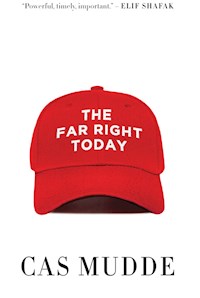
The far right is back with a vengeance. After several decades at the political margins, far-right politics has again taken center stage. Three of the world's largest democracies - Brazil, India, and the United States - now have a radical right leader, while far-right parties continue to increase their profile and support within Europe. In this timely book, leading global expert on political extremism Cas Mudde provides a concise overview of the fourth wave of postwar far-right politics, exploring its history, ideology, organization, causes, and consequences, as well as the responses available to civil society, party, and state actors to challenge its ideas and influence. What defines this current far-right renaissance, Mudde argues, is its mainstreaming and normalization within the contemporary political landscape. Challenging orthodox thinking on the relationship between conventional and far-right politics, Mudde offers a complex and insightful picture of one of the key political challenges of our time.
Sie lesen das E-Book in den Legimi-Apps auf:
Seitenzahl: 267
Veröffentlichungsjahr: 2019
Ähnliche



















Contents
Dedication
Title page
Copyright page
Acknowledgments
Abbreviations
Introduction
Terminology
Outline of the Book
Notes
1 History
Three Waves of the Postwar Far Right, 1945–2000
Neo-Fascism, 1945–55
Right-Wing Populism, 1955–80
Radical Right, 1980–2000
The Fourth Wave, 2000–
Notes
2 Ideology
Ideology
Themes
Immigration
Security
Corruption
Foreign Policy
The Role of Religion
Notes
3 Organization
Political Parties
Social Movement Organizations
Intellectual Organizations
Media Organizations
Political Organizations
Subcultures
“Alt-Right”
Football Hooligans
Skinheads
International Collaboration
Notes
4 People
Leaders
Members and Activists
Voters
Notes
5 Activities
Elections
Demonstrations
Violence
Notes
6 Causes
The Debates
Protest versus Support
Economic Anxiety versus Cultural Backlash
Global versus Local
Leader versus Organization
The Breeding Ground
The Role of the Media
Notes
7 Consequences
A Question of Power
Far-Right Governments
Far-Right Coalitions
Far-Right Oppositions
Domestic Consequences
The People
The Policies
The Polities
International Consequences
Notes
8 Responses
The State: Between the German and the US Models
The Parties: From Demarcation to Incorporation
Demarcation
Confrontation
Cooptation
Incorporation
Civil Society: Between Non-Violent and Violent Resistance
Demarcation
Confrontation
Do These Responses to the Far Right Work?
Notes
9 Gender
Ideology and Issues
People and Actions
Consequences
Causes and Responses
Notes
10 Twelve Theses on the Fourth Wave
1 The Far Right Is Extremely Heterogeneous
2 The Populist Radical Right Is Mainstream(ed)
3 Populist Radical Right Politics Is No Longer Limited to Populist Radical Right Parties
4 The Boundaries Have Become Blurred
5 The Populist Radical Right Is Increasingly Normalized
6 The Extreme Right Are a Normal Pathology, the Populist Radical Right a Pathological Normalcy
7 The Rise of the Populist Radical Right Is About Dealignment Rather Than Realignment (For Now)
8 The Far Right Is a Gendered Phenomenon
9 No Country Is Immune to Far-Right Politics
10 The Far Right Is Here to Stay
11 There Is No Single Best Way to Deal with the Far Right
12 The Emphasis Should Be on Strengthening Liberal Democracy
Chronology
Glossary
Further Reading
Index
End User License Agreement
Guide
Cover
Contents
1 History
Pages
ii
iii
iv
vi
vii
viii
ix
1
2
3
4
5
6
7
8
9
180
10
11
12
13
14
15
16
17
18
19
20
21
22
23
24
25
26
27
28
29
30
31
32
33
34
35
36
37
38
39
40
41
42
43
44
45
46
47
48
49
50
51
52
53
54
55
56
57
58
59
60
61
62
63
64
65
66
67
68
69
70
181
71
72
73
74
75
76
77
78
79
80
81
82
83
84
85
86
87
88
89
90
91
92
93
94
95
96
182
97
98
99
100
101
102
103
104
105
106
107
108
109
110
111
112
113
114
115
116
117
118
119
120
121
122
123
124
125
126
127
128
129
130
131
132
133
134
135
136
137
138
139
140
141
142
143
144
145
146
147
148
149
150
151
152
153
154
155
156
157
158
159
160
161
162
183
163
164
165
166
167
168
169
170
171
172
173
174
175
176
177
178
179
184
185
186
187
188
189
190
191
192
193
194
195
196
197
198
199
200
201
202
203
204
205
Dedication
To my readers,
in the hope that this book
will educate and empower you
THE FAR RIGHT TODAY
Cas Mudde
polity
Copyright page
Copyright © Cas Mudde 2019
The right of Cas Mudde to be identified as Author of this Work has been asserted in accordance with the UK Copyright, Designs and Patents Act 1988.
First published in 2019 by Polity Press
Polity Press
65 Bridge Street
Cambridge CB2 1UR, UK
Polity Press
101 Station Landing
Suite 300
Medford, MA 02155, USA
All rights reserved. Except for the quotation of short passages for the purpose of criticism and review, no part of this publication may be reproduced, stored in a retrieval system or transmitted, in any form or by any means, electronic, mechanical, photocopying, recording or otherwise, without the prior permission of the publisher.
ISBN-13: 978-1-5095-3683-2
ISBN-13: 978-1-5095-3684-9 (pb)
A catalogue record for this book is available from the British Library.
Typeset in 11 on 13 pt Sabon
by Fakenham Prepress Solutions, Fakenham, Norfolk NR21 8NL
Printed and bound in by Great Britain by CPI Group (UK) Ltd, Croydon
The publisher has used its best endeavours to ensure that the URLs for external websites referred to in this book are correct and active at the time of going to press. However, the publisher has no responsibility for the websites and can make no guarantee that a site will remain live or that the content is or will remain appropriate.
Every effort has been made to trace all copyright holders, but if any have been overlooked the publisher will be pleased to include any necessary credits in any subsequent reprint or edition.
For further information on Polity, visit our website: politybooks.com
Acknowledgments
Throughout my career, I have had the great fortune of receiving generous support from many wonderful colleagues and friends in the academic field of extremism and democracy. For this particular book, which has a much broader geographical and topical scope than my more narrow academic work, I called upon an exceptionally broad range of them for feedback and was yet again humbled by their response. Aurelien Mondon, Caterina Froio, Cristóbal Rovira Kaltwasser, Cynthia Miller-Idriss, Duncan McDonnell, George Hawley, Jan-Werner Müller, Kathleen Blee, Léonie de Jonge, Matthew Feldman, and Uwe Backes all read the first full manuscript and provided me with many smaller and bigger suggestions. I was able to include several of them, but was forced to ignore some, because of the practical constraints of this relatively short book.
Special thanks go out to four more people. Alex DiBranco was able and willing to read over the later added chapter on gender and provided me with crucial feedback within a week. My amazing wife Maryann Gallagher not only facilitated my writing but also read an earlier draft of the gender chapter and helped me reshape and rethink it. My fantastic graduate student Jakub Wondreys did vital research assistance for the book and helped me construct the chronology and the glossary. He also read through the full manuscript and provided me with helpful comments. I thank him for all his work and cannot wait to repay it, by editing his dissertation. Finally, a shout out to my friend and publisher Craig Fowlie, who made time in his extremely busy schedule to provide me with great feedback on the full manuscript, despite the fact that it is published by a competitor. Perhaps he is right after all: Scousers are special.
I have written several books before, some purely academic, some mostly non-academic. In most cases, I acted quite quickly on the initial idea, but it then took me a (very) long time to turn it into a book. This book is the exact opposite. I have been brooding over this idea for more than a decade, returning to it each time I was asked for a recommendation for a relatively short, non-academic book after giving a public lecture. But once I approached Polity with the idea, the book almost wrote itself – if I could find time for it in between family, lectures, meetings, teaching, and travel. I want to thank the three anonymous referees for their constructive and encouraging reviews and my editors at Polity, Louise Knight and Sophie Wright, for their quick and hands-on editing style. It confirmed my long-held feeling that Polity is indeed the perfect publisher for this book.
Abbreviations
AfD
Alternative for Germany
ANS/NA
Action Front of National Socialists/National Activists
APF
Alliance for Peace and Freedom
B&H
Blood & Honour
BJP
Indian People’s Party
DF
Danish People’s Party
EAF
European Alliance for Freedom
EDL
English Defence League
EKRE
Conservative People’s Party of Estonia
ENF
Europe of Nations and Freedom
ESM
European Social Movement
FN
National Front (France)
FPÖ
Austrian Freedom Party
FvD
Forum for Democracy
GRECE
Research and Study Group for European Civilization
KKK
Ku Klux Klan
LN
Northern League
LPR
League of Polish Families
L’SNS
Kotleba – People’s Party Our Slovakia
MHP
Nationalist Action Party
MSI
Italian Social Movement
NF
National Front (UK)
NMR
Nordic Resistance Movement
NPD
National Democratic Party of Germany
ONP
One Nation Party
PEGIDA
Patriotic Europeans Against the Islamization of the Occident
PiS
Law and Justice
PVV
Party for Freedom
REP
The Republicans
RN
National Rally
RSS
National Volunteer Organization
SD
Sweden Democrats
SNS
Slovak National Party
SRP
Socialist Reich Party
SVP
Swiss People’s Party
UKIP
United Kingdom Independence Party
VB
Flemish Bloc/Flemish Interest
XA
Golden Dawn
Introduction
On a grey and drizzly day in January 2017, on the steps of the Capitol Building in Washington, DC, the newly elected president of the United States gave a speech unlike any of his predecessors. It had the anger and frustration of the political fringes, but it came from the political mainstream. In his inaugural speech, the new “Leader of the Free World” said:
For too long, a small group in our nation’s Capital has reaped the rewards of government while the people have borne the cost. Washington flourished – but the people did not share in its wealth. Politicians prospered – but the jobs left, and the factories closed. The establishment protected itself, but not the citizens of our country. Their victories have not been your victories; their triumphs have not been your triumphs; and while they celebrated in our nation’s Capital, there was little to celebrate for struggling families all across our land. That all changes – starting right here, and right now, because this moment is your moment: it belongs to you.
The election of Donald Trump is in many ways illustrative of what this book is about: the mainstreaming and normalization of the far right in general, and the populist radical right in particular, in the twenty-first century. As I finish this manuscript, in May 2019, three of the five most populous countries in the world have a far-right leader (Brazil, India, and the US) and the biggest political party in the world is the populist radical right Indian People’s Party (BJP). Within the European Union (EU), two governments are fully controlled by populist radical right parties (Hungary and Poland), another four include such parties (Bulgaria, Estonia, Italy, Slovakia), and two are held up with support of a populist right party (Denmark and the United Kingdom).1 And in the latest European elections, far-right parties increased their presence in the European Parliament yet again, albeit modestly, as they had done in the previous elections in 2014 and 2009.
A lot has changed since I started working on the far right in the late 1980s, as a student at the University of Leiden in the Netherlands, when the far right was still primarily a phenomenon of the political margins. Neo-Nazi groups could barely protest in the streets without being arrested and anti-immigration parties barely registered in the polls. Today, the far right is closely connected to the political mainstream; and in more and more countries it is becoming the political mainstream. Let me illustrate this disturbing transformation with three (European) examples.
In 1982, thousands of protesters filled the square in front of the Dutch parliament in The Hague. Carrying signs that read “They Are Back” and “Racism is Hate Against Humans,” they protested against one man, Hans Janmaat, leader of the misnamed Center Party, who, with fewer than 70,000 votes (0.8 percent), had entered the Second Chamber. Fast-forward more than three decades, and the Dutch parliament counts twenty-two (out of 150) far-right Members of Parliament (MPs), installed without any protests, while the main right-wing government parties advance and implement policies that are fully anchored in the Center Party’s main point of controversy: “The Netherlands is not an immigration country. Stop immigration!”
In 1999, the Austrian Freedom Party (FPÖ) gained its biggest electoral success to date, coming second with 26.9 percent of the vote in the parliamentary elections. When the party entered the government the next year, it was met by mass demonstrations and an international boycott. When the FPÖ returned to government in 2018, few Austrians came out to demonstrate, while the international community embraced the coalition with virtually no protest.
And, finally, in France, most French people responded with horror when the leader of the National Front (FN), Jean-Marie Le Pen, made the 2002 presidential run-offs with 16.9 percent of the national vote. In response, turnout for the second round increased substantially, keeping Le Pen at 17.8 percent, less than one percent higher than in the first round. Fifteen years later, his daughter Marine made the second round with 21.3 percent. This time (even) fewer French people voted in the second round and Le Pen increased her support to 33.9 percent. With Marine Le Pen almost doubling her father’s 2002 score, most French people were relieved rather than upset. At least she didn’t win.
These examples illustrate the fundamental differences between the so-called “third wave” and “fourth wave” of the postwar far right. The third wave, roughly from 1980 till 2000, saw the rise of electorally successful populist radical right parties, although they were largely reduced to the political margins, as mainstream parties excluded them from political coalitions and often minimized “their” issues, notably immigration and European integration. In the fourth wave, which roughly started in the twenty-first century, radical right parties have become mainstreamed and increasingly normalized, not just in Europe, but across the world. And even extreme right parties have emerged, as extreme right sentiments (like antisemitism, historical revisionism, and racism) are openly flirted with in the media and politics.
The so-called “refugee crisis” of 2015 played a special role in this development. I put the term in quotes because whether or not it was indeed a crisis is more a matter of personal judgment than objective condition. The EU had the financial resources to deal with even these record numbers of asylum seekers, although for years it had neglected to build an infrastructure to properly take care of them. Mainstream media and politicians chose to frame the influx of asylum seekers as a “crisis,” thereby providing ammunition to the already mobilized far right.
The “refugee crisis” was not the initial cause of the mainstreaming of the far right, in Europe or beyond, but it has definitely functioned as a catalyst for the process. Anti-immigration demonstrations have become a common occurrence on the streets of major European cities, while far-right violence against anti-fascists, immigrants, the LGBTQ community, and refugees has increased sharply. From Germany to the US, law enforcement and intelligence agencies warn of a growing far-right terrorist danger, often after decades of downplaying this threat.
This book aims to give an accessible and concise overview of the fourth wave of the postwar far right. While it includes several original observations which will also be of interest to more expert readers, this book is first and foremost written for a non-academic audience; for people who follow the news, are concerned about the rise of the far right, but feel that media accounts provide too little detail and insight, while academic and non-academic books are too complex or simply too long. It draws on more than a quarter-century of scholarship, including my own, and simplifies and summarizes this in ten clearly structured chapters.
My hope is that after reading this book, the reader will feel better equipped to assess the key challenges that the far right poses to liberal democracies in the twenty-first century and to feel empowered to defend liberal democracy against these challenges. But before she can do this, we have to address one of the most confusing and frustrating aspects of the academic and public debate on the topic: terminology.
Terminology
The ideas and groups at the heart of this book are described with an ever-growing myriad of terms, often used interchangeably, yet without a clear definition or explanation of the differences and similarities. While issues of terminology might sound like a purely academic matter, they are crucial to politics and the public debate. For instance, in countries like Germany, “extreme right” groups can be banned, while “radical right” groups cannot.
It is true that most of the defining and terming is done by outsiders, that is, academics, anti-fascists, and journalists, rather than by the far right itself, but this is not to say that it does not care about terminology. Leaders from prominent far-right parties, like the FN (now National Rally, RN) and FPÖ, have taken academics and journalists to court for describing them as “fascist,” for example. Others have proudly proclaimed themselves to be populists, and sometimes even racist, albeit often after redefining the term more favorably. For example, Matteo Salvini, leader of the Northern League (LN; now just League) and Italy’s interior minister, said that while “populist” was used as an insult, for him, it was a compliment. And former Breitbart News CEO and Trump advisor Steve Bannon told FN activists at a party gathering, “Let them call you racists. Let them call you xenophobes. Let them call you nativists. Wear it as a badge of honor.”
There is no academic consensus on the correct terms for the broader movement and the various subgroups within it. Moreover, the dominant term has been changing throughout the postwar era. In the first decades, these movements were primarily described in terms of “neo-fascism,” which changed to “extreme right” in the 1980s, “radical right” in the 1990s, some form of “right-wing populism” in the early twenty-first century, as well as “far right” in more recent years. This development reflects changes both within the movement itself and in the scholarly community that studies it.
Most academics agree that the movement is part of the broader right, but disagree over what that exactly means. The terms “left” and “right” date back to the French Revolution (1789–99), when supporters of the king sat to the right of the president of the French parliament and opponents to the left. This means that those on the right were in favor of the ancien régime, marked by its hierarchical order, while those on the left supported democratization and popular sovereignty. After the Industrial Revolution, the left–right division became mainly defined in terms of socio-economic policies, with the right supporting a free market and the left a more active role of the state, although alternative meanings remained popular – such as religious (right) versus secular (left). In more recent decades, left–right has become more defined in socio-cultural terms, with the right standing for either authoritarianism (versus the left’s libertarianism) or nationalism (versus the left’s internationalism) – or, in the terms of RN leader Marine Le Pen, “patriot–globalist.”
While these various interpretations differ on many points, they do share an essential core, which has been captured most accurately by the Italian philosopher Norberto Bobbio,2 who defines the key distinction between left and right on the basis of their view on (in)equality: the left considers the key inequalities between people to be artificial and negative, which should be overcome by an active state, whereas the right believes that inequalities between people are natural and positive, and should be either defended or left alone by the state. These inequalities can be (believed to be) cultural, economic, racial, religious, or however defined.
This book is not concerned with the so-called “mainstream right,” such as conservatives and liberals/libertarians, but only with those on the right who are “anti-system,” defined here as hostile to liberal democracy. This is what I call the far right, which is itself divided into two broader subgroups. The extreme right rejects the essence of democracy, that is, popular sovereignty and majority rule. The most infamous example of the extreme right is fascism, which brought to power German Führer Adolf Hitler and Italian Duce Benito Mussolini, and was responsible for the most destructive war in world history. The radical right accepts the essence of democracy, but opposes fundamental elements of liberal democracy, most notably minority rights, rule of law, and separation of powers. Both subgroups oppose the postwar liberal democratic consensus, but in fundamentally different ways. While the extreme right is revolutionary, the radical right is more reformist. In essence, the radical right trusts the power of the people, the extreme right does not.
Given the prevalence of the term populism in contemporary political discussions, let me quickly clarify both my understanding of that term and its relationship to the far right. I define populism as a (thin) ideology that considers society to be ultimately separated into two homogeneous and antagonistic groups, the pure people and the corrupt elite, and which argues that politics should be an expression of the volonté générale(general will) of the people (see also chapter 2). At least in theory, populism is pro-democracy, but anti-liberal democracy. Consequently, the extreme right is, by definition, not populist, while the radical right can be – and, in the twenty-first century, predominantly is.
Outline of the Book
This book focuses predominantly on the fourth wave, that is, on the far right in the twenty-first century. While I aim to present the far right in its diversity, including both the extreme right and the radical right, the emphasis will be on the most important ideas, organizations, and personalities of the contemporary period, that is, populist radical right leaders and parties. The first set of chapters focuses primarily on the far right itself (chapters 1–5), while the second deals with the far right within the (mostly western democratic) political context (chapters 6–8).
Chapter 1 provides a concise chronological overview of the four waves of postwar far-right politics. Chapter 2 introduces the key ideologies and issues of the contemporary far right. Chapter 3 focuses on the organizational structure of the far right, distinguishing between far-right parties, social movement organizations, and subcultures. Chapter 4 shifts the focus to the people within the far right, more specifically leaders, members and activists, and voters. Chapter 5 examines the main forms of mobilization, that is, elections, demonstrations, and violence.
The next three chapters situate the far right within its (western democratic) political context. Chapters 6 and 7 discuss the causes and consequences of the recent rise of the far right, summarizing some of the key academic and public debates – such as economic anxiety versus cultural backlash – and highlighting the broad variety of far-right challenges that western democracies are facing today. Chapter 8 reviews the different ways in which democracies have responded to the rise of the far right. Chapter 9 looks at the role of gender within the far right, relating it to most of the aspects discussed in the previous chapters. Finally, chapter 10 ends the book with twelve theses that highlight key characteristics and novelties of the fourth wave of the postwar far right.
Notes
1
The far-right parties in question are the Patriotic Front (Bulgaria), DF (Denmark), EKRE (Estonia), Fidesz (Hungary), the League (Italy), PiS (Poland), the SNS (Slovakia), and the Democratic Unionist Party (UK).
2
N. Bobbio,
Left and Right: The Significance of a Political Distinction
, University of Chicago Press, 1997.
1History
In 1945, the world started to recover from the second world war in thirty years. An estimated 75 to 85 million people were killed, and many more were seriously injured. Europe was in ruins. Nazi Germany and the Soviet Union bore the brunt of the destruction, but almost all European countries were severely affected by collaboration, destruction, and occupation. Millions of minorities had perished in the Nazi annihilation and concentration camps, most notably Jews, Roma and Sinti (commonly referred to by the derogatory term “Gypsies”), homosexuals, and communists.
As the European continent was recovering from one division, between fascists and anti-fascists, it was entering another one, between communists and anti-communists. The Cold War separated Europe into a capitalist and (largely) democratic West and a socialist and authoritarian East. This division preceded the Second World War, and the two sides were only brought together by the shared threat of fascism, because anti-fascism was one of the few values communists and liberal democrats shared (despite the cynical pact that Hitler and Stalin struck between 1939 and 1941). Yet, as soon as fascism was destroyed, the two became mortal enemies again.
The anti-fascist consensus would survive the Cold War, even though there were fundamental national and regional differences in the ways in which countries dealt with the far right in the postwar era. In communist states, all “fascist” ideas and movements were banned, as were all other non-communist ideas and movements. Most East European collaborators and fascists were killed in the war and the postwar repression or were able to escape to, primarily, the Americas, where they integrated into broader anti-communist émigré communities, which often already held very right-wing ideas.
While most western democracies also went through a short period of, partly extrajudicial and violent, repression of local fascists and collaborators, particularly in countries that were occupied by Nazi Germany, many had more ambivalent legal restrictions on far-right ideas and movements. Countries that had not been occupied, like the UK and US, introduced virtually no restrictions, while others, notably Germany and Italy, officially banned “neo-fascist” ideas and movements (see chapter 8). Despite different legal systems, and social pressures, the general lesson of the Second World War was “never again.” It was a sentiment that was also at the heart of the process of European integration, which aimed to integrate economies and pool sovereignty to create a bulwark against nationalism.
Three Waves of the Postwar Far Right, 1945–2000
In 1988, the German political scientist Klaus von Beyme1 identified three waves of far-right politics in postwar Western Europe. While there is some debate about the exact characteristics and time periods of the different waves, his model does provide at least a rough sketch of the ways in which the far right fared in the second half of the twentieth century.
Neo-Fascism, 1945–55
In the direct aftermath of the defeat of fascism, far-right politics was backward- rather than forward-looking. Given that almost all far-right activists and groups had collaborated with the fascists during the war, far-right politics was almost universally rejected – and in some countries, like Germany and the Netherlands, all nationalisms were perceived negatively. Most Europeans who had either ideologically supported, or opportunistically collaborated with, the fascist regimes adapted to the new democratic reality either by becoming apolitical or by working within the democratic parties and system.
The small group of fascists who remained loyal to the cause, and who were not or no longer imprisoned, worked mainly at the margins of society. They were mostly described as “neo-fascists,” but there was really not much new to them. They were old fascists who remained loyal to the old ideology, who organized primarily within social organizations, providing camaraderie and social support for the “heroes” and martyrs” of the fascist cause. Among the more important groups were those providing support for former Eastern Front fighters (mostly Waffen-SS) and their families, such as the Belgian Saint-Martin Fund and the German Mutual Aid Association of Former Waffen-SS Soldiers – millions of children and wives had lost their fathers and husbands and were left without a state pension because their countries considered them traitors.
As far as (neo-)fascists wanted to remain politically active, they had to operate in a hostile legal and political climate. Even when cautious not to be openly neo-fascist, far-right organizations led by former (high-ranking) fascists rarely achieved popular support and often faced significant state repression. Most of the political parties did not contest elections, and even if they did, they would remain well under the electoral threshold of parliamentary representation. Several (neo-)fascist parties were banned in the 1950s, including the German Socialist Reich Party (SRP) in 1952 and the Dutch National European Social Movement in 1956.
The main exception was the Italian Social Movement (MSI), which was led by a former Fascist government official, Giorgio Almirante, and made little secret of its credentials – the initials allegedly signified “Mussolini Sei Immortale” (Mussolini, You Are Immortal). Although the new Italian Constitution explicitly stated, “It shall be forbidden to reorganize, under any form whatsoever, the dissolved Fascist party,” the MSI entered parliament in 1948 and remained represented until its transformation into the “post-fascist” National Alliance in 1995. It even provided parliamentary support for the short-lived Tambroni government in 1960.
Outside of Europe, neo-fascist ideas were often represented in East European émigré organizations in the Americas and Australia. This was strengthened by the influx of former fascist activists and politicians, particularly from collaborationist regimes in Croatia, Hungary, and Slovakia, after the end of the Second World War. In Latin America, some more or less relevant groups were strongly influenced by the far-right regimes of Antonio Salazar’s Estado Novo in Portugal and, in particular, Francisco Franco’s Falange in Spain.
In an attempt to break away from their national marginalization, some fascist leaders tried to organize at the international level. The most famous attempt was the European Social Movement (ESM), inspired by the success of the MSI, which was founded at a congress in Malmö (Sweden) in 1951. While it brought together the most well-known far-right activists of that period, as well as representatives of the most relevant far-right parties (including the MSI and SRP), the ESM remained marginal in its short life, becoming moribund in 1957. The same applied to all other attempts at far-right collaboration, including the various attempts to develop a European nationalism by people like the British fascist Oswald Mosley (also involved in the ESM) and the US attorney and polemicist Francis Parker Yockey, founder of the ambitiously named European Liberation Front, which existed from 1949 till 1954.




