


24,99 €
Mehr erfahren.
- Herausgeber: John Wiley & Sons
- Kategorie: Fachliteratur
- Sprache: Englisch
Praise for The Financial Numbers Game "So much for the notion 'those who can, do-those who can't, teach.' Mulford and Comiskey function successfully both as college professors and real-world financial mercenaries. These guys know their balance sheets. The Financial Numbers Game should serve as a survival manual for both serious individual investors and industry pros who study and act upon the interpretation of financial statements. This unique blend of battle-earned scholarship and quality writing is a must-read/must-have reference for serious financial statement analysis." --Bob Acker, Editor/Publisher, The Acker Letter "Wall Street's unforgiving attention to quarterly earnings presents ever increasing pressure on CFOs to manage earnings and expectations. The Financial Numbers Game provides a clear explanation of the ways in which management can stretch, bend, and break accounting rules to reach the desired bottom line. This arms the serious investor or financial analyst with the healthy skepticism required to drive beyond reported results to a clear understanding of a firm's true performance." --Mark Hurley, Managing Director, Training and Development, Global Corporate and Investment Banking, Bank of America "After reading The Financial Numbers Game, I feel as though I've taken a master's level course in financial statement analysis. Mulford and Comiskey's latest book should be required reading for anyone who is serious about fundamentally analyzing stocks." --Harry Domash, San Francisco Chronicle investing columnist and investment newsletter publisher
Sie lesen das E-Book in den Legimi-Apps auf:
Seitenzahl: 908
Veröffentlichungsjahr: 2011
Ähnliche


















Contents
Cover
Title page
Copyright
Preface
CHAPTER ONE Financial Numbers Game
REWARDS OF THE GAME
CLASSIFYING CREATIVE ACCOUNTING PRACTICES
PLAN OF THIS BOOK
SUMMARY
GLOSSARY
NOTES
CHAPTER TWO How the Game Is Played
ACCOUNTING POLICY CHOICE AND APPLICATION
FRAUDULENT FINANCIAL REPORTING
CLEANING UP AFTER THE GAME
CLARIFYING TERMINOLOGY
SUMMARY
GLOSSARY
NOTES
CHAPTER THREE Earnings Management: A Closer Look
WHAT IS EARNINGS MANAGEMENT?
INCENTIVES AND CONDITIONS FOR EARNINGS MANAGEMENT
EARNINGS MANAGEMENT TECHNIQUES
EVIDENCE OF EARNINGS MANAGEMENT
EFFECTIVENESS OF EARNINGS MANAGEMENT
IS EARNINGS MANAGEMENT GOOD OR BAD?
SUMMARY
GLOSSARY
NOTES
CHAPTER FOUR The SEC Responds
THE CHAIRMAN’S SPEECH
THE ACTION PLAN
SUBSEQUENT DEVELOPMENTS
ENFORCING THE SECURITIES LAWS
SUMMARY
GLOSSARY
NOTES
CHAPTER FIVE Financial Professionals Speak Out
SURVEY OF FINANCIAL PROFESSIONALS
SURVEY RESULTS
SUMMARY
GLOSSARY
NOTES
CHAPTER SIX Recognizing Premature or Fictitious Revenue
IS IT PREMATURE OR FICTITIOUS REVENUE?
WHEN SHOULD REVENUE BE RECOGNIZED?
DETECTING PREMATURE OR FICTITIOUS REVENUE
CHECKLIST TO DETECT PREMATURE OR FICTITIOUS REVENUE
SUMMARY
GLOSSARY
NOTES
CHAPTER SEVEN Aggressive Capitalization and Extended Amortization Policies
COST CAPITALIZATION
DETECTING AGGRESSIVE COST CAPITALIZATION POLICIES
AMORTIZING CAPITALIZED COSTS
DETECTING EXTENDED AMORTIZATION PERIODS
CHECKLIST TO DETECT AGGRESSIVE CAPITALIZATION AND EXTENDED AMORTIZATION POLICIES
SUMMARY
GLOSSARY
NOTES
CHAPTER EIGHT Misreported Assets and Liabilities
LINK WITH REPORTED EARNINGS
BOOSTING SHAREHOLDERS’ EQUITY
OVERVALUED ASSETS
UNDERVALUED LIABILITIES
CHECKLIST TO DETECT MISREPORTED ASSETS AND LIABILITIES
SUMMARY
GLOSSARY
NOTES
CHAPTER NINE Getting Creative with the Income Statement: Classification and Disclosure
CURRENT INCOME STATEMENT REQUIREMENTS AND PRACTICES
REPORTING COMPREHENSIVE INCOME
CREATIVE INCOME STATEMENT CLASSIFICATIONS
CREATIVITY WITH OTHER ASPECTS OF THE INCOME STATEMENT
SUMMARY
GLOSSARY
NOTES
CHAPTER TEN Getting Creative with the Income Statement: Pro-Forma Measures of Earnings
RECASTING THE BOTTOM LINE: PRO-FORMA EARNINGS MEASURES
SUMMARY
GLOSSARY
NOTES
CHAPTER ELEVEN Problems with Cash Flow Reporting
REPORTING CASH FLOW
PROBLEMS WITH REPORTED OPERATING CASH FLOW
USING OPERATING CASH FLOW TO DETECT CREATIVE ACCOUNTING PRACTICES
CHECKLIST FOR USING OPERATING CASH FLOW TO DETECT CREATIVE ACCOUNTING PRACTICES
SUMMARY
GLOSSARY
NOTES
Subject Index
Company Index
End User License Agreement
Pages
i
ii
iii
iv
v
vi
vii
viii
ix
1
2
3
4
5
6
7
8
9
10
11
12
13
14
15
16
17
19
20
21
22
23
24
25
26
27
28
29
30
31
32
33
34
35
36
37
38
39
40
41
42
43
44
45
46
47
48
49
50
51
52
53
54
55
56
57
58
59
60
62
61
63
64
65
66
68
67
69
70
71
72
73
74
75
76
78
77
79
80
81
82
83
84
85
86
87
88
89
90
91
92
93
94
95
96
97
98
99
100
101
102
103
104
105
106
107
108
109
110
111
112
113
114
115
116
117
118
119
120
121
122
123
124
125
126
127
129
128
130
131
132
133
134
136
135
137
138
139
140
141
144
142
143
147
145
146
148
149
150
151
152
153
154
155
156
157
158
159
160
161
162
163
164
165
166
167
168
169
170
171
172
173
174
175
176
177
178
179
180
181
182
183
184
185
186
187
189
188
190
191
192
193
194
195
196
197
198
199
201
202
203
204
205
206
207
208
209
210
211
212
213
214
215
216
217
218
219
220
221
222
223
224
225
227
226
228
229
230
231
232
233
234
235
236
237
238
239
240
241
242
243
244
245
246
247
248
249
250
251
252
253
254
255
256
257
258
259
260
261
262
263
264
265
266
267
268
269
270
271
272
273
274
275
276
277
278
279
280
283
284
285
287
288
289
290
291
292
293
294
295
296
297
298
299
300
301
302
303
304
305
306
307
308
309
310
311
312
313
315
316
317
318
319
320
321
322
324
323
325
326
327
328
329
330
331
332
333
334
335
336
337
338
339
340
341
342
343
344
345
346
347
348
349
350
351
352
353
354
355
356
357
358
359
360
361
362
363
364
365
366
367
368
369
370
371
372
373
374
375
376
377
378
391
392
393
394
395
Guide
Cover
Contents
Start Reading
List of Tables
Exhibit 1.1
Exhibit 1.2
Exhibit 1.3
Exhibit 2.1
Exhibit 2.2
Exhibit 2.3
Exhibit 2.4
Exhibit 2.5
Exhibit 3.1
Exhibit 3.2
Exhibit 3.3
Exhibit 3.3
Exhibit 3.4
Exhibit 3.5
Exhibit 3.6
Exhibit 3.7
Exhibit 3.8
Exhibit 4.1
Exhibit 4.2
Exhibit 4.3
Exhibit 4.3
Exhibit 4.4
Exhibit 4.5
Exhibit 4.6
Exhibit 4.7
Exhibit 4.8
Exhibit 5.1
Exhibit 5.2
Exhibit 5.3
Exhibit 5.4
Exhibit 5.5
Exhibit 5.6
Exhibit 5.7
Exhibit 5.8
Exhibit 5.9
Exhibit 5.10
Exhibit 5.11
Exhibit 5.12
Exhibit 6.1
Exhibit 6.2
Exhibit 6.3
Exhibit 6.4
Exhibit 6.5
Exhibit 6.6
Exhibit 6.7
Exhibit 7.1
Exhibit 7.2
Exhibit 7.3
Exhibit 7.4
Exhibit 7.5
Exhibit 7.6
Exhibit 7.7
Exhibit 8.1
Exhibit 8.2
Exhibit 8.3
Exhibit 8.4
Exhibit 8.5
Exhibit 8.6
Exhibit 8.7
Exhibit 8.8
Exhibit 8.9
Exhibit 8.10
Exhibit 8.11
Exhibit 9.1
Exhibit 9.2
Exhibit 9.3
Exhibit 9.4
Exhibit 9.5
Exhibit 9.6
Exhibit 9.7
Exhibit 9.8
Exhibit 9.9
Exhibit 9.10
Exhibit 9.11
Exhibit 9.12
Exhibit 9.13
Exhibit 9.14
Exhibit 9.15
Exhibit 10.1
Exhibit 10.2
Exhibit 10.3
Exhibit 10.4
Exhibit 10.5
Exhibit 10.6
Exhibit 10.7
Exhibit 10.8
Exhibit 10.9
Exhibit 10.10
Exhibit 11.1
Exhibit 11.2
Exhibit 11.3
Exhibit 11.4
Exhibit 11.5
Exhibit 11.6
Exhibit 11.7
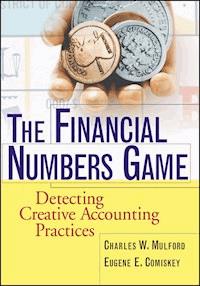
The Financial Numbers Game
Detecting Creative Accounting Practices
Charles W. Mulford
Eugene E. Comiskey
To Debby Mulford:Her strength and courageare an inspiration for us all.
Copyright © 2002 by John Wiley & Sons, Inc. All rights reserved.
Published simultaneously in Canada.
No part of this publication may be reproduced, stored in a retrieval system or transmitted in any form or by any means, electronic, mechanical, photocopying, recording, scanning or otherwise, except as permitted under Sections 107 or 108 of the 1976 United States Copyright Act, without either the prior written permission of the Publisher, or authorization through payment of the appropriate per-copy fee to the Copyright Clearance Center, 222 Rosewood Drive, Danvers, MA 01923, (978) 750-8400, fax (978) 750-4744. Requests to the Publisher for permission should be addressed to the Permissions Department, John Wiley & Sons, Inc., 605 Third Avenue, New York, NY 10158-0012, (212) 850-6011, fax (212) 850-6008, E-Mail: [email protected].
This publication is designed to provide accurate and authoritative information in regard to the subject matter covered. It is sold with the understanding that the publisher is not engaged in rendering legal, accounting, or other professional services. If legal advice or other expert assistance is required, the services of a competent professional person should be sought.
Library of Congress Cataloging-in-Publication Data
Mulford, Charles W., 1951–
The financial numbers game : detecting creative accounting practices / Charles W. Mulford and Eugene E. Comiskey.
p. cm.
Includes bibliographical references.
ISBN-10 0-471-77073-6 (pbk. : alk. paper)
ISBB-13 978-0-471-77073-2
1. Financial statements—United States. I. Comiskey, Eugene E. II. Title.
HF5681.B2 .M75 2002
657′.3—dc21 2001045648
Foreword
It has only been a few short years since publication of The Financial Numbers Game: Detecting Creative Accounting Practices. While much has happened since then, the techniques advocated for detecting creative accounting practices continue to be effective.
We wrote the book at a time when there was less of a stigma attached to earnings management. In fact, the activity was arguably quite widespread and was viewed by many as a responsibility of management for the purpose of reaching forecast targets. In a speech given in the late 1990s, the chairman of the Securities and Exchange Commission (SEC) noted that earnings management, which includes aggressive accounting actions both within the boundaries of generally accepted accounting principles (GAAP) and that extend beyond those boundaries, had become a game of sorts as managers took all manner of steps to report earnings at or slightly above expectations.
In writing the book that we will refer to here simply as The Financial Numbers Game, we surveyed financial professionals to get their perspective on the subject of earnings management. It is interesting now to look back at their views and marvel at how those views have changed. For example, the following observation regarding earnings management is representative of many we received at the time: “It helps companies who manipulate earnings for the purpose of maintaining stability in their stock price by smoothing earnings over time, rather than sending volatile earnings reports to the market.” These are exactly the kinds of steps that managers at Fannie Mae and American International Group, Inc. (AIG) were taking in order to report a smoother, less risky earnings stream. We suspect that fewer financial professionals would view earnings management as this benign today.
The Enron Corp. fraud was uncovered around the time the book was published. It was followed in short succession by the discovery of fraud at WorldCom, Inc. Both frauds resulted in dramatic bankruptcies that wiped out billions of dollars in shareholder funds. Suddenly, the perception took hold that while earnings management may begin small, it can often grow and become harmful to investors. Congress responded and passed in short order the Sarbanes-Oxley Act of 2002. The financial-reporting landscape in the United States was changed dramatically as new requirements were put in place for managers, their firms, and auditors.
America wanted to see the perpetrators of the alleged crimes dealt with harshly. Prosecutors responded and a series of high-profile court cases, including trials of managers at Enron Corp., WorldCom, Inc., Tyco, Inc., Dynegy, Inc., and Health-South Corp., among many others, took place.
Today, even as we continue to feel the fallout from Sarbanes-Oxley, investors are understandably interested in whether financial statements can be trusted. Are the frauds over? Has the financial numbers game stopped or has it changed into something new?
While Sarbanes-Oxley cannot stop financial fraud, it can make it more difficult and costly, and, in the process, theoretically, reduce the number of frauds and their size. However, such assurances are of little consolation when fraud is discovered in a firm in which one has an investment position.
The Financial Numbers Game is designed to help investors and creditors uncover earnings management and fraud in financial statements. The methods advocated are as effective today as when we wrote the book.
In this Foreword, we look back at the financial reporting landscape at the time the book was written. We trace developments in financial reporting since then and highlight the changes. Finally, we address how The Financial Numbers Game can help investors today just as it did when the book was first written.
THE CHAIRMAN MAKES HIS PLEA
At the time we wrote The Financial Numbers Game we felt that it was crucial to stress the seriousness of what we considered to be an important and growing problem—one of using aggressive, or what we referred to as creative, accounting practices in an effort to mislead investors and creditors. It seemed to us that it was too easy for managers to employ many tricks in an effort to achieve desired earnings targets.
For example, revenue might be recognized even as a secret side agreement introduced as contingencies that effectively negated the sale. Or, charges might be taken and reserves established for merger-related costs or restructuring activities. Later, these reserves could be reversed and used to boost income. Similarly, useful lives of depreciable assets might be manipulated to achieve desired results. Sometimes these actions were within the boundaries of GAAP, and sometimes they extended beyond those boundaries. In all cases, however, the impressions of investors and creditors regarding financial performance were affected.
As early as 1998, Arthur Levitt, then chairman of the Securities and Exchange Commission, was also vocal about the developing problem. In a speech, which we cite in the book’s introduction, he warned those in attendance at a gathering of the New York University Center for Law and Business of a “widespread, but too little-challenged custom: earnings management.”1 He noted that the process had evolved into what he characterized as “a game.” He continued, noting that, if not addressed soon, the game would “have adverse consequences.”
In hindsight, the speech is alarmingly prescient. It is probably more accurate than even the Chairman could have foreseen. One could reasonably question why the Chairman did not do more to stop the problem if he was so sure that adverse consequences would be the end result. However, he did try to effect change. In fact, some of the action steps he proposed, which were designed to address the problems with financial reporting that he felt existed at the time, actually found their way into the Sarbanes-Oxley Act that became effective several years later.
The Chairman identified five accounting practices that he thought were being abused. He devoted SEC time and resources to uncovering instances of their use and effecting change. These five practices, which we look at more carefully in Chapter 4, were the heart and soul of aggressive earnings management. They consisted of the use of big-bath charges, such as those taken in a restructuring, which were designed to reduce current earnings but to boost future earnings. In addition, according to the Chairman, creative acquisition accounting provided a means for writing off much of the cost of an acquisition, typically in the form of purchased in-process research and development. Cookie jar reserves were accruals for any number of ordinary operating expenses that are expensed in advance of payment and carried as a liability. Subsequently, these reserves could be reversed, thus providing a means to absorb and reduce future operating expenses. He identified a problem with the application of materiality rules, where individual items may not be material, but collectively they breach normal materiality thresholds. Finally, he noted problems with revenue recognition, where companies were recording revenue before a sale was made and delivery had taken place.
The Chairman laid out an action plan that was designed to return reliability and transparency to financial reporting in the United States. The plan was divided into four broad categories. The first, improving the accounting framework, was focused on rectifying the five accounting practices that he thought were being abused. In the second, enhancing outside auditing, he asked auditors to review the way audits were being performed and determine if changes were needed. In the third action step, strengthening the audit committee process, he called for a blue-ribbon panel to develop recommendations to strengthen audit committees. Finally, in the fourth step, pursuing cultural change, he called on corporate management and Wall Street to examine the reporting environment and find ways to reward open and transparent reporting and punish abusive practices.
While on target, the Chairman’s plan was probably both too little and too late to head off the firestorm that was emerging. The year 1998 was at the height of the last great bull market. Corporate managers, rich with stock options, Wall Street, feasting on fees derived from investment banking and mergers and acquisitions, individual and professional investors, rich and giddy with double-digit annual returns generated over several years, were not interested in change. As many in these groups likely thought at the time, if earnings management helps to keep the party going, why should we change?
A SURVEY OF FINANCIAL PROFESSIONALS
A survey of financial professionals, which we completed during 2001, did not provide an unequivocal view that earnings management was necessarily bad. Some results suggested that earnings management was not a problem while others viewed it with growing concern. For example, some survey respondents viewed earnings management as harmful if it gave the appearance of greater stability than was the case, or if it kept negative items temporarily hidden. Others saw benefits from the smoothing of earnings that might have a beneficial effect on share prices. If done within the GAAP boundaries, earnings management was also seen as helpful since it could help firms to meet or beat analyst estimates of earnings.
The dramatic accounting-related turmoil that exploded in late 2001 and early 2002 has no doubt affected some of the relatively benign attitudes toward earnings management that existed when the survey was conducted. For example, survey respondents rated earnings management achieved through the use of “real” actions as midway between (1) within the flexibility afforded by GAAP and (2) at the outer limits of the flexibility afforded by GAAP. The real actions included in the survey included adjusting advertising expenditures, increasing production, relaxing credit standards, announcing next-year price increases in the fourth quarter of the current year, delaying year-end shipments, and selling investments in order to book a gain.
The real actions above that involved the relaxation of credit standards and the announcement of price increases in the fourth quarter—to take effect in the next year—could be seen as part of a “channel-stuffing” strategy. In recent years firms that have engaged in channel-stuffing activities have become targets of the SEC. Those affected have included, among others, such prominent firms as Bristol-Myers Squibb Co. and The Coca-Cola Co.
In a SEC Accounting and Auditing Enforcement Release, Bristol-Myers Squibb was charged with, among other actions, “stuffing its distributions channels with excess inventory.”2 A $100 million civil penalty and a $50 million shareholder fund were required as part of the settlement. Bristol-Myers Squibb was found to have engaged in channel stuffing “near the end of every quarter in amounts sufficient to meet sales and earnings targets set by officers.”3
In the case of Coca-Cola, the focus of the SEC Accounting and Auditing Enforcement Release was also on channel stuffing. With Coca-Cola, the practice was referred to as “gallon stuffing.”4 Coca Cola (Japan) Company, Ltd. offered extended payment terms to bottlers at or near the end of reporting periods. “The income generated by gallon pushing in Japan was the difference between Coca-Cola meeting or missing analysts’ consensus or modified consensus estimates for 8 out of 12 quarters from 1997 through 1999.”5 Unlike Bristol-Myers Squibb, the Coca-Cola Company avoided any fines. However, it did agree to a cease-and-desist order and to institute a range of “remedial efforts” to avoid a repeat of its “channel-stuffing” adventures.
In the case of both Bristol-Myers Squibb and Coca-Cola, a central theme of the SEC actions was that the channel stuffing was not disclosed and that the implications for future profits were not highlighted. A reasonable inference might be that, if disclosed, the channel-stuffing activities of both firms would not have been considered to be a violation of either GAAP or SEC regulations. However, if these activities had been disclosed it seems clear that the analyst community would not have considered, for example, the earnings targets of the channel-stuffing firms to have been met. That is, increases in earnings from channel stuffing are inherently unsustainable. They would be removed from reported earnings in the process of revising reported earnings so that these revised numbers could then be compared to the forecasts.
A reasonable conclusion about the use of real actions in efforts to manage earnings is that their use should be expected to be somewhat reduced in the post-2002 era because of the active and aggressive SEC action that is taking place. In addition, it is clear from the SEC action in the cases of Bristol-Myers Squibb and Coca-Cola that channel-stuffing activities and their effects on earnings must be disclosed. However, if disclosed they will lose much of their effectiveness as earnings-management tools.
Beyond earnings management involving real actions, the 2001 survey respondents would probably view the exploitation of the inherent flexibility in GAAP in a more negative manner today. Moreover, if the disclosure requirements, discussed in connection with the cases of Bristol-Myers Squibb and Coca-Cola, for real actions are extended to other earnings-management actions, then a reduction in the use of GAAP flexibility should be the result. The combination of increased SEC scrutiny, new reporting requirements, and the severe penalties being levied against company officers, make going to the edge with GAAP flexibility less likely in the future than in the environment of 2001.
THE ONE-TWO PUNCH THAT SHOOK THE INVESTMENT WORLD
In an environment where there were equivocal views about the problems posed by the use of creative accounting practices, it was difficult for the SEC to get much traction in the Chairman’s crusade to foster transparent financial reporting and punish abusive practices. There was little agreement about whether a problem existed, much less on how to deal with it.
However, much like the manner in which an unexpected explosion can turn all eyes in the same direction, toward the blast, the events of 2001 and 2002 changed everything. The discovery of the frauds at Enron Corp. and WorldCom, Inc. fostered the consensus view that something must be done.
It was 2001 when news of the elaborate fraud we now know as Enron captured the nation’s attention. That fall, the company filed for bankruptcy. The average American felt empathy for Enron’s employees as television stories carried video clips of them leaving their offices for the last time with boxes of personal effects. As details of the fraud became available, we learned that the company’s profits were illusory and liabilities were kept off of the balance sheet. The firm effectively transacted with itself through unconsolidated special-purpose entities, recognizing gains on transactions that had no real economic substance. While rules were in place to force consolidation of special-purpose entities, Enron illegally skirted those rules. Analysts who focused on cash flow as a means of confirming the company’s earnings were jarred as it became clear that much of its cash flow from operations was actually borrowed and funneled through the same special-purpose entities. Loans were reported as deferred revenue instead of borrowings, enabling the company to report the proceeds received as operating instead of financing cash flow.
For several months Enron was viewed as an outlier, an isolated event and not a reason to effect wholesale changes in financial reporting in the United States. Then, in the summer of 2002, the WorldCom, Inc. fraud was uncovered. At WorldCom, billions of dollars of operating expenses, costs for connecting long-distance phone calls, were capitalized and kept off of the income statement. They were reported instead as property, plant and equipment. It was a relatively simple fraud to commit, devoid of the accounting complexity and nuance that was part and parcel of the Enron fraud. Yet, analysts were misled because the company’s capital expenditures, which included these capitalized operating expenses, were kept in line with company-provided projections.
Like Enron, bankruptcy followed the WorldCom fraud. Once again, investors lost billions and employees lost jobs. Congress, feeling a need from constituents to do something about accounting fraud in the United States, responded with the Sarbanes-Oxley Act of 2002.
SARBANES-OXLEY
The Sarbanes-Oxley Act was signed into law on July 30, 2002, only weeks after the WorldCom fraud was uncovered. In hindsight, it is truly remarkable that such sweeping legislation was enacted so quickly. The Act contained many provisions, all of which were focused on the financial reporting system in the United States.
Accounting Oversight Board
Recognizing that auditors may have been deficient in their discovery of fraudulent accounting, Sarbanes-Oxley created the Public Company Accounting Oversight Board (PCAOB). PCAOB is a government-sponsored entity given authority to set standards for auditing, quality control, and ethics, to inspect the work of registered accounting firms, and to conduct investigations and take disciplinary actions. As a check on its power, PCAOB is subject to SEC review and oversight.
The concept for regular review of the work of audit firms was not a new one. For years, the work of accounting firms was subjected to peer review, where audit firms would review each other’s work. However, the results of these reviews were not publicly disclosed and sanctions for shoddy efforts were virtually nonexistent. Sarbanes-Oxley brought important changes, as the results of PCAOB audits would now be made public.
In August 2004 the PCAOB published the results of a limited investigation of the Big Four public accounting firms, Deloitte & Touch, LLP, Ernst & Young, LLP, KPMG, LLP, and PricewaterhouseCoopers, LLP. If the accounting firms held the belief that the work of the PCAOB would be anything but in-depth and hard hitting, these first reports surely changed that view. The investigations were very detailed and looked at the procedures followed at selected audit engagements as well as firmwide policies and procedures. For example, across all four firms the PCAOB found instances where (1) GAAP violations were not identified or addressed, (2) departures occurred from PCAOB or firm-specified quality control policies, and (3) documentation was lacking of audit steps performed. We suspect that the threat of PCAOB review will keep auditors much more focused on audit quality.
Auditor Independence
Concern that audit firms may not be sufficiently independent of the companies they audit led to provisions for stricter independence rules. Auditors would be limited in the scope of non-audit services they could provide their clients. For example, auditors would not be allowed to consult on the design of a financial reporting system or conduct internal audits of firms where they were also the external auditor of record. In effect, auditors would not be permitted to audit themselves.
Corporate Governance and Responsibility
The Act contains provisions that are designed to stiffen the resolve and oversight of auditors by audit committees. Members of audit committees must be independent of company management and directly responsible for the appointment, compensation, and oversight of the company’s auditors. At least one member of a company’s audit committee must be a financial expert. The Act made it clear that the primary duty of auditors is to the public company’s board of directors and the investing public, not to its managers.
As a deterrent to corporate misconduct, the Act contains a number of new provisions. For example, for the first time, CEOs and CFOs must certify that company financial statements fairly present the company’s financial condition. Also, the Act prohibits any company officer or director from attempting to mislead or coerce an auditor.
Issuer and Management Disclosure
The Act imposes a range of new corporate disclosure requirements including all off-balance-sheet transactions and management conflicts of interest. The Act also requires that all pro-forma disclosures must be made in a manner that is not misleading and must be reconciled with GAAP-based measures.
Provisions in the Act require management to assess the effectiveness of its company’s internal controls and make a statement in its annual filings with the SEC that it is responsible for creating and maintaining adequate internal controls and assessing the effectiveness of those controls. The company’s auditors must review management’s assessment of internal controls and identify the nature of any material weaknesses uncovered.
Fraud and Criminal Penalties
Sarbanes-Oxley imposes a range of tough new criminal penalties for financial fraud. For example, top corporate executives that certify the financial statements of a company knowing they are false can be subjected to fines of up to $5 million or 20 years in prison, or both.
As we go to press, the trial of Richard Scrushy, former CEO of HealthSouth Corp., is continuing. For Sarbanes-Oxley, this is an important trial as it is the first that included charges against an officer for violations of the Sarbanes-Oxley Act.
Will It Be Effective?
Whether Sarbanes-Oxley will be effective in reducing financial reporting fraud is an open question. Notice that we did not posit whether the Act would eliminate such fraud. We know that it will not. Human nature being what it is, given the right motivation, opportunity, and attitude, managers will succumb to temptation. What Sarbanes-Oxley did was to reduce the opportunity and increase the penalties for fraud on the premise that such moves will be effective. While naysayers abound, including those who question the Act’s cost and its potential to limit the appeal of publicly raised capital, we remain optimistic that Sarbanes-Oxley will be effective in at least reducing the number and size of financial reporting frauds committed in the United States.
THROW THE BUMS OUT
As this foreword is being written, some trials have been completed and many are continuing of executives at several of the companies at which frauds were allegedly conducted. While prosecutors have not always been successful, and many verdicts are not in, some defendants have been found guilty. Their sentences have not been light. Consider the following examples of several high-profile cases.
Enron Corp.
Kenneth Lay, the former Chairman and CEO of Enron Corp., and Jeffrey Skilling, also a former CEO of the company, face numerous criminal and civil charges related to the company’s fraud. Both men await trial. A former finance chief at the company, Andrew Fastow, pleaded guilty to fraud and admitted to conspiracy in inflating the company’s profits, in return for a 10-year sentence.
WorldCom, Inc.
In a very high-profile case, Bernard Ebbers, former chairman and CEO of WorldCom, Inc., was found guilty on all counts of securities fraud, conspiracy, and causing the company to make false filings with securities regulators. In his trial, the defendants maintained that he relied on his officers and did not know that the fraud was taking place. In a sobering development for other defendants who may use a similar defense tactic, the jury was not swayed by his contentions. Scott Sullivan, the company’s former CFO, pleaded guilty to orchestrating the fraud and testified against Mr. Ebbers.
Tyco International, Ltd.
L. Dennis Kozlowski, Tyco’s former CEO, and Mark Swartz, the company’s former CFO, were accused of looting approximately $600 million from the company in unauthorized compensation and illicit stock sales, and using questionable accounting practices to hide their misdeeds. The trials of both men ended without the jury reaching a verdict. At present, a retrial of Mr. Kozlowski is ongoing while Mr. Swartz awaits a retrial.
HealthSouth Corp.
The trial of Richard Scrushy, former chairman and CEO of HealthSouth Corp., is continuing. The officer is accused of knowingly issuing fraudulent financial statements. More than a dozen officers at the company, including five former CFOs, have pleaded guilty in the case. Yet, Mr. Scrushy maintains that he was a victim of the fraud and did not know that it was taking place.
Cendant Corp.
Jurors failed to reach a verdict in the fraud trial of Walter Forbes, former chairman of CUC International Inc., the company that merged with HFS, Inc. to form Cendant Corp. A retrial is scheduled. However, a former vice chairman at the firm, E. Kirk Shelton, was found guilty of inflating the company’s revenue by more than $500 million, among other charges. He faces a prison sentence of up to 40 years.
Dynegy, Inc.
Jamie Olis, a former vice president of finance and attorney for Dynegy, Inc., was sentenced to 24 years in prison for his role in an accounting fraud at the company. Interestingly, two of his former colleagues reached plea agreements with prosecutors that included no more than five years in prison.
Adelphia Communications Corp.
John Rigas, the founder of Adelphia Communications Corp., and one of his sons, Timothy Rigas, were found guilty of looting the cable company of more than $100 million. Their sentence is pending, but the more serious of their charges carries a maximum sentence of 25 years in prison. A jury was unable to reach a verdict in the trial of a second Rigas son, Michael. A retrial will be conducted.
Rite Aid Corp.
In 2004, Martin Grass, the former CEO of Rite Aid Corp., was sentenced to eight years in prison for his role in the accounting fraud at the drugstore chain. Five other executives were also found guilty.
IN SUMMARY
Much has happened since The Financial Numbers Game: Detecting Creative Accounting Practices was published. The requirement that corporate officers attest to the effectiveness of their company’s internal controls and certify to the accuracy of their financial statements has increased their responsibility for the quality of their company’s financial reports. A heightened threat of civil and now criminal proceedings against them has increased the penalties they may receive for accounting malfeasance. Audit committees have been strengthened, made more independent, and afforded more over-sight of the audit process and more responsibility for audit failures. Accounting firms have refocused their attention on audits of their clients’ financial statements and less on providing non-audit consulting services. Awareness of the PCAOB’s oversight of their work has them exercising more care in the audit services they provide. The staff at the SEC has been increased markedly and is more focused on pursuing and effecting change in accounting practices that they consider to be questionable.
These important changes notwithstanding, however, earnings management and, in some cases, financial reporting fraud will continue. Investors and creditors must be ever diligent in carefully reviewing financial reports for questionable results. In this regard, The Financial Numbers Game: Detecting Creative Accounting Practices continues to provide much needed assistance and guidance.
NOTES
1.
A. Levitt, The “Numbers Game,” remarks to New York University Center for Law and Business, Sep tember 28, 1998, para. 4. Available at:
www.sec.gov/news/speeches/spch220.txt
.
2.
Accounting and Auditing Enforcement Release No. 2075, Securities and Exchange Commission v. Bristol-Myers Squibb Co. (Washington, DC: Securities and Exchange Commission, August 4, 2004).
3.
Ibid.
4.
Accounting and Auditing Enforcement Release No. 2232, In the Matter of The Coca-Cola Co. (Wash ington, DC: Securities and Exchange Commission, April 18, 2005).
5.
Ibid.
About the Authors
Charles W. Mulford is the Invesco Chair and Professor of Accounting and Eugene E. Comiskey is the Callaway Chair and Professor of Accounting in the DuPree College of Management at the Georgia Institute of Technology in Atlanta. Both professors have doctorates in accounting and are professionally qualified as certified public accountants. In addition to their work at Georgia Tech, they actively consult with lenders at commercial banks in the United States and abroad. Professors Mulford and Comiskey have published articles on financial reporting and analysis issues in leading academic journals in the accounting and finance fields as well as in such widely read professional journals as the Commercial Lending Review and the Financial Analysts’ Journal.
This is the authors’ third book. Their first, Financial Warnings, published in 1996, identifies the warning signs of future corporate earnings difficulties. Their second, Guide to Financial Reporting and Analysis, seeks to simplify the complexities of current-day generally accepted accounting principles as an aid to practicing financial analysts and other users of financial statements.
Preface
With a certain mind-numbing frequency, users of financial statements—investors and creditors—find themselves buffeted with announcements of accounting irregularities. These irregularities are called many things, including aggressive accounting, earnings management, income smoothing, and fraudulent financial reporting. While they may vary in the degree to which they misreport financial results, they have similar effects—financial statements that serve as a foundation for important investment and credit decisions are incorrect, improper, and worse, misleading.
Companies of all sizes and types, from the startup to the venerable, from those traded on the “Bulletin Board” to the “Big Board,” are susceptible to the problems we refer to here collectively as creative accounting practices. When these acts are discovered, adjustments are needed. Often, prior-year financial statements must be restated, sometimes more than once. Unfortunately, many learn of these accounting problems only after it is too late—after assessments of earning power have been reduced and share prices have fallen precipitously.
Aware that the proper functioning of our capital markets is dependent on the reliability and transparency of financial statements, the Securities and Exchange Commission (SEC) has taken important steps in recent years to rein in the problem. Calling the problem a “numbers game,” a former chairman of the SEC increased the enforcement actions taken by the Commission against accounting practices it considered to be errant. As an example of the SEC’s newly found diligence, during one month the agency instituted action against 68 individuals at 15 different companies.
Some would say the SEC has gone too far and has begun to question financial reporting practices that are well within the flexibility afforded by generally accepted accounting principles (GAAP). This appears to be a minority view. Moreover, attesting to a need for the SEC’s diligence, the problem of companies employing creative accounting practices in their financial reporting is continuing. And the problem will continue as long as there are measurable rewards, including positive effects on share prices, borrowing costs, bonus plans, and corporate regulations, to be gained by those who seek to play this financial numbers game.
The Financial Numbers Game: Detecting Creative Accounting Practices was written, first and foremost, to help readers of financial statements avoid being misled by financial results that have been altered with creative accounting practices. Key chapters conclude with checklists designed to help the reader discern when creative accounting practices have been employed. These checklists, and the text that supports them, were developed with examples of hundreds of companies that were caught in the act of playing the financial numbers game.
Beyond its primary objective, the book provides a sense of perspective. It looks at the embedded flexibility within generally accepted accounting principles, why it is there, and how companies might use it to their advantage—sometimes pushing their financial reporting within that flexibility and other times pushing it well beyond. It looks at the role of the SEC in enforcing the securities laws and identifies the specific statutes used to prosecute those it considers to have pushed beyond the flexibility inherent in GAAP. It provides the results of a survey of important financial professionals, including equity analysts, lenders, and chief financial officers, among others, on their views of the propriety of many financial reporting practices and on the steps they use to detect creative accounting practices. The results of the survey are not always predictable and show disagreement not only between the groups but also within the groups as to which practices are appropriate and within GAAP boundaries, which ones go beyond them, and which ones actually constitute fraud.
The Financial Numbers Game: Detecting Creative Accounting Practices was written for serious readers of financial statements, whether equity analysts or investors, credit analysts or the credit professionals they serve, serious individual investors, or any parties whose interest in financial statements goes beyond the casual read. The steps outlined here should become a standard component of financial analysis and an important future reference, ultimately helping to answer the question: Do the numbers make sense?
A Special Note to Our Readers
As we went to press, the details of the accounting and reporting shortcomings at Enron Corp. that facilitated the company’s demise were only beginning to come to light. Unfortunately, their investors and creditors had not fully discounted the risk associated with the firm’s trading activities, its off-balance sheet liabilities, and its related-party transactions. Given our publication deadline, we were unable to incorporate a full accounting of the events that took place at the company. However, we do believe that careful attention to all the steps outlined in the checklists that conclude Chapter 8, “Misreported Assets and Liabilities,” and Chapter 11, “Problems with Cash-Flow Reporting,” would have provided an early alert to the possibility of developing problems.
CHAPTER ONEFinancial Numbers Game
I’d like to talk to you about another widespread, but too little-challenged custom: earnings management. This process has evolved over the years into what can best be characterized as a game among market participants. A game that, if not addressed soon, will have adverse consequences …1
With an all-too-frequent occurrence, users of financial statements are shaken with disclosures by corporate managements that certain “accounting irregularities” have been discovered and, as a result, current- and prior-year financial results will need to be revised downward. Consider these examples:
Sybase’s shares dropped an additional 20% when the company reported improper practices at the Japanese subsidiary, which Sybase said included booking revenue for purported sales that were accompanied by side letters allowing customers to return software later without penalty.
Lesen Sie weiter in der vollständigen Ausgabe!
Lesen Sie weiter in der vollständigen Ausgabe!
Lesen Sie weiter in der vollständigen Ausgabe!
Lesen Sie weiter in der vollständigen Ausgabe!
Lesen Sie weiter in der vollständigen Ausgabe!
Lesen Sie weiter in der vollständigen Ausgabe!
Lesen Sie weiter in der vollständigen Ausgabe!
Lesen Sie weiter in der vollständigen Ausgabe!
Lesen Sie weiter in der vollständigen Ausgabe!
Lesen Sie weiter in der vollständigen Ausgabe!
Lesen Sie weiter in der vollständigen Ausgabe!
Lesen Sie weiter in der vollständigen Ausgabe!
Lesen Sie weiter in der vollständigen Ausgabe!




