


Erhalten Sie Zugang zu diesem und mehr als 300000 Büchern ab EUR 5,99 monatlich.
- Herausgeber: Icon Books
- Kategorie: Ratgeber
- Sprache: Englisch
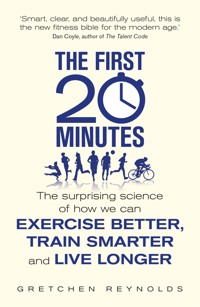
Discover the amazing restorative powers of chocolate milk on tired muscles, how running can actually be good for your knees and how even just 20 minutes of regular exercise can transform your health and well-being. Right now, modern science is revolutionizing the traditional workout. More is known about exercise, health and fitness than ever before, from how (and how much) we should be exercising, to the pros and cons of barefoot running and the effect music can have on a workout. In The First Twenty Minutes New York Times columnist Gretchen Reynolds has turned the key findings of cutting-edge research into practical, user-friendly advice to help you improve the way you exercise. Whether you are a sprinter or a marathon runner, whether your goal is weight loss or a faster 5k, this book provides evidence-based answers showing you how you can train more efficiently, recover more quickly and reap all the physical and mental benefits of an exercise regime specifically tailored to meet your individual needs.
Sie lesen das E-Book in den Legimi-Apps auf:
Seitenzahl: 418
Veröffentlichungsjahr: 2013
Das E-Book (TTS) können Sie hören im Abo „Legimi Premium” in Legimi-Apps auf:
Ähnliche



















Every effort has been made to ensure that the information contained in this book is complete and accurate. However, neither the publisher nor the author is engaged in rendering professional advice or services to the individual reader. The ideas, procedures and suggestions contained in this book are not intended as a substitute for consulting with a health professional. All matters regarding your health require medical supervision. Neither the author nor the publisher shall be liable or responsible for any loss or damage allegedly arising from any information or suggestion in this book.
Printed edition first published in the United States in 2012 as The First 20 Minutes: Surprising Science Reveals How We Can: Exercise Better, Train Smarter, Live Longer
Published in the UK in 2013 by
Icon Books Ltd, Omnibus Business Centre,
39–41 North Road, London N7 9DP
email: [email protected]
www.iconbooks.net
Published by arrangement with Hudson Street Press, a member of The Penguin Group (USA) Inc.
This electronic edition published in 2013 by Icon Books Ltd
ISBN: 978-184831-520-4 (ePub format)
ISBN: 978-184831-521-1 (Adobe ebook format)
Copyright © Gretchen Reynolds, 2012
All rights reserved.
No part of this book may be reproduced in any form, or by any means, without prior permission in writing from the publisher.
To Russell and Max, my training partners for life
A body in motion remains in motion, unless acted upon by an external force. A body at rest remains at rest.
—Newton’s First Law of Motion
Eating alone will not keep a man well; he must also take exercise.
—Hippocrates
CONTENTS
Title page
Copyright information
Dedication
Epigraph
Acknowledgments
Introduction: A Body in Motion
Chapter 1: The First 20 Minutes
Chapter 2: Stretching the Truth
Chapter 3: It’s Not About the Bites
Chapter 4: The Losing Battle
Chapter 5: What We Mean When We Talk About Endurance
Chapter 6: Give Me the Strength to Carry On
Chapter 7: When Bad Things Happen to Good Workouts
Chapter 8: How to Build a Better Brain
Chapter 9: Survival of the Fittest
Chapter 10: Pushing Back the Finish Line
Conclusion: Use It or Lose It
Index
Also available
ACKNOWLEDGMENTS
This book wouldn’t have been possible without the help of many people, especially the scientists who performed the experiments that I write about. Theirs is the hard and groundbreaking work, and I thank them wholeheartedly for patiently answering my many, basic, and sometimes inane questions. I particularly want to acknowledge the assistance and expertise of Dr. Dan Carey, who passed away while I was still working on the book. Thanks, too, to Mark Bryant, the founding editor of Play magazine at the New York Times, who suggested that I write a health and fitness column for the magazine; and to my other editors at the Times: Ilena Silverman, Gerald Marzorati, Laura Hohnhold, Tara Parker-Pope, and Toby Bilanow. Special thanks to my agent Sam Stoloff and my editor Meghan Stevenson, who kept the chapters flowing when I was afraid the spigot was dry. Finally, warm thanks to my family, by blood and marriage, who put up with my long hours, frequent absences, and whining.
INTRODUCTION
A Body in Motion
It’s become a truism to say that humankind was born to run, and perhaps some politicians were, though what proper and odd little children they must have been. For the rest of us, the notion is debatable. Consider the latest evidence. Not long ago, biologists from the University of Utah, together with zoologists from Friedrich Schiller University Jena, in Germany, and other researchers set out to study how humans move, and how divergent our locomotion is from that of, say, cheetahs or gazelles, who run so fluidly. The researchers fitted volunteers, most of them trained athletes in their twenties, thirties, or forties, with face masks that measured how much oxygen they were breathing and then had them alternately walk or run on treadmills.
Each of the volunteers was asked to run and to walk in three different ways: by landing either on their heels, on the middle of their feet, or on their toes. Some research in the past few years has suggested that humans run most efficiently, meaning with the least consumption of oxygen, when they land on the balls of their feet or on their toes. Efficiency in human movement is desirable, as it is in other forms of transport, because it means that you burn less fuel over a given distance. Like a fuel-efficient car, a more efficient human machine needs less energy to cover the same number of miles as an inefficient one. Fuel savings matters during evolution. Being able to amble long distances on less food than the next Homo sapiens could mean that you’d complete a long, stalking hunt and still have the wherewithal to undertake carnal relations later and pass your DNA on to the next generation. Part of the thinking behind the idea that humans are born to run is that running, particularly if you land on your toes, should be an efficient stride and that, employing it, we would have run easily for hours, chasing down our prey.
But in this study, running was not the most efficient human stride, not by a long shot. It didn’t matter whether a runner landed on his toes, the balls of his feet, or his heels. Running just wasn’t fuel efficient, the data showed. Walking was. By a sizeable margin, walking, especially when the athletes landed first with their heels, was the most physically economical way for human beings to move. This estranges us from much of the animal world. Gazelles rarely walk and don’t do it well. They bound madly, landing on their toes. But humans seem built to plod. “We are remarkably economical walkers,” the authors concluded. “We are not efficient runners. We consume more energy to run than the typical mammal our size.”
Conveniently, as it turns out, caveman-like hunts were probably conducted at a walking speed, anyway. When researchers recently followed a group of modern-day African hunters on a long, slow pursuit of their prey, the average speed was 3.8 miles per hour, a walking pace.
“This notion that all humans were born to run is unscientific,” says zoologist Karen Steudel, Ph.D., of the University of Wisconsin-Madison, who’s conducted a number of comparative studies of the evolution of human and animal locomotion. “The evolutionary record makes it clear that humans are born to be active,” she adds. Sitting in one place wasn’t an effective survival strategy when big cats and mammoths were around and food was mobile. “That’s all we know for sure at the moment,” she continues. “But ideas can change with new discoveries. Check back in a month.”
This is a book about your body in motion. It’s also a book about change, because what we are learning today about the moving body is itself a flying target. Exercise science has never been so yeasty. Every week brings a new discovery that undercuts another entrenched (and often beloved) exercise practice. Who once would have believed that massage would turn out not to help tired muscles to recover? Or that chocolate milk would? For years we were told it was impossible to drink too much water during a marathon, but overdrinking, it’s been proven, can kill. The litany goes on. Stretching is probably bad for your muscles, but running is good for your knees. Weight training makes you smart. Lucky underpants really work. Your genes might be the reason you’re so reluctant to work out in the first place. And humans are born to stroll.
It’s a fascinating time to own a body, and a perplexing one.
But, really, we shouldn’t be surprised that our understanding of the moving body is in flux. The body is an astonishingly complicated contraption. The machinations required just to lift your finger are boggling. Muscles interlace with nerves, tendons, ligaments, and bones. Collagen stretches against sarcomeres. Cartilage softens the rubbing of bones. The brain, initiating movement, is flooded with spidery feedback from muscles, eyes, skin, various of its own lobes, and other systems. Fluids move in and out of cells. Biochemical processes flare. The liver gets drawn in.
For many years, the specifics of this process were baffling. Scientists simply didn’t have the tools to determine some aspects of how the exercising body worked. Organs and bodily systems were inaccessible or inconvenient for study purposes.
But now, with the rapid advancements in microscopy, neurology, radiology, surgery, 3-D biomechanical imaging, and other fields, we can see into and measure the human body as never before. Consider what we’ve learned just about the brain in recent years. Sitting behind a dense, bony, protective skull, it didn’t, with standard imaging equipment, seem to be doing much, no matter how hard someone was thinking or how elaborately he was moving. But with the advent of functional magnetic resonance imaging (fMRI) machines, scientists can view, from outside, the brain’s operations—which portions are firing with electrical impulses during movement and which portions are remodeled by movement. Because, make no mistake, as the latest science absolutely assures us, no part of your body is static. If you move enough, your muscles change and grow. So does your mind. The brain initiates movement. But it is, in its turn, remade by movement. New cells are born; new vessels sprout. The same process operates body-wide. No cell in your body is unaffected by motion. Your very DNA is changed.
So, move. The state-of-the-art exercise science also points out, with increasing urgency, that inactivity is, for the human body, unnatural and unwise. Death rates rise when societies sit. Waistlines grow. Unhappiness spreads. By one recent calculation, life expectancy in the United States and Europe will drop in the coming decade, for the first time in modern history, in large part because people do not exercise enough (but also because we smoke and overeat).
So, if this book is partly an overview of what’s known right now about physical performance, it’s also—and perhaps even more accurately—a user’s manual. I hope it will allow you to take what’s being learned about the human body and put it into action, whether your aim is to break 3:30 in a marathon or to walk more briskly around the block. We all have questions about exercise, whether we’ve been working out for years or hope to start tomorrow. Do you have to follow a specific diet? Can you get fit with only a few minutes of exercise on any given day? What is an interval? Science is, with exhausting regularity, supplying new, tested, evidence-based answers to these and hundreds of other questions.
We don’t, after all, have to be athletes to want to know how best to move. We need only to listen to the voice bred deep into our blood and bones that says, “Hey, let’s go for a walk. The antelope herds are moving.” (You can ignore that last part.) The body wants to move. Go with it. And the information about intervals, by the way, can be found on page 13.
1
The First 20 Minutes
Do you have many aches and pains? Is your mood generally good? How much time do you spend jogging? Do you ever visit the gym? Periodically, the good folks at the Division of Adult and Community Health, at the Centers for Disease Control and Prevention, in Atlanta, check in with Americans to see how they’re feeling about their health, asking them such questions as part of the ambitious and sweeping telephone poll known as the Behavioral Risk Factor Surveillance System or, more familiarly, the BRFSS (gesundheit!). This survey asks Americans about their physical activities, including whether they engage in any exercise, and about how they subjectively feel about their “health-related quality of life.”
After the raw data from one of the recent BRFSSs became available, CDC researchers decided for the first time to cross-correlate the information about, on the one hand, people’s activity levels and, on the other, their health-related quality of life, on a monthly basis. The researchers had anticipated, as they wrote in their published report, that “physical activity” would be “associated with increasing benefits to health,” both physiological and emotional, although as they also recognized, the “dose-response relationships between physical activity and many health benefits remains unclear.” In other words, the researchers felt confident that exercise was good for you, but they weren’t quite sure how much was necessary to receive benefits.
Their report, published in Medicine & Science in Sports & Exercise, the official journal of the American College of Sports Medicine, somehow managed to muddy the issue further. They found that of the 175,850 adults whose health information was parsed, 18 percent engaged in effectively zero planned physical activity (i.e. exercise), while 66 percent completed at least 30 minutes a day of moderate physical activity (such as walking or easy bicycling) and 42 percent said they exercised vigorously (jogging, for instance) at least once or twice a week for 20 minutes or more. (Many in this group were also moderate exercisers on other days.) These are more impressive numbers, in terms of activity, than in many recent studies of Americans. In those, particularly when the studies relied on hard measurements, such as pedometers, to gauge activity, the percentage of Americans who were even moderately active on most days of the week barely reached 50 percent.
The more eye-opening BRFSS data, though, came from people’s estimates of their health-related quality of life in the month preceding the survey. People who exercised moderately reported fewer “unhealthy” days, during which they felt fatigued, unhappy, ill, anxious, achy, or otherwise “off,” than people who didn’t exercise. Almost 30 percent of the sedentary respondents, in fact, said they’d felt puny on at least 14 days in the prior month. Far more surprising, though, was that more than 20 percent of the people who said they worked out vigorously multiple times during the week also reported 14 or more “unhealthy days” in the month. Specifically, since this was a study overseen by health statisticians, the scientists wrote that “a poor HRQOL [health-related quality of life] was always more likely among those with no physical activity, usually more likely among those who had daily (7 days a week) activity, almost always more likely for those with activity of short duration (less than 20 minutes a day) and more likely more than half the time for those with very long duration (more than 90 minutes a day).”
Or, to be blunt, the issue of just how much exercise people need and how much may be either too little or too much is, from a scientific standpoint, a big fat mess.
Not Stepping Up
There was a time when the question of how much exercise a person required was moot. The cows needed seeing to; the corn needed tending. As we all know, prior to World War II, most Americans lived outside cities and were active almost all the time, whether they wished to be or not. A recent study of activity levels among a group of modern Old Order Amish families, whose lifestyles are considered representative of a past America (apart from the boomers), found that Amish men spent more than 10 hours a week in vigorous activity, on top of almost 43 hours a week of moderate activity and 12 hours a week of walking. They averaged almost 18,500 steps per day, or about nine miles of walking every day of the week except Sunday. The Amish women were relatively slothful, covering only about 7.5 miles per day, on average.
By comparison, according to 2010 statistics, most American adults take about 5,000 steps a day, which pales in comparison not only with the Amish but also with activity levels in other countries. The happy-go-lucky Australians average about 9,700 steps a day, the highest total in the Western world. The Swiss, number two, yodel through 9,650 steps a day and, despite the ready availability of Lindt chocolate, have a national obesity rate of barely 8 percent. In America, that rate is 34 percent and rising.
But while those figures make it clear that most Americans don’t move enough, they don’t tell us how much each of us should be moving, because, frankly, no one really knows. “Science and common sense tell us that, without a doubt, it’s unhealthy to sit and be sedentary all day,” says William Haskell, Ph.D., an emeritus professor of exercise physiology at Stanford University and one of the country’s experts in exercise dosing and longevity. “But precisely how much exercise is required for health, fitness, or athletic performance is difficult to determine.”
Health, fitness, and athletic performance are, after all, distinct aims with distinct demands, and each of us must resolve, for ourselves, which we’re trying to achieve. We also must decide how much we’re willing to do, realistically, to reach those standards. Health may seem the most achievable goal, but in reality health is a slippery term, defined often by its absence. Having high blood pressure, rotten cholesterol numbers, too much blood sugar, a wide waist, or actual illnesses, from colds to cancer, is un-healthy. Not experiencing those same conditions is good health. Activity can, if chosen wisely, improve health.
Fitness is something else, although health and fitness are often automatically joined together. If you ask an exercise physiologist, fitness refers to cardiovascular or cardiorespiratory fitness (the two terms are almost but not quite synonymous—cardiorespiratory includes measures of lung function—but close enough). Physical fitness in this sense is a measure of how efficiently you transport oxygen to laboring muscles and maintain movement. A physically fit person has strong lungs, a robust heart, and sturdy muscles. She may or may not be clinically healthy. Some people blessed with high marks on fitness can have miserable cholesterol profiles or rotund waistlines. A surprisingly large portion of any given person’s biological fitness is, in fact, innate. According to several large recent studies, 30 percent or more of a person’s cardiovascular fitness may be genetic. You are born either more or less physically fit than the next person. But how you augment or diminish that inheritance is up to you.
Finally, there’s athletic performance, an ambition unto itself, capable, in some instances, of mitigating the other two. Walking three miles a day on a regular basis will almost certainly improve most people’s health and fitness. Running four marathons in a year might not. Unless it does. “There is considerable variability in people’s responses to exercise, at any dose,” Dr. Haskell says.
Which raises the most central and pressing question in this entire book: Yes, fine, all those studies are very interesting; but what about me?
How Low Can You Go?
Recently researchers in Scotland trawled through a vast database of survey data about the health and habits of men and women in that fair land, similar to the BRFSS survey. In this case, the scientists were looking to see how much exercise was needed to keep the average Scotsman or -woman from feeling dour (or in technical terms, experiencing “psychological distress”). Scots are not famed for being blithe-hearted, and many of us might have expected that firm measures and lots of sweat would be required. But as it turned out, researchers found that a mere 20 minutes a week—a week!—of any physical activity, whether vigorous or easy, improved the respondents’ dispositions. The activities in question ranged from organized sports to walking, gardening, and even housecleaning, the last not usually associated with bliss. The researchers found that, in general, more activity did confer more mental-health benefits and that “participation in vigorous sports activities” tended to be the “most beneficial for mental health.” But overall their conclusion was that being active for as little as 20 minutes a week was sufficient, if your specific goal happened to be a sanguine temper.
The question of just how little activity people can get away with has preoccupied exercise scientists in recent years, in part because so many of us have proven so resistant to any exercise. There was a time, in the 1970s and 1980s, when most exercise guidelines, including those from the American College of Sports Medicine (ACSM) and other groups, aimed at athleticism; they recommended that people engage in prolonged, uninterrupted, vigorous activity for an hour or more, multiple times a week. Basically, people should run, swim, or bicycle, the recommendations suggested, and they should do so hard, and the more the better.
Some people responded. That was the height of the 1970s running boom. Then in 1984, Jim Fixx, the author of The Complete Book of Running, died at age 52 of a “fulminant heart attack” while marathon training. Running didn’t kill him. He’d been afflicted, an autopsy showed, with intractable heart disease, probably congenital. But some people gleefully and ghoulishly pointed to his death as a reason to remain couch-bound. Even more Americans, though, hadn’t needed such an excuse. They had not been inspired to exercise in the first place, at least not hard, and resolutely continued not to.
By the 1990s, formal exercise recommendations, bowing to human nature, had softened, and experts were suggesting that less-vigorous exercise might be sufficient. In 1995, the ACSM and the CDC jointly announced that “Every U.S. adult should accumulate 30 minutes or more of moderate-intensity physical activity on most, preferably all, days of the week.”
But there still was little science behind any exercise guidelines, including that one. So in the mid-2000s, the U.S. Department of Health and Human Services convened an advisory committee of scientists, including physiologists, cardiologists, epidemiologists, nutritionists, and others, and asked them to scrutinize decades of studies about the benefits—and risks—of exercise and to formulate new, evidence-based guidelines. The result was the massive 2008 Physical Activity Guidelines for Americans, which began on a cautionary note. The “amount of physical activity necessary to produce health benefits cannot yet be identified with a high degree of precision,” the authors wrote.
Oh. Great.
But still the scientists had persevered, wading through studies involving animals and humans, looking at the impacts that various types and amounts of activity have on people’s risks for heart disease, obesity, diabetes, cancer, depression, and premature death in general. In some studies cited in the final report, exercise conferred little if any disease-fighting benefits. In others, the benefits kicked in only if the exercise was quite strenuous. In still others, a gentle stroll a few times a week was enough to lessen the risk of many diseases and early death.
Despite the inconsistent results, the advisory committee ultimately reached a consensus about just how much—and how little—exercise most of us should be getting, at least for health purposes. The magic number, the report announced, was a minimum of 500 MET minutes of exercise a week.
So, get to it.
Of course, unless you’re an exercise scientist, you probably don’t know what a MET minute is. A single MET, or Metabolic Equivalent of Task, is the amount of energy a person uses at rest. Two METs represent twice the energy burned at rest; four METs, four times the energy used at rest; and so on. Walking at three miles per hour is a 3.3-MET activity, while running at 6 miles per hour is a 10-MET activity. The committee concluded that a person needs to accumulate a weekly minimum of 500 MET minutes of exercise, which does not mean 500 minutes of exercise. Instead, 150 minutes a week (two and a half hours) of a moderate, three- to five-MET activity, such as walking, works out to be about 500 MET minutes. Half as much time (an hour and 15 minutes per week) spent on a 6-plus MET activity such as easy jogging seems, according to the committee, to have similar health effects.
What this means, in practical terms, is that according to the best available science, you should walk or otherwise work out lightly for 150 minutes a week in order to improve your health. This report and other, newer science show that you can split these 150 minutes into almost any chunks and still benefit. In a nifty study of aerospace engineers (virgin exercisers, one and all), the men were assigned to briskly walk or gently jog for 30 minutes a day in either a single, uninterrupted half-hour bout or in three 10-minute sessions spread throughout the day (10 minutes in the morning, 10 minutes at lunchtime, and 10 minutes in the evening). At the end of eight weeks, both groups of engineers had improved their health and fitness profiles, without major differences between the groups. All had wound up with lower heart rates, better endurance on a treadmill test, and a few less pounds.
So, too, when separate groups of lab rats recently were allowed either leisurely to rodent-paddle in a laboratory water feature for three hours or were required to increase the tempo until they were swimming quite vigorously for 45 minutes, the animals afterward uniformly displayed significant improvements in their bodies’ ability to regulate blood sugar, a key measure of health.
It hadn’t mattered how they’d accumulated the exercise, only that they had.
The Overload Principle
There is a catch. The person who is likely to benefit the most from increasing exercise time is probably not you, but instead your pudgy uncle Clarence or that pasty kid next door who’s never met an online orc he couldn’t slay. “The greatest health benefit from exercise comes from getting up off the couch,” says exercise physiologist Timothy Church, Ph.D., a professor at the Pennington Biomedical Research Center, in Baton Rouge, Louisiana, who has studied exercise dosing extensively. “Everything after that is incremental.”
The health benefits of activity follow, in fact, a breathtakingly steep curve at first. “Almost all of the mortality reductions are due to the first 20 minutes of exercise,” says Frank Booth, Ph.D., a professor of biomedical sciences at the University of Missouri and much-cited expert on exercise and health. “There’s a huge drop in mortality rates among people who haven’t been doing any activity and then begin doing some, even if the amount of exercise is quite small.” In a recent meta-analysis of studies about exercise and mortality conducted by scientists at the University of Cambridge and others, the authors found that in general a person’s risk of dying prematurely from any cause plummeted by nearly 20 percent if he or she began to meet the current exercise guidelines of 150 minutes of moderate activity per week, compared with someone who didn’t exercise.
If, however, someone almost tripled that minimum level, completing about 90 minutes a day of exercise four or five times a week, the researchers wrote, his or her risk of premature death dropped still further, but only by another 4 percent.
He or she might, however, be well on the way to enviable fitness. That’s important to bear in mind, especially for those, like me, who are fairly confident that we sit outside the bounds of mortality and don’t need to obsess about premature death but really, really want to trounce our spouses at the next community Fun Run. Any amount and type of exercise will probably improve your health somewhat, but it won’t necessarily make you physically fitter or athletically more competitive. Thirty minutes of walking five times a week is not going to lower your personal best time in a 5K.
Walking three minutes at an extremely brisk pace, though, followed by three minutes of slower striding, with that set repeated five or six times, just might. There is a famous fitness principle known as “overload,” which, according to a recent commentary in the well-regarded Journal of Applied Physiology, is “the one overriding truth in exercise physiology.” Encouraging, isn’t it, that there is at least one?
Overload is not a complicated idea. The word encapsulates the concept. Overload simply means that, as the commentary explains it, “improved athletic performance is the result of systematic and progressive training of sufficient frequency, intensity, and duration.” You can’t keep on doing the same old workout and improve athletically. The body gets used to a certain level of activity with impressive rapidity. So you have to ratchet things up.
You’ve no doubt experienced overload in action. Maybe you used to puff and struggle on the elliptical machine after 20 minutes and soon felt obliged to quit for the day. Then after a few weeks those same 20 minutes became easy. From then on, you could, should you so choose, repeat that same undemanding workout—with unchanged time, distance, and resistance level—for the rest of your life and continue to accrue health benefits.
But if you wanted to become fitter, faster, or in general tougher, you’d have to dial up the resistance or prolong the workout. You’d puff and struggle again, and slowly grow used to the new workload. You would have overloaded your cardiovascular and other systems, let them readjust, and from a fitness and athletic standpoint, improved. Good for you.
But how? The practical options are, you may be pleased to know, many. It’s never been difficult to overload oneself in this modern world. Google Calendar can do it for you. But physiologically, you achieve overload by increasing the number of times you work out in a week, the length of time each workout lasts, or the intensity of any given workout. If you enjoy walking and currently schedule 30-minute walks five times a week, you can lengthen each session to 35 minutes, then 40. As a general rule, you shouldn’t increase your training volume by much more than 10 percent a week, to avoid injury. But exercise of low intensity, such as walking, rarely results in injury in the first place.
You also can increase the intensity of the same workout, a concept that many of us know and dread as intervals. Intervals are typically short, sharp, unpleasant bouts of exercise performed at an intensity as close to your maximum as you can stand, followed by a rest period and then repeated. They definitely result in overload and occasionally nausea among athletes, many of whom pepper several interval sessions into a week’s worth of competitive training.
The latest science suggests, though, that benign versions of interval training can provide significant performance benefits even to walkers, recreational athletes, or any of us who wish to improve athletically but not to vomit. In a cheering, ongoing experiment in Japan, middle-aged and elderly walkers were assigned to one of two programs. Some undertook a low-intensity regimen, during which they strode 8,000 steps (or between three and four miles, as measured by pedometers) at an intensity equal to about 50 percent of their maximum heart rates—nice, easy walking. The rest practiced intervals, which consisted in their case of three-minute bursts of power walking, during which they’d raise their heart rates to about 70 percent of their predetermined maximum. This was followed by three minutes of striding at barely 40 percent of their maximum heart rates, then three minutes hard again, and so on, until they’d completed at least five sets.
Both groups walked for five months. At the end, all of the walkers had improved their blood pressure readings. But only the interval group had developed measurably greater leg muscle power, as determined by weight-training machines, and higher maximum oxygen capacities. They had grown significantly more physically fit than the strollers. The intervals had done their job.
The regimen can be so effective, in fact, that it has the potential to provide all of the exercise that you need in only a few minutes per week. Those minutes, though, will not be pleasant.
The Four-and-a-Half-Minute Workout!
In a laboratory at the National Institute of Health and Nutrition, in Japan, scientists watched with interest as laboratory rats paddled furiously around the periphery of a shallow barrel filled with warm water. There was one barrel for every rat. The swimmers had been at it for hours. Swimming is a reliable way for scientists to test and increase rodents’ aerobic fitness, because most rats aren’t very good at it. There is no placid backstroke for a rat. It splashes and slaps and uses plenty of energy. A prolonged session of paddling can tax a rat.
After three hours, the scientists scooped the rats out of the water and let them rest quietly for 45 minutes. Then they lowered the rats back into the barrel and had them swim for an additional three hours. Afterward, the researchers tested each rat’s leg-muscle fibers and found that they had begun to show biochemical, molecular changes that indicated that the rats were increasing their bodies’ endurance and fitness.
Meanwhile, a second group of rats was motoring through vastly shorter swimming sessions. These rats, wearing tiny weighted vests equivalent to 14 percent of their body weight (to make the swimming more strenuous), windmilled around the barrels for 20 seconds and were then lifted out and allowed to rest for 10 seconds. They completed 14 of these vigorous mini-swims, for a grand total of about 4.5 minutes of swimming. When the scientists biopsied their muscle fibers, they found the same molecular changes as in the long-distance swimmers, and more of them. Four and a half minutes of intense exercise had yielded, it would seem, virtually the same aerobic benefits as six long hours in the water.
The concept of “high-intensity interval training,” or HIIT, is relatively new and quite different from the old-school approach to intervals that most of us remember from high school track. With HIT, you don’t intersperse interval sessions on one day with longer workouts on others. You only do intervals, day after day, finishing the hard work in a matter of minutes. “There was a time when the scientific literature suggested that the only way to achieve endurance was through endurance-type activities,” such as long, relatively easy runs or bike rides or, perhaps, six-hour swims, says Martin Gibala, Ph.D., a professor at McMaster University in Canada, who’s been at the forefront of HIIT science.
But ongoing research from Dr. Gibala’s lab proves otherwise. In one study (which was the most e-mailed document on the website of the Journal of Applied Physiology for almost two years), Dr. Gibala and his colleagues had a group of healthy college students ride a stationary bike at a sustainable pace for between 90 and 120 minutes. Another set of students grunted through a series of short, strenuous intervals: 20 to 30 seconds of cycling at the highest intensity the riders could stand. “We describe it as an ‘all-out’ effort,” Dr. Gibala says, which requires straying “well out of your comfort zone.” After resting for 4 minutes, the students pedaled hard again for another 20 to 30 seconds, repeating the cycle 4 to 6 times (depending on how much each person could stand), “for a total of two to three minutes of very intense exercise per training session,” Dr. Gibala says.
Each of the two groups exercised three times a week. After two weeks, both groups showed almost identical increases in their endurance (as measured in a stationary bicycle time trial), even though the one group had exercised for six to nine minutes per week, and the other for about five hours each week. Both groups, in biopsies, showed dramatic molecular changes deep within their muscle cells indicating increased physical fitness. In particular, they had far more mitochondria now, the microscopic organelles that allow muscles to use oxygen to create energy. Six minutes or so a week of hard exercise (plus the time spent warming up, cooling down, and resting between the bouts of intense work) had proven to be as good as about 300 minutes of less strenuous exercise for achieving basic fitness.
Sadly, those six minutes had to hurt.
Jogging Trumps Berry Picking
The health benefits of vigorous exercise can be substantial, though, if that’s sufficient compensation. Researchers in Finland, for instance, recently concluded that if you wish to ward off lung or gastrointestinal cancer, you should spend your leisure time jogging instead of picking berries, gathering mushrooms, or fishing. They based that finding on extraordinarily detailed health diaries from a group of 2,560 middle-aged Finnish men who have been keeping records of their daily activities for the past two decades and who reside in a nation where berry picking and mushroom hunting regularly occur.
When the study began, none of the men had cancer. Seventeen years later, 181 had died of the disease. Controlling for cigarette smoking, fiber and fat intake, age, and other obvious health-related variables, the researchers determined that activity had significantly affected the men’s cancer risk. The most physically active were the least likely to develop or die from malignancies, particularly of the gastrointestinal tract or the lungs.
And intensity was key. More arduous exercise was more protective. Jogging was the most strenuous activity studied; fishing among the least. The men who jogged or otherwise exercised fairly intensely for at least 30 minutes a day had “a 50 percent reduction in the risk of dying prematurely from cancer,” says Sudhir Kurl, M.D., medical director of the School of Public Health and Clinical Nutrition at Finland’s University of Kuopio and one of the study’s authors.
More technically, the men whose METs reached at least five almost every day were the least likely to die of cancer, especially of the lung or the gastrointestinal tract. That result jibes neatly with the findings of a large study of women and colon cancer. In it, women who walked briskly for five to six hours a week were much less likely to develop the disease than those who strolled for 30 minutes per week. And in the bogglingly comprehensive 2008 national Physical Activity Guidelines Advisory Committee report prepared for the secretary of health and human services, which includes a chapter about exercise and cancer, the authors concluded that “one hour per day of moderate or vigorous activity produces greater reduction in risk” than the two and a half hours of moderate exercise per week that is currently recommended.
The Finnish researchers admit that they don’t know just how or why brisk exercise reduces cancer risk or why only some types of cancer seem to be affected. Exercise speeds the emptying of the colon, which may reduce the amount of time that carcinogens linger in the organ. Strenuous and frequent exercise also can affect the production of sex hormones in men and women, which could have implications for breast and prostate cancer. Even the panting involved in hearty exercise might somehow move carcinogens out of the lungs, the researchers point out.
But it remains difficult to tease out the specific molecular effects of regular, taxing exercise from the generally healthy habits of exercisers. “Lifestyle factors” and the luck (good and bad) of genetics could be skewing the results, the authors admit. Still, there is food for thought in their findings. “At least moderately intense physical activity is more beneficial than low intensity physical activity in the prevention of cancer,” the authors conclude. Forget the romantic imagery. For this purpose, jogging trumps berry picking.
Too Much Much-ness?
Only you can decide, though, how much discomfort you wish to endure to become healthy and fit or how little time you can devote to the process. Only you can decide if fitness, with or without competition, is ultimately your goal.
And it’s always possible to do too much. “The benefits of exercise appear to be curvilinear,” Dr. Booth says. The profits rise precipitously when you first wade into exercise, level off as you do more, and, at some point, drop if you overdo things, although just where this break point occurs is “likely to differ from person to person,” Dr. Booth says. Overuse injuries are the most common symptom that you’re overdoing it. They are, after all, overuse injuries, which develop from accumulating wear and tear. (Acute injuries result from sudden, one-off accidents or incidents such as twisting a knee during soccer, treading in a hole while running, or clobbering yourself with a stop sign while reading a book walking down the street, and that only happened to me once.) A study of 5,000 adults enrolled in the long-term Aerobics Center Longitudinal Study overseen by the Cooper Institute, in Dallas, found, unsurprisingly, that the more people exercised, the more likely they were to wind up hurt. That sounds like “duh” science, to be sure, but the conclusion is often ignored by avid athletes, who’ll continue through recurrent, nagging muscle twinges until they develop a severe injury.
Or they may exercise themselves into a sickbed, as a provocative series of recent studies implies. In one, researchers divided lab mice into two groups. The first group rested comfortably in their cages. The others ran on little treadmills until they were exhausted. This continued for three days. The mice were then exposed to a flu virus. After a few days, more of the mice that had exhausted themselves running came down with the flu than the control mice. They also had more severe symptoms.
Likewise, when other scientists infected mice with a particularly virulent type of mouse flu and then had them either rest, jog slowly for 20 or 30 minutes, or run flat-out on a treadmill for two and a half hours, repeating the sessions for the next three days, the results were telling. The running mice were hardest hit by the flu. About 70 percent of them died, while only half of the sedentary mice expired, and a mere 12 percent of the gently jogging mice passed away. Meanwhile, inside the running mice, scientists found evidence of significant perturbations in their immune systems. In both mice and men, viruses can evoke an increase in immune cells that induces inflammation, a bodily defense. But if the inflammation continues for too long, it becomes counterproductive. In the running mice, cells that would normally have eased the inflammation somehow had been muted and didn’t respond fully. The inflammatory process flamed out of control. The mice died.
Moderate exercise, on the other hand, had improved the mice’s inflammatory cell balance. They were the healthiest and fittest animals in the lab.
Broken Hearts
At the extremes of exercise, then, there can be undesirable consequences. And among true outliers, those consequences can involve the heart. It is, after all, a muscle and, as such, potentially prone to overuse. Recently, British researchers looked closely at the heart health of a group of lifelong, seriously competitive male athletes. All of their subjects had been or were British national team distance runners or rowers, or were members of the extremely selective 100 Marathon Club, which admits runners who, as you might have guessed, have completed at least a hundred marathons. The men had trained and competed throughout their adult lives and still worked out strenuously. About half were past age 50 and the rest were relative striplings, between 26 and 40. The scientists also gathered a group of 20 healthy men over 50, none of them endurance athletes, for comparison.
The different groups underwent a sophisticated new form of magnetic resonance imaging of their hearts that can spot very early signs of fibrosis, or scarring, within the heart muscle. Fibrosis, if it becomes severe, often leads to stiffening or thickening of portions of the heart, contributing to irregular heart function and, in the worst cases, heart failure.
None of the younger athletes or the older nonathletes had fibrosis in their hearts. But half of the older lifelong athletes showed some heart muscle scarring. The affected men were, in each instance, those who’d trained the longest and hardest. None were experiencing any symptoms. But spending more years exercising strenuously was associated with a greater likelihood of a scarred heart.
Another study using laboratory rats provides some possible explanations for why. In the study, Canadian and Spanish scientists prodded young, healthy male rats to run at an intense pace, day after day, for three months, which is the equivalent of about ten years in human terms. The training was meant to mimic years of serious marathon training in people, says Stanley Nattel, M.D., a cardiologist at the Montreal Heart Institute Research Centre and one of the authors of the study.
The rats had started out with normal hearts. But after their long, hard marathon training, scans showed that most of the rodents had developed scarring in their hearts and some structural changes similar to those seen in human endurance athletes. The researchers could induce arrhythmias, or disruptions of the heart’s natural electrical rhythm, much more readily in the running rats than in a control group of unexercised animals. Thankfully, when the animals stopped running, their hearts returned almost to normal within eight weeks. By and large, the fibrosis disappeared.
Should longtime marathoners worry, then, about the state of their hearts? At the moment, it’s impossible to say. Too many factors remain unknown, including genetics, other health habits, and luck. “Let’s say we ask a hundred people, all the same age, the same gender, to start a marathon training program at the age of 20 years,” says Paul Volders, M.D., a cardiologist at Maastricht University, in the Netherlands, who’s studied athletes’ hearts. If the runners continue their training uninterrupted for 30 years and scientists then scan their hearts, he continues, “it is very likely and, in fact, one may say, it’s a certainty that there will be major differences in the tissue of the chambers of the heart between these people.” For some, the changes will be beneficial; for others, probably not.
If you are a lifelong marathon runner or other serious endurance athlete and your heart occasionally races, which could indicate arrhythmia, or in any other unusual ways draws attention to itself, Dr. Nattel says, consult a doctor.
But, realistically, most of us do not need to fret about exercise-induced cardiac fibrosis. “Most people just run to stay in shape, and for them, the evidence is quite strong that endurance exercise is good” for the heart, says Paul Thompson, M.D., the chief of cardiology at Hartford Hospital, in Connecticut, and an expert on sports cardiology. If you exercise regularly and currently have no heart symptoms, “I think it’s safe to say that you should keep it up,” he continues.
“How many people are going to join the 100 Marathon Club?” he asks, or undertake a comparable amount of training? “Not many,” he says. “Too much exercise has not been a big problem in America.”
How Much and What Kind of Exercise Do You Need? Some Hints
1. Take This Quiz.
It consists of a single question, courtesy of Dr. Frank Booth, one of the country’s leading experts on exercise dosing. “Do you want to live to be a hundred?” Dr. Booth asks. Since we both know that you do, you’ve now established a rationale for using exercise to improve your health. “Being active is the best, easiest, and cheapest way to decrease all-cause mortality and increase functional life span,” Dr. Booth says. “People who don’t exercise are at greatly increased risk of dying earlier than they need to.”
2. Got Health?
If enhanced physical and emotional well-being—i.e. health—and a centenarian’s birthday party are your primary goals, then the current national exercise guidelines, issued in 2008 by the Department of Health and Human Services, apply to you. They suggest:
a. 150 minutes (2 hours and 30 minutes) of moderate aerobic activity each week, such as brisk walking or lap swimming. Or
b. 75 minutes (1 hour and 15 minutes) weekly of more vigorous aerobic activity, such as running. Plus
c. Weight training at least twice a week, to ensure that all muscles are healthy.
You can partition the sessions in whatever way works for you. Walk for 30 minutes a day 5 times a week, or divide the walks into 15-minute blocks and go twice a day. The best science suggests that the body doesn’t really care.
3. Want More?
If you have ambitions beyond glowing health; if, essentially, you are an athlete—which does not mean that you must compete, only that you ache to be a little faster or better at your chosen activity—you will have to push your body somewhat. You must overload the musculoskeletal and cardiovascular systems in order to improve your fitness and performance. You can do this with whatever type of exercise you already enjoy. Just do it harder than normal sometimes. An interesting study of walking conducted a few years ago divided a collection of about 500 adults into multiple groups. All walked for 30 minutes at a time, but at differing intensities, based on their heart rates, or for different frequencies throughout the week. The group that walked at a pace equal to about 70 percent of their maximum heart rate, meaning quite briskly, had by far the greatest increase in physical fitness, compared with the groups that walked at lower intensities, even if they scheduled more walking sessions during the week. At the easy intensity, though, those who walked more often (six or seven sessions a week) wound up with better measures of aerobic fitness than those who walked four times a week. So to improve your physical fitness and performance:
a. Occasionally increase the intensity or frequency of your usual workouts.
b. Wear a heart rate monitor if you’d like, but multiple recent studies have shown that people are often better judges of their workout’s difficulty than even the best gear. Maximum heart rates vary wildly, despite what those charts at health clubs suggest, and an exact calculation of yours would demand a treadmill test at an exercise physiology lab. Trust your intuition.
c. If you’re breathing hard enough that you can barely converse during a workout, you’re exercising vigorously.
4. Make It Snappy.
You can compress all of your exercise into a few minutes a week. This approach improves both health and fitness in a very short time frame but is not for the fainthearted. (Which reminds me: If you haven’t been exercising regularly until now, consult a doctor about your heart and other health issues before beginning, obviously.) HIIT or high-intensity interval training requires that all of your exercise, not just some, be intervals. Pioneered by Dr. Martin Gibala at McMaster University, in Canada, the original studies of HIIT involved grueling, abbreviated workouts conducted at a pace beyond each person’s supposed maximal heart rate for 30 seconds at a time on specialized stationary bicycles known as Wingate ergometers. Most of us don’t want to work that hard and have never heard of a Wingate. So recently Dr. Gibala tested a slightly more humane and practicable version of HIIT. The results were gratifying. When a group of young, untrained men practiced this new HIIT for two weeks, they significantly increased the molecular markers associated with aerobic fitness. Others have found that the HIIT protocol also lowers blood sugar and improves blood pressure control, meaning it’s good for your health. To employ this greatest HIITs version, you need only a normal stationary bicycle, some sense of your maximum heart rate, and grit.
a. Warm up with at least 3 minutes of easy cycling.
b. Then HIIT it, with intervals consisting of 60 seconds of almost all-out pedaling, equivalent to almost 100 percent of your maximum heart rate. Basically make yourself as uncomfortable as you




