


29,99 €
Mehr erfahren.
- Herausgeber: John Wiley & Sons
- Kategorie: Fachliteratur
- Serie: At a Glance
- Sprache: Englisch
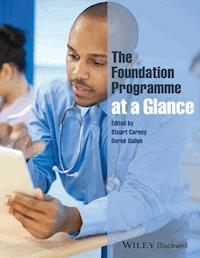
Providing an overview of the formative years of a junior doctor’s career, The Foundation Programme at a Glance consolidates the generic and condition-specific skills required to excel in this stage of training. Taking a simple and holistic approach to providing support for junior doctors, it integrates text and image content to suit all learning styles.
Sections include advice on making the most of your training, tips on good clinical practice, communication, and common presentations and conditions. Edited by the National Director and Deputy National Director of the UK Foundation Programme, each section is written by experts in their respective fields, presenting insights into the programme with unrivalled authority.
The Foundation Programme at a Glance:
• Uses diagrams, line drawings and flow charts to clearly illustrate concepts
• Follows the current Foundation Programme curriculum
• Integrates theory and practice
This comprehensive and practical volume contains all the vital information you need to reach excellence during the foundation years, and to get the most out of your time on the programme.
Sie lesen das E-Book in den Legimi-Apps auf:
Seitenzahl: 347
Veröffentlichungsjahr: 2013
Ähnliche


















Contents
Cover
QR code
Title Page
Copyright
List of contributors
Preface
Acknowledgements
List of abbreviations
How to use your textbook
Features contained within your textbook
The anytime, anywhere textbook
Chapter 1: Shadowing and induction
Shadowing and induction
Learning how to do your first F1 job
What you need to know
Who else should you meet?
Chapter 2: The e-portfolio – how to plan, manage and evidence your learning
What is the e-portfolio for?
Who has access to my e-portfolio?
What do I put in it?
Chapter 3: Supervised learning events and assessments
Supervised learning events (SLEs)
Assessments
How to use feedback
Chapter 4: Reflective learning
What is reflection?
Why is it important?
Using the e-portfolio to help your reflective practice
A model for reflection
What examples can you use in your reflective log
Chapter 5: Managing your medical career
What should I aim for in my medical career?
Career discussions and where to find career support
Exploring options in the foundation programme
Other career issues and changes to plan
Chapter 6: Applying to specialty training
Exploration of the options
Career structure of your chosen specialties
Application process timelines
Interview/selection process
Applicant etiquette
Less than full time (LTFT) training
Myths about speciality training applications
Chapter 7: Quality improvement and clinical leadership
What is quality improvement?
Improving healthcare for the benefit of patients
Leading and implementing changes
Chapter 8: Quality improvement projects
Plan, do, study, act (PDSA)
Audit
Chapter 9: Breaking bad news and handling complaints
Breaking bad news
Handling complaints
Chapter 10: Assessing capacity and informed consent
What is mental capacity?
Principles
Supporting patients to make decisions
Two-stage test of mental capacity
Acting in the patient's best interests
Chapter 11: Handover and communicating with colleagues
Effective communication with colleagues
Safe handover
Leadership and communication
Chapter 12: Communication between primary and secondary care
Written communication
Discharge letters
Referral letters and internal referrals
Clinic letters
Chapter 13: Introduction to evidence-based medicine
What is evidence-based medicine?
Why is it important?
How to practice EBM – the five steps
Chapter 14: Critical appraisal of randomized controlled trials
What is critical appraisal?
Is the RCT applicable and valid?
Are the results important?
Is it a poor quality study or a poorly reported study?
Chapter 15: Critical appraisal of systematic reviews and meta-analyses
Question – does it ask a clearly focused question?
Find – did it find all the best evidence?
Appraise – were the studies critically appraised?
Synthesis – were the results appropriately combined?
What could you tell your patient?
Chapter 16: Making the most of guidelines and protocols
What is the difference between a guideline and protocol?
How to find guidelines and protocols
How to critically appraise a guideline or protocol
How to use guidelines and protocols
Chapter 17: Running a teaching session and presentation skills
Maximising learning
Choosing the right media
Length
Emphasize key messages
Chapter 18: Assessment and feedback
Assessment methodology
Assessment tools
Assessment demonstrating cause for concern
Feedback
Chapter 19: Assessing and managing the acutely ill patient
Identifying the unwell patient
Approaching the acutely ill patient
Initial assessment
When should I call for help?
Chapter 20: Rational prescribing
First steps
Prescribing
Treatment
Compliance
External effects on prescribing
Drug reactions
Chapter 21: Medical record keeping
Why keep medical records?
What is included in medical records?
Who contributes to medical records?
What information should be recorded?
What should not be recorded in the notes?
Confidentiality
Who can view medical records?
Chapter 22: Time management
How can I maximize my time?
Protected time
Reference
Chapter 23: Fluid management
Normal body fluids
Administration and monitoring of fluid replacement
Chapter 24: Blood transfusion
Blood transfusion
Managing transfusion reactions
Reference
Chapter 25: Discharge planning
Why is discharge planning important?
What is discharge planning?
What is the foundation doctor's role in discharge planning?
How is a discharge planned?
Early supported-discharge teams
Who can discharge a patient?
Chapter 26: Nutrition
Specific malnutrition (vitamin and mineral deficiencies)
Nutritional support
Chapter 27: Health promotion and public health
Alcohol
Smoking
Drugs
Diet and nutrition
Wider public health issues
Chapter 28: Do not attempt CPR decisions
Ethical and legal considerations
When to consider making a DNACPR decision
Discussions about CPR
Practical Issues
Chapter 29: Palliative care
Pain
Terminal phase of illness
Chapter 30: Certifying death
How to complete a MCCD
When to inform the coroner or procurator fiscal
What does the coroner or procurator fiscal need to know?
What happens next?
Chapter 31: The unconscious patient
History
Examination
Investigations
Management
Chapter 32: Stridor
What is stridor?
What you see
History
Management
Chapter 33: Anaphylaxis
Mechanism
Presentation/range of symptoms
What questions to ask the patient?
Examination/anything else to look for?
Practical management
Investigations
Chapter 34: Asthma
Chapter 35: Pneumothorax and pulmonary embolism
Pneumothorax
Pulmonary embolism
Chapter 36: Chronic obstructive pulmonary disease
Chapter 37: Community-acquired pneumonia
Chapter 38: Acute chest pain
Key points
Differential diagnosis
Important diagnostic features
The acute coronary syndromes
Key investigations
Chapter 39: Palpitations
Key points
Differential diagnosis: what is the patient describing?
Important diagnostic features
Key investigations
Chapter 40: Hypotension
Definitions
Symptoms and signs
Causes
Management
Chapter 41: Severe sepsis
Definitions
Incidence and risk factors
Management
Chapter 42: Oliguria – including acute kidney injury
Presentation
Prevention
History
Examination
Investigations
Management
Chapter 43: Electrolyte derangement–hyperkalaemia
Hyperkalaemia
Chapter 44: Electrolyte derangement – hyponatraemia
Hyponatraemia
Chapter 45: Diabetic ketoacidosis
Recognition and management of DKA
Pathophysiology
Aetiology
Mortality and morbidity
Treatment
Chapter 46: Hypoglycaemia
Recognition of hypoglycaemia
Causes of hypoglycaemia in diabetes
Risk factors for hypoglycaemia in diabetes
Treatment
Follow on care
Chapter 47: Abdominal pain
History
Examination
Investigations
Red flag conditions
Chapter 48: Gastrointestinal bleeds
Causes
History
Initial assessment and management: the ABC approach
Chapter 49: Back pain and large joint pain
Back pain
Large joint pain
References
Chapter 50: Fractures and dislocations
Chapter 51: Coma
Chapter 52: Seizures
Stop the seizure
Search for a cause
Examination
Investigations
Who can go home?
Chapter 53: Meningitis and encephalitis
Meningitis
Encephalitis
Cerebral abscess
Chapter 54: Stroke/acute onset of focal neurological signs
Clinical assessment
Investigations
Stroke
Transient ischaemic attack
Chapter 55: Acute visual impairment
Vascular occlusion
Acephalgic migraine
Vitreous haemorrhage
Chapter 56: Depression
How to diagnose a major depressive episode
What are the risks associated with depression?
What else could it be?
How to manage patients with a depressive episode
What is the prognosis?
Chapter 57: Psychosis
What is psychosis?
Schizophrenia
How to assess for psychosis
Differential diagnosis for schizophrenia
How to manage a patient with schizophrenia
Prognosis and risk
Assessing and managing aggressive patients
Chapter 58: Anxiety disorders
Anxiety disorders
Panic disorder
Generalized anxiety disorder (GAD)
Chapter 59: Harmful drinking and alcohol dependence
Screening for harmful use/alcohol dependence
Detailed assessment
Management of assisted alcohol withdrawal
Alcohol withdrawal in hospital
Chapter 60: Child abuse and protection
Cause for concern – the child's injury
Parental responsibility
History
Examination
Action
Pitfalls in diagnosis
Reference
Chapter 61: The febrile child, and recognizing the seriously ill child (including UTI and meningitis)
Detection of fever
Assessment
Symptoms and signs of specific illnesses
Chapter 62: Cough and wheeze
Is it asthma?
Managing acute asthma in children
Long-term management of stable asthma
Reference
Chapter 63: Diarrhoea, vomiting and constipation in young children
Diarrhoea and vomiting (D&V)
Constipation
References
Chapter 64: Confusion, dementia and delirium
Delirium
Dementia
Chapter 65: Fits, faints and falls
Check
History
Treatment in fits and faints
Implications of a diagnosis of epilepsy
Prevention of falls
Index
This title is also available as an e-book.
For more details, please see
www.wiley.com/buy/9780470657379
or scan this QR code:
This edition first published 2014 © 2014 by John Wiley & Sons, Ltd.
Registered office: John Wiley & Sons, Ltd, The Atrium, Southern Gate, Chichester, West Sussex, PO19 8SQ, UK
Editorial offices: 9600 Garsington Road, Oxford, OX4 2DQ, UK The Atrium, Southern Gate, Chichester, West Sussex, PO19 8SQ, UK 111 River Street, Hoboken, NJ 07030-5774, USA
For details of our global editorial offices, for customer services and for information about how to apply for permission to reuse the copyright material in this book please see our website at www.wiley.com/wiley-blackwell
The right of the author to be identified as the author of this work has been asserted in accordance with the UK Copyright, Designs and Patents Act 1988.
All rights reserved. No part of this publication may be reproduced, stored in a retrieval system, or transmitted, in any form or by any means, electronic, mechanical, photocopying, recording or otherwise, except as permitted by the UK Copyright, Designs and Patents Act 1988, without the prior permission of the publisher.
Designations used by companies to distinguish their products are often claimed as trademarks. All brand names and product names used in this book are trade names, service marks, trademarks or registered trademarks of their respective owners. The publisher is not associated with any product or vendor mentioned in this book. It is sold on the understanding that the publisher is not engaged in rendering professional services. If professional advice or other expert assistance is required, the services of a competent professional should be sought.
The contents of this work are intended to further general scientific research, understanding, and discussion only and are not intended and should not be relied upon as recommending or promoting a specific method, diagnosis, or treatment by health science practitioners for any particular patient. The publisher and the author make no representations or warranties with respect to the accuracy or completeness of the contents of this work and specifically disclaim all warranties, including without limitation any implied warranties of fitness for a particular purpose. In view of ongoing research, equipment modifications, changes in governmental regulations, and the constant flow of information relating to the use of medicines, equipment, and devices, the reader is urged to review and evaluate the information provided in the package insert or instructions for each medicine, equipment, or device for, among other things, any changes in the instructions or indication of usage and for added warnings and precautions. Readers should consult with a specialist where appropriate. The fact that an organization or Website is referred to in this work as a citation and/or a potential source of further information does not mean that the author or the publisher endorses the information the organization or Website may provide or recommendations it may make. Further, readers should be aware that Internet Websites listed in this work may have changed or disappeared between when this work was written and when it is read. No warranty may be created or extended by any promotional statements for this work. Neither the publisher nor the author shall be liable for any damages arising herefrom.
Library of Congress Cataloging-in-Publication Data
Carney, Stuart, author. The Foundation Programme at a glance / Stuart Carney, Derek Gallen. p. ; cm. – (At a glance series) Includes bibliographical references and index. ISBN 978-0-470-65737-9 (pbk. : alk. paper) – ISBN 978-1-118-73459-9 – ISBN 978-1-118-73460-5 – ISBN 978-1-118-73461-2 (emobi) – ISBN 978-1-118-73462-9 (epdf) – ISBN 978-1-118-73463-6 (epub) I. Gallen, Derek, author. II. Title. III. Series: At a glance series (Oxford, England) [DNLM: 1. Foundation Programme (Great Britain. National Health Service) 2. Clinical Medicine–methods–Great Britain. 3. Medical Staff, Hospital–education–Great Britain. 4. Inservice Training–methods–Great Britain. 5. National Health Programs–organization & administration–Great Britain. WX 203] RA972 362.11068′3–dc23
2013024793
A catalogue record for this book is available from the British Library.
Wiley also publishes its books in a variety of electronic formats. Some content that appears in print may not be available in electronic books.
Cover image: iStockphoto © Sturti Cover design by Meaden Creative
List of contributors
Anthony BatemanFRCA Consultant in Critical Care and Long Term Ventilation ICU, Western General Hospital Edinburgh, UK Chapters 40, 41
Rhodri G. BirtchnellMBBCh BSc (Hons) FCARCSI Anaesthetic Registrar Royal Gwent Hospital Newport, UK Chapter 33
Sue CarrMB BS MMedSci MD FRCP Consultant Nephrologist/Visiting Professor of Medical Education Associate Medical Director University Hospitals of Leicester Leicester, UK Chapters 23, 42, 43, 44
Gordon FrenchFRCA FFICM MBA Consultant Anaesthetist Department of Anaesthesia and Critical Care Northampton General Hospital Northampton, UK Chapter 28
Alice GallenBSc MBBS GP Registrar Nevill Hall Hospital Abergavenny, UK Chapter 1
Peter HenriksenPhD FRCP Consultant Cardiologist Edinburgh Heart Centre Edinburgh, UK Chapter 39
Patricia HooperMBChB BSc MRCP Specialty Registrar, Gastroenterology University Hospitals of Leicester NHS Trust Leicester, UK Chapters 47, 48
Helen L. JewittMBBCh FRCA Consultant Anaesthetist Royal Gwent Hospital Newport, UK Chapter 32
Melanie J. T. JonesMB BCh FRCA MA Associate Dean for Careers and LTFT Training, Wales Retired Consultant Anaesthetist Chapters 5, 6, 31, 32, 33
M. Sian LewisMB BCh FRCP FRCPath PCME MBA Consultant Haematologist Hywel Dda Health Board Carmarthen, UK Chapter 24
Laura McGregorMBChB MRCP (UK) (Rheumatology) Consultant Rheumatologist Glasgow Royal Infirmary Glasgow, UK Chapter 49
Scott W. OliverMBChB BSc (MedSci) (Hons) MRCP (UK) MFMLM Specialty Registrar, Nephrology and General (Internal) Medicine NHS Lanarkshire Glasgow, UK Chapters 19, 21, 25
Matt OutramFRCA FFICM Consultant Anaesthetist Department of Anaesthesia and Critical Care Northampton General Hospital Northampton, UK Chapter 28
Helen A. PadfieldMBBCh FRCA Specialty Registrar, Anaesthetics University Hospital of Wales Cardiff, UK Chapter 31
Michael D. PageMD FRCP Consultant Physician Royal Glamorgan Hospital Ynysmaersdy, LLantrisant Pontyclun, UK Chapters 45 and 46
Heather PayneMRCPCH FHEA IHSM Welsh Government Cathys Park Cardiff, UK Chapters 60, 61, 62, 63
Andrew SteelFRCP Consultant Physician Kettering General Hospital NHS Foundation Trust Kettering, UK Chapters 47, 48
Peter S. TophamMB ChB MD FRCP Consultant Nephrologist John Walls Renal Unit University Hospitals of Leicester Leicester, UK Chapters 43 and 44
Rachael WestacottMB ChB BSci FRCP Consultant Nephrologist John Walls Renal Unit University Hospitals of Leicester Leicester, UK Chapters 23, 42, 43, 44
Preface
The 2-year foundation programme was introduced in 2005. Bridging the gap between medical school and specialty training, the original focus of the foundation programme was the assessment and management of the acutely ill patient in a variety of settings. The curriculum has gone through three revisions since the start of the programme and this book encompasses the latest developments. While there continues to be a high emphasis on the management of the acutely ill patient there is now greater emphasis on caring for the ‘whole patient’ including long-term physical and mental illness. This is a reflection of the needs of the National Health Service (NHS) with a growing elderly population who often have co-morbidities. It is therefore essential that all doctors have a knowledge and understanding of the management of both acute and long-term conditions.
The ‘At A Glance’ series does not seek to give a comprehensive, in-depth review of each clinical topic or subject but rather a synthesis of the key facts, including the assessment and management of patients with common conditions. The object of this book is to cover the important topics in an easy-to-read and view format. It can be used as an aide-memoir before starting a new placement or to refresh your knowledge before seeing patients with particular clinical problems. It summarizes how to identify, examine, investigate and begin to treat patients. The book also contains valuable information on making the transition from medical school to employment and preparing for specialty training. Topics include time management, dealing with colleagues and communication skills to help in your day-to-day working practice. Top tips are included in all chapters and serve as a quick reference to help ensure you think through the main issues in every case.
This book is primarily aimed at foundation doctors but will also be of benefit to final year medical students As the final year of medical school is mainly spent on the wards dealing with patients, the contents of this book will be very relevant. Educational supervisors may also wish to make reference to the guide as it covers all the key topics in the Foundation Programme Curriculum.
The foundation programme is the start of your career in the NHS and helps you build the confidence and capabilities required to safely and effectively care for patients and progress through to specialty training. We hope you find this book a useful resource in your day-to-day interactions with patients and colleagues alike.
Stuart Carney is the Dean of Medical Education at King's College London and Deputy National Director of the UK Foundation Programme Office. Since 2004 Stuart has been involved in setting up and coordinating the delivery of the foundation programme across the UK. As a psychiatrist and an academic, he has been particularly interested in how the foundation programme prepares graduates to begin to care for the whole patient.
Derek Gallen is the National Director of the UK Foundation Programme Office. He is also the Postgraduate Dean for Wales and Chair of the Conference of Postgraduate Deans UK. He set up the Foundation Programme Office in 2007 in Cardiff and has principally been involved in the recruitment and selection into the 2-year foundation programme. His main interest is in the establishment and development of innovative academic foundation placements.
Lesen Sie weiter in der vollständigen Ausgabe!
Lesen Sie weiter in der vollständigen Ausgabe!
Lesen Sie weiter in der vollständigen Ausgabe!
Lesen Sie weiter in der vollständigen Ausgabe!
Lesen Sie weiter in der vollständigen Ausgabe!
Lesen Sie weiter in der vollständigen Ausgabe!
Lesen Sie weiter in der vollständigen Ausgabe!
Lesen Sie weiter in der vollständigen Ausgabe!
Lesen Sie weiter in der vollständigen Ausgabe!
Lesen Sie weiter in der vollständigen Ausgabe!
Lesen Sie weiter in der vollständigen Ausgabe!
Lesen Sie weiter in der vollständigen Ausgabe!
Lesen Sie weiter in der vollständigen Ausgabe!
Lesen Sie weiter in der vollständigen Ausgabe!
Lesen Sie weiter in der vollständigen Ausgabe!
Lesen Sie weiter in der vollständigen Ausgabe!
Lesen Sie weiter in der vollständigen Ausgabe!
Lesen Sie weiter in der vollständigen Ausgabe!
Lesen Sie weiter in der vollständigen Ausgabe!
Lesen Sie weiter in der vollständigen Ausgabe!
Lesen Sie weiter in der vollständigen Ausgabe!
Lesen Sie weiter in der vollständigen Ausgabe!
Lesen Sie weiter in der vollständigen Ausgabe!
Lesen Sie weiter in der vollständigen Ausgabe!
Lesen Sie weiter in der vollständigen Ausgabe!
Lesen Sie weiter in der vollständigen Ausgabe!
Lesen Sie weiter in der vollständigen Ausgabe!
Lesen Sie weiter in der vollständigen Ausgabe!
Lesen Sie weiter in der vollständigen Ausgabe!
Lesen Sie weiter in der vollständigen Ausgabe!
Lesen Sie weiter in der vollständigen Ausgabe!
Lesen Sie weiter in der vollständigen Ausgabe!
Lesen Sie weiter in der vollständigen Ausgabe!
Lesen Sie weiter in der vollständigen Ausgabe!
Lesen Sie weiter in der vollständigen Ausgabe!
Lesen Sie weiter in der vollständigen Ausgabe!
Lesen Sie weiter in der vollständigen Ausgabe!
Lesen Sie weiter in der vollständigen Ausgabe!
Lesen Sie weiter in der vollständigen Ausgabe!
Lesen Sie weiter in der vollständigen Ausgabe!
Lesen Sie weiter in der vollständigen Ausgabe!
Lesen Sie weiter in der vollständigen Ausgabe!
Lesen Sie weiter in der vollständigen Ausgabe!
Lesen Sie weiter in der vollständigen Ausgabe!
Lesen Sie weiter in der vollständigen Ausgabe!
Lesen Sie weiter in der vollständigen Ausgabe!
Lesen Sie weiter in der vollständigen Ausgabe!
Lesen Sie weiter in der vollständigen Ausgabe!
Lesen Sie weiter in der vollständigen Ausgabe!
Lesen Sie weiter in der vollständigen Ausgabe!
Lesen Sie weiter in der vollständigen Ausgabe!
Lesen Sie weiter in der vollständigen Ausgabe!
Lesen Sie weiter in der vollständigen Ausgabe!
Lesen Sie weiter in der vollständigen Ausgabe!
Lesen Sie weiter in der vollständigen Ausgabe!
Lesen Sie weiter in der vollständigen Ausgabe!
Lesen Sie weiter in der vollständigen Ausgabe!
Lesen Sie weiter in der vollständigen Ausgabe!
Lesen Sie weiter in der vollständigen Ausgabe!
Lesen Sie weiter in der vollständigen Ausgabe!
Lesen Sie weiter in der vollständigen Ausgabe!
Lesen Sie weiter in der vollständigen Ausgabe!
Lesen Sie weiter in der vollständigen Ausgabe!
Lesen Sie weiter in der vollständigen Ausgabe!
Lesen Sie weiter in der vollständigen Ausgabe!
Lesen Sie weiter in der vollständigen Ausgabe!
Lesen Sie weiter in der vollständigen Ausgabe!
Lesen Sie weiter in der vollständigen Ausgabe!
Lesen Sie weiter in der vollständigen Ausgabe!




