


9,49 €
Mehr erfahren.
- Herausgeber: 3D Worldly Press
- Kategorie: Ratgeber
- Sprache: Englisch
Many problems in life arise from the misinterpretation of behaviors or situations (misunderstandings, arguments, blowbacks) and the maladaptation to sought-out or endured environments (stress, awkwardness, “imposter syndrome”). In states of naïveté, confusion, or uneasiness, the issue isn’t so much about improving happiness or prosperity (not to mention leadership) as enhancing, first, discernment and attunement.
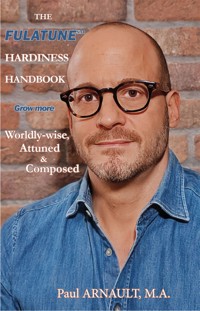
In The Fulatune℠ Hardiness Handbook, psychologist and sociologist Paul Arnault doesn’t provide quick fixes, magical recipes, flattery, spiritual guidance, or proclaim false promises and moralistic injunctions. He argues instead, often with bounce and humor, that developing insight and hardiness takes modesty, time, and work.
His fresh approach proposes a new rational and structured method to:
-reduce behavioral and situational misperceptions;
-prepare extensively for challenging situations;
-attune gradually to complex and/or tough environments;
-stay composed under massive pressure.
The Fulatune℠ system was created for an international audience weary of the redundant, simplistic, and ideological incantations often cluttering the mainstream self-help industry. Its purpose is to help people grow more worldly-wise, attuned, and composed, not only for “personal” development but also to acquire the reliability necessary to efficiently lend a hand to others.
Das E-Book können Sie in Legimi-Apps oder einer beliebigen App lesen, die das folgende Format unterstützen:
Seitenzahl: 131
Veröffentlichungsjahr: 2024
Ähnliche




















THE FULATUNE HARDINESS HANDBOOK
Also by Paul Arnault
Gheorghiu, M. D. & Arnault, P. (Eds.). (2013). Les sciences sociales et leurs publics: engagements et distanciations. Alexandru Ioan Cuza University Press.
Copyright © 2023 by Paul Arnault
First printed in paperback in 2024
Fulatune℠, 3D Worldly℠, and 3D Worldly Press℠ theme names are trademarks of 3D Worldly, EI.
All rights reserved.
Subject to statutory exception and to the provisions of relevant collective licensing agreements, no reproduction of any part may take place without the written permission of 3D Worldly.
ISBN-13: 978-2-487414-01-3
Contents
Preface
Introduction
Three Problems in the Mainstream Personal Development Field
The 3D Worldly Approach and the Fulatune Training System
Part I. Three Foundations & Three Stages
Chapter 1. Biopsychosocial Foundations
1.1. Physiological and Physical Health Foundations
1.2. Sociological Foundations
1.3. Psychological Foundations
Chapter 2. Step 1: Observation
2.1. Observation Skills Can Be Enhanced
2.2. Observation Needs Frameworks
Chapter 3. Step 2: Understanding
3.1. Understanding How and Why Interpretations Can Go Wrong
3.1.1. Understanding and Modesty
3.1.2. Knowing and Controlling Biases Through Metacognition and Learning
3.2. Optimizing Active and Accurate Understanding
3.2.1. Knowing Behavioral Determinants for Realistic Agency
3.2.2. Mastering Critical Thinking Tools
Chapter 4. Step 3: Adaptation
4.1. Why Adapt? After All…
4.2. Adapt to What?
4.3. How to Adapt
Part II. Principles, Steps & Programs
Chapter 5. Principles, Mechanisms, and Steps
5.1. Three Principles and Rational Mechanisms
5.1.1. Three Principles
5.1.2. Rational Mechanisms
5.2. 16 Steps
Chapter 6. Application and Topics
Deep Insight
Specific Preparation
Specific Long-Term Adaptation
Morning Routines: Fulatune style
Stress-Management: Fulatune style
Endurance for Hard Times
Global 3D Development
Conclusion
Bibliography
About the Author
Index of Key Concepts & Authors
List of Illustrations
Figures
Figure 1. Health and Social Problems Are Worse in More Unequal Countries (Wilkinson & Pickett, 2009)
Figure 2. Example of a competency/rationality perspective applied to the self-help industry
Figure 3. Relationships between the 3D Worldly approach and the Fulatune training method
Figure 4. Biopsychosocial foundational disposition of the Fulatune method
Figure 5. Bias reduction process
Figure 6. The Observe, Understand, Adapt (OUA) process
Figure 7. Three Fulatune principles
Table
Table 1. Synthetic table of the Fulatune hardiness training method
Preface
Under present circumstances, it appears that self-growth methods are mostly aimed at serving individual prosperity, social status upgrading, and happiness (at least certain conceptions of it). While our approach won’t impede those goals, it was rather designed to help people become more worldly-wise, attuned, and composed. Of course, happiness is a legitimate pursuit. However, the fact that it can be achieved through illusions sometimes makes clear-eyed acumen preferable. Besides, happiness is a very personal matter, and the way you find it is, after all, none of our business. In other words, this is not a happiness manual: it’s a hardiness handbook. It might at times feel uncommon or provocative as it will question conventional wisdom and discuss topics such as perception biases related to ideological, national, and cultural standpoints. Unusual acuity and disenchanting tools, such as history and sociology, will also be employed. Therefore, this preface aims to encourage readers who might not be familiar with human and social science or perhaps had a hard time in school as I sometimes did. If you encounter intricacies, you might want to: a) take a break, hang on, and consider the hardship as only temporary (instant access to dictionaries and quality sources is historically unprecedented), b) remember that skill enhancement paths are challenging by definition (hardiness acquisition is…hard), c) keep in mind that the process, as well as the outcome of effective and structured thinking, can be enjoyable and rewarding (it is, instead, rambling reflection that leads to deadlocks, sterile rumination or despair when problem-solving), and d) consider that if discovering news outlooks and concepts can be confusing at first, it will only help you, in the long run, to develop more insight and objectivity in the face of complex adversity.
Introduction
Three Problems in the Mainstream Personal Development Field
A strong diversity of actors, approaches, and purposes characterizes the expanding field of personal development. On self-growth library shelves, one can find, side by side, writings from scientists popularizing evidence-based mental health research findings on anxiety and depression prevention, clerics and philosophers sharing wisdom principles on serenity, as well as self-taught entrepreneurs and military personnel advocating the virtues of determination to achieve success and leadership. Although many of these productions may differ in terms of scope or validity, they often share unquestioned frameworks and common assumptions. One example is the recurrent premise according to which ideas play a tremendous role in personal change. They certainly do. However, the external factors that support their implementation are often neglected (grants, micro-credit, emotional, medical, and technical support, political will, etc). Another example of an influential presumption is that psychology is the key discipline to understanding individual and social behavior. It is a central approach. But other disciplines such as sociology, anthropology, and even history are also significant perspectives. A last example could be the cultural bias influencing personal development. Historically and geographically, modern applied psychology and self-growth movement thrived after the First World War in the United States (Jansz and van Drunen, 2004), a country where optimism, entrepreneurship, and individualism became widespread values (Zakaras, 2022). Combined with the perspectives of idealism and psychologism, these norms have deeply shaped modern self-growth conceptions which found an international audience after the Second World War, for the better and the worse.
Personal development discourses arguably spread scientific findings and healthy encouragement on a global level. They propose numerous sensible mental health and “productivity” tips. And daily, many well-intentioned authors and speakers deliver messages of hope to millions of struggling people. The point of these comments is not to call into question the positive functions of the self-growth movement. It is to underline misdirection, shortcomings, and neglected possibilities.
Firstly, by underestimating material and social factors involved in agency and empowerment, idealistic discourses advocating voluntarism can harm people by making them believe they are entirely responsible for their misery. Mobilizing statistically rare “super-achievers” during a speech is undoubtedly inspirational and relevant given their possible merit. However, the storytelling techniques used to promote these success stories differ in accuracy and intent from in-depth biographical analysis. Besides, the (self)promoted celebrities are not the most inclined to highlight conditions that, if undisclosed, would temper their glorification (an unmentioned generous uncle, a supportive and non-dysfunctional family, an economic stimulus package, systemic privileges, etc.). One can’t help to believe it would certainly be an eye-opener to research the percentage of people who have been listening to motivational speakers for 15 years or more, and who are still earning about the same income. It is also hard to believe that the 1.3 billion people living in multidimensional poverty (United Nations, 2021) simply lack the motivation to “succeed”. Self-instructional techniques and coaching tips can be helpful, but detached from concrete foundations, they become naïve and ineffective solutions.
Secondly, overestimating the powers of will as a self-improvement mechanism is partly related to the idea that the origin of success primarily lies in the psychology of the individual. But individual psychology is not only a cause, it is also an effect: a product of history, social contexts, socialization, or biology. By extension, psychological primacy conceptions generally lead to social and political theories that explain collective phenomena as, essentially, the sum of individual behaviors. This bias can result in denying top-down dynamics such as systemic discrimination and preferring Bad Apple Theory types of individualistic explanation. A perfect example of political denial of collective formations and related social dynamics was given by Margaret Thatcher when she commented: “Who is society? There is no such thing! There are individual men and women and there are families” (Thatcher, 1987). These uninformed but influential opinions tend to worsen the fate of many people across the world (remember “Reaganomics”?). Individualism and psychologism not only overlook structural problems (racism, addiction, unemployment) but also global solutions. It is interesting to notice that the World Health Organization’s (WHO) Department of Mental Health and Substance Use experts are not advocating more individual responsibility or extra coaching tips; they are exhorting stakeholders to “reshape the environments that influence mental health, and strengthen the systems that care for mental health” (World Health Organization, 2022a, Back cover). British epidemiologists Richard Wilkinson and Kate Pickett established the existence of a very strong link between the role of systemic determinants in health on the one hand, and social problems on the other, which are worse in more unequal countries (Wilkinson & Pickett, 2009). Figure 1 illustrates this strong relationship. In other words, multiple behaviors, that are generally examined through the lens of individual “choices” (such as sexual, aggressive, and addictive behaviors), are heavily conditioned by social factors when analyzed from a macro-sociological perspective. As we will discuss later, our position is not to deny some degree of free will but to argue that the greater the awareness of its determinants, the more empowered it is.
Figure 1. Health and Social Problems Are Worse in More Unequal Countries (Wilkinson & Pickett, 2009)
Thirdly, personal development discourses and practices are culturally biased. This fact doesn’t mean it is “bad”. Or “unamerican” to underline it. It simply implies that they are rooted in certain contexts and schools of thought, just like other “technologies of the self”. According to Michel Foucault, they “permit individuals to effect by their own means or with the help of others a certain number of operations on their own bodies and souls, thoughts, conduct, and way of being, so as to transform […] themselves in order to attain a certain state of happiness, purity, wisdom, perfection, or immortality” (Foucault, 1988, p.18). The hegemony of American personal development discourses across the world has progressively associated the conception of success and happiness with individual material wealth, upward social mobility, leadership, and body aesthetics. The so-called American way of life has such attractiveness that it is often ironic to observe the paradoxical love and hate attitudes of many non-Americans who can simultaneously denounce real or perceived “decadence” and “imperialism” while simultaneously aspiring to enjoy the lifestyle of upper-middle-class Americans. There is also something awkward and comical, but somehow disappointing, to observe how non-American online coaches and motivational speakers across the world mimic American cheerfulness, commercial body language, and voice intonations. The cultural bias affecting the conception of “success” partly operates by selection and reduction: it selects the economic aspect of achievement and reduces it to its financial dimension. The same reductionist process affects the notion of happiness which tends to equate to social status contentment. While this wealth, performance, and dominance orientation can be endorsed by some personal development movements (human enhancement, masculinism, etc.), it is not surprising many Westerners are also disenchanted by the futility of “the society of the spectacle” (Debord, 1967) and have been turning (back) to mysticism or esoterism.
Knowledge and cultural biases such as idealism, individualism, psychologism, and Americanism have partly conditioned the orientation of the self-growth movement. While it is inevitable that self-care or enhancement techniques will vary according to culture, it remains preferable to keep questioning assumptions and constructively bringing up issues such as the purposes of personal development, the validity of expert claims, and professional competence.
Generally speaking, personal development experts are professionals who provide services related to self-care, social skills, and, more or less intentionally, spirituality. More or less, because unlike openly mystical movements legitimately existing within the field of personal development, such as Buddhism or shamanism, many self-growth trends simply convey plain ideology through fairly unwitting representatives. While it is understandable that certain principles such as humanism, welfare, or fulfillment are inherent to the application of human and social sciences to well-being issues, the presence of values such as “leadership”, “influence”, or “entrepreneurship” is questionable since they are implicitly presented as universal norms. If anthropology was promoted and popularized as much as psychology by mainstream media, people would know that. The role of psychologists, counselors, coaches, or motivational speakers is not to embody or act as ideological mouthpieces. It is to capably help their patients, clients, and audiences to cope with life’s problems when they show up. What’s the relationship between personal welfare and leading others anyway? The kick from a serotonin power trip? The simple satisfaction of not being the one who “follows”? Aspiring to become the leader of other rational adults somehow implies a certain depreciation of the democratic value of self-determination. And is there really a connection between entrepreneurship and serenity? If the link was that strong, there wouldn’t be so many “executive coaches” out there, paid to soothe power-related stress and sometimes guilt. Besides, is it really up to behavioral experts to encourage upward social mobility, and reach managerial or moguls’ positions? That is generally the role of parents and business schools. Not so long ago, a majority of CEOs seemed to have the decency to refrain from impersonating philosophers or heroes. Not so long ago, people could tell the difference between the valor of people such as Rosa Parks and the “courage” of dismissing 80% of staff in a heartbeat.
Because personal development does disseminate and vulgarize some quality science, and since motivational tips encourage people to tackle life every morning, it would be unfortunate to globally condemn the self-growth industry and throw the baby out with the bath water. But one can sometimes get the impression that personal development is tailored for people living in the world of the “Friends” sitcom, or that it is about positive self-talk stickers on fridges or AI-made flowery coaching templates. People are being exposed to enough vague concepts, unrealistic goals, and false promises. Moreover, too many personal development actors trespass the boundaries of simple wellness to promote bald worldviews. Worse, some motivational speakers even resort to blaming, shaming, and castigating audiences, narcissistically offering themselves as identification models. But there is every reason to believe they are confusing loudness with charisma, rhetoric with competence, and strength with solidity. What is needed is more modesty, conceptual accuracy, and clear-eyed objectivity.
Figure 2. Example of a competency/rationality perspective applied to the self-help industry
The 3D Worldly Approach and the Fulatune Training System
Personal development is not reducible to making more money, becoming powerful, or dully happy. The 3D Worldly approach and the Fulatune training system were created to help people become more worldly-wise, attuned, and composed. The Fulatune method is mainly an applied hardiness technique. Hardiness is defined by the American Psychological Association (APA) as: “the ability to adapt easily to unexpected changes combined with a sense of purpose in daily life and of personal control over what occurs in one’s life” (APA, 2018)1.
Adaptation, which is in fact rarely “easy”, is necessary to most enterprises and starts with observation and understanding the goal-related environment (corporate, academic, administrative, political, associative, athletic, military, etc.). The 3D Worldly approach is rational, multidisciplinary, integrative, and holistic. It is rational in the sense that it complies with scientific and logical reasoning and procedures. It is open to good faith discussion and is refutable. It is rational by not resorting to unaccountable, specious, or mystical arguments. As an element of applied human sciences, it contains standards such as “truth”, “humanism”, “benevolence” or “welfare”. However, it remains vigilant regarding political, economic, or ideological influences. Its rationality doesn’t necessarily discard the positive effects of mysticism and ideology on motivation, courage, hope, and self-efficacy (it doesn’t turn a blind eye to the negative either). It simply sticks to the scientific position that all phenomena have (or can have) a rational explanation. The 3D Worldly approach is multidisciplinary in the sense that it makes use, not only of psychology, but also of history, sociology, anthropology, political science, and biology




