


9,49 €
Mehr erfahren.
- Herausgeber: Hamad Bin Khalifa University Press
- Kategorie: Geisteswissenschaft
- Sprache: Englisch
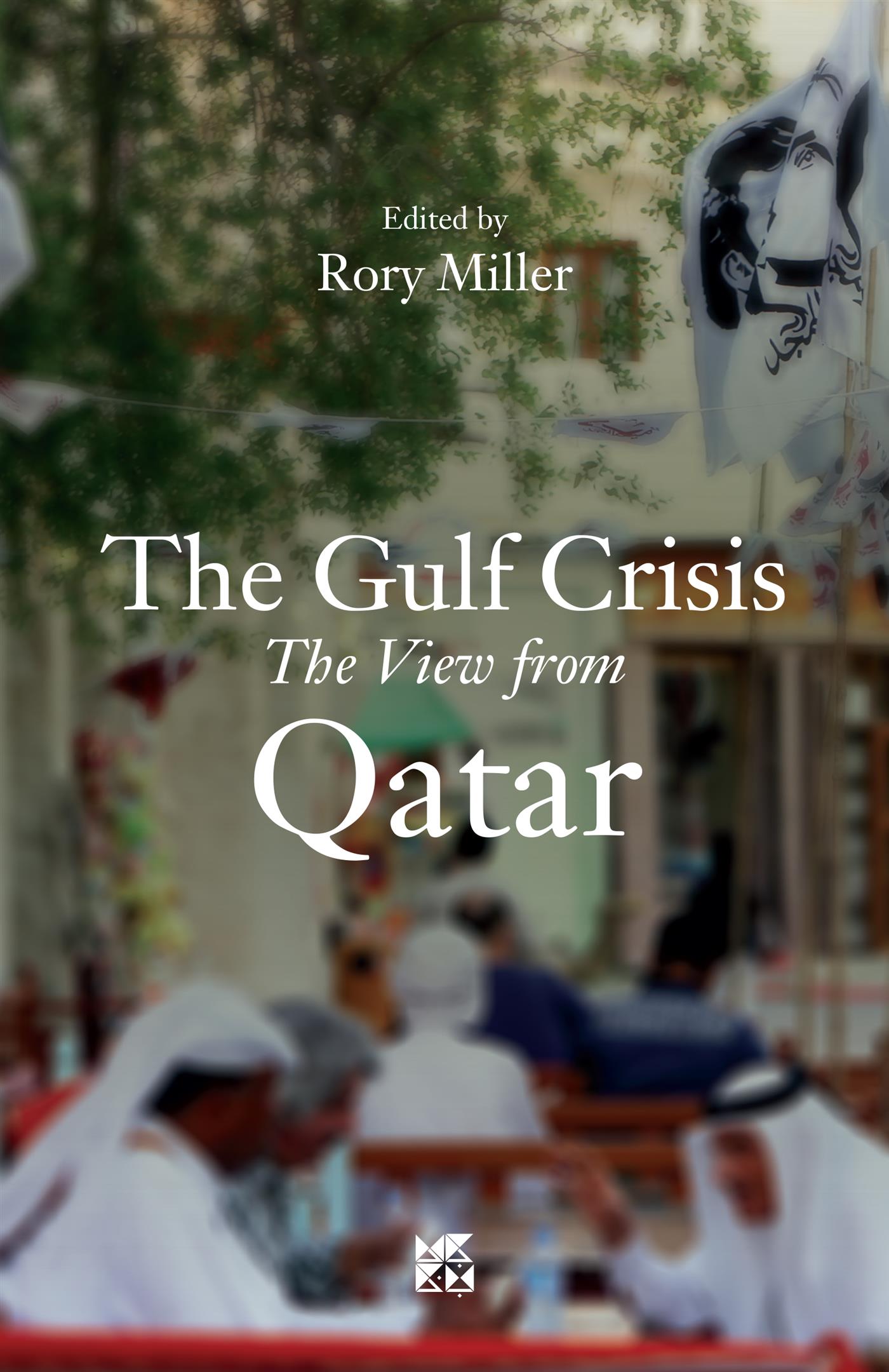
The blockade of Qatar, which was launched in June 2017, has not only had important long-term implications for life in Qatar, it has also cast a giant shadow over future relations between Gulf neighbors and has impacted on dynamics across the wider international community. In this volume, 15 Doha-based scholars and experts offer insider accounts of the ways the blockade has influenced Qatar’s economy, politics, and society; how it has impacted on regional and international diplomatic, security, and strategic relations; and how it has been covered in traditional and social media outlets. These reader-friendly contributions are complemented by a series of photographs that provide an illuminating visual record of events. The result is an unmatched chronicle of the dynamics of the blockade in its first year that will appeal to experts and general readers alike.
Das E-Book können Sie in Legimi-Apps oder einer beliebigen App lesen, die das folgende Format unterstützen:
Veröffentlichungsjahr: 2020
Ähnliche



















The Gulf Crisis:The View from Qatar
Abbreviations
AFP Agence France-Presse
AP Associated Press
ASEAN Association of Southeast Asian Nations
CAABU Council for Arab-British Understanding
CIRS Center for International and Regional Studies
DICID Doha International Center for Interfaith Dialogue
EU European Union
FAO Food and Agriculture Organization
FPPMS Forum for Promoting Peace in Muslim Societies
GCC Gulf Cooperation Council
GCCIA GCC Interconnection Authority
GECF Gas Exporting Countries Forum
GEM Global Entrepreneurship Monitor
HBKU Hamad Bin Khalifa University
ILO International Labour Organization
ISIS Islamic State of Iraq and the Levant
IUMS International Union of Muslim Scholars
KISR Kuwait Institute for Scientific Research
LNG Liquefied Natural Gas
MEC Ministry of Economy and Commerce
MENA Middle East and North Africa
MME Ministry of Municipality and Environment
MOI Ministry of Interior
NGO Non-Governmental Organization
NIAG National Information Assurance Glossary
OBG Oxford Business Group
OPEC Organization of the Petroleum Exporting Countries
PETA Power Exchange and Trade Agreement
QBIC Qatar Business Incubation Center
QCRI Qatar Computing Research Institute
QDB Qatar Development Bank
QF Qatar Foundation
QIA Qatar Investment Authority
QNA Qatar News Agency
QNB Qatar National Bank
QNRF Qatar National Research Fund
QNV Qatar National Vision 2030
QP Qatar Petroleum
SME Small and Medium Enterprise
UAE United Arab Emirates
VAT Value-Added Tax
VPN Virtual Private Network
WEF World Economic Forum
WISE World Innovation Summit for Education
Introduction:
The Gulf Crisis: The View from Qatar
Rory Miller, Georgetown University in Qatar
On a Monday morning in early June 2017, without any specific forewarning, Saudi Arabia, the United Arab Emirates (UAE) and Bahrain abruptly cut off diplomatic ties, closed their borders and airspace, and suspended all flights to and from Qatar. This move by three of Qatar’s closest economic and security partners was backed up by Egypt and a group of smaller states. In Doha, initial concerns revolved around the availability of fresh food, which before the crisis had been supplied to the country’s stores by road from Saudi Arabia. There was also a sudden drop in the value of the stock market and heightened concerns over the ambitious plans for the FIFA football World Cup scheduled to take place in Qatar in 2022 – the first time an Arab or Muslim nation will host the world’s biggest sporting event.
The economy and financial sector were subsequently stabilized at considerable expense, new domestic and overseas sources of supply were established, the building of roads, railways and stadia continued, and daily life returned to normal for most. What has taken longer to come to terms with is the realization that some of Qatar’s closest neighbors, who share intricate and complex family and business ties, as well as a common language, religion and history, had chosen to break ties the way they did in the summer of 2017.
Throughout the blockade, the Qatari government has adopted a consistent position in response to the claims made against it. It has categorically rejected the accusation that it supports terrorism and has defended relations with Iran, Islamists and others in terms of its independent foreign policy and long-time commitment to dialogue. To counter such claims further, it has also highlighted Qatar’s status as home to two of America’s most important overseas military bases, which play a key role in the US-led air war against Islamic State in Syria and Iraq. At the same time, the government has repeatedly offered to engage with the blockading countries in order to find a solution acceptable to all parties. “We are willing to sit and talk,” explained Foreign Minister Sheikh Mohammed bin Abdulrahman Al Thani in an interview with CNN early in the crisis, though he made clear “that attempts to impose policies are out of the question.”
A year on, this remains the position of the Qatari government. One argument in particular has been very effective in influencing international opinion: that Qatar is the victim of a direct assault on its national sovereignty by a coalition of much larger powers, whose actions have undermined security in the Arab Gulf, a region that before the blockade was an oasis of stability in the wider Arab world. In these terms, the crisis has not only had important long-term implications for life in Qatar. It has also cast a giant shadow over future relations between Gulf neighbors under the auspices of the Gulf Cooperation Council (GCC), which has been undermined by events.
Although a far from perfect institution, for four decades until the blockade the GCC had contributed to regional economic and security cooperation and had fostered prosperity, development and mutual understanding. Now the GCC’s future is uncertain at a time of grave insecurity and crisis in Yemen, Syria and across the wider region. This is particularly problematic as the blockade has also greatly impacted on the security architecture and alliance system between Washington and its key local allies in one of the world’s most important regions.
Domestically, early reactions to the blockade among the country’s 2.5 million inhabitants – citizens and foreign residents alike – were of surprise verging on disbelief. There was particular shock that the launch of the blockade was timed to coincide with the first full week of Ramadan, usually a peaceful time in the Muslim world. An even bigger shock since then has been the extreme hostility expressed toward Qatar and its leadership by government officials and the media in blockading countries. This has resulted in a sort of “social trauma” that will take a long time to overcome, but it has also fostered solidarity among citizens and the large expatriate community.
Hamad Bin Khalifa University, a public research university founded in 2010 by Qatar Foundation, Qatar’s oldest and most important civil society actor, commissioned this volume in recognition of the significant impact that the blockade has had on the domestic, regional and international levels. I would like to thank HBKU President Dr. Ahmad M. Hasnah and project director Marya Al-Dafa for their support in this endeavor. I would also like to thank Rima Ismail of HBKU Press for overseeing the book’s publication. I offer special thanks to Rodolphe Boughaba, who had the original idea for this volume and who has been hugely supportive and helpful in seeing it to fruition over subsequent months.
All the chapter contributors are Doha-based scholars and experts working at the various universities and research institutions hosted in Qatar under the auspices of Qatar Foundation. I would like to thank my colleagues at Georgetown University in Qatar, Northwestern University in Qatar, Texas A&M University at Qatar, University College London (UCL) Qatar, and Hamad Bin Khalifa University for their enthusiastic support for this project and for the range and depth of expertise that they have brought to these pages. They are social and political scientists, engineers and economists, experts on security and diplomacy, scholars of Islam and linguistics, and authorities on culture and the arts. Their combined local knowledge and their cutting-edge research are showcased here in a series of policy-oriented analysis pieces that address a wide range of topics and issues in a reader-friendly style that is easily accessible to a general audience.
The 15 chapters in this volume are divided into three sections. The first section offers insider accounts of the ways the crisis has influenced Qatar’s economy, politics and society. The second frames the crisis in its important international context. The third looks at the ways the crisis has been covered in traditional and social media outlets and how the various parties to the conflict and their supporters have used the media to promote their own positions.
Section one begins with a study of the impact of the crisis on Qatar’s globally significant cultural and creative industries, which have become an important vehicle for the country’s branding, global visibility and relevance over the last decade and a half. Here Karen Exell shows how, at the outset of the crisis, there was international consensus around the view that hostilities would be wholly detrimental to Qatar’s cultural and artistic life. Though the blockade has had some challenging resource impacts and has led to the reduction of regional cultural interactions, she shows how Qatar has adapted its cultural strategies to deal with the new environment.
The following two chapters by Tareq Al-Ansari and M. Evren Tok argue that the post-embargo era is a potential turning point, respectively, for food security and entrepreneurial endeavors in Qatar. Al-Ansari notes that the debate on food security inside Qatar long predated the blockade. The importance of ensuring the security and sustainability of food, as well as energy and water, increasingly occupies the thinking of decision-makers in sovereign states across the globe, and is an especially pressing matter in countries such as Qatar that face a scarcity of water and severe climate patterns. That said, as Al-Ansari shows, the blockade has played an important role in fostering further consensus over the urgency of accelerating plans that prioritize increased domestic food production within a sustainable development framework.
M. Evren Tok makes a similar point in his chapter on the impact of the blockade on Qatar’s entrepreneurial sector. As in the case of food security, the development of an entrepreneurial class has long been a strategic priority for Qatar, is a target of its 2030 National Vision, and is central to attempts to diversify the economy away from oil and gas. In his comprehensive survey of the measures taken to boost support mechanisms and incentives for entrepreneurship since the blockade began, Tok demonstrates clearly the unprecedented linkage and awareness that now exist across Qatari society of the importance of entrepreneurship to socio-economic development and growth.
Religion, as Sohaira Z. M. Siddiqui notes, was introduced into the politics of the blockade from the start because it was launched in the middle of the holy month of Ramadan. After assessing the reasons for this decision and its implications, she explores the role of religious arguments and counter-arguments in the crisis. In particular, she examines how religion and religious rhetoric have been used to both justify and undermine the legitimacy of the blockade. In these terms, what has occurred can be viewed as part of a larger process of interaction between religion and the state across the Arab world in general, and the GCC countries in particular.
Jocelyn Sage Mitchell also locates her assessment of the domestic policy opportunitiesthat have been engendered by the blockade in terms of the rapidly changing situation at the GCC level. She argues that the events of the last year have undermined the normal parameters of social, economic and institutional interaction between GCC member states and between different constituencies within those states. This has, in turn, enabled Qatar’s rulers to seize the opportunity to implement domestic policy goals that in the past were subject to local and external obstacles. She argues that the upshot of this may, over time, not only reshape Qatar but also the wider Gulf region as a whole.
In the final chapter of section one, Maryah B. Al-Dafa examines the ways in which Qatar Foundation, as the country’s leading civil society actor, has responded to the crisis. Over the last year, the universities and research centers under the Foundation’s umbrella have served as a focal point for a multifaceted policy and academic debate on the implications and opportunities of the crisis. The Foundation has also played a more practical role in helping staff and students from blockading countries deal with the new challenges they face in staying in Qatar, while facilitating the return to academic life of Qatari students forced to abandon their studies in blockading countries.
As well as serving as the location of two of America’s most strategically placed overseas military bases, Qatar is also home to Al Jazeera, one of the world’s most influential news networks. In recent decades, it has also emerged as a key player in regional diplomacy and in the global energy, financial, investment and property markets. These considerations, among others, mean that the blockade has a significant international component and, in part, explains why so many members of the international community have called for a peaceful resolution of hostilities that prioritizes a return to regional stability.
In acknowledgement of this, the second section of the volume assesses the blockade in its wider regional and international context. It begins with two chapters that draw on the theoretical literature in International Relations to examine the crisis from the perspective of small state theory and Foreign Policy Analysis (FPA). Rory Miller begins his contribution by noting that the blockade has, among other things, ignited a debate on whether Qatar can counterbalance size-related difficulties to maintain political autonomy, diplomatic influence and economic sovereignty. This, in turn, he argues, has engendered a more general debate over the role and power of small states in the international system. In his analysis, he investigates whether Qatar’s handling of this particular crisis provides a suitable case study for other small states facing their own hostile security environments and, if so, what it tells us about small state behavior in international affairs.
In his chapter, Gerd Nonneman considers the causes of the blockade and the reasons why the parties have not yet been able to resolve their differences through the prism of Foreign Policy Analysis (FPA), a sub-discipline of International Relations. In doing so, he examines a wide range of factors – including the role of bureaucracies, the personalities/types of leaders and the patterns of domestic and foreign policymaking. This throws much-needed light on the wide array of often overlapping considerations that have influenced decision-makers in Doha, Abu Dhabi and Riyadh since the crisis began.
We live in an era of cyber threats that have the potential to undermine societal security and prosperity. In the next chapter, Joseph J. Boutros considers the main pillars of cyber security as they relate to sovereign states in general and Qatar in particular. Using available government data, he then analyzes the rising number of reports of electronic crimes in Qatar in the five years before the crisis, as well as the main vulnerabilities of Qatar’s internet backbone. Boutros argues that the blockade in itself has had no direct influence on the number of cyber incidents or cyber attacks in Qatar. He does, however, examine the ways that the crisis has influenced thinking on cyber security given that prior to the launch of the blockade hackers took full control of the network belonging to Qatar News Agency (QNA).
The impact of the crisis on future energy cooperation and energy security on the regional and international levels is addressed in the next two chapters. This is an important issue given Qatar’s current status as the world’s number one exporter of liquefied natural gas (LNG). Steven Wright frames this issue in terms ofthe major changes in a global gas market increasingly defined by competition, stagnant demand and an oversupply of gas, all of which have resulted in depressed prices. As he shows, prior to the start of the blockade these factors had influenced Qatar to engage more deeply with its neighbors in order to establish itself as a secure and reliable supplier of natural gas across the Gulf. The current stand-off has stalled this, raising challenges for Qatar as a gas supplier and for its long-time regional partners as gas consumers.
Damilola S. Olawuyi agrees with Wright that, in terms of energy cooperation, the current breakdown in relations among GCC states is a lost opportunity for the entire region. He also examines the gas issue from the perspective of international energy law and analyzes how the blockade has undermined the chances of an integrated regional electricity market and a coordinated approach to climate change and low carbon energy transition. At the same time, he argues that the events of the last year have provided Qatar with an opportunity to establish itself as a champion of a more robust multilateral cooperative approach to gas production and supply.
The section on international affairs concludes with Harry Verhoeven’s examination of competition between Gulf actors in the critically important African region in light of the crisis. This “other Arab Cold War,” as Verhoeven terms it, is a particularly pertinent issue to consider because in June 2017 four African nations cut diplomatic relations with Qatar (Chad, Comoros, Mauritania and Senegal) and three downgraded them (Djibouti, Gabon and Niger). This has significant strategic implications given that the Arab Gulf states are now major actors in Africa and Africa is increasingly vital for Gulf security and prosperity.
The third and final section of the book contains three articles examining the ways in which the crisis has played out in the traditional and social media. Banu Akdenizli’s chapter considers the role of Twitter in the first 100 days of the crisis. As she explains, social media is an increasingly important foreign policy instrument, used to craft an online image and communicate messages to large audiences across the world. US President Donald Trump’s resort to Twitter in the first days of the crisis is, as Akdenizli notes, a perfect example of this evolving use of social media at the policy level. She then examines in detail the Twitter use of the foreign ministers and foreign ministries of the four Gulf nations embroiled in the crisis and assesses what this says about their strategies, attitudes and engagement with contemporary public diplomacy.
Ashraf Fattah’s chapter seeks to shed light on the strategies employed by some journalists writing hard news reports on the Gulf crisis, and how there is often a tendency to turn supposedly objective news into subjective opinion. The case study used by Fattah to assess this form of editorialization of hard news is the special section devoted to coverage of the blockade in the UAE’s Arabic daily Al-Ittihad. Fattah argues that the news reports included in this study reveal the extent to which supposedly neutral reporting was often more about expressing views than retelling the news.
In the final chapter of the book, Christina Paschyn examines editorials and opinion pieces, as opposed to hard news, published digitally in the first nine months of the blockade by four international outlets – TheTelegraph and The Guardian in the United Kingdom and Fox News and CNN in the United States. Though acknowledging that her findings are not comprehensive, her analysis of the data shows that, over the period examined, commentary in the more conservative media outlets (The Telegraph and Fox News) expressed stronger criticism of Qatar and more sympathy for Saudi Arabia on the matter of the legitimacy and necessity of the blockade, while the more liberal outlets (The Guardian and CNN) were either more sympathetic to Qatar or presented a more balanced assessment of the crisis.
The short-term goal in putting this volume together has been to draw on the intellectual resources and expertise available in a diverse group of institutions affiliated with Qatar Foundation to document and analyze the first year of the crisis from a number of perspectives and to offer an initial assessment of lessons learned. The longer-term hope is that this volume will serve as a unique and highly informed record of the impact of, and responses to, the blockade in Qatari society, across the wider region and throughout the international community. With these distinct, but overlapping, goals in mind the entire work is complemented by a series of photographs (provided by Suzi Mirgani of the Center for International and Regional Studies (CIRS) at Georgetown University) that offer a rare and unmatched visual chronicle of the dynamics of the first year of the blockade of Qatar.
Rory Miller
Doha, 2018
Section 1:Economics, Politics and Society
Adapting Ambitions at the Time of Crisis:Qatar’s International Cultural Strategies
Karen Exell, University College London (UCL) Qatar
The international arts media initially regarded the Gulf crisis as almost wholly detrimental to the cultural activities of a tiny Gulf state that has staked so much on its investments in art and culture as a vehicle for cultural branding, global visibility and geopolitical positioning. For example, on 13 June 2017, eight days into the blockade, The Art Newspaper reported that “[t]he diplomatic crisis in the Middle East, which has resulted in the partial blockade of Qatar, is likely to destabilise cultural institutions and partnerships in the region.”1 While intraregional interactions have indeed been limited, Qatar’s international cultural projects have continued unchecked and its cultural institutions remain robust. In fact, the blockade has given Qatar a platform to attract attention to its cultural projects whilst using the increased media attention to position itself on the moral high ground by, for example, projecting a positive message regarding its relationship to its foreign resident populations.
On 2 November 2017, Sheikha Al Mayassa bint Hamad bin Khalifa Al Thani, chairperson of Qatar Museums and one of the world’s highest profile patrons of the arts, gave the keynote address to the Seventh Hamad bin Khalifa Symposium on Islamic Art, “Islamic Art: Past, Present and Future,” held at Virginia Commonwealth University in Richmond, Virginia, whose School of the Arts has a branch in Doha. After listing some of the artists, both international and “contemporary Islamic” as she described them, who have been hosted by Qatar – Damien Hirst, Cai Guo-Ciang, Richard Serra, Takeshi Murakami, Luc Tuymens, Shirin Neshat, Mona Hatoum, Wael Shawky and Dia Al Azzawi – she stated that:
the current crisis in the Gulf thus frames any conversation about contemporary culture and by extension arts in the region … Ours is a country made up of diverse populations, over 100 different nationalities live in Qatar. In such a place where many cultures intersect and people cohabit peacefully and in harmony, the value of cultivating an open mind is paramount. Similarly, in the international arena we have always engaged in conversation with the world, and even when our views differed from others we addressed such differences in a respectful and dignified manner. This approach is evident in everything that we do, including our activities relating to contemporary art.2
Sheikha Al Mayassa’s emphasis on Qatar’s approach to inclusivity was evident in the Contemporary Art Qatar exhibition in Berlin (Kraftwerk, 9 December 2017 – 3 January 2018), part of the Qatar-Germany Year of Culture,3 an exhibition which showcased the work of young Qatari artists, both nationals and foreign residents. One of the artists who received a high level of media attention was Emiline Soares, Qatari-born with Portuguese and Indian roots, whose work, “Shifting Identities,” consists of an intricate carpet made of colored sand patterns altered by visitors walking on it, reflecting, according to the artist, her experience of the complex, shifting identities of Qatar’s population.4 Reem Al Thani, the exhibition curator, is quoted in Britain’s Guardian newspaper as saying, “The essence of the exhibition is the changing perceptions of Doha, and it’s in the nature of our multi-cultural state that I honestly can’t tell you who is a Qatari-born artist and who is not; there are all sorts of people represented on the walls here.”5
In addition to the celebration of diversity, Sheikha Al Mayassa also used her address to reference Qatar’s dialogic approach to international diplomatic engagement, an approach contrary to that of the blockading Gulf states of Saudi Arabia, the United Arab Emirates (UAE), Bahrain and their allies, who have avoided direct dialogue throughout the crisis. This keynote address captured Qatar’s smart exploitation of the crisis through culture to project a message of moral superiority intended to beneficially alter international perceptions. It is also illuminating as a form of indirect criticism of the members of the anti-Qatar coalition. This use of culture can be contrasted with the recent omission of Qatar from a map of the Gulf in the Louvre Abu Dhabi. This caused an international outcry, and forced the UAE to declare it an error which has since been rectified, though it is of note that it was replaced with a map that removes the demarcation between the Omani territory of Musandam and the UAE.6
Qatar’s Evolving Cultural Strategy
At the time of writing, eight months into the blockade, Qatar, through one of its key government cultural organizations, Qatar Museums, is hosting two major exhibitions from Germany, Driven by German Design (Al Riwaq Gallery, 3 October 2017 – 14 January 2018) curated by the late Martin Roth, and German Encounters – Contemporary Masterworks from the Deutsche Bank Collection (Fire Station Artist in Residence, 3 October 2017 – 20 January 2018), counterparts to the contemporary art exhibition in Germany. Other exhibitions in Qatar include the more regionally focused Imperial Threads: Motifs and Artisans from Turkey, Iran and India (Museum of Islamic Art, 15 March 2017 – 27 January 2018) – inadvertently outlining newly clarified regional alliances – and Powder and Damask: Islamic Arms and Armour from the Collection of Fadel Al-Mansoori (Museum of Islamic Art, 27 August 2017 – 12 May 2018). When the blockade began, on 5 June 2017, two exhibitions represented countries now on opposite sides in the current hostilities: a Turkish collector in Contemporary Calligraphy – Mehmet Çebi Collection (Al Riwaq Gallery, 15 May – 17 June 2017), and an Egyptian artist in Project Space 9: Basim Magdy (Mathaf: Arab Museum of Modern Art, 15 March – 14 September 2017). This snapshot gives an idea of the range of Qatar’s ever-evolving cultural strategy operating at the local, regional and international levels by mid-2017.
Qatar Museums was established in 2005 as Qatar Museums Authority to implement the outward-facing cultural strategy of the then Amir of Qatar, Sheikh Hamad bin Khalifa Al Thani, which formed part of Qatar’s robust soft-power diplomatic engagement with Europe and the United States, a strategy essential for defense reasons for a tiny state with fluctuating relationships with its larger regional neighbors. Qatar’s investment in Western-style cultural projects at home and its purchase of Western modern and contemporary art have been widely reported. Central to this strategy were high-profile projects such as the Damien Hirst retrospective, Relics (Al Riwaq Gallery, 10 October 2013 – 22 January 2014), a version of which took place the previous year at the Tate Modern in London (4 April – 9 September 2012), and the establishment of the Museum of Islamic Art, which opened in Doha in 2008 to much international acclaim.




