


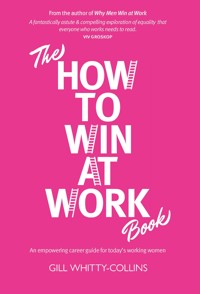
Erhalten Sie Zugang zu diesem und mehr als 300000 Büchern ab EUR 5,99 monatlich.
- Herausgeber: Luath Press
- Kategorie: Geisteswissenschaft
- Sprache: Englisch
Why is it that every book about winning in business seems to be written by a male CEO? Probably because over 90% of the leadership positions in the world are held by men. Women are not winning at work – but Gill Whitty-Collins wants to change that. Women represent 50% of the world's population, intelligence and competence: why should they not represent 50% of its leadership? My goal is that one day you will be one of the women in a room of leaders that is 50% women. I know what women need to do to win at work. I share it in keynotes, in workshops, in coaching – now I'm going to share it with you all here. In this empowering book, Gill Whitty-Collins builds on her first acclaimed book Why Men Win at Work…and how we can make inequality history and fearlessly tackles all the invisible, unconscious forces that create the male dominant workplace that holds women back. Gill draws on her extensive knowledge and experience as a leader, manager, workshop facilitator, coach mentor to equip working women to overcome the career barriers they face. She combines insights, strategies, action plans exercises that will empower and enable you to unleash your full potential and to win at work. Think of The How to Win at Work Book as your personal Coaching Manual. Clear, practical and genuinely empowering, it is the career guide that belongs on every professional woman's desk.
Sie lesen das E-Book in den Legimi-Apps auf:
Seitenzahl: 244
Veröffentlichungsjahr: 2026
Das E-Book (TTS) können Sie hören im Abo „Legimi Premium” in Legimi-Apps auf:
Ähnliche



















Praise for The How to Win at Work Book
The career guide every woman should have within reach, whether she’s finding her feet, climbing, or staying exactly where she wants to be. This is the professional handbook women will wish they’d been handed 10 years ago. Essential reading.
— HOOD MAGAZINE
Praise for Why Men Win at Work
This sprightly book draws on personal anecdotes and academic research to make a readable and practical case for improving inclusion—BROOKE MASTERS, CHIEF BUSINESS COMMENTATOR, Financial Times
In the tradition of all the most efficient execs, Whitty-Collins sets out an almighty set of recommendations—SUNDAY TIMES MAGAZINE
Gill Whitty-Collins is 2020’s driving force in the fight against gender discrimination.—HOOD MAGAZINE
A call to action, a real eye-opener and a must-read for everyone.— BOOKS ETC
A fantastically clear and research-backed approach to understanding why everyone should be feminists.—FELICIA WILLOW, CEO, THE FAWCETT SOCIETY
Whitty-Collins’ straight-talking exploration of gender diversity at work combines psychology, experience, insight and advice to make for a really eye-opening read.—SAM BAKER
Best non-fiction book of the Pandemic.—KAREN DOBRES
Packed full of great insights and helpful action-oriented advice.—JANE CUNNINGHAM, CO-AUTHOR of Brandsplaining
‘This book has changed my world view on gender equality in way others have not. I have a level of awareness and understanding that was simply not there before.’ JO SCAIFE, CEO CLEARBLUE
A truly brilliant and inspiring book, a rallying call to us all to make inequality history.—ANNI TOWNEND
Enlightening, thought provoking, and perhaps even life changing.—JOHN FORSYTH
A must-read for any manager/leader aiming or hoping to improve their business.—KEVIN MCCARTEN
This book should be read by all men and women at work. Brilliant analysis and recommendations about the workplace.— UTE HAGEN
This book blew my mind.—RICHARD CALDICOTT
An eye-opening and game-changing read.—GAUTIER VILLIAUME
A mine of insight and self-reflection.—ESTRELLA LOPEZ-BREA
Impossible to put down.—HANNAH ROBINSON
A must-read for all women and men in the workplace, simple!—JANINE MENASAKANIAN
One of the very best books about women and work.—CECILIA POULLAIN
Life changing.—ELLIE REES
It blew my mind. I regularly quote sentences from it to my friends and colleagues. We need more education like this out there for all.—ANGHARAD TRUEMAN
5 stars...a gift to the world.—JOSE L LOPEZ REYNOSO
An insightful and inspirational read and one that I will get both my sons to read as well.—JULIE DONALD
One of my favourite books of the year.—AMINA RABIA
An awesome, eye opening book… By the end my feminist phobia was cured and this feels more like a bible to me. — LYNNE NICHOLSON
A brilliantly written book. Easy to read with actionable advice for us all… rare gem.—MARIE PAOLUCCI
Mandatory reading for anyone who wants to build an inclusive workplace.—JAYA BHATIA
A great read from the first page.—LAVINIA MILNER-GRAY
A real page-turner.—MATTHEW THOM
A great, thought-provoking, balanced and challenging read. —WILL HOGG
People say books broaden horizons but this one has changed my life for ever!—ANNA MALONE
Thought-provoking and a compelling read on a vital topic. Have recommended it to both friends and colleagues.—ANNA BJÖRK
Helpful and enlightening… I’ve written notes and bent the corners so I can use it as a reference.—ESTHER STANHOPE
Read it, loved it, learned loads from it and have recommended it to so many others.—JENNY ASHMORE
One of the best things I’ve read about the issue… very few academic papers or books discuss the ‘whys’ of inequality and you do… hugely resonant.—CLAIRE WARWICK
Fantastic read and scary how many of the issues highlighted are still often accepted as the norm/overlooked in this day and age!—LAURA WALKER
Hands down my favourite book on gender inequality in the workplace! … The first book I’ve read on equality in the workplace that speaks to the day to day reality of life. —LIZZIE BARTHOLOMEW
Powerful and thoughtfully crafted book... Loved the hallmark gwc direct yet engaging tone coming through and the (P&Gesque) generous helping of data references... Wholeheartedly agree re inequality being huge opportunity for sustainable growth – exactly what’s needed right now in our Climate & Covid Crises World right now. —KEITH DICKENS
I loved it! Very well-researched, lots of thought provoking and shocking material in here, clear and powerfully constructed points and very well written... I will keep this on my shelf ready for my daughter.—LISA BARCLAY
Full of golden nuggets that really resonated. —SALLY HINDMARCH
What a fabulous book! So many spot-on observations – especially all the double-binds, where whatever you do you can’t win.—ANNE ELIZABETH WILSON
What a fantastic book this is. It really made me think about leadership and everyday actions that I could take. I have recommended to a lot of friends and colleagues. — SCHELLION HORN
Best articulation I’ve read of a very nuanced challenge. — LINDSEY BATEMAN
An eye-opening, comprehensive and helpful read.—SOPHIE DEVONSHIRE
A compelling and clear-headed analysis and call-to-action on the systemic and mindset issues that lead to gender imbalances in leadership.—DIANE BAILEY-BOULET
This book is impressive, the way Gill approaches the subject is astounding… I recommend it to the most sceptical, to those who don’t believe in it, so maybe, with the data at hand, they can see it. I have underlined many phrases, it is a book that has left its mark on me.—MICHELA, AMAZON.IT
I found this a thoroughly enjoyable and insightful book – it’s given me a lot to think about and a much, much fuller understanding of why gender inequality exists in the workplace and what we can do about it.—5* WATERSTONES
A must read for anyone who suspects that there is gender bias, or is unaware that it still exists.—5* GOODREADS
…paints a 360-degree picture of gender inequality in the workplace and why it is the way it is today.—5* AMAZON
Before I read this book, I thought it is for people who work at companies. I was wrong. It is a ‘must read’ for everybody who work at companies, but it is much more than that. It needs to be read by parents, educators, students, people who work in media, and actually by everybody. It makes the invisible dynamics visible; it brings the unconscious into consciousness, so that something can be done about it… —5* AMAZON
Why Men Win at Work is one of those rare business books that is easy to read, blends big data and personal experience, and most importantly leaves the reader with a clear set of recommendations to be the change they want to see in the world. Gill Whitty-Collins’ direct and open style is perfect for the topic, challenging us all to re-look at diversity and inclusion with fresh eyes. An essential read not just for those in business but also for parents, teachers and anyone with an interest in feminism and equality (that means everyone!).—5* AMAZON
Whitty-Collins sets out the hard-hitting truth about how gender equality really works in the corporate world. Unlike many books I have read on this subject, it is immensely readable and written from the perspective of a gender equality convert. The irony is that Gill was hugely successful in the corporate world and yet still felt compelled to write this book! You can feel her fury but it isn’t directed at the male species – far from it. The author is empathetic to the fact that this is a tricky and complex area – it’s not easy to fix but she does not shy away from hard-hitting recommendations and the need for urgent action. Read this and I defy you to look at the issues passively again.—5* GOODREADS
First published 2026
ISBN: 978-1-80425-350-2
The author’s right to be identified as author of this book under the Copyright, Designs and Patents Act 1988 has been asserted.
Typeset in 10.5 point Sabon by Lapiz
© Gill Whitty-Collins 202
For my Mum, who’s life’s work was raising & loving her family – the most important work of all.
Contents
Preface
How this book works
1 Why men win at work – A summary
2 How not to win at work
3 How to win in a male-dominant culture
4 How to find your Confident Core
5 How to say Goodbye to Perfectionist Syndrome
6 How to win in meetings
7 Your Personal Brand
8 Visibility – How to come out from under your Umbrella
9 It’s all about relationships – How to network (without the ick)
10 How to close the Time Gap
11 Life First, Work Second – How to keep balanced & healthy
12 Knowing Your Value – How to negotiate the best for yourself
13 Navigating the Age Trap
14 Sisterhood – How to help other women win at work
15 The Super 7% – What the women who win at work can teach us
16 Something borrowed – What women can learn from men
17 A career white piece of paper
18 FeMANists – How to help women win at work (& why you should)
How to Win at Work – Your To Do List
Final Word
Acknowledgements
Endnotes
Some useful organisations & web resources
Preface
THE HOW TO WIN AT WORK BOOK is my second book and, I believe, a necessary follow-up to my first, Why Men Win at Work… and how we can make inequality history. I wrote Why Men Win at Work because, after 20 years of being lucky enough not to be personally troubled or held back by the gender inequality issue, I reached the Senior Executive level and I saw it. And once I had seen it, I saw it everywhere. I understood it, I understood why it matters and, above all, I understood why it happens and what we need to do to address it – and I wanted everyone to see and understand it as well. Many women have told me that they wish they’d read Why Men Win at Work 15 years ago and I tell them that I wish I’d read it 15 years ago too! We can only change things if we see, acknowledge and truly understand the issues affecting us.
Five years on, the gender inequality issue is even worse and addressing it is more important than ever. Men still hold over 90% of the leadership roles in the world, in business and in society in general, and some of these men are using this power to reverse women’s rights (from abortion in the US, to education in Afghanistan, to personal freedom in Iran).
Even when men in leadership are well-intentioned, there are things that they simply do not see and are not aware of, and a lack of equality and diversity usually leads to bad decisions and outcomes. The key thing that will drive progress will be having more women at the top who deeply understand and care about the issues and are willing to fight for what needs to be done. The only way to ensure women’s insights, knowledge and views are represented and heard is for women to be equally represented and heard in the room where discussions are had and decisions are made. We need to ensure we never miss important input or perspectives and make bad, even embarrassing or dangerous decisions.
But we’re still living in a man’s world – and it isn’t working. We have a much better chance of getting things right when teams are diverse and representative, and we will all win from this: this is true for society, and it is true for business.
We are, however, a long way from this, and what is clearer than ever is that women are not winning at work. The World Economic Forum reports that women make up around 5% of ceos globally.1 Some people will try to tell you that this is because most women don’t want to be a ceo, because they have other priorities in life. In fact, 45% of women – versus 54% of men – say they would like to become a ceo2 and, at the beginning of their career, 43% of women – versus 34% of men – aspire to reach top management. (Although, after two or more years of experience, this is down to 16% for women, while for men the number remains the same.)3 So nothing indicates that only 5% of women want to get to ceo level.
And it’s not just an issue of men versus women at ceo level. Data shows that the ftse 100 have 43% women in board positions (still a long way from 50%) with 32% women in executive committee positions.4 Furthermore, 77% of the hr executive positions are held by women but only 29% of the Finance Director (fd) positions. Two of the executive committees are all-male, as are 8 of the ftse 250 executive committees. Four ftse 350 companies still meet only the minimum requirement of having a single female director.5 Only 30% of US board positions are held by women.6 A 2018 McKinsey report found that 65% of all female executives are in non-management roles7 and Grant Thornton’s data from 2024 shows that women account for only 33% of US senior business roles.8 A man is ten times more likely to make partner at a law firm and three times more likely at an accountancy firm, and only 13% of fund managers are female.9 Only 2% of global venture funding went to female-only founded start-ups 2024, and start-ups run by women get only 2% of US venture capital firms’ investments, despite 39% of all privately held businesses being owned by women. Interestingly, women-led funds also invest largely in men.10
Women are also enormously under-represented in politics and law. According to UN data, only 9% of Member States have a female Head of State, and only 27% of parliamentary seats worldwide are held by women.11 Only 40% of UK MPs are female, and this is forecast to fall significantly in the next election. In the US, one state has never sent a woman to the Senate or the House; only fourteen states have a female governor and only 51 women have ever served as governor, versus over 2,300 men. Women hold 28% of seats in the House of Representatives and 26% of seats in the Senate.12 Japan has its first female Prime Minister in Sanae Takaichi, but only 16% of Japan’s legislators, senior officials and managers are women.13
It’s the same story in film: women make up only 21% of all film-makers. This over-representation of men in the media has a significant impact on how we perceive women, especially when combined with the role models we see in ceo and senior management roles, politics and the justice system. It is proven that we are all greatly influenced by what we see on screen and around us – if we see men in the boardroom and women in the kitchen, it affects how we all perceive women and their role in society.
In the words of Haley Swenson:
We know that what people see affects what they perceive to be normal, and that in turn affects behaviour… If you don’t think it’s normal for a person like you to do a certain job, then you just don’t do that… one of the things that drives sexual harassment is men in those jobs perceive women as infringing in a space that’s supposed to be theirs.14
So, we are not only facing a huge issue from the lack of women in key roles now, we are facing a self-fulfilling prophecy that will never unravel itself unless we drive radical change. We need to break the cycle – we need more women like you in leadership.
And, ultimately, why should 50% of the world’s population, intelligence and competence not represent 50% of its leadership? We know there is no intelligence or competence gap between men and women. More than half of university students worldwide are women, including at the most prestigious institutions of higher education such as Harvard, Yale and Princeton.15 In the US, 57% of students in college or higher education are women,16 55% in Europe.17 In the UK, 78% of female students achieve a first or second class degree, compared with 74% of male students.18 Women earn 60% of all university degrees in the US, 30% of American women hold a bachelor’s degree versus 28% of men.19
The media likes to celebrate the worst moments for women in leadership roles, but based on the data, women are at least as competent as men. USA Today compared the performance of the women ceos of Fortune 500 companies versus the performance of the men ceos: the women ceos’ stocks were up 50% versus the average of 25%.20Forbes found that it is 12x more likely for companies with 30% plus women in leadership roles to perform in the top 20% financially.21 A McKinsey report found that 89 European companies with the highest proportion of female leaders outperformed industry averages for the Stoxx Europe 600 with 10% higher return on equity, 48% higher earnings and 17 percentage points higher stock price growth.22 Venture capital firm First Round reported that its investments in female-founded companies performed 63% better than those in all-male venture teams23 and studies of hedge-fund managers showed that the women’s funds outperformed the men’s (I’ll ask you to remember this later when we talk about men and women’s attitude to risk). Research done by a leadership development and training firm that surveyed 7,000 leaders showed that women outperformed men on 12 out of 16 measures of outstanding leadership (and scored the same on the other four).24
Despite this, we are a very long way away from real equality, which, in case we are in any doubt, means 50% female.
That’s where this book comes in.
I have written The How to Win at Work Book to help you navigate through all this. Think of this as your personal coaching manual where you will find everything I share in the work I do as a keynote speaker, workshop leader, consultant and coach. The concept of a career is different for everyone and dependent on all of the other priorities you have and will have in your life. However, whatever form you would like your career to take, I don’t want gender inequality issues to hold you back from fulfilling your potential. And if you have the potential to be a leader in business or society, my goal is that one day you will be one of the women in leadership in a room that is 50% women.
And I’m going to be straight with you. We’re going to face up to the ‘really reallys’ (as we used to say in frank discussions at P&G) of what is happening in the workplace that is holding you back in your career – and what you need to do about it. Not everything is in your control, and I will not dump responsibility on you for fixing things that need to be fixed by men, but there are things women can be savvier about and do better: I’m going to share everything I have learnt that will help you with this.
Every woman is unique, as is every woman’s career experience and perspective. Some women have ‘feminist phobia’ and are in denial about the gender equality issue. Some don’t like to complain about gender issues when they compare their ‘gilded lives’ with women even 50 years ago and in other parts of the world who are dealing with real problems. But, in reality, most of us share the same frustrations. Most of us have sat in a meeting watching the men hold the floor for ages and waiting for our chance to speak, but struggling to get a word in. Then, when we finally do get the chance to speak, we feel the pressure to make our point quickly because we know we won’t be allowed much time before someone cuts in (and so not making our point as strongly and convincingly as we could have). Or we have been interrupted in the middle of our point, even though we only had the floor for about 30 seconds. Or we have made a point or suggestion that was ignored and then repeated later in the meeting by a man, at which point it became a brilliant idea. Or stopped bothering to try to contribute anymore in a meeting you attend regularly because nobody was really listening to or registering what you were saying, so there didn’t seem to be much point. Or even lost out on a new role or promotion to a man who wasn’t as capable or competent.
If you recognise these frustrations, The How to Win at Work Book is for you.
A few caveats before we plunge in:
Yes, this workbook is focused on women, not on diversity in general (which is very important, but it is a different book written by a different author). I am very aware that women are not the only group who are under-represented and under-leveraged in the workplace and in society. I focus on supporting women to win at work from the perspective of a cis white woman, because that is what I have experienced and understand, and I leave it to others to share the knowledge and expertise they have based on their experiences. I do, however, hope that the tips and thoughts I share will be helpful for all women, even though they will certainly not go far enough for some.
It’s important to say that women winning at work isn’t the most important issue we have in the world today – it’s not even the biggest issue women have, as long as some women are being physically or sexually abused anywhere in the world. Gender inequality at work is a ‘first-world feminist problem’ by comparison, and supporting women isn’t only about career opportunity and representation in leadership jobs and teams (the ‘luxury gender issues’). But this
How to Win at Work Book
is here for all women including those who have managed to escape or survive physical or sexual abuse, who have ploughed through all the crap – the sexual harassment in the street, at school, at college – and have strived to stop it holding them back. You have made it to work, you have a good job, which you do very well. You work alongside men who, by and large, are decent, behave well, try not to say or do the wrong things. And yet, despite all this, many, many invisible and unconscious forces are holding you back from performing at your best, being at your best and being seen and valued fully as the intelligent, competent, talented woman you are. This book will help you navigate through all this so you can fulfil your career potential. And if we have more women represented at the top tables, the horrendous ‘bottom of the pyramid safety issues’ would be discussed, prioritised and addressed.
I am a feminist, I am a huge supporter of women and gender equality, but this does not mean that I want women to rule the world. I do not believe that women are better or smarter than men. I simply believe that we are equal and that we should rule and run the world (and its businesses and organisations) together.
This book is primarily a handbook for women, but it is absolutely not a man-hating book. We need to end the Gender Wars if we are going to drive equality – and we need to call on men’s support if we want to win at work (as I always say, they have over 90% of the leadership of the world, so nothing is going to change without them).
In order to talk about this issue, I am sometimes going to need to make generalisations about ‘men vs women’. I am very aware that we all sit on a spectrum of gendered behaviours, and on a spectrum of gender, for that matter. There are men out there who will relate more to the ‘female’ characteristics I discuss, and women who will relate more to the ‘male’ characteristics and people who will relate to other combinations of ‘male’ and ‘female’ characteristics. However, I need to make some generalisations about the way women are and the way men are to help women tackle the challenges and win at work.
My mission is to see women winning at work and representing 50% of the leadership of business and society. I do not accept that our lives and world are run by men and that this is ‘just the way it is’. I have a deep understanding of all the invisible, unconscious and often unintentional forces in the workplace that create barriers for women and hold them back from being as successful in their careers as their intelligence and ability should lead them to be. Most importantly, I know what women need to do to win at work. I share it in keynotes, in workshops, in coaching. I wish I could personally coach every career woman in the world, and I do coach as many as time allows, but not enough. So, now I’m going to share it with you all here.
Gill Whitty-Collins
How this book works
HAVE YOU READWhy Men Win at Work? It’s OK if you haven’t, you can admit it, we can still be friends. If you haven’t, the Why men win at work – A summary chapter is for you. And if you have read it, it’s a great quick refresher on all of those invisible, unconscious forces that are holding women back in their careers.
Then, before we get into our ‘How to Win at Work Career Therapy’, we have the How not to win at work chapter. I guarantee you there’s at least one thing that you’re doing (or think you should be doing) that you absolutely shouldn’t be, and how simply looking at why men win at work and re-applying this usually doesn’t work.
Now it’s time to start the work. We will tackle each of the key forces, issues or barriers that women face in the workplace. I will share my experience and tips from my 30 plus years’ career and drawing on what I share and teach in my workshops, coaching and consulting work.
We’ll start with How to win in a male-dominant culture. Virtually every woman with a career will, at some point, find herself in a male-dominant culture. For some women, this may happen very early on, depending on the industry or field you’re in (e.g. Supply Chain, Tech, Sales). For others, like me, it will happen much later – I started my career in Brand Management & Marketing in one of the world’s more equality and diversity focused companies, so it wasn’t until Senior Executive level in my 40s that I found myself in the male-dominant culture of board and exec meetings. Whatever age and stage it happens to you, there’s no avoiding the effect it has on you and on your impact. You need to understand what’s happening, and you need strategies to ensure you’re not held back from performing at your best.
It is a human truth that isn’t going to change that we value confidence in people and that if someone has confidence in themselves, we have confidence in them. And that the opposite is true – if we don’t seem confident in what we’re doing or saying, it’s very unlikely someone else is going to be.
So, one of the most important things you’re going to need to know to win at work is How to find your Confident Core. No matter how smart and talented you are, you simply won’t fulfil your potential if you don’t have and project confidence in yourself – and you will be constantly frustrated in your career as you watch less competent but more confident people get the jobs and promotions you believe you deserve.
Are you one of those women who says ‘I’m a bit of a perfectionist’ with, go on, admit it, some pride? This has to stop, and we’ll talk about why and how in the How to say Goodbye to Perfectionist Syndrome chapter. Perfectionism is only going to hold you back from winning at work.
It’s virtually impossible to win at work if you don’t know How to win in meetings. This is the key moment when we and our work are seen and judged by our management and the people who influence and decide our career success. And the reality is that many women are not winning in meetings, which are often male-dominated and thus extremely difficult places to get a word in, let alone make an impact. So, we need strategies for this too.
The next step is to define Your Personal Brand




