


Erhalten Sie Zugang zu diesem und mehr als 300000 Büchern ab EUR 5,99 monatlich.
- Herausgeber: e-galáxia
- Kategorie: Geisteswissenschaft
- Sprache: Englisch
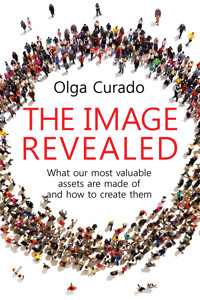
Have you ever wondered what people think about you? And what makes them have that opinion? The image revealed is the description of a method that dissects the content of the image, and as a result offers a personal and professional tool for everyone to know and develop their own image. The method described in the book serves individuals, organizations, institutions, services, products, and provides a path for positioning or repositioning the image. It teaches a new way and looking at events, reading the news, evaluating people and understanding how it is perceived. The image is the way we are all identified or recognized and this defines our personal and professional trajectory. Success and failure are leveraged by the image. After all, what is your image?
Sie lesen das E-Book in den Legimi-Apps auf:
Seitenzahl: 142
Veröffentlichungsjahr: 2021
Das E-Book (TTS) können Sie hören im Abo „Legimi Premium” in Legimi-Apps auf:
Ähnliche



















Summary
Acknowledgements
What and who is this book for?
1. The point of departure
2. The mirror challenge
3. The power of image
4. The mystery revealed
5. The whisper of the gods
6. The magic tool
7. I feel, therefore I exist
8. The confusion of signs
9. Either this or that
10. Action and transformation
About the author
I dedicate this book to all those who want to know more.
Acknowledgements
Creating the image audit index, the IAI, has been an adventure. Documenting this new approach to reading how we are perceived in this book represents the consolidation of the efforts of dozens of people, captured by the idea and the commitment to bring it to fruition.
I would like to thank the various teams at Curado & associates, who have contributed to the project for over a decade, questioning and checking its concepts in their practice. I would like to formally acknowledge the invaluable help of Antonio Romero, Daniel Freire, Ricardo Kauffman, Thais Cerpa, Mayra Fratin and André Gomes – the group responsible for developing the system. I would also like to acknowledge the essential collaboration of Emerson Couto, who provided comments on the book and conducted the Neoenergia case study presented in it.
In addition to the inhouse team who discussed and actively worked day to day on the creation of the index, the IAI was “fathered” by Bruno Favaretto. Responsible for the technology, but more than just a programmer, he contributed actively to discussions about the concept, and proved to be a consummate professional who translated the initially subjective vision into the objective language of computation. I am immensely grateful for his work that dates back over a decade and has recently been creatively and dynamically updated by Gabriel Vasconcellos Pessoa, whom I would also like to thank.
I would like to acknowledge the collaborative role played by Professor of Statistics at the Universidade Federal de São Carlos (São Paulo), director of the Centre for Risk Studies and Postgraduate Studies, Francisco Louzada-Neto, and Professor Carlos Diniz, of the same institution, who audited the method. I am also grateful for the illuminating, reflective conversations with the philosopher Roberto Gambini and the support of the semiologist Doctor Maria Eugenia Curado.
I am equally grateful for the collaboration of the many people at Curado & associates who contributed directly or indirectly to developing and bringing to fruition the IAI, namely Andrea Barbosa Ramos, Emanoel Augusto Lopes de Araujo, Filipe Augusto Damião de Carvalho e Silva Pereira, Guilherme dos Santos Fagundes Ferreira Netto, Izis Layane Damaceno Bispo, Leticia de Areia Menezes, Mayra Siqueira, Marinalva de Jesus Prates, Priscila Ferrio Basílio, Rosana Lima Reis, Thiago Ghougassian, Roney Peterson de Oliveira, Vanessa dos Santos Morais, Rachel Bonino, Udo Simons, Mauro Malin, Rita de Cassia Toth Ferreira, Maria das Dores Marques das Neves, Isabeli Lima Zucheli, Michelle Domingues, Clau- dia Renata Gonzalez, Georgia Nicolle de Azevedo Silva, Gizelle Franca do Nascimento, Lidiane Silva dos Santos, Fernanda Mendes Ferreira, Cristiane Candido de Oliveira, Ricardo Simões, Ricardo Miyajima, Osires Gianetti, Igor Marques Martins, Jennifer Silva de Jesus, Juliana Felipe Gutierrez, Beatriz Bradley Moreira, Sandra Garcia Cortés, Gabriela Borba and Camila Curado Pietrobelli.
Special thanks go to the partners and clients of Curado & associates who have used and are still using the perception analysis methodology (IAI), drawing on it to guide their communication acts. It was due to their faith in the project that we did not give up. I am especially grateful to the confidence in us expressed by the team at Elektro, AES Eletropaulo and Neoenergia group.
I am equally grateful to Boxnet, a winning company with growing credibility in the area of communication, for having added the IAI to its range of recognised services. Thanks to Décio Manso, Enrico Manso, Fabio Franco, Marcelo Molnar, Luiz Rigo and Miklós Pluhar Miyata for their warm, enthusiastic and professional reception.
This book was made possible by the critical participation, enthusiasm and dedication of all those who were involved in the development and implementation of the methodology based on a new way of reading perceptions, decoded by the IAI via its central concepts – value (motivation), governance (accomplishment) and relationship (empathy). I stress, however, that any potential flaws are entirely my own responsibility, and thus I should be the only person held liable for its imperfections.
What and who is this book for?
You, the person who is looking at this book and deciding whether to read it, buy it or leave it where it is, will discover that you need it, because it will change your life.
Why?
The Image Revealed is the description of a method that aims to increase awareness of how we look at people and perceive them, dissecting the content of the image, and as a result offer you a personal and professional tool with which to develop your own image. It describes the mechanism of perception and sets out to help you to formulate answers to questions like: why am I seen like I am seen?
The questions and answers apply to individuals as well as to organizations, institutions, services and products, and provide a way to position or re-position an image. You might be, let’s say, an average person, one of those who don’t stand out from the crowd. You’re grey or a punk like everyone else – your daily life is hard-earned, routine and reasonable, but it’s not causing any great changes to the course of history. Neither at home nor at work, although you have a good circle of friends. All of them like you.
This book is for you.
Have you ever wondered what people think about you? What their opinion is of you? And what makes them perceive you like that? Or are you the sort of person who just counts the number of likes and dislikes you receive? Is this enough to know whether you are a great, fantastic person with a good image? And are you upset when people ignore your comments on Facebook? Why is it that happens? Does everyone forget your birthday? Do people overlook you?
This book will do more for you. It will explain why people do and don’t like your Facebook posts. Not even a smiling emoji? And no kiss?
But you aren’t one of those average individuals. You make things happen. You are an advisor, a consultant – one of those people who help others, or companies, or organizations, to pick themselves up – and you literally chase after things, so that your boss or client has a good image, so that they are publicly recognized for their qualities. You are a press, marketing, media or image advisor, a crisis manager and need to be ready every day to ensure and make it known that everything is going to be fine. Your job is to make sure that the “public” continue to like the company, the boss, the institution, the product, or the service.
I don’t want to convince you of the importance of this book, but I want to tell you that in it I share the concepts that have changed my way of looking at events, of reading the news, of judging people, and have also enabled me to construct the image that I want to have, the way I want to be understood.
To achieve these objectives, it is necessary to understand what an image is, what it is composed of, what its importance is and how to take action to transform it. It is necessary to know that what I see in myself is not always perceived by another person, that there is a big difference between image and self-image, and that it is necessary for the two to be aligned to establish a stable connection with my various publics, whether I am an individual, an organization or an institution.
An image is a map, a drawing sketched in the mind of each one of us that attributes positive qualities to something or to someone. To sketch this drawing, we choose colours and strokes – the attributes.
An image is the way I am identified or recognised, and it defines my relationship with the public. It is not randomly constructed, but rather results from a combination of elements, from a formula. A knowledge of how this operates allows us to create the image we desire, revealing what we are.
1.
The point of departure
In the beginning God created the heavens and the earth (...) And God said ‘let there be light’, and there was light.
From this opening line the Catholic Bible’s book of creation, Genesis, narrates the sequence of events that defined the formation of the Earth, of its inhabitants and elements, the arrival of human beings, who gave everything a name and compared them, classified them and attributed qualities and defects to them.
That was where it all began. In the separation between and the judgements about what is good or bad, when “good” and “bad” were attributed. The next step was: I want the good and I don’t want the bad. These choices were then made – what I want, what I like, what I don’t like - as one of the human beings pointed in a certain direction and said: “hmm, that’s good!” or pointed a different way and stated: “oh, that’s bad!”.
It wasn’t necessary to be familiar with or to try something, or even analyse it for oneself, in order to accept it as good. If someone classified something as being worthwhile, that was enough for this “thing” to be accepted or rejected even before coming into contact with it. “I’m not familiar with it and I don’t like it”. It is the image that determines our choices...
So, there we are, everything started back then when all things were given a name and identified by man. Everything wasn’t just one thing, even though, according to the philosophy of astrophysicist Carl Sagan, we are all made of the same star dust...
But, to return to the point of departure, this is a book about image, its nature, importance and the mysteries of its genesis, as well as the ingredients that maintain it. At the end of the day, what is it made up of? Of that good thing and that bad thing, of what we like and admire and of what we reject and dismiss? Even without trying it. Where does image come from, and what is it composed of? Why is that thing over there good, and this thing over here bad? Where does this incredible power to instantly determine if something will be accepted or rejected come from?
Before going any further, it’s important to underline an essential clarification: what is image? What kind of image are we talking about? This is such a simple question that we might be embarrassed to ask it.
Let’s go back to basics. Image is something that contains some kind of representation, that can be observed. To be less abstract, it is everything that has a form. And when required to give an opinion on this form, the good and the bad constitute an image. How so? Abstraction, which is nothing more than a judgement made about something, is the representation of this thing. Yes, image becomes the thing. So, if I’ve never eaten yams – which might be unlikely – and I have an image of this vegetable as bland, even before I’ve tried it, when it arrives on my plate I may have already declared: “No, thank you! I don’t like it” (because I don’t like bland food... I prefer Thai or Mexican dishes...).
That is image: I imagine qualities or defects, characteristics and attributes and I plough on, making judgements, because in the past someone pointed at a yam and said: “That’s bland!” and I believed it. But why did I believe it? Well, I heard people mention so many times a yam’s lack of taste, because I trust in what I’m told, and even before trying the vegetable myself I formed an opinion about it: it’s insipid. Therefore, the image that remained of yams is that they are rather tasteless food.
If, on the one hand, I identify something from the evaluation passed on to me by someone else, on the other I can also stamp things, people, services and products with qualities or defects, based on my own experience. There is a mystery to be unveiled about this mechanism that leads us to swiftly classify things with good grades or to fail them. This mystery will be revealed later in this book.
I want to return to God – as many people believe, it is to him that we all return in the end. The central idea is that, when everything was just one thing – and in the beginning there was no separation between light and dark, between earth and heaven, everything was generic –, there was no need to make choices, there was no one or nothing to choose, just as there were no agreeable or disagreeable things. Then diversity arose. Tribes were formed, and here I am referring literally to ancient, historical tribes, and now a decision had to be taken: whose side am I on? I’m joining the side that gives the best impression. That has a better image.
There are more people speaking well of me, but not just that, I’m having a more pleasurable experience, but not just that. In any case, I’m not going to completely reveal now the mystery of what makes people speak well or ill of someone. I begin by recognizing that having a good image is the major ambition of people, companies and institutions – because, as I already said, my image arrives before I do and opens doors. Or closes them, definitively.
2.
The mirror challenge
The mirror reflects what is in front of it. Confident as always, the stepmother walks towards it: – is there a fairer woman than me? And the mirror, to her surprise, answers: – yes, Snow White. The stepmother has cultivated an opinion of herself as a person of unsurpassable beauty, something that, unfortunately for her, the mirror does not confirm. When she hears the answer she doesn’t want, the furious stepmother smashes it and orders a hunter to kill her rival in beauty. We are all familiar with the ending of this children’s story.
In the Brothers Grimm fairy tale that has become popular with millions of children of different nationalities, there is an age-old but still current preoccupation, one that underpins the most established human desires: to be well-seen, or seen in the way that meets our expectations, and our own sense of who we are.
What I see in the mirror is not necessarily what the mirror reflects. The genie in the mirror shows something that I don’t always manage to see – my image, whereas I only see my self-image, the opinion that I have of myself.
Self-image is how I see myself. Image is what the public sees and imagines. When there is a gulf between what I see and characterize myself as, and what the person who sees me does, a great sense of frustration can ensue, like that of Snow White’s stepmother. “What? I’m not the fairest of them all?!” It is in this context of great annoyance that victims also emerge – Snow White in a deep, poisoned sleep and the communication advisors who are unable to convince the mirror to disseminate that good opinion that I have of myself. The mirror doesn’t reveal self-image, it simply shows the form in front of it.
My opinion, in other words, how I characterize myself belongs to me, but I have no control over another person’s view of me, what they perceive and infer about me. That is image. Beauty and ugliness are in the eye of the beholder.
The mirror simply reflects.
This is where tensions arise. The other person does not perceive my good qualities. The mirror is passive and lazy. We would thus be condemned by an image that we don’t recognize because the mirror does not always have a polished surface. It can indeed distort the form of the object in front of it. Who is the mirror? The public I present myself to, whether as an individual, as a species, as a business, service or product.
In front of this public I face my first major challenge: to align my image and my self-image, being seen and recognized as the best I have to offer, being applauded for the qualities that I recognize when I look at myself.
How can I ensure that my self-image – a positive one – is confirmed by the public, if the mirror only captures what is in front of it and the image it creates takes into account its own limitations? I cannot change the nature of the mirror, but I can create conditions so that it reflects the best of me, as far as it’s able. I need to show it my good qualities, and to do so I must first identify and present them.




