


Erhalten Sie Zugang zu diesem und mehr als 300000 Büchern ab EUR 5,99 monatlich.
- Herausgeber: Birlinn
- Kategorie: Lebensstil
- Sprache: Englisch
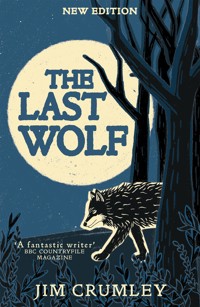
New and updated edition. In 1743, according to legend, the last wolf in Scotland was killed by a huntsman near Inverness. Long regarded in folk takes and history as a slayer of babies, a robber of graves, a devourer of battlefield dead, its extinction was widely celebrated. But since then, deer have multiplied, destroying the vegetation on which an array of wildlife depends, and it is clear that the entire Highland ecosystem has been thrown off balance by the elimination of a top predator. Jim Crumley believes the old stories are pure fiction – a distortion of reality which prevents people from thinking rationally about the huge benefits wolves could bring. With reference to wolves in other cultures and places, from the south-west of England to Scandinavia and North America, this is a passionate polemic which argues for the return of the wolf to heal the damaged land.
Sie lesen das E-Book in den Legimi-Apps auf:
Seitenzahl: 317
Veröffentlichungsjahr: 2012
Das E-Book (TTS) können Sie hören im Abo „Legimi Premium” in Legimi-Apps auf:
Ähnliche


















THE LAST WOLF
OTHER TITLES BY JIM CRUMLEY
Nature Writing
The Winter Whale
Brother Nature
Something Out There
A High and Lonely Place
The Company of Swans
Gulfs of Blue Air (A Highland Journey)
Among Mountains
Among Islands
The Heart of Skye
The Heart of Mull
The Heart of the Cairngorms
Badgers on the Highland Edge
Waters of the Wild Swan
The Pentland Hills
Shetland – Land of the Ocean
Glencoe – Monarch of Glens
West Highland Landscape
St Kilda
Fiction
The Mountain of Light
The Goalie
Autobiography
The Road and the Miles (A Homage to Dundee)
Urban Landscape
Portrait of Edinburgh
This eBook edition published in 2012 by Birlinn Limited West Newington House Newington Road Edinburgh EH9 1QSwww.birlinn.co.uk
Copyright © Jim Crumley, 2010
The moral right of Jim Crumley to be identified as the author of this work has been asserted by him in accordance with the Copyright, Designs and Patents Act 1988
All rights reserved. No part of this publication may be reproduced, stored or transmitted in any form without the express written permission of the publisher.
ISBN: 978-1-84158-847-6 eBook ISBN: 978-0-85790-520-8
British Library Cataloguing-in-Publication Data
Remember well
GEORGE GARSON
(1930–2010)
Of all the native biological constituents of a northern wilderness scene, I should say that the wolves present the greatest test of human wisdom and good intentions.
– Paul Errington, Of Predation and Life (1967)
CONTENTS
Acknowledgements
Prologue
1 False Wolves and True
2 A Cold Spoor
3 An Unreliable History
4 The Rabid Droves
5 Last Wolf Syndrome
6 The Findhorn
7 Rannoch
8 Devon
9 The Black Wood
10 Norway
11 The First Dreams
12 Yellowstone
13 A Dance with the Moon
14 The Absence of Wolves
15 A Dark Memory
16 Rannoch Once More
17 The Last Dream
ACKNOWLEDGEMENTS
The author gratefully acknowledges a grant from the Society of Authors that greatly assisted the cause of this work.
Thanks to the publishers of the following works for permission to quote from them in the text:
Decade of the Wolf by Douglas Smith and Gary Ferguson, Lyons Press, 2005
Comeback Wolves edited by Gary Wockner, Gregory McNamee and SueEllen Campbell, Johnson Books, 2005
Wolfsong by Catherine Feher-Elston, 2004
On the Crofters’ Trail by David Craig, Cape, 1990
Of Wolves and Men by Barry Lopez, Touchstone, 1978
The Wolf by Erik Zimen, Souvenir Press, 1981
The Company of Wolves by Peter Steinhart, Vintage, 1996
The author is also grateful to the late Aldo Leopold (A Sand County Almanac), Margiad Evans (Autobiography) and Seton Gordon (The Charm of Skye) for books which had a profound influence on his life and work, and to J.E. Harting (British Animals Extinct Within Historic Times) whose book did no such thing, but without which this book would have been much tougher to write.
Particular thanks to my friend and landscape painter of distinction, Sherry Palmer of New Hampshire, for choice examples of American wolf literature and for countless cuttings of American journalism on the subject of wolves; and to Molly Pickall and Sarah Deopsomer of the Yellowstone Wolf Project who were extremely helpful and encouraging.
PROLOGUE
The Painter of Mountains
THE THING about the mountain after the wolves came was that it started to change colour. We noticed the change the second year, in the spring. All along the level shelf at the foot of the screes where the deer used to gather in the evening there was a strange haze. We had never seen that haze before. It was pale green and it floated an inch or two above the ground, a low-lying, pale green mist.
We had only ever seen the red deer there, deer by the hundred, deer browsing the land to a grey-brown all-but-bareness, all-but-bare and all-but-dead. It is, we thought, what deer do. They gathered in the places that sheltered them, places that accommodated their safety-in-numbers temperament. And every morning, once the sun had warmed the mountain, they climbed to higher pastures. They commuted up and down the mountain. But their days routinely ended browsing the level shelf to the bone, to the almost-death of the grasses, mosses, lichens, flowers. When there was nothing left to eat they moved. But as soon as new growth began they returned because they liked the comfort of the shelf under the screes, and the browsing to almost-death resumed. In the long wolfless decades they forgot how to behave like deer. Then the wolves came back, and overnight they remembered.
We looked out one evening and there were no deer. None. We scoured the lower slopes, all the ways we knew the deer came down the mountain in the evening. Nothing.
We saw no deer for weeks without knowing why, until on the stillest of evenings a wolf howled. We had never heard a wolf howl. Not even the oldest folk in the glen held the memory of wolves, only the handed-down stories that grew out of an old darkness. That howl, when it came, when it sidled round the mountain edge the way a new-born breeze stirs mist out of stillness, when it stirred things in us we could not name because we had no words for what we had never felt and never known . . . that howl sounded a new beginning for everything in the glen that lived. Everything that lived, breathed, ran, flapped, flew, flowered – and all of us – were changed from that moment.
And in the spring of the second year after the wolves came, we saw the mountain start to change colour. Where the deer had been, where they smothered – suffocated – the growth, bit and bit again the heather-high trees (twenty years old, twenty inches high and going nowhere until at last they were bitten to death) . . . in that second spring we saw the evening sun illuminate a green haze, low on the land. At first we didn’t understand its meaning, so we climbed from the floor of the glen to the old deer terrace, and we found its meaning: fresh, sweet, young, vivid, green grass. The wolves, by keeping the deer constantly on the move, had restored to the mountain a lost meadow.
And as the spring advanced, flowers! Splashes of white and yellow and blue, and the grass ankle-deep. And with every new season after that, the new growth summoned others to the change: butterflies, moths, berries, berry-and-butterfly-eating birds; then the first new trees.
It has been ten years since the wolves came back. Their howls have become the mountain’s anthem. The deer still come back to the old terrace, of course, but in much smaller groups, and only for a few days at a time. Then they vanish, and we know they have moved on to the rhythm demanded of them by the wolves. The trees are many, and tall, taller than the biggest stag. The oldest memories in the glen do not remember trees before.
Now, every year at the first hint of spring, we watch the low sun in the evening for the first illumination of the new green mist.
The wolf that was handed down from the old darkness was a slayer of babies, a robber of graves, and a despoiler of the battlefield dead. The wolf that howls in our dusk is a painter of mountains.
CHAPTER 1
False Wolves and True
Clearly, this is an animal less likely to offer scientists irrefutable facts than to lure us on a long and crooked journey of constant learning.
– Douglas W. Smith and Gary Ferguson, Decade of the Wolf (2005)
I MET A MAN in Norway who told me this true story: ‘A friend calls me one Saturday morning . . . he has sled dogs, and in the night these dogs had been very upset and made much noises. He was going out to shout at the dogs, and he doesn’t have nothing on him, and it was winter. And he was standing there shouting at the dogs and then they were quiet. And when they were quiet he heard a concert from wolves 200 metres from his house. And he was standing there pure naked. Can you imagine that feeling? Nothing on you!’
I said, ‘That’s got to be the ultimate wilderness experience.’
My Norwegian friend said, ‘Yeah, he thought so too!’
Ah, but then the story grew legs, became what the Norwegians call ‘a walking story’. My friend heard it again two weeks later from a completely different source. The ‘concert from wolves’ at 200 metres had become a slavering pack that confronted the man and threatened him so that he had to drive them off, and was lucky to escape with his life.
‘That was in 14 days,’ he said. ‘What about 140 days? Or 140 years?’
The process of wolf-legend-making is far from extinct, but that is what happens with some people and wolves. The truth is never enough for them. The man who told me this story is a wildlife photographer and film-maker. He and a friend had just completed a TV film about a pack of wolves that had taken eight years to make. That particular pack’s territory is around 1,000 square miles. They find the wolves by tracking them in the winter when the pack uses frozen rivers and lakes as highways and the wolves write their story in the snow. The film-makers read other clues, such as the behaviour of ravens; ravens are forever leading them to wolf kills.
‘Tell Jim how many ravens you saw on one wolf-killed moose,’ one Norwegian film-maker urged the other.
‘Seventy,’ he said, and to make sure I had understood his heavily-accented English he elaborated: ‘Seven times ten.’
Both men were openly hostile towards biologists who fit radio collars and transmitters to wolves after first firing tranquilliser darts into them from planes or helicopters so the collars and transmitters can be fitted. They raged against the stress the darting causes the wolves. One said: ‘The uncollared wolves are the real wild wolves. These people who use the radio collaring . . . it seems to be the wolves are only things. It’s like a computer game.’
I smiled and told them of Aldo Leopold’s observation in his timeless landmark in the literature of the natural world, A Sand County Almanac: ‘Most books of nature writing never mention the wind because they are written behind stoves.’
They smiled back. ‘It’s the same thing! And it’s very exciting to not know everything. If you know everything, it’s not exciting.’
The Norwegian Government permits four wolf packs in the country. When I met the film-makers, three out of the four packs, and all the packs in neighbouring Sweden, were collared and tracked by computer. The film-makers were fighting a rearguard action on behalf of the Koppang pack, the one they had filmed. They spoke about the need to allow the wolf to retain its mysteries. Their language surprised me, because, historically, Scandinavians have not made the wolf welcome, and here they were using the kind of language I associate with indigenous North Americans. I liked them because they spoke my language too, and because historically, Scots did not make the wolf welcome either.
I mention all this because in any exploration of the wolf in Scotland, sooner or later someone somewhere will ask you to believe that the last wolf in Scotland – in all Britain, for that matter – was killed in the valley of the River Findhorn south-east of Inverness, around 1743. You will also be asked to believe that the history-making wolf-slayer was a MacQueen, a stalker and a man of giant stature. He would be. Wolf legend is no place for Davids, only Goliaths.
He was six feet seven inches. There’s a coincidence – the same height as Scotland’s greatest historical hero, William Wallace, or at least the same height as William Wallace’s legend has grown to in the 700 years since he died. Like Wallace, MacQueen was possessed of extraordinary powers of strength and courage; and in addition he had ‘the best deer hounds in the country’. Well, he would have. You would expect nothing less. The wolf he killed (with his dirk and his bare hands) was huge and black. Well, it would be, you would expect nothing less. And it had killed two children as they crossed the hills accompanied only by their mother. What, only two? When the story was first published in 1830, the Victorians swallowed it whole, in the grand tradition of wolf stories.
And here’s another coincidence. At the same time, the Victorians were high on a heady cocktail of Scottish history and Sir Walter Scott, and in that frame of mind, were in the throes of building an extraordinary national monument to one of the greatest figures in any rational assessment of Scottish history – William Wallace. His monument stands on a hilltop on the edge of Stirling within sight of the scene of his finest hour, the Battle of Stirling Bridge in 1297. The coat of arms of the old royal burgh of Stirling was a wolf.
The Victorians loved the story of MacQueen as much as they loathed anything with claws, teeth and hooked beaks. Killing nature’s creatures (and often stuffing the results and displaying them in glass cases or on the walls of castles and great houses) was a national pastime among the gun-toting classes. It occurred to no-one that the last wolf in Scotland might not have been killed by a man; nor that it might have died old and alone in a cave, perhaps in the vast wild embrace of Rannoch Moor in the Central Highlands, or in the empty Flow Country of the far north, and many years after any human being last saw a wolf. No-one challenged the evidence on which the story of MacQueen and his casual heroics was hung and presented as fact. But that is what you are up against when you consider the place of the wolf in my country, and for that matter, in so many other countries. That is what I am up against in this book. But first, here is a glimpse of the animal we are talking about: not a supposed-to-be wolf but a real wolf.
She was known as number 14 and her mate was Old Blue. Even if it does sound like the first line of a bad country and western song, it was a match made in heaven, or at least in Yellowstone, which in wolf terms is much the same thing. Biologists like Douglas Smith who are deeply embedded in the project to restore wolves to Yellowstone National Park in the northern United States give wolves numbers or, very occasionally, names, to help keep track of them. Number 14 and Old Blue were two remarkable animals, even by the rarefied standards of the tribe of wild wolves. The average lifespan of a Yellowstone wolf is three to four years. Old Blue was almost 12 when he died, at which point Number 14 had to be at least eight years younger. She learned prodigiously from such a seen-it-all-before wolf as Old Blue, so that when he died, she was equipped for anything that the North American wilderness could throw at her. But first she did something astonishing.
In the last few months of his life, Old Blue and number 14 mated one last time. But when he died, number 14 took off, leaving behind her pups and yearling wolves, leaving the territory of the pack. Alpha female wolves don’t take off when they have pups, don’t abandon their families. It doesn’t happen. But 14 took off alone into deep snow, into a landscape that according to Smith, was ‘so inhospitable it contained not a single track of another animal’.
She was eventually found by a spotting plane, gave it a single cold stare, then simply continued travelling until all efforts at tracking her failed. She vanished.
She was gone for a week. Then quite suddenly she turned up again, rejoined her family and the rest of the pack. Smith wrote: ‘Though no-one wanted to say 14 travelled alone so far because she was mourning the loss of her mate, some of us privately wondered.’
Travel is the wolf’s natural habitat. With no alpha male, but possessed of all the experience and survival skills of Old Blue, number 14 waited for the elk migration to come down from the high ground, then led her pack away, following the elk. Their travels took them into the neighbouring wolf pack territory and into a battle. They killed the resident alpha male and some of the others fled; two died in a snow avalanche. These were found the following summer, ‘their skeletons at the foot of a small waterfall, shrouded in the lavender blooms of harebell’.
Number 14’s audacious move shook up the established order in that part of Yellowstone, and her pack acquired a huge territory with a single battle, no casualties and no alpha male. But the new territory was harsh in winter, the elk all but vanished, and the pack would have to rely on the formidable prey of bison. At first they travelled further into the National Elk Refuge, but then, and for reasons no-one understood, she led the way back to her hard-won heartland and stayed there, as uncompromising in the life she chose to lead as the territory she won for her pack.
Number 14 was found dead at the age of six, but even her death had something of an aura about it. When national park staff found her, there was a golden eagle on her carcase, and if you like your appreciation of nature well garnished with symbolism, what more do you need than that? The carcase of a moose lay nearby. It seems that an epic encounter had killed both prey and predator. Later observation of the spot revealed a grizzly bear covering her carcase as if it was the bear’s own kill. There are no memorials to wolves like these, no epitaphs or eulogies. They live and die at the cutting edge of nature. The death of Number 14 was attended by golden eagle and grizzly bear, and it may be she was mourned by her own kind. Nature marked her passing in a way that honoured her astounding life.
The reintroduction of wolves into Yellowstone in 1995 after an absence of 70 years has been well documented; the lives of many individual wolves have sprung into sharp focus, and their stories have travelled the world. Yet despite these years of precious discovery, despite the sum of accumulated knowledge of earlier wolf biologists and nature writers, and despite the best of twenty-first-century technology, wolves are forever baffling and outwitting our own species. We simply don’t know why they do certain things. ‘Clearly,’ wrote Smith and Ferguson in Decade of the Wolf, ‘this is an animal less likely to offer scientists irrefutable facts than to lure us on a long and crooked journey of constant learning.’
Number 14 baffled Yellowstone’s professional staff more than most, and appears to have got under the skin of Doug Smith. The summer after her death, he rode out on horseback ‘to find what was left of her. Not surprisingly, little was waiting for me but bone and hide. I found too the dead moose she’d been battling with, also entirely consumed by scavengers. I knelt one last time by her tattered carcase, feeling the quiet of this extraordinary spot in the Yellowstone back-country. A slight breeze came up, fingering the tall summer grass. Looking around, all in all it seemed a beautiful place to come to rest.’
The entire Yellowstone reintroduction project was only possible because of the Nez Perce tribe and its particular relationship with wolves. The first wolves were released onto the Nez Perce reservation; the tribe offered them a home at a time when state authorities refused to handle wolf management programmes. Wolf reintroduction was political dynamite, and politics prevailed over wolves. Only eighty years before, the US government initiated a policy of wolf extermination, a state of affairs that lasted until 1973 when President Richard Nixon signed the Endangered Species Act. The wolf was the first animal to be listed as endangered.
Few people would have blamed the Nez Perces if they had declined to assist the United States government in the resettlement of Canadian wolves into Yellowstone. Historically, no tribe was treated more brutally by white America than the Nez Perces, but as the head of the recovery programme Ed Bangs put it, ‘The Nez Perces revere wolves: they have a different way of looking at animals.’
Catherine Feher-Elston, an archaeologist and historian who has worked with many indigenous peoples across the world, wrote of the Nez Perce relationship with wolves in her 2004 book Wolfsong:
Nez Perce call wolf He’me. Wolf is an embodiment of past, present and future to them . . . Levi Holt, a Nez Perce who worked with the wolves, maintains that wolf recovery helps return the Nez Perces and all people to balance, dignity and the right way to live. ‘Restoring the wolf, protecting the wolf, sharing our lives with the wolf gives us a chance to have our culture reborn,’ says Holt. ‘We know that successful recovery will lead to delisting of the wolf. We know that some ranchers fear wolves will hurt their livestock. We know that if states take over wolf management and wolves are delisted, some people will hunt wolves. But our tribe will not take part in hunting wolves. People will not be allowed to hunt them on Nez Perce lands. We will honour our ancient relationships. What affects them affects us.’
Holt says that when he remembers everything the wolves and his own tribe have endured together, he looks at the wolves and prays, ‘We mourned your death. We were saddened by your exile. We rejoice in your return.’
Remember these things whenever you encounter stories of the wolf’s savagery, stories of the wolf as a wilful slaughterer of innocent children, a terroriser of isolated human communities, a despoiler of human graves, a devourer of battlefield corpses; whenever you encounter the wolf cast in the Devil’s clothes, remember too that where people have always lived closely with wolves and still do, they are often protective of the relationship and sometimes pray for them.
CHAPTER 2
A Cold Spoor
Was Waternish perhaps the last hold of heathendom in Skye, as it certainly was of wolves?
– Otta Swire, Skye – The Island and Its Legends (1961)
SOMETIMES YOU just have to walk the landscape to see what rubs off. You go with no more than half an idea in your head: something happened here once, you tell yourself, or someone else has told you and you at least half-believe it. And you want to know if the landscape itself still holds the scent or the sense of it. It is a nature writer’s way of looking at the landscape. You go with your senses open to anything and everything, looking for the cold spoor of what it was that passed this way. Even a cold spoor is better than no spoor at all. Perhaps there will be a whiff of something on the wind. Perhaps the long absence of wolves will drop hints of their old presence the way something suggestive of what unfurled and died and vanished there forever seems to occur when you walk the battlefield of Culloden. When the naturalist and nature writer David Stephen wrote a novel about Scotland’s last wolf he called the wolf Alba, the Gaelic word for Scotland. His was a symbolic wolf that died on 16 April 1746, the date of Culloden. Scotland died, he was saying, with Culloden, the last battle fought on British soil, and the wolf died with it. It is certainly unarguable that both events impoverished Scotland immeasurably.
Yet Culloden is a known historical event with a known outcome. There were eyewitnesses and survivors. As a species, we write down our own story. But in the matter of Scotland’s wolves, there are almost no certainties at all. The more I explored our old wolf stories, the more elusive the truth became. The few historical accounts of wolf-related events are rich in distortion and quite bereft of what we now know in the twenty-first century about wolf biology. Yet the wolf has not changed. The wolf the Yellowstone Wolf Project began to reintroduce in 1995 (the project proceeds apace as I write) is the same wolf that storytellers from the Middle Ages to the Victorians crossed swords with, the same wolf that appears in the lens of a Norwegian wildlife cameraman in the twenty-first century. Yet it has become clear to me in the course of writing this book that almost nothing in so-called historical records about the wolf in Scotland is reliable, almost nothing at all.
So part of my response has been to walk the landscape to see what rubs off. Perhaps the old rocks, the oldest trees will speak to me more directly and with more honesty than the ghosts of the old people. So I travel, hoping against hope that perhaps just being there will flush out some extra awareness that lives on in that landscape, a connection that illuminates the past and makes it relevant to what the poet Kathleen Raine called ‘this very here and now of clouds moving across a still sky’.
I began with the north-leaning peninsula of Waternish on the island of Skye in search of the scent or the sense of its wolves. The particular half-an-idea that directed my feet there had been implanted by Seton Gordon, an old sage of both Skye and nature writing. His long life (he died in 1977 at the age of 90) and his fascination for both wildlife and the handed-down word-of-mouth history of the landscape and its people gave him a reach far back beyond the range of most writers of his time. And he had written in The Charm of Skye (1928) about wolf pits on a Waternish hillside. And Skye has a place in my heart not easily explained considering I am an east-coast mainlander from Dundee, and the slightest excuse to return has always been fine with me.
Waternish, or Vaternish in the old maps and old books like Seton Gordon’s, is out-on-a-limb Skye. Skye is the Winged Isle of the Norseman. Of the island’s four ‘wings’, Sleat boasts two ferry terminals and one end of the Skye Bridge, Duirinish is veined enough with roads for a stranger to need a road map, and Trotternish has a ferry connection to the Western Isles, a ring road, a couple of hairy east-west road crossings and Portree on the doorstep. But Waternish owns only a thin string of road that runs between the crest of a long hill and the sea. It begins with Fairy Bridge and ends with Trumpan, the one a by-passed stone bridge with a reputation for supernatural encounters and spooking horses, the other a ruined church famed for a massacre, and for the last resting place of a notorious madwoman. And nearby is Cnoc a’ Chrochaidh, the Hanging Knoll. There is little here to mitigate Waternish’s isolation.
There is also something almost tangibly Norse at work, something more redolent of Shetland than Skye. There is a clutch of Norse-tongued names – Lustra, Halistra, Dun Hallin, Trumpan, the offshore islands of Isay, Mingay and Clett. And Waternish feels like its own island with a land bridge to Skye, much like Ardnamurchan’s barely physical attachment to mainland Scotland, and which makes for self-containment in a community. Some islanders elsewhere on Skye look askance at the Waternish folk, and doubtless vice versa. The landscape of Waternish is a factor in all this too, for in terms of its blunt, raw beauty, and especially its seaward prospects, there is nothing like it, even on Skye.
Legend and historical fact (separating the two was never an easy task, especially among Gaels) have conspired to blacken the reputation of Waternish. Every legend is liberally bloodied, witches performed black deeds in the guise of cats, the centuries-old MacLeod-MacDonald feud commemorated at Trumpan was gruesome even by their own dire standards of clan warfare, and – wouldn’t you believe it? – the peninsula has the reputation of being Skye’s stronghold of wolves. Whether this last claim accounts for much of the darker side of Waternish lore is nothing more than speculation of my own, but I now advance it with some confidence because it is true of almost all the reputed haunts of wolves throughout Scotland. For all the cultural sophistication of the Gaels, they suffered from the same blind prejudice towards the wolf as most other northern European peoples, the same willingness to blacken its reputation at every opportunity. That the Gaels willingly exterminated wolves from their realm makes them no more and no less culpable than most of the rest of Scots, Britons, and half the tribes of the northern hemisphere. If wolves or stories of wolves have a home on Skye, here is as likely as anywhere and likelier than most.
But Waternish was still early in my explorations of the landscape of Scotland’s wolves. It seems to me now that if there ever were wolves on Skye (and hints of a tradition prove nothing, not in the flaky depths of that malaise of Scotland’s wolf landscape I think of as ‘last wolf syndrome’, a previously undiscovered chronic medical condition that attacks the corner of the human brain dealing in rational thought), it might have been in just such a far-flung northern outpost that they clung on longest, that they made their last stand in the face of the relentless encroachment and wolf-hatred of the people. The coastal woods under Geary and the tumultuous alders at Waternish House suggest that, three or four hundred years ago, Waternish would have been more wooded than it is now, and that too could have assisted their tenuous survival, although woodland has never been essential to wolves. Seton Gordon had written:
Other relics of the past age are the remains of long wolf traps. These are on the hill near Trumpan and must be of great age, for the oldest inhabitant has no tradition of when the last wolf was trapped in Skye. The traps are long pits dug into the hillside. In length they are some 24 feet, and in breadth approximately three feet. They are now almost filled in, but their shape can be seen at a glance. The entrance, too, is visible. There is a tradition among the old people of Waternish that the bait for the wolves was a piece of flesh placed near the upper end of the trap – the traps were all dug parallel with the slope of the hill – and presumably the wolf was imprisoned on entering by a door which closed behind it.
Here was my first brush with contradiction in the matter of communities and their wolf traditions. The ‘oldest inhabitant’ had no tradition of when the last wolf was trapped, yet the ‘old people’ did have a tradition about how the trap was made and baited. And then there was the truly implausible bit, as recorded by Otta Swire in her book, Skye – The Island and Its Legends (1961):
There are still faint traces of ancient wolf-traps to be seen. Indeed, so comparatively recent are they that tradition still lingers of how a hunter accidentally fell into his trap and was saved by his companion, one Gillie Chriosd Chaim, who caught the wolf by the tail and so held it . . .
Um. Typical wolf behaviour might have been either to back away from the man who had fallen in, or to scramble free itself (and if a man could do it, rest assured a wolf could do it with ease). The one element of the story likely to have induced a hostile reaction in the wolf is the Alice-in-Wonderland-ish detail of someone else coming up behind it and grabbing its tail, an idea about as likely in the real world as the Mad Hatter’s tea party. It is a shame that the wolf declines in real life to live up to its ancient reputation, for there would have been a delicious natural justice if the hunter had been torn apart in his own pit by the very quarry whose death the pit had been designed to achieve.
Elsewhere on Skye, at Prince Charlie’s Cave near Elgol, Otta Swire notes that it has a claim to be where ‘one of the earlier Mackinnon chiefs, being attacked by a wolf, slew the creature by forcing a deer bone down its throat, a feat still commemorated in the Mackinnon arms.’
Despite the Grimm-esque quality of the yarn-spinning, she is confident enough to assess Waternish’s reputation thus: ‘Was it perhaps the last hold of heathendom in Skye, as it certainly was of wolves?’ Yet no-one has ever supplied a scrap of evidence to back up that ‘certainly’.
Back in the real world of Waternish in December, I looked out across Loch Bay where a conifer plantation ends and the cliff belt about the waist of Sgurr a Bhagh begins. Beneath it hang folds of skirts fashioned from native trees, untrampled, ungrazed, unfelled, unburned, the natural order. I watched them grow grey and darkly purple one quiet midwinter afternoon and thought the wolves would have loved them.
There were only two hours of usable daylight left. There was no prospect of afterglow or moonlight to steal from the long northern night, merely the certainty of a dirty afternoon, a week before the shortest day, growing progressively dirtier. Wind had blasted rain into submission, but that was all that had submitted. It had looked an unenticing prospect when the squalls thudded through a half-dark noon, but by one o’clock they had ceased their percussive flaying of the window where I worked, and I rose from the writing table and went out into the island. By two I was scrambling through a little gully on the flank of Beinn na Boineide and the air was the icy breath of the Arctic. If anything else was to fall from that sky that day it would be snow.
I have long since learned to value fragments stolen from the unlikeliest days: two hours on a hillside in Waternish can amount to an energising expedition after a long morning writing. A mind weary with word-making can be blown clean and uncluttered, and goes eagerly in pursuit of the wolf image it has made for itself. There is no long, patient stalk to consider, nothing to pack, nothing to prepare. There is just jacket, scarf, wellies, gloves, binoculars and an afterthought apple for my pocket. Then there is just the being there.
I love the gloaming hour whatever the season, the folding away of the daylight creatures and the unfolding of night lives, the brief pause of overlapping regimes. Here an owl might contemplate an eagle, the turning head of a wind-perched kestrel might follow a low-flying skein of whooper swans homing in on a roosting lochan. At the same hour on a December day a decade or two before Culloden, a fox might have stepped deferentially aside from a hunting wolf.
At a little over 1,000 feet, Beinn na Boineide, the Bonnet Hill, is the head and shoulders of all Waternish. I tramped up out of the gully, breathed easier on the slopes above, saw the sea widen and Waternish’s own shape and shade of moorland hill lengthen. With no light in the sky the moor grasses smouldered with their own dark flame. There was no bright point in all the landscape. A slab of dark grey cloud lowered and squatted on Waternish, so I walked north keeping below it, following the line of overgrown dykes until I stumbled on the bed of an old track. A slow, downhill, breaking wave of peat and moss and lichen had overwhelmed the bones of dykes and track, obliterated the art of the builders. If there was anything left of the old wolf traps, if I could find what was left, if there had ever been wolf traps at all other than in a storyteller’s imagination, this was what I could expect to find . . . their grown-over ghosts.
Once I would have walked here among birch, hazel, oak, ash, rowan, alder, willow, pine, aspen maybe, an airy woodland shaped into contrary uphill waves by the sea wind. Once, the road-and-dyke builder might have stood here among such trees and watched a wolf catch his scent on the wind, test it, and step quietly away from it. I allowed myself to believe that much, for the moment. Then a buzzard cried close by and almost at once rounded a buttress moving sideways across the strengthening wind, led by the primary feathers of her left wing. And I was above and behind the bird, so I crouched to be a rock on the hillside, well placed to watch her harness the wind to her bidding. When I put the glasses on her she almost filled them.
She sat on the wind rather than hovering like a kestrel. She held her wings in rigid concave arches, flexing them only briefly to make minute adjustments of her position or to drift away a yard or two over the moor only to turn again into the wind, yellow legs dangling. Her head restlessly scanned the moor below, ahead and to either side, and to the far horizons. In perhaps ten minutes, she was never further than 20 yards from where I had first seen her. Then she started to drift towards me, sideways and slightly backwards, conceding a few yards of airspace to the wind. As the bird drifted, she also rose, climbing the hillside backwards. In that attitude she passed above my head, low and dark and huge. Instantly the tables were turned. Now she was above and behind me, and I guessed that her scrutiny of the landscape was now riveted on me: the watcher watched.




