


32,99 €
Mehr erfahren.
- Herausgeber: John Wiley & Sons
- Kategorie: Fachliteratur
- Sprache: Englisch
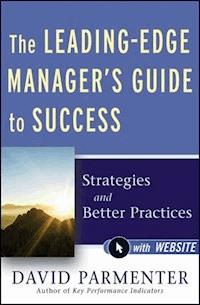
Practical, commonsense advice on becoming an effective leader Examining the baggage that most managers have and then helping them to understand the personal traits that can limit their potential, this book guides you through the pathway of self development, then takes you through management and leadership better practices, providing many implementation tools. * All you need to know when getting prepared for a 'management role' * How to develop 'conquest leadership' attributes * Traits to make you a 'winning' CEO * Latest thinking on KPIs, quarterly rolling planning, decision based reporting and performance related pay * How to create Winning Management and Leadershp Habits * Examines how to become More Financially Aware This book is a very practical guide with templates, 'how to do it tools', stories about gifted leaders, checklists and examples and is devoid of all intellectual arguments on management. With directional guidance on what managers need to know in order to be able to manage and lead others, The Leading-Edge Manager's Guide to Success helps managers and 'managers to be' as they climb the 'management mountain'.
Sie lesen das E-Book in den Legimi-Apps auf:
Seitenzahl: 525
Veröffentlichungsjahr: 2011
Ähnliche


















Table of Contents
Cover
Table of Contents
Title page
Copyright page
Dedication
Preface
Acknowledgments
Part I: Selecting the Mountain and Your Guides
CHAPTER 1 Creating a Vision of What You Want to Achieve
Neuro-Linguistic Programming
Influencing the Environment
CHAPTER 2 Find Out about Yourself
Personal Baggage
Courses to Attend
Locking in a New Behavior Trait
Inner Disarmament
CHAPTER 3 Locating a Mentor
Why You Need a Mentor
How to Find a Mentor
How to Ask Someone to Be Your Mentor
Types of Mentors
Some Mentoring Better Practices
CHAPTER 4 Finding the Right Organization for You
Working under a Great CEO
Working for a Great Manager
Part II: Getting Prepared for Management
CHAPTER 5 Creating Winning Personal Habits
Treasure Mapping
Self-Recognition
Recognition of Others
Making Decisions
Do Not Run Out of Fuel
Continuous Innovation
Learn How to “Post-It” Reengineer
Mind Mapping
Business Etiquette
Managing Relationships
Cell Phone Etiquette
Greeting the Guest
Remember You/Remember Me
Disengaging Swiftly and Politely
Full Attention at Meetings
Returning Phone Calls
Golden Rules with Email
CHAPTER 6 Developing Winning Work Habits
Attend a One Week Management Course
How to Help Your Boss Be Successful
How to Handle a “Bully of a Boss”
Time Management: The Basics
The 4:00 P.M. Friday Weekly Planner
Power Dressing
Preparing for Your Performance Review
Preparing a Monthly Progress Report
Quality Assurance Checks
Contributing to Your Organization’s Intranet
Making the Most out of Your Computer Applications
In Pursuit of Slow
Better-Practice Graphics
Delivering Bulletproof PowerPoint Presentations
Searching the Web Efficiently
Interview Techniques
CHAPTER 7 Part Two Progress Checklist
Thirteen-Week Change Program
Lessons from Sir Edmund Hillary’s Expeditions
Part III: Being A Better Manager
CHAPTER 8 Improving Team Performance: The Basics
Attending Further Management Courses
Staff Debriefing at the End of the Day
Attracting the Best Staff to the Team
Getting the Right Staff
Getting the Induction Process Right
Set Up Monthly One-on-One Progress Meetings with Direct Reports
Performance Reviews that Work
Hold Offsite Meetings for the Team at Least Twice a Year
Make Work Fun
In-House Satisfaction Survey
Getting a Bigger “Bang” for Your Training Dollar
Managing Staff on Sick Leave
Stress Management
Apply Pareto’s 80/20 Principle in Your Work
Maintain a Focus on Materiality
CHAPTER 9 Improving Team Performance: The Cutting Edge
Implementing “Action Meetings” Methods
Hourly Meeting Cost
Check the Need for the Meeting
Ban Morning Meetings
Learn How to Negotiate
The Hidden Cost of Downsizing
Dismissing a Poor-Performing Employee
The Overnight Challenge
Use the One-Minute-Manager Techniques
Introduce a Team Balanced Scorecard
Lessons from a World-Class Coach
CHAPTER 10 Effective Recruiting
Understand That Time Spent Recruiting Is the Most Valuable Time
Cathay Pacific Recruitment
Peter Drucker’s Five-Step Process
14 Great Questions to Help Get Select ‘A’ Players
Using the Organization’s Values in Recruiting
Involve the Human Resources Team
Use Simulation Exercises and Psychometric Testing
Assessment Centers
Involve Your Team in the Final Selection Process
Ask Your Top Employees for Referrals
Reference Checks: The Do’s and Don’ts
Selecting an Executive Assistant to Be Your Copilot
CHAPTER 11 Becoming More Financially Aware
Understand Your Financial Responsibilities as a Budget Holder
Understanding Internal Controls
Understand Your Organization’s Financial Statements
Balance Sheet or the Statement of Financial Position
Statement of Profit and Loss
Source and Disposition of Funds
CHAPTER 12 Developing Your Selling Skills
Selling a New Process through “Emotional Drivers”
Always Pre-Sell Your Proposals
Selling Your Team to Your Peers
CHAPTER 13 Working Smart with the Outside World
Supplier Relationships
Seeking Publicity
Using Outside Consultants Effectively
CHAPTER 14 Part Three Progress Checklist
A Bulldog Who Never Gave Up: Churchill’s Leadership Lessons
Part IV: Being a Leader Who Makes a Difference
CHAPTER 15 Learning Must Never Stop
A Constant Thirst for Knowledge
The Thinking of Jeremy Hope
The Thinking of Harry Mills
CHAPTER 16 Key Performance Indicators Can Transform Your Organization
The Great KPI Misunderstanding
The 10/80/10 Rule
Characteristics of a KPI
Importance of Identifying the Critical Success Factors
The Balanced Scorecard
Winning KPIs Link Day-to-Day Activities to Strategy
Implementing Winning KPIs
Use the Emotional Drivers When Selling Winning KPIs
If Your KPIs Are Not Working, Throw Them Out and Start Again
Importance of Daily CEO Follow-Up
CHAPTER 17 Reporting Performance Measures in a Balanced Way
Reporting Measures Daily, Weekly, Monthly
How KPIs and Financial Reporting Fit Together
CHAPTER 18 Making a Difference in the Senior Management Team
Your Involvement with the Organization’s Intranet
Your Ability to Lead
Your Competency with Technology
Your Ability to Work in the “Not Urgent and Important” Quadrant
Your Ability to Finish
Your Commitment to Human Resources Management Techniques
CHAPTER 19 Finding Your Organization’s Critical Success Factors
Few Organizations Know Their Critical Success Factors
Definition of Critical Success Factors
Identifying Organization-wide Critical Success Factors
Identifying Organization-wide CSFs: A Three-Stage Process
CHAPTER 20 Special Organizations
Cathay Pacific Recruiting Frontline Staff Born with the Ability to Serve
Building an Organization That Works in the Fourth Dimension: SMASH
Toyota’s 15-Year Advantage
Management Practices at the Pier Nine Restaurant
CHAPTER 21 Making Your Day More Successful
Managing Your Scarcest Resource: Your Time
Revolutionizing the Working Day
Planning a Sabbatical
Bring Back the Morning Tea Break
SMT Lunches and the Monthly Team Breakfast
Focusing on One’s Goals During the Day
CHAPTER 22 Reporting to the Board
Selling the Change to the Board
Costing Board Papers
Scoping Information Requests
Avoiding Rewrites of Board Reports
Tabling Board Papers Electronically
Do Not Give the Board “Management Information”
Training Session for All Writers of Board Papers
Set Timely Board Meetings Less Frequently
Using a Dashboard to Report Key Result Indicators to the Board
CHAPTER 23 Annual Planning Is Not Working
Throw Out Your Annual Planning and Associated Monthly Budget Cycle
If You Must Keep an Annual Plan, Do It in Two Weeks
CHAPTER 24 Quarterly Rolling Forecasting and Planning
The Quarterly Rolling Forecast
QRF Quickly Creates the Annual Plan Goalposts
QRP Creates a Quarter-by-Quarter Funding Mechanism
QRF Is Based on a Planning Application—Not on Excel
QRF Should Be Based on the Key Drivers
QRF Has a Fast, Light Touch (Completed in One Week)
CHAPTER 25 CEO Feedback
Managing One’s Ego
Measuring Your Performance as a CEO
CHAPTER 26 Implement Reporting That Works
Daily/Weekly Reporting
Month-End Reporting
Snapshot of All Projects Currently Started
Reporting the Strategic Objectives/Risks/Costs Pressures
The One-Page Investment Proposal
CHAPTER 27 Seeking Staff Opinion on a Regular Basis
A Staff Survey Run Three or Four Times a Year
Designing a Staff Survey
CHAPTER 28 Importance of the Human Resources Team
Selecting the Right People for the Business
Reducing the Need to Recruit
Reducing Recruitment Costs
Developing Managers and Staff
Enhancing the Organization’s Performance through Changing the Culture
Savings through Reducing Sick-Pay Payments
Managers Do Not Have the Time and Expertise to Be HR Experts
Steps You Can Take Right Now
CHAPTER 29 Performance Bonus Schemes
The Billion-Dollar Giveaway
The Foundation Stones
CHAPTER 30 Avoiding a Rotten Takeover or Merger
How Mergers Go Wrong
Alternatives to a TOM
CHAPTER 31 The Perils of Restructuring
Why Do We Appear to Have an Addiction to Reorganization?
Typical Reasons for a Reorganization
Before You Look at a Reorganization
CHAPTER 32 Becoming a Serving Leader: A Viking with a Mother’s Heart
Five Foundation Stones of a Serving Leader
Areas of Focus for a Serving Leader
Crisis Management
Abandonment
Recruiting Your Team
Abundance of Positive Energy
Develop and Maintain Relationships
Student of Psychology
Seeing the Future
Focus on Learning and Innovation
Finishing What You Start
Develop, Engage, and Trust
Valuing Results and People
Accumulate Experience
A Viking with a Mother’s Heart
CHAPTER 33 Part Four Progress Checklist
Twelve-Week Change Program
APPENDIX A In-House Customer Satisfaction Survey
APPENDIX B List of Success Factors
APPENDIX C Intranet Content Checklist
APPENDIX D Recognition Letters
APPENDIX E Focus Group Meeting Workshop
APPENDIX F Putting Your Support Behind Initiatives
APPENDIX G Staff-Satisfaction Survey
Confidential Employee Survey
APPENDIX H A 360 Degree Feedback Questionnaire Suitable for a CEO
A Confidential 360 degree feedback on the CEO
Index
Copyright © 2011 by David Parmenter. All rights reserved.
Published by John Wiley & Sons, Inc., Hoboken, New Jersey.
Published simultaneously in Canada.
No part of this publication may be reproduced, stored in a retrieval system, or transmitted in any form or by any means, electronic, mechanical, photocopying, recording, scanning, or otherwise, except as permitted under Section 107 or 108 of the 1976 United States Copyright Act, without either the prior written permission of the Publisher, or authorization through payment of the appropriate per-copy fee to the Copyright Clearance Center, Inc., 222 Rosewood Drive, Danvers, MA 01923, (978) 750-8400, fax (978) 646-8600, or on the web at www.copyright.com. Requests to the Publisher for permission should be addressed to the Permissions Department, John Wiley & Sons, Inc., 111 River Street, Hoboken, NJ, 07030, (201) 748-6011, fax (201) 748-6008, or online at www.wiley.com/go/permissions.
Limit of Liability/Disclaimer of Warranty: While the publisher and author have used their best efforts in preparing this book, they make no representations or warranties with respect to the accuracy or completeness of the contents of this book and specifically disclaim any implied warranties of merchantability or fitness for a particular purpose. No warranty may be created or extended by sales representatives or written sales materials. The advice and strategies contained herein may not be suitable for your situation. You should consult with a professional where appropriate. Neither the publisher nor author shall be liable for any loss of profit or any other commercial damages, including but not limited to special, incidental, consequential, or other damages.
For general information on our other products and services or for technical support, please contact our Customer Care Department within the United States at (800) 762-2974, outside the United States at (317) 572-3993 or fax (317) 572-4002.
Wiley also publishes its books in a variety of electronic formats. Some content that appears in print may not be available in electronic books. For more information about Wiley products, visit our web site at www.wiley.com.
Library of Congress Cataloging-in-Publication Data
Parmenter, David.
The leading-edge manager’s guide to success: strategies and better practices/David Parmenter.
p. cm.
Includes index.
ISBN 978-0-470-92043-5 (hardback); ISBN 978-1-118-02310-5 (ebk); ISBN 978-1-118-02311-2 (ebk); ISBN 978-1-118-02312-9 (ebk)
1. Executive ability. 2. Management. 3. Leadership. 4. Success in business. I. Title.
HD38.2.P375 2011
658.4'09–dc22
2010045217
To my friend Michele who, one evening asked “What are all the facets of leadership?” This question, which I could not answer, inspired me to complete this work.
Preface
Many of us have drifted into management without adequate preparation, very much in the way we drifted into adulthood. In many cultures, the transition into adulthood is managed very carefully—the Australian Aborigines by the “walkabout,” the New Guinea highlanders by formal ceremonies, and the Zulus by hunting game. If we are to be successful in management, we need guidance from our extended family, our managers, our colleagues, our heroes, and our mentors.
This book is designed to share the peer wisdom that you might get if you are lucky enough to be influenced by a gifted leader—one who, like a passing comet, gathers others and drags them upward until they themselves have the momentum to make it to the top.
The better practices listed here are like the buckshot from a shotgun. Many of the buckshot will miss their target—either they are not appropriate or you are already doing something similar. However, some better practices will hit the target and these will hopefully make a difference in your current and future management positions.
Please note that I do not view my management experiences as being anything like those of the great managers and leaders I feature here. That is not my purpose. I fervently seek to ensure that the reader does not perform in the naive and fault-ridden way that characterized my own management years. This book is about better practices that will help you become a leader who will make a difference—a serving leader.
While this book incorporates many of the latest management techniques it cannot replace regular management training or the attendance of a residential management course.
How to Use This Book
This book is for all those talented managers who are making a difference but acknowledge that some of the building blocks were never put in place properly. It targets the staff person about to become a supervisor, who needs to process the first section, as well as CEOs who, behind closed doors, may find some tips to help them score more goals.
Using Part One: Selecting the Mountain and Your Guides
It helps to have an idea of what you want to achieve—otherwise, as Lewis Carroll said, “Any road will take you there.” If you want to climb Mount Everest, you will obviously need a high degree of skill and preparation on all types of challenging terrain. If you want to be a CEO of a major corporation, you will likewise need to have that vision early on and carefully map your career moves to ensure you are gaining the requisite skills.
All successful mountaineers need to select their guides carefully. These guides in the business world are your mentors. Your mentors will help prepare you for the challenges ahead and save you from falling into the crevasses. Mountaineers carefully pack their rucksack. They cannot afford to carry excess baggage as this would limit their chances of success. This section of the book will help you; minimize your own personal baggage, find you mentor(s), spur you on to find your vision, and assist you to find the right organization to work for.
Using Part Two: Getting Prepared for Management
Many of us embark on management with limited knowledge and skills, having at best read a collection of management books and attended a management training course some five or six years ago. For various reasons, the building blocks are not complete. This section of the book is aimed at providing the missing building blocks to give you a sound basis for summiting the management mountain. It covers creating winning personal habits and developing winning work habits.
Using Part Three: Being a Better Manager
This part covers those skills and experiences you need to have in order to move onward and upward. It covers creating improved team performance, better recruiting, becoming more financially aware, developing your selling skills, and working smart with the outside world.
Using Part Four: Being a Leader Who Makes a Difference
This part covers those skills and experiences you need to have gained in order to successfully reach the top of the mountain (become the CEO) and return safely, ready for the next mountain. It covers understanding how Key Performance Indicators (KPIs) can transform your organization, reporting performance measures in a balanced way, finding your organization’s critical success factors, stories about some special organizations and people, obtaining feedback on performance, adopting twenty-first-century performance management techniques, ways you can destroy value quickly if you are not careful and becoming a serving leader.
Why Feature Leadership Stories throughout This Book?
During the journey of writing this book I have been captivated by the stories of some great leaders. When researching them I have found that their messages are very powerful. In this book I feature lessons from Sir Ernest Shackleton, Sir Edmund Hillary, Sir Winston Churchill, and other leaders less well known. I have deliberately woven them throughout the book to give the reader a sense of continuity and perspective and some relief from the technical topic areas that are covered here.
Electronic Media Available
To support you in implementing the strategies and better practices in this book, the following electronic media are available (some for a small fee):
Numerous webcasts (see www.davidparmenter.com/webcasts/). These are free to everyone.On my website (www.davidparmenter.com) I have placed some complementary electronic media that will be helpful to readers. The website will refer to a word from a specific page in this book which you can use as a password.Most of the checklists, agendas, and report formats can be purchased from www.davidparmenter.com using a PayPal link on the site.The following icons relate to what types of media are available throughout this book:
All exhibits with this icon are available electronically (some for free, some for a small fee).
I have performed a webcast on this topic for you (see www.davidparmenter.com/webcasts).
An article on this subject is available for free on my website (www.davidparmenter.com).
As an alternative to reaching the author’s Web site, you can access the material by going through the publisher’s link: www.wiley.com/go/leadingedge
Acknowledgments
I would like to acknowledge the commitment and dedication of Waymark Solutions staff members over the years it took to complete this project (Dean, Roydon, Matt, Louis and Jennifer). I thank my partner, Jennifer Gilchrist and children, Alexandra and Claudine, who are so understanding during my absences which are so much a part of being a writer and speaker.
I am also grateful to all those managers who have shared their ideas on management and leadership with me over the years.
I want to thank Harry Mills, Matt Clayton, and Jeremy Hope for their ongoing sage advice and Sheck Cho for getting this book published in the first place.
Special appreciation goes to my parents, who, encouraged all their four children to be independent and confident in their own endeavours. To all of the above mentioned people and all the other people who have been an influence in my life, I say “thank you” for providing me the launching pad for the journey I am now on.
Part I: Selecting the Mountain and Your Guides
CHAPTER 1
Creating a Vision of What You Want to Achieve
If you have only a few minutes to skim over this chapter, this is what you should focus on:
Neuro-Linguistic ProgrammingIt helps to have an idea of what you want to achieve, otherwise, “Any road will take you there.”1 If you want to climb Mount Everest, you will obviously need a high degree of skill and preparation on all types of challenging terrain. If you want to be a CEO of a major corporation, you will likewise need to have that vision early on and carefully map your career moves to ensure you are gaining the requisite skills. It is worth noting that becoming a CEO of a major corporation seldom happens by chance.
It is worth understanding the power of the subconscious. As I understand it, the subconscious does not know the difference between right and wrong; it does not know the difference between what is real and what is imagined in the future or the present; it does not know its limitations.
In the book, The Winning Zone,2 Al Smith states that “the more vivid the imagination, the more real the subconscious thinks the picture is; eventually, the subconscious will believe it is reality and allow the body to perform the task.”
Neuro-Linguistic Programming
Many readers will be aware of this term, even attended a course on it, and yet this concept has been left in the deep recesses of the brain, unused. At its basic level it is the most effective form of behavior alignment one can do. By using your five senses you create visions of achievement you have yet to attain. You smell, you see, you feel, you hear, you touch, all in your mind, the event you want to achieve. Your subconscious is now in a dilemma. It needs to close the gap between now and this future reality. Because it knows no bounds, it will lift your performance, the only limiting factor being your consciousness, which as always will interfere and will sabotage progress, if allowed to.
Al Smith, a sport psychologist, sat his son down to watch hours of videotape of the top-ten bowler, Marshall Holman. After a week and a half of focusing on Holman’s delivery and visualizing the same approach and motion when he bowled, his son’s average moved from the 120s to the 185s! There are many more sporting analogies highlighting the power of vision.
Sir Edmund Hillary and Tensing Norgay are reputed to have visualized being the first person to climb Mount Everest. It is no surprise that they should meet each other in the best-organized attempt on Mount Everest. Upon meeting, they soon realized their compatibility and joined together as a two-man climbing team, performing feats of endurance designed to catch the eye of Lord Hunt, the Expedition leader. They naturally were then selected to be the second summiting team. The first team met a problem they could not surmount, whereas when Sir Edmund Hillary approached the final barrier, now known as the Hillary step, he developed a new climbing technique, at 27,000 feet, to get around the problem. One wonders how much Sir Edmund’s and Norgay’s shared vision was the differentiating factor between the two separate summiting attempts.
Influencing the Environment
There are people who believe that one’s thoughts can influence the environment around you. For those readers who think I have lost the plot, I ask you to do an exercise. Pick a busy shopping day where parking will be a nightmare. Now think precisely where you want to park—the most convenient busy road where parking is available. On the journey, think of an empty parking spot. Now that you are thinking the positive thoughts you will be amazed at the results you get. It is as if the universe has linked into another driver and stimulated him to move his car just as you are arriving; or looking at this another way you are more open to the opportunities that are always there. Many cars will be leaving their spots during peak times!
By creating visions of where you want to be, you are, according to this school of thought, creating the opportunities and being receptive to them as they arise. It is worth attending courses on neuro-linguistic programming, meditation, and visualization, which lock in practices better than any book on the subject.
Notes
1. Lewis Carroll, Alice’s Adventures in Wonderland, (Tribeca Books).
2. Al Smith, The Winning Zone, Ist Books Library, 2002.
CHAPTER 2
Find Out about Yourself
If you have only a few minutes to skim over this chapter, this is what you should focus on:
The EnneagramThe personal baggage checklistPersonal Baggage
We will always be running with a few cylinders misfiring unless we fully understand our behavior patterns and those of the people around us. Skip the section on personal baggage and I promise you that you will never reach your potential. You will never be able to successfully implement large change as this requires advanced interpersonal skills.
We inherit baggage from our ancestry, along with many great things. This baggage is added to by our parents, with either too much smothering, too little attention, too much criticism, too little quality time (need I go on?). One course I attended, called “Turning Point,” stated that we all have baggage; our role in life is to lighten the load so that it is not crippling when we decide to start “management summiting.”
My point is, you owe it to your colleagues, staff, suppliers, contractors, family, partner, and offspring to do something about your personal baggage.
We have a choice: to grow and to challenge those behavior traits that will create havoc in the workplace, or to ignore them and seek new jobs like we do new partners, hooked on the romance period and leaving when the going gets tough. To make a major contribution, you will need to achieve through the contribution of others. This means acquiring a suite of behavioral skills.
Let us be clear: To be a leader today you do not have to have handled all your personal baggage. There are plenty of leaders “crippled” with the weight of their personal baggage who are causing havoc within every organization that they work for. Yet there are those Iconic leaders who are a pleasure to work with that demonstrate the benefit of minimizing one’s own personal baggage.
Courses to Attend
As I said before, you owe it to your colleagues, staff, suppliers, contractors, family, partner, offspring, and golfing partners to do something about it. Here are six courses that everybody needs to do as a basic minimum.
Course 1: The Enneagram
“The enneagram is a profound, elegant, and compassionate approach to people and their relationships. It describes nine basic world-views and nine different ways of doing business in the world. Each of the nine personality types is something of a pathway through life, with likely obstacles and pitfalls along the way.”1
Your principle motivation should be a better understanding of how you work and what will benefit your family, friends, and colleagues. A by-product will be that you will have an understanding of the likely worldview/personality type of your boss, and thus be in a better position to make the relationship work. (See www.enneagraminstitute.com/ennagram.asp.)
Course 2: Hermann’s Thinking Preferences
This entertaining workshop looks at the way people think. It is broken into four types. It is important to understand the thinking preference of your boss, colleagues, and staff reporting to you so you can communicate effectively with them. Attend a local course as soon as you can or visit
Lesen Sie weiter in der vollständigen Ausgabe!
Lesen Sie weiter in der vollständigen Ausgabe!
Lesen Sie weiter in der vollständigen Ausgabe!
Lesen Sie weiter in der vollständigen Ausgabe!
Lesen Sie weiter in der vollständigen Ausgabe!
Lesen Sie weiter in der vollständigen Ausgabe!
Lesen Sie weiter in der vollständigen Ausgabe!
Lesen Sie weiter in der vollständigen Ausgabe!
Lesen Sie weiter in der vollständigen Ausgabe!
Lesen Sie weiter in der vollständigen Ausgabe!
Lesen Sie weiter in der vollständigen Ausgabe!
Lesen Sie weiter in der vollständigen Ausgabe!
Lesen Sie weiter in der vollständigen Ausgabe!
Lesen Sie weiter in der vollständigen Ausgabe!
Lesen Sie weiter in der vollständigen Ausgabe!
Lesen Sie weiter in der vollständigen Ausgabe!
Lesen Sie weiter in der vollständigen Ausgabe!
Lesen Sie weiter in der vollständigen Ausgabe!
Lesen Sie weiter in der vollständigen Ausgabe!
Lesen Sie weiter in der vollständigen Ausgabe!
Lesen Sie weiter in der vollständigen Ausgabe!
Lesen Sie weiter in der vollständigen Ausgabe!
Lesen Sie weiter in der vollständigen Ausgabe!
Lesen Sie weiter in der vollständigen Ausgabe!
Lesen Sie weiter in der vollständigen Ausgabe!
Lesen Sie weiter in der vollständigen Ausgabe!
Lesen Sie weiter in der vollständigen Ausgabe!
Lesen Sie weiter in der vollständigen Ausgabe!
Lesen Sie weiter in der vollständigen Ausgabe!
Lesen Sie weiter in der vollständigen Ausgabe!
Lesen Sie weiter in der vollständigen Ausgabe!
Lesen Sie weiter in der vollständigen Ausgabe!
Lesen Sie weiter in der vollständigen Ausgabe!
Lesen Sie weiter in der vollständigen Ausgabe!
Lesen Sie weiter in der vollständigen Ausgabe!
Lesen Sie weiter in der vollständigen Ausgabe!
Lesen Sie weiter in der vollständigen Ausgabe!
Lesen Sie weiter in der vollständigen Ausgabe!
Lesen Sie weiter in der vollständigen Ausgabe!
Lesen Sie weiter in der vollständigen Ausgabe!




