


11,49 €
Mehr erfahren.
- Herausgeber: J A Allen
- Kategorie: Lebensstil
- Sprache: Englisch
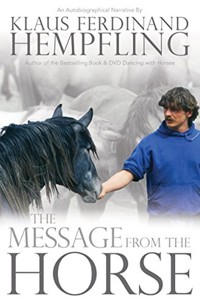
Every human enters this life and begins a journey. The path travelled is unique to each individual, and for some, the main streets and popular thoroughfares provide all that's needed to nourish a life well lived - food, fuel, friendship, family. For others, though, there is a desire - in fact, a need - for something more. In the form of a wandering, lyrical, autobiographical narrative, world-renowned horseman Klaus Ferdinand Hempfling exposes the inner turmoil, the burning questions, the fear, the doubt, and the darkness that pushed him off the roads most travelled in search of answers. In search of meaning. As he reflects on cultures past and his present surroundings, his words linger on visual, sensual, and inspirational clues, bringing his personal experiences alive on the page in emotional detail. His thoughts string together like clicking beads, brilliantly illustrating the passage of time and the interconnectivity of all beings. And ultimately, Hempfling comes to a truth, which for him brings heaven and earth into sharp focus. It is the horses that show him the way.
Das E-Book können Sie in Legimi-Apps oder einer beliebigen App lesen, die das folgende Format unterstützen:
Seitenzahl: 248
Veröffentlichungsjahr: 2015
Ähnliche


















THE MESSAGE FROM THE HORSE
Klaus Ferdinand Hempfling
Translated by David Walser
J. A. ALLEN • LONDON
CONTENTS
Preface
Part I
The Silent Ones’ Message
Part II
The Soft Breeze Wafted Over the Lake
Part III
The Sun Follows Its Course and the Scents of Nature Respond to Its Passage
Part IV
He Is Not There to Carry Man’s Grief
Part V
They Called It “The Other World”
It is not the truth that a person feels he
possesses but the quality of the effort he has made to get behind the truth.
That is what measures a man’s worth.
Gotthold Ephraim Lessing
preface
THE SULTRY AIR HUNG above us like a sponge about to be squeezed. The animals and the rest of us waited, as if we all shared the same thought: when might a deafening thunderclap bring it to an end? My breath was short and fast; a cold sweat ran down my spine.
The old monk sat facing me in his armchair, his gaze fixed on the infinite. Barely perceptibly, his lips began to move.
“You have come to learn from me. That is good. But you are expecting explanations. That is not good. How does it help to smother everything in words? Of course, people feel at home when you do so: it is the disease of our times.
“What you and others are looking for cannot be reached by words alone. It is alien and new, as unique as every individual is in this world.
“To reach a true understanding with the tools we are given is almost impossible. We have to venture into the unknown and this requires courage, strength, and an open, watchful spirit. Fear of the boundaries of this new land is the chief enemy. The truth you seek recognizes no frontiers. You must be willing to go in any direction.”
The old man’s breathing was as regular and calm as his speech. His gaze appeared to be concentrated on something invisible to my eyes. After a long pause he continued.
“And how do you recognize the truth? Truth is life itself. That is why it is powerful and dangerous: where the day is, there can be no night. Truth leads you back to yourself and to all that is natural. It cures your dependency and drives away the dark fruit of your fears.
“How do you set out on this quest for the truth? You must first abandon the little room that gives you your feeling of security but imprisons you. You will begin to understand the truth when you seek it with all your senses, with your entire being…”
He turned his level gaze on me as he went on, “My words alone can never explain it all to you. They can only scratch the surface of all the wisdom spoken by the sages of old. Their true worth stays hidden.”
“And where is it hidden? Where can I find it?” I asked impatiently.
“Where can you find it?” he murmured as his gaze once again focused on something infinitely distant. Then, almost in a whisper, he continued, “Everything, however far apart, is connected.”
“And how does this answer what I am looking for?”
“You asked me where you would find the truth. You are finding it this very instant. You will find it in what people flippantly call ‘nothingness.’”
After a while I rose to my feet and left. The monk sat silent and motionless.
PART I
The Silent Ones’ Message
one
IT IS EARLY EVENING and thoughts are forming in my mind without leading in any particular direction. It is not so that in this world all our thoughts are somehow part of a planned design and lead to an expected conclusion. No, they often come on silent footsteps, leading us in directions we had not planned or foreseen. They come as quietly as my horse’s gentle breathing and sometimes last no longer than a single breath.
My horse is white, with a black mane. He is still a young stallion, but I see time creeping up on him as his mane pales a little more each year. As I feel him beneath me and think about him, life and death no longer hold any terrors. I am part of this horse and we experience life together: not life as perhaps I should see it but, dare I say it, life as it really is.
I live in this magic environment: the fire-red stones, the precipitous cliffs, the desiccated vegetation, the tortuous channels gouged out by winter streams that for a short time spring into life; the golden sands that light up and glitter with the low autumnal sun lying on the horizon; the iron-rich rocks that seem to have split or exploded and demonstrate a degree of hidden strength that one cannot ignore—indeed, a force that I take in with every breath.
This is where I live, in the valley of the ravens. On the horizon, gigantic rock formations reach into the sky as if being drawn upward to share in the might of the heavens. The landscape is peppered with ancient ruins, half-collapsed walls of old forts and dwellings, all woven together by the magicians of past centuries—fragmentary quotations that describe the passing of time but still radiate strength, life, and beauty.
I feel blessed to live here in this land called Catalonia, which reaches from the Spanish foothills of the Pyrenees, up over the precipitous mountains and down into the French plains.
On evenings like this I while away the hours in my horse’s company on the little terrace in front of the old house, breathing in the unparalleled beauty of this corner of the world. I know my horse also feels the energy these moments give us, and the resulting calm that settles on us. I allow my gaze to wander, taking in every new detail of a landscape that is picking itself up after the energy-crushing dryness and heat of the endless summer months. Here and there, flashes of green announce the imminent arrival of the wet period, the fleeting springtime before the crushing heat of the sun returns for another year.
And this is how it is in winter: the sun is mild and gentle and a friend to man and beast. The nights are chilly and draw us all to the fires that burn continuously. When the ice-cold air that gathers in the valley beneath climbs toward us, the animals gather by the walls of the house and press themselves close against the warm stones.
“Come quickly! You must come now! The little stallion—they’ve driven him into the steel cage—he’s bleeding all over and now he can’t get out. You must come quickly!”
Fernando, our neighbor’s chubby son, has climbed the steep hill below us as fast as he can manage and only just has enough wind to shout out his message toward the rear wall of the house. He can’t see me but must have guessed that at this time of day I would be working with one of my stallions behind the half tumbled-down wall.
Finally his little round, red face appears in a large hole in the wall, and he repeats his message before I can say anything to calm him.
I have never seen this boy so animated before and decide to forego any questions: it is clearly an emergency. I lead my horse into his stall while I shout to Fernando to go straight to the jeep.
A minute later we are bouncing down the precipitous stony track; the sun is already low on the horizon and even though here in the mountains we are over 100 kilometers from the sea I have, as I often do on evenings like this, the sensation of being able to smell fish in the air. As soon as the sun sets, the smell disappears and is replaced by the strong odor of the pine trees that clothe the slopes.
In front of us, the old house looks across a wide dusty plateau; to the left of us the road, shored up by the ubiquitous, half-crumbled walls that cover the landscape, plunges down to the valley.
Fernando points in an agitated manner with his little arms toward a group of men in front of us. “There they are, the idiots, and now they don’t know what to do!”
“Calm down, Fernando! Let’s first see what’s happened.”
We pull up in front of the group, which stands aside. The boy leaps out and starts to run toward the cage before Antonio stops him.
“You stay put, Fernando, do you hear?”
Only now can I see the tragedy: they’ve driven Pinto, a fiery young stallion, into the narrow steel cage, which is big enough to contain a bullock or a small horse but without leaving the creature the smallest room for movement. Whole herds are trapped by using this dreadful contraption. When the front and back gates of the cage are closed, no resistance is possible. In this case the stallion is thrashing about in such a panic that in addition they have used a serreta, a veritable instrument of torture. Sharp spikes are digging into the tenderest part of the horse’s nostrils and the rope attached to the serreta is now tangled around one of his forelegs. Any attempt to move him or indeed free him from the cage only increases his panic and tears his nostrils even more severely.
Antonio, the manager, comes toward me, saying, “Este caballo es malo, malo, malo!” “He’s a bad, bad, bad horse!”
Through gritted teeth, I take a deep breath before greeting him as civilly as I can.
“You’ve a problem here,” I say. “What happened?”
He replies but I am not really listening. I slowly approach the cage. I see the serreta, which by now has reduced the nostrils to a bleeding lump of flesh, and my blood boils. I pause a moment as Antonio looks questioningly at me. I go toward Jose.
“Give me your knife,” I say, “and now beat on the back of the cage with your stick!” He looks over momentarily at his father, but Antonio is impassive and nods without saying a word. The youth does what I ask, and the little stallion jerks his head upward in fright and to one side. Now I can get hold of the rope to sever it. At this point his front foreleg is so bent that he is almost lying on his side; the right hind leg has slipped through the bars of the cage and every convulsion only aggravates his situation. I ask the group of men to back away from the cage and give me space.
I gaze into the evening sky at the setting sun. I feel the calm. I feel the tension draining away. I feel the chaos of the situation like a knot—one that can gradually be undone. And so I finally calm the stallion.
“Be still, little horse! Be still!” I know I have to get close to him without causing another panic attack. “Hand me a rope, please, Jose!”
I can see that Antonio and the others trust me enough to leave me alone. Suddenly I feel as if I am observing the scene from a distance. I am aware of a change of scents in the air: The wind has veered to the southwest, and it is pleasantly warm as it blows softly up from the valley below, carrying the heavy scent of the herbs that carpet the hillside. I breathe deeply and slowly, relishing the beautiful, mild evening; I feel the warmth of the sun on my left cheek and the breeze ruffling my hair. Once again I take a deep breath and enjoy the soft, balmy air. My fingertips begin to stroke the sweat-drenched neck of the little stallion. His eyes are now half closed and he has become completely calm. Only the horse can hear my voice as I describe the beauty of the evening to him.
For a moment or two I consider whether to remove the painful serreta but decide against it. My first task is to get him out of the steel cage. Only then can I decide what course to take.
I start by feeding the rope under the angled foreleg and then around his neck. In doing so, I make it clear to him that, with one big heave, he must stand up. I pass the end of the rope over the top bar of the cage and give it to Antonio, asking him and the three others to pull on it with all their strength when I give the order. I walk quietly around to the other side of the cage and carefully pass another rope around the ankle joint of the trapped hind leg. I gaze out over the sweat-covered body of the horse and across the valley to the dark red sunset. My hand rests on the horse’s croup and I feel the little fellow breathing calmly. He gives a tentative snort through the blood that clogs his nostrils.
It has only been a few minutes since we met, but already the mysterious bond between us is in place. The nature of this bond cannot be properly put into words. It is an indescribable sensation that rises from one’s innermost being, a pulsing, a soaring instant of awareness, a flash of understanding that one might doubt had taken place if it were not for the fact that the horse lies there peacefully, waiting and trusting.
“Tira! Tira! Tira!” “Pull! Pull! Pull!” I shout toward the men and in the same instant I pull with all my strength on the rope that will free the trapped hind leg. With a terrific crack the horse strikes his head on the metal bars; he rears up with his left foreleg hanging outside the cage. Again he strikes the cage bars with a loud crack of his head. “Come on, boy! Once more, one more effort!” are the words going through my mind.
I say to the men, “When he rears up again, pull like demons!” At the same time I increase the pull on my rope, as I shout, “NOW!”
Again the horse strikes his head a fearful blow on the cage bars and then I am falling backward until I am stopped by hitting my own head on a post. I can still hear the sound of his hooves striking the steel bars, and I right myself in time to see him galloping away.
Meanwhile Antonio has walked over to me and is asking if all is well.
“Thank you! Thank you!” I say. “I’m okay.”
“Este caballo es malo, malo, malo,” says Antonio, shaking his head.
“No!” I say under my breath. “It’s you, not he, who is bad.”
two
I BELIEVE I AM INDEBTED first and foremost to the horses themselves for my understanding of how to deal with situations that require instantaneous action. It is they who have taught me to find inner peace, to live completely in the moment, to marry my existence to theirs and be part of the great current that embraces all living creatures in a state of total trust; to be one who watches with all my senses and concentration, recognizing that the distinction between good and bad luck has no relevance: it is only life that matters, life as opposed to not-life.
The stallion is now standing quietly enough in a corner of the fenced area. The serreta is still clamped deep into his nostrils and clearly causes him dreadful pain every time he breathes, and even more so when he lowers his head and treads by mistake on the short piece of rope attached to it.
Antonio comes over to me and goes on about what an awful horse this is, the worst he has ever experienced, that won’t allow anyone near him and only reacts with biting and kicking. This, he explains, is the reason for using the steel cage.
I have already worked with a lot of horses that were more dangerous than this one. What makes the situation special is the injury this stallion has suffered. The pain and the panic, and not his true nature, now dictate his reactions. Before I can do anything I have to reduce the pain.
Jose, Fernando, and the rest are standing on the other side of the fence and volunteering unhelpful remarks. I hear Antonio repeating his warning to me to mind myself because this is such a bad horse, and I wonder how such a basically good man could get things so wrong.
By now dusk has fallen. It is a clear evening but the bright moon has not yet driven off the red sunset, which gives our scene an unreal quality.
Jose brings me a long rope; I carefully drive the young stallion into a corner of the fencing. In spite of all his pain he seems to understand that I have his interests at heart. I now have to do something totally different from what I would usually do. I move closer and closer toward his croup and by means of little signals I get him to understand that he should turn his head toward me. With barely perceptible movements I am trying to build a common space in which he will accept me as a trusted horse—and one senior to himself.
A situation like this follows the same path: it is a game in which the two sides learn about each other at a certain distance. The ceremony lasts only a few minutes, but out of it springs a deep and friendly relationship in which the rank of the participants is made absolutely clear. The horse can then face me with trust and without fear. He accepts me and knows that he is accepted for what he is.
But there is still a very thorny problem I have to face: I’ve prepared a large loop with the rope in my hands and at some point I have to throw it around his neck. The little stallion turns his head toward me, and I lift my left hand high enough to throw the noose over his head with a single motion—but at that precise moment I see that I have moved too fast.
Time freezes. I know the probable outcome, but there is nothing I can do except let my body react as it would naturally. Only in this way can I avoid disaster, but even as the event unfolds, I am considering how else I could have gone about it.
The stallion rears up and bends his head backward and in the last fraction of a second I have to take my arm as far back as I can in order to slip the rope over his head. I know I should have found another way to do this as with my last ounce of energy I swing my hips to one side—but not far enough: The stallion lands a hard kick to the right side of my pelvis. An intense pain shoots through my body. I see the shadows of the men watching as they move toward me and shout to them to keep away. With all the strength I can muster, I anchor my left leg to the ground; the rope goes taut and the stallion falls down.
He stares at me, and it is as if I am looking into his eyes for the first time: I see an intense and deep-seated look of sorrow.
I am drawn to anxious horses. Why is it I like them so much? Perhaps because I’ve pursued what you might call the sensitive, almost anxious, path in life, and for this reason I like sensitive and fragile horses. I have gone down the same road. Isn’t it the timorous ones who must finally dare to overcome that timidity? Isn’t it the sensitive ones who in the end set aside their fears? Hasn’t it always been the hard-pressed, the failures, and the harassed that have risen in revolt?
three
it is not only this that we have in common, but also the pain. I try to relax, breathing deeply. Very little of the men’s state of excitement reaches me. I can’t understand why it never occurs to me in situations like this to turn away and not become involved, but I know better than to resist the great current of life that sweeps us along.
Events now take their natural course. The horse has all his attention concentrated on me. We are both suppressing our pain in an effort to come out of this situation in which fate has involved us. Slowly, as if following a well-worn ritual, I begin to move my upper body. My right hand, holding the rope, has the measure of the problem, but I have to be totally concentrated because everything must work the first time. My leg hurts too much for me to be able to follow the horse or get out of his way.
“Tranquilo, por favor,” I call out to the men, in case any of them has not understood that I am no longer in danger. My relationship with the horse is sealed; the moment has arrived when I can ask him to come to me, to follow me, and indeed to trust me without hesitation.
I put all my weight onto my left leg and brace myself with the rope in my right hand; the stallion throws up his head and looks at me. I take a slow step backward, end our eye contact, and invite him in his own language to come toward me and to follow me. He makes a little enquiring snort and comes quietly over toward me. As if drawn by an invisible force, he comes to my hand with his head held low and follows my shaky footsteps.
Pain is still disrupting my concentration, but in the few minutes that are left to me I have to make it crystal clear to him that I am superior to him in rank. He moves toward me and places his lowered head against my chest so that I can try to open the serreta. As I put my hand on it, he jerks his head to one side but without the slightest sign of aggression, and takes a step backward, and then comes up close again. This time I am able to remove the blood-encrusted steel from his nose and place a halter that Jose has handed me around his neck.
None of the men utter a word; some of them make as if to come toward me, but Antonio holds them back. I know how ashamed he is of what has taken place as he quietly leads the stallion into his stall. I glance across at him and take my leave of the men. They ask me if they can help me in any way but I refuse, saying things are not really too bad. I maneuver my right leg gingerly across the driver’s seat of my jeep and start the engine. Antonio catches my eye and calls out, “He’s really docile. Extraordinary!”
“I’ll be over in a day or two. Goodbye for now!” I call to him, but he’s already walking over to me. I lower the window and he sticks his round, red, bullet-shaped head through the opening.
“Gracias!”
“De nada—hombre!” I reply and attempt a smile.
I drive up the dusty road until I reach the fork and continue a little way to the left before stopping. I move my leg tentatively before sitting quietly and breathing in the mild air of evening. I look to the left and let my eyes follow a stone wall that leads away into the twilight and the unending distance. The confusion of what has just happened begins to sink into my consciousness. It has been ages since I have been wounded by a horse and I have not yet come to terms with the reasons behind it.
four
A PAINFUL NIGHT FOLLOWS, and I am not much help to Emilio mucking out the stables the next morning. The pain in my hip is still severe and the swelling reaches right down to my knee.
It is a beautiful, sunny spring day. I throw a few things into the jeep because I have to drive down to where the land is flat and by day smells of fish, where the sea touches the city of nearly five million inhabitants.
My road takes me through a small village; on one side, a long row of dilapidated houses leans against the mountain and is bathed from morning till night in the rays of the low winter sun. As if I am the only living being moving across a painting, I drive past an old man in a blue jacket and dark cap, propped up against a wall.
Now the roads are a little wider as I approach the town. How I dislike towns, and yet in this part of the world there is always something that appeals to me: Even in the coldest part of the year, people seem unaware of the stinking buses and the noisy vehicles. Children play games; old men sit about on benches or in groups. Narrow as the streets become, there seems to be a place for this kind of activity that has all but disappeared from the cities of my homeland.
It has been some time since I have come here. In spite of the pain, I hobble along the wide pavement between lanes of traffic, under the plane trees, engrossed in my thoughts, past innumerable cafes and bars, little restaurants, and as many pigeons as people. I seek refuge from the midday heat in the shade of a café. At the next table a beggar is asking two girls for a cigarette. With friendly smiles, they give him a whole half pack. His eyes light up and I notice that under his arm is a cardboard carton with a bottle of cheap wine. The girls talk to him until the waiter arrives and chases him away. I sit watching the hustle and bustle around me, and I am aware of a deep unease inside me. I think of my mountains and yesterday’s little stallion. How much untapped and unspoiled energy does he still have? At least he is alive!
But these people around me, jostling and hurrying—what makes them tick? What vision drives them? What moves them? What aim in life inspires them? What shining ambitions do they have? What adventures stimulate them? In all this hectic hubbub, what concerns them? What rewards do they expect? And even when they appear to be calm, what lies underneath in the hidden layers of their lives?
A young man sits down near me on the rim of a stone basin containing a palm tree, in order to feed his puppy. My mind wanders back over the past year, considering the ebb and flow of nature that has been my constant companion; I can hardly grasp the strange fact that this glittering, agitated world exists only a short drive away from the one in which I have been buried, and seemingly has no idea that anything different exists. At this very moment I am aware of the contrast more than ever before. The hustle and bustle that surrounds me, the playful shadows of the bare plane trees, the rays of the setting sun on the rough walls of the café, all help to soften the constant, crippling pain in my hip and the memory of the desperate little stallion struggling to save himself. Unformed thoughts whirl about in my consciousness, but at the same time I am aware of the newfound strength and joy that the little chap must be experiencing.
I wonder if it would ever be possible to see and to hear the world through the eyes and ears of a horse. With his senses, how would my understanding of what I would call life, strength, or feelings be experienced? How would I think of being really stretched as opposed to being politely exercised? Would it ever be possible to describe what I experience when I allow the wonders of nature to touch me or indeed to penetrate my being down to the very doors of my soul?
Some people think of me as a charlatan; they believe that my relationship with horses is somehow dependent on hypnosis and magic tricks. But I ask you: Is not what I do a reflection of the most basic and simplest form of life, a life in which the brotherhood of every living creature is apparent?
I linger a while in this pleasant spot, which seems like an island of sanity in the turmoil of the city. Since I feel no urge to hurry on, I remain, engrossed in my thoughts a little longer. It is not really so important to record what I actually do as to try to share the almost indescribable secrets that lie behind what I do. This is what I need to do for my own peace of mind and for the sake of the horses—and, indeed, for other people.
Still deep in my thoughts, I climb back into the jeep; the pain that had calmed a little during the day now reasserts itself. I turn on the radio for distraction and listen to some twentieth-century music. For a few kilometers the lights of the city keep me company, but then I turn onto a small country road that leads up into my hills, back to my horses and the world I understand.
The jeep’s old diesel motor bears me along at a leisurely pace as the road winds slowly upward. The moon shines bright and the trees cast long black shadows that settle my thoughts and give a peaceful rhythm to my progress. Driving is not my favorite occupation but on this occasion I enjoy the journey. The pain in my hip drapes like a thin veil over my being and is hardly noticeable. I let my thoughts lead me where they want to, combining the happenings of the day with the possibilities of the future. It seems as if the spirit revels in a peaceful warm space and wanders quietly in and out of reality to a dream world in which anything can happen. I am taken back to my early days in the mountains when this part of my life took root, and it presents me with difficult memories that are almost too powerful to relive: the first encounters with the wild horses and the time I shared with the old monk. Paloma makes a sudden appearance, high up in the semi-deserted village, and Puitschmal—the “evil mountain”—and that unforgettable, moonless night within the crumbling walls of the monastery. And then, of course, old Valenciano is there, too.
My thoughts lead me back along my life’s path, a long and difficult journey, but one that has not finished yet and never will. A path that will take me to the limits of understanding and the gates of the great unknown.
For some time the road has become ever more steep and bumpy. Having to engage the four-wheel drive announces our imminent arrival. I park behind the house just as Emilio is closing the last stall doors.




