


3,49 €
Mehr erfahren.
- Herausgeber: The History Press
- Kategorie: Lebensstil
- Sprache: Englisch
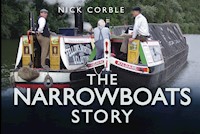
Bright and colourful, slow and easy, narrowboats are seen today as the epitome of a peaceful life and a wonderful way to get away from the stresses of modern living. Although true, this is a far cry from their origins as the workhorses of the early days of industrial revolution, without which Britain may never have developed as far and fast as it did. Packed with colourful illustrations and little known snippets of information, this entertaining and informative guide retraces the story of how narrowboats have evolved, how their very existence was once challenged and how they have risen phoenix-like into the holiday craft of today. Nick Corble is a renowned canal expert and has written a number of books on the waterways for The History Press, including James Brindley: The First Canal Builder and Living Aboard, the definitive guide for anyone contemplating making a life afloat.
Das E-Book können Sie in Legimi-Apps oder einer beliebigen App lesen, die das folgende Format unterstützen:
Veröffentlichungsjahr: 2012
Ähnliche


















The Narrowboats Story
Nick Corble
First published in 2012
The History Press
The Mill, Brimscombe Port
Stroud, Gloucestershire, GL5 2QG
www.thehistorypress.co.uk
This ebook edition first published in 2014
All rights reserved
© Nick Corble, 2012, 2014
Nick Corble has asserted his moral right to be identified as the author of this work.
This ebook is copyright material and must not be copied, reproduced, transferred, distributed, leased, licensed or publicly performed or used in any way except as specifically permitted in writing by the publishers, as allowed under the terms and conditions under which it was purchased or as strictly permitted by applicable copyright law. Any unauthorised distribution or use of this text may be a direct infringement of the author’s and publisher’s rights, and those responsible may be liable in law accordingly.
EPUB ISBN 978 0 7524 8572 0
MOBI ISBN 978 0 7524 8571 3
Original typesetting by The History Press
CONTENTS
Acknowledgements
Introduction – Waiting for the Spark
Canal Men
Canal Mania
Engineers and Navvies
Working the Canals
The Coming of the Railways
Rescue and Renaissance
Living Aboard
Holidays Afloat
Canal Treasures
Appendix 1 Key Canal Terms
Appendix 2 Learning More
ACKNOWLEDGEMENTS
A number of different people and organisations have been helpful in preparing this book and I would like to thank them for their contributions. Particular gratitude goes out to Allan Ford and to British Waterways for their help in sourcing illustrations. Others to whom a debt is owed include Andrew Denny, Blisworth Images, Dudley Archives, The Horse Boating Society, Manchester City Library, Salford City Council and Warrington Museum and Art Gallery.
INTRODUCTION – WAITING FOR THE SPARK
In 1746 the Young Pretender was defeated at Culloden, putting the final seal on the Act of Union with Scotland agreed just under forty years previously. At last the country could call itself a truly United Kingdom.
Although this may have been true politically, the reality on the ground was very different. A demographic map of the country would have looked like a random ink splat, with one big dot representing London and hundreds of much smaller dots representing the other towns and villages around it. Most local market towns had residents numbering in the thousands at best, whilst London outnumbered its nearest rivals by a factor of at least ten.
Furthermore, moving around this ‘united kingdom’ was something attempted only by the rich, the desperate or the brave. The only viable alternative to walking was to travel by horse or stagecoach, a privilege accorded to just a few. Roads, although improving with the introduction of turnpikes (an early form of toll road), were simply dangerous. Kept in poor repair and open to the vagaries of the weather, if the mud didn’t get you the vermin or criminals that lined them probably would. Little wonder that very few Britons ever wandered further than their neighbouring parish.
Yet signs of change were beginning to appear. Pockets of local industry were forming and qualities we would label today as ‘entrepreneurialism’ were taking hold. By 1776 the economist Adam Smith would be lauding the idea of a high-production, high-wage economy based on economies of scale in large factories in his seminal work The Wealth of Nations.
At the same time, the potential of the generous abundance of natural mineral resources the country had been blessed with was just beginning to be tapped. Coal in particular was being used to heat homes and fire industrial processes and the steam age was just around the corner. On top of all this the sheer number of people in the country was growing fast.
There was a problem, however. Economic power remained heavily skewed towards London, and it was proving increasingly difficult to physically provide enough food and consumer goods to satisfy this massive market. The larger provincial towns were facing similar problems, limiting their potential to provide an economic counterweight. Transporting anything that couldn’t fit on the back of a cart, man or donkey represented a significant logistical challenge. Where there were rivers goods could be transported by boat, but rivers didn’t always obey the wishes of men, both in terms of where they flowed and how they flowed.
Nowhere were these problems better illustrated than in Manchester. A population of 10,000 at the start of the eighteenth century soared to nearer 70,000 by the end, making the town the second largest centre in the country. The town was becoming a manufacturing hub for cotton, linen and silk, but feeding both the people and the demands of industry had become increasingly difficult. Bad weather, something not uncommon in Manchester, would waterlog the roads, effectively giving the town all the characteristics of being under siege for months at a time. Food riots were common, not least because the land around the town was too poor to grow anything of value, and there were no forests for wood. That same land, however, was abundant in the other commodity the town depended upon: coal. As with the food, the difficulty was finding a way of transporting it.
Did you know?
In the 1750s three stagecoaches a week plied the route between London and Manchester, taking four days to get there. Passengers were advised that the service only ran ‘God Willing’.
Did you know?
Having increased by only a million during the seventeenth century, the population of the UK grew by 3 million in the following hundred years, reaching 8 million.
Luckily, one man was determined to solve the problem. Equally fortuitously, he chanced upon another man who had the skills to help him do so and a third who made sure the other two men’s plans became a reality. Combined, the vision and perseverance of these three men were to show not just Manchester, but the whole country, how to move bulk goods efficiently and cheaply over long distances. In so doing, these three men were to provide the spark that was to ignite the Industrial Revolution.
CANAL MEN
Using water to transport heavy goods wasn’t anything new. The problem was that rivers could be mercurial, flowing where they wanted, often subject to tides, hidden rocks and weirs – features which made using them a dangerous business.
Efforts had been made to make rivers easier to negotiate. By 1660 there were 680 miles of navigable river in the UK, and over the next seventy-five years improvements to the Aire in Yorkshire and the Avon, Kennet and Wey in the south added a further 500 miles to this total. These improved rivers became known as ‘navigations’, a term still in use today, but they remained human adjustments to natural phenomena, and as such each was at best a compromise.
Equally, the notion of totally artificial waterways, independent of rivers, whose flows could be controlled by men, wasn’t a new one and, as with so many other things, the Romans had led the way. As with plumbing and road building these useful skills had been lost, however, and Britain had to wait over a thousand years before attempts were made to revive canal-building, and even this was brief.
Opened in 1566, the Exeter Canal was a five-mile waterway built to by-pass a particularly troublesome weir. This canal was the first in Britain to use ‘pound’ locks: chambers secured by wooden gates in which boats could rise or fall through the controlled release or addition of water, with the sides of the lock covered in turf. Ingenious though this was, the idea didn’t catch on and it took another hundred years before the idea of locks was used again, as part of the improvements to the Wey. While canals on a grand scale took off in France, with the Canal du Midi opening in 1681, the notion was slow to catch on across the Channel.
The next attempt to create a totally independent canal had to wait for a further seventy-five years, until 1737, when Scroop Egerton, the First Duke of Bridgewater, applied to Parliament for an Act to convert a brook linking his coal mines at Worsley west of Manchester to that growing town. In the end the idea came to nought, defeated on the grounds of both practicality and cost, as well as opposition from vested interests, notably the existing Mersey and Irwell Navigation and the owners of turnpike roads.
Did you know?
A horse can pull sixty times more weight than it can carry.
It took another twenty years for a canal to be actually cut, this time by the Corporation of Liverpool rather than a duke. Initially viewed as a navigational improvement to the Sankey Brook, linking the Mersey about two miles below Warrington to St Helens, the brook didn’t really qualify as a river and in time the cut became recognised formally as the St Helens Canal.
At this point our story returns to Worsley and the Egerton family. The first Duke of Bridgewater had died in 1744, having squired eight children, including four sons. The oldest of these had died aged only six, while the third only just made it past his first birthday. On Scroop’s death the title passed to his second son, John, who was only seventeen at the time. The final son, Francis, who was nine, quickly became forgotten as his mother remarried, and he ended up passing through the hands of a succession of tutors. Not seen as particularly promising, and sickly to boot, few saw the value in over-educating the boy.
It came as something of a shock to all concerned therefore when John Egerton died four years later, leaving Francis to become the third Duke at the tender age of twelve. Plans were rapidly put into place to regain lost time. Francis was given two aristocratic guardians and five years later he was sent on a Grand Tour of Europe. Here he was captivated more by triumphs of engineering than of art, and it is perfectly possible that he saw the Canal du Midi in France along the way.
On returning to England he adopted the life of a playboy, indulging himself in horseracing (both as a punter and a participant) and affairs of the heart. It was one such affair that was to change his life. Rebutted in love, Francis eventually retreated to one of his estates, that at Worsley in Cheshire, far away from London society. It was here, along with his agent John Gilbert, that he became intrigued by his father’s idea of an artificial waterway to transport coal to Manchester.
Did you know?
The Romans had dug waterways in the Fens, initially as drainage channels but also providing a means of transporting grain between garrisons.
Initially apprenticed at Boultons of Birmingham, later to become pioneers in steam, John Gilbert had been recommended to Francis Egerton, and the two quickly formed a strong working bond. Both were intrigued by the possibility of retrieving coal from the Duke’s mines and transporting it to Manchester, but as well as the logistical and political problems experienced twenty years before there was also the matter of the constant flooding in the mines.




