


42,99 €
Mehr erfahren.
- Herausgeber: John Wiley & Sons
- Kategorie: Geisteswissenschaft
- Sprache: Englisch
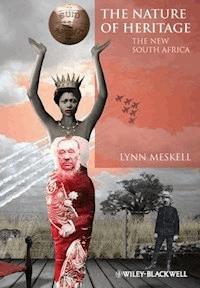
The Nature of Heritage: The New South Africa is unique in revealing the conflicts inherent in preserving both natural and cultural heritage, by examining the archaeological, ethnographic and economic evidence of a nation's attempts to master its past and its future.
- Provides a classic example of how nations attempt to overcome a negative heritage through past mastering of their histories
- Evaluates the continuing dominance of nature and conservation over concerns for cultural heritage
- Employs ethnographic and archaeological methodologies to reveal how the past is processed into a new national heritage
- Identifies heritage as therapy, exemplified in the strategy for repairing legacies of racial and ethnic difference in post-apartheid South Africa
- Highlights the role of archaeological heritage sites, national parks and protected areas in economic development and social empowerment
- Explores how nature trumps culture and the global implications of the new configurations of heritage
Sie lesen das E-Book in den Legimi-Apps auf:
Seitenzahl: 572
Veröffentlichungsjahr: 2011
Ähnliche


















Table of Contents
Cover
Title page
Copyright page
Dedication
Acknowledgments
Abbreviations
Introduction
Culture and Nature in Kruger
Outline of the Book
Chapter 1 Naturalizing Cultural Heritage
Enclosures and Fortresses
Beauty and Duty
Diversity, Sustainability and Future Generations
Future Thinking
Chapter 2 Making Heritage Pay in the Rainbow Nation
The Tribal Trap
Developing Heritage
Neoliberal Heritage
Rainbow Materialities
Making Heritage Pay in Kruger
Chapter 3 It’s Mine, It’s Yours
Skukuza Stories
The Past of the Park
Colonial Incursions
Trekpas and Trespass
Military and Juridical Histories
A Post-Apartheid Park: Your Heritage, Your Park, Your World
Chapter 4 Why Biodiversity Trumps Culture
States and Parastatals
The Nature of Biodiversity and Bad Citizens
Dreams of Terra Nullius
Skukuza: Nation without History
Chapter 5 Archaeologies of Failure
Misadventures at Masorini
Putting Archaeology in its Place
Ecologies of Heritage
An Alternative Vision of Cultural and Natural Heritage
Past Mastering in the Park
Chapter 6 Thulamela
The Money
White Mischief
White Crosses
The Locals
Deep Disregard
Revealing Archaeology in a New Nation
Treasure in the Veld
Chapter 7 Kruger is a Gold Rock
Well Deserved
Developing Black People
This is Not a Development Agency
Masterplanning Kruger
Doing Well by Doing Good
Kruger eKhayelitsha
Gold Rocks, Public Goods, and Private Gains at the Rainbow’s End
Conclusions
“State in Search of a Nation”
Public and Private Goods
Modern Nature and Premodern Cultures
Nature and Culture
References
Index
Download CD/DVD content
This edition first published 2012
© 2012 John Wiley & Sons, Inc
Wiley-Blackwell is an imprint of John Wiley & Sons, formed by the merger of Wiley’s global Scientific, Technical and Medical business with Blackwell Publishing.
Registered Office
John Wiley & Sons Ltd, The Atrium, Southern Gate, Chichester, West Sussex, PO19 8SQ, UK
Editorial Offices
350 Main Street, Malden, MA 02148-5020, USA
9600 Garsington Road, Oxford, OX4 2DQ, UK
The Atrium, Southern Gate, Chichester, West Sussex, PO19 8SQ, UK
For details of our global editorial offices, for customer services, and for information about how to apply for permission to reuse the copyright material in this book please see our website at www.wiley.com/wiley-blackwell.
The right of Lynn Meskell to be identified as the author of this work has been asserted in accordance with the UK Copyright, Designs and Patents Act 1988.
All rights reserved. No part of this publication may be reproduced, stored in a retrieval system, or transmitted, in any form or by any means, electronic, mechanical, photocopying, recording or otherwise, except as permitted by the UK Copyright, Designs and Patents Act 1988, without the prior permission of the publisher.
Wiley also publishes its books in a variety of electronic formats. Some content that appears in print may not be available in electronic books.
Designations used by companies to distinguish their products are often claimed as trademarks. All brand names and product names used in this book are trade names, service marks, trademarks or registered trademarks of their respective owners. The publisher is not associated with any product or vendor mentioned in this book. This publication is designed to provide accurate and authoritative information in regard to the subject matter covered. It is sold on the understanding that the publisher is not engaged in rendering professional services. If professional advice or other expert assistance is required, the services of a competent professional should be sought.
Library of Congress Cataloging-in-Publication Data
Meskell, Lynn.
The nature of heritage : the new South Africa / Lynn Meskell.
p. cm.
Includes bibliographical references and index.
ISBN 978-0-470-67072-9 (hardcover : alk. paper) – ISBN 978-0-470-67071-2 (pbk. : alk. paper)
1. Archaeology and Heritage–South Africa. 2. Ethnography–South Africa. 3. Cultural property–South Africa. 4. Post-apartheid era–South Africa. 5. National characteristics, South African. 6. Kruger National Park (South Africa)–History. 7. Kruger National Park (South Africa)–Antiquities. 8. South Africa–Race relations. 9. South Africa–Antiquities. I. Title.
GN656.M47 2012
306.0968–dc23
2011015895
A catalogue record for this book is available from the British Library.
This book is published in the following electronic formats: ePDFs 9781118106624; Mobi 9781118106648; ePub 9781118106631
For the people of Kruger National Park
past, present, and future
Acknowledgments
This book, and indeed all my work in South Africa, was made possible by one incredible organization. I owe an enormous debt to the Andrew W. Mellon Foundation, specifically the committee for the New Directions Fellowship that enabled me to shift my research focus from the archaeology of ancient Egypt to contemporary South African heritage. Their faith in this project, and their additional program support to bring young South African scholars to Stanford University, has been unfailing. Particularly, I want to express my gratitude to Joseph Meisel, Harriet Zuckerman, and William Robertson for their years of generosity and guidance. Without them I would not have had the privilege of working in South Africa all these years and collaborating with so many talented young scholars in the Stanford–South Africa Heritage Exchange program. In addition, I am grateful for the generous support of the National Science Foundation, the Institute for Social and Economic Research and Policy (Columbia University), the Lang Fund (Stanford University), and the Clayman Institute (Stanford University).
My colleagues in South Africa have been inspirational and are the real reason why I was drawn to changing my research focus. The original invitation in 2002 by Martin Hall, Ben Smith and Geoff Blundell to lecture in South Africa had more impact than anyone could have envisaged. The National Research Foundation in South Africa kindly made that visit possible. Over the years the continued friendship, generosity, and intellectual insights from scholars at the University of the Witwatersrand has been invaluable, particularly Ben Smith, Geoff Blundell, Thembi Russell, Phil Bonner, and David Pearce. The transformative directions for heritage that Ben and Geoff have contributed through their work at the Rock Art Research Institute and Origins Center provided the key inspiration for my own work. They also facilitated my residency at Wits, thus cementing my commitment to the city of Johannesburg; they first introduced me to Kruger National Park and initiated me into the joys of biltong. Thembi Russell accompanied me on many of my fieldtrips to remote parts and braved spitting cobras, appalling roads, cultural villages, and my penchant for eating various antelopes. She taught me a great deal about being in South Africa and, from her critical vantage, its many potentials, not simply its problems. Martin Hall deserves special recognition as a mentor and friend whose pioneering research on the political economy of heritage in South Africa remains unsurpassed. This project owes an enormous debt to his unwavering intellectual presence.
Many people in South African National Parks deserve individual thanks for their time, enthusiasm, and support of the project. Without their contributions this book could not have been written. Edgar Neluvhalani and Sibongile Masuku Van Damme must be singled out for both inspiring and grounding my work, for their constancy and commitment, and their vision for a different South Africa. My life in Kruger was significantly enriched by living and working with Glynn Alard and Heidi Hansen, whose knowledge, patience, and good humor I can never fully repay. Thanyani Madzhuta has been there from the beginning and educated me about the history of Kruger and its communities inside and outside the fence. Among the many people who contributed to my fieldwork in and around Kruger are Emma Algotsson, Harry Biggs, Sue Eber, Mike English, Navashni Govender, Rina Grant, Patricia Khoza, Thembi Khoza, Leonard Luula, Sandra MacFadyen, Eric Makuleke, Patience Mdungasi, Bandile Mkhize, Precious Motubatse, Helen Mtheti, Danie Pienaar, Scott Ronaldson, Vanessa Strijdom, Randy Tanner, Raymond Travers, and Rene Travers. At Head Office in Pretoria I would like to thank Kevin Moore, Alexis Symonds, Johan Verhoof, and Rozena Waiget. From Mapungubwe National Park I would like to thank Paballo Mohofa, Cedric Sethlako, Allie Chauke, and Tzimingadzo Nemaheni.
I am deeply grateful to the elders and representatives of numerous communities around Kruger and Mapungubwe National Park, including the Makahane, Malatje, Machete, Vhangona, Lemba, Vhatwanamba and particularly Joseph Mkhabela and his family. Numerous residents in Musunda, Bende Mutale, Lilydale, Tshikuyu, Makushane, Welwerdiene, and Kliptown also shared their histories, time and ideas about heritage. In particular I want to acknowledge Joseph Endani, Alpheus Mapukumele, Freddie Mukosi Munzhelele, Alpheus Thomani Mudzanani, Bishop Malatji, Evans Malatji, Andries Makatikela, Andries Sihlangu, and the incomparable Philleos Machavi.
Other colleagues in South Africa who were generous with their time and research over the years include David Bunn, Jacklyn Cock, Gene Duiker, Amanda Esterhuysen, Simon Hall, Carolyn Hamilton, Nessa Leibhammer, David Lewis-Williams, Sibongile Masuku Van Damme, Clapperton Mavungha, David Morris, Cecilene Muller, Ndukuyakhe Ndlovu, Webber Ndoro, Sven Ouzman, John Parkington, Zarena Patel, Innocent Pikirayi, Steven Robbins, Collette Scheermeyer, Carmel Schrire, Alinah Segobye, Soul Shava, Nick Shepherd, and Leslie Witz. Les Carlisle and Lotus Khoza from AndBeyond, formerly Conservation Corporation Africa, have been generous with their time and support, introducing me to the people of Phinda, Bongani, and Ngala. Conrad de Rosner spent weeks each year with me in Bongani and Kruger, teaching me rock art recording, sharing new found sites and his knowledge of the Lowveld. His passion for South African heritage and the hospitality he extended to me and my colleagues was unstinting.
In the United States I want to thank my colleagues who have guided the project, Paulla Ebron, Miyako Inoue, James Ferguson, Liisa Malkki, Helen Stacy, Londa Scheibinger, and Jeff Kossef at Stanford and my former colleagues at Columbia in New York, Lila Abu Lughod, Sherry Ortner, Paige West, Nick Dirks, and Nan Rothschild. My current and former students have influenced my work more than they realize and have been gifted interlocutors, Lindsay Weiss, Erin Hasinoff, Karen Holmberg, Carrie Nakamura, Marisa Lazzari, Felipe Gaitan Amman, Rachel Ama-Asaa Engmann, Kathryn Lafrenz Samuels, Joshua Samuels, Trindad Rico, Madeleine Douglas, Corisande Fenwick, Alexandra Kelly, Helen Human, Maria Fernanda Escallon, and Claudia Luizza. I was very fortunate to have Lindsay Weiss work alongside me at Thulamela, accompany me on many interviews, and share her own expertise that has greatly enriched the project over the years. She was always more colleague than student and her intellectual dynamism can be seen in the better parts of my work. Rachel King deserves special mention not only for being a brilliant research assistant for this book, but for the summer of fieldwork we conducted together in Mapungubwe National Park in 2008.
I have benefitted enormously from discussions with scholars working on politics, rights and heritage in Australia, Steve Brown, Duncan Ivison, Ian Lilley, and Denis Byrne. In Spain I received an education from Felipe Criado, Alfredo Gonzalez-Ruibal, Ricardo Rodríguez, and students of the Laboratorio de Patrimonio in Santiago de Compostela. Over the years, aspects of this project were presented in Leiden, Uppsala, Ramallah, Paris, Johannesburg, Vancouver, Santiago de Compostela, Stockholm, Michigan, Bistol, Philadelphia, Gainesville, and Tucson, and I thank my hosts for providing such lively contexts for debate. Others who have offered their unique expertise and shared their writing include Anneli Ekblom, Chip Colwell-Chanthaphonh, Jean Comaroff, Diane Gifford-Gonzalez, Donald Moore, Paul Lane, Peter Pels, Peter Schmidt, Lucienne Thys-Senocak, and Ann Stoler. Denis Byrne, Martin Hall, Lindsay Weiss, and Erin Hasinoff bravely read the entire book and significantly improved it. Rosalie Robertson, my editor at Wiley-Blackwell, has my heartfelt gratitude for supporting the book and for working so hard to ensure its timely publication. At the press I also wish to acknowledge the ever-efficient Julia Kirk and the incomparable Felicity Marsh.
The book was written during my sabbatical in Oxford, Paris, and Istanbul. The glories of New College, Oxford provided a sublime place to write, thanks largely to Caroline Thomas, Michael Burden, David Parrott, Tamson Pietsch, the Warden, and other fellows. Oxford was also an inspirational place to think about South Africa thanks to the presence of William Beinart, Chris Gosden, Peter Mitchell, and Simon Pooley. During his visit to New College, Justice Albie Sachs encouraged me to write a positive account that did not draw hard lines or anger people in South Africa, though I have probably failed in that endeavor. As he says, the fact that South Africa is a country at all is one of the greatest stories of our times. During the year I also worked in Paris, enabling me to meet a new set of colleagues at UNESCO, and I thank Francesco Bandarin, Mechtild Rössler, Lazare Eloundou Assamo, Kishore Rao, and Nuria Sanz. And finally, I was lucky enough to finish the manuscript at the Research Center for Anatolian Civilizations in the company of Director Scott Redford and the fellows in Istanbul. My year abroad was made all the more special by the presence of Ian Hodder, who has lived with this project, travelled with me to Kruger, debated many of the ideas, read and undoubtedly strengthened any contribution this book might make. It is impossible to capture in words all the shared connections and experiences in a life joined by love, work, and fond similarity.
Finally, this book is dedicated to the people of Kruger National Park, past and present, to all those who lived upon its land, who inhabit its borders and remember its history, and those who are the custodians of its cultural and natural riches. Perhaps the final word should go to Albie Sachs, since he has so poignantly encapsulated South Africa’s painful past and its amazing achievements after 1994: We have many bad stories, and they need to be told, fearlessly, and again and again; as the saying goes, the beautiful people are not yet born. But I have lived at the heart of a truly wonderful story, seen it with my own eyes and felt it with my own heart, and will tell it to whoever is willing to listen.
Lynn Meskell
Oxford, Paris, and Istanbul
The author and publisher gratefully acknowledge the permission granted to reproduce the copyright material in this book
Chapter 2
McGregor, J., and L. Schumaker. (2006). Heritage in Southern Africa: Imagining and marketing public culture and history. Journal of Southern African Studies 32: 649–65
Chapter 3
Carruthers, J. (1994). Dissecting the myth: Paul Kruger and the Kruger national park. Journal of Southern African Studies 20: 263–83
Every effort has been made to trace copyright holders and to obtain their permission for the use of copyright material. The publisher apologizes for any errors or omissions in the above list and would be grateful if notified of any corrections that should be incorporated in future reprints or editions of this book.
Abbreviations
ANC
African National Congress
ASAPA
Association of South African Professional Archaeologists
AU
African Union
BEE
Black Economic Empowerment
CBD
Convention on Biological Diversity
CBNRM
Community Based Natural Resource Management
CCA
Conservation Corporation Africa
COSATU
Congress of South African Trade Unions
CSR
Corporate Social Responsibility
DAC
Department of Arts and Culture
DANCED
Danish Cooperation for Environment and Development
DCA
Damage-Causing Animal
DEAT
Department of Environment and Tourism
DECCW
Department of Environment, Climate Change, and Water
ESI
Environmental Sustainability Index
FRELIMO
Frente de Libertação de Moçambique
GEAR
Growth, Employment, and Redistribution
GHF
Global Heritage Fund
GLTP
Great Limpopo Transfrontier Peace Park
ICOMOS
International Council on Monuments and Sites
ICCROM
International Centre for the Study of the Preservation and Restoration of Cultural Property
INGO
International Non-Governmental Organization
IUCN
International Union for the Conservation of Nature and Natural Resources
KZN
KwaZulu Natal
NEPAD
New Partnership for Africa’s Development
NHC
National Heritage Council
NORAD
Norwegian Agency for Development Co-operation
NSW
New South Wales
OAU
Organization of African Unity
RARI
Rock Art Research Institute
RENAMO
Resistência Nacional Moçambicana
SACP
South African Communist Party
SADC
Southern African Development Community
SADF
South African Defence Force
SAHRA
South African Heritage Resources Agency
SANParks
South African National Parks
SDI
Spatial Development Initiative
TPC
Threshold of Potential Concern
UNEP
United Nations Environment Program
UNESCO
United Nations Education Science and Cultural Organization
USAID
United States Agency for International Development
WMF
World Monuments Fund
WWF
World Wildlife Fund
Introduction
Past Mastering in the New South Africa
These deluded patterns of historical reflection and self-understanding are not natural, automatic, or necessarily beneficial to either rulers of ruled. Instead of reinflating imperial myths and instrumentalizing imperial history, I contend that frank exposure to the grim and brutal deaths of my country’s colonial past should be made useful.
(Paul Gilroy, Postcolonial Melancholia, 2005)
This is a book about past mastering, or the struggle to come to terms with the past. All heritage work essentially starts from the premise that the past is contested, conflictual, and multiply constituted. In that sense, the processing of history into heritage involves dealing with a negative legacy. I had been developing the idea of “negative heritage” after the events of 9/11 when archaeologists from the universities of Cape Town, the Western Cape, and the Witwatersrand kindly invited me to South Africa. My lectures dealt with the parallels that were being drawn between the destruction of the Bamiyan Buddhas in Afghanistan and the twin towers in New York City, where I then lived and taught. My long-term research interest has been the ways in which specific heritages are constructed and deployed at expedient political moments and how archaeological culture is mobilized in ideological struggles. What we were witnessing after 9/11 was a proliferation, or ramping up, of the visibility of cultural heritage in conflict situations where debate around culture and “civilization” was a tactic of hegemonic military power (Scham 2009).
In archaeology, discussions of heritage and conflict have been examined against the familiar backdrop of state-sanctioned programs of remembering or forgetting in Europe, typically Germany, where the continued efforts of past mastering are so central as to warrant the term Vergangenheitsbewältigung (Meskell 2002; Rosenfeld 2000). Significantly, strong ideological linkages existed between European fascism and Afrikaner nationalism in South Africa and found their material expression in the famous Voortrekker Monument outside Pretoria, a religio-nationalist mausoleum to the Great Trek (Coombes 2003). Apartheid South Africa effectively prolonged the precedents of colonial control, imbued it with religious morality, and established a society organized by race and privilege that persisted after all other African colonial regimes had been replaced by forms of majority rule (Hall 2005: 181). Like post-war Germany, South Africa today might be described as a post-conflict zone whose relationships with the past and sites of memory and trauma are being closely scrutinized. The nation’s negative heritage is familiar from an international perspective, yet because democratic transition was so recent, one might apply the scholarly insights gleaned from post-conflict studies to an emergent situation. But most striking of all, developments in South Africa are compelling not because they were history but because they are unfolding in front of us.
In the weeks spent traveling and lecturing through South Africa I realized that instead of focusing on the well-documented past mastering of fascist Europe or contemporary examples from the Middle East, here was an opportunity to witness the forging of a nation only a decade after democracy. In that new crafting of nationhood, a proudly African past played a vital new role, revealed in the national motto and coat of arms, state medals and awards, in government speeches, the proliferation of museums and heritage sites, exhibitions and excavations, new school curricula, arts and crafts programs, and innumerable development initiatives. South Africa was “alive with possibility” as national marketing slogans suggested, and the past lay very much at the center of possible futures. It offered the perfect place to track the progress of the past from the dark days of apartheid repression to the future-geared nation of many colors, a Rainbow Nation no less. But more than its stated centrality, the past was imbued with seemingly therapeutic powers that claimed to heal the state and its citizens economically, socially, and spiritually. Recognition of the past would provide employment for previously disadvantaged South Africans through culture and tourism. It was broadcast in highway signage that read “Culture Creates Jobs” – albeit exclusively in English. The very constituents of people’s embodied identities, their “race” and respective histories that once ensured their persecution and subordinate status, could now be transformed into capital. The past was more than an economic resource, however, it was the font of social and psychical uplift that would instantiate a sense of pride and empowerment that would literally heal the nation. Past deprivations were not allowed to sediment into the social bedrock of revenge and retribution, thanks to the enormous success of the Truth and Reconciliation Commission (TRC), the role of charismatic figures like Nelson Mandela and Desmond Tutu, and the general humanity or of the South African people. The past would serve as therapeutic device, a guiding legacy for healing the nation and moving forward. There is always a sense of double time, where history is constantly refracted in the present and is a perpetual referent for future projections. These were some of the reasons I found the new nation so compelling for a new kind of study.
Lesen Sie weiter in der vollständigen Ausgabe!
Lesen Sie weiter in der vollständigen Ausgabe!
Lesen Sie weiter in der vollständigen Ausgabe!
Lesen Sie weiter in der vollständigen Ausgabe!
Lesen Sie weiter in der vollständigen Ausgabe!
Lesen Sie weiter in der vollständigen Ausgabe!
Lesen Sie weiter in der vollständigen Ausgabe!
Lesen Sie weiter in der vollständigen Ausgabe!
Lesen Sie weiter in der vollständigen Ausgabe!
Lesen Sie weiter in der vollständigen Ausgabe!
Lesen Sie weiter in der vollständigen Ausgabe!




