



0,49 €
Niedrigster Preis in 30 Tagen: 1,99 €
Niedrigster Preis in 30 Tagen: 1,99 €
Mehr erfahren.
- Herausgeber: Booksell-Verlag
- Kategorie: Geisteswissenschaft
- Sprache: Englisch
In 'The Philosophy of Style,' Herbert Spencer presents a meticulous examination of the art of writing, intertwining his insights with the broader philosophical discourse of the Victorian era. He posits that style is not merely an embellishment of language but a fundamental aspect of effective communication, arguing that the clarity and coherence of expression reflect the thought processes behind it. Spencer's work is characterized by its analytical tone and systemic approach, delving into grammar, syntax, and the economy of expression, making it a pioneering text in stylistic theory that resonates with contemporary discussions on rhetoric and composition. Herbert Spencer, a prominent figure in the intellectual landscape of the 19th century, was not only a philosopher but also a social theorist known for his application of evolutionary concepts to various fields, including ethics and education. His diverse background provided him with a unique lens through which he viewed language and style, underscoring the interconnectedness of thought and literary expression. This framework reflects Spencer's commitment to understanding the principles that govern communication, influenced by his evolutionary perspective on human development. For scholars, writers, and anyone interested in the mechanics of language, 'The Philosophy of Style' is an indispensable resource that encourages reflection on the nuances of expression. Spencer's thoughtful navigation of style elevates the reader's approach to writing, advocating for clarity and conciseness that remains relevant today. This book is not merely a guide on style; it is a philosophical treatise that invites readers to appreciate the deeper implications of how we communicate. In this enriched edition, we have carefully created added value for your reading experience: - A succinct Introduction situates the work's timeless appeal and themes. - The Synopsis outlines the central plot, highlighting key developments without spoiling critical twists. - A detailed Historical Context immerses you in the era's events and influences that shaped the writing. - An Author Biography reveals milestones in the author's life, illuminating the personal insights behind the text. - A thorough Analysis dissects symbols, motifs, and character arcs to unearth underlying meanings. - Reflection questions prompt you to engage personally with the work's messages, connecting them to modern life. - Hand‐picked Memorable Quotes shine a spotlight on moments of literary brilliance. - Interactive footnotes clarify unusual references, historical allusions, and archaic phrases for an effortless, more informed read.
Das E-Book können Sie in Legimi-Apps oder einer beliebigen App lesen, die das folgende Format unterstützen:
Veröffentlichungsjahr: 2019
Ähnliche







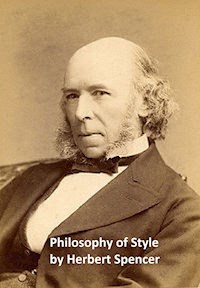






The Philosophy of Style
Table of Contents
Introduction
Style, in Spencer’s account, is the calibrated transfer of thought with the least friction. From its opening pages, The Philosophy of Style pursues an ideal of prose that respects the reader’s energy as a precious resource. Herbert Spencer examines how sentences, figures, and rhythms can be arranged so ideas move quickly, clearly, and forcefully from writer to reader. He treats composition not as ornament, but as a practical art grounded in how minds process information. The result is a study that feels at once analytical and humane, inviting writers to consider clarity not a concession, but a discipline that magnifies meaning.
This work endures as a classic because it reframed style as a reader-centered endeavor and did so with striking concision. Rather than rehearsing rules by tradition alone, Spencer relates them to mental effort and attention, offering a unifying rationale for choices writers face on every page. Its arguments helped shift emphasis from display to intelligibility, influencing the evolution of modern prose. The treatise has remained a touchstone in discussions of clarity, and it continues to inspire renewed interest whenever debates arise about plain language, rhetoric, and the responsibilities of public communication in literature and beyond.
The Philosophy of Style is by Herbert Spencer, a leading Victorian thinker, first published in 1852. Written in the intellectual climate of nineteenth-century Britain, it is a compact treatise on effective composition that strives to systematize the craft. Spencer’s purpose is not to prescribe fashion, but to explain why certain forms make reading easier and more memorable. He proposes principles to guide word choice, sentence structure, and arrangement, consistently measuring them against the reader’s cognitive burden. The essay’s scope is practical yet philosophical, situating stylistic decisions within a broader theory of communication that values clarity, economy, and thoughtful emphasis.
At the core of the book lies a governing insight often summarized as an economy of attention. Spencer argues that the best writing minimizes unnecessary mental effort while preserving vitality and precision. He pursues this insight across several dimensions: the order in which ideas appear, the placement of modifiers, the balance between concrete detail and abstraction, and the strategic use of figurative language. He also considers rhythm and cadence, showing how sound can assist sense without calling undue attention to itself. These analyses collectively illuminate why some sentences glide and others stall, and how writers can reliably build momentum.
The treatise occupies an important place in literary history because it merges rhetoric with the era’s fascination for scientific explanation. Spencer brings a diagnostic tone to issues that had often been taught as taste or custom. This scholarly posture, anchored in observation of reader experience, resonates with later developments in stylistics and composition studies. While fashions in prose have shifted, the book’s central concerns have proven durable: intelligibility, emphasis, and respect for the audience’s time. Its formulations have been cited and debated in classrooms, writing manuals, and critical essays, ensuring that its ideas circulate across generations of readers and writers.
Spencer’s broader intellectual profile informs his approach. Known for his wide-ranging interests in philosophy and the sciences, he favored general principles that connect disparate fields. In addressing style, he applies that inclination to the mechanics of communication. He seeks the fewest, most powerful laws that explain many surface features of prose. This perspective does not flatten art into formula; rather, it asks how craft is intelligible as craft. The result is a framework inviting both adoption and scrutiny, one that treats language as a system of choices whose effects can be traced through the reader’s moment-to-moment experience.
Readers will find practical counsel embedded in analysis. Spencer draws attention to the order of clauses, urging arrangements that present the most central ideas with minimal detour. He examines how brevity can help, yet warns that concision without guidance may confuse. He values concrete phrasing when it clarifies, but allows abstraction when it gathers complex relations efficiently. He explores how imagery lends force when it compresses meaning rather than scattering it. Throughout, he treats emphasis as the art of placement, showing how strategic sequencing and transitions can illuminate the hinge points of argument, narrative, or explanation without straining the reader’s patience.
In positioning his work among earlier rhetorical traditions, Spencer both inherits and revises. Classical handbooks cataloged figures and tropes; eighteenth-century treatises refined categories of taste. Spencer preserves what endures from those lineages, while reframing their advice through a psychological lens. He is less concerned with ornament for its own sake and more with the operational why behind effective expression. That recalibration helps explain the work’s lasting appeal: it offers reasons as well as recommendations. For modern readers, this orientation translates into flexible heuristics rather than rigid rules, adaptable to diverse genres, from criticism and science to journalism and public discourse.
Because the work advances principles, it also invites debate. How far can the economy of attention go before it risks austerity, or when might a calculated difficulty deepen understanding? Spencer raises such questions by implication, acknowledging that style mediates between ease and force, simplicity and richness. The treatise proposes that true mastery harmonizes these pressures, minimizing waste while preserving resonance. Its value, then, is not only in settled answers, but in a method of inquiry: measure choices by their effect on comprehension, momentum, and impact. That framework remains fertile ground for writers negotiating the tensions of their own purposes.
For contemporary audiences, the book’s relevance is plain. In an era of constant messages and limited attention, the ethics of clarity matter. Spencer’s emphasis on reader effort anticipates concerns later formalized in fields like usability, plain language advocacy, and information design. His arguments speak to editors shaping public documents, scientists communicating complex results, and artists seeking lucidity without dilution. The treatise offers a vocabulary for discussing readability that neither trivializes art nor mystifies technique. It encourages writers to consider the human costs of obscurity and the civic value of prose that allows knowledge to travel swiftly and accurately.
Approaching the text today, readers can expect a measured, analytic voice and numerous examples that make abstract principles tangible. The prose reflects its century, yet its insights cut across time, inviting application rather than doctrinal allegiance. It rewards slow reading and active testing: try an alternative order, weigh a shorter term against a longer one, listen for cadence that helps rather than distracts. The book does not promise formulas that write for you; it cultivates judgment. In that sense, it functions both as a guide and as a mirror, helping writers see where intention meets effect on the page.
The Philosophy of Style endures because it unites theory with empathy for the reader. Its themes are clarity, emphasis, and economy, balanced against the need for vigor and nuance. Its method is to trace how form carries thought, and to encourage choices that respect attention without thinning meaning. Readers come away with a sharpened sense of responsibility, a toolkit of practical strategies, and renewed curiosity about how language works. In a crowded, accelerated world, those gifts remain timely. This is a classic not only of style, but of intellectual generosity, inviting us to write so that understanding can proceed with grace.
Synopsis
The Philosophy of Style presents Herbert Spencer’s systematic account of what makes writing effective. He proposes a single governing principle: style should economize the reader’s mental effort. Communication succeeds when ideas are arranged so they can be grasped with minimal strain, conserving attention for the substance of thought. Spencer treats this as a psychological law from which practical rules follow, arguing that perspicuity precedes ornament. He frames the essay as a sequence of deductions from this law, surveying sentence structure, choice of words, figures, euphony, and composition. The result is a concise doctrine unifying clarity, force, and beauty under the economy of attention.
From the central law Spencer derives guidance on ordering ideas. The familiar should precede the unfamiliar, the known furnishing context for the new. Sentences should introduce the subject before its predicates and complements, letting the reader build meaning without retroactive reinterpretation. Constructions that force the mind to hold fragments in suspense, or to revise early impressions, squander attention. He recommends basing sequences on natural relations—cause to effect, whole to part, general to particular—so that each step prepares the next. This approach reduces cognitive transitions and eases comprehension, aligning grammatical order with the logical order of thought.




