


9,99 €
Mehr erfahren.
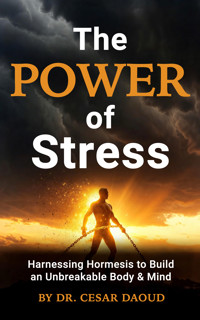
The Power of Stress is a groundbreaking guide that redefines stress not as an enemy, but as a biological ally. Drawing on Eastern medicine, Western science, and over 21 years of clinical experience, Dr. Cesar Daoud reveals how strategic, intentional stress—known as hormesis—can transform your body, sharpen your mind, and restore your vitality.
Through compelling stories, practical tools, and deep wisdom, you’ll learn how cold exposure, heat, fasting, movement, breathwork, light, emotional challenge, and environmental rhythms can rewire your nervous system and rebuild resilience at the cellular level.
This is your roadmap to becoming antifragile—not just surviving stress, but growing because of it.
A book for anyone facing burnout, fatigue, anxiety, hormonal imbalance, emotional overwhelm, or the feeling of being “stuck,” The Power of Stress guides you back to strength, clarity, and aliveness.
Stress isn’t breaking you.
It’s calling you forward.
Please note:
This book was written by the author. AI tools were used solely for language correction, proofreading, and structural verification.
Das E-Book können Sie in Legimi-Apps oder einer beliebigen App lesen, die das folgende Format unterstützen:
Seitenzahl: 139
Veröffentlichungsjahr: 2026
Ähnliche



















The Power of Stress: Harnessing Hormesis to Build an Unbreakable Body & Mind
© 2026 Dr Cesar Daoud
All rights reserved.
No part of this publication may be reproduced, stored in a retrieval system, or transmitted in any form or by any means — electronic, mechanical, photocopying, recording, or otherwise — without the prior written permission of the author, except for brief quotations in reviews or scholarly works.
This ebook is published in Cyprus.
ISBN: 978-9925-8292-0-0
Disclaimer
The information contained in this book is provided for educational and informational purposes only and is not intended as medical advice. The content is not a substitute for professional medical diagnosis, treatment, or care. Always seek the advice of a qualified healthcare professional regarding any medical condition or health-related decision.
While every effort has been made to ensure the accuracy of the information presented, the author makes no representations or warranties, express or implied, regarding the completeness or reliability of the content and assumes no responsibility for errors or omissions.
The reader acknowledges that the application of any information or practices described in this book is done at their own discretion and risk.
Chapter I. Introduction
Chapter II. The Stress Paradox — Embracing Discomfort for Growth
Section 1. Rethinking the Nature of Stress
Stress: A Misunderstood MessengerThe Biological Two-Face: Stress as Destroyer and BuilderThe Story You Tell Yourself About Stress Changes EverythingDiscomfort Is the Price of GrowthEveryday Hormesis: The Stress You Didn’t Know You NeededThe Stress-Resilience Spectrum: Finding Yourself on the MapThe Practical Promise: You Can Train ThisSection 2. Hormesis: Nature’s Strategy for Strength
Understanding the Principle of HormesisFrom Toxic to Tonic: Reframing StressorsThe Evolutionary Foundations of Beneficial StressScientific Evidence for Hormetic ResponsesHormesis in the Natural WorldThe “Less is More” Principle in ActionIntroducing the Concept of Hormetic DosingChapter III. The Biological Blueprint of Resilience
Section 1. The Adaptive Machinery of Your Body
The Autonomic Nervous System Explained Allostasis: The Body’s Dynamic Equilibrium The Stress Response vs. the Recovery Cycle How the Body Adapts to Challenges The Role of Neurotransmitters in Stress Hormonal Responses to Stressors Building Allostatic Load CapacitySection 2. Cellular Foundations of Adaptation
Mitochondria: The Powerhouses of CellsInflammation: The Double-Edged SwordCellular Repair and Regeneration MechanismsThe Impact of Stress on Cellular HealthMitochondrial Adaptations to StressUnderstanding Oxidative StressThe Role of Autophagy in Cellular RenewalChapter IV. Thermal Stress — The Power of Temperature Extremes
Section 1. Embracing the Cold for Health
The Science Behind Cold ExposurePractical Applications: Ice Baths and Cold ShowersThe Wim Hof Method and Its Hormetic EffectsCryotherapy and Its BenefitsImpact of Cold on Metabolism and MoodBuilding Cold Tolerance GraduallySafety Precautions for Cold ExposureSection 2. The Benefits of Heat Exposure
Understanding Heat Stress and Adaptation The Role of Saunas in Health and Longevity Hot Yoga and Its Hormetic Contributions Heat Shock Proteins: Cellular Protectors Cardiovascular Benefits of Heat Exposure Detoxification Through Sweating Combining Heat and Cold TherapiesChapter V. Metabolic Resilience — Fasting and Movement
Section 1. The Hormetic Advantage of Fasting
The Science of Intermittent Fasting Metabolic Switching: From Glucose to Ketones Autophagy: The Body’s Cellular Cleanup Different Fasting Protocols Explained Fasting Mimetics and Their Applications Practical Tips for Successful Fasting Potential Benefits of Fasting for LongevitySection 2. Exercise as a Hormetic Stimulus
Strength Training and Hormetic Principles Endurance Training and Its Adaptive Benefits The Critical Role of Recovery in Growth Understanding Overtraining and Stress Mismanagement Optimizing Exercise for Hormetic GainsThe Mind-Muscle Connection in TrainingExercise as a Catalyst for Cellular AdaptationChapter VI. Breath, Light, and Environment — Essential Stressors
Section 1. Breathwork and Oxygen Dynamics
The Power of Conscious Breathing Hypoxia Training: Altitude Masks and Breath Holds Pranayama, CO₂ Tolerance, and Heart Rate Variability Oxygen as a Double-Edged SwordThe Impact of Breath on the Nervous System Improving Lung Capacity Through Breathwork Breathwork for Stress Reduction and FocusSection 2. Harnessing Light and Nature
Sunlight Exposure and Vitamin D ProductionRed Light Therapy and Cellular HealthThe Benefits of Natural Environmental ExposureNature as a Controlled Stressor for ResilienceGrounding and Its Physiological EffectsThe Impact of Light Cycles on Circadian RhythmsIncorporating Nature into Daily LifeChapter VII. Mental and Emotional Fortitude — The Mind as a Muscle
Section 1. Navigating Emotional and Mental Stress
Eustress vs. Distress: The Spectrum of ChallengeCognitive Resilience and Emotional Reappraisal The Role of Mindset in Stress Management Developing Grit and Perseverance Embracing Challenges for Mental Growth The Power of Constructive Self-Talk Mindfulness and Stress AwarenessSection 2. Cultivating Flow and Peak Performance
Understanding Flow States in Psychology The Psychology of Challenge and Engagement Stressors That Foster Creativity Optimizing Your Environment for Flow Overcoming Obstacles to Flow Flow as a Tool for Personal Development Integrating Flow into Daily ActivitiesChapter VIII. Designing Your Hormetic Life — From Stress to Antifragility
Section 1. The Art of Balanced Stress Application
Finding Your “Goldilocks Zone” of StressThe U-Shaped Curve of Benefit vs. RiskListening to Your Body’s BiofeedbackMonitoring HRV, Sleep Quality, and MoodAvoiding the Trap of Chronic Stress AccumulationThe Critical Role of Deliberate RecoveryBuilding Resilience Through Intelligent Stress DosingSection 2. Creating an Antifragile Lifestyle
Designing Your Personalized Hormesis Routine Building Rhythmic Stress Exposure (Daily, Weekly, Seasonal)Strategic Stress Layering for AdaptationAdaptation Windows and Restorative RitualsBio-integration: Hormesis with Intention and PrecisionHormetic Strategies for Longevity and Cognitive VitalityAncient Wisdom Meets Modern Science in Antifragile LivingConclusion
Reader’s Workbook: From Reading to Becoming
About the Author
Acknowledgments
Recommended Reading
Next Steps
Chapter I.
Introduction
There was a time in my life when I saw stress as the enemy — a force that drained energy, stole joy, and pushed the body to its breaking point. I saw it in my patients, in my colleagues, in the people I loved, and at times, in the mirror. It was something to fight, avoid, or numb.
But everything changed the day I stopped seeing stress as a problem… and started listening to it as a message.
As a doctor trained in both Western medicine studies and Eastern healing traditions — acupuncture, Traditional Chinese medicine, posturology, and Manual therapy — I’ve spent nearly two decades helping people heal what seemed unhealable. Chronic pain, hormonal chaos, emotional overwhelm, burnout that medicine couldn’t quite explain. Over and over again, I noticed the same hidden thread: stress wasn’t just present, it was central. Yet it wasn’t the stress itself causing damage — it was the misunderstanding of it.
Somewhere along the way, I began to ask a different question:What if stress is not here to break us… but to wake us up?
That one question changed everything — not only for my patients but for my own life. I dove deep into the science of the autonomic nervous system, the healing wisdom of the meridian system, the biology of hormesis, and the emotional maps held in the body. I saw how the very thing we fear — discomfort, challenge, intensity — can be used as medicine. As a mirror. As a sacred teacher.
This book, The Power of Stress, was born from that realization.
It’s for the woman who feels she’s falling apart during perimenopause — whose hormones seem to betray her, who feels invisible, angry, and lost in a body she no longer recognizes.It’s for the man trapped in performance mode, living in constant fight-or-flight, checking off goals but feeling increasingly hollow inside, unable to rest without guilt.It’s for the parent who gives everything to their children but collapses quietly at night, wondering where their energy — and identity — has gone.It’s for the high-achieving professional who looks “fine” on the outside but is silently battling migraines, bloating, brain fog, and shame.It’s for the young adult who wakes up with anxiety clenched in their chest, overstimulated by life, unsure how to move forward without shutting down.It’s for the person healing from heartbreak, from burnout, from a diagnosis they didn’t see coming — or from years of ignoring their own needs just to keep going.It’s for the person who wakes up every day with fatigue, inflammation, anxiety — and wonders, is this just the way life is now?
It’s for anyone who has ever whispered to themselves: Something’s not right… but I don’t know where to begin.
This book is the beginning.
This book is my invitation to you: to stop fearing stress and start working with it. To decode the signals. To activate your body’s built-in capacity for resilience, balance, and deep transformation. Not through hacks or suppressants — but through integration. Through learning how to respond rather than react.
I didn’t write this book as a guru. I wrote it as a guide. I’ve walked this road myself — and I’ve watched thousands walk it too.
What you’re about to read is not just theory. It’s a synthesis of lived experience, cutting-edge research, and timeless wisdom. It’s a roadmap to turn stress from a silent saboteur into a sacred ally.
Welcome to the other side of stress — the side where healing begins.
Let’s walk it together.
— Dr. Cesar Daoud
Chapter II.
The Stress Paradox — Embracing Discomfort for Growth
Section 1. Rethinking the Nature of Stress
It was 3:17 a.m. when Liam, a 36-year-old emergency room nurse, finally stepped outside for his first breath of fresh air in nearly twelve hours. His scrubs were damp with sweat, his feet ached, and the fluorescent lights inside still echoed behind his eyes. He had just finished stabilizing a teenager after a motorbike accident—blood loss, shattered femur, shock. The kind of shift that doesn’t let you pause, doesn’t let you process, doesn’t let you forget.
And yet, as he stood in the cold night air, hands trembling from the last push of adrenaline, he didn’t feel broken. He felt lit up. Alert. Alive. He was exhausted, yes—but deeper than the exhaustion was a kind of clarity. He knew, in that moment, why he had chosen this job. He felt capable. Needed. Stronger.
What Liam was experiencing was something that many of us overlook in our rush to avoid discomfort: the fact that stress, under the right conditions, can be deeply empowering.
We’ve been conditioned to fear it—to label it as the enemy, to run from it, to medicate it, suppress it, numb it. But what if the real problem isn’t stress itself… but our relationship to it?
1. Stress: A Misunderstood Messenger
In modern conversation, “stress” is usually a placeholder for suffering. It’s what we say when life feels too full, when the inbox won’t stop pinging, when the baby won’t sleep, when deadlines loom, when the body aches and the mind spirals.
But biologically, stress is not a problem to be eliminated. It is a signalling system. It is your body’s built-in, intelligent response to challenge or change. And it is a process that your cells, your brain, and your physiology have evolved to need.
Hans Selye, the pioneering scientist who first introduced the concept of stress into medicine in the 1930s, observed that all organisms respond to threats—real or perceived—with a predictable sequence of changes: an initial alert, a mobilization of energy, and then (hopefully) recovery. He called this the General Adaptation Syndrome, and it forms the foundation of our modern understanding of how stress operates in the body.
But Selye also warned against oversimplification. Not all stress is bad. In fact, a certain kind of stress is necessary for growth. He called this “eustress”—from the Greek eu, meaning good. This positive stress arises when the challenge is meaningful, the load is temporary, and recovery is built in.
2. The Biological Two-Face: Stress as Destroyer and Builder
Imagine a weightlifter tearing muscle fibers in the gym. That mechanical damage is a form of stress. It hurts. It’s inflammation. But it’s also a message to the body: adapt or fall behind. In the days following, the body rebuilds the damaged tissue—not just to its previous state, but stronger than before. This is the biological principle of supercompensation, and it’s happening in your tissues, your nervous system, your mind, all the time.
That same adaptive principle can apply to fasting, heat exposure, cold plunges, breath-holding, intense learning, and emotional discomfort. In small doses, these stressors push your system to evolve. They trigger hormesis—a phenomenon in which exposure to a mild stressor activates protective mechanisms that ultimately make the system more resilient.
But—and this is critical—too much stress, for too long, without recovery, has the opposite effect. It depletes, weakens, breaks down.
It’s not about avoiding stress. It’s about understanding your dosing.
3. The Story You Tell Yourself About Stress Changes Everything
Let’s bring in another story.
Jasmine was a 42-year-old single mom and startup founder. Her days began before dawn and ended long after sunset. She’d be up packing lunches, pitching investors, handling crises, and putting out fires at work and at home. When she came to see her functional medicine practitioner, her body was inflamed, her hormones out of balance, her sleep fractured.
When the topic of stress came up, Jasmine sighed and said, “Stress is just part of who I am. It’s killing me, but there’s nothing I can do about it.”
But the truth is, Jasmine wasn’t suffering just because of the amount of stress in her life. She was suffering because of her perception of helplessness in the face of it. She believed stress was something happening to her, something uncontrollable, something inherently harmful.
And that belief alone was doing more damage than the stress itself.
In a landmark study conducted by researchers at the University of Wisconsin-Madison, over 28,000 people were asked two questions:
How much stress have you experienced in the past year?Do you believe stress is harmful to your health?Eight years later, the people with high stress and the belief that stress is harmful had a 43% increased risk of premature death. But those with high stress who believed stress was helpful? They had the lowest risk of death in the entire study—even lower than those with minimal stress.
Your mindset literally changes your physiology.
4. Discomfort Is the Price of Growth
Here’s a truth you already know deep down: nothing meaningful comes without discomfort.
Think back to a time you grew the most as a person. Was it during ease and certainty? Or was it during upheaval—when you lost the job, when the relationship ended, when you moved to a new city, when you took the risk?
Stress, by nature, signals the presence of challenge. But challenge, by nature, is what catalyzes transformation. Just as muscles grow by breaking down, your character, capacity, and consciousness grow through meeting stress with presence instead of panic.
And that discomfort? It’s not a bug in the system. It’s the very mechanism of change.
5. Everyday Hormesis: The Stress You Didn’t Know You Needed
You don’t need to be an ER nurse or startup founder to apply this. Stress training is available to you—right now—in small but powerful forms.
Here are just a few:
Cold exposure: A 30-second blast at the end of your shower boosts norepinephrine, improves mitochondrial function, and trains your nervous system to tolerate discomfort.Fasting: Going 12–16 hours without food flips metabolic switches, improves insulin sensitivity, and triggers autophagy—the cellular cleanup process.Exercise: Intense training temporarily stresses the cardiovascular and musculoskeletal systems, prompting greater strength, cardiovascular efficiency, and mental clarity.Breath-holds and CO₂ training: Short periods of breath retention improve oxygen utilization, raise CO₂ tolerance, and reduce anxiety.Social risk: Having a hard conversation or sharing something vulnerable activates emotional stress—but increases relational depth and authenticity.These are not just fitness hacks or productivity tips. They are invitations to reclaim your agency. They are tools to remind your body and mind that you can handle more than you think you can.
6. The Stress-Resilience Spectrum: Finding Yourself on the Map
Now, let’s place this all on a spectrum—a simple model for understanding where you are, and where you could go.
1. Fragile




