


19,99 €
Mehr erfahren.
- Herausgeber: John Wiley & Sons
- Kategorie: Fachliteratur
- Sprache: Englisch
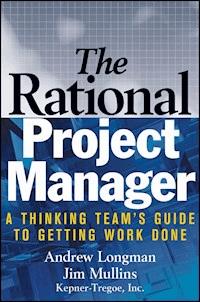
This comprehensive exploration of the project management processpresents the tools, steps, and processes of project management anduncovers the critical thinking -- the why -- vital to projectmanagement excellence. Incorporating Kepner-Tregoe?s renowned andeffective problem-solving and decision-making processes, the bookguides you through the core activities of projectmanagement?planning, solving problems, making decisions, andassessing risk. It positions projects within an organization?s"performance environment," an understanding of which is essentialfor effective team performance and alignment. Offering acombination of overarching insights into organizational dynamics,as well as specific processes and practices for effectivemanagement, this is a resource no project leader -- and no projectteam member -- should be without.
Sie lesen das E-Book in den Legimi-Apps auf:
Seitenzahl: 269
Veröffentlichungsjahr: 2015
Ähnliche


















The Rational Project Manager
A THINKING TEAM’S GUIDE TO GETTING WORK DONE
Andrew Longman
Jim Mullins
KEPNER-TREGOE, INC.
Copyright © 2005 by Kepner-Tregoe, Inc. All rights reserved.
Published by John Wiley & Sons, Inc., Hoboken, New Jersey. Published simultaneously in Canada.
No part of this publication may be reproduced, stored in a retrieval system, or transmitted in any form or by any means, electronic, mechanical, photocopying, recording, scanning, or otherwise, except as permitted under Section 107 or 108 of the 1976 United States Copyright Act, without either the prior written permission of the Publisher, or authorization through payment of the appropriate per-copy fee to the Copyright Clearance Center, Inc., 222 Rosewood Drive, Danvers, MA 01923, 978-750- 8400, fax 978- 646- 8600, or on the web at www.copyright.com. Requests to the Publisher for permission should be addressed to the Permissions Department, John Wiley & Sons, Inc., 111 River Street, Hoboken, NJ 07030, 201-748- 6011, fax 201-748- 6008.
Limit of Liability/ Disclaimer of Warranty: While the publisher and author have used their best efforts in preparing this book, they make no representations or warranties with respect to the accuracy or completeness of the contents of this book and specifically disclaim any implied warranties of merchantability or fitness for a particular purpose. No warranty may be created or extended by sales representatives or written sales materials. The advice and strategies contained herein may not be suitable for your situation. You should consult with a professional where appropriate. Neither the publisher nor author shall be liable for any loss of profit or any other commercial damages, including but not limited to special, incidental, consequential, or other damages.
For general information on our other products and services, or technical support, please contact our Customer Care Department within the United States at 800-762-2974, outside the United States at 317-572-3993 or fax 317-572- 4002.
Wiley also publishes its books in a variety of electronic formats. Some content that appears in print may not be available in electronic books. For more information about Wiley products, visit our web site at www.wiley.com.
Library of Congress Cataloging-in-Publication Data:
Longman, Andrew, 1959– The rational project manager : a thinking team's guide to getting work done / Andrew Longman, James Mullins. p. cm. ISBN 0-471-72146-8 (cloth) 1. Project management. I. Mullins, James, 1973– II. Title. HD69.P75.L66 2005 658.4′04—dc22
2004027083
CONTENTS
Chapter 1: the missing pieces of the project management puzzle
Project Management as the New Imperative
Project Management Unplugged
Project Management in Action
The Stuff of Projects
Today's Projects: What Makes Them Different?
Today's Game is Speed
Disembodied Goals
The Ebb and Flow of Today's Teams
The Competition for Resources
The Revolving Door
The Penchant for Complexity
Projects Aren't Going Away
The Missing Pieces of the Project Management Puzzle
What's Ahead
Notes
Chapter 2: project definition
Why Are We Doing This Project?
State the Project
Develop Objectives
Develop the Work Breakdown Structure
Identify Resource Requirements
Additional Definition Topics
Chapter 3: project planning
Assign Responsibility
Sequence Deliverables
Schedule Deliverables
Schedule Resources
Protect and Enhance the Plan
Enhance the Plan
Additional Planning Topics
Planning Summary
Chapter 4: project implementation
Are You Ready to Do the Work?
Start to Implement
Monitor the Project
Modify the Project
Closeout and Evaluate
Additional Implementation Topic
Implementation Summary
Chapter 5: managing people in projects
Influencing People
The Performance System
Involving People
Communicating with People
Meetings and Communication
Summary
Chapter 6: project decision making and problem solving
Situation Appraisal
Decision Analysis
Problem Analysis
Decision-Making and Problem-Solving Summary
Chapter 7: installing project management within an organization
Ensuring Systematic Use of Project Management
Installing Project Management
How Should You Install Project Management in Your Organization?
A Final Word on Project Management
Index
EULA
List of Illustrations
Chapter 2
Example 2.1 Project Objectives
Example 2.2 Work Breakdown Structure—Indented Outline
Example 2.3 Work Breakdown Structure—Tree Diagram
Example 2.4 Resource Requirements
Chapter 3
Example 3.1 Responsibility Assignment Matrix
Example 3.2 Performance Expectations for the Facilities Manager
Example 3.3 Precedence Table
Example 3.4 Activity-on-Node or Precedence Diagramming Method
Example 3.5 Activity-on-Arrow or Arrow Diagramming Method
Example 3.6 Activity-on-Node Network Diagram
Example 3.7 Network with Probabilistic Branching and Looping
Example 3.8 Gantt Chart
Example 3.9 Resource Loading and Leveling
Example 3.10 Revised Gantt Chart
Example 3.11 Protect the Plan
Example 3.12 Enhance the Plan
Example 3.13 Critical Path Method
Example 3.14 Calculating PERT
Chapter 4
Example 4.1 Ground Rules
Example 4.2 Project Baseline Schedule
Example 4.3 Time Variance
Example 4.4 Cost Variance
Example 4.5 Work Variance
Example 4.6 Actual Schedule
Example 4.7 Closeout Report
Example 4.8 Earned Value Analysis
Total Allocated Budget
Chapter 5
Example 5.1 The Performance System Model
Example 5.2 The Performance System Example
Example 5.3 The Managing Involvement Leadership Tree
Chapter 6
Example 6.1 Situation Appraisal—Clarification and Priority
Example 6.2 Situation Appraisal—Action Plan
Example 6.3 Decision Analysis—Objectives
Example 6.4 Decision Analysis—Alternatives
Example 6.5 Decision Analysis—Risks
Example 6.6 Problem Specification Questions
Example 6.7 Problem Analysis—Statement and Specification Problem Specification Questions
Example 6.8 Problem Analysis—Most Probable Cause
Guide
Cover
Table of Contents
Chapter 1
Pages
1
3
4
5
6
7
8
9
10
11
12
13
14
15
16
17
19
21
22
23
24
25
26
27
29
31
33
34
36
39
40
41
42
45
46
47
48
49
50
51
52
53
54
55
57
58
59
61
62
63
64
65
66
67
68
69
70
71
72
73
74
75
76
77
78
79
80
81
82
83
84
86
87
88
89
90
91
94
95
96
97
99
100
101
102
103
104
106
107
108
110
111
113
114
115
116
117
119
120
123
124
126
127
129
131
132
133
134
135
136
137
139
140
141
142
143
144
145
146
147
148
149
150
151
152
153
154
155
156
157
158
159
160
161
162
163
164
165
166
167
168
169
170
171
173
175
176
177
178
180
181
183
184
185
186
189
190
192
193
195
197
199
200
201
202
203
204
205
206
207
208
209
210
211
212
213
214
215
216
217
218
219
220
221
222
223
224
225
226
Foreword
Back in 1965, when The Rational Manager was published, times may have been less turbulent, but they were no less challenging: Competitive pressures were beginning to intensify, as the Japanese and European economies rebounded from the aftermath of World War II; boom-and-bust economic cycles continued to challenge forecasters; the “Age of Acquisitions” had begun, with high-stakes financiers stalking the trail, looking for low-hanging fruit; the Cold War continued to cast its chill; Vietnam, the Kennedy and King assassinations, and tlie LSDing of America created confusion and cynicism; racial tensions were boiling; and bestsellers such as Ralph Nader's and Rachael Carson's caused great anxiety throughout corporate America.
Lesen Sie weiter in der vollständigen Ausgabe!
Lesen Sie weiter in der vollständigen Ausgabe!
Lesen Sie weiter in der vollständigen Ausgabe!
Lesen Sie weiter in der vollständigen Ausgabe!
Lesen Sie weiter in der vollständigen Ausgabe!
Lesen Sie weiter in der vollständigen Ausgabe!
Lesen Sie weiter in der vollständigen Ausgabe!
Lesen Sie weiter in der vollständigen Ausgabe!
Lesen Sie weiter in der vollständigen Ausgabe!
Lesen Sie weiter in der vollständigen Ausgabe!
Lesen Sie weiter in der vollständigen Ausgabe!




