


21,99 €
Mehr erfahren.
- Herausgeber: Prestel
- Kategorie: Geisteswissenschaft
- Sprache: Englisch
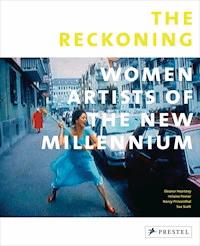
The authors of After the Revolution return with an incisive study of the work of contemporary women artists.
In After the Revolution, the authors concluded that "The battles may not all have been won . . . but barricades are gradually coming down, and work proceeds on all fronts in glorious profusion." Now, with The Reckoning, authors Heartney, Posner, Princenthal, and Scott bring into focus the accomplishments of 24 acclaimed international women artists born since 1960 who have benefited from the groundbreaking efforts of their predecessors. The book is organized in four thematic sections: "Bad Girls" profiles artists whose work represents an assault on conventional notions of gender and racial difference. "History Lessons" offers reflections on the self in the context of history and globalization. "Spellbound" focuses on women’s embrace of the irrational, subjective, and surreal, while "Domestic Disturbances" takes on women's conflicted relationship to home, family, and security. Written in lively prose and fully illustrated throughout, this book gives an informed account of the wonderful diversity of recent contemporary art by women.
"An indispensable contribution to the literature on contemporary art by women." (Whitney Chadwick, author of Women, Art and Society)
"In the 2007 book After the Revolution: Women Who Transformed Contemporary Art, [the authors] set a new standard in documenting and evaluating the work of a dozen key women artists, spanning generations between the 1960s to the 2000s. . . The beat goes on with the appearance of The Reckoning, written by the same authors in the same accessible scholarly style, but reflecting important historical changes over the past decade and more. In line with the increased presence of women in mainstream art, the book includes twice as many artists as its predecessor. And its global reach has expanded vastly, stretching from Europe and the Americas to Africa and China." (Holland Cotter, The New York Times)
Das E-Book können Sie in Legimi-Apps oder einer beliebigen App lesen, die das folgende Format unterstützen:
Seitenzahl: 366
Veröffentlichungsjahr: 2014
Ähnliche



















THE RECKONING
THE RECKONING
WOMEN
ARTISTS of
the NEW
MILLENNIUM
Eleanor Heartney
Helaine Posner
Nancy Princenthal
Sue Scott
PRESTEL
MUNICH • LONDON • NEW YORK
INTRODUCTION
BAD GIRLS
Essay by Eleanor Heartney
GHADA AMER • CECILY BROWN • TRACEY EMIN • KATARZYNA KOZYRA • WANGECHI MUTU • MIKA ROTTENBERG
SPELLBOUND
Essay by Nancy Princenthal
JANINE ANTONI • CAO FEI • NATHALIE DJURBERG • PIPILOTTI RIST • JANE & LOUISE WILSON • LISA YUSKAVAGE
DOMESTIC
DISTURBANCES
Essay by Sue Scott
KATE GILMORE • JUSTINE KURLAND • KLARA LIDEN • LIZA LOU • CATHERINE OPIE • ANDREA ZITTEL
HISTORY LESSONS
Essay by Helaine Posner
YAEL BARTANA • TANIA BRUGUERA • SHARON HAYES • TERESA MARGOLLES • JULIE MEHRETU • KARA WALKER
BIBLIOGRAPHY
INDEX
ACKNOWLEDGMENTS
REPRODUCTION CREDITS
INTRODUCTION
Fig. 1. Janine Antoni, Inhabit, 2009.Digital c-print; 1161/2 x 72 in. | 295.9 x 182.9 cm; edition of 3.
In the United States, 2007 was hailed as the year of feminism in art. This surprising celebration took place at a time when the women’s movement was widely regarded as outmoded, even irrelevant, and feminism was considered a dirty word. The year was marked by a number of significant events designed to applaud and assess women’s achievements in the visual arts, including the opening of the Elizabeth A. Sackler Center for Feminist Art at the Brooklyn Museum, featuring an inaugural exhibition on Global Feminisms; another large international survey titled WACK!: Art and the Feminist Revolution, organized by the Museum of Contemporary Art, Los Angeles, which toured North America; and a two-day symposium called “The Feminist Future” held at New York’s Museum of Modern Art, an institution not generally noted for its support of art by women.
In his review of WACK!, art critic Holland Cotter offered a bold assessment of the state of art and feminism in the pages of The New York Times. He declared, “One thing is certain: Feminist art, which emerged in the 1960s with the women’s movement, is the formative art of the last four decades. Scan the most innovative work, by both men and women, done during that time, and you’ll find feminism’s activist, expansionist, pluralistic trace. Without it identity-based art, crafts-derived art, performance art and much political art would not exist in the form it does, if it existed at all. Much of what we call postmodern art has feminist art at its source.” [1] It seems that while the art establishment was attending to business as usual, feminists—male as well as female—had passed them by.
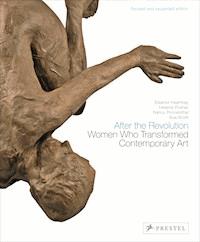
Our contribution to the year of art and feminism was a book titled After the Revolution: Women Who Transformed Contemporary Art. Focusing on a dozen exemplary artists, we described the strides they and their colleagues had made since the advent of the feminist movement in the 1960s, and noted the changes that took place in their critical reception, commercial appeal, and level of institutional support. In her foreword to this volume, the distinguished art historian Linda Nochlin observed, “After the revolution comes the reckoning,” and asked, “Exactly what has been accomplished, what changed?” The Reckoning: Women Artists of the New Millennium is an attempt to address Nochlin’s pointed question. We decided to turn our attention to a generation of women artists born post-1960 who have benefited from ground-breaking efforts of their predecessors, and to cast a wider geographical net, reflecting the globalization of the contemporary art world as well as the inroads made by feminism worldwide. The twenty-five women artists selected for inclusion in this new survey work in a wide variety of media and across a broad range of subjects. With gradually increasing opportunity and growing popular and critical acclaim, these artists, and their peers, are now positioned to reshape visual culture.
Rather than attempting an encyclopedic survey, we have organized The Reckoning around four themes that, we feel, capture significant impulses in artwork by younger women. “Bad Girls” presents artists who exploit “politically incorrect” and sexually explicit material to challenge the patriarchal image regime. “Spellbound” focuses on women’s embrace of the irrational, the subjective, and the surreal. “Domestic Disturbances” takes on women’s conflicted relationship to home, family, and security. “History Lessons” addresses women artists’ engagement with political and social concerns. Each theme is linked to a groundbreaking work by what we came to think of as our artists’ foremothers. These landmark works, which demonstrate the continuity between generations, also helped us think through how younger artists differ from their predecessors—how changing circumstances in the world and the role of women within it have subtly inflected longstanding concerns.
We readily acknowledge that many important artists do not fit comfortably within these categories. However, we feel they allowed us to map out a revealing set of relationships among women, culture, and world. The four themes might be thought of as a four-pointed net thrown over our subject. Two of the points involve subjective and individual aspects of women’s experience: “Bad Girls” explores the body’s role in forging our identity and considers how we are in turn shaped by the other’s gaze. “Spellbound” comes at the question of identity from the opposite perspective, examining interior realities shaped by fantasy, subconscious desires, subliminal memories, and dreams. Because both categories deal with the construction of a sense of self, artists in these sections share certain overlapping concerns, among them the uses and abuses of pornography, the role of fantasy in the creation of identity, and the varieties of female pleasure.
The other two points of our net are more social, exploring women’s relationship to the larger institutions that make up our world. “Domestic Disturbances” highlights the conflicts that often exist between individuals and family, construed in the widest sense. Dilemmas here include the struggle to balance communal identity and individuality; personal freedom and group responsibility. “History Lessons” pulls back to look at the self in relation to an even larger sphere, namely the artist’s role in the world. Here questions of political power, social responsibility, and national identity come to the fore. Again, there are overlapping concerns between these two more collective categories, among them questions of activism, politics, and communal action.
Together these four points provide a way to make sense of the bewilderingly varied nature of female experience in the contemporary world. They also help explain the increasing diversity in our understanding of the term “feminism.” One thing that became apparent to us in considering this generation of women artists is that its notion of identity—sexual, cultural, personal—is strikingly fluid. And while feminism continues to be a drive that transcends individuality (it is meaningless otherwise), it is itself increasingly plural. The ways in which the artists in this book speak about feminism vary enormously (and it should be noted that a few choose not to speak of it at all). For some—Sharon Hayes, for instance—it is a cause their work is organized to promote. Others—among them Tracey Emin and Lisa Yuskavage, two of the artists gathered under the category “Bad Girls”—take feminism as a term of lively contestation. Their work kicks against the traces of earlier activist positions, arguing for a new way of conceiving women’s desires and ambitions.
At the same time, the artists considered here generally share the belief that gender identity, on which feminism is after all founded, is itself no longer unitary. Taking control (for a long time this was the working title for our book) of the way their sexuality is pictured is a driving force for much of this work, from Catherine Opie’s richly formal but highly confrontational portraits of cross-dressing leather dykes, to Kara Walker’s blistering depictions of interracial sexual violence. Determined to fashion their own sexual identities, younger women tend to be acutely sensitive to the ways in which commercial visual culture confines their choices. They embrace the realization that it is impossible, and undesirable, to divide gender into a simple binary of straight and gay, or male and female.
Just as the positions sketched out by these women for personal identity are deliberately loose, their modes of work unsettle traditional notions of how art is produced. Many have chosen to work in collaboration; Liza Lou’s work with craftswomen in South Africa is one example; Jane and Louise Wilson, and Nathalie Djurberg (who works with musician Hans Berg), are among the many women included in this book who have chosen, often or always, to work in partnerships. One result of this decentered authorship is the possibility of compounded inventiveness.
Crafting new modes of domesticity, of romantic and professional partnership, these artists are creating lives that mirror those pictured in their work, and vice versa. Many live deep in a matrix within which the authentic is nearly impossible to disentangle from the constructed, the individual from the collective. From Cao Fei’s online animated world at one extreme, to the quasi-utopian, real-life community of Andrea Zittel’s High Desert Test Sites at another, the work these women do aims some heavy blows at already weakened barriers between art and everything else.
The project of assembling a book about women artists inevitably raises questions about whether sexual parity hasn’t made arguments on behalf of women artists unnecessary. The statistics we’ve assembled for both our first book and our second show that while significant progress has been made, there is still work to be done. In After the Revolution we looked at the percentage of women artists given solo exhibitions in galleries and museums and featured in monographs to assess progress in achieving professional parity with male artists (see table 1 and 2). In each case, the numbers have risen from dismally low proportions in the 1970s to between 25% and 30%. While working on The Reckoning, we realized these particular statistics were just beginning the conversation. This led us to wonder: how do artists become known and who are the gatekeepers to a successful career?
Looking at leading MFA programs across the United States, we found a consistent upward trajectory of women earning MFAs, equaling or surpassing the number of male graduates over the past forty years. This wasn’t always the case. At Yale University, the oldest program surveyed, 11 women and 28 men graduated with MFAs in 1972 (table 3). By 1983, more women graduated than men (28:27), and over the last decade, the numbers were almost even year to year. Since the early ’80s, both the School of the Art Institute of Chicago and UCLA have typically graduated more women than men (table 4 and 5).
In MFA programs in Sweden, England, and Israel, the ratio of graduates is either equal or favors women. For example, the Royal Institute of Art in Stockholm graduated more women than men in two-thirds of the years surveyed (table 6), and we see the same proportion at Goldsmiths, University of London (table 7). The relatively young program at the Bezalel Academy of Arts and Design in Jerusalem, which opened in 2003, typically graduates an equal number of men and women (table 8).
It is striking to move from the academy to the commercial realm, where women remain far behind in terms of gallery representation. In our survey of prominent New York galleries, women artists represented 25%, at the very best, of recent solo shows. Why is this? The answer may be that many younger women—like their feminist progenitors—work in performance and video, which inarguably has less market appeal than the more traditional forms of art making. It is also worth noting that while several of the artists featured in this book lack gallery representation at this time, four have received the prestigious and lucrative MacArthur Award.
On the flip side, contemporary biennials are more supportive of women, perhaps due to their embrace of video and performance work. In the 1973 Whitney Biennial, curated by Marcia Tucker, 27% of participants were women (table 9). The infamous boundary-breaking 1993 biennial curated by Elizabeth Sussman (with Thelma Golden, Lisa Phillips, and John Hanhardt) was 40% female. Almost twenty years later, that number is about that same—37% of the 2012 biennial participants were female. The 2010 biennial, curated by two men, should not go unmentioned; it had the same number—27 each—of men and women. The Istanbul Biennial went from 23% participation by women in 1987 to 50% in 2011. The first Documenta, in Kassel, Germany, held in 1955, had 7 women of the 148 participants, or just fewer than 5% (table 10). The 1982 Documenta, which showed only one video artist (Dara Birnbaum), saw only 13% participation by women. In 2007, 41% of those chosen were female, dipping slightly to 37% in 2012. (For both these years, at least one of the curators was female.) Manifesta, a relative newcomer which began in 1996, consistently includes upwards of 30% female participants (table 11). These data clearly attest to the progress women have made over time in the international surveys.
Compare all of these statistics to the progress of women in society at large. The US election of 2012 will be heralded as historic for a number of reasons, not the least of which is the unprecedented election of 20 female senators. Still, that represents only 20% of the senate. A 2012 New York Times article entitled “The Myth of the Male Decline” discusses and debunks the lingering misconception that women dominate the workplace. [2] Although more women graduate from college than men (60%) and today make up 40% of management, they still earn 73% of what their male colleagues earn. Thus in government and business—as in the art world—women are making impressive strides toward equality but they have not yet reached the goal.
Nonetheless, most of our statistics give a clear basis for optimism. Our reckoning, then, concurs with Cotter’s assessment that feminist art is among the most innovative and influential work being made today. Furthermore, women are reaching parity in institutional support. There is, however, still room for improvement, both in representation in galleries and solo shows in museums. There is reason to hope that the market will eventually catch up with the critical and institutional success women artists have enjoyed. In any case, we feel strongly that the rich vitality of work by young women, sampled by the artists in this book, constitutes the best argument for the increased share of attention they deserve.
— ELEANOR HEARTNEY, HELAINE POSNER,NANCY PRINCENTHAL, and SUE SCOTT
[1] Holland Cotter, “The Art of Feminism as It First Took Shape,” New York Times, March 9, 2007, http://www.nytimes.com/2007/03/09/arts/design/09wack.html?pagewanted=all.
[2] Stephanie Coontz, “The Myth of Male Decline,” New York Times, September 29, 2012, http://www.nytimes.com/2012/09/30/opinion/sunday/the-myth-of-male-decline.html?pagewanted=all.
Table 1: Number of solo exhibitions at galleries by gender. [1]
Table 2: Number of solo exhibitions at museums by gender. [2]
Table 3: Number of MFA graduates by gender.
Table 4: Number of MFA graduates by gender.
Table 5: Number of MFA graduates by gender.
Table 6: Number of MFA graduates by gender.
Table 7: Number of MFA graduates by gender.
Table 8: Number of MFA graduates by gender.
Table 9: Number of featured artists by gender.
Table 10: Number of featured artists by gender.
Table 11: Number of featured artists by gender.
[1] Originally published in the authors’ After the Revolution: Women Who Transformed Contemporary Art (2007) and updated for the 2013 revised edition, this chart compiles solo exhibitions from twenty-four prominent New York galleries specializing in primary market sales.
[2] Compiles solo exhibitions from the following US museums: Carnegie Museum of Art, Pittsburgh; Henry Art Gallery, Seattle; High Museum of Art, Atlanta; Museum of Contemporary Art Chicago; The Museum of Modern Art, New York; Institute of Contemporary Art, Philadelphia; Wexner Center for the Arts, Columbus, Ohio; and the Whitney Museum of American Art, New York.
BAD GIRLS
by Eleanor Heartney
Fig. 2. The original SlutWalk demonstration, held on April 3, 2011 in Toronto.Photograph by Pamela Westoby.
One hundred years after Margaret Sanger opened the first birth control clinic in the United States, and fifty years after the onset of the so-called sexual revolution, questions about women’s control over their bodies, sexual expression, and complicity with sexual violence remain deeply divisive and controversial. These became a political issue in the 2012 American election campaigns when Republican candidates quibbled about terms like “legitimate rape” versus “forcible rape” (as opposed to what, exactly?) and conservative talk show host Rush Limbaugh dubbed a young law student a “slut” for her advocacy of contraception. This came a year after Canadian feminists, outraged by a Toronto police officer’s remark that women could evade rape by not “dressing like sluts,” instituted the “SlutWalk,” a form of protest in which women dress provocatively while demonstrating against sexual violence (fig. 2).
So it is clear that, forty years after artist Lynda Benglis was excoriated by other feminists for posing for an ad in Artforum magazine wearing nothing but a pair of sporty sunglasses and a giant dildo (fig. 3), the debate over Bad Girls goes on. Questions about the power of images, the politics of sexual assertion, and the “proper” expression of female desire refuse to go away. Are women who play with sexually suggestive images liberating themselves or succumbing to patriarchal prejudices? Is pornography, as various feminist writers and artists have argued, a form of male violence against women or is it a potentially subversive tool which may be adapted for women’s own purposes? Are phrases like slut, slag, dyke, and cunt to be embraced or rejected? What, exactly is a “Bad Girl” and is it good or bad to be one?
The debate over Bad Girls goes to the heart of competing theories about the male gaze (or, as it is sometimes referred to in more theoretical circles, “the scopic regime of the patriarchal order”). Since the 1970s, feminist art historians have been pointing out that Western art’s traditional focus on the female nude underscores the male-dominated culture’s assumptions about female passivity, sexual availability, and subordination. For feminist artists emerging in the 1970s and ’80s, the power of such images posed a challenge: how does one best counter the pervasive presentation in art and popular culture of women as mere objects of male desire?
Lesen Sie weiter in der vollständigen Ausgabe!
Lesen Sie weiter in der vollständigen Ausgabe!
Lesen Sie weiter in der vollständigen Ausgabe!
Lesen Sie weiter in der vollständigen Ausgabe!
Lesen Sie weiter in der vollständigen Ausgabe!
Lesen Sie weiter in der vollständigen Ausgabe!
Lesen Sie weiter in der vollständigen Ausgabe!
Lesen Sie weiter in der vollständigen Ausgabe!
Lesen Sie weiter in der vollständigen Ausgabe!
Lesen Sie weiter in der vollständigen Ausgabe!
Lesen Sie weiter in der vollständigen Ausgabe!
Lesen Sie weiter in der vollständigen Ausgabe!
Lesen Sie weiter in der vollständigen Ausgabe!
Lesen Sie weiter in der vollständigen Ausgabe!
Lesen Sie weiter in der vollständigen Ausgabe!
Lesen Sie weiter in der vollständigen Ausgabe!
Lesen Sie weiter in der vollständigen Ausgabe!
Lesen Sie weiter in der vollständigen Ausgabe!
Lesen Sie weiter in der vollständigen Ausgabe!
Lesen Sie weiter in der vollständigen Ausgabe!
Lesen Sie weiter in der vollständigen Ausgabe!
Lesen Sie weiter in der vollständigen Ausgabe!
Lesen Sie weiter in der vollständigen Ausgabe!
Lesen Sie weiter in der vollständigen Ausgabe!
Lesen Sie weiter in der vollständigen Ausgabe!
Lesen Sie weiter in der vollständigen Ausgabe!
Lesen Sie weiter in der vollständigen Ausgabe!
Lesen Sie weiter in der vollständigen Ausgabe!
Lesen Sie weiter in der vollständigen Ausgabe!
Lesen Sie weiter in der vollständigen Ausgabe!
Lesen Sie weiter in der vollständigen Ausgabe!
Lesen Sie weiter in der vollständigen Ausgabe!
Lesen Sie weiter in der vollständigen Ausgabe!
Lesen Sie weiter in der vollständigen Ausgabe!




