



1,99 €
Niedrigster Preis in 30 Tagen: 1,99 €
Niedrigster Preis in 30 Tagen: 1,99 €
Mehr erfahren.
- Herausgeber: Booksell-Verlag
- Kategorie: Religion und Spiritualität
- Sprache: Englisch
In "The Religion of the Samurai," Kaiten Nukariya delves into the spiritual and philosophical foundations that underpin the conduct and ethics of the samurai class in feudal Japan. This work intricately weaves together historical narratives, Zen philosophy, and the principles of Bushido, exploring how these elements shaped a unique worldview characterized by loyalty, honor, and discipline. Nukariya's prose is both lucid and evocative, inviting readers into the complex interplay between samurai culture and the spiritual traditions that influenced it during a time of societal tumult and transformation in Japan. Kaiten Nukariya, a prominent scholar of Japanese philosophy and religion, draws upon a wealth of historical and textual analysis to present a nuanced perspective on the samurai's ethical framework. His own background, steeped in the study of Zen and Eastern philosophies, informs this exploration, allowing him to bridge the gap between ancient wisdom and its relevance in contemporary discourse. Nukariya's scholarship provides a vital context for understanding the synthesis of martial prowess and spiritual depth that defines the samurai ethos. This book is essential for anyone intrigued by Japanese history, martial arts, or the philosophical underpinnings of honor and ethics. Whether a student of philosophy, history, or martial culture, readers will find Nukariya's insights to be both enlightening and profound. "The Religion of the Samurai" not only enriches our understanding of a pivotal aspect of Japanese identity but also invites reflection on the universal principles of integrity and virtue. In this enriched edition, we have carefully created added value for your reading experience: - A succinct Introduction situates the work's timeless appeal and themes. - The Synopsis outlines the central plot, highlighting key developments without spoiling critical twists. - A detailed Historical Context immerses you in the era's events and influences that shaped the writing. - A thorough Analysis dissects symbols, motifs, and character arcs to unearth underlying meanings. - Reflection questions prompt you to engage personally with the work's messages, connecting them to modern life. - Hand‐picked Memorable Quotes shine a spotlight on moments of literary brilliance. - Interactive footnotes clarify unusual references, historical allusions, and archaic phrases for an effortless, more informed read.
Das E-Book können Sie in Legimi-Apps oder einer beliebigen App lesen, die das folgende Format unterstützen:
Veröffentlichungsjahr: 2019
Ähnliche



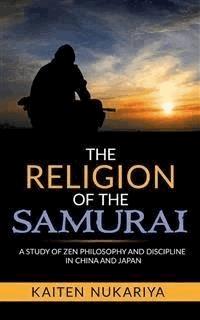













The Religion of the Samurai
Table of Contents
Introduction
At its core, The Religion of the Samurai presents Zen as a lived discipline in which direct insight, cultivated through rigorous practice and ethical self-mastery, is continuously tested in the realities of life, so that wisdom is not an abstract doctrine but a trained clarity of mind and character capable of meeting conflict, uncertainty, and responsibility without evasion, and thus forming a spiritual path that prizes experience over speculation, presence over distraction, and action guided by insight rather than impulse, while remaining rooted in a tradition that seeks freedom from delusion and compassion in conduct.
Kaiten Nukariya’s work is a non-fiction study of Zen Buddhism, written in English in the early twentieth century and addressed to readers seeking a clear account of the tradition’s philosophy and discipline as shaped in China and Japan. Rather than a travelogue or a memoir, it is a systematic exposition that places Zen within the larger Buddhist heritage and within East Asian cultural history. The book’s publication moment coincided with growing Western curiosity about Asian religions, and it aims to offer an informed, structured, and contextual introduction that avoids sensationalism, presenting Zen as both an intellectual doctrine and a practical way.
The book offers the experience of a carefully organized guide: historical in scope, philosophical in argument, and practical in emphasis. Its voice is formal yet accessible, seeking to define terms, trace developments, and correct common misunderstandings without relying on technical jargon. Readers encounter a steady, explanatory tone that balances clarity with nuance, neither reducing Zen to mere meditation techniques nor dissolving it into vague mysticism. The mood is lucid and purposeful, as the author moves from foundations to applications, inviting readers to consider how ideas become habits of mind, and how spiritual training shapes perception, conduct, and responsibility.
Nukariya situates Zen within the broader Buddhist tradition, outlining its transmission from India to China and onward to Japan, and showing how the school’s emphasis on practice and direct insight took characteristic forms in those contexts. He explains the place of meditation, the focus on awakening, and the training that aims to unify understanding and action. Without presuming prior knowledge, the book introduces central concepts such as satori and the use of paradox and discipline in spiritual education, presenting them not as esoteric curiosities but as methods intended to refine attention, dissolve error, and align conduct with insight.
A defining interest of the book is the association historically drawn between Zen and the Japanese warrior class, explored not as romantic legend but as a question of temperament, ethics, and training. The discussion considers how habits of concentration, fearlessness, and self-control cultivated in Zen could resonate with the demands of a life that required decisiveness and responsibility. Rather than glorifying violence, the analysis emphasizes inner discipline, presence of mind, and moral seriousness. In this way, the title’s evocation of the samurai becomes a lens for examining how spiritual practice can inform character, duty, and the conduct of life.
For contemporary readers, the book remains relevant because it addresses enduring concerns: how to unite clarity with compassion, freedom with responsibility, and contemplation with effective action. Its insistence on experience tested in life speaks to those navigating distraction, stress, and moral complexity, while its cross-cultural framing encourages careful understanding rather than stereotype. The emphasis on training—not merely belief—offers a counterpoint to quick fixes and abstract debates, suggesting that ethical and cognitive transformation require method, patience, and community. In this sense, the work raises questions about attention, resilience, integrity, and the conditions under which insight becomes a steady guide.
Approached as an introduction, The Religion of the Samurai rewards slow reading and reflection, inviting newcomers to gain a coherent overview while offering students of Buddhism a synthesis attentive to history, doctrine, and practice. It does not promise instant illumination or exhaustive detail; instead, it maps a tradition and points toward the discipline required to explore it further. Readers can expect a thoughtful bridge between cultures, a measured account of ideas tested in life, and an argument for the unity of understanding and conduct. As such, the book frames Zen as a path to be walked, not merely a topic to be surveyed.
Synopsis
The Religion of the Samurai presents an introduction to Zen Buddhism as it developed in East Asia and shaped the ethical ideal of Japan's warrior class. Kaiten Nukariya aims to explain Zen to readers unfamiliar with Asian religions by outlining its historical origins, principal doctrines, training methods, and cultural effects. The book moves from early Buddhism to Mahayana thought, then to the rise of Zen in China and its transmission to Japan, before examining practice and its influence on samurai discipline. Throughout, the author emphasizes Zen's practical orientation, its stress on direct insight, and the institutional forms that sustained it.
Early chapters summarize the life and teaching of Sakyamuni, presenting the Four Noble Truths, the path of ethical cultivation, and the Buddhist analysis of suffering and release. The account distinguishes the historical Buddha's practical guidance from later scholastic systems, while noting how early communities preserved discipline and contemplative training. Nukariya sketches the canon and monastic ideals that became foundations for later schools. He highlights the emphasis on experience over speculation already present in early Buddhism, a trait that Zen would radicalize. This background frames Buddhism as a method for transforming mind and conduct rather than a set of dogmas.
The narrative then traces the rise of Mahayana philosophy, outlining concepts such as emptiness, dependent origination, and universal Buddha-nature. It introduces the Bodhisattva ideal, the two truths, and key schools that shaped later thought, especially Madhyamika and Yogacara. These developments supplied terms for articulating nondual insight and compassion, which Zen would treat as lived realization. The text explains how Mahayana broadened soteriological aims beyond individual liberation, reinterpreting Nirvana and Samsara as not-two. This doctrinal evolution prepares the ground for a tradition that privileges awakening here and now, using mind to understand mind without reliance on elaborate metaphysical systems.
Zen's entrance into China is described through the figure of Bodhidharma, whose teaching emphasized direct seeing of one's nature and meditation over scriptural study. The transmission to Huike and subsequent patriarchs leads to the pivotal role of Hui-neng, associated with the doctrine of sudden enlightenment. The book sketches the division between Northern and Southern lines and the emergence of several houses of Chan, each with distinctive methods. Classic anthologies, dialogues, and paradoxical sayings are noted as training tools rather than doctrinal authorities. The Chinese monasteries establish the institutional patterns and discipline that later Japanese Zen would inherit.
In Japan, Zen takes root from the late twelfth century, with Eisai advancing Rinzai Zen and Dogen establishing the Soto school. The work recounts patronage by the Kamakura shogunate, the formation of great monasteries, and the importation of Chinese models in ritual, architecture, and scholarship. It follows later reformers, notably Hakuin, who revitalized koan practice and broadened lay participation. Zen's spread beyond monastic circles is outlined alongside its dialogue with existing Tendai and Shingon traditions. The narrative emphasizes how institutional consolidation and training halls shaped a distinctive Japanese expression while preserving the core emphasis on awakening.
Having set the historical frame, the book presents essential tenets of Zen: a special transmission outside scriptures, reliance on personal realization, and the claim that one's own mind is identical with Buddha-nature. The discipline centers on seated meditation, concentrated inquiry, and guidance from a qualified teacher. Koan introspection, mondo exchanges, and practical tests cultivate insight beyond discursive reasoning. Ethical precepts, simplicity, and attention to everyday tasks ground the training. The text treats enlightenment as a transformative experience that clarifies ordinary life rather than as withdrawal, while acknowledging differences of method between Rinzai and Soto approaches.
Nukariya outlines how Zen informed the ideal of the samurai by fostering composure, courage, and independence of mind. Training techniques are shown to cultivate decisiveness and readiness in the face of impermanence, themes that resonated with warrior ethics. The book notes Zen's imprint on arts linked to discipline and simplicity, including the tea ceremony, poetry, ink painting, gardening, and swordsmanship. Examples illustrate how mindfulness and form were integrated in service and craft. While acknowledging other influences on bushido, the account presents Zen as a sustaining spiritual resource that shaped attitudes toward life, death, duty, and self-mastery.
The book surveys broader philosophical issues raised by Zen, addressing questions of karma, rebirth, free will, and moral responsibility. It contrasts Zen's non-theistic view with theism, discussing the absence of a creator deity and the focus on experiential realization. Comparisons with Christianity and other traditions are presented to clarify differences in soteriology, authority, and practice. The work also considers objections that Zen is quietist or nihilistic, responding by emphasizing ethical conduct and purposeful activity. Throughout, the argument situates Zen within a universal search for truth, while maintaining the distinctive methods that define its training and insight.
In closing, The Religion of the Samurai presents Zen as a living discipline whose core can be understood through its history, ideas, and concrete exercises. The concluding chapters recapitulate the main themes: the Mahayana background, the Chan and Zen lineages, the priority of awakening, and the shaping of character through practice. The book underscores the continuity of transmission alongside creative adaptation across cultures. Its purpose is descriptive and explanatory rather than polemical, aiming to make Zen intelligible to modern readers. The overall message emphasizes self-cultivation, clarity of mind, and an attainable realization grounded in ordinary life.
Historical Context
Kaiten Nukariya’s The Religion of the Samurai emerged in late Meiji and early Taishō Japan, a period of accelerated industrialization, imperial expansion, and intense dialogue with the West. Published in English in 1913 (Luzac & Co., London), the work reflects Tokyo’s academic milieu and the author’s training as a Rinzai monk and professor at Keio University. It looks back to medieval warrior society while speaking to contemporary debates about national morality, science, and religion. The intellectual “setting” is thus twofold: the Kamakura–Edo past that forged Zen’s samurai ethos, and the modern nation-state (post-1868) seeking a philosophical foundation amid Westernization and state Shinto policies.
Nukariya anchors Zen in Chinese Chan history, presenting a continuum from Bodhidharma (traditionally c. 5th–6th century) to Tang and Song developments. Tang-era figures such as Huineng (638–713) and Mazu Daoyi (709–788) exemplify sudden enlightenment and unconventional pedagogy, while Song institutionalization crystallized Linji (Japanese: Rinzai) and Caodong (Sōtō) lineages. Monasteries like Shaolin became emblematic of Chan’s disciplined praxis. By tracing names, doctrines, and transmission lines, the book situates Japanese Zen within this Sino-Buddhist matrix, arguing that the methods shaping samurai discipline—direct insight, rigorous meditation, and master–disciple training—were refined in China before taking root in Japan.
The Kamakura period (1185–1333) saw Zen’s transplantation to Japan alongside the rise of the warrior government. Eisai (1141–1215) returned from China in 1191, founded Shōfuku-ji in Hakata (1195) and Kennin-ji in Kyoto (1202), promoting Rinzai practice; Dōgen (1200–1253) established Eihei-ji in 1244, shaping Sōtō Zen. Under Hōjō regents, Rankei Dōryū founded Kenchō-ji (1253), and Mugaku Sōgen established Engaku-ji (1282). The Mongol invasions of 1274 and 1281, repelled under Hōjō Tokimune (1251–1284), became a crucible: Tokimune famously sought courage from Mugaku, emblematic of Zen’s role in samurai resolve. Nukariya highlights this nexus to present Zen as the warrior’s internal discipline.
Under the Ashikaga shogunate (Muromachi, 1336–1573), Zen attained cultural and political centrality. Musō Soseki (1275–1351) advised rulers and helped found Tenryū-ji (1339) with Ashikaga Takauji; the temple’s financing through licensed trade with Yuan China exemplified the clerical–diplomatic role of Zen monks. The Five Mountain (Gozan) system hierarchized leading Zen monasteries in Kyoto and Kamakura under Ashikaga patronage, while Ashikaga Yoshimitsu (shogun 1368–1394) further consolidated Zen institutions. Ink painting, garden design, and monastic literature flourished. Nukariya reads this era as showing Zen’s administrative efficiency, aesthetic restraint, and ethical training—traits he argues underwrote samurai governance as much as personal spiritual attainment.
The age of unification bridged warfare and state-building. Oda Nobunaga (1534–1582) weakened entrenched Buddhist militaries while tolerating some Christian missions; Toyotomi Hideyoshi (1537–1598) consolidated power; Tokugawa Ieyasu (1543–1616) established the bakufu in 1603. Francis Xavier’s arrival in 1549 spurred Christian growth until Ieyasu’s 1614 ban and the Shimabara Rebellion (1637–1638), after which the temple-registration (terauke) system tied households to Buddhist institutions. Zen persisted in martial circles: Takuan Sōhō (1573–1645) counseled swordsman Yagyū Munenori on no-mind in combat. Nukariya deploys such episodes to illustrate how Zen praxis informed ethical comportment and composure amid violence and political consolidation.
Edo-period stability (1603–1868) reshaped Zen. While the bakufu used Buddhism for social control through parish registration, internal renewal arose with Hakuin Ekaku (1686–1769), who revitalized Rinzai through strenuous kōan introspection and universalized satori as attainable by laypeople and warriors. Urbanization and Neo-Confucian governance framed Zen as both moral training and contemplative discipline. Canonical networks matured, and figures like Bankei Yōtaku (1622–1693) emphasized the “Unborn” mind. The book’s discussion of rigorous training, sudden insight, and ethical self-mastery mirrors Hakuin’s legacy, presenting Edo Zen not as quietist ritual but as an active technology of mind useful to governance and personal duty.
The Meiji Restoration (1868) dismantled the Tokugawa order and instituted shinbutsu bunri (Shinto–Buddhist separation), unleashing haibutsu kishaku persecutions (especially 1868–1873) that destroyed temples and images. Buddhism adapted via education, social service, and modern scholarship. Imakita Kōsen (1816–1892) and Shaku Sōen (1860–1919) articulated Zen for a global audience, the latter speaking at Chicago’s 1893 World’s Parliament of Religions. Victories in the Sino-Japanese War (1894–1895) and Russo-Japanese War (1904–1905), alongside the 1890 Imperial Rescript on Education, fostered nationalism; Nitobe Inazō’s Bushido (1899) codified warrior ethics. In 1913, Nukariya framed Zen as the samurai’s religion—disciplined, rational, ethical—addressed to Western readers and a modernizing Japan.
By grounding spiritual authority in direct experience rather than in ritual compliance or state ideology, the book implicitly critiques Edo “funeral Buddhism,” Meiji bureaucratic control of religion, and the reduction of ethics to obedience. Its portrait of Zen discipline exposes tensions in class hierarchy: the training that forged elites is recast as a universal path transcending birth and status. Addressing Western materialism and Japan’s instrumental nationalism, Nukariya contends that courage, loyalty, and duty must be tempered by inner freedom and insight. The work thereby questions both shallow modernization and dogmatic traditionalism, proposing Zen as a corrective to social coercion and political expediency.




