


Erhalten Sie Zugang zu diesem und mehr als 300000 Büchern ab EUR 5,99 monatlich.
- Herausgeber: The History Press
- Kategorie: Fachliteratur
- Sprache: Englisch
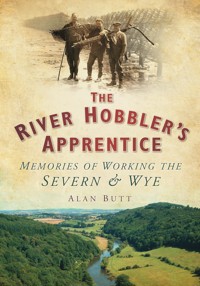
The rivers Severn and Wye were once home to many now long-forgotten crafts and skills. In The River Hobbler's Apprentice: Memories of Working the Severn and Wye Alan Butt provides a vivid insight into the forgotten world of the river hobbler, a unique trade and one which he learnt of at the end of its days. Falling through the cracks of society the river hobbler paid no taxes and made a living by working whatever was available on and around the river. Changing throughout the year, tasks included catching salmon and elvers, rabbiting, cleaning barrels and castrating piglets to name just a few. Each season brought with it hazards ranging from trench foot, lost fingers, pneumonia, tuberculosis and even the occasional drowning! This is a dual story in which the author seamlessly blends memories of the time he spent alongside hobblers during his youth with the life stories of other river hobblers. Tales range from falling in love with a milkmaid to the toiling tasks of earlier days, amid the hardships and constantly changing nature of work that was their lot. Featuring many previously unpublished photographs and written in a lively and humorous style with a love story running throughout, this book is sure to captivate its reader, immersing them in a way of life now long forgotten.
Sie lesen das E-Book in den Legimi-Apps auf:
Seitenzahl: 208
Veröffentlichungsjahr: 2010
Das E-Book (TTS) können Sie hören im Abo „Legimi Premium” in Legimi-Apps auf:
Ähnliche


















THE RIVER HOBBLER’SAPPRENTICE
THE RIVER HOBBLER’SAPPRENTICE
MEMORIES OF WORKING THE SEVERN AND WYE
ALAN BUTT
First published 2010
Reprinted 2013
The History Press
The Mill, Brimscombe Port
Stroud, Gloucestershire, GL5 2QG
www.thehistorypress.co.uk
This ebook edition first published in 2013
All rights reserved
© Alan Butt, 2010, 2013
The right of Alan Butt to be identified as the Author of this work has been asserted in accordance with the Copyright, Designs and Patents Act 1988.
This ebook is copyright material and must not be copied, reproduced, transferred, distributed, leased, licensed or publicly performed or used in any way except as specifically permitted in writing by the publishers, as allowed under the terms and conditions under which it was purchased or as strictly permitted by applicable copyright law. Any unauthorised distribution or use of this text may be a direct infringement of the author’s and publisher’s rights, and those responsible may be liable in law accordingly.
EPUB ISBN 978 0 7509 5263 7
Original typesetting by The History Press
CONTENTS
Introduction
Chapter One
Scrumpy and My Julie
Chapter Two
Rabbits and His Majesty’s Mail
Chapter Three
Gypsy Zac and Jack
Chapter Four
Willow, Mud and Uncle Tom
Chapter Five
A Plate of Elvers
Chapter Six
Beloved Pansy Hancock
Chapter Seven
Salmon, Shad and Simple Nunk
Chapter Eight
Big Bulls and Carrots
Chapter Nine
Fishcakes and Mavis Stokes
Chapter Ten
Pigs and Parties
Chapter Eleven
Ganders and Cider Apples
Chapter Twelve
A Sailor’s Life For Me
Chapter Thirteen
Turkeys and Christmas Trees
Appendix
Chronology of Seasons for the River Hobbler
The River Severn, two miles wide at Tirley during heavy flooding.
The beautiful Wye Valley at Llandogo.
I intended this book to look at a typical year in the life of a River Severn ‘hobbler’: men whose lives depended on the bounty that the river could provide throughout the seasons. From salmon fishing, eel trapping and elver catching, to odd jobbing of all kinds. A hard life carried on by real countrymen full of humour and, most of the time, rough cider. These are my own memories and old stories handed down throughout the years.
Without the benefit of such wizardry as the television set, and with radios in their infancy driven by the weekly-changed accumulator, humour was handmade. Practical jokes took centre stage in the lives of the older men and were hatched in the dark satanic recesses of the local pub, and I have tried to illustrate many of these old pranks that go under the heading of ‘wind-ups’ in our modern society. However, there was a serious and very arduous side to the existence of these countrymen. Weather played a huge part in the constant struggle to provide both food and cash crops of all kinds. This applied to most countrymen as Gloucestershire was almost totally dependent on agriculture for employment.
Being brought up in the late forties and early fifties my greatest influence was from countrymen born at the turn of the nineteenth century, mostly middle-aged who had somehow endured the horrors of the First World War (or the not-so-Great War as I prefer to call it), and who had endeavoured to carry on the old traditions and work practices that they had known before. It is with some regret that the changes in country life that I have experienced in the past sixty years have not all been for the best.
No one now seems to have time to ‘stand and stare,’ children do not know a blackbird from a crow or a narrow boat from a trawler, old men do not have their own seat in the local pub, and cider comes in bottles with gold labels and fizz. Where are the boss-eyed children I was at infant school with? The children with ringworm? And what ever happened to scarlet fever, leg irons and your mother sitting in the hearth so her legs turned to red squares? I have not seen cockroaches in peoples’ Rayburns for years, and now it is women who contract sclerosis of the liver from binge drinking gin and shots of something blue with an unpronounceable name. Oh the joy of ice on the inside of cottage windows, school clothes in your bed to warm up, and the thought of hand-milking three cows before walking to school in the morning. Where is the flitch of bacon that used to hang in the scullery, and the backache from churning the butter after school? Bring back the good old days!
The River Severn taken from Haw Bridge.
This is a light-hearted look at old tales passed down to me by men with great country values. Also in this small book are some very interesting photographs with scenes of our two beautiful rivers, past and present.
MY THANKS TO
Lorna Page (for illustrations)
The lateVic Jones (front cover, one of the last rivermen)
The late Lionel Gaston (a real countryman)
The late Alfie Smith (willow cutter and riverman)
Roger Brown from Llandogo (some photographs)
Formal education had ceased for me at long been decided that I was to be as a ‘river hobbler.’ Although I had been mother had never allowed this work to interfere about your cobbling, smithing and farm – a self-employed river hobbler. This coveted Lord of the Manor who owned the stretches were allowed to operate. These rights had being passed from father to son.
This position meant that you worked seasons of the year, and of course each season ranging from trench foot to lost fingers, coupled with the occasional drowning! since Christmas cutting logs for the local barrels by rolling them through the village, length of heavy chain. We had also rabbited we had sometimes a two-mile walk to what
Father had a ferret called Spike who was that I have ever had the misfortune to come it would not have given you a boil, had father – who would not hear a bad word ferret – was lifting it from its travelling box suddenly lurched forward and closed its fangs the blood ran down his chin he made great thing was only trying to be affectionate have been very hungry this winter without
Personally I was dreaming of hurling good hoping above hope that an old Jack pike parts before he could reach the opposite to eating rabbit kittens in the ground instead waited for him to surface for more than in the nets the old man just picked up a spade body with his only comment being ‘I got
Life was rather harsh and there was not fifteen to stop and wonder at how these the side of the road had managed to survive a severe winter and still appear like miniature angels. We were bound for our yearly visit to Burt Illes’ cider shed. We had a two-wheeled cart that father had bartered for with the estate manager of the big house. To facilitate the barter dad had supplied twenty fresh Severn salmon for a banquet to be held there. This would be attended by all the local nobs as well as some visitors from London. The cart was in a poor state of repair but dad was an accomplished carpenter and it was soon one of the best on the riverbank.
Burt and his wife Nell, always referred to as Mr & Mrs by me as indeed were all other grown-ups, had two skills in life that were in great demand by my father. One was the manufacture of cider, the other was the manufacture of a heavy type of gauze for the making and repairing of elver nets, which were vital to the existence of the rivermen in the coming months. ‘Whoa you old bitch,’ dad shouted at Jenny, our old Welsh cob mare that was slightly overweight and had an uncanny ability to fart loudly with every stride. I hitched her to the spear-shaped metal railings that stretched the whole length of the cottage frontage, placed a nosebag over her ears and followed dad into the small hallway.
We were carrying the barter with us which included two plump rabbits, two sides of dad’s own smoked salmon, some bottles of mum’s plum jam and left outside was a large bundle of withies (willow sticks used for making runner-bean tents.) I had been coming to this house for many years and it had always smelled the same; stale cider, boiled cabbage and wood smoke. Burt smiled broadly on our arrival, exposing teeth that strongly resembled a row of condemned houses I had once seen in the Slad Valley in Stroud. His hands were hard, cracked and almost black from being pickled in cider for many years.
After the normal pleasantries father and Burt went out through the back-kitchen, which smelled even more strongly of boiled cabbage, into the backyard where soon the unmistakable sound of barrels being rolled on loose gravel could be heard. With the absence of the normal shout ‘boy’ the two kilderkins of cider were loaded onto the cart, causing Jenny to lower her sleeping leg and temporarily put back her ears in disapproval.
The thirty-six gallons of venomous liquid, known locally as scrumpy, screech and cripplecock, had a specific gravity of anything between five per cent and twelve per cent, and was responsible for the destruction of hundreds of livers and millions of sperm in the Severn Valley. The ‘killing-strength’ of the cider was determined by the type of apple used, the time that they fell and the ambient temperature during the ‘working period’ within the cask. Cider-making is not a very precise art and it is made with little more than apple juice and some sugar.
The apples used were specifically grown for cider-making, the best variety of these being the Kingston Black, but most types of apple were used except the Bramley which made the cider too bitter. Cider fruit was collected as fallers and raked up with a wooden-tined hay rake. The result of this method was that it ensured a liberal helping of leaves, snails, bird and fox shit and a large number of fag ends, Woodbines mostly. The cider fruit was then put through an apple grinder or a cider stone and ground into slurry, and the particularly noxious substance that this produced was then shovelled into the mats.
These mats were roughly-constructed hessian envelopes which were placed on the bottom board of the cider press and filled with the apple slurry. This process was repeated until the press was filled to the top board. A large wooden screw, powered mostly by the rotation of a small horse, pressed the envelopes containing the apple mixture until the juice ran through the hessian envelopes over the bottom board and into a sunken barrel under the cider press. The juice, now only fit for consumption by children and vicars, was then bucketed into clean barrels, racked up and left with the top keystone open so that it could work.
After several days fermentation would begin, and cider ‘snot’ appeared, boiling from the open keystone hole. A saying commonly heard in the local pubs was ‘my scrumpy’s got good snot on ‘er this year,’ which meant that fermentation was taking place at a good rate and all the impurities, including the aforementioned rotting leaves, snails, bird and fox shit and Woodbines, were now leaving the apple juice. After several weeks of snot removal from the tops of the barrels, fermentation would cease and the barrels could be bunged up and left to mature. Another saying often heard in the local pubs was ‘I’ve bunged up already,’ which left visitors (always referred to as emmets) wondering if the whole village was suffering from some form of acute constipation.
A story mother often told was of the Plum Jerkum affair. Plum Jerkum was another form of strong alcohol. Manufactured by exactly the same process as cider but exclusively from plums, it was rare and only came about when there was a glut of the fruit.
Old Doctor Price and his nurse Sister Brown had delivered babies and administered to the sick in the village for as long as anyone could remember. Before the advent of a health service the barter system was also used by the local doctor to administer health care and supply medicaments. A visit to the ‘quack’ was rare and cost the patient much-needed provisions, the amount based mostly on the gravity of the illness and the ability of the patient to pay. This could range from a cockerel to a side of bacon for the critical. The produce would be left on an old low table in the porch of the doctor’s house, and it was said that the general state of health of the entire village could be determined by the amount of supplies on the old doc’s table.
On the particular week in question the table at the doctor’s house was overflowing with every form of consumable you could imagine; from a bunch of flowers for the lady of the house in return for a stitch in little John Walker’s lip, to a very large ham for the birth of the Jones’s twins. But something was definitely up in the village! The old doc was having countless visitations from normally hale and hearty men, which was most rare. All the men seemed to be complaining of a similar illness, with symptoms of partial blindness and hallucinations coupled with nausea and severe bouts of diarrhoea.
Suspicions were aroused in the parlour of the doctor’s house and my great-uncle Lemuel was ordered to bring a sample of the Plum Jerkum that the doctor knew the men of the village had been consuming in copious amounts. A sample of the liquor was despatched to Gloucester Royal Infirmary for analysis and was found to contain heavy concentrations of amygdalin, a drug poisonous if consumed in any quantities. The village cider press was found to have been used at the same pressure required for apple crushing, and had smashed the plum stones causing the release of the toxins into the juice.
Doctor Price ordered that the entire batch, some one hundred and fifty gallons, was to be destroyed without delay. This was to be carried out the following weekend by pouring the contents of the barrels into the river. When the dreaded day arrived the bungs were knocked out and the Jerkum ran down the bank, over the mud and into the river, causing grown men standing on the bank to break down in tears, and George Pickford to emigrate with his whole family to Australia!
While the weather-beaten men deliberated on all things rural, Mrs Illes worked a crude type of loom creating her much-coveted material used for the covering of the elver nets. She called to me ‘why don’t you go and see our Julie, ‘ers in the yard just home from milking?’ Julie was a milkmaid at Hobbs Farm and was at home between the two milking sessions. The cowman and Julie milked forty cows between them by hand, twice daily, and she always joked ‘that is one hundred and sixty tits per session you know.’
Julie was a heavily built girl, not beautiful but attractive, with the clearest and softest complexion I had ever seen. She was wide in the backside and large in the breast, built I think more for comfort that speed. She was wearing a headscarf tied under her hair at the back and a thick cardigan over a printed dress. We talked of boy-girl affairs, dances and the new car that had recently been delivered to the big house making a grand total of three in the village. I was excited by Julie having known her for many years and felt quite easy in her company. I had kissed her before, and once on the Sunday school picnic I had tried my best to rub the floral print off the top half of her dress. She did not seem to mind and I was only stopped when the vicar’s wife, suspecting a bout of groping, advanced towards us up the aisle of the charabanc.
I began to turn the conversation more suggestive and provocative while all the time trying to peer down the top of her dress, of which the first three buttons were undone exposing a row of melted and ironing-deformed smaller rubber buttons on her liberty bodice. With heart pounding I made my move! My left elbow was awkwardly pressed against the shed slightly above her head, as I leaned forward and kissed the side of her face. This was the prelude to a full-frontal attack followed by a full cavalry charge down the front of the dress, between it and the liberty bodice. I could feel my already work-hardened hands snagging the small frayed fibres of her underclothes. Julie hesitated for a few seconds before unceremoniously wrenching my hand from her clothing.
She rounded on me sharply saying ‘If you want some of that make sure you’re at the dance at the village hall next month.’ She moved off swiftly into the kitchen and removed a heavy tweed long-coat that was hanging behind the door. Placing it over her shoulders she passed by me again and disappeared through the small gate at the bottom of the garden and into the meadow. I was not too disappointed with the outcome, as it had certainly left the village hall dance pregnant with possibility.
After adjusting the contents of my corduroy trousers I was struck with the brilliant idea that if I inhaled an enormous breath I may be able to pass through the brassica-impregnated kitchen without having to take another breath. I slowly approached the back-kitchen door, taking as I walked two shallow breaths and one enormous lungful as I passed within the portals. I shot through the kitchen and on into the parlour with oxygen to spare. My father and Burt Illes were still sat at the parlour table clutching old stone cider mugs; the only difference I could see was that my father was now having difficulty in keeping his large brown eyes facing forward and maintaining any sort of equilibrium.
His speech would lapse into involuntary bursts of a foreign language, the like of which I had only heard from a narrow-boatman who came from Norwich. With my return, and some prompting from Mrs Illes, it was decided that we should make tracks for home. Father was almost unable to walk, but with some assistance from Mr Illes I managed to push him onto the back of the cart. He rolled the bolt of Mrs Illes’ material under his head and closed his eyes. ‘Get on home boy, it’s starting to spit,’ said Mr Illes as he untied Jenny for me.
I clipped the reins on her back and we moved off slowly. Within five minutes the ‘coming on to spit’ had changed to ‘coming on to piss it down,’ but we were nearly always wet and so it bothered us little. I put Jenny’s nosebag over my shoulders, but father lay totally exposed with the rain drops bouncing off his face as we made our way back to the riverbank. Mother was not best pleased with the sight of two drowned rats, one so drunk that he rolled off the cart and into the large water-filled depression in the backyard that we had been meaning to fill ever since dad fell in it the last time!
Rabbits were, for us, one of the most important food sources in these very lean winter months. Most of the bounty from our river was in short supply, no salmon run, no shad or sea trout and the willow was in its winter shutdown. Some eels were still being caught in our eel wheels, which are a kind of trap placed in the small streams that run into the main river. The wheels were cleverly constructed out of willow to form the shape of a bottle with a small opening at one end to allow the eel to enter but not to leave. They were baited with an old piece of pig fat or a chicken’s head or any other rotting meat we could find. Father would sometimes resort to using dead mice he had caught in the barn or eel skins from a previous catch. These eels would mostly be taken to the fishmonger in Gloucester for skinning and icing down and then transported by train to London for making into jellied eels.
Rabbits however were the best food supply at this time of year and a useful barter to be swapped for something else. Rabbiting with ferrets and nets was cheap to do and cost only time and a lot of patience. Spike and the other ferrets were cheap to feed on boiled rabbit they had caught, dry horse oats and the ends of small children’s fingers that ventured too close to their cages. My Father and I would walk miles in a day, from 6.00am until it was almost dark in the evening. We would peg down nets on every rabbit hole we could see on the raised ground just in from the river’s edge then lift the corner of one net and slip the ferret in, quickly pegging the net back down behind it.
Sod’s Law would sometimes allow that one obscure hole hidden under a bush would be missed and most of the rabbits would make a bid for freedom out of this precise hole. This would always guarantee a clip round the ear for me for not having noticed the location of the hole, though it was hidden deep in a bramble bush. I did notice that other children in our village had a left ear that resembled a cauliflower, or that of a rugby front row forward. I think they must have missed rabbit holes as often as I did, but I do think it helped to keep the ringworm away as no self-respecting worm would be desirous of receiving regularly delivered hefty clouts whilst merrily burrowing through the side of a small child’s face. This then of course saved a dozen eggs being bartered at the doctor’s house for treatment with the telltale bright blue unction.
One of our favourite rabbiting spots was a large bank father called ‘Glory Bank’. It was partially covered in small bushes (an ideal area for ear clipping) with grassy patches between. It was the biggest warren in our area and was not rabbited by anyone else as father had what he called the rights from the farmer for past services rendered. As Glory Bank was about three miles from home and lots of nets were required to cover the bank we would take the horse and cart. So many rabbits could be caught that we would not have been able to carry them all home by hand, and more importantly it was a long way from the nearest pub for the lunchtime cider intake.
It was a clear frosty morning and first light when we left the house. Mother had made a full breakfast and the fire had stayed in all night so the house was warm. I was reluctant to venture out but father was a hard taskmaster and work was work, with only cider drinking taking preference to it. The iron rims round the oak sides of the cart were covered in thick frost which sent searing pains into my bottom, and my other bits and pieces down that end disappeared up into my chest cavity in a split second. Jenny was about as enthusiastic as I was, and would have much sooner had a day in the stable than rabbiting at Glory Bank, but she could only show her disapproval in the normal way which was to fart with every step for the first hundred yards.
We passed Julie coming home for breakfast after her first shift in the milking parlour but I was too embarrassed to do much more than just acknowledge her as father was with me. ‘Best cow girl in the whole of Gloucestershire that ‘un is, got a way of getting the best out of stock she ‘ave, you’d do well to get after ‘er boy,’ the old man said, not knowing I was busting my arse to build up some sort of relationship with her. We plodded on as fast as Jenny’s reluctant legs were prepared to take us. By this time my legs were numb from foot to waist and I am sure dad’s customary dewdrop was frozen to the bottom of his nose, but he was a hard man and not at all fazed by anything the weather could throw at him.




