


9,59 €
Mehr erfahren.
- Herausgeber: Seren
- Kategorie: Lebensstil
- Sprache: Englisch
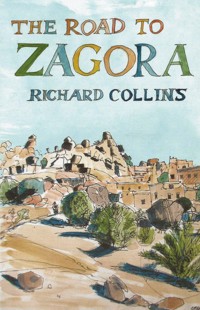
'Attempts to get to the heart of the traveller's experience. The result is the emergence of an … increasingly involving story.' – New Welsh Review When Richard Collins was diagnosed with a progressive incurable disease in 2006 he decided to see as much of the world as he could while his condition allowed. The result is The Road to Zagora, a singular travel book which takes in India, Nepal, Turkey, Morocco, Peru, Equador and Wales. 'Mr Parkinson', as Collins refers to his condition, informs the narrative. As inveterate walkers Collins and his partner Flic decided to continue to travel 'close to the land' post diagnosis, leaving the tourist trails and visiting places of extremes: the Himalayas, rainforests, deserts. The difficulties of rough terrain, altitude, extremes of climate for a person with Collins' condition are an ongoing strand of his narrative; occasionally they cannot be overcome and Collins is forced to consider the frailties of the human body in passages of moving contemplation. The Road to Zagora also includes an element of memoir, as Parkinson's Disease also causes Collins to reflect on his life, and in particular on his relationship with Flic. There are moments of great charm as their relationship evolves, and also the drama of previous serious illnesses. These recollections of pre-diagnosis life have the wistfulness of hindsight as Collins considers what constitutes a life well lived. Yet any sentiment or self-pity is denied through Collins's resolute and independent- mindedness and the quality of writing. In the travel passages the readers experiences the sheer physicality of Collins' expeditions, along with his novelist's eye for telling local detail. In the sequences of memoir the writing is humane, compassionate and quite often comic. The Road to Zagora is a memorable journey around the world, and the self.
Das E-Book können Sie in Legimi-Apps oder einer beliebigen App lesen, die das folgende Format unterstützen:
Seitenzahl: 452
Veröffentlichungsjahr: 2016
Ähnliche
















The author on the road to Zagora
Seren is the book imprint of
Poetry Wales Press Ltd, Nolton Street, Bridgend, Wales
www.serenbooks.com
facebook.com/SerenBooks
Twitter:@SerenBooks
© Richard Collins, 2015
The right of Richard Collins to be identified as the Author of this Work has been asserted in accordance with the Copyright, Designs and Patents Act, 1988.
ISBN 978-1-78172-259-6
Mobi: 978-178172-296-1
Epub: 978-178172-297-8
A CIP record for this title is available from the British Library
All rights reserved. No part of this publication may be reproduced, stored in a retrieval system, or transmitted at any time or by any means electronic, mechanical, photocopying, recording or otherwise without the prior permission of the copyright holders.
The publisher works with the financial assistance of the Welsh Books Council
Cover Artwork by Flic Eden
Printed by The CPI Group (UK) Ltd, Croydon
CONTENTS
Author’s note
Maps
1)
The Most Weird Place
A is for Aqaba
2)
An Elephant, Passing By…
B is for Bethlehem
3)
The Limp, the Alien and the Aurora
C is for Copacabana
4)
Around Annapurna
D is for Damp 2000
5)
The Sex Bus
E is for Entebbe
6)
Ballsy
F is for Fort William
7)
The Road to Zagora Starts Here
G is for Grindlewald
8)
Not Lapland
H is for Harlem
9)
The View from the Bridge
I is for Istanbul
10)
The Right Side of Scary
J is for Jericho
11)
Landscape and Memory-card
K is for Kathmandu
12)
Travel, India, a Short Guide
L is for Lucca
13)
Difficult Times
M is for Madrid
14)
Distant Relatives
N is for Nuweiba
15)
Africa
O is for Omorushaka
16)
I felt it touch my face with its whiskers
P is for Paris
17)
Meetings with Remarkable People
Q is for Quito
18)
Me and my Monkey
R is for Rotterdam
19)
A Short Intermission
S is for Skopje
20)
A Very Short Story
T is for Tel Aviv
21)
At the End of the Road to Nowhere
U is for Urubamba
22)
The Sky Was Working Overtime
V is for Varanasi
23)
The Sacred Valley
W is for Westport
24)
The Earth Moved
X is for Xania
25)
The World Turned Upside Down
Y is for York
26)
The Road to Zagora
Afterword
making that journey through wonderful consciousness, toward the end of consciousness
EDWARD ALBEE
no hay camino, se hace camino al andar
(there is no road, you make the road as you go)
ANTONIO MACHADO
Author’s note
My partner, Flic, and I have travelled a great deal in recent years. I was diagnosed with a progressive, incurable disease in 2006 and it seemed like a good idea to see some of the world while it was still possible. We went to India and Nepal three times, travelled in Peru and Ecuador, visited the Middle-East and also spent some time in Turkey and Morocco.
This book tells the story of our travels and of the great misfortune and great good fortune that sent us on our way. It also includes some backstory – tales of times and events that have shaped my life and the life we have lived together.
Flic carried sketchbooks on our travels and wrote, drew and painted along the way. Her immediate response to our surroundings and experiences created a vivid record. Looking though the books has been a great pleasure and I have drawn on her account unreservedly.
The Road to Zagora is dedicated to Flic, my favourite and best travelling companion, with a very big thank you for all that you have given and all that we have shared.
Photographs and some of Flic’s watercolours can be found in the blogs:
http://richflicjordan.blogspot.co.uk/
http://flicrichperu.blogspot.co.uk/
http://richardandflic.blogspot.co.uk/
1
The Most Weird Place
The wind has come round to the north-west and we have changed our plans. We will now take the train to Morfa Mawddach, a little station on the salt marshes at the head of an estuary, and cycle home from there. We will wait for an hour here, at Dyfi Junction, a station at the head of a different estuary, and look up at the surrounding hills, and out across the marshes towards the sea, and talk about long gone times and faraway places. It is the right thing to do.
I am with Bill, who I have known for nearly thirty years; he’s a dear friend and has come to help me while my partner, Flic, is away. Nowadays I am ill enough to sometimes need help with the simplest of tasks, buttering a slice of toast, let’s say. And well enough to be looking forward to a day of cycling up and down the steep Welsh hills; at least if the wind is behind me. I see this might need some explanation; more on this later. Right now it’s eight o’clock on a late August morning; summer seems to be coming to an end and a new season has begun. The air is cooler and clearer, the sun less bright, and the very first hint of autumn colour, very early this year, shows on the leaves of some trees and bushes and on the bracken and long grass.
Dyfi Junction station has been revamped with shiny new shelters and seats, new tarmac and paving slabs, and a row of unnecessarily tall lamp-posts on an unfeasibly long platform. A public address system beeps from time to time and an automated voice speaks its name: Systemtech Public Announcements. It doesn’t say anything more than that as there are no trains due for a while. And as there is no car access to the station, just a mile long rough track, there are only two passengers for it to address, Bill and myself. The whole thing is incongruous set here in the vast space of the marshes. It could be the railway station at the end of the universe.
We walk to the end of the platform where the railway crosses a body of water a little larger than a ditch. It is the Llyfnant, a small stream that comes down out of the hills and runs across the marshes to join the Dyfi Estuary. We are maybe eight miles from the sea but the tide has come right up here in the night and now flows out quietly between the reeds. Two cormorants fly past. There are some gulls out over the water. And we can hear a stone-chat somewhere nearby but we can’t see it. Perhaps it is the unpeopled quiet of this place that makes me think of its opposite, the station at Varanasi in India, where I spent part of a night waiting for a train a few years ago. I tell Bill about it and his opportunity to commune with nature, light, space, and silence is interrupted for a while. I hope he doesn’t mind too much.
Flic and I were in Varanasi some years ago. It’s a huge, dirty city beside the foul, polluted, pure and sacred River Ganges. A place of pilgrimage that every Hindu should visit once in a lifetime, a place to be cremated and have your ashes cast upon the water, and a particularly good place to die, as you may escape the cycle of death and rebirth and instead reach Nirvana, the Hindu equivalent of heaven. It is also, and people forget to tell you this, a very beautiful place, with the temples and ghats strung out along the bank of the wide river. But after a few days the intensity of experience, the heat, holiness and hassle of the place, were enough for us and we decided to move on. The travel agent who sold us our railway tickets told us that he had special connections that would allow him to find seats for us even though the train was officially full. These seats came, as you can guess, at a special price. The travel agency doubled as an internet café and the proprietor also told us that he was a Brahmin and that his people were the first intermediaries between God and man. We had, he was pleased to tell us, connectivity.
The Indian railway system handles twenty million passengers per day. Unbelievable but true. There were several hundred of them (500 or so I wrote in my diary) in the foyers and on the platforms when we arrived at Varanasi station at ten in the evening. Hundreds of people were stretched out asleep on the ground. They looked poor, perhaps destitute. But no, I noticed that one man was propped up in such a way that he could watch a film on his iPhone. The trains in India travel vast distances over periods of several days and can be very much delayed. It is not unusual to hear an announcement in Hindi and English something like: India Railways regret to inform passengers that the Punjab Express to New Delhi is running approximately eight hours late. And so people have to wait and while they wait they stretch out on the ground and sleep.
We found our platform and waited a mere four or five hours for our train. It was a memorable experience. It seemed a good idea to sit comfortably with our backs against the wall and watch our fellow travellers. But nobody did this, they all sat or lay in the middle of the platform. When we saw rats making their way along the bottom of the wall we knew why. And we weren’t that surprised to discover later that the railway carriages each had their own population of mice that travelled the length and breadth of the country.
The station was busy with people coming and going and with others trying to make a living by selling chai, or fruit, or cheap plastic toys (why toys?) to those passing through. We saw a whole tribe of village folk come in from the countryside carrying sacks of vegetables to sell at the market. They wore similar red and yellow turbans on their heads and nothing at all on their feet, they were that poor.
Flic took out her sketchbook and started drawing as she does at such times. A very poorly dressed young woman came and sat close by to watch. She smiled and her face lit up like that of a child. Then she moved away and we saw that she was crying. I bought chai for us and a cup for the young woman and we decided that we would give her some money before we left. She was certainly destitute and possibly mentally disabled. Then our train arrived and in the rush we forgot all about her. But I thought about her later. So many people with places to come from and places to go. And maybe a few like this woman, poor enough to spend her days and nights on the station platform, checking out the litter bins in the hope of finding something to eat. Stuck on Varanasi station platform because there was nowhere else for her to be.
Bill and I don’t have that long to wait for our train; we are soon riding in comfort and watching the hills pass by on one side and the sea on the other. Then we have a good day of cycling through wild and beautiful landscapes with the help of a following wind, tea and cake in Dolgellau and Machynlleth, and the way-marks along the Lon Las Cymru. And I get some extra help and encouragement from Bill when I struggle to get my arms and legs to do as they’re told.
Back at home in the evening I find myself thinking again about some of the places Flic and I have visited in recent years and the way that this country looks so different when you return from abroad. Perhaps this is something I could write about. I find one of Flic’s India journals and read the words on the last page. We had been away in India and Nepal for three and a half months finally returning from tropical Kerala on the last day of January to a home that just wasn’t the same. She wrote:
Now back in Wales these things strike me. It is cold and colourless. There are no leaves, no noises accept the wind blowing, nor anything like the warm bustle of India or the heat of the tropics. It is the most weird place we’ve been.
A is for Aqaba (Jordan)
Travelling enriches your life and changes your understanding of quite a few things. Home is a different place on your return. You are a different person, having travelled. I have had some preconceptions of other people and places quietly overturned. I spend a lot of my time at home now because of my poor health and have the opportunity to reflect on these things. Or I do something daft like make an A to Z of place names, each from a different country, and write a little anecdote about each one. I once spent a couple of rainy days doing this, starting with Aqaba in Jordan:
Forget Lawrence of Arabia arriving in Aqaba on camelback at the head of a Bedouin army: we crossed the desert by bus, in comfort, with wi-fi and air-con and reclining seats.
Aqaba is a port but also a seaside resort, a holiday destination for Jordanians. We were at the beach on a Friday, the Muslim holy day, and found that it wasn’t wall-to-wall joylessness as Sunday is in some parts of Christendom (we once saw a children’s playground in the west of Scotland with a sign Closed on Sundays). People may have been to the mosque in the morning but now they were having fun. Women were dressed conservatively, some in long black robes, but it didn’t stop them from going into the sea, snorkelling or messing about on inflatable plastic ducks.
We had already had our preconceptions of Islamic society challenged in the first Jordanian town we visited. The shoe shop proudly displayed in their window a number of pairs of hi-heeled thigh-high leather boots in a choice of colours, red or black. Did the women we passed on the street wear these under their long robes? In what other context, we wondered, would they be worn? I really can’t imagine.
The people of Jordan are renowned for their hospitality, friendliness and sense of humour.
2
An Elephant, Passing By...
The best part of a year passes by and Bill comes to visit again. My health has deteriorated now but we try a more adventurous day out. We are at Dyfi Junction station earlier, this time for a seven o’clock train. And it is a little earlier in the year too; no hints of autumn this time. We walk to the end of the platform and look towards the local osprey’s nest. One of the birds is flying towards us but veers away when it recognises our human shapes. It climbs and circles, then folds up its wings and dives, stoops I should say, to attack a random crow that may be a threat to its young. Then the train comes in and we are off to Penrhyndeudraeth, from where we cycle to the foot of Snowdon, climb one of its sibling peaks, Y Lliwedd, and return home by bike and train. Quite a day out.
A couple of weeks later my partner, Flic, and I are on the bus home from Aberystwyth. I am feeling rough and we have a conversation something like this:
‘Is it that thing where you feel like you’re lying naked on a cobblestone street in the rain and an elephant, passing by, stops to rest and lies on top of you?’ she asks.
‘No, of course not.’ I reply. ‘That’s how it feels at night. Or not exactly how it feels but a measure of the discomfort. That’s how uncomfortable it feels in the middle of the night.’
‘So what is it now?’ she asks. ‘Is it like you’re just recovering from flu and have recently been run over by a bus?’
‘No, that’s what it’s like in the evenings, or not exactly like that but comparable, you know what I mean.’
‘What is it then? You don’t look too bad.’
‘It’s indescribable. You know how I am with words but this is indescribable. Only it’s a bit like... you know those science fiction films where the guy’s body is being taken over by an alien? Or when an insect has a parasite eating it live from the inside? It’s not like that but it’s... you know, my body feels unbearably weird and my speech and my movement and my facial expression are all fading away. And... and I never get used to it. It still makes me feel panicky.’
With the lack of a mountain to climb my body has packed up and we are abandoning a trip to our local seaside town. We talk about the hidden symptoms of my illness, the indescribable half of it, by means of ludicrous analogies. They are, of course, exaggerations, but not so much as you’d think. And today I’ve been unable to walk far at all and when we get home I have to do some thinking.
I have Parkinson’s disease, a neurological condition, in which the brain’s messages to the body are somewhat interrupted. The symptoms vary from hour to hour, day to day, and over longer periods. So two weeks ago I cycled 30 miles and climbed a mountain with Bill but today I can’t walk a few hundred yards along the prom. Why is that? I have to think this through.
There are, I know now, psychological triggers. The excitement of a new challenge or the stimulation of a friend coming to stay will have a beneficial effect; suddenly I can do more. And exercise, hard exercise like that of climbing what we in Wales call a mountain (anywhere else in the world it would be a hill), always makes my body work better. At the end of such a day I am much more functional than at the end of a day at home. More than that, I realise, is the determination to go on.
Y Lliwedd was tough. Cycling there I was hunched forward and to one side, as if about to tumble sideways off the bike at any minute. It took all my concentration to make my feet stay on the pedals. And when on the mountain we tried a steep short cut to the summit and my legs refused to work. I collapsed onto the slope and Bill had to help me to my feet. This happened a few times. Cycling home he fed me sesame seed snacks and encouragement when it seemed like I couldn’t go any further. Aberystwyth prom, on the other hand, is not a challenge and to carry on when you can hardly walk seems daft not to mention embarrassing.
There you are, I have explained a little why a man who sometimes cannot butter a slice of toast can climb a mountain. And why a man who cannot work can, with some help, have adventures in faraway places. That is what the disease has done for me; it has taken me to India and Nepal, Peru and Ecuador, Turkey, Morocco, and the Middle East. When we knew that I faced a future of severe disability Flic and I panicked. And in a spirit of now or never, we travelled. We saw a volcano erupting in Ecuador, were guests of honour at a Hindu ceremony in India, came across fresh snow leopard tracks in the Himalayas, snorkelled in the Red Sea, and much, much more.
We did it for the experience of being in beautiful and strange places not knowing that it would enrich our lives and change our understanding of the world in the long term. That’s a bonus. It makes me want to write about our travels and about the things we have learned. And there’s a temptation to look at the longer journey that I have made, that we all make, you know the one I mean. You’ll have to excuse me if I find myself wondering, just for a moment or two, about some of the deeper meanings behind such an adventure.
B is for Bethlehem (Wales)
It was quite early on in that longer journey to which I have referred, and I was maybe twenty-two years old, when I visited Bethlehem, in south Wales. I was working on a small organic dairy farm close by.
I had read a lot of Thomas Hardy as a teenager and loved the rural settings and country life of the stories as much as anything else. I was brought up in leafy suburbia and had romantic notions of the countryside. I loved the beauty of the natural world and wanted to be immersed in it by working out of doors. It might not match up to my dreams but I thought I would give it a try. I had an opportunity through an organisation called WWOOF, Working Weekends on Organic Farms, to volunteer on a small dairy farm near Fairfach. I loved it.
The new owner of the farm, a woman with a PhD in soil science keen to put into practice her organic theories and ideals, had brought her cows with her down from Scotland. They were Ayrshires, brown and white and very handsome. I was soon able to tell them apart by their markings and got to know the individual characters of some.
There was Ticky, a sleek intelligent animal who always tried to sneak her way into the hay barn on the way to the milking parlour and once managed to break off a car wing mirror in the process. There were Celandine and Buttercup, similar looking cows who had markings the colour of a new conker when it is first squished out of its case and who were great friends and grazed side by side. And there was a big daft cow called Meg who was way down on their butting order, the cow’s hierarchy, and was bullied by most of the others. When she had a calf which she would get to see at milking time she got so excited that she pushed her way through the herd, bravely fending off her persecutors. If I thought about it for a while I could probably remember some of the others.
There is, as you know, another Bethlehem in another part of the world, the Middle East. Towards the end of our travels we visited Israel, Palestine and neighbouring countries. We spent some time in the city of Jerusalem and visited nearby Bethlehem. I have enjoyed the interest and beauty of many places on five continents and I’m going to enjoy sharing some of that with you in the following pages. But it was in the Middle East that we were most engaged with political issues and it was there that we had our preconceptions most thoroughly challenged. I don’t know why we went to those countries but it feels right that we made that journey after the others, as if we were building up to it. And so you too will have to wait a while before we pass through Israeli checkpoints and visit the town made famous by Jesus and Banksy. You’ll have to make do with Bethlehem in Wales and a herd of Ayrshire cows.
3
The Limp, the Alien and the Aurora
I was diagnosed with Parkinson’s disease in the summer of 2006. I had been walking with a limp, cycling with a limp and even driving with a limp (my right foot refused to lift up when I changed gear and I revved up like a boy racer – brrrrrrrrrum!). Sometimes my right arm hung loosely by my side when I walked. When it got worse I had to spend two weeks in Morriston hospital, Swansea, waiting for a brain scan. They found nothing that shouldn’t be there (no blood clots, no cancer) and decided that it must be Parkinson’s. I returned home and found my symptoms getting worse. My body refused to work when asked, did things I didn’t require of it, and seemed to be occupied by an alien. When I closed my eyes at night great waves of coloured light drifted up behind my eyelids. I had always wanted to see the aurora borealis but not like this. I felt too ill to do anything and spent whole days lounging around lying on the sofa.
Then one bright sunny morning in January 2007 Flic decided to walk up the hill behind our village in west Wales. I was too ill to go with her but it was too lovely a morning to miss so I tried anyway. We got to the old spoil heap and a view of the Dyfi estuary and the sea and the Lleyn Peninsula in the distance. Wonderful. I waited while Flic went on to the top of the hill. She came back soon, told me how beautiful it was up there and insisted that I come up too. When I got to the top my Parkinson’s symptoms pretty much went away. The exercise, the beauty of the morning, the relief at being out in the world again, maybe all these things together worked a cure. We walked for an hour or so and I came home a happy man. That walk was the start of something big for us.
A few weeks later we walked up Cadair Idris. I felt I could get as far as the lake half way up. It was easy and we continued to the summit. We saw the seaside town of Barmouth in the distance and decided to walk there, some eight miles away, arriving after dark. I cannot express how special a day that was for me.
Flic and I love the outdoors and we continued walking in the hills. We spent six days in the Swiss Alps in the summer. In November we arrived in Kathmandu, ready to walk the Annapurna circuit. It was to be a one off, an unrepeatable trip of a lifetime. We had travelled together many years ago, before we had children. Now Kit had left home and was at art college. Peter, at seventeen years old and with friends in the village, could manage without us for a month. We were ready for a long walk.
A few years ago I was walking along a stretch of the Pembrokeshire Coast Path, with Flic and her sister, Anna. I had been limping for a while but not so badly as to spoil my day. It was a different way of walking not, as it can sometimes be, a difficult struggle. Anna said something like: It’s strange that you like walking so much when you find it difficult. The truth was, and is, that most other things are more difficult for me; walking is one of the few things I can do. More than that, the repetitive motion often makes my body function better while more complicated tasks cause me to become more dysfunctional. And I’ve always liked walking.
Flic and I have covered a lot of ground on foot in the years since my illness became apparent and our shared pleasure in the outdoors has brought us closer together. And so it causes me great sadness to realise that it’s becoming much more difficult for me and that increasingly I choose to stay at home rather than attempt and fail to enjoy a long walk. But I shouldn’t make myself too miserable yet. There are three things I can think about to come to terms with this.
The first is to remember the time when I injured my foot by treading on broken glass when I was wandering around Greece as a young man. I limped along painfully and slowly, there was no possibility of hurrying, and I began to take note of much more in my surroundings. The slower you go, the more you see I thought and I still think it now. Secondly there’s this: I can still walk quite well, quite often, if only for short distances. Finally I have to celebrate what has been possible for me. Flic and I had a wonderful time walking a hundred and fifty miles around Annapurna. We can’t do it now but we did it when we could and it was marvellous, as were the travels that followed. And here’s the strange thing: if Mr Parkinson hadn’t come knocking on my door we quite probably would have stayed at home.
C is for Copacabana (Bolivia)
The shores of Lake Titicaca are wild and unspoilt and beautiful, for the most part. But not at Copacabana in Bolivia. It’s a rundown tourist resort with untreated sewage spilling into the lake, street dogs hungry for titbits and affection, and more pedalo boats per head of population than anywhere else in the world.
Our Lady of Copacabana is the patron saint of boy racers, who come to the town in large numbers on her feast day to have their cars blessed. Then they get drunk and drive around for a while. Gringos are advised to stay away until the festivities are over. But when we were there we did watch a street marriage celebration with music and dancing. I thought something was wrong with the beer – people kept pouring some of it onto the ground. I later discovered it was in honour of Pachamama, the Inca Earth goddess who is in the fertility business. The Spanish imposed Catholicism all over South America but Pachamama is still alive and well and living in Copacabana.
4
Around Annapurna
Of course an essence of Nepal. Ever present at the end of the slightest alley that reminds Nepal a loyally paradise of gallant shade the ‘Nature’.
From the website of Hotel Nature.
From our hotel window I can see banana trees, lemon trees, ducks, vines, pot plants, crows, washing, solar panels, brick walls, and flags. The roofs have a tower on them for water tanks–with a spiral staircase you can climb. Hear–dogs, cars beeping, voices, motorbikes, brakes squealing.
From Flic’s journal, November 2007.
I don’t know the hour but it is early morning, sometime between first light and sunrise. I am up on the flat rooftop of Hotel Nature, looking out across the city through a haze of pollution and humidity. Kathmandu stretches, in some directions, as far the eye can see; only to the west I can make out hills touched with the green of something like woodland or farmland, and to the north, between drifting clouds, glimpses of snow covered mountains.
Low-rise square buildings of brick and concrete surround me, all of them with black plastic water tanks on their roofs, some with pot plants and even small trees, some with washing hanging out, a few with early rising people. A man nearby clears his throat and cleans his teeth. A woman below me is preparing vegetables. Further away a small boy waits until his mother has gone, jumps up onto the parapet and balances along high above the street. There is the sound of a small handheld bell and I look down and across at a man chanting a prayer. There is the smoke of burning juniper leaves and then the bell again.
I can see no old buildings, just these newly decrepit, multi-occupied blocks, a few vacant lots awaiting development and some half-built concrete shells of buildings-to-be. Further away are few scattered little tree-covered hillocks, like tiny islands above the streets. And a bigger hill with trees and what might be a temple, I can make out two white towers and a golden dome.
I don’t know it yet but this is to be only the first of a great number of early morning rooftop views, in a dozen countries on four continents, that I will experience during the next few years. Views over cities and mountains and farmland and desert and the sea. I wake up early in a new place, excited by life, looking out and around, maybe wondering what’s ahead. It’s the best time of the day.
Walking the Annapurna Circuit is, for the most part, easier than walking in Wales. The old trade routes that are now popular with trekkers run through settled countryside and there are villages every few miles along the way. In every one of them you can buy food and drink and find a cheap place to stay the night. There are no way markers but friendly locals will put you back on the path if you get lost. The only problem is the altitude. The route takes you up the valley of the Marsyangdi River and down the valley of the Khali Kandaki. You just have to cross from one to the other by way of the Thorong La, a 17,000 ft pass, where cold and altitude sickness will kill you if you are unlucky enough to get benighted. I really didn’t know what effect altitude would have on my illness so we employed both a guide and a porter. On the Thorong La I was pleased we had.
Our guide was called Ram Rai, an easy going but reserved man who spoke some English. Our porter was a sweet young guy called Take. We met them in Kathmandu and set off by bus for the beginning of the trail at Besi Shah. Ram sat across the aisle, a little separate from us but there if needed. That was to be his way over the next three weeks, polite, unobtrusive but with an uncanny habit of being around at the right time. The bus passed field after field of a handsome green cereal crop that I hadn’t seen before and didn’t recognise. I asked Ram what it was and he showed no surprise at my ignorance. It is rice, he said with a smile.
Ram always smiled, always seemed at ease. He had the broad face and narrow eyes of the Rai people (hence his surname, Ram Rai, in the Nepali manner) and that contributed to his seeming contentment. Nepalis are lovely people, kind and friendly to foreigners. On the trail they greet you with a smile and the word namaste, which translates as I salute the God within you. I never, ever heard a Nepali say namaste to another Nepali. I guess it’s archaic and sounds something like good morrow kind sir. No wonder that they keep on smiling.
We set off from Besi Shah early in the morning and walked down a flat, grassy trail along which jeeps or buses would sometimes pass. The buses had very high clearance and could travel over rough ground. After a short distance the path became too rough and narrow for them and we were in a world completely free of wheeled vehicles. Everything had to be carried on the back of a Nepali porter or a donkey. We passed by fields of millet and rice, terraced into the hillside. Lentils were growing on the banks of the terraces. Sweetcorn had been harvested and was stored on the cob hanging in special racks on under the eaves of houses. There were sheep, goats, chickens and water buffalo along the way. Any questions I had about the agriculture there would be answered by Ram who was from a farming background. And when we passed a patch of semi-tropical woodland he showed us the movement in the trees where there were monkeys.
This is what I remember. But Flic carried her sketchbook journal and now I have it in front of me. She wrote and sketched as we went along, not often reflecting on our experiences, just recording the day to day details. It makes for a vivid account, a very special record of a very special journey. Here are some of her observations:
There are cattle trees which are holy and have stones around them to rest on. Giant mango trees with strange noises coming from them – frogs? crickets? Burbling from birds. It’s quite humid and cloudy. We stop for tea after a couple of hours and watch passersby – porters carrying huge loads with a strap around their foreheads. There are mule trains carrying stuff up to Manang and returning empty apart from rubbish. All the while the Marsyangdi roars along beside us.
We stopped for lunch at a simple guesthouse close to the bank of the Marsyangdi River in a place called Ngadi. Ram asked if we should stay the night there and we agreed. We pottered about among the boulders on the river bank and then Flic walked up to the village with some local children. That was our first day. I would like to impress you with our courage and fortitude on the hard trail, challenges met, unforeseeable problems overcome. It wasn’t like that. At the beginning it was, as we said at the time, a walk in the park.
In the evening some villagers organised a dance for the trekkers. They persuaded us to join in and laughed at us good naturedly and got some money out of us to help with the building of a new school. A girl in her early teens talked to the trekkers in reasonable English. As Flic recorded she was pretty and very aware of it. She sold me a woven good luck charm which has been attached to my rucksack ever since. She seemed worried that she was charging too much at something like 35 pence in our money. As the light faded the locals walked back up to the village. We watched fireflies glowing in the bushes around us and, looking up and along the valley, got our first view of a snow-capped mountain reflecting the sunset
It now occurs to me that we met and talked to women in Nepal as you would at home, no surprises there; but it was in great contrast to our later experiences in India, where ordinary women don’t generally talk to foreigners or indeed to any men outside the family. We noticed that men and women share heavy physical work in Nepal and we often saw men looking after young children too. It looked like there was a fair amount of gender equality – who knows?
Our second day’s walking was a little harder, not much, and we began to have the animal encounters that are so much a part of rural life in poorer countries. We saw water buffaloes crossing the river. One was swept off its feet and carried downstream a little. When it managed to get out of the water it found itself on the wrong side and had to go back in and struggle across to catch up with the rest of the herd. When we stopped for lunch two kids (the four legged kind) jumped up onto the table and had to be shooed away. Flic noted: It is a festival time and today is the dog’s festival so the dogs, a few, have been decorated with garlands and tinsel and one has red paint on its head.
Both the Marsyangdi and the Kali Kandaki valleys have been important trade routes for a long time and, as the paths are not too steep and the altitude not too great, there are many mule trains, as we came to call them although they are made up of donkeys. The foremost animals wear quite grand woven head-dresses. We were warned to stand on the uphill side of the path as they passed because you can get knocked off. We met a woman who had been pushed off the path by a well-laden donkey and fallen a few metres – enough to make her nervous when they came by.
We stopped early again and checked into village guesthouse. We made love enthusiastically in the late afternoon. Then we became aware that we hadn’t drawn the curtains properly and that a young girl was watching us from the next door rooftop. It left us with an uncomfortable feeling as if we had done something wrong. I had vague worries, I can’t say exactly what they were, perhaps I imagined we would be confronted by an angry parent. I was relieved when we left the village the next morning.
The next day we walked through a higher, steeper landscape and reached the village of Tal. For the first time we were in a Buddhist rather than Hindu world. There were prayer flags and prayer wheels, rough stone monuments known as chortens and stupas, mani walls with Buddhist mantras carved into the rocks. There was something very powerful and moving about the marks the religion made on the land. It may be only superstition (I’m sorry but that’s what I think it is) but somehow the expression of belief and connection between the physical and spiritual universe moved me. I think it was just the beauty of it all. And the feeling that these beliefs grew out of the mountains themselves.
There was no electricity in Tal. We ate our supper by candle light and went to bed at eight to escape the cold. Outside the stars shone very bright in the gap between the steep sides of the valley. Flic wrote of humming birds sipping nectar from deep yellow flowers and of walking through villages that seem to be from the Middle Ages, dark and wooden, full of different smells and sounds and mules goats dogs chickens donkeys sheep and children. Women wearing beautiful coloured clothes and being so graceful. They walk the same paths as us but with sandals and bare feet and flip-flops and carry great loads. And a sentence that might give you an idea of the richness and intensity of our experience: now it is Saturday and Friday seems so long ago that I can hardly remember it.
The next day we walked through a changing landscape: steeper and rockier and with pine trees and strange high altitude palm trees in place of the rice fields. We were stopped by Maoist insurgents at a formal checkpoint which consisted of two men sitting at a table by the side of the path. They were polite and unarmed and asked for a donation for which we were given a written receipt.
It was the third day of the festival and the turn of cows to be decorated. We took a photo of one wearing a garland of marigolds. In the evening first a group of boys and then girls came to sing in the yard. Ram kept time on a drum while the children danced. Then they carried on around the village with call and response songs and dancing.
We travelled gradually from semi-tropical farmland to pine forests to high altitude yak pastures and eventually, on the Thorong La, to snow and ice. Walking through these steadily changing physical and cultural landscapes felt worthwhile and meaningful.
One morning we were walking through a landscape that I thought must be like that of Arizona. The valley had opened out and at times we experienced an eerie silence that came from being away from the noise of the river for the first time in quite a while. Instead of farmland there was a scattering of stunted pine trees through which we could see a massive sheer rock face with a crack running down its length and patches of snow clinging to the top edge. We met three children walking some distance to school. One of them, a girl of eight or nine years, was practicing her English spelling out loud: S T R A I G H T, straight. She said it over and over again as she walked down the winding trail under the crooked mountains towards the meandering river.
At Pisang we took the high route to Manang through a dry mountain landscape of austere beauty. It was November, with very clear light and blue skies and now, after a week and a half of walking, we were surrounded by very high mountains, sharp peaks jutting out above the ice and snow. We stopped at the small village of Ngarwal where there were maybe forty flat-roofed houses built of rough stone and timber, most of them flying a single prayer flag on a tall pole. We sat on the roof of our very cheap, very simple guesthouse watching the light fade. At sunset the temperature dropped fast and Flic had to stop writing her journal. The ink had frozen in her pen.
We were tourists, on a well-known tourist trail, with all the advantages and disadvantages of that. Accommodation was cheap and plentiful (as little as 70p per night for a double room, if you must know) and there was always rice and lentils (dhal baht) and sometimes chocolate cake. OK, there was no hot water and no heating so we didn’t take our clothes off for days at a time. And the nights were very long and dark. Doors and windows didn’t fit so the temperature indoors dropped close to freezing. But sometimes we were treated to a brazier of smouldering charcoal under the dining table. Everybody would tuck the heavy table cloth around their legs and we would be warm from the waist down at least.
We met and got to know some of our fellow trekkers, people from all over the world and with a wide range of ages. We met a tough retired German woman who had trained as an engineer and had worked at CERN, home of the hadron collider, near Geneva. She was trekking in the Himalayas while waiting for a heart bypass operation. She had been very ill in the Everest region and had been carried down in a basket on the back of a Sherpa. Now, having recovered, she was trying the Annapurna circuit. We met a couple of guys with mountain bikes: a young, clean-shaven Dutch man and a younger Nepali who was his country’s junior champion. Not only did they carry the bikes much more of the way than the bikes carried them, they also had a porter carrying their personal gear. He would arrive at their accommodation, on foot, well ahead of them. We met a young Swiss woman who upset the locals by wearing tiny shorts and a Scotsman who amused the locals by wearing a kilt. We spoke to a young Korean woman travelling alone through the countries that shared her religion – Buddhism. And we met, of course, quite a few more.
After twelve days of walking we arrived at Manang, a small town at 11,500 feet. On the way into town there was a wall maybe thirty yards long in which there were niches containing prayer wheels, actually brass cylinders, marked with Tibetan script. An old woman was making her way along the wall, keeping it on her right as is the custom, setting every wheel in motion to send prayers up to heaven. Another tiny old lady came past with a huge bundle of firewood on her back. And at the entrance to the town was a metal sign bearing two images: a young man galloping on horseback and another man on foot leading his horse by the reins. The first image was struck through with a red line signifying prohibition. It seems that boy racers are a problem even in a society without cars.
We spent a few days in Manang acclimatising to the altitude so that we might cross the Thorong La safely. We stayed in a tiny, primitive guesthouse with notched tree-trunks for staircases and stupendous views across the valley to the Annapurnas. The people were friendly and kind and pious. Two older men of the family spent the entire day on the roof chanting and praying and reading from religious texts. Across the road a brown cow kept trying to enter through the door into a hotel.
After leaving Manang we walked for three days through a steep and empty steep landscape of high pastures. We caught sight of a herd of thar, a sort of wild goat, and we saw yaks for the first time. I had some scary intimations of altitude sickness but I didn’t tell anyone; I wanted to carry on. At one lodge Flic insisted on going out exploring alone on the mountain-side as night fell and temperatures sunk down way below freezing. I was worried that something like a twisted ankle would be enough, at that altitude and in that cold, to result in tragedy. I was relieved when she came back.
Then we arrived at a place called High Camp. Now we were high above and far away from inhabitable land. This was just a squalid overnight stop before crossing the Thorong La. Just before nightfall a fellow trekker showed me the route that we were to take the next morning. It was an icy path cut into a steep snow slope that ended, I think you could safely say, in oblivion. You could see the path higher up winding back and forth across scree slopes and snow fields. I went indoors and told Flic that I couldn’t do it.
Remember that I had Parkinson’s disease, was unsteady on my feet, and had a very reasonable fear of falling. Added to that was the fact that we had to start at four in the morning, in the dark and cold, to make it across the pass safely. Flic was quietly furious that we should have gone so far and then have to turn back. Ram said something like don’t worry – I will take you. He was completely understanding, kind and confident. I trusted him.
It was scary but not as bad as I anticipated. Ram held my hand crossing one or two dodgy slopes early on and then I was OK. But it was a tough climb up to 17,000 and something feet. There is, at that altitude, not enough oxygen in the air. You have to take a few steps, rest and breathe, then take a few more. As it got light and we got higher I felt that I would faint before reaching the top of the pass. Take, dropped our stuff off at the top and then came back and walked beside me looking very concerned, ready to catch me if I fell. Of course, we made it. The top of the pass was bleak and unspectacular but there was a café serving hot drinks (yes, it’s true). We both felt quite ill and soon went down the other side.
As we descended views opened up over a vast arid mountain landscape of great beauty. We walked down and down until we reached the town of Muktinath, a holy place and pilgrimage destination for both Hindus and Buddhists. It felt, I must say, pretty damn good to get there. The town is famous for its shrine, built around a cleft in the rock where there is a little jet of natural gas, the eternal flame of Muktinath. I will always remember the town for something else. Early the next morning I washed some clothes by hand and put them out to dry. Not a single drip fell from them to the ground and I really couldn’t understand why. I touched a t-shirt with my hand and understood: my clothes had frozen, stiff as boards, the moment I hung them up.
Before leaving Muktinath we visited the temple compound with its temples and shrines, the hundred and eight water spouts under which the devout would bathe, and the eternal flame, which was the size of a pilot light on an old style gas cooker. Outside of the compound was the sacred helicopter pad, used by rich Indian pilgrims who need to fit their moment of spiritual enlightenment into a busy schedule.
From Muktinath we carried on down to the valley of the Kali Kandaki river and followed its course for a few days. Then we cut up into the hills again before reaching a road and taking a beaten up old taxi to the lakeside town of Pokhara. This return section of the Annapurna trek was busier, with a small airstrip at Jomsum adding to the numbers of visitors. Sometimes we followed jeep-tracks rather than footpaths and sometimes we would actually see a jeep or a tractor. There wasn’t the feeling of being so remote from the twenty-first century. But it was still beautiful and interesting; we were still a long way from home in a very foreign landscape and a very foreign culture.
Near a village called Jarkhot we saw a man ploughing with oxen, probably dzos, crosses between domestic cattle and yaks. He was far away in the valley below us but we could hear him singing as he worked. People seemed happy and they worked without machinery in an unspoilt land of great beauty. On our trek we saw lots of farming activity. We saw rice being harvested with sickles and spread out to dry in beautiful patterns. We saw it being threshed by being beaten with sticks and winnowed by being tossed into the air from woven baskets. We met teenage girls walking down the track, laughing and joking, carrying baskets of manure on their backs. We were aware that farming was a sociable activity, with whole families taking their meals together out of doors, in the sunshine.
It sounds, and it seemed, an idyllic lifestyle that the people led there. We can’t know what it feels like to lead that life. It includes high illiteracy, short life expectancy, limited choices, and there are preventable (to us) illnesses. Most houses were without chimneys and the smoke from cooking fires fills the rooms and just leaks out between the roof tiles. This leads to eye problems and chest complaints. Perhaps much of the beauty that a visitor sees is merely commonplace to those who spend their whole lives there. It is, to us, picturesque poverty, but it is poverty all the same. Or is it? The local farmers where we live in Wales don’t sing at the tops of their voices as they drive their multi-thousand pound tractors alone, through a relatively unpeopled landscape. So who is poor? That’s a big question.
And how should we feel taking time out from our affluent lives to walk alongside people who have none of the wealth and opportunities that we have? All I can say is that our being there contributed directly to the local economy. We bought food and paid for accommodation so the people we dealt with, and their communities, benefited. And it was trade not aid, they sold us goods and services with, as it were, their heads held high. We saw a trekker trying to barter with a woman who had carried apples high into the mountains to sell them at a better price. Five rupees, she said (or something, I can’t remember now) and the trekker, trying to be clever by bartering, asked, but how much for two?




