


Erhalten Sie Zugang zu diesem und mehr als 300000 Büchern ab EUR 5,99 monatlich.
- Herausgeber: The History Press
- Kategorie: Lebensstil
- Sprache: Englisch
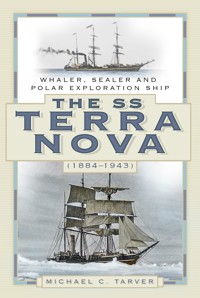
SS Terra Nova was most famous for being the vessel to carry the ill-fated 1910 polar expedition led by Robert Falcon Scott, but the story of this memorable ship, built in wood to enable flexibility in the ice, continued until 1943, when she sank off Greenland. This newly designed and updated edition presents the definitive illustrated account of one of the classic polar exploration ships of the 'heroic age'. Put together from accounts recorded by the men who sailed in her, it tells the sixty-year history of a ship built by a famous Scottish shipbuilding yard, in the nineteenth-century days of whaling and sealing before coal gas and electricity replaced animal oils.
Sie lesen das E-Book in den Legimi-Apps auf:
Seitenzahl: 461
Veröffentlichungsjahr: 2020
Das E-Book (TTS) können Sie hören im Abo „Legimi Premium” in Legimi-Apps auf:
Ähnliche


















Also by the same author
The Man Who Found Captain Scott, Antarctic Explorer And War Hero: Surgeon Captain Edward Leicester Atkinson (1881–1929), DSO AM MRCS LRCP Royal Navy
First published in 2006 by Pendragon Maritime Publications, Hillhead, Brixham, Devon, TQ5 0EZ
This edition published 2020
The History Press
97 St George’s Place, Cheltenham,
Gloucestershire, GL50 3QB
www.thehistorypress.co.uk
© Michael C. Tarver, 2006, 2020
The right of Michael C. Tarver to be identified as the Author of this work has been asserted in accordance with the Copyright, Designs and Patents Act 1988.
All rights reserved. No part of this book may be reprinted or reproduced or utilised in any form or by any electronic, mechanical or other means, now known or hereafter invented, including photocopying and recording, or in any information storage or retrieval system, without the permission in writing from the Publishers.
British Library Cataloguing in Publication Data.
A catalogue record for this book is available from the British Library.
ISBN 978 0 7509 9551 1
Typesetting and origination by The History Press
Printed and bound in Great Britain by TJ International Ltd.
eBook converted by Geethik Technologies
CONTENTS
Acknowledgements
Author’s Note
Prologue
Foreword by HRH Princess Anne
Introduction by Sir Ranulph Fiennes
1 Into the Evening of a Passing Age
Introduction
The British Whaling Industry and its Ships
The Shipyard of Alexander Stephen & Sons, Dundee
The Launch of the SS Terra Nova and her Early Years
2 Across the Atlantic and New Owners
The Ambitions and Achievements of Benjamin Bowring and his Family
The Founding of a Shipping and Trading Company
‘Terra Australis Incognita’
3 From the North Atlantic to the Antarctic
Relief Ship for the British National Antarctic Expedition, 1901
Under Dundee Command Again and First Mission to Antarctica
4 From the Antarctic to the Arctic
Under US Ownership and Norwegian Command
Rescue Mission to an Arctic Archipelago
Return from a Successful Arctic Mission
Return to Newfoundland for Sealing Duties
5 Her Name Will be Remembered Forever
Expedition Ship for the British Antarctic Expedition, 1910
Fitting Out in West India Dock, London
Preparations and the British Departure from Cardiff
Around the World to Lyttelton, New Zealand
6 Into the Southern Ocean
Final Preparation and Departure from Port Chalmers, New Zealand
A Storm in the ‘Furious Fifties’
Through the Pack Ice and into the Ross Sea
Arrival at McMurdo Sound and a Change of Command
7 First Role Complete
Expedition Base Established, Scientific Parties Deployed
A Surprise in the Bay of Whales
Scientific Parties Landed and the Return to New Zealand
8 New Zealand Refit and Hydrographic Surveys
Summary of Expedition Relief Voyages
First Return Voyage to New Zealand – ‘The Pumps Again!’
Winter Cruise and Survey Work
9 Return to Antarctica – First Relief Voyage
McMurdo Sound: Relief and Attempted Relief of Scientific Parties
Second Return Voyage to New Zealand and More Survey Duties
Another Refit in New Zealand and a Tragedy at Admiralty Bay
10 To Antarctica – The Final Relief
Last Passage to Antarctica
Cape Evans and the Tragic News
Last Departure for New Zealand and Goodbye to Antarctica
11 The Voyage Home
The Passage to Britain
Return to Expedition Home Port
Summary of British Antarctic Expedition Programme, 1910–13
Report on the Biological Work Carried Out Aboard by Dennis G. Lillie, MA
Extract from Report: ‘Outfit and Preparation’ by Commander E.R.G.R. Evans
12 Newfoundland and Sealing
Thirty Years with the ‘Wooden-Walls’
Rendering Assistance at a Maritime Disaster
Portrait of a Legendary Sealing Master, Captain Abram Kean OBE
A First-Hand Experience of the ‘Greatest Hunt in the World’
13 Chartered for War Duties
Refit and Role as a Coastal Trader
On Charter During Wartime
Ice Damage to the Stern: The Last Voyage and an SOS Call
Memories and Recollections
Research and More Recollections
14 The Finding of the Wreck
Epilogue
Appendices
A Ships Built at Dundee by Alexander Stephen & Sons 1844–93
B Description and Specifications of SS Terra Nova
C Extract from the Log of USCGC Atak
D List of Captains Who Commanded the SS Terra Nova, 1884–1943
E SS Terra Nova Crew List, Antarctic Relief Voyage, 1903–04
F SS Terra Nova Crew List, Arctic Relief Voyage, 1905
G SS Terra Nova Crew List and Shore Parties, British Antarctic Expedition, 1910–13
H Summarised Directory of the Arctic Region and Antarctic Continent
I Alexander Stephen & Sons Ltd, 1750–1970: The Family Line of Shipbuilders and a Brief History of the Company
J Bowring Brothers Ltd, Profit & Loss Accounts Balance Sheet, 1943
K Some Sealing Phrases and Expressions
L Miscellaneous List of Whalers and Sealers Launched and Their Fates
References
Bibliography
ACKNOWLEDGEMENTS
It would not have been possible to write this story without the records of those who had sailed in the SS Terra Nova and my first acknowledgement must be to the men of yesteryear who kept diaries, wrote letters home or recorded in any way the happenings of everyday life aboard ship and the many events, work and expeditions with which they were involved. There will be many stories which still lay undiscovered.
In addition to available publications, it has been necessary over many years to accumulate material from the archives of various institutions and I am grateful for the assistance given by the Scott Polar Research Institute, University of Cambridge; the Norsk Polarinstitutt, Tromsø; the Memorial University of Newfoundland; the Provincial Archives of Newfoundland and Labrador; the Department of Defense Naval Historical Center and the National Archives and Records Administration, Washington DC, USA; the Maritime Archives of the National Museum of Wales; the National Museums of Scotland; the University of Glasgow Archives; the National Maritime Museum, Greenwich; the Oates Museum and Gilbert White’s House, Selborne; the British Antarctic Survey and the Archives of the Captain Scott Society.
I am grateful for the assistance of the Guildhall Library, City of London; the City of Cardiff Central Library; the City of Dundee Central Library and McManus Museum & Galleries; the Britannia Royal Naval College Library, Dartmouth; the Maritime Museum of the Atlantic, Halifax, Nova Scotia; the Museums of Canterbury, Marlborough, Nelson and Port Chalmers, New Zealand; HM Hydrographer of the Navy, Hydrographic Office, Ministry of Defence, Taunton; the UK Antarctic Heritage Trust and the Dundee Heritage Trust.
My thanks also to publishers Tundra Books Inc., Montreal and Toronto; St Martin’s Press, New York; Flanker Press Ltd, St John’s and Mr Clyde Rose of Breakwater Books Ltd, St John’s, Newfoundland.
During preparation for this project, I turned many times with queries in the UK to Robert K. Headland and William Mills of SPRI, Sir Vivian Fuchs FRS, Dr Anthony M. Johnson, Rear Admiral John Myres CB, David Yelverton FRGS, Judy Skelton, Tim Hughes of Kew, Dr David Jenkins, Ann Savours Shirley, Dr John Heap CMG, David S. Henderson, Angus Erskine, Herbert Dartnell, Norman Watson, Mr Peter Bowring CBE and Mr Antony Bowring.
My appreciation also to Professor Julian Dowdeswell, Director of SPRI; James Campbell; John A. Davies; Julian D.O. Salisbury; Matthew G.A. Salisbury; Peter W. James; Brian Thorpe; John E. Davies; John S. Cosslett; Richard H. James; Alf H.K Thomas; Peter L. Jones; John H.L. Rowlands; Basil J. Watkins; John M.D. Curteis; Owen Willmer; Paul A. Davies; Derek H. Moss and David Scheeres. My thanks to Gary C. Gregor, Philip Chatfield and to H. Stanley Richards, past curator of the City of Swansea Museum.
Descendants of men who served in the ship have also answered my queries and given their assistance. The Hon. Edward Broke Evans allowed me unrestricted access to his family archives and let me use passages from his father’s book, South with Scott by Admiral E.R.G.R. Evans. My thanks to Angela Mathias and Hugh Turner, who allowed me to quote from the classic work The Worst Journey in the World by Apsley Cherry-Garrard. My thanks also to Dr David M. Wilson FZS for permission to quote from the Terra Nova diary of Dr Edward A. Wilson. and to Jo Laurie and John J. Ramwell, descendants of ‘Birdie’ Bowers, who allowed me to quote from his letters.
Tony & Moira Pennell and Christopher Lee Pennell provided family details of Commander Harry Pennell, and Ellen-Johanne McGhie, daughter of Tryggve Gran, allowed me to quote from his diary, The Norwegian with Scott. My thanks to Jack S. Williamson and John Evans of Swansea; Eva Skelton Tacey, daughter of James Skelton AB; also Jean Scholar, granddaughter of PO Parsons.
I am also grateful for the interest and support of Professor Robert Swan and Sir Ranulph Fiennes, and for material provided by Mary Cleveland and Sandra Kyne of St Mary’s, Scilly Islands. Also, the reminiscences and material provided by Mrs June Siveyer Watson of Ashburton, Devon. My thanks to Mr Arthur Thomas, Group Scout Leader of the 4th Cardiff (St Andrews) Scout Group for allowing me access to their archives, and to the late Lieutenant Folke E. Swenson USCG and his son, Gus, for their support and interest in the early stages of the project.
Thank you to Ray Harvey (Design), Department of Maritime Studies, Southampton Institute University College and Mr & Mrs Colin Mudie of Lymington; also to the Royal Dart Yacht Club, Kingswear, Devon. I am grateful to the Commodore, Royal Navy Trophy Centre, HMS Nelson, Portsmouth and to Mr Geoffrey Buck, the Royal Navy Trophy Officer.
My thanks to Mr Christopher Grant of Forfar, who was able to provide me with family details and photographs of the Stephen family including his great-grandmother, Alice Stephen, who launched Terra Nova.
My appreciation to Mr A.M.M. ‘Sandy’ Stephen, the last managing director of the famous Scottish shipbuilding company, Alexander Stephen & Sons Ltd. He sent me the complete family tree of the Stephen family dating back before the founding of the company. He and his fellow directors were to see the last days of shipbuilding at Linthouse on the River Clyde with an amalgamation of companies and then the closure of Upper Clyde Shipbuilders Ltd in 1970.
A number of people responded to an article on my behalf which appeared in The Courier and wrote to me from Scotland with details of family connections and folklore stories; my thanks to them.
Mr Francis Gloak of Perth wrote that his grandfather, David Gloak was a coppersmith at Stephen’s yard. He worked on Terra Nova and other ships installing boilers and pipework. Mr Roger Buist of West Ferry, Dundee, sent me Dundee whaling songs and wrote that his grandfather William Rodger Salmond, a ship’s plater, worked for Gourlay Brothers and at Stephen’s Panmure yard. Mr Salmond held a unique form of ‘passport’ embossed with the Dundee Coat of Arms, signed in those days by the Lord Provost of the City which enabled the holder to travel and gain work in European shipyards.
Mr James M. Robertson of Dundee recalled that his grandfather George Robinson, born 1853, was a cook on Terra Nova during a sealing voyage and that the crew used to drink in the town’s Arctic Bar, New Inn Entry. Holly Lindsay of Ceres by Cupar, in Fife, wrote that her mother remembered Terra Nova anchored off Tayport and connections with Captain Harry McKay and his family; Mr John Aitken of Montrose sent me a file of past local maritime events and Mr John Alexander Smith of Montrose wrote that his uncle, Robert Smith, born 1897, was employed by Alexander Stephen & Sons for thirty-two years at their Linthouse yard on the Clyde.
My thanks must go to Arthur R. Railton, of Martha’s Vineyard Historical Society, Edgartown, Massachusetts, USA; David Harrowfield, Christchurch, and Jim Wilson, Port Chalmers Museum, New Zealand; Clive Goodenough of Melbourne, Australia, formerly of Christchurch, New Zealand; Dr Albert E. Jones, Varrick Cox, Dr Shannon Ryan, Heather Wareham, Jack and Rosalind Power of Fort Amherst and Captain Thomas H. Goodyear of St John’s, Newfoundland; John and Gwen Reed, Bridgewater, Nova Scotia; Captain Ulf S. Snarby, Liverpool, Nova Scotia; Heddi Siebel, Cambridge, Massachusetts, USA; Kjell G. Kjaer, Torsvaag, Vanna Island, Norway and to Assa Sonberg Kendall, formerly of Oslo, who kindly translated Norwegian correspondence and data for me.
Finally, my thanks to Ann Griffiths who acted as proofreader to check my presentation, and her husband, John C. Griffiths (FIDS Halley Base, 1960–63), who was well qualified to make helpful observations, and to Bob Headland, of the Scott Polar Research Institute who scanned my historical references, most appropriately, during a voyage in an icebreaker while on passage through the Arctic Ocean and the Northwest Passage.
Michael C. Tarver, Hillhead, Brixham, Devon, UK
March 2020
AUTHOR’S NOTE
In putting together this story, I have sought to take the reader back to the mood of the times and have tried to avoid straying from the main theme. This was not easy, for to write about just one ship without mentioning other vessels and events of those days would not have provided a sufficiently comprehensive historical picture nor have been of engaging interest. This is essentially a story of the men who sailed in the ship. I have used their own words in many paragraphs and for the sake of continuity, where I have found it fitting, I have linked relevant parts of their stories using my own words.
Readers might find it helpful to copy some of the maps and plans included so that they can follow the story more easily and track the many place names mentioned, particularly following the movements of SS Terra Nova when in McMurdo Sound, Antarctica.
Before publication, I sought the help of the media in Scotland and Newfoundland. I visited Dundee and St John’s to seek facts and to give an opportunity for anybody to make contact with me who might have useful information both about Terra Nova and the Dundee shipyard of Alexander Stephen & Sons Ltd. I am most grateful to those who wrote to me. I was particularly pleased to hear from descendants of the Stephen family, whose forbears built the ship, and members of the Bowring family whose company were her owners for forty-five years.
I am sure there is much about the ship that I have not discovered. It is inevitable that more information will come to light following publication, and this I welcome. Using many original sources, every effort has been made to keep to historical accuracy. I welcome any further details which interested readers may offer. To assist research in the future, they can communicate with me by writing to my publishers or to the Scott Polar Research Institute, University of Cambridge, in whose archives the SS Terra Nova file is to be found.
In linking the various sources of the story, the views expressed are mine alone. They are my thoughts after I have studied the heroic age of polar exploration for twenty years, including undertaking a voyage to the Ross Sea region of the Antarctic continent in an icebreaker. I visited Dundee to see what is left of the Panmure shipyard where Terra Nova was built and, to make my story complete, I felt compelled to visit St John’s, Newfoundland to get to know the port from which Terra Nova had operated. Here I met many interesting and helpful people whose warmth and hospitality helped me to feel part of the history of this famous fishing and sealing port.
I acknowledge with particular gratitude the kindness of Her Royal Highness the Princess Royal in writing the foreword to this story.
Michael C. Tarver
PROLOGUE
The selection of the whaler and sealer SS Terra Nova for polar exploration and relief duties on three occasions amounted to a total engagement of six years in the ship’s working life of sixty years. For the majority of her years she performed mercantile duties, initially as a whaler from Dundee and then in the sealing trade from St John’s, Newfoundland. In her last years she was chartered as a wartime supply vessel and it was during this role that she foundered.
The acquisition of Terra Nova as expedition ship for the British Antarctic Expedition in 1910 is what brings her to notice as a famous ship and gives her a place in history. As a relief ship, seconded from her sealing duties in the North Atlantic and Arctic regions, she had proved herself a formidable vessel suitable for use in ice. It was her selection as the expedition ship for Captain Robert Falcon Scott’s last expedition to the Antarctic that secured for her the fame with which she will always be associated and assured her a place in the history of the sea and polar exploration.
There is a long story to tell of her service in the North Atlantic seal fishery and earlier whale trade. Terra Nova was a familiar sight at her home port of Dundee, Scotland, and subsequently in St John’s, Newfoundland, where for so long she had a special place in the hearts of two seagoing generations on both sides of the Atlantic. This is the story of the ship and her many roles.
There are many written accounts of exploration in the polar regions, attempts to cross the Arctic Ocean toward the North Pole and penetration of the Antarctic continent toward the South Pole. Accounts have been written by many of the explorers themselves, with later contributions by other authors who seek to analyse the stories and tell of the achievements, failures and incredible hardships involved with polar exploration. All make exciting reading for armchair explorers and lovers of the sea.
An account of life aboard Terra Nova which describes five weeks of sealing from Newfoundland was written in 1922. It is fortunate that we can include excerpts from that fascinating period, together with some records of the company that owned Terra Nova for forty-five years. Her principal home port was St John’s and her owners, Bowring Brothers Ltd, operated with its parent company, C.T. Bowring & Co. Ltd, of Liverpool and London. They acquired Terra Nova from her owners at the port of Dundee where she was built and operated for the first fourteen years of her life.
Between 1895 and 1922 is the period generally referred to as the ‘heroic age’ of Antarctic exploration, where territorial gains and scientific discoveries were made by expeditions attempting to extend the boundaries of man’s knowledge of the continent and to pursue the quest to reach the South Pole. This coincided with attempts to cross the Arctic Ocean and to be first to reach the North Pole.
The leaders of these polar expeditions remain household names. The lives and careers of the many men that accompanied them reveal them to be equally brave and fascinating, but little has been written about the ships that took them there. These were wooden ships, being used apparently out of their time as the world advanced from the steam age into the twentieth century. Composite and iron ships had been built since the mid-nineteenth century, but these early designs proved totally unsuitable because condensation made life unbearable for the crews in the cold regions and the iron hulls were easily damaged by ice.
The Royal Research Ship Discovery, built of wood, was used for two scientific expeditions to the Antarctic regions by Sir Douglas Mawson as late as the 1930s, and another wooden ship the SS Bear of Oakland was used by Admiral Richard Byrd for Antarctic expeditions up to 1941.
Welded ice-strengthened steel construction gradually improved, and nowadays powerful icebreakers have long taken the place of those early wooden vessels which had their bows sheathed in metal plates. Shipbuilding technology developed further during the Second World War, when welded vessels known as ‘Liberty’ ships were built.
Nowadays, ships with purpose-designed hulls for work in the ice fields are able to go virtually anywhere during the summer in the polar regions. During the heroic age, the only suitable ships were those with wooden hulls. Fitted with iron-sheathed bows, they could enter the ice and the hulls were able to flex with pressure from the ice to reasonable limits.
SS Terra Nova began her life as a steam-assisted barque built in the late nineteenth century at a time when whale and seal products were still in demand. However, in that declining market she carried on through a transitional stage in history and gave service for a total of sixty years from her launch in 1884 to her end in 1943. Terra Nova was one of many wooden ships from that era that had been suitable for exploration of the polar regions. Expeditions of the time show a list of British and Norwegian wooden ships in use during the heroic age, many having careers of different lifespans and mixed fortunes.
Records show that most of the nineteenth-century British ships built as whalers and sealers and used in the polar regions came from the Dundee yard of Alexander Stephen & Sons (see Appendix A). Some similarly designed vessels were built in other British yards.
Norwegian shipyards also built whalers and sealers and explorers of many nations were pursuing interests in the polar regions, among them France, Germany, Russia, Norway, Sweden and Japan. There are many stories on record, including the losses of ships.
There is a never-ending fascination with the stories of these expeditions, the leaders, their men and their adventures. But what happened to the ships of the heroic age, each one an essential part of an expedition; each ship with its own personality and characteristics and as much a part of the expedition as the men themselves? What became of these vessels that served them so well?
Southern Cross, formally a Norwegian whaler named Pollux, was built in Arendal, Norway in 1886. She was the expedition ship used by Carsten Borchgrevink and the British Antarctic Expedition, 1898–1900. Under the command of Captain George Clark, Southern Cross went down in 1914 off Newfoundland. She was last seen off Cape Pine when returning from sealing in the Gulf of St Lawrence. All 177 men aboard were lost. A single lifebelt, months later, was picked up off the coast of Ireland, but was never positively identified as coming from that ship.
Scotia was used by Dr William Spiers Bruce for the Scottish National Antarctic Expedition, 1902–04. Formerly the Norwegian whaler Heckla and built in 1872, she was chartered by the Board of Trade to monitor ice conditions in the North Atlantic following the Titanic disaster in 1912. Efforts were made to conserve her but early in the First World War she was sold and ended her days as a collier operating out of Cardiff. On 18 January 1916, loaded with coal, on passage to a French port, she caught fire just after leaving Cardiff and was beached by tugs at Sully Island in the Bristol Channel. She became a total loss, although fortunately without loss of life.
The sealer and whaler Nimrod came from the yard of Alexander Stephen & Sons in 1866 and was chosen for the British Antarctic Expedition, 1907–09 led by Ernest Shackleton. In 1911, she took an expedition to the Yenisei River, Siberia. During the First World War she served as a coastal collier. She was wrecked in the North Sea on the Barber Sands off Caister, Yarmouth, on 29 January 1919. Her twelve-man crew launched the ship’s lifeboat, but it then capsized. There were only two survivors.
Sir Ernest Shackleton’s Endurance, formerly the Norwegian barque Polaris, built in 1913, was watched by her crew as she was crushed in the ice and lost in the Weddell Sea in 1915, after the Imperial Trans-Antarctic Expedition had been unable to set up its first base.
The ship always described as the ‘gallant little Morning’, formerly the Norwegian whaler Morgen, on two occasions relieved Discovery and the British National Antarctic Expedition of 1901–04 led by Scott. Morning was lost in the North Atlantic in December 1915, while on convoy duty carrying munitions to Russia.
Aurora, 580 tons, was another whaler and sealer from the yard of Alexander Stephen & Sons, built in 1876. She had a truly remarkable series of adventures in the Arctic even before being used on two Antarctic expeditions. In the Antarctic she was used by Sir Douglas Mawson in 1911–14 and then on behalf of Sir Ernest Shackleton in 1914–17 as the second vessel and part of his Imperial Trans-Antarctic Expedition. She gave splendid service during the heroic age and her incredible story, both in the Arctic and Antarctic, deserves a separate study and ought to be fully researched and recorded. The dramatic story of the Ross Sea party of Shackleton’s Trans-Antarctic Expedition 1914–17, with its tragedies, and the account of Aurora’s drift with all its consequences, is told by Richard McElrea & David Harrowfield in Polar Castaways.
Aurora was lost on a commercial voyage from Australia to South America. She left Newcastle, New South Wales on 20 June 1917 with a cargo of coal but failed to arrive at Iquique, in Chile. Aboard her was James Paton, a seaman with a proud record of service to the heroic age. He had been in Morning for the relief of Discovery; with Shackleton on the Nimrod expedition and was in the crew of Terra Nova with Scott.
Later, he went in Aurora with Shackleton’s Trans-Antarctic Expedition and was in the crew during Aurora’s drift. He stayed to work on board, but on her last passage in the Pacific she foundered and was never heard of again. Aurora was posted missing at Lloyds on 2 January 1918. The Cardiff & South Wales Journal of Commerce quoted a Lloyds report of the loss of Aurora on 29 December 1917. The journal lists the names of merchant ships posted missing at Lloyds during wartime and also makes mention of warships lost, but for obvious reasons not named. Aurora was listed as 580 tons, O.N. 75106 and her master was Captain Reeves.
On hearing of the loss, the explorer Sir Douglas Mawson, who had sold Aurora to Shackleton in 1914, is quoted as saying, ‘She was the finest ship on the seas for polar exploration’, and he believed that her loss was due to enemy action. However, Morton Moyes, a member of Mawson’s expedition who had been in Aurora for the relief of the Ross Sea party, suggested that she had been strained by many years of working in the ice and had been overwhelmed by heavy seas. Only a bottle and a lifebuoy were found, washed up on an Australian beach.
During 1944 and 1945, at the time of the Second World War, the British Government consolidated British bases in the Antarctic in what was known as Operation Tabarin. The Norwegian-built wooden sealer, SS Eagle was sent from Newfoundland and assisted HMS William Scoresby and SS Fitzroy in setting up bases on the Antarctic peninsula. Eagle was scuttled by her owners after fifty years of service.
As late as 1947, when Sir Vivian Fuchs was appointed to the Falkland Islands Dependency Survey as Field Commander of British bases in the Antarctic, his expedition sailed south in John Biscoe. She was the former US boom defence ship AN-76, which had served during the Second World War as HMS Pretext. She was built of pitch pine and when ice damage to the hull was made good in the Falkland Islands she was fitted with steel plates fastened to her wooden hull with bolts. Sir Vivian recalled to the author that the temporary repairs were regarded with some concern as to how they would withstand the ice conditions.
Two ships from the heroic age still survive, the Fram and the Discovery. Roald Amundsen’s ship, Fram was built in 1892 by Colin Archer at Larvik, Norway, for Arctic exploration by Fridtjof Nansen and is now preserved as a national monument in Oslo.
Discovery was launched in 1901 by the Dundee Shipbuilders Company, successors to Alexander Stephen & Sons. She was built specially to order for the Royal Society and the Royal Geographical Society, promoters of the British National Antarctic Expedition, 1901–04 led by Commander Robert Falcon Scott RN. After her return from the Antarctic in 1904, Discovery was sold by the Admiralty, who had acquired ownership, to the Hudson Bay Company to operate as a cargo ship. Her story is told in The Voyages of the Discovery by Ann Savours. RRS Discovery is now an exhibition ship and afloat today at Dundee, a tribute to those well-proven ships able to work polar regions and to the men who built and sailed them.
Ask anybody to name Captain Scott’s ship and most will reply, ‘Discovery!’. However, in 1909 Terra Nova was bought by the Expedition Committee for Scott’s second expedition to the Antarctic in 1910. The more authentic answer to the question is actually, Terra Nova. Scott’s name as managing owner is recorded on the Board of Trade Agreement and Account of Crew.
The career of these historic ships varied according to fortune, but no ship of the Antarctic heroic age could match the full and active sixty-year career of the SS Terra Nova, the second largest and most powerful whaler and sealer to be built by Alexander Stephen & Sons.
After her launch in 1884 and into the declining years of the whaling trade, she was twice a relief ship to polar expeditions, first in the Antarctic and then the Arctic. Her reputation established, she was then thrust into her most famous role. Having been chosen as a polar exploration ship, she went back to the Antarctic. Afterwards she returned to sealing in the North Atlantic and finally she was chartered for wartime supply duties, during which she foundered. Thus, six of her sixty years were spent with polar expeditions, the remainder as a whaler and sealer and finally as a cargo vessel.
It is of interest that when making comparisons with other vessels built by Alexander Stephen & Sons at Dundee there was one sealer larger than Terra Nova, and another which sailed the seas for eighty-nine years. Both of these are worthy of special mention.
The largest wooden vessel to be built at Stephen’s yard at Dundee was the sealer, Arctic II, completed in 1875. She was built to replace another vessel of that name which had been lost in 1874. A steam assisted barque, her dimensions were 200.6ft x 31.6ft x 19.9ft and 828 tons (Builders Old Tonnage gross). She had an early end, being lost in the ice in 1887.
The longest service record is held by the Bear, a steam-assisted barque of 689 tons launched in 1874. She served for eighty-nine years until she was lost in 1963 while under tow. Mainly US owned, she operated in the Arctic regions and also in the Antarctic but in a period after the heroic age.
In the Arctic she had taken part in the rescue of abandoned whalers and sealers left on the ice after the loss of their ships and had been part of the mission with the Dundee whalers Thetis and Aurora to rescue the US Arctic explorer, Adolphus Greely, in 1883. Bear was involved in events at the Alaskan north-western town of Nome where there was some trouble at the time of the gold rush in 1899. During the First World War she was a revenue cutter at San Diego and later a ‘rum chaser’ during the prohibition. In the early 1930s she was a museum ship in the City of Oakland, near San Francisco. Here, she was put up for auction and bought by Admiral Richard Byrd, US Navy for an Antarctic expedition and renamed, Bear of Oakland.
In 1935, on return from the Antarctic, Bear of Oakland was sold by Admiral Byrd to the US Navy for $1 and became the USS Bear, taking part in his third expedition to the Antarctic from 1939 to 1941. In 1948 Bear was sold to the Shaw Steamship Company of Dartmouth, Nova Scotia, for sealing. She was sold again in 1963 to go on public display in Philadelphia but while under tow she sank off Nova Scotia. Her bell is displayed in the Explorers’ Club, New York, the city to which years before she had safely returned the survivors of the Greely Arctic Expedition.
The varied life of SS Terra Nova during her sixty years of whaling, sealing and polar exploration in the heroic age is told using entries from the ship’s logs, diaries, journals and letters sent home by those serving aboard her to family and friends, and from books and accounts written by those men. This story is dedicated to these men. Most of what the author has written and linked together belongs to them. Much of it is written in their own words just as it was intended to be read.
FOREWORD
BY HRH PRINCESS ANNE
INTRODUCTION
BY RANULPH FIENNES
This second-edition story of SS Terra Nova, a famous Scottish-built ship, brings together so many tales of maritime history, not only of the vessel itself as told by the men who sailed in her, but equally through the development of a flourishing trade in animal oils, combined with the increase in demand for general cargos around the world.
In the nineteenth century the shipbuilding company of Alexander Stephen & Son prospered through the days of sail and steam, while at the same time Benjamin Bowring and his family developed their business in Newfoundland as ship owners, general merchants and insurance brokers. The SS Terra Nova was to become owned by the Bowring company in 1898.
This development was to coincide with territorial exploration and the advancement of science in the polar regions, where such ships were known to be ideal for the rigours of ice work. The ‘heroic age’ of polar exploration saw many wooden ships used by expeditions and, years later, when we set out on the Transglobe Expedition, we were so proud that the Bowring company rekindled its links with both the Arctic and Antarctic by providing us with our ice-strengthened ship MV Benjamin Bowring, named after the founder of that historic company.
Mike Tarver’s fascinating and detailed history of the SS Terra Nova shows just how tough those early days of polar exploration really were.
Ranulph Fiennes
September 2019
1
INTO THE EVENING OF A PASSING AGE
Introduction
This is the story of a ship – a whaler, sealer and polar exploration ship that sailed the seas for sixty years. From her launch in 1884 she sailed the oceans from the Arctic regions to Antarctica until she foundered in 1943. Once she was launched, her story can only be told by the men who sailed in her – they bonded with the ship in which they placed their trust when they put to sea.
How does one tell the story of a ship? To those who do not know the sea, a ship is an inanimate object but to those who have been carried over the oceans, who have been close to nature in all conditions, who have seen the horizon under a ceiling of stars, felt that feeling of humbleness beneath the power of the universe and experienced the moving awesomeness of the sea which presents a constantly changing picture, a ship seems to have a heart, a soul and a spirit of her own. This also applies to smaller craft on inland waters – whether you have contributed to her construction and equipment or merely been a passenger, you must place your trust in your ship. Ask any old seaman his feelings on seeing his ship go down, perhaps torpedoed in wartime, or ask a captain who takes his ship to be decommissioned. Ask any yachtsman who sells his boat which has given him many years of pleasure. Whatever the vessel, whatever her character, whatever stretch of sea or water is crossed, a special relationship grows between ‘man’ and ship. Your trust is in the vessel which carries you – and a ship must be a ‘she’.
It is rare for a ship to sail the seas for sixty years, particularly a ship built of wood. She will have many tales to tell. Life will begin on the drawing board and as her lines take shape, the men who build her begin a relationship themselves as they put together their skills toward the day she is launched. Most ships are built for a specific purpose and are suitable only for that role. Few last for as long as sixty active years. Not so the SS Terra Nova, designed and built as a whaler and sealer in the tradition of her time.
Towards the end of an era in nineteenth-century Britain, in a country with an empire built on an economy driven by coal and steam, Terra Nova entered into an age of ever-changing technology and still kept sailing, changing roles as the times demanded. Parts of the story of Terra Nova have already been told by the men who sailed in her. The author has sought to discover those stories spanning her entire career and bring together the tales of those men of yesteryear.
The British Whaling Industry and its Ships
Animal oils from whales, seals and fish were much used in the manufacture of foods, fabric products, soap, fertiliser and lighting until the late nineteenth century. From the early nineteenth century, the whaling and sealing fleets of Britain were sent from many ports, principally Hull, Aberdeen, Peterhead, Newcastle and Dundee to Arctic waters in search of their catch.
As iron and composite ships were developed and steam power was introduced, entrepreneurs thought they could increase their catch by sending out ever larger vessels. Crews soon found that working aboard the very early iron ships brought problems in cold regions. The ships were damp, cold and dripped with condensation. Their rivetted, plated iron hulls became damaged in the ice and the engines frequently broke down.
All this was much to the delight of traditional crews in wooden ships, which sometimes had steam engines but were always rigged for sail and could be sailed out of trouble. These crews would often be called on to help other crews in their icebound and damaged ships. Sometimes help couldn’t be given or was perhaps even refused. There were accidents and there was loss of life.
One port, above all, which persisted with whaling and sealing by using traditional wooden ships assisted by steam power was the Scottish port of Dundee, which, as records show, had sent out whaling ships since 1750. When the early iron ships failed, the activity at other ports diminished, but Dundee prospered and continued to build ships with wooden hulls.
Dundee Docks and tidal harbour. (British Docks Association Handbook, 1912)
By the first half of the nineteenth century, with the coming of the railway, Dundee became established as a major engineering centre in Scotland. Shipbuilding and railway industries and jute and hemp importing businesses developed there and the port became the centre of the British whaling industry. With this growth in employment and prosperity, Dundee became important enough to be granted a royal charter as a city by Queen Victoria in 1889. One of the local industrialists, Sir James Caird, a jute and hemp importer, became a great benefactor to the city.
The earlier years of whaling in ships without steam power carried a high cost in loss of human lives and shipping. Tragedies in Arctic regions, particularly the Davis Strait, were commonplace, with many ships failing to return. Whole crews were lost or left abandoned on the ice, either to perish of the cold or, if they were lucky, to be rescued by another ship. This was the way of life in those days. Dundee produced many famous whaling skippers, amongst them Captain William Adams and Captain Charles Yule, who became harbourmaster at Dundee.
The early nineteenth century saw the development of docks along the banks of the River Tay. Between 1815 and 1830 the King William IV Dock and Graving Dock were completed with sea walls and quays forming the Tidal Harbour. Then came a fine custom house in 1843. Later came the Earl Grey Dock, the Victoria Dock and then the Camperdown Dock. Here, at Dundee, a growing and prosperous town with fine maritime facilities and an allied industry, was the centre of Britain’s whaling fleet.
By the middle of the nineteenth century, Dundee had grown into the third-largest town in Scotland after Glasgow and Edinburgh. The number of textile mills and the growth of steam power technology increased rapidly, providing employment for the growing population. This led to increasing activity at the docks where exports of the cloth, sack and bag by-products of imported jute and hemp combined with the hustle and bustle of the importing of the raw materials, all alongside the busy landing of whale and seal products.
In The Dundee Whalers, Norman Watson describes Balaena mysticetus (Bowhead Whale) as the chief quarry of the whalers. It was called the Greenland ‘Right’ whale, so-called because this distinguished it from the wrong whale to catch! It was ‘Right’ because it was slow moving, easy to hunt and floated when it was dead. This docile giant possessed a fortune in its cavernous upper jaw, overlapping plates of springy, tough baleen (sometimes referred to as whalebone), which was valuable for use in ladies’ corsets and other flexible products. No other whale had such a mass of baleen and this made the ‘Right’ whale a prime commercial target. It also had a thick layer of fat, or blubber, a valuable commodity when boiled to oil.
Certainly, if the ships came home with a good catch financial rewards were greater than could be earned ashore, but the risks to human life were enormous. Even the introduction of steam power in the middle of the nineteenth century, while bringing many benefits, still brought extra loss of life as more ambitious attempts were made to bring home the catch. The biggest danger was that the ship might be ‘nipped’, i.e. squeezed or crushed by moving pack ice. Many were lost in this way, the crews being left on the ice dressed only in what they stood up in and with what possessions could be scrambled from the ship before she disappeared through the ice. Such losses must have been dreadful for the surviving crews and those who rescued them.
As towns and cities grew in the late nineteenth century, demand for heat, light and power came to depend more on coal and gas. In 1885 the Austrian scientist Carl Von Welsbach (1858–1929) invented the gas mantle for lighting. Gasometers sprang up in populated areas, and the demand for animal oils declined and market prices for whale products dropped. At the same time, there was a danger that the ‘Right’ whale might be hunted to extinction. An era appeared to be ending.
In 1841 Captain James Clark Ross had sailed his ships HMS Erebus and HMS Terror through the pack ice into the sea round Antarctica, which is now named after him. He had reported great numbers of whales for the taking. Perhaps an answer to the decline of the whaling industry might be found in the southern hemisphere? In hopeful expectation of a sea of plenty, ship owners and shareholders decided to send a fleet south.
Dundee Seal & Whale Fishing Co., St John’s, Newfoundland (est. circa 1870 for co-operation of men and resources). Photo taken around 1880. Back row (left to right): Captain Alexander Graham (Bloodhound), Captain McLennan (Narwhal), Captain James Bannerman, Captain Charles Dawe (Aurora), Hon. Moses Monroe (Company founder), Mr John Pye (shipbuilders, Alexander Stephen & Sons, Dundee), Mr. A.G. Smith (broker). Front row (left to right): Captain John Green (Tug Co.), Captain Charles Yule (Esquimaux), Captain William Adams Snr (Arctic), Mr Francis Winston (editor of the Morning Chronicle). (Courtesy Memorial University of Newfoundland)
The Dundee Antarctic Whaling Expedition of 1892–93 consisted of four ships which sailed to Antarctic waters with the hope of discovering new and plentiful hunting grounds, but the speculators were to be disappointed. Captain Alexander Fairweather in the whaler Balaena led the fleet, accompanied by Polar Star (Captain James Davidson), Active (Captain Thomas Robinson) and Diana (Captain Robert Davidson). They sailed via the Falkland Islands to the peninsular region of the Antarctic continent.
Unfortunately, no ‘Right’ whales were to be found, only an abundance of a species not profitable to pursue. The fleet returned to port some nine months later with a cargo of sealskins and oil, together with some scientific and geographical information, all much to the financial disappointment of those who had funded the project. It is of interest, however, that in probing south, these were the first power-driven ships to have penetrated the Antarctic Circle since the scientific voyage of HMS Challenger, when, on 16 February 1874, Challenger crossed the Antarctic Circle and stood on for 10 miles before turning north. These events predated the heroic age of Antarctic exploration but might be regarded as a practical beginning.
It is interesting to note that of these four Dundee-based ships that went south on the expedition of 1892, only Diana, at 473 tons, was built at Dundee by Alexander Stephen & Sons and launched in 1891 for Job Bros of St John’s. Balaena was built in Norway, Active and Polar Star were built at Peterhead. Diana is shown bringing in a seal catch at Newfoundland early in 1892 after which she joined the fleet for the Antarctic venture which left Dundee on 6 September 1892.
Today, the city of Dundee, its maritime and associated industrial past now left to historians to record, remains famous for its marmalade and Winston Churchill’s favourite fruit cake. As a reminder of nineteenth-century times, Dundee is home to the Royal Research Ship Discovery, the last example of a nineteenth-century wooden ship based on the design of a Dundee whaler built in the yard of her forerunners. Her keel was laid down on 16 March 1900 and she was launched on 21 March 1901 specially for use in polar exploration.
She is now restored and preserved as an exhibition ship. Though Discovery was never a whaler or a sealer, the visitor strolling round her decks can easily imagine all the excitement and tension of those days. When taking dinner in her splendid wood-panelled and elegant wardroom, it brings to mind all the nostalgia of being part of another age when the furtherance of polar exploration to extend man’s knowledge of the globe was so geographically and scientifically important.
The Discovery is a symbolic reminder of those famous years when, despite all the hardships and losses of life in the whaling industry, the city of Dundee grew and developed as a world centre for whaling, together with the import and manufacture of jute and hemp products. Here, too, evolved the skill of constructing wooden ships. Dundee people proudly built the western world’s finest whalers and sailing ships. Towards the end of the era, SS Terra Nova was the second largest, most powerful (and, indeed, the last) whaler to be built for active duty in those days.
The Shipyard of Alexander Stephen & Sons, Dundee
The city of Dundee is set on the north bank of the River Tay, and downriver from its famous railway bridge was once situated the entrance to a tidal harbour and the city docks. Industrial archaeology reveals some of what remains of the nineteenth- and early twentieth-century shipyards. A slipway at what was once known as Stephen’s Yard, the Panmure Shipyard, Marine Parade, still remains almost ‘spooky’ within a restructured industrial area. Here can be found traces of Alexander Stephen & Sons’ Dundee yard. Some of the old dockyard buildings which would have housed offices and ancillary services to the industry are still to be seen. Here would have stood the sheds from which the smell of boiling whale blubber would have wafted across the town.
In those days we would have entered the Tidal Harbour from the River Tay and turned to starboard (that is, right). There, we would have seen the shipyard of Alexander Stephen & Sons. The yard extended east beyond the buildings, and tall sheds held launching slips which ran directly into the river. This area later became a timber yard, now lost. Much alteration has taken place. Within the past twenty-five years the building of a new road bridge over the river and a new road network embracing the old city docks has changed the face of the waterfront. The plans included a dock for the RRS Discovery and a visitors’ exhibition centre.
The old tidal harbour has been filled in, leaving what remains of Stephen’s shipyard to the imagination. The Stephen family began building small boats for fishermen at Burghead on the Moray Firth in 1750 and afterwards at Aberdeen. The railway had reached Dundee in 1838, and at about the same time came the introduction of the screw propeller and the development of steam power in ships.
By 1843, the family firm became established at what became known as the Panmure Shipyard, Marine Parade, Dundee. There were some setbacks. In 1868 the Dundee yard, with two unnamed ships on the stocks, was totally destroyed by a fire which started near the sawmill. One ship was a composite and the other a whaler, both well advanced and almost ready for launching. Two hundred employees were thrown out of work. However, perseverance triumphed in the face of adversity. Within a year the shipyard had been rebuilt and a ship was ready for launching.
The performance of Dundee whalers caught the eye of the sealing industry in Newfoundland and ships were built for a number of companies operating at the ports of St John’s and Harbour Grace. From 1851, Alexander Stephen & Sons expanded the Glasgow business on the River Clyde, first at Kelvinhaugh and afterwards at the Linthouse Yard, building large steam ships. The family business passed down the line and continued well into the twentieth century.
Tidal harbour entrance and Panmure Shipyard. (Courtesy Dundee Museums and McManus Art Galleries)
Tidal harbour entrance and Panmure Shipyard. (Courtesy Dundee Museums and McManus Art Galleries)
Alexander Stephen (1795–1875) was a national figure whose career as a Scottish shipbuilder marked him out in stature and accomplishment as one of the great Scottish industrialists of the nineteenth century, with his sons alongside him. Their company eventually became the second largest of the Scottish shipbuilders on the Clyde. Their business eventually became part of Upper Clyde Shipbuilders Ltd, which went into voluntary liquidation in the 1970s, part of the sad decline of British shipbuilding in the twentieth century. (For the company history see Appendix I.)
Alexander Stephen (1795–1875). (Courtesy Mr A.M.M. Stephen)
The Launch of the SS Terra Nova and her Early Years
In the list of ninety-seven ships built at the Dundee yard of Alexander Stephen between 1844 and 1893, Terra Nova is listed as No. 84 (see Appendix A). That list of whalers and sealers contains the names of many famous ships such as Aurora, Arctic, Bear, Esquimaux, Nimrod, Thetis, Ranger, Neptune and Diana, whose names crop up in connection with Terra Nova in Dundee and Newfoundland and some in association with polar exploration in addition to whaling and sealing. Many other ships on the list were lost before Terra Nova was built.
Terra Nova is shown as a sealer 187ft long x 31ft beam x 19ft draught, of 744 tons (gross in Builders’ Old Tonnage). She was laid down by Alexander Stephen’s eldest son, William, to the account of the company. William is shown as owning all sixty-four shares. The ship was launched as a steam-assisted barque on 29 December 1884. Her hull is described as having frames of oak laid on a keel of rock elm and clad with pitch pine and elm. (A more detailed description of her construction is given in the Appendix B.) Her steam engines were built by Gourlay Brothers of Dundee and were two-cylinder inverted compound steam engines of 120hp (combined) with 27in and 54in diameter cylinders, giving a 2ft 9in stroke to a 10½in shaft driving a four-bladed cast-steel propeller.
William Stephen (1826–93). (Courtesy Mr Christopher Grant)
Gourlay Brothers was a Dundee engineering company which had produced agricultural machinery from the early nineteenth century and then turned to developing marine steam engines. As the Stephen’s company activities on the Clyde developed, Ebenezer Kemp, engineering manager at Gourlay Brothers, took his talents from Dundee to the Clyde and entered into partnership with Alexander Stephen & Sons to develop and build engines for larger ships.
The engine details of Terra Nova recorded on registration documents at the time of launch show 120hp, though 140hp is shown as her power in a following chapter. She was rigged as a barque, i.e. fore and main mast square-rigged, mizzen mast rigged fore and aft. Her official number was ON 89090. If there were original plans for her building, they have not come to light. Such were the skills of shipwrights in those days that individual plans for each ship were not always drawn up.
Terra Nova was launched in 1884 by William Stephen’s daughter, Alice. The Dundee Advertiser reported on 30 December 1884:
Yesterday the whaler Terra Nova was launched from the shipbuilding yard of Messrs Alexander Stephen and Sons. This vessel has been built to replace the Thetis which was sold to the American Government last year for the Greely Relief Expedition. The Terra Nova has been specially built for Arctic Navigation. It is calculated she will carry about 40,000 seals or 260 tons of oil. She will be employed in the Newfoundland and Davis Straits whale industry and be commanded by Captain Fairweather.
So began the life of a ship which, when her intended career as a whaler and sealer is coupled with her more famous role as a polar exploration ship, became the longest serving and most travelled expedition vessel to survive the Antarctic heroic age. She had sixty years’ distinguished service, and it could be said that her excellent service has never received the true recognition it deserved.
Terra Nova was based at Dundee for her first fourteen years. She was under the command of Captain Alexander Fairweather from 1884 to 1888. In 1889, and thereafter to 1893, the year which included Captain W. Archer also of Dundee, she was under the command of the Newfoundlander, Captain Charles Dawe.
Alice Stephen (1854–1916), who launched Terra Nova, daughter of William Stephen. (Courtesy Mr Christopher Grant)
Alexander Fairweather’s brother James had earlier commanded the whaler Aurora for many years. During those years, Terra Nova and other Dundee whalers would sail to the sealing grounds with large crews taken on at Dundee and in Newfoundland. Here, they would join the fleet from St John’s and take part in the seal hunt in the spring of each year. Newfoundland law prescribed that this would not commence before 10 March.
Early in the 1870s the Stephen company had leased ground on the south side of St John’s harbour where it built a yard with essential plant for processing seals. This meant a saving in time as, during the sealing season, ships could discharge their cargo on that side of the Atlantic and return to the sealing grounds rather than sailing back to Dundee.
Poor catches and the loss of a number of ships in the late 1880s began to signal that the end of the whaling era might be in sight. In The Dundee Whalers




