


37,99 €
Mehr erfahren.
- Herausgeber: John Wiley & Sons
- Kategorie: Fachliteratur
- Serie: The Jossey-Bass Nonprofit Guidebook Series
- Sprache: Englisch
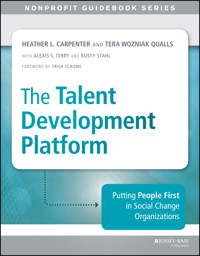
Putting People First in Social Change Organizations The Talent Development Platform is about results driven talent development for social change. Written by seasoned nonprofit experts, this book provides a holistic process for creating an in-house training and talent development program. The Talent Development Platform offers organizations the tools for ensuring their professional development systems are successful through regular feedback loops, tailored for learning styles, and specific to their organization. Detailed case studies provide insight into the strategies used by organizations that have implemented the Talent Development Platform, and interviews with experts in the field give readers a handle on the most current thinking. Robust resource guides facilitate the talent development process, and online access to the Talent Development Platform and assessments help streamline the workflow. Social change organizations make the most of limited resources, but often overlook developing the talent they already have. This book gives readers a plan for finding and nurturing their internal talent to reduce turnover and improve organizational efficiency. More specifically the book helps organizations: * Develop organizational, department, and position specific competencies. * Create and revise job descriptions. * Assess staff and volunteer proficiency levels with created competencies. * Determine staff and volunteer learning styles. * Establish professional development goals and objectives tied to strategic goals. * Implement professional development with on the job learning, mentoring, and training. * Calculate a return on talent investment. * Evaluate talent development implementation and proficiency level changes. Implementing the Talent Development Platform provides organizations with tangible benefits in the form of lower turnover and greater output (without the burnout) from employees and volunteers, as well as intangible benefits that make organizations more attractive to top talent.
Sie lesen das E-Book in den Legimi-Apps auf:
Seitenzahl: 682
Veröffentlichungsjahr: 2015
Ähnliche


















Table of Contents
Title Page
Copyright
The Jossey-Bass Nonprofit Guidebook Series
Other Titles in the Jossey-Bass Guidebook Series
List of Tables, Figures, and Exhibits
Tables
Figures
Exhibits
Foreword
Preface
Acknowledgments
About the Authors
Introduction
Make the Investment Now
Social Change Organizations
Professional Development for Changemakers
Who Is This Book For?
Focusing on Four Types of Organizations
What Is This Book About?
Terms Used in This Book
Chapter 1: Why Talent Development?
The Case for Talent Development in Social Change
The Return on Your Investment
How Adults Learn and Why It Matters
The Talent Development Platform Overview
Creating an Effective Talent Development System
Conclusion
Chapter 2: The Organizational Learning Assessment
Creation of the Organizational Learning Assessment
The Importance of Being Ready
Why Organizational
Benefits of the Assessment
Administering the Assessment
Scoring the Assessment
What If You Aren't Ready?
The Organizational Learning Assessment in Practice
Conclusion
Chapter 3: Social Change Competencies
What Are Competencies and Why Are They Important?
Our Competency Development Process
The Ten Core Social Change Competencies
Creating Sub-competencies for Your Organization
Conclusion
Chapter 4: Creating Job Descriptions
Conclusion
Chapter 5: Mapping Competencies and Proficiency Levels to Job Descriptions
The Importance of Accurate Job Descriptions
Proficiency Level Descriptions and Action Words
The Proficiency Mapping Process
Revising Job Descriptions
Proficiency Mapping in Practice
Resources
Conclusion
Chapter 6: The Individual Professional Development Assessment
About the Individual Professional Development Assessment
Administering the Assessment
Interpreting IPDA Results and Creating the Talent Map
Reviewing and Interpreting IPDA Results
The Talent Map and IPDA in Practice
Conclusion
Chapter 7: The Individual Learning Styles Assessment
About the Individual Learning Styles Assessment
Benefits of Administering the Individual Learning Styles Assessment
Administering the Individual Learning Styles Assessment
The Individual Learning Styles Assessment
The Learning Styles Assessment in Practice
Conclusion
Chapter 8: Developing Organizational Goals and Setting Objectives
Preparing for Goal Setting
The Ground Rules
Reviewing Strategic Goals and Setting Professional Development Goals
Structuring Objectives for Each Realm of Learning
Professional Development and Training
Departmental Professional Development Objectives
Finalizing Your Talent Development Platform
Goals and Objectives in Practice
Conclusion
Chapter 9: Setting Individual Goals and Objectives
Preparing for Individual Goal Setting
Setting Individual Goals and Objectives
Analyzing the IPDA and ILSA Prior to Goal Setting
Connecting Learning Activities to Goals and Objectives
Meeting with Supervisees
Finalizing Individual Talent Development Platforms
Individual Goals and Objectives in Practice
Conclusion
Chapter 10: Implementing the Plan
Implementation Best Practices
Resources and Tools for Implementation
Overcoming Barriers to Implementation
Implementation in Practice
Conclusion
Chapter 11: Organizational Evaluation and Performance Assessment
The Evaluation Process
Reassessing Your Talent Map
Resetting Professional Development Goals
Assessing the Talent Development Process
Calculating Your Return on Investment
Evaluation in Practice
Conclusion
Guide 1: Third-Party Professional Development Options
Guide 2: Talent Investing: Raising and Granting Funds to Develop Social Change Leadership: Raising and Granting Funds to Develop Social Change Leadership
Talent Philanthropy
Fundraising for Talent
Funding Talent Development for Grantees
Conclusion
Guide 3: A Practical Guide on Intercultural Competence for Nonprofit Managers
Part A: Framing Intercultural Competence in Your Work
Part B: Facilitating Intercultural Competence in Your Organization
References
Introduction
Chapter 1: Why Talent Development?
Chapter 2: The Organizational Learning Assessment
Chapter 3: Social Change Competencies
Chapter 4: Creating Job Descriptions
Chapter 5: Mapping Competencies and Proficiency Levels to Job Descriptions
Chapter 6: The Individual Professional Development Assessment
Chapter 7: The Individual Learning Styles Assessment
Chapter 8: Developing Organizational Goals and Setting Objectives
Chapter 9: Setting Individual Goals and Objectives
Chapter 10: Implementing the Plan
Chapter 11: Organizational Evaluation and Performance Assessment
Guide 2: Talent Investing: Raising and Granting Funds to Develop Social Change Leadership
Guide 3: A Practical Guide on Intercultural Competence for Nonprofit Managers
Index
End User License Agreement
Pages
v
vi
1
2
3
4
5
6
7
8
9
10
11
12
13
14
15
16
17
18
19
20
21
22
23
24
25
26
27
28
30
29
31
32
33
34
35
36
37
38
39
40
41
42
43
55
44
45
46
47
48
49
50
51
52
53
54
56
57
58
59
60
61
63
64
65
66
67
68
69
70
71
72
73
74
75
76
77
78
79
80
82
81
83
84
85
86
87
88
89
90
91
92
93
94
95
96
97
98
100
101
99
102
103
104
105
106
107
108
109
110
111
112
113
114
115
116
117
118
119
120
121
122
123
124
125
126
127
128
129
130
131
133
134
135
136
137
138
139
140
141
142
143
144
145
146
147
148
149
150
151
152
153
154
155
156
157
158
159
160
161
162
163
164
165
166
167
168
169
170
171
172
176
177
178
179
180
181
182
183
173
174
175
184
185
186
187
188
189
190
191
192
193
195
196
197
198
199
200
201
202
203
204
205
206
207
208
209
210
211
212
213
214
215
216
217
218
219
220
221
222
223
224
225
226
227
229
228
230
231
233
234
235
236
237
238
239
240
241
242
243
244
245
246
247
248
249
250
251
252
253
254
255
256
257
258
259
261
262
263
264
265
266
267
268
269
270
271
272
274
273
275
276
277
278
279
280
281
282
283
284
285
286
287
288
289
290
291
293
294
295
296
297
298
299
302
300
301
303
304
305
306
307
308
309
310
311
312
313
314
315
316
317
318
319
320
321
322
32
324
325
326
327
328
329
330
331
332
333
334
335
336
337
338
339
340
341
342
343
344
345
346
347
348
349
350
356
357
351
352
353
354
355
358
359
360
361
362
363
364
365
366
367
368
369
370
371
372
373
374
375
376
377
378
379
380
381
382
383
384
385
386
387
389
390
388
391
392
393
394
395
396
398
399
397
400
401
402
403
405
406
407
408
409
410
411
412
413
414
415
416
417
418
419
420
421
422
423
424
425
426
427
428
429
430
431
432
433
434
435
436
437
438
439
440
441
442
443
444
445
446
447
448
449
450
451
452
453
454
455
456
457
458
459
460
461
462
463
464
465
466
467
468
469
470
471
472
473
474
475
476
477
478
479
480
481
482
483
484
485
486
487
488
489
490
491
492
493
494
495
496
497
498
499
500
501
502
503
504
505
506
507
508
509
510
511
512
513
514
515
516
517
518
519
520
521
522
523
524
525
526
527
528
529
530
531
532
Guide
Table of Contents
Cover
Foreword
Preface
Introduction
Begin Reading
List of Illustrations
Figure I.1
Figure 1.1
Figure 1.2
Figure 1.3
Figure 1.4
Figure 2.1
Figure 2.2
Figure 2.3
Figure 2.4
Figure 2.5
Figure 2.6
Figure 2.7
Figure 3.1
Figure 4.1
Figure 6.1
Figure 6.2
Figure 6.3
Figure 6.4
Figure 6.5
Figure 6.6
Figure 6.7
Figure 6.8
Figure 6.9
Figure 7.1
Figure 7.2
Figure 7.3
Figure 7.4
Figure 7.5
Figure 7.6
Figure 8.1
Figure 8.2
Figure 8.3
Figure 8.4
Figure 8.5
Figure 8.6
Figure 8.7
Figure 8.8
Figure 8.9
Figure 8.10
Figure 9.1
Figure 9.2
Figure 9.3
Figure 9.4
Figure 9.5
Figure 10.1
Figure 11.1
Figure 11.2
Figure 11.3
Figure 11.4
Figure 11.5
Figure 11.6
Figure 11.7
Figure 11.8
Figure 11.9
List of Tables
Table 3.1
Table 4.1
Table 4.2
Table 5.1
Table 5.2
Table 5.3
Table 5.4
Table 5.5
Table 5.6
Table 5.7
Table 5.8
Table 5.9
Table 5.10
Table 5.11
Table 5.12
Table 5.13
Table 6.1
Table 6.2
Table 6.3
Table 6.4
Table 6.5
Table 6.6
Table 6.7
Table 6.8
Table 6.9
Table 6.10
Table 6.11
Table 6.12
Table 6.13
Table 6.14
Table 6.15
Table 6.16
Table 6.17
Table 6.18
Table 6.19
Table 7.1
Table 7.2
Table 7.3
Table 7.4
Table 7.5
Table 7.6
Table 7.7
Table 7.8
Table 7.9
Table 7.10
Table 7.11
Table 7.12
Table 7.13
Table 7.14
Table 7.15
Table 7.16
Table 8.1
Table 8.2
Table 8.3
Table 9.1
Table 10.1
Table 10.2
Table 10.3
Table 10.4
Table 10.5
Table 10.6
Table 10.7
Table 10.8
Table 10.9
Table 11.1
Table 11.2
Table 11.3
THE TALENT DEVELOPMENT PLATFORM
PUTTING PEOPLE FIRST IN SOCIAL CHANGE ORGANIZATIONS
HEATHER L. CARPENTER
TERA WOZNIAK QUALLS
with ALEXIS S. TERRY and RUSTY STAHL
Foreword by Trish Tchume
Cover design: Wiley
Cover images: Abstract Background © iStock.com/Studio-Pro, Glitter Background © iStock.com/zokara
Copyright © 2015 by Heather L. Carpenter and Tera Wozniak Qualls. All rights reserved.
Published by Jossey-Bass
A Wiley Brand
One Montgomery Street, Suite 1200, San Francisco, CA 94104-4594—www.josseybass.com
Certain pages of this book may be customized and reproduced. The reproducible pages are designated by the appearance of the following copyright notice at the foot of each page:
The Talent Development Platform: Putting People First in Social Change Organizations.
Copyright © 2015 by Heather L. Carpenter and Tera Wozniak Qualls. All rights reserved.
This notice must appear on all reproductions as printed.
No part of this publication may be reproduced, stored in a retrieval system, or transmitted in any form or by any means, electronic, mechanical, photocopying, recording, scanning, or otherwise, except as permitted under Section 107 or 108 of the 1976 United States Copyright Act, without either the prior written permission of the publisher, or authorization through payment of the appropriate per-copy fee to the Copyright Clearance Center, Inc., 222 Rosewood Drive, Danvers, MA 01923, 978-750-8400, fax 978-646-8600, or on the Web at www.copyright.com. Requests to the publisher for permission should be addressed to the Permissions Department, John Wiley & Sons, Inc., 111 River Street, Hoboken, NJ 07030, 201-748-6011, fax 201-748-6008, or online at www.wiley.com/go/permissions.
Limit of Liability/Disclaimer of Warranty: While the publisher and author have used their best efforts in preparing this book, they make no representations or warranties with respect to the accuracy or completeness of the contents of this book and specifically disclaim any implied warranties of merchantability or fitness for a particular purpose. No warranty may be created or extended by sales representatives or written sales materials. The advice and strategies contained herein may not be suitable for your situation. You should consult with a professional where appropriate. Neither the publisher nor author shall be liable for any loss of profit or any other commercial damages, including but not limited to special, incidental, consequential, or other damages. Readers should be aware that Internet Web sites offered as citations and/or sources for further information may have changed or disappeared between the time this was written and when it is read.
Jossey-Bass books and products are available through most bookstores. To contact Jossey-Bass directly call our Customer Care Department within the U.S. at 800-956-7739, outside the U.S. at 317-572-3986, or fax 317-572-4002.
Wiley publishes in a variety of print and electronic formats and by print-on-demand. Some material included with standard print versions of this book may not be included in e-books or in print-on-demand. If this book refers to media such as a CD or DVD that is not included in the version you purchased, you may download this material at http://booksupport.wiley.com. For more information about Wiley products, visit www.wiley.com.
Library of Congress Cataloging-in-Publication Data
Carpenter, Heather L.
The talent development platform: putting people first in social change organizations / Heather L. Carpenter and Tera Wozniak
Qualls; with Alexis S. Terry and Rusty Stahl; foreword by Trish Tchume. – First edition.
pages cm. – (The Jossey-Bass guidebook series)
Includes bibliographical references and index.
ISBN 978-1-118-87388-5 (pbk.)
ISBN 978-1-118-87384-7 (pdf) – ISBN 978-1-118-87395-3 (epub)
1. Nonprofit organizations–Personnel management. 2. Manpower planning. I. Qualls, Tera Wozniak, date- II. Title.
HD62.6.C2665 2015
658.3′01—dc23
2014036903
FIRST EDITION
The Jossey-Bass Nonprofit Guidebook Series
The Jossey-Bass Nonprofit Guidebook Series provides new to experienced nonprofit professionals and volunteers with the essential tools and practical knowledge they need to make a difference in the world. From hands-on workbooks to step-by-step guides on developing a critical skill or learning how to perform an important task or process, our accomplished expert authors provide readers with the information required to be effective in achieving goals, mission, and impact.
Other Titles in the Jossey-Bass Guidebook Series
Strategic Communications for Nonprofits: A Step-by-Step Guide to Working with the Media
, 2nd Edition, Kathy Bonk, Emily Tynes, Henry Griggs, Phil Sparks
The Executive Director's Guide to Thriving as a Nonprofit Leader
, 2nd Edition, Mim Carlson, Margaret Donohoe
The Budget-Building Book for Nonprofits: A Step-by-Step Guide for Managers and Boards
, 2nd Edition, Murray Dropkin, Jim Halpin, Bill La Touche
How to Write Successful Fundraising Appeals
, 3rd Edition, Mal Warwick
Content Marketing for Nonprofits: A Communications Map for Engaging Your Community, Becoming a Favorite Cause, and Raising More Money
, Kivi\hb Leroux Miller
The Nonprofit Marketing Guide: High-Impact, Low-Cost Ways to Build Support for Your Good Cause
, Kivi Leroux Miller
Winning Grants Step by Step
, 4th Edition, Tori O'Neal-McElrath
Powered by Pro Bono
, Taproot Foundation
List of Tables, Figures, and Exhibits
Tables
3.1 Competency Components and Definitions
4.1 Job Description Components
4.2 Executive Director Job Responsibilities, by Competency Area
5.1 Proficiency Scale
5.2 Advocacy and Public Policy Job Responsibilities: Executive Director, Small Grassroots Organization
5.3 Job Responsibilities Separated by Social Change Competency Category: Executive Director, Small Grassroots Organization
5.4 Realigned Job Responsibilities: Executive Director, Small Grassroots Organization
5.5 Position Proficiency Levels: Executive Director, Small Grassroots Organization
5.6 Proficiency Mapping Results: Volunteer-Run Organization
5.7 Proficiency Mapping: President/Board Chair, Volunteer-Run Organization
5.8 Proficiency Mapping Results: Small Grassroots Organization
5.9 Proficiency Mapping Results: Midsized Organization
5.10 Proficiency Level Comparisons between Development Coordinator and Development Director
5.11 Proficiency Mapping: Development Coordinator, Midsized Organization
5.12 Proficiency Mapping Results: Grantmaking Organization
5.13 Proficiency Mapping: Program Associate, Grantmaking Organization
6.1 IPDA Scores: Small Grassroots Organization
6.2 shows the final calculations in a more simplified format for each competency category.
6.3 Talent Map Review: Volunteer-Run Organization
6.4 Proficiency Strengths: President/Board Chair, Volunteer-Run Organization
6.5 Position Proficiency Gap Analysis: President/Board Chair, Volunteer-Run Organization
6.6 Desired Proficiency Gap Analysis: President/Board Chair, Volunteer-Run Organization
6.7 Talent Map Review: Small Grassroots Organization
6.8 Proficiency Strengths: Executive Director, Small Grassroots Organization
6.9 Proficiency Deficiencies: Executive Director, Small Grassroots Organization
6.10 Position Proficiency Gap Analysis: Executive Director, Small Grassroots Organization
6.11 Desired Proficiency Gap Analysis: Executive Director, Small Grassroots Organization
6.12 Talent Map Review: Midsized Organization
6.13 Proficiency Strengths: Development Coordinator, Midsized Organization
6.14 Position Proficiency Gap Analysis: Development Coordinator, Midsized Organization
6.15 Talent Map Review: Grantmaking Organization
6.16 Proficiency Strengths: Program Associate, Grantmaking Organization
6.17 Proficiency Deficiencies: Program Associate, Grantmaking Organization
6.18 Position Proficiency Gap Analysis: Program Associate, Grantmaking Organization
6.19 Desired Proficiency Gap Analysis: Program Associate, Grantmaking Organization
7.1 Learning Styles and Descriptions
7.2 Learning Styles Assessment: Question 3 Scores, Executive Director
7.3 Learning Styles Assessment: Question 3 Scores, Small Grassroots Organization
7.4 Learning Styles Assessment: Section 1 Combined Average Scores per Question
7.5 Training Location Preferences: Executive Director, Small Grassroots Organization
7.6 Training Location Preferences: Small Grassroots Organization
7.7 Training Format Preferences: Small Grassroots Organization
7.8 Training Time Preferences: Small Grassroots Organization
7.9 Training Day Preferences: Small Grassroots Organization
7.10 Training Duration Preferences: Small Grassroots Organization
7.11 Travel to Training Preferences: Small Grassroots Organization
7.12 Learning Activities Based on Learning Styles
7.13 Learning Styles: President/Board Chair, Volunteer-Run Organization
7.14 Learning Styles: Executive Director, Small Grassroots Organization
7.15 Learning Styles: Development Coordinator, Midsized Organization
7.16 Learning Styles: Program Associate, Grantmaking Organization
8.1 Learning Styles and Professional Development Preferences
8.2 Types of Mentoring
8.3 Examples of Potentially Important Personality Variables at Different Phases of the Mentoring Relationship
9.1 Individual Objectives by Learning Realm
10.1 Time and Cost Estimates: Creating the Talent Development Platform, Small Grassroots Organization
10.2 Time and Budgeted Costs: Implementing the Talent Development Platform, Small Grassroots Organization
10.4 Time and Cost Estimates: Creating the Talent Development Platform, Volunteer-Run Organization
10.5 Time and Budgeted Costs: Implementing the Talent Development Platform, Volunteer-Run Organization
10.7 Time and Budgeted Costs: Implementing the Talent Development Platform, Midsized Organization
10.9 Time and Budgeted Costs: Implementing the Talent Development Platform, Grantmaking Organization
11.1 Organizational Learning Assessment Results Comparison
11.2 Tangible Benefit Calculations
11.3 Net Benefits of Talent Development Investment, Small Grassroots Organization
Figures
I.1 Overview of the Talent Development Platform Process
1.1 The Talent Development Platform Process
1.2 Blank Talent Development Platform
1.3 Blank Individual Talent Development Platform
1.4 Setup Checklist
2.1 Organizational Learning Assessment Checklist
2.2 Organizational Learning Assessment Implementation Readiness Scoring Ranges
2.3 Organizational Learning Assessment Scores, Small Grassroots Organization
2.4 Volunteer-Run Organization Scores
2.5 Small Grassroots Organization Scores
2.6 Midsized Organization Scores
2.7 Grantmaking Organization Scores
3.1 Competency Network Map
4.1 Job Description Mapping Checklist
6.1 IPDA Checklist
6.2 Talent Map: Small Grassroots Organization
6.3 Talent Map: Volunteer-Run Organization
6.4 IPDA Results: President/Board Chair, Volunteer-Run Organization
6.5 IPDA Results: Executive Director, Small Grassroots Organization
6.6 Talent Map: Midsized Organization
6.7 IPDA Results: Development Coordinator, Midsized Organization
6.8 Talent Map: Grantmaking Organization
6.9 IPDA Results: Program Associate, Grantmaking Organization
7.1 ILSA Checklist
7.2 Learning Styles Map: Small Grassroots Organization
7.3 Learning Styles Map: Volunteer-Run Organization
7.4 Learning Styles Map: Small Grassroots Organization
7.5 Learning Styles Map: Midsized Organization
7.6 Learning Styles Map: Grantmaking Organization
8.1 Organizational Goals and Objectives Checklist
8.2 Talent Development Platform: Small Grassroots Organization
8.3 Talent Development Platform: Volunteer-Run Organization
8.4 Goals and Objectives: Volunteer-Run Organization
8.5 Talent Development Platform: Small Grassroots Organization
8.6 Goals and Objectives: Small Grassroots Organization
8.7 Goals and Objectives: Midsized Organization
8.8 Talent Development Platform: Midsized Organization
8.9 Talent Development Platform: Grantmaking Organization
8.10 Goals and Objectives: Grantmaking Organization
9.1 Individual Goals and Objectives Checklist
9.2 Individual Talent Development Platform: Board Chair, Volunteer-Run Organization
9.3 Individual Talent Development Platform: Executive Director, Small Grassroots Organization
9.4 Individual Talent Development Platform: Development Coordinator, Midsized Organization
9.5 Individual Talent Development Platform: Program Associate, Grantmaking Organization
10.1 Implementation Overview
11.1 Evaluation and Performance Assessment Steps
11.2 Before and After Comparison: Organizational Learning Assessment, Volunteer-Run Organization
11.3 Before and After Comparison: Talent Map, Volunteer-Run Organization
11.4 Before and After Comparison: Organizational Learning Assessment, Small Grassroots Organization
11.5 Before and After Comparison: Talent Map, Small Grassroots Organization
11.6 Before and After Comparison: Organizational Learning Assessment, Midsized Organization
11.7 Before and After Comparison: Talent Map, Midsized Organization
11.8 Before and After Comparison: Organizational Learning Assessment, Grantmaking Organization
11.9 Before and After Comparison: Talent Map, Grantmaking Organization
Exhibits
I.1 Professional Development for Volunteers
1.1 Turnover Ratios
1.2: Professional Development for Volunteers and Boards
2.1 Organizational Learning Environment Domains
2.2 Organizational Learning Assessment E-mail Introduction Template
2.3 The Organizational Learning Assessment
2.4 Sample Score Sheet
2.5 Organizational Learning Assessment Scoring
3.1 Competency Research
3.2 Emotional Intelligence & Inter-cultural Competence
3.3 Sub-competency Worksheet
4.1 Sample Job Description (Before Proficiency Mapping)
4.2 Sample Job Description (Before Proficiency Mapping)
4.3 Sample Job Description (Before Proficiency Mapping)
4.4 Sample Job Description (Before Proficiency Mapping)
4.5 Our Philosophy on Compensation
4.6 Do We Have to Do This in a Volunteer-Run Organization Too?
4.7 Job Analysis Form
4.8 Sample Responsibilities of a Board Chair
4.9 Sample Responsibilities of a Board Treasurer
4.10 Sample Responsibilities of an Executive Director
4.11 Sample Responsibilities of a Chief Operating Officer / Operations Manager
4.12 Sample Responsibilities of a Human Resources Manager
4.13 Sample Responsibilities of a Development Director
4.14 Sample Responsibilities of a Development Coordinator
4.15 Sample Responsibilities of a Program Manager
4.16 Sample Responsibilities of a Volunteer Coordinator
4.17 Sample Responsibilities of an Administrative Assistant
4.18 Sample Responsibilities of a Marketing Coordinator
4.19 Sample Responsibilities of a Program Officer
4.20 Sample Responsibilities of a Program Associate
4.21 Sample Responsibilities of a Director of Donor Services
4.22 Sample Responsibilities of an Evaluator
5.1 Bloom's Learning Taxonomy
5.2 Adding Job Responsibilities
5.3 Identifying Action Words
5.4 Realigning the Proficiency Level
5.5 Sample Job Description (Realigned)
5.6 Sample Job Description (Realigned)
5.7 Sample Job Description (Realigned)
5.8 Sample Job Description (Realigned)
5.9 Position Mapping Form
5.10 Proficiency Mapping Worksheet across a Department or an Organization
6.1 The Individual Professional Development Assessment
6.2 Administering the IPDA: Sample E-mail Template
7.1 ILSA E-mail Invitation Template
7.2 The Individual Learning Styles Assessment
8.1 Goal Setting: Small Grassroots Organization
8.2 Setting Department Goals in Large Organizations
8.3 On-the-Job Learning Objectives: Small Grassroots Organization
8.4 Identifying Mentors: Small Grassroots Organization
8.5 Training Options: Small Grassroots Organization
8.6 Proficiency Gaps: Small Grassroots Organizations
9.1 Individual Goal Setting: Executive Director, Small Grassroots Organization
9.2 Goals and Objectives Tied to Mission versus Career Building
9.3 Objectives for Leadership
10.1 Salary Adjustments: Small Grassroots Organization
10.2 Plan for On-the-Job Learning
10.3 On-the-Job Assignment Reflection Questions
10.4 Tips for Mentors and Mentees
10.5 Sample Mentoring Timeline
10.6 Sample Mentor-Mentee Agreement
10.7 Sample Peer Group Agenda
10.8 Sample Training Evaluation Form
10.9 Implementation Timeline: Volunteer-Run Organization
10.10 Implementation Timeline: Small Grassroots Organization
10.11 Implementation Timeline: Midsized Organization
10.12 Implementation Timeline: Grantmaking Organization
11.1 Assessing the Performance of Board Members
11.2 The Individual Professional Development Assessment—Evaluation Stage
11.3 Job Analysis Form
11.4 Employee Performance Interventions
11.5 Turnover Ratios
11.6 Tangible Benefits of Talent Development Platform: Small Grassroots Organization
11.7 Staff Costs: Talent Development Platform, Small Grassroots Organization
11.8 Return on Investment: Volunteer-Run Organization
11.9 Return on Investment: Small Grassroots Organization
11.10 Return on Investment: Midsized Organization
11.11 Return on Investment: Grantmaking Organization
G.1 Self-Assessment of Organizational Talent Development
G.2 Self-Assessment for Funders: Preparedness for Investing in Grantee Talent
G.3 Self-Assessment for Funders: Practicing Talent Investment Internally
G.1 Intercultural Competence Self-Assessment
G.2 Tool 1: Holding Up the Mirror
G.3 Tool 2: Staying Open and Confident through Cultural Conversations
G.4 Tool 3: Developing Strategies to Overcome Objections to Intercultural Competency
G.5 Tool 4: Intercultural Competency Behaviors of an Effective Social Change Manager
Foreword
In 2011, my colleague Dan Dobin and I published a report based on a survey of 1,100 respondents within the Young Nonprofit Professionals Network (YNPN). That year we asked young professionals to take a look at five often-cited strategies for developing and retaining talent in the nonprofit sector:
Nonprofits should offer more competitive compensation.
Nonprofits should invest in building “bench strength.”
Nonprofits should engage in inclusive succession planning.
Nonprofits should prioritize diversity.
Lesen Sie weiter in der vollständigen Ausgabe!
Lesen Sie weiter in der vollständigen Ausgabe!
Lesen Sie weiter in der vollständigen Ausgabe!
Lesen Sie weiter in der vollständigen Ausgabe!
Lesen Sie weiter in der vollständigen Ausgabe!
Lesen Sie weiter in der vollständigen Ausgabe!
Lesen Sie weiter in der vollständigen Ausgabe!
Lesen Sie weiter in der vollständigen Ausgabe!
Lesen Sie weiter in der vollständigen Ausgabe!
Lesen Sie weiter in der vollständigen Ausgabe!
Lesen Sie weiter in der vollständigen Ausgabe!
Lesen Sie weiter in der vollständigen Ausgabe!
Lesen Sie weiter in der vollständigen Ausgabe!
Lesen Sie weiter in der vollständigen Ausgabe!
Lesen Sie weiter in der vollständigen Ausgabe!
Lesen Sie weiter in der vollständigen Ausgabe!
Lesen Sie weiter in der vollständigen Ausgabe!
Lesen Sie weiter in der vollständigen Ausgabe!
Lesen Sie weiter in der vollständigen Ausgabe!
Lesen Sie weiter in der vollständigen Ausgabe!
Lesen Sie weiter in der vollständigen Ausgabe!




