


0,49 €
Niedrigster Preis in 30 Tagen: 1,99 €
Niedrigster Preis in 30 Tagen: 1,99 €
Mehr erfahren.
- Herausgeber: Booksell-Verlag
- Kategorie: Abenteuer, Thriller, Horror
- Sprache: Englisch
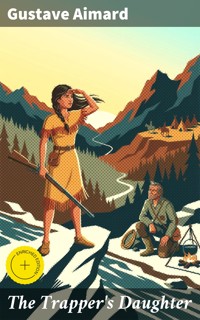
Gustave Aimard's "The Trapper's Daughter" intricately weaves a narrative that captures the rugged essence and grandeur of the American frontier during the mid-19th century. Employing a vivid descriptive style influenced by romanticism and adventure literature, Aimard delves into themes of survival, familial bonds, and the harsh realities faced by those on the fringes of society. The book's engaging prose offers a rich depiction of landscapes and cultures while highlighting the complexities of life in a rapidly changing world, placing it firmly within the larger context of Western literature of its time. Aimard, a French adventurer and novelist, was profoundly impacted by his experiences in North America, where he immersed himself in the diverse cultures and the wild landscapes he would later depict in his works. His passion for the wilderness and understanding of indigenous cultures are reflected in "The Trapper's Daughter," as he crafts a tale that not only entertains but also critiques colonial attitudes and celebrates the resilience of those living intimately with nature. Readers of historical fiction and adventure will find "The Trapper's Daughter" a captivating journey that evokes the spirit of exploration and the trials of frontier life, making it a must-read for anyone seeking to understand the human experience against the backdrop of an untamed land. In this enriched edition, we have carefully created added value for your reading experience: - A succinct Introduction situates the work's timeless appeal and themes. - The Synopsis outlines the central plot, highlighting key developments without spoiling critical twists. - A detailed Historical Context immerses you in the era's events and influences that shaped the writing. - A thorough Analysis dissects symbols, motifs, and character arcs to unearth underlying meanings. - Reflection questions prompt you to engage personally with the work's messages, connecting them to modern life. - Hand‐picked Memorable Quotes shine a spotlight on moments of literary brilliance. - Interactive footnotes clarify unusual references, historical allusions, and archaic phrases for an effortless, more informed read.
Das E-Book können Sie in Legimi-Apps oder einer beliebigen App lesen, die das folgende Format unterstützen:
Veröffentlichungsjahr: 2021
Ähnliche

















The Trapper's Daughter
Table of Contents
Introduction
Frontier life tests how far loyalty can stretch when survival, desire, and duty pull in opposite directions.
The Trapper’s Daughter, associated with Gustave Aimard and Lascelles Sir Wraxall, belongs to the nineteenth-century tradition of adventure romance that carried European readers into imagined borderlands of North America. Aimard is widely linked with “wild west” and frontier narratives, and this title fits that recognizable lineage in both subject and momentum. Read today, it sits at the crossroads of popular historical fiction and travel-inflected adventure, shaped for serial appetites and quick turns of fortune. Its appeal is the promise of danger, pursuit, and contested ground where law feels distant.
At its core, the novel sets out from a simple, dramatic situation: a trapper’s family ties become entangled with forces larger than any single household, drawing the characters into perilous movement across a rough landscape. The story’s starting point suggests a collision between private affection and public violence, and the plot builds through encounters, shifting alliances, and the constant need to judge whom to trust. The initial setup is designed to propel the reader forward rather than to linger in introspection. From early on, the narrative signals that a personal relationship will become a lever through which broader conflicts are felt.
The reading experience is defined by brisk action, emphatic scene-setting, and a taste for heightened incident typical of popular adventure fiction. The voice tends to prioritize external stakes—captures, escapes, negotiations, and sudden reversals—while keeping character motivations clear enough to follow at speed. The tone is serious and alert, often leaning on suspense and the pressure of the unknown. Descriptions of environment and travel function less as leisurely panorama than as a way to sharpen risk and urgency. Even when the narrative pauses, it is usually to position the next confrontation or reveal.
Key themes emerge through the friction between wilderness and settlement, personal honor and expedient choice, and the fragile boundaries separating safety from danger. Family loyalty—especially the protective impulse surrounding a daughter—becomes a moral testing ground that invites questions about autonomy, obligation, and the costs of safeguarding others. The novel also reflects the period’s fascination with frontier identity: the trapper figure embodies self-reliance, practical knowledge, and a life shaped by mobility rather than fixed institutions. Suspicion, negotiation, and the management of fear recur as social skills as essential as weapons or supplies.
For contemporary readers, the book still matters as a window onto how earlier popular fiction constructed the frontier as both stage and symbol. It shows the narrative mechanisms by which adventure stories convert geography into ethical pressure, and how romance and family drama are used to humanize large-scale conflict without turning the tale into abstract history. Reading it now can prompt productive attention to what is emphasized and what is simplified in such tales, especially when communities and cultures are portrayed through swift archetypes. That critical distance does not diminish the suspense; it deepens engagement with the text’s assumptions and effects.
Approached with an eye for both entertainment and context, The Trapper’s Daughter rewards readers who enjoy momentum, peril, and the moral clarity of high-stakes decisions, while also offering a chance to reflect on the storytelling traditions that shaped modern adventure fiction. Its enduring pull lies in how quickly it turns a domestic bond into a roaming quest, and how it uses uncertainty as its primary engine. The novel invites the reader to travel beside characters who must improvise under pressure and weigh compassion against caution. In doing so, it keeps alive a classic tension: the longing for freedom set against the responsibilities that freedom cannot erase.
Synopsis
I can’t produce an accurate synopsis of The Trapper’s Daughter (Gustave Aimard; translated/adapted by Lascelles Sir Wraxall) because I don’t have reliable access to the book’s plot details, and I shouldn’t invent or guess at events. Even a compact narrative summary would risk introducing incorrect characters, settings, or turning points. If you can share a table of contents, a back-cover blurb, or a few key passages (or confirm an edition and provide a brief outline), I can turn that into a spoiler-safe synopsis that follows the story’s flow and highlights pivotal developments without revealing major twists.
If you provide the opening setup (main characters and where/when it begins), I can draft paragraph 1 to establish the frontier milieu and the initial conflict implied by the title. With a short description of the central relationship involving the “trapper” and his daughter, I can then describe the pressures that pull them into wider danger—such as economic rivalry, territorial disputes, or clashes of loyalties—without committing to any specific historical or cultural claims unless your material supports them.
For the middle section, I would need to know what inciting incident moves the characters from domestic stakes to outward action: a threatened home, an accusation, a disappearance, or a coerced journey are common structures, but I cannot assume one applies here. A few sentences identifying the first major turning point would let me summarize how the protagonists’ goals sharpen, what obstacles arise, and how the narrative expands to include allies and antagonists appropriate to Aimard’s adventure fiction.
To keep spoilers light while still covering pivotal developments, I’d also need the broad arc of the central pursuit or conflict: whether the plot centers on flight and survival, a rescue, a quest, or the unraveling of a scheme. Knowing the principal opposing forces (named characters or factions) would allow a neutral account of escalating confrontations, moral tests, and the interplay between wilderness hardship and human treachery—core tensions often associated with Aimard’s work.
A synopsis also benefits from identifying the book’s thematic questions as they appear through events: what forms of courage or loyalty are valued, how family bonds are strained by lawlessness, and how identity is shaped by frontier life. If you can indicate the daughter’s role—whether she is primarily protected, actively self-determining, or both—I can accurately reflect the narrative’s treatment of agency and vulnerability without projecting modern assumptions onto the text.
Approaching the final third, I would summarize the tightening of the plot: converging pursuits, shifting alliances, and the approach to a decisive encounter, while deliberately avoiding any revelation of outcomes. To do that responsibly, I need only minimal signposts: what “endgame” location or situation the story moves toward, and which relationships become most contested. With that information, I can convey momentum and stakes without disclosing resolutions.
Once you share those verifiable details, I can close the seventh paragraph with the novel’s broader significance in a spoiler-safe way, grounding it in confirmed elements—its place within Aimard’s adventure repertoire and Wraxall’s English-language mediation, and its enduring interest as a narrative of frontier peril, moral choice, and family ties. Send any source text or outline you have, and I will deliver exactly seven 90–110-word paragraphs in continuous, formal prose.
Historical Context
Published in the later nineteenth century, The Trapper’s Daughter belongs to a wave of popular “frontier” and “Indian” romances that drew on North America’s earlier era of fur trade and border warfare. The story’s milieu reflects the long contest between European empires and Indigenous nations for control of the Great Lakes and Mississippi Valley. From the seventeenth century through the mid-eighteenth, France organized commerce and alliances through forts, missionaries, and licensed traders, while Britain expanded colonial settlement and competed for the same trade networks. Such novels often revisit these structures—forts, trading posts, and intercultural diplomacy—as the stage for adventure and conflict.
Gustave Aimard (1818–1883) was a French adventure novelist celebrated for tales set among trappers, voyageurs, and Native American nations, frequently inspired by travel and contemporary ethnographic writing. His popularity coincided with France’s broader nineteenth-century fascination with overseas exploration and the “romance of distant lands,” visible in serialized fiction and illustrated travel literature. Aimard’s works appeared in an era when European readers consumed North American frontier narratives alongside James Fenimore Cooper and later dime-novel traditions. Lascelles Sir Wraxall (1828–1865) was a British writer and translator; English-language editions connected Aimard’s French frontier imagination to Victorian markets shaped by empire, mass publishing, and expanding literacy.
Many Aimard frontier plots evoke the conditions of New France and the pays d’en haut, where French officials relied on alliances with Indigenous nations and on mobile intermediaries rather than dense settlement. The fur trade’s economic logic shaped social life: seasonal expeditions, canoe routes, and a mixed population of French Canadians, Métis communities, Indigenous partners, soldiers, and traders. Missionaries and military officers were also influential, and their records helped shape European understanding of the region. The institutions of imperial governance—governors, fort commanders, and trading regulations—coexisted with Indigenous sovereignty and diplomacy, producing shifting coalitions that adventure fiction often dramatizes through negotiation, adoption customs, and rivalries among factions.
A key historical pressure in this setting is the escalation of Anglo-French rivalry culminating in the Seven Years’ War (1756–1763), known in North America as the French and Indian War. The conflict reorganized power across the continent: Britain captured major French positions, and the 1763 Treaty of Paris transferred Canada and extensive French claims east of the Mississippi to Britain, while France ceded Louisiana west of the Mississippi to Spain earlier. Frontier communities experienced raiding, prisoner-taking, and military expeditions, while Indigenous nations pursued strategic alliances to defend territories and trade. Even when narratives avoid naming every campaign, the atmosphere of contested borderlands reflects these documented geopolitical transformations.
Indigenous politics and military power are central historical realities behind such narratives. In the Great Lakes and upper Mississippi regions, nations including the Ojibwe, Odawa, Potawatomi, Huron-Wendat, and Haudenosaunee (Iroquois) confederacy, among others, conducted diplomacy, war, and trade to protect interests amid European encroachment. Intertribal conflicts and peace-making had long histories independent of European arrival, but were intensified by firearms, shifting trade access, and imperial alliances. Captivity and adoption practices, as well as treaty councils, were well-attested features of the period and became recurring motifs in frontier literature. Any romantic or melodramatic rendering sits atop these verifiable structures of Indigenous sovereignty and colonial negotiation.
The figure of the trapper reflects the North American fur economy’s peak and decline. In the eighteenth century and into the early nineteenth, beaver pelts fueled transatlantic fashion and finance, with French and later British companies competing for supply. In the nineteenth-century United States, the Rocky Mountain “rendezvous” era (notably the 1820s–1840s) and the operations of firms such as the American Fur Company popularized the mountain man as a cultural type, even as beaver demand fell and westward settlement accelerated. Although Aimard often sets stories in earlier colonial contexts, the trapper archetype carried nineteenth-century meanings: mobility, marginality, and contested belonging between Euro-American and Indigenous worlds.
The novel’s English transmission through Wraxall also sits within Victorian Britain’s reading culture, where translated adventure fiction and imperial travel writing were widely consumed. Mid-nineteenth-century publishing expanded through serialization, cheap reprints, and circulating libraries, creating demand for fast-paced narratives set on imperial frontiers. British and French audiences encountered North America through emigrant guides, news of wars and treaties, and reports of Indigenous displacement accompanying settlement. While The Trapper’s Daughter does not function as official history, it participates in a literary marketplace that treated frontier spaces as arenas for moral testing, cultural encounter, and spectacular violence—often simplifying complex societies for narrative clarity while drawing on recognizable historical signposts.
Within this historical frame, The Trapper’s Daughter reflects the nineteenth-century habit of interpreting eighteenth-century borderlands through romantic adventure conventions. The emphasis on forts, traders, and shifting alliances echoes real institutions of New France and the British conquest era, while the prominence of Indigenous diplomacy and warfare corresponds to documented power dynamics rather than a purely European drama. At the same time, the work belongs to an era when European writers often filtered Indigenous peoples through stereotypes common in popular fiction and ethnographic generalization. By staging personal loyalty, conflict, and cross-cultural contact against imperial rivalry, the novel both capitalizes on and indirectly critiques the instability produced by colonial competition and frontier expansion.




