


13,99 €
Mehr erfahren.
- Herausgeber: The History Press
- Kategorie: Geisteswissenschaft
- Sprache: Englisch
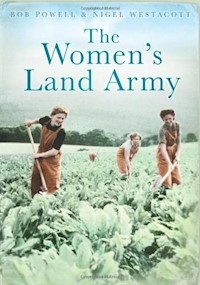
This book brings together a wealth of black and white pictures which together record not only the operations of the WLA but also scenes of the countryside between 1939 and 1950. Drawn from the worldwide albums of many ex-land girls at a time when film was rationed and photography monitored, this collection offers a fascinating insight into the people and places associated with the WLA. Many of these photos have never been published in book form and so offer a unique record of the organisation. Every photo is captioned, providing names and dates where possible, revealing historical anecdotal detail which gives life to the scenes and personalities captured through the camera lens. Presenting training, occupations and the social activities of the Land Army women, this absorbing collection will not only evoke many wartime memories, but will also inspire readers through these images of hope, strength and unity.
Das E-Book können Sie in Legimi-Apps oder einer beliebigen App lesen, die das folgende Format unterstützen:
Veröffentlichungsjahr: 2011
Ähnliche




















ACKNOWLEDGEMENTS
We would like to thank very sincerely the many people who helped with the preparation of this book, most especially those ex-Women’s Land Army ladies who so willingly lent us their photographs to copy and gave so much of their time to helping with and verifying the caption information.
We must also acknowledge our thanks to the Weald & Downland Open Air Museum, whose Women’s Land Army exhibition to mark fifty years from the end of the Second World War brought to our notice the wealth of previously unpublished photographs.
Should we have unknowingly infringed the copyright of any photograph used in this book, we apologize most sincerely, and upon notification will ensure that any future edition will contain full acknowledgement.
CONTENTS
Title Page
Acknowledgements
Introduction
1. Uniform
2. Hostels & Billets
3. Training
4. Handwork
5. Tractor Work
6. Haymaking
7. Harvesting & Threshing
8. Other Jobs
9. Milking & Cattle
10. Horses
11. Sheep & Other Animals
12. The Timber Corps
13. Social Events
14. Rallies & Parades
15. Conclusion
Bibliography
Copyright
A Harvest Festival Land Army Parade in Chichester, West Sussex, 16 November 1945.
INTRODUCTION
The roots of the Women’s Land Army lie in the First World War. It has to be borne in mind that in 1914 50 per cent of the food needed by Britain’s population of 36 million was imported. By 1915 the enemy’s navy had begun to mount a successful blockade of our ports, and the question of a food shortage was already causing concern to Lord Selbourne, the Minister for Agriculture. However, the Prime Minister, H. H. Asquith, said in July of that year that, in his opinion there was not ‘the least fear of any probable or conceivable development … that can be a serious menace to our food supply’ [sic].
The labour shortage created by the taking of farm and other workers for military service resulted in the Government announcing its intention, in 1915, to compile a ‘Register of Women: willing to do industrial, agricultural and clerical work’. However, little happened after months of talk between numerous official bodies, until Lord Selbourne appointed Miss Meriel Talbot (later Dame Meriel Talbot DBE) as adviser to the Minister.
In December 1916 the new Prime Minister, David Lloyd George, granted backing for a new Food Production Department, among whose seven divisions were included ‘Labour’ and ‘Women’.
1917 was a gloom-ridden year. There was a near desperate situation on the farms, caused by the lack of labour, and indeed of horses commandeered by the military, coupled with a predicted disastrous harvest. This was compounded by the success of the enemy U-boat submarines in devastating our ships importing food. It was calculated that the country’s reserves of food barely exceeded three weeks. It was then that the Women’s Land Army was born.
Recruits were offered the chance to serve in one of three sections: Agriculture, Timber Cutting or Forage (animal feed-stuffs). All were under the new Food Production Department, with Sir Arthur Lee as Director. The women’s branch of this department, with Miss Talbot as Director, was also responsible for guiding and nurturing the Women’s Institute, then in its infancy. It was through the Women’s Institute connection that Miss Talbot was able to recruit Lady Trudie Denman to become involved with the Women’s Land Army, as Honorary Assistant Director.
The organization now went ahead at express speed, and a measure of its success can be gauged by unofficial figures recorded in 1918, that 23, 000 Land Girls had been at work. This was the number accepted from 45, 000 applicants. To quote from a letter written by Miss Talbot to The Times in 1941: ‘The returns (from a survey taken in 1918 of 12, 637 Land Army members) showed that work was distributed as follows: 5, 734 milkers: 293 tractor drivers: 3, 971 field workers: 635 carters: 260 ploughmen: 84 thatchers: 21 shepherds’ [sic]. The First World War Women’s Land Army was finally disbanded in 1919.
The work and experiences of these early Land Girls has been recorded in print, but there are very few surviving photographs taken by or of the girls themselves; the day of the Box Brownie for all had not yet arrived.
Before the Second World War things began to get organized in 1938 for another Women’s Land Army. Volunteers were registered, and Lady Denman accepted the post of Honorary Director. With her experiences from the First World War, she had no hesitation in insisting that the entire organization regarding recruitment, enlisting, placement and welfare of the Land Girls must be in the hands of a single body, staffed by women. By June 1938 she had selected the chairmen of the county committees in readiness for the outbreak of war.
In February 1939 Lady Denman offered the use of her own home at Balcombe Place, Sussex, as the headquarters of the Women’s Land Army. On 1 June 1939 the second Women’s Land Army was officially formed. The headquarters staff moved to Balcombe Place on 29 August 1939, just days before war was declared. Recruitment offices opened all over the country in towns and cities, one even being situated in London’s Oxford Street.
There were strong appeals on radio and in the newspapers, and Lady Denman herself was very active in vocal persuasion. It was said that her invitations to stay as a guest in friends’ houses while touring the country were severely curtailed when her hostesses found that some of their few remaining servants left to join the Land Army within days of her visit!
The primary reason to join the WLA was patriotism, but the girls responded to the call for an unlimited variety of reasons: a wish to avoid marching as in the women’s military services, a healthy country life, not having to work in munitions factories, to get away from home or a job ‘in service’, and even ‘anything for a laugh’.
The girls were first interviewed at the recruitment offices, to see if they were suitable, then enrolled. The official minimum age to join was 17½, but it seemed to be quite usual for girls of 17 to be accepted. Indeed, numerous girls aged 16 were accepted, if they lied about their age and looked big and strong! The medical examination given varied enormously, and one girl said that having stated she didn’t suffer from flat feet or varicose veins she was accepted without further examination!
The recruits were notified when and where to report for training, or in the early days of the war went straight to work. Uniforms were usually sent to their homes (numerous dress rehearsals in front of the mirror and family, and for many girls a trip down to the local photographer), or sometimes the new recruit had to await their arrival where she had to report. At this point the lives of many girls changed abruptly as they left home for the first time, not always going to ideal working and living conditions.
In 1994 an appeal was made for photographs and memorabilia of the Women’s Land Army by the Weald & Downland Open Air Museum at Singleton, West Sussex. The aim was to stage an exhibition in tribute to the Women’s Land Army. However, it was soon realized what an enormous store of agricultural history was in the hands of these ex-Land Girls. Following an overwhelming response a vast treasure house of photographs was produced by the ‘girls’, mostly taken with their own cameras, which reflected not only their work but the British countryside at that time.
Once the exhibition was opened, with a gathering of over fifty ex-Land Girls who had given assistance, very many more of the ‘girls’ came to visit. Many brought even more photographs, of what a number termed ‘some of the happiest days of our lives’.
It seemed a duty to make certain that a good selection of the photographs, once brought to light, should remain as a permanent record and be available to all those interested.
A First World War photographic postcard of Land Girls in the official uniform posing with working horses. The back of the postcard was inscribed: ‘Love to Ethel, + is myself. Others our girls.’
ONE
UNIFORM
Baggy Brown Brown Breeches And A Cowboy Hat was the title of one Land Girl’s book containing her reminiscences. Despite this description the ‘Walking Out’ uniform could be very smart, even if some of it had to be ‘home tailored’, and the hat bent to suit the personality of the wearer!
Laced brown brogue shoes were worn with brown corduroy (or occasionally gabardine) breeches, and fawn knee-length woollen socks. A smart green V-necked long-sleeved ribbed pullover was worn over a fawn short-sleeved Aertex shirt, with the WLA tie added for formal wear. The uniform was topped with the brown felt ‘pork-pie’-style hat, with the WLA badge on the band. This uniform was completed by a good quality melton three-quarter length brown overcoat that was both warm and rainproof (at least until it got wet right through!). For parades and rallies the WLA armband was also worn on the left arm. The colour reflected each five years of service, and apart from the WLA and a crown woven into the cloth, the girls sewed on half diamond cloth badges for each six months of service.
The working uniform of brown dungarees with matching jacket had to serve for most of the work. Wellington boots were issued when available, and some girls received leather ankle boots. Extremes of hot, cold and inclement weather led to many unofficial variations of the uniform. The range varied from the adaptation of dungarees into shorts (some were very short!) during the hot summers, to outer layers of old sacks tied round with binder twine during the worst of the winter rain.
The official uniform as issued to most Land Girls, 1939–50. This illustration is from Land Girl, by W.E. Shewell-Cooper, a manual for volunteers published in 1941, price 1s.
Miss Margery Kent poses for a photograph in her ‘best’ uniform shortly after it was issued. The photo was taken at Sutton in Surrey, 28 December 1942.
A party of Land Girls wear their best uniform on a visit to Maidstone Zoo in 1943. The day out was organized by the local officer for girls working in the area. Pat Ware (née Taylor), on the right wearing a hat, worked for Mr John Berridge, a Covent Garden Market stallholder who grew vegetables for sale in London on land requisitioned by the Kent War Agriculture Executive Committee.
Betty Merrett (née Long) wears gum boots with her uniform for tractor driving, 1944. The tractor is a Fordson Standard model ‘N’. The boots were often in short supply owing to the wartime restriction on rubber.
The Land Girl magazine, published monthly, carried this advertisement in many of its issues. This example dates from February 1941. Those who could afford them were able to order more flatteringly cut breeches than the official baggy versions.
A group of market gardening Land Girls at Manor Fruit Farm, near Normandy in Surrey, showing the issued working overalls. The girls called them dungarees. The addition of the leather belt was adopted by most but not all girls. Left to right: Doreen Puttock, Iris Mais, Marjorie ?, Ruth Lamdin, Kathleen Reigate, Renée Middleton (née Abbott).
‘Mollie and Beryl’ show the working uniform, with and without the overall jacket. Mollie Sivyer is on the left.
Eileen Mitchell (née Vile) is ready for work accompanied by her junior assistant Joan Geall (the farmer’s daughter) at Lower Hill Farm, Pulborough, Sussex, 14 April 1945. The little girl’s uniform had been made by her older sister from one of Eileen’s worn-out overalls. The hat was genuine and Eileen’s.
Hot weather produced quick alterations to the overalls. The ground must still have been muddy as shown by their wearing turned-down gum boots, but the chorus line looks very happy in spite of it. This was a hoeing gang from the hostel at Dyke Road, Brighton, enjoying a break while working on potatoes on War Agricultural Committee land on the South Downs at Saltdean, 1948. Jean Stemp (née Ellis), known as ‘Ginger’, is second from the right.
TWO
HOSTELS & BILLETS
Many of the Land Girls were placed in lodgings and billets near their place of work. These could be cottages in an adjacent village, with the families of fellow farm workers, or living in the farmhouse with the farmer and his wife. Many billets were pleasant, but some varied from poor to atrocious.
Few of the cottages boasted baths or readily available hot water for washing, and the bedding provided was none too clean. A few landladies took rations intended for the Land Girls to add to the meals of their own families, giving the girls small portions and the poorer quality food. Occasionally girls living-in with the farmer and his family were treated as though they were household servants as well as farm workers.
A good and efficient Land Army local representative with the welfare of her girls at heart could often sort out these difficulties by a word in the right place, or moving a girl to another billet. However, it was not unknown for the local representative to be on familiar terms with the farmer or cottager in her area, and so to take their part in disputes.
When the girls settled down and found their feet they could often find alternative billets for themselves. Nevertheless, the feelings of these young girls, often moving from home in towns and cities for the first time in their lives, and being pitched into this rural environment, can be imagined.
As the numbers of Land Girls increased and mobile gangs were formed for labour-intensive work, hostels were opened to accommodate girls in available vacant country houses and schools. The numbers accommodated at each hostel could be as low as six, or up to a hundred girls. Once the initial problems were overcome most provided an acceptable standard of food and accommodation, but the comfort of a hostel depended on the attitude of the resident warden and her staff. Many wardens were like mothers to their girls, but some were too strict or too indifferent; one was found to be selling the girls’ rations on the black market!
Doreen Peskett (née Strange) found she had to share a bed with her landlady, Mrs Walder, at her first billet. The tiny cottage was at Plummer’s Plain, near Horsham in Sussex.




