


Erhalten Sie Zugang zu diesem und mehr als 300000 Büchern ab EUR 5,99 monatlich.
- Herausgeber: Inkspot Publishing
- Kategorie: Geisteswissenschaft
- Sprache: Englisch
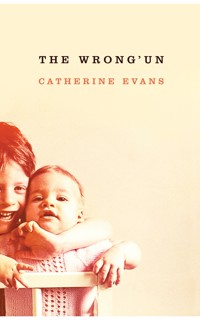
Meet the Newells, a big family of good lookers and hard grafters. From their sleepy working class backwater, the siblings break into Oxford academia, London's high life, the glossy world of magazine publishing and the stratospheric riches of New York's hedge funds. Then there's Paddy, the wrong'un in their midst, who prefers life's underbelly. As things fall apart around his sister Bea, is Paddy behind it all? And why does matriarch Edie turn a blind eye to her son's malevolence? Will she stand by and watch while he wrecks the lives of her other children? Just how much is she willing to sacrifice to protect her son? The book opens with Edie, now in her seventies, who looks back on her early married life with her husband, George, and their ever-growing brood. She loved having babies, but resented their growth and increasing independence. She recalls the horror and confusion surrounding the death of her toddler son, Timmy. Even though it happened forty years ago, she still blames her brother, his uncle, for falling asleep while he was supposed to be looking after the children. Now, her favourite son, Paddy, has just been released from prison for dangerous driving. She is good at making excuses for him. All her other children are successful, and have done extremely well in their chosen careers, but it becomes apparent that she begrudges her only daughter's success. Why does she resent her daughter so much? Paddy is malevolent, violent, bullying, cruel... Edie has never forgiven herself for giving him up to the care system before she married George. He has never fitted in with his siblings, and is the bad apple that can ruin the whole batch. The only person he has ever cared about is his stepfather, George, who saw only too clearly what Edie has always been blind to. Bea, the only daughter in the family, has grown up knowing her mother doesn't love her. She is a successful journalist, and adores her husband, David, and her stepchildren, but longs for a baby of her own. Then suddenly David dies. In the midst of her grief, her glamorous cleaning lady, Lorena, flaunts her pregnancy. She insists that the baby is David's, and is willing to take a DNA test to prove it. Welcome to the world of the Newells, where nothing is as it seems.
Sie lesen das E-Book in den Legimi-Apps auf:
Seitenzahl: 519
Veröffentlichungsjahr: 2023
Das E-Book (TTS) können Sie hören im Abo „Legimi Premium” in Legimi-Apps auf:
Ähnliche



















Contents
Title Page
Copyright
Dedication
Epigraph
The Newell Family Tree
Chapter One
Chapter Two
Chapter Three
Chapter Four – Brazil, 1990s
Chapter Five
Chapter Six
Chapter Seven
Chapter Eight
Chapter Nine
Chapter Ten
Chapter Eleven
Chapter Twelve
Chapter Thirteen
Chapter Fourteen
Chapter Fifteen
Chapter Sixteen
Chapter Seventeen
Chapter Eighteen
Chapter Nineteen
Chapter Twenty
Chapter Twenty-One
Chapter Twenty-Two
Chapter Twenty-Three: Four Years Later
ACKNOWLEDGEMENTS
First published in 2018 by Unbound
www.unbound.com
This edition published in 2023 by Inkspot Publishing
www.inkspotpublishing.com
All rights reserved
© Catherine Evans 2018, 2023
The right of Catherine Evans to be identified as the author of this work has been asserted in accordance with Section 77 of the Copyright, Designs and Patents Act 1988. No part of this publication may be copied, reproduced, stored in a retrieval system, or transmitted, in any form or by any means without the prior permission of the author, nor be otherwise circulated in any form of binding or cover other than that in which it is published and without a similar condition being imposed on the subsequent purchaser.
ISBN (Paperback): 978-1-7396305-7-7
ISBN (eBook): 978-1-7396305-8-4
Created using Atomik ePublisher from Easypress Technologies
Design by Mecob
Cover image: © Shutterstock.com/Shanina
For Rom Tiddly Pom
‘Sometimes, in jumping to avoid your fate, you rush headlong to meet it instead.’
Edie Fell Newell
CHAPTER ONE
I’m just an old bat now, so it doesn’t matter what I think. I’ll tell you this though. Things were never the same between me and George after Bea was born. To have a girl after so many boys. ‘Oh you must be thrilled!’ people said. People don’t know what they’re on about half the time.
We started our family straight off. He’d sooner have waited for kids, but there was no stopping me. Sammy first, Sonny hot on his heels and him barely three months old before I found out Will was on his way. It was hard, those early days, George scratching a living at Jebsen’s Yard before he set up on his own. There never was any question of me working. Not with two little ones and a third waiting to burst in on the world. Another man would have torn his hair out.
Paddy came to us after Will was born. Beautiful. Like a Botticelli angel. He was four when we got him. I’ll never make up for those four years. Fair, he was, when the rest of us were dark. He was different in other ways. You know kids. Needy, always looking for attention. Not Paddy. I tried so hard with him. To read him a story or play a game. Paddy liked to look at books by himself and didn’t get excited about games. He was just more self-sufficient, more independent. The only person he was interested in was George, and George didn’t know what to do with him.
I still feel a lurch in my heart when I think about the one we lost. Timmy. I used to panic I’d forget his little face, as if I ever would. They didn’t want me to be the one to dress him for his burial. They said it would be too upsetting for a woman in my condition. Colin was on the way by then, you see, but who else should have dressed him if not his own mother? I don’t remember much about that time. Just flashes in the darkness, like the sight of his tiny white coffin, my children’s frozen faces, George in a panic looking for Grubby, Timmy’s toy rabbit. We’d wanted Grubby to go in with him but in the end he was buried alone. I went through the rest of the pregnancy in a dark fog. Colin was the smallest of our babies. Forced out early by grief and shock. He helped us to heal. It sounds like we forgot about our Timmy once we had a new baby, but I swear it’s not true. Colin was supposed to be our last.
My brother was with us when Timmy died, on leave from the Merchant Navy. George liked Jackie, though he drank too much and had an eye for the ladies. I was fond of my little brother. I’d been like a mother to him after our mam was gone. Anyways. Jack never came back to our house after Timmy died.
Life goes on, so they say, even after the worst kind of disaster. I blotted Jackie from my life and got on with the business of mothering.
We had clever children, George and me. Sammy was the first boy from St Stephen’s to get into Oxford. He got a mention in the local paper. I cried when I saw it. He ruffled my hair and called me his daft little mam. If I’d known what kind of life it would lead to… being buried in a lab like a gnome. I’m not saying it’s not worthy, whatever it is he does, but he should be married with kids. Newell men tend to find a girl and then stick to her their whole life. Things didn’t work out that way for me and George, and not for Sammy neither. He lost the only girl he ever loved.
Sonny rose like a rocket at Morgan Stanley before he set up his own hedge fund. He’s minted, living in New York, married to a Yank with a couple of kids. He takes very good care of his old mam. Bea too, to be fair, though she can’t take credit for her money like he can.
Will’s third book will be out soon. It’d be nice if this one wasn’t about us. It’s a mixed blessing having a writer in the family, let me tell you.
Colin’s an accountant. His brothers rib him about it, but they lumber him every January with their tax returns.
I wonder sometimes what little Timmy would have been like as a man, but I find I can’t do it. He’s frozen in my mind as a babe in arms.
It was hard on Paddy, surrounded as he was by brilliance, but he was just a late bloomer. The neighbours laughed behind our backs when he went to prison for dangerous driving. Under the influence too. To my face they were all tea and sympathy, of course. Paddy swears the boy came out of nowhere. You know what kids are like. No road sense. The child’s walking again now. I shudder to think what kind of pressure Paddy was under to start taking that stuff. I never thought I’d say so, but prison did him some good. Like a cold bath. He swears he’s off it now. I pray every day he’ll never go back to it. I’m thankful he works for himself as it’s hard getting a decent job when you’ve a record. People are quick to sit in judgement. If they knew the strain he was under… people get a look in their eye when I try and tell them.
So coming to Bea. A gifted student, her teachers said. An all-rounder. Jack of all trades, I always thought, but it seemed a bit mean-spirited to say that about your own child. George was like a strutting peacock whenever his precious angel did well. Always blind, he was, where she was concerned. She writes for some highbrow magazine. She does the commentary, the politics, the features, the world’s sob stories, the stuff that people skip over to get to the gossip and the fashion. She could have done any number of things if she’d had a mind. She had one true talent, a golden voice with range and strength, and what did she do? She jacked it in. She should have a kiddie or two. Women these days are obsessed with their careers. It’s not like David wouldn’t support her. He’s a diamond, her husband. She’s lucky to have him.
There were no more babies after Bea. I loved having babies. Having their warm, milky little bodies snuggled up against me, the need and the love pulsing from them for me and no one else. It’s hard to explain to someone who hasn’t had a baby. They grow away from you, get a sense of themselves, then off they go. They start not to need you any more. Heartbreaking. Colin, the next one up from Bea, was walking and chattering away, a proper little man, and I couldn’t wait for a new one. I loved the minuscule little fingers and toes, and how the bigger children, even the tiny ones, dwarfed the newborns. I loved their scrawny matchstick legs and their pinched red faces. Just like angry little baked beans. Their bums. How I loved their little bums. Red and blotchy and dimpled, no bigger than my palm.
It was all different with Bea. The last thing I ever expected was a girl. I wish I could remember if the pregnancy was any different, but it was just the same as the others, so far as I could tell.
‘A little girl!’ the matron cooed before whisking her away. ‘Finally! After all those boys.’ As if I’d kept going till I’d finally hit the jackpot. After she’d been washed and swaddled, the nurse gave her to George. He gazed at her like she was the Holy Grail. He cried. Cried, I tell you. I felt a tremble in my stomach as I watched him fall hopelessly in love with the wrinkled, wailing creature in his arms. He brought her to me and had just lowered her to my breast when I jerked forward and coughed. I couldn’t help it. He was so overwhelmed he didn’t clock it, and the baby stopped crying when he put his pinkie in her mouth. My heart flailed within me as I tried to smile, and tears came to my eyes too. George couldn’t speak he was that choked up, grinning and misty-eyed, so grateful I’d given him something so precious. As if the boys, each of our beautiful little boys, were somehow worth less than her. He held her till I was settled, till I’d readied myself to feed her.
The boys were so easy. They’d all latched on in a heartbeat. Each of them had fused with me, and I’d rock back and forth and hum to them while they fed. And it wasn’t just me feeding them. They fed something deep within me, that couldn’t be reached any other way. But Bea. She wouldn’t settle. It was a battle to get her comfortable and the two of us would go through a kind of wrestling match filled with vexed frustration all for a piddling result, as what she finally got down her wouldn’t feed a slimming sparrow.
Finally I threw in the towel and borrowed a pump from the midwife. No shortage of takers wanting to feed her. George had that baby glued to him. The boys fought for the privilege. Smothered with love and affection, she was. Not from Paddy, I grant you. I didn’t express for long. It all seemed to dry up. I suppose I just couldn’t produce in the same way for a machine, but no one can say I didn’t try. I switched her to powder.
As for sleeping – the boys fretted in the night from time to time. There was the odd wet bed and sometimes a nightmare. Especially Will. Imagination comes at a price, poor lamb. But Bea… where she found the energy to bellyache the way she did on the rations she took in, I’ll never know. With the boys I’d get up and sort them out. Change the bed, give them a cuddle, whatever they needed. But with Bea, somehow George started to do it. He’d get up for Bea in the middle of the night. Even if he’d worked late or had to get up at stupid o’clock. He never did that for the boys. He’d sleep through all their fussing, and I’d get to them before he even woke up. But with her, it was like he was tuned in to the frequency of her crying. Funny, isn’t it?
We were going to call the new baby Albert, after my grandad. In my head he’d become Bertie. It sounds daft, but I had to get used to not having my Bertie with me. Fancy missing a baby that didn’t even exist. We didn’t have any girls’ names ready.
George was shaving one morning before work. He was still at Jebsen’s. I was in bed trying to feed Bea. She’d been home from the hospital five or six days and we were still calling her ‘the baby’. Sonny was reading Peter Rabbit to Colin at the foot of the bed. Suddenly he stopped.
‘What’s the baby’s name?’ he asked.
George laughed. ‘Good question, my lad,’ he said. ‘What are we going to call her? Alberta?’
I was silent. Your brain doesn’t work right after you’ve had a baby. I didn’t want to give Bertie’s name away.
‘What do you reckon, Princess?’ he asked me again.
‘I’m thinking,’ I said.
‘What about Beatrix?’ Sonny asked.
George and me looked at each other. ‘Beatrix,’ he said, trying it for sound. ‘Not many Beatrixes around, that’s for certain. I like it.’ He looked at me.
‘Why not?’ I said.
George chucked his razor in the sink and ruffled Sonny’s hair. ‘Nice one, Sonny,’ he said. He kissed me, leaving a bit of foam on my cheek. He cupped the baby’s head with his palm. ‘Little Beatrix,’ he said and bent over to kiss her too.
Colin stood up on the bed. He was still tiny, dressed in red pyjamas, his hair tousled from his bed, looking delicious as a plum. He could normally put a smile on my face. He jumped into George’s arms. The three of them giggled like halfwits.
‘George, you’ll be late for work,’ I said. The baby started crying. ‘That’s torn it! Sonny, go and get ready for school. Take Colin with you.’
‘But he doesn’t go to school.’
‘Just get him out of here. Clear off, both of you.’
The cry was a particularly pathetic kind of mewling.
‘That was a bit harsh, Princess,’ said George. ‘They were only having a bit of fun.’
A flash of heat surged in my chest. I was just about to mouth off, when I got a hold of myself. He was right, but I was the more livid for it. I looked down at the baby, and I longed for Bertie. Like I said, your brain isn’t the same after a pregnancy. George quietly turned back to the bathroom and pulled the plug on the water in the sink, no doubt leaving it flecked with foam and stubble as per usual.
Patrick Newell sat alone in a cavernous pub on the Holloway Road, two fingers of Kronenbourg remaining in his pint glass. Face-up on the table was a cheap pay-as-you-go Nokia, which he glanced at frequently. He held an iPhone in his hand. His dark cashmere coat was draped over the chair next to him. Snowflakes had melted into water beads on the surface of the fabric. Each time the double doors of the pub opened, a blast of freezing air blew in. People left swaddled against the cold, umbrellas at the ready, or entered pink-cheeked and foot-stamping into the sudden warmth. A couple of overly made-up girls perched at the bar whispering and giggling together. They were looking his way, eyes like crocodiles’.
Paddy was used to the admiring glances of women. In his forties, he was tall and athletic with patrician features. The cast of his face promised strength of character and high intelligence. Perhaps of more interest to the girls was the stamp of money. The fabric and the clean lines of his dark suit bore all the hallmarks of bespoke tailoring.
His iPhone vibrated. Diana. He sent the call to voicemail. Moments later it beeped. He put the phone to his ear to listen to her message. ‘Darling, I’m looking forward to seeing you tonight. Pick me up at eight? If the children weren’t here, I’d summon you early for… well, it wouldn’t be polite to say. Call me. Bye.’ Diana, so groomed, so polished, so well-preserved. So fucking tedious. He took the last sip of his lager.
His iPhone rang again. The screen flashed ‘Lorena’. He hesitated, thumb hovering. He took the call.
‘Be quick, Lola. I’m busy with Phase II.’
‘Come and see me. Tonight. At eight o’clock.’
‘I’ve got a date with—’
‘I don’t care. Bring me cigarettes.’
‘Fucksake, Lorena, you’re pregnant.’
‘Bring them. If I go out, I may slip in the snow and who knows what will happen?’
Irritation bubbled across his chest. ‘Fine. I’ll see you later.’
A spotty youngster was collecting glasses. Paddy wanted to signal the boy for another pint, but thought better of it. Dritton had assured him he’d be on time. The Nokia on the table beeped. About time. He put the little phone into his trouser pocket and scanned the room. He made eye contact with a stocky bearded man in a green ski jacket leaving the pub.
He collected his things and extracted a small black umbrella from his briefcase. It unfurled with a snap at the click of a button on the handmade wooden handle. Once outside, he held it low over his face, shielding himself from the weather and from CCTV. Only Dritton’s legs were visible, scurrying up the Holloway Road against the wind. Dritton took a left into Drayton Park Road, then turned into a residential street flanked on either side by ugly beige terraced houses. The streetlights cast orange patches onto the snow. Paddy kept his head well beneath the umbrella’s canopy. Dritton picked his way carefully through the snow, and placed a lone Yale key onto the gatepost of No. 27 without turning round. He turned right into a side road, disappearing from view. Paddy picked up the key and let himself into the house.
The place was in complete darkness. Paddy tried the switch in the hallway. Nothing. He reached into his pocket for his Zippo. The click was loud in the hush and a faint reek of lighter fuel merged with the damp and stale cigarette smoke. The hallway was awash with junk mail that had been kicked here and there to unblock the door. Holding the lighter, he put his head round the living room door. It was empty except for a mouldy sofa and a broken TV set on the floor. He wrinkled his nose at the smell of damp and neglect. He tried the light switch. Still nothing.
The galley kitchen had fitted cabinets above a Formica counter on one side. Two of the cabinet doors hung from their hinges and one of the doors was missing, like a gap in a row of teeth. A small wooden table was pushed against the far wall, flanked by two Formica chairs. On the table were a candle and a couple of boxes of matches, blobs of wax and a chipped saucer full of cigarette butts. Spent matches lay in disarray over the tabletop. More burnt matches and the odd squashed butt lay scattered on the floor. Paddy lit the candle and was about to sit down when he stopped himself and reached into his pocket for a handkerchief. He wiped the seat and the back of the chair first.
The front door opened and Dritton came in, quickly shutting the door. He swore softly and blew air from his cheeks like a bellows. He stomped his feet on the floor, scattering snow all over the sea of junk mail. He paused when he saw Paddy’s dark shape behind the candle, then made his way into the kitchen. He pushed back the hood of his jacket to reveal thick dark hair that shone in the candlelight. The English winter had touched his olive skin with a pale yellow pastiness. His face was rescued from prettiness by a hooked nose that had been broken more than once, and an ingrained frown line, like a stab in pastry.
‘Dritton!’ said Paddy. He stood up. The two men gave each other an awkward bear hug. ‘It’s good to see you,’ he went on.
‘You also.’
‘Nice place you have here, I must say.’
‘Would you prefer to meet at your house?’
The corners of Paddy’s mouth twitched. Dritton reached into his inside pocket and brought out a packet of cigarettes. He offered one to Paddy, who shook his head.
Dritton lit the cigarette in the flame of the candle and took a deep drag.
‘In my country a house like this would not go to waste.’
‘Still homesick? It’s funny. You lot love your country so much you’ll do anything for it. Except live there.’
‘We’re free of Albania now. I’ll go back soon.’
Paddy was about to say, ‘And I’m the tooth fairy,’ but thought better of it. Dritton was touchy about his country, his ways, his people. Inside, he had pasted an Irishman who had said he’d ‘fuck his flat-faced peasant grandmother for a penny.’
‘I saw Fevze quite recently,’ he said instead.
Dritton looked surprised.
‘Oh yes. I’ve done a bit of work for him.’
‘What kind of work?’
‘You know. Bits and pieces.’
‘And you want me to do something for you?’
‘Yup. I need you to take care of someone.’ Paddy had seen at close quarters over an extended time how meticulous Dritton was. ‘I’m trusting you as a friend that you’ll be professional about it.’
‘Please,’ said Dritton, with a pained expression, as if insulted. He dragged so deeply on his cigarette that it crackled. ‘Who is it?’
Paddy brought out some photographs from an envelope in his briefcase and handed them over. Dritton studied the top photo, a head and shoulders shot of a man in his fifties smiling directly to camera. The picture could have come from a corporate brochure, despite his weatherbeaten skin. The next picture showed the same man dressed casually, drink in hand. In the third, he was tanned and bare-chested, holding up a large fish by the tail. In all of the photos, he looked happy, despite the lines on his face.
‘He saw you in prison,’ said Dritton.
‘Yes. His name is David Grahame,’ said Paddy.
Dritton continued to flick through the photographs, cigarette still in hand. He stopped to study one in particular, in which David Grahame had his arm round a tall blond woman leaning in to him. Dritton narrowed his eyes as he puffed on his cigarette. He looked appraisingly at Paddy.
‘Your sister’s husband?’
Paddy didn’t respond. ‘All the information you need is in here,’ he said, handing over the envelope. ‘Where he lives, where he works, his daily habits. Everything. It could look like a mugging. He walks to work most mornings when it’s still dark and it would be simple—’
Dritton put his hand up, as if for silence.
‘Do you care how it is done?’
‘No. So long as it’s not traced back to me.’
‘You have nothing to fear. What about timing? It’s a problem for you?’
‘Within a month. The end of the month would be best.’ Lorena had just had her twelve-week scan, but he needed a bit of extra time to sort out one or two loose ends.
‘You have the money?’
Paddy picked up his briefcase and brought out a bubble-wrapped A4 envelope. He handed it over. ‘Half now and half when the job is done. As agreed.’
Dritton took the envelope. ‘I will not insult you by counting, my friend.’
Paddy laughed. ‘Go ahead and count. Trust, but verify. It’s a good principle to live by.’
Dritton shook his head and stood up, tucking the envelope under his arm. ‘The key, please,’ he said.
Paddy handed over the single Yale key. ‘Is that it, then?’
‘Yes. Just one more thing. You must be sure. After tonight, there is no stopping this.’
‘I’m sure,’ said Paddy. He blew out the candle and sparked up his Zippo to light the way to the front door. The two men were about to leave the house together, but then Dritton turned round and raised his hand. ‘I go first. You wait.’
‘Hold on. I’m the one paying.’
Dritton shrugged. ‘As you wish.’
Paddy slipped out of the door, umbrella at the ready. He took a different route back to the Holloway Road. He flagged a cab down and gave Lorena’s address in St John’s Wood. He’d pick up the blasted cigarettes on the way.
After Paddy left, Dritton Zladko waited a while in the darkness. Just as he was about to leave, he remembered that he’d brought new candles. He made his way back to the kitchen, lighting his way with a cheap yellow Bic lighter. He dug into his other pocket and pulled out a new box of white candles and two boxes of matches and put them into one of the kitchen drawers. He took a last look around to see if he’d forgotten anything.
He hadn’t thought it possible, but the damp was worse than the last time he came. It was strange the neighbours didn’t complain to the council. Perhaps they had. The council was useless. The house was solid, with good foundations and well-proportioned rooms. It could be fixed up nicely and sold for a profit. He shrugged at the waste. In his country every room would be full, all generations thrown together, children falling asleep where they dropped. When he had enough money together, he’d go back. He missed his wife. His sons were growing up without him. His brother had no work. ‘I will be a father to your children,’ he had told Dritton, as if that were a comfort. His brother was an idiot. His sister’s husband had left her with two small children. His mother was getting too old to be much help. What a difference he could make with a little more money. Only a fraction of the cash in Paddy’s envelope would come to him. He answered to Fevze, Fevze answered to Almas. Who Almas answered to, he, Dritton, had no idea.
CHAPTER TWO
Paddy was a special little boy. Different. The others didn’t like him much. Their own brother. He found it hard to make friends. The others were with their mates all the time, coming home only for meals, often with some kid or other in tow. Not Paddy. I’m not saying he was my favourite, that wouldn’t be right, but he needed someone on his side.
Paddy took against Bea from day one. He’d come to us just after Will was born. Maybe it was having my Paddy back that settled me for a spell, as it was another four years before Timmy turned up. When he did, Paddy played up something terrible. Timmy dying and Colin arriving so soon after made it so much worse. So imagine how he must have felt about George heaping his attention on baby Bea, who well and truly pushed her way up the pecking order. Hard for a boy to see someone nakedly favouring one child. The fuss George made when Paddy dropped her. You’d think he’d tried to kill her.
Before Bea could even walk she joined in the boys’ games. She’d sit in the garden in her vest and nappy, digging up worms, unaware she was the old king who had to be defended from a young usurper, or that she was the stone that sheathed Excalibur. They played ball around her, and dodged her as if she were a bit of garden furniture. Sometimes they’d take it in turns to leap over her, and she’d sit blinking like a mole as the boys hurtled towards her, then she’d lift her eyes in wonder, wreathed in smiles to see them sailing in the air overhead. I put a stop to it when I saw them do it, babies’ heads being soft as eggs. I did my best to watch them, but I had to keep on top of the meals and the clothes and the house and no eyes in the back of my head.
The boys were always ranged against Paddy.
I remember hearing one of their fights breaking out in the garden. I was edgy that day. Maybe I had the curse. Will and Sam were yelling at Paddy. The other boys all stood around Sonny, who held a crying Bea in his arms.
‘How would you like it if I stomped on your hand?’ Sonny screamed.
‘She was in the way,’ Paddy said. ‘She’s always in the way.’
‘She’s a baby!’
Ganging up on Paddy again. I couldn’t bear it.
‘What’s going on?’ I took Bea from Sonny’s arms. She kicked off again for my benefit.
‘Paddy stomped on Bea’s hand,’ said Sonny in righteous fury.
‘I’m sure it was an accident,’ I said. ‘Paddy, come and say sorry to Bea.’
I lowered Bea to Paddy’s level so he could kiss her. He puckered up but she whipped her head away from him. The others started in.
‘That was no accident. I’m telling you, Mam, he did it on purpose,’ said Sonny. ‘He’s always hurting her. And Colin and Will. Anyone smaller than him.’
‘You’re smaller than me,’ said Paddy.
‘Yeah, but I can fight back, can’t I?’ His eyes blazed.
‘Enough!’ I cried. ‘Now. I’m putting Bea down here, out of the way. Play nicely, all of you. Paddy, be more careful with the little ones. And the rest of you stop pointing fingers.’
‘But Mam—’ said Will.
‘No buts!’ I said. ‘More fighting and I’ll make you play inside.’
Sonny muttered something. I rounded on him.
‘Sonny, what did you say?’
He glared at me, then looked away. It wasn’t five minutes before war broke out again.
‘Every time you jump over her, you kick her one.’
‘Shut up, twat. It’s not my fault she moved.’
I’d told the boys time and again they shouldn’t be jumping over Bea’s head. Paddy was a bit accident-prone where she was concerned, but all the same. They were always leaving him out. I marched downstairs again. I decided to pretend I hadn’t heard Paddy’s language. George was always on at him about it. It was a drag on my soul knowing where he’d learned it, and more besides.
‘What are you warring over now?’ I asked. The boys looked sheepishly in my direction.
‘They jumped over Bea’s head,’ said Paddy. ‘I told them they mustn’t.’
‘Liar!’ Sonny bellowed.
‘Enough!’ I cried. ‘How many times have I told you not to jump over Bea’s head? And don’t call your brother a liar. I won’t have it, d’you hear me?’
I looked at the faces of my simmering brood. ‘And Paddy, don’t tell tales.’ I added lamely. The boys seized on what I’d said.
‘Yeah, Paddy you arsewipe,’ said Sonny.
I grabbed him by the shoulder. ‘What did you call him? Do you want a mouthful of soap?’
We glared at each other.
‘Read my lips,’ I hissed. ‘I’ll not have any screaming, nor any fighting or jumping over the baby’s head. Understand?’
‘But Mam—’ said Paddy.
I rounded on him too. ‘I said shut it!’ I was hoping they’d be united by being ranged against me. A country at war, and all that. ‘I don’t want to hear another word.’ They glowered at me. I looked at their little frowning faces in turn. Nobody said anything at first. Then Will piped up.
‘He likes hurting her,’ said Will. ‘Why d’you let him, Mam?’
I felt like he’d slapped me. So I slapped him. Right across the face. Bea started bellowing, as if I’d hit her, which set Colin off. Will stared at me, then he lifted his hand to his cheek. I looked down at my stinging palm as if it belonged to someone else. If he’d only cried I could have done something, put my arms round him, said sorry; but he didn’t. Sonny stared at me too. He put his hand on Will’s shoulder. Sam picked Bea up and tried to shush her and put his free arm round Colin. Colin turned to him and clung to his leg, bawling for all he was worth. Paddy gave nothing away, as per usual.
I stalked back inside. I willed Paddy to stay with the others but he followed me in, marking himself out even more.
Bea furrowed her brow, chasing the dream that was fast scattering in her head. The wind moaned intermittently through the surrounding trees like a half-hearted banshee. She looked at the clock, which glowed 3.07. The seven morphed into an eight.
She propped herself up on her elbow, trying not to disturb David, a deadweight beside her. Through the half-opened curtain, she saw snowflakes blowing thick and fast against the window. There would be no getting out in the morning.
The house was on a hill, exposed to the wind. It was a ramshackle old Cotswolds farmhouse, with a maze of rambling bedrooms and a huge stone kitchen. The garden sprawled and sloped, blending with the open fields and hills that stretched out into the distance. Their car was no match for the treacherous driveway and they didn’t have chains.
Their visits to the old place had dwindled, though David didn’t have the heart to sell it. His maiden aunt Lucy had left it to him. She had been his guardian when he was a boy, while his parents were ‘living high on the hog abroad’.
‘Let’s take a chance,’ he’d said about the prospect of being snowed in. ‘Just the two of us for the whole weekend. No visitors, no kids, none of our dreadful relatives. Just you, me and a cellarful of decent plonk. We can pick up a couple of trash movies and curl up on the sofa together. I’ll even do the cooking.’
His offer to cook was not one to be taken seriously. He liked to mix up corned beef, boiled potatoes and baked beans, and slop the resulting mixture on toast. It looked like something that could be found on a pavement on a Friday night, and smelled worse. She’d often had to eat corned beef as a child. Even then, it had stuck in her craw.
There was no way she’d make work on Monday. She was writing a big piece about Sudanese women. Her mother had asked her if she couldn’t write about something more cheerful for a change, but the world was chock-full of places where life was cheap and tragedies two a penny. How did you decide which stories should be told? Disfigurement, slavery, rape, murder, child killing. All predictably shocking. Unexpected were the vestiges of warmth, humour, compassion, hope and zest for life that survived in people who had suffered the worst kinds of horror. That was cheerful. Humbling. But Edie didn’t see it that way.
Her boss, Rob, had been hassling her about the time she’d been taking off. He couldn’t understand why she didn’t drop everything to travel for a story as she used to. Now she timed her trips to ensure they didn’t clash with ovulation or clinic appointments. Rob had given Bea a hard time about conducting an interview over the phone. ‘You just don’t get the same feel for the person, the connection you get from seeing the whites of their eyes. That kind of cheating comes through on the page.’ He’d printed the piece regardless.
If Rob knew about the IVF, he would be sympathetic, she was sure, but it was deeply private on so many levels. She feared that David would be judged, and she keenly felt her failure as a woman. David had told her she was being ridiculous, that their inability to conceive was probably due to his bone-idle old sperm. He’d kissed her, then made her laugh by pretending to be a bored, creaky old sperm cell: ‘Oh Christ on a bike!’ he’d drawled, rolling his eyes. ‘The old bugger wants us to go swimming again.’
She was sure that the fault, if that was the right way to put it, was down to her. He never pointed fingers, even after the first two rounds had failed. ‘Darling, it’ll happen, I promise. We’ll have a baby one day. I can feel it in my bones.’ The only grumble he’d ever made was about ‘those wretched porn mags at that confounded clinic. It’s hard to wank off to 1970s German air hostesses, knowing they’re now in Lufthansa’s knacker yard. Next time I’m bloody well taking my own.’
She wished she could talk to her friends about it. All she had to do was open her mouth. God knows they’d be sympathetic, and it would feel so good to unburden herself. They’d probably be relieved she had a weakness, that there was a worm in the apple of her perfect life. ‘Airing your dirty linen in public,’ her mother called it.
Her colleague, Martha, also suffered from infertility, as everyone in the office knew. Even Bola, the Nigerian security guard, was kept informed of Martha’s husband’s sperm count and the probable genesis of her polycystic ovaries. She never tired of running through the pros and cons of all the options that various doctors, sages and quacks had suggested. Nobody was short of an opinion either, volunteering the triumphs and tragedies of ‘my sister’, ‘my friend’, ‘my cousin’s girlfriend’.
Bea listened intently to these conversations, a mishmash of science fiction and old wives’ tales. She tuned in, hoping for some revelation, some nugget that would magically open the door that was barred to her.
She wouldn’t be back to leave money on the kitchen table for Lorena, their cleaner. They’d have to leave double the week after. Bea had offered to pay her online several times, but she had always curtly refused. Lorena made her uneasy. ‘Your problem,’ David had said ‘is that you suffer from lower-middle-class guilt about having a cleaner.’ He was right. Lorena had taken the job from her sister, Rafaela, during those awful weeks after Paddy had his car accident. Lorena had been brilliant at handling Paddy, even if her cleaning wasn’t a patch on her sister’s. He was docile as a child with her. Rafaela had at least been friendly, whereas Lorena was a frosty fish indeed. A frosty fish with a blatant sex appeal. Bea and David’s Brazilian cleaning lady became a standing joke among their neighbours, who reported sightings of her playing loud rock as she worked, dancing along in tight jeans and figure-hugging polo necks. She wore Marigolds to protect her perfect manicure. Her clothes looked expensive. Bea didn’t understand how she did it on a cleaner’s wage.
Bea needed to pee. She lay in bed mustering the willpower to get up. David lay in absolute stillness beside her. She settled on her back, pushing her stomach out to give her aching bladder room to expand, postponing the inevitable for a little longer. She ran her hands gently over her stomach as she listened to the wind keening through the trees. Maybe this time it had worked. Maybe she was, actually, right now, pregnant. She threw up the thousandth silent prayer to her nameless god. She tried breathing deeply.
Her gynaecologist, Damien Lillie, lectured her about taking it easy, about how stress had an adverse effect on conception. It was all very well for him to say that. He had pictures of his four children plastered over his consulting room. There were school photos, the children adorable in their uniforms; a shot of them playing on a white sand beach; another of the children in Disneyland wearing giant sunglasses gathered around Donald Duck and a picture of the littlest girl in full riding gear, down to the hard hat, mounted on a pony, smiling gap-toothed at the camera. It was perhaps a little wanting in tact, nakedly displaying his own rampant virility, especially as all his patients came to him for the same reason. She sighed. She didn’t begrudge anyone else their good fortune. Mr Lillie also had a prominent photo of himself in top hat and tails with his arm round his couture-clad, behatted wife, who was holding onto the reins of a magnificent chestnut racehorse. Racing was his passion, apparently. When David had asked him, he’d said that he owned the horse. ‘Now that’s what I call wanting in tact,’ David had moaned afterwards. ‘Parading a hobby like that, while charging like a wounded rhino.’
There was a huge board in his office with pictures of all the babies that had been created in the clinic, the ones that had started out as an oddball collection of cells fused together in Petri dishes, frozen in nitrogen, mixed up in test tubes and squirted through injection needles before finally taking up residence in nice cosy wombs.
The treatment was costing an astonishing amount of money. ‘A microscopic drop in a vast ocean,’ David had sighed. She had seen the bills rolling in for his three kids, who were in private schools, plus the eye-popping maintenance payments he was obliged to send to Diana, his ex-wife. The country pile surrounding them was free of a mortgage, but the upkeep was staggering, particularly the heating bills. ‘You’d never think it, would you? Still colder than a penguin’s bum.’ Their London house had been described by the estate agent as ‘a stunning four-bedroom family home in need of minor renovation.’ ‘Minor renovation! Try major rebuilding,’ David had cried. ‘Cheaper to burn the sodding place down.’
They supported his mother, Millicent, who lived in a high-end nursing home. It was the best they could find, but still depressing as all hell. She’d come to live with them for a while, until her Swiss cheese memory bloomed darkly into full-blown Alzheimer’s. She’d required vigilant care, as she developed a mania for escape. Initially they hired carers. The first walked out after less than a week as she was ‘fed up with chasing the old bird’. The second person hired to watch Millie preferred watching daytime TV. David sacked her after Millie was found wandering round Hyde Park. Millie became as artful as Papillon. They threw in the towel after Bea received a frantic call from the third carer, who’d just fished her out of the Serpentine. The old lady had forgotten everything else, but remembered how to swim. ‘Just like riding a bicycle’, she’d said breezily, when asked. The cold water did her no harm, and seemed to restore some of her lucidity, but that evening she tried to get away again, complaining that her room was full of dark shadows spying on her. Bea was desperately sorry for her. There was no escaping the fears that lived in your own head.
It was hard to decide between the breakdown of the body or the disintegration of the mind. Her own father had died the year previously of prostate cancer. It had been a protracted death and none of his children had been with him at the end. He’d had a sudden spell of good health, then died in the night without warning. She and her brothers shared the guilt for his lonely death. There was a piece of the narrative in Will’s latest book that she could not read without crying.
She couldn’t wait for the loo another minute. The mattress groaned as she slipped out of the covers and felt around for her dressing gown. She couldn’t find it, so she tiptoed to the bathroom in the nude, her body fast shedding its warmth. She imagined what she’d look like through the lens of an infra-red gun. A glowing bundle of moving red light, growing dimmer as she grew colder, her life light finally expiring as she ultimately froze to death. She sat on the loo and hugged herself, vigorously rubbing her arms. She shivered. The central heating in the house was dodgy as all hell. The boiler could be relied upon to conk out when most needed. The release of tension in her aching bladder was blissful despite the biting cold.
Fat snowflakes whirled in uneven clusters, the wind spitting them this way and that. The branches of the old yew knocked gently against the rattling panes, outlined in white against the luminous sky.
She saw movement in the corner of her eye and turned her head towards the door. David stood naked in the doorway.
‘Sorry I woke you.’ She whispered it, although they were alone.
He gazed at her, silent. He seemed half asleep. He bent down to kiss her. He reached for her cold breasts, then tried to hug her.
She wriggled free. ‘See you back in bed. It’s bloody freezing.’
She rinsed her hands under the sputtering tap and bent to take a sip of icy water. David appeared in the mirror and wrapped his arms round her, pulling her against him. He sank his face into her neck. She turned and dropped a peck on his chest.
‘Be quick!’ she said, still whispering, and dashed back to the warmth of the bed.
He straightened and let her pass. She turned at the door to look at him again. Still he didn’t speak and he seemed oblivious to the cold. His face was shrouded in darkness, haloed by the light from the snow. She scampered back to bed and dived under the covers. She anticipated his return, waiting for the great waves of heat he generated, which she could burrow into like a wintering animal. She lay under the covers, and listened to her heart slowing. Her skin warmed. She lay still in the quiet, drowsy and comfortable, losing herself.
Abruptly, she started upright, not sure if she’d been asleep or not. She was disoriented, with a pit of anxiety in her stomach, as if she’d overslept and missed something of vital importance. All was quiet in the bathroom. David peed like a racehorse. She would have known if he’d come back to bed. The mattress was like a noisy old trampoline, especially under his weight. She glanced towards the bathroom. He was lying right beside her, but there was something wrong. She felt a stab of fright in her chest. She reached out her hand and put it on his chest. He was cold and unyielding.
‘David!’ She shook his shoulders and whirled round to turn on the bedside light. She fumbled for the switch. In her haste, her wrist became tangled with the cord and just as she switched it on and turned back to look at him in the light, she dragged the lamp over the edge of the bedside table. It crashed to the floor. As it bounced, it cast terrible shadows over his face. For a moment it looked animated, but as the light came to rest, the illusion was over.
‘David!’ she called, terrified, shaking his shoulders again. CPR. That’s what she had to do. He seemed long dead. She couldn’t comprehend it. He’d been touching her up in the bathroom not five minutes ago, or so it seemed. He had no pulse. She checked that his airways were clear. She jerked his head back and held his lips together with her fingers, then sealed his mouth with hers and blew hard into him twice. She watched his chest cavity rise. It fell lifeless just as quickly after each breath. Then she knelt by his side and interlaced her fingers and pushed down hard on his sternum with the heel of her hand. The mattress groaned with each compression. It did not give enough resistance. Twenty or thirty compressions? She couldn’t remember. She split the difference and did twenty-five. Again she made a seal over his mouth with her own and blew all her breath into him twice before pushing down on his sternum again another twenty-five times. She couldn’t remember where she’d left her mobile. She had no idea where David’s phone was. There was a landline on his side of the bed but she couldn’t reach it. Once she’d done another round of chest compressions, she leapt up. Naked, she straddled David to get to it, ignoring the cold.
She couldn’t simply dial 999. The house had a complicated telephone system, installed so they could use two or more lines simultaneously. They’d had grandiose ideas about working together from the house, which had never come off. It was important not to rush it, or she’d have to start all over again. Despite her shaking hands, she pressed the green talk button first, and waited to hear a click. Then she pushed 9 and had to wait for a dialling tone. Then she could dial 999. Her heart hammered in her chest with frustration at the time it took to get a connection. His brain and organs were dying with every second. She pumped more air into his chest while she waited for a response.
‘999, police, fire or ambulance?’
‘Ambulance!’
‘What’s the nature of your emergency?’
‘It’s my husband. He’s—hang on!’ said Bea and slammed the receiver onto the pillow. She needed both hands to make a seal around his mouth. She blew into his mouth hard twice, then clamped the receiver between her ear and shoulder while she pushed down on his sternum, the mattress creaking with each compression.
‘Don’t hang up. I’m giving him CPR. Wait!’
She switched on the bedside light on David’s side and pressed the speaker button.
‘I won’t hang up, love. What’s the problem?’
‘He’s not breathing,’ she sobbed. ‘I woke up in the middle of the night to find he wasn’t breathing.’ She didn’t want to say ‘dead’. ‘He was fine a little earlier—HANG ON!’ and she repeated the routine. It was exhausting. Two strong sharp breaths followed by the chest compressions. Her arms ached and her jaw felt tense, after only three or four rounds. Her back was already sore from bending over in the cold.
‘Is it two breaths then twenty compressions? Or is it thirty?’
‘Two breaths and thirty. If you’ve been doing twenty, don’t worry. It’s enough to get the carbon dioxide out of his lungs. What’s your location?’
She gave the postcode while compressing David’s chest. She heard him rapidly tapping. She made a colossal effort to pull herself together.
‘Is it The Cedars?’
‘Yes! But it’s…’ in the middle of nowhere, she thought in despair, as she paused to blow and pump. ‘…it’s really difficult to find. Hold on!’ and she started the cycle again. She’d given the directions so many times to friends who were visiting for the weekend or coming for Sunday lunch. With all the time in the world it was difficult to explain, and people were forever getting lost. She finished another round of CPR, then gave the directions, closely following the script that she had honed over the years. ‘The turning to the house is—Wait!’ She’d lost count. She gave a few more compressions, then two breaths. ‘The turning’s on the left a mile out of town. It’s signposted “Woodlands”. Then the house is a mile and a half down the track on the left. It has a wooden gate with “The Cedars” etched onto it’. Speaking was dragging her away from keeping her husband alive.
‘What’s your phone number, love?’ he asked.
‘HANG ON!’ she cried, and repeated the CPR cycle. The feeling of dread within her strengthened. Rob had asked her to do a St John’s Ambulance course last year, as they needed a designated first aider in the office, and typically no one else had volunteered. The face of the course leader came back to her. The heavy pouches under his eyes had reminded her of a St Bernard dog. She remembered what he’d said. ‘You can continue with CPR until an ambulance arrives, but you need a defibrillator to bring someone back to life. Giving CPR just keeps their brain and their organs alive but it won’t bring them round by itself.’
‘Are you still there?’ she asked the operator. ‘You asked me something.’
‘Yes, love. I need your phone number.’
She recited the number to him and he repeated it back to her.
‘What’s your name?’ he asked.
‘Bea Grahame.’
‘Mine’s Ken. Is he responding?’
‘No,’ she said, her voice cracking. She edged herself off the side of the bed and stood over David, so she could straighten up while she pumped his chest. The ferocious cold was beginning to get to her. She thought again of the light emitted by the body through infra-red. David would be merging with the dark. She wanted to weep. There was a blanket draped over the foot of the bed. She stopped the round of CPR to reach for it and wrapped it round herself like a cloak, then continued blowing and pumping. The conviction that what she was doing was completely useless grew within her like a nasty weed, but she didn’t dare stop.
‘Will the ambulance be able to get here? The driveway is really steep and the snow is so heavy.’
‘They’ll get to you, love. They’re used to out-of-the-way places. Is there anyone else in the house with you?’
‘No,’ she sobbed, holding his lips between her fingers as she’d been taught.
‘I’ll stay on the phone with you till the ambulance arrives.’
‘Thank you,’ said Bea. ‘It’s not working!’
‘You’re doing brilliantly, love. Keep trying. Just till the ambulance gets there. It seems bleak now, but you’d be amazed at what a defibrillator can do.’
The image of her first aid course leader’s face came back to her. ‘Most people think that a defibrillator starts someone’s heart again with a jolt of electricity. What it does is it stops the heart. It’s a bit like when you’re having trouble with a computer. You switch it off and then turn it back on again, and it often works just fine again, no bother. It’s the same with a defib. It stops the heart, which shuts down the irregular heart rhythms, then you can restart it, and it often starts again, no bother. Not always, mind you. Sometimes you can do everything right, but it still won’t work. At least you can be sure you did what you could.’
She continued with the CPR for over an hour, to the soundtrack of the creaky old mattress. She was spurred on by her own desperation, and by Ken, cheerleading as best he could.
‘I think I see car lights!’ she cried to Ken. ‘I hope to God it’s the ambulance. How am I going to let them in?’ she asked desperately. ‘The door’s locked. It’ll mean leaving him.’
‘You really don’t have a choice, love,’ said Ken. ‘Just be as quick as you can.’
‘Can’t you radio them? Tell them to break in?’
‘That’ll take longer, believe me. Better for you to just run and open the front door. You’ll be quick as a flash, I’m sure.
‘Don’t hang up, please. I’m going now.’
The sprint across the corridor and down the stairs to the front door took no more than a dozen seconds, fifteen tops. She unlatched the door and peered outside. Gusts of freezing air blew in. She shrivelled in her thin blanket. She took in the empty driveway in disbelief. She’d been so certain she’d seen lights. Hope had made her hallucinate. Maybe they hadn’t seen the gate and had turned round. She screamed in frustration. The switches for the outside light, the hallway and the stairway were all on the same pad by the front door. She flipped them all on, and left the door propped open, and flew back to the bedroom. It was difficult to give David his next two breaths as she was crying so hard.
‘Bea, love. Take a deep breath,’ said Ken. She couldn’t answer. Her crying made the strength of the compressions erratic, so she forced herself to concentrate, to slow her sobbing breath.
The paramedics finally stormed into the house, flooding it with light and noise. They rushed upstairs to the bedroom. Bea stepped aside to allow one of them to approach David. Stiff and cold, she straightened with difficulty. The medic made a rapid assessment, checking pulse and airways.
‘Defib,’ he said, and his colleague stepped forward and attached the pads to David’s chest. Bea gasped, not expecting it to jolt him so violently. He jerked like a zombie from a bad B-movie before falling back on the bed, limp as a ragdoll. The medic waited a moment. Bea held her breath for the second jolt, her hands over her mouth, praying and willing David with all her remaining strength to blink, or cough, or sit up and say ‘What the eff’s going on here?’ or laugh and say ‘Darling, you should have told me we were expecting company.’ When the jolt came, his body spasmed again before falling back against the pillow, forcing another groan out of the mattress. His eyes were closed and his mouth slightly open. His skin was grey.
‘I’m sorry,’ said the paramedic to Bea, his mouth set in a grim line. ‘He’s gone. You did everything you could.’
‘What happens now?’ she asked, her voice hollow. Desolation swept over her.
‘We’ll take him to the hospital morgue. You should come with us too. You shouldn’t be alone.’
‘You should be treated for shock,’ said his colleague, who stepped forward to put his hand on her shoulder. Just before he touched her he changed his mind, probably when he realised she was naked underneath the thin blanket. Naked and shivering. He scurried to the chaise longue by the window to get David’s big blue dressing gown, then scuttled back and flung it round her shoulders like a cloak.
‘Could you leave me with him?’ asked Bea.
‘I wouldn’t want to leave you alone here…’
‘I just want to be alone with him for a moment.’
The two men looked at each other. One nodded. They gathered their equipment and left the room. Bea gazed at David. She lurched forward and threw her arms round his neck. She began to sob. She clung to the cold, dead thing that used to be her husband until the paramedics gently prised her fingers away.
CHAPTER THREE
In his last year of junior school, Paddy was sent home early with a letter from the headmaster, Mr Penharris. It wasn’t the first time I’d been summonsed to talk about ‘Patrick’.
‘What have you done this time, Paddy?’ I asked, my stomach filled with lead. The last thing I wanted was to see Penharris. Paddy lifted his angel face.
‘It was an accident, Mam. I never meant it. It was a dare.’
‘A dare to do what, exactly?’ I ripped the envelope open, scanning his face.
Dear Mr & Mrs Newell
Patrick is responsible for serious burns to one of his classmates, who has been hospitalised.
I would be grateful if you would see me at the earliest opportunity. Until we have agreed appropriate action, please keep him from school until further notice.
Yours sincerely,
Arthur Penharris
Paddy had almost been expelled two years before. He’d pinned one of the little boys down and punched him a few times in the face. It was true the poor kid had a shiner on him and a few bruises, but he’d said Paddy had cheated at marbles. Honour was a big thing among the kids.
‘Kids get into scrapes all the time,’ I’d said to Penharris at the time.
‘Mrs Newell, his behaviour is really not normal for a boy his age. He shows levels of aggression that I seldom see even in troubled teenagers. But it’s not just that, it’s the…’ He paused.
‘The what?’ I demanded.




