


42,99 €
Mehr erfahren.
- Herausgeber: John Wiley & Sons
- Kategorie: Fachliteratur
- Sprache: Englisch
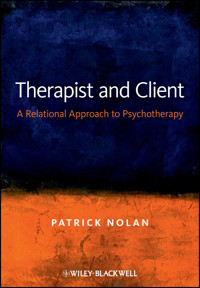
Therapist and Client: A Relational Approach to Psychotherapy provides a guide to the fundamental interpersonal elements of the therapeutic relationship that make it the most effective factor in therapy.
- Presents the fundamental interpersonal elements that make the therapeutic relationship the most effective factor in psychotherapy
- Explores and integrates a range of approaches from various schools, from psychoanalysis to body-oriented psychotherapy and humanistic psychotherapies
- Offers clear and practical explanations of the intersubjective aspects of therapy
- Demonstrates the pivotal need to work in the present moment in order to effect change and tailor therapy to the client
- Provides detailed case studies and numerous practical applications of infant research and the unified body-mind perspective increasingly revealed by neuroscience
Sie lesen das E-Book in den Legimi-Apps auf:
Seitenzahl: 429
Veröffentlichungsjahr: 2012
Ähnliche


















Contents
Foreword
Preface
Acknowledgements
Introduction
1 Applying Findings from Infant Research
Introduction
Intersubjectivity
2 The Interpersonal Relationship
Introduction
The Evolution of a Relational Approach
The Therapist: Self with Other
Reflecting on Self and Other
Repairing the Relationship
3 Potential Space, Creativity and Play
Introduction
Intersubjectivity – the Realm of Potential Space
The Therapeutic Space
Creativity and Play
4 The Intersubjective Experience
Introduction
Defining and Exploring the Intersubjective Experience
5 The Relational Body–Mind
Introduction
The Nature of the Relational Body–Mind
A Relational Body–Mind Perspective
Five Modes of Experience, Function and Expression
Taking a Body–Mind Stance
Relational Body–Mind Therapy
Transference-Countertransference and the Body–Mind
‘Fragile’ Clients
6 Working with Trauma and Fragile Clients
Introduction
Therapy for the Traumatized Body–Mind
Working with Fragile Clients
7 Adapting Therapy to the Client: A Relational Approach
Introduction
Assessment
Creating the Therapeutic Frame
Tailoring the Therapist’s Stance
Choosing a Level
Staying Adaptable and Relational
Arriving at an Individual Style
Index
Praise forTherapist and Client
‘Nolan’s integrative approach to psychotherapy is unique. It draws together concepts and practices from many therapeutic traditions including humanistic, client-centered, gestalt, psychoanalytic, object-relations, interpersonal and body-oriented approaches. It also takes account of recent advances in developmental psychology and neuroscience. Through clinical case material this book offers a novel perspective on a range of critical issues including the centrality of the therapeutic alliance, matching the therapeutic process to clients’ needs, and addressing mind-body and self-other dualities. Nolan is widely acclaimed for his approach to psychotherapy training. This book is long awaited and should be read by both psychotherapists in training and experienced therapists.’
Alan Carr, Director of Clinical Psychology,University College Dublin, Ireland
‘Drawing on findings from infant research, many schools of psychotherapy, and other disciplines including neuroscience, plus over thirty years of clinical experience, Patrick Nolan affirms the relational field as the locus of both suffering and healing. In doing so he challenges our ideas about the nature of individual psychopathology and re-visions the role of the therapist. Therapist as tender of the Hachoka – The Lakota word for sacred circle; the dynamic web of relationships in which we are each embedded. This is a valuable guide for psychotherapists attempting to forge a relational way of working.’
Michael Kearney, Medical Director of Palliative Care, Cottage Health Systems, California; author of ‘Mortally Wounded: Stories of Soul Pain, Death, and Healing’ and ‘A Place of Healing: Working with Nature and Soul at the end of Life’
‘I like the attention Nolan gives to the therapeutic relationship and the way he proposes to build it. The attention he gives to non verbal communication and to the body forges an important step toward a new model of working with clients and offers an antidote to the over emphasis given to the verbal channel.
Reading in Nolan’s book how much the therapist must be aware of reciprocity, rhythmic coupling, turn taking, and matching more than of contents, I feel we are touching on a new model of intervention. The therapist trained in this approach will be able to engage more acutely, more quickly and with a better understanding of their patients.
Opening up the implicit, non verbal world , finding meaning folded within the explicit expressions of mind and body helps the therapist match therapy to the client in a real, and helpful way.
This is always important, but becomes essential when working with fragile patients with whom the therapist struggles to “invent” a creative and playful way to forge a relationship, which is difficult to start and even move difficult to maintain.
The attention given by Nolan to assessment, proposed in a relational way, is fundamental to creating a secure way of working particularly with these traumatised and fragile clients. I strongly recommend this book to therapists, counsellors and psychologists who are keen to enliven and enrich their practice’
Rodolfo de BernartDirector, Institute of Family Therapy of Florence; Professor of Family Therapy, University of Siena
This edition first published 2012© 2012 John Wiley & Sons, Ltd.
Wiley-Blackwell is an imprint of John Wiley & Sons, formed by the merger of Wiley's global Scientific, Technical and Medical business with Blackwell Publishing.
Registered OfficeJohn Wiley & Sons, Ltd, The Atrium, Southern Gate, Chichester, West Sussex, PO19 8SQ, UK
Editorial Offices350 Main Street, Malden, MA 02148-5020, USA9600 Garsington Road, Oxford, OX4 2DQ, UKThe Atrium, Southern Gate, Chichester, West Sussex, PO19 8SQ, UK
For details of our global editorial offices, for customer services, and for information about how to apply for permission to reuse the copyright material in this book please see our website at www.wiley.com/wiley-blackwell.
The right of Patrick Nolan to be identified as the author of this work has been asserted in accordance with the UK Copyright, Designs and Patents Act 1988.
All rights reserved. No part of this publication may be reproduced, stored in a retrieval system, or transmitted, in any form or by any means, electronic, mechanical, photocopying, recording or otherwise, except as permitted by the UK Copyright, Designs and Patents Act 1988, without the prior permission of the publisher.
Wiley also publishes its books in a variety of electronic formats. Some content that appears in print may not be available in electronic books.
Designations used by companies to distinguish their products are often claimed as trademarks. All brand names and product names used in this book are trade names, service marks, trademarks or registered trademarks of their respective owners. The publisher is not associated with any product or vendor mentioned in this book. This publication is designed to provide accurate and authoritative information in regard to the subject matter covered. It is sold on the understanding that the publisher is not engaged in rendering professional services. If professional advice or other expert assistance is required, the services of a competent professional should be sought.
Library of Congress Cataloging-in-Publication Data applied for.
A catalogue record for this book is available from the British Library.
For Peggy who taught me to play
Foreword
I enjoyed reading this book even when the plethora of ideas became somewhat daunting. There is an enthusiastic virtuosity combined with a humanity in the way that Patrick Nolan brings together some of the best of current research and thinking about the ways our capacities for relationships are formed from infancy and then applies them insightfully to construct an integrative conception of psychotherapy.
The book starts with a reflexive openness regarding the influences on his development. The many strands are presented as a resource but clearly the author does not expect or wish it to be a prescription. He roots his insights in his own history and I am sure would expect readers to do the same. In which case the book is a valuable resource, offering a rich repertoire of ways of understanding and working that the therapist can make their own. Patrick Nolan brings an exceptional range of approaches into coordination to build what, if he were being grandiose, could be claimed to be a universal conceptualization of all interpersonal therapies, but he is also well aware that the present statement is a ‘punctuation’; a snapshot that reflects our current knowledges and ignorances. It does though put down a marker from which we can move forward.
I am very attracted by the attempt to ground a better understanding of psychotherapy in carefully researched aspects of early development. I particularly liked the way he builds an understanding of infant development on the empirical research of such as Stern, Trevarthen and Schore, and avoids the dead end of starting from attachment theory and assuming that this essential theory provides all that we need to know. From the first chapter, the prioritizing of intersubjectivity points to a focus on a dialogic ‘reciprocal mutual influence’, but I wonder whether the lesson from infancy is rather undermined by the concrete division of capacities between the two hemispheres. Some readers will need to see the division of the brain as a metaphor by which different aspects of functioning can be distinguished rather than as a realistic account of two different brains dividing up the tasks. Is there perhaps a parallel in Nolan’s imaginative metaphor that conceptualizes the therapeutic relationship as the coexistence of two selves like two rowers rowing side by side?
So what is his position and what do psychotherapists have to learn from it?
Still in Chapter 1 we are provided with a useful survey of infancy research, which is then brought to bear on the clinical situation, along with case examples for illustration. It is a strength of the book that the ideas are made concrete, and elaborated through relevant clinical case vignettes as the argument is developed – a great aid to fully grasping the implications and the reasons for choosing each concept.
There is a fascinating sequence of concepts derived from infancy research and then applied to psychotherapy: vitality affect, intermodal experience, intersubjectivity, affect regulation, affect attunement, the essential processes of misattunement and repair, the mid-range level of regulation leading to Stern’s explorations of ‘the present moment’ among others.
I would be a bit more critical of the current enthusiasm for claiming that the therapeutic relationship overrides anything else, but Nolan makes it work for his argument, and the developmental analysis of human functioning does support the position. The emphasis works well throughout the book and, for example, leads to an exploration of Stern’s useful ideas around the ‘present moment’ and ‘moments of meeting’ at a shared emotional level between therapist and client.
We start to see a strong representation of Winnicott’s ideas and particularly his recognition that the core task for the therapist is to enable the client to play. More broadly, we are shown how we can learn from the visible playfulness and creativity of children to bring the same qualities into therapy.
Chapter 4 attends to tuning in to the intersubjective experience and building the interactive field in the potential space created between the client and the therapist. His concept of the third space that is created in therapy has echoes for me of the use of the idea of a fifth province as a safe space between the four ancient provinces of Ireland. Because the concept was developed therapeutically by a group of systemic psychotherapists in Dublin I kept expecting it to appear. But this is one of the experiences in reading the book. It is a selection of influences that make up Patrick Nolan’s personal integration, offered to us without the potential confusion of making all of the possible academic connections.
Chapter 5 then moves on to an explicit consideration of the body in therapy, a body-inclusive perspective, with due attention to the mutual process of client and therapist. The explication of five body–mind modes is a useful corrective to the overemphasis on mind that arises rather naturally in therapies that work almost exclusively through language.
Nolan builds the idea of ‘fragile clients’ represented particularly in borderline personality disorder and, post-trauma, and distinguished from those clients who can be characterized as neurotic. He shows both theoretically and through case accounts how the concepts that have been built up in the book can become a very practical guide to making therapy manageable for both therapist and client.
Near the start of Chapter 5 Nolan makes the claim that ‘As for all the ideas and principles in this book, these can be applied by psychotherapists of all types.’ I could believe this in my psychodynamic mode, but as a systemic family therapist likely to be attempting therapy with four or more people of different generations together in the room, my immediate reaction was to doubt the claim. But a family system is composed of individual people, to whom the insights of this book are highly relevant. So then his claim in Chapter 6 that as therapists by ‘Hovering, not knowing and reflecting, empathizing and containing, we allow old patterns and new possibilities to arise out of the complexity of human form’ seems to me a pretty good universal description of the careful psychotherapist.
In the final, extensive, chapter Patrick Nolan argues for assessment as part of therapy (but does not follow some of his sources such as Lambert by arguing that we should routinely monitor our outcomes). His progression from social work through the human potential movement and then psychoanalysis leads him to accept DSM diagnosis as well as valuing the humanistic avoidance of labelling. The integrative position that is now so well recognized is fully valued as is the matching of therapist to client and the therapeutic relationship. He shows how a clear frame, including an explicit contract is important, and works towards a conclusion by showing how therapists can stay adaptable and relational while arriving at their own unique style.
This book is an impressive bringing together in one place of strands that connect. Many of the connections are already recognized separately in the field but the achievement of this book is to have woven so many threads into a coherent whole. But truly, it is impossible to even list the rich array of concepts that Patrick Nolan brings into conjunction. All I can do is urge you to take your time with the book and select the insights that, at this time, can enrich your practice.
Peter StrattonEmeritus Professor of Family TherapyUniversity of Leeds
Preface
Therapist and Client: A Relational Approach to Psychotherapy shows how to work with the fundamental interpersonal elements that make the therapeutic relationship the most effective factor in psychotherapy. I hope the book will serve as a highly practical guide for undergraduates studying psychotherapy and psychology. The work integrates many perspectives that I hope will be valuable also to practising psychotherapists, psychologists, social workers and counsellors who are interested in a relational approach.
The Introduction sets out how my own journey began and the relational themes that have developed throughout my practice, and form the basis for this book. Chapter 1 explores findings from infant research that shed light on why the relationship is key to psychotherapy. I explore how the basics of our early relational exchanges have very practical applications in our work with clients. In the next chapter, I set out how the evolution of a relational approach, different theories, research and experience reveal key interpersonal elements that form the bedrock of the therapeutic relationship. The importance of the present moment emerges as we aim for an optimum balance of separateness and attunement, and stay open to the remarkable blend of explicit and implicit experience we share with our clients. In Chapter 3, I map out the space between therapist and client – the potential space of therapy. Winnicott's valuable notion leads to creative uncertainty and play, and challenges us to go to the heart of our clients’ problems and beyond them to restored vitality. The space of the relationship comes alive with intersubjective experience, the topic of Chapter 4. I look at how we can attune to the rich, co-created fabric of interaction and its currents of transference, countertransference and projective identification to sense what may be unarticulated but ready to be addressed. The fact that what arises in the relationship is rooted in our physical nature becomes the topic of Chapter 5. I summarize how science now shows clearly how a body–mind perspective helps us relate fully to the individuality of our clients and their capacity for cognitive, emotional, imaginative, sensory and motor experience, function and expression. Chapter 6 takes up how to work with traumatized clients whose capacities have become locked into patterns that harm their ability to relate and diminish their sense of self. I explain how I use the term ‘fragile’ to describe clients with severe symptoms and how to recognize and work effectively with this group using clear principles. The final chapter focuses first on assessment as an essential element underlying each unique journey of therapy. I show how the initial interview, the evaluation of relational issues, and the frame and contract provide the context for the possibility of beginning therapy. I conclude by providing a guide to adapting therapy to each client by choosing the optimum level and approach and by arriving at our own unique style.
Acknowledgements
Many people have helped in bringing this book to completion. I want to say a special thank you to Maria Gordon for her support, persistence and encouragement. Her careful reading and challenging comments helped me to express my ideas more clearly. I am grateful to Catherine Vaughan for her patience, support and love. I am grateful to Inger Safvestad for her support, care and patience; our creative and thought-provoking discussions over many years helped me to develop the ideas in this book. I would also like to thank the following people for their kind support arround the book: Fran Burns, Alan Carr, Ann Cox, Claire Creedon, Rodolfo de Bernart, Frank Dorr, Mark Duberry, Phil Houston, Helen Jones, Michael Kearney, Phil Kearney, Eileen Lynch, Elizabeth Nixon, Colm O'Doherty, Mary Peyton, Emma Philbin Bowman, and supervisees and trainees.
I would also like to thank my clients from whom I have learned so much. The clinical material described in the book is based on actual cases, but identifying details and other aspects of the therapeutic context have been changed to preserve confidentiality.
The kind permission of the following publisher to reproduce material is gratefully acknowledged:
Every effort has been made to obtain permission to reproduce copyright material throughout this book. If any proper acknowledgement has not yet been made the copyright holder should contact the publisher.
Rilke, R. (1996) 59, in Rilke’s Book of Hours (eds A. Barrows and J. Macy), Riverhead Books, New York. Extract reprinted with permission of Anita Barrows and Joanna Macy.
Introduction
Ring the bells that still can ring. Forget your prefect offering. There is a crack in everything. That’s how the light gets in. Cohen, 1993, p. 373. I remember I was about nine years old and supposed to be busy shelving tins of golden syrup in my parents’ grocery store, when a woman in slippers and a flapping cardigan rushed in, breathless and flustered. ‘Frank has cancer’, she said, then burst into tears. Through a rack of Cadbury's Milk Tray, The Irish Times, Tiger Nuts and lollipops, I watched my mother standing still and attentive, her broad forehead set, her eyes filled with concern, hands gently interlaced just below the band of her apron, as she said quietly, ‘Oh, Deirdre, I am so sorry to hear that’. The woman on the other side of the counter shook her head from side to side, repeating ‘It's terrible’ through her tears as she told her sad, broken tale and my mother listened. Token charity was not my mother's way, but neighbourly counselling was. Deidre was one of many customers and neighbours, wives, fathers, girlfriends, boyfriends, widows, characters all, who knew they could count on my mother. A word to my mother was a word absorbed, kept, and not told, and nothing owed to be heard from her in exchange. Whatever concerns, confidences or sorrows flowed, they met calm and still waters.
I am sure this tale offers varied interpretations, but for me it remains one of my first glimpses of some of the qualities, spaces, interactions and dynamics that I write about in this book. Not until years later did I even hear words like ‘empathic stance’, ‘mirroring’ and ‘intersubjectivity’, but I saw them all captured in my mother's interactions with customers at our corner store. I can regard this place now as a wonderfully rich interpersonal world containing many rich therapeutic encounters – encounters that show us how therapy finds its roots in ordinary human contact. In my view, the way these occur and the processes behind them provide common ground where all psychotherapeutic approaches could converge. The search for an understanding of basic relational functions that are evident today has led pioneers of psychotherapy to infancy and childhood. Early theories of development had to rely on limited observations. But what we can reveal with modern technology changes theories. What we see confirms a body–mind perspective. We know now, for instance, that an infant's brain is literally shaped by the caregiver–infant relationship and, like the infant, cannot develop without the relationship. The web of interconnected perception running through the infant's body is central to its developing sense of self. As we grasp the importance of relational functions like reciprocity, rhythmic coupling, turn taking and matching, we learn, too, about fundamental processes involving vitality affects, attuning and switching modes of expression, and how they guide human interactions, including those between us and our clients. Studies that look at intersubjectivity outside the clinical world have also shown us how early relationships can influence later life. The theoretical perspectives we learn from draw increasingly on observation of infants. In Chapter 2, I provide a summary of related findings and show how they apply in therapy, outlining how they help me to engage more acutely, more quickly, and with more understanding of my clients. In my view, this kind of research calls out for incorporation by all schools of psychotherapy.
Lesen Sie weiter in der vollständigen Ausgabe!
Lesen Sie weiter in der vollständigen Ausgabe!
Lesen Sie weiter in der vollständigen Ausgabe!
Lesen Sie weiter in der vollständigen Ausgabe!
Lesen Sie weiter in der vollständigen Ausgabe!
Lesen Sie weiter in der vollständigen Ausgabe!
Lesen Sie weiter in der vollständigen Ausgabe!
Lesen Sie weiter in der vollständigen Ausgabe!




