


2,99 €
Mehr erfahren.
- Herausgeber: T.S. AVINI
- Kategorie: Ratgeber
- Sprache: Englisch
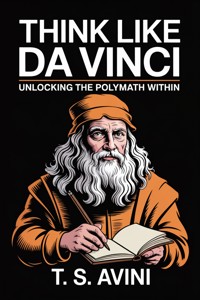
"Think Like Da Vinci: Unlocking the Polymath Within" is an enlightening exploration of how to cultivate the boundless curiosity and innovative spirit of one of history's greatest minds. Discover how Leonardo da Vinci's approach to art, science, and creativity can empower you to break through conventional thought barriers and unlock your own potential. This book guides you through:
- Mastering the art of observation to uncover hidden patterns in everyday life.
- Learning to balance the focus and diversity necessary to master multiple disciplines.
Whether you're looking to enhance your problem-solving skills or seek inspiration for your creative endeavors, "Think Like Da Vinci" offers a blueprint for transforming your curiosity into a powerful tool for lifelong learning and success. Embark on your journey to think like a modern polymath and unleash your own Renaissance spirit today!
Das E-Book können Sie in Legimi-Apps oder einer beliebigen App lesen, die das folgende Format unterstützen:
Veröffentlichungsjahr: 2025
Ähnliche













Think Like Da Vinci
Think Like Da Vinci
Think Like Da Vinci
Table of Contents
Chapter 1: Introduction: Embracing the Polymath Spirit
Chapter 2: The Renaissance of Thought: Da Vinci's World
Chapter 3: The Curious Mind: Cultivating Lifelong Curiosity
Chapter 4: Art and Science: Bridging Creativity and Logic
Chapter 5: The Power of Observation: Seeing the Invisible
Chapter 6: Questioning the Known: The Art of Critical Thinking
Chapter 7: The Anatomy of Nature: Understanding the World Through Study
Chapter 8: Drawing Connections: Interdisciplinary Thinking
Chapter 9: The Sketchbook of Ideas: Harnessing Visualization
Chapter 10: The Language of Innovation: Communicating Ideas Effectively
Chapter 11: Experimentation and Play: Embracing Trial and Error
Chapter 12: The Habit of Reflection: Learning from Experience
Chapter 13: Balancing Focus and Diversity: Mastering Multiple Interests
Chapter 14: Emulating the Masters: Learning from History’s Greats
Chapter 15: Simplicity and Depth: Mastering Complexity
Chapter 16: Resilience and Persistence: Overcoming Failures
Chapter 17: The Role of Mentorship: Learning from Others
Chapter 18: Personal Vision: Defining Your Polymath Path
Chapter 19: Cultivating a Renaissance Environment: Encouraging Innovation
Chapter 20: Conclusion: Rediscovering the Da Vinci Within
About the Author
Title Page
Table of Contents
Think Like Da Vinci
Unlocking the Polymath Within
by T. S. AVINI
Table of Contents
1. Introduction: Embracing the Polymath Spirit
2. The Renaissance of Thought: Da Vinci's World
3. The Curious Mind: Cultivating Lifelong Curiosity
4. Art and Science: Bridging Creativity and Logic
5. The Power of Observation: Seeing the Invisible
6. Questioning the Known: The Art of Critical Thinking
7. The Anatomy of Nature: Understanding the World Through Study
8. Drawing Connections: Interdisciplinary Thinking
9. The Sketchbook of Ideas: Harnessing Visualization
10. The Language of Innovation: Communicating Ideas Effectively
11. Experimentation and Play: Embracing Trial and Error
12. The Habit of Reflection: Learning from Experience
13. Balancing Focus and Diversity: Mastering Multiple Interests
14. Emulating the Masters: Learning from History’s Greats
15. Simplicity and Depth: Mastering Complexity
16. Resilience and Persistence: Overcoming Failures
17. The Role of Mentorship: Learning from Others
18. Personal Vision: Defining Your Polymath Path
19. Cultivating a Renaissance Environment: Encouraging Innovation
20. Conclusion: Rediscovering the Da Vinci Within
Chapter 1: Introduction: Embracing the Polymath Spirit
In an era where specialization is often revered as the pinnacle of professional achievement, the notion of the polymath—the individual whose knowledge and skills span a wide array of subjects—seems curiously antiquated, almost like a relic of the Renaissance. I used to completely misunderstand this.
Yet, for those who yearn to transcend the conventional boundaries of knowledge, embracing the polymath spirit is not only possible but also profoundly enriching. Welcome to a journey that seeks to unlock the polymath within you—an adventure that draws inspiration from one of history’s most celebrated polymaths: Leonardo da Vinci. Nobody ever told me this directly — I had to learn it.
Leonardo da Vinci, the quintessential Renaissance man, embodies the essence of the polymath spirit. Painter, scientist, sculptor, engineer, anatomist, botanist—his insatiable curiosity knew no bounds. Da Vinci did not compartmentalize his interests; instead, he pursued them with equal fervor, allowing them to inform and elevate each other. I used to completely misunderstand this.
It is this cross-pollination of disciplines that we admire and aspire to recreate. We are living in a time of unprecedented access to resources and information. This presents a thrilling opportunity to revive and reshape the polymath paradigm. It might sound dramatic, but this matters.
As strange as it sounds, Embracing the polymath spirit begins with nurturing curiosity. As children, we are naturally curious, insatiably inquisitive about the world around us. Yet as we grow, societal norms often channel our paths into narrower fields. Let me tell you, this changed how I think.
Rediscovering this innate curiosity is the first step towards becoming a polymath. Leonardo maintained the curiosity of a child but applied the discipline of an adult—a powerful combination. One need not forsake specialization to nurture a polymath mindset; rather, one should explore connections between diverse fields, allowing each to enliven and contextualize the other. It is about weaving a tapestry of knowledge where each thread enriches the whole. It might sound dramatic, but this matters.
A pivotal aspect of adopting this mindset involves erasing the fear of stepping outside one's comfort zone. Leonardo was never daunted by the blank canvas—he embraced the unknown with an open mind, ready to learn and adapt. It might sound dramatic, but this matters.
This perpetual openness to new ideas and challenges is critical for modern polymaths. It is not about excelling in every domain but rather rejecting the constraints of singularity and embracing the beauty of interdisciplinary synergy. I used to completely misunderstand this.
Another crucial pillar of the polymath spirit is integrating arts and sciences. In Leonardo’s time, there was no such demarcation; today, these boundaries are all too prevalent. Yet the most significant breakthroughs often occur at the intersection of diverse disciplines. I used to completely misunderstand this.
Innovation is born where art amplifies science, where technology reimagines creativity, and where mathematics shapes new aesthetics. Da Vinci leveraged his artistic sensibilities to inform his scientific inquiries, and vice versa. A modern polymath harnesses this duality, mining the rich interfaces between disparate fields for new insights and creative solutions. Let me tell you, this changed how I think.
Pursuing polymathy is not without its challenges. The world today demands focus and rapid specialization, rewarding experts more than generalists—on the surface, at least. I used to completely misunderstand this.
Beneath this lies a growing recognition of the value in breadth. In complex systems, which characterize much of today’s societal, technological, and ecological landscapes, insight necessitates diverse perspectives. The polymath spirit thrives in recognizing patterns, making atypical connections, and imagining possibilities unseen by those bound within their silos. Let me tell you, this changed how I think.
How then does one nurture this spirit in an increasingly compartmentalized world? The answer begins with a mindset shift. Cultivate an attitude that values the process of learning, not just the accumulation of knowledge. Here’s the truth nobody talks about.
Leonardo’s notebooks were a testament to his learning journey, filled with sketches, observations, and questions. This sense of relentless inquiry should inspire how we approach our own notebooks, be they paper or digital. Document your explorations, maintain journals that serve as reservoirs of thought and reflection, and allow yourself to digress into fields that intrigue you, however alien they may initially seem. Let me tell you, this changed how I think.
Equally important is seeking collaborators. The solitary genius is a myth; even Da Vinci was part of thriving intellectual circles that stimulated his thinking and broadened his horizons. Let me tell you, this changed how I think.
Engage with communities that transcend disciplinary boundaries, immerse yourself in dialogues that challenge your perspectives, and collaborate across fields. True polymathy flourishes in an ecosystem of shared knowledge and co-creation. Nobody ever told me this directly — I had to learn it.
Finally, we must redefine success. It might sound dramatic, but this matters.
In the polymathic pursuit, success is not confined to mastery over a particular domain but is measured by the richness of one’s intellectual tapestry, the breadth of one’s experiences, and the depth of one’s understanding of how interconnected our world truly is. It celebrates the joy of perpetual discovery, of constantly evolving and growing across the multiple facets of human knowledge. Let me tell you, this changed how I think.
As we embark on this journey to unlock the polymath within, let us be guided by Da Vinci’s example—his passion for discovery, his relentless pursuit of knowledge across boundaries, and his profound understanding that all knowledge is interrelated. I used to completely misunderstand this.
Embracing the polymath spirit is not a rejection of specialization but a recognition that our world, and our potential within it, is infinitely richer and more complex than any single field can encompass. Here’s the truth nobody talks about.
So, open your mind to the vast expanse of human curiosity, challenge the constraints of convention, and dare to think like Da Vinci. I used to completely misunderstand this.
Embrace the polymath spirit as a way of life, and you’ll find that the world is a much more fascinating place, filled with endless opportunities for connection, creation, and understanding. Welcome to the journey of discovering the polymath within you. Nobody ever told me this directly — I had to learn it.
Chapter 2: The Renaissance of Thought: Da Vinci's World
The brushstrokes of innovation and enlightenment spread across Europe like a breathtaking fresco during the 15th and 16th centuries, a period of rebirth popularly known as the Renaissance. Here’s the truth nobody talks about.
This era was a confluence of classical wisdom and nascent exploration, a crucible where human creativity and intellectual vigor intermingled to produce some of the most influential advancements in art, science, philosophy, and literature. To truly unlock the polymath within, one must first understand this Renaissance of thought through the lens of its quintessential icon: Leonardo da Vinci. It might sound dramatic, but this matters.
Picture Italy during Leonardo's lifetime: a tapestry of city-states, each a hub of commerce, politics, and vibrant cultural exchange. Here was a world poised on the brink of modernity, shedding medieval shackles and embracing the potential of human achievement. Nobody ever told me this directly — I had to learn it.




