


Erhalten Sie Zugang zu diesem und mehr als 300000 Büchern ab EUR 5,99 monatlich.
- Herausgeber: Luath Press
- Kategorie: Lebensstil
- Sprache: Englisch
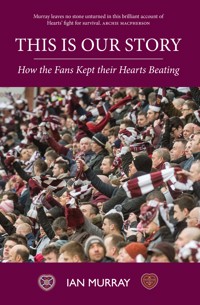
Imagine if your club, the love of your life, was about to play its last ever game. The club you've cheered on as a child, which your family has supported for generations, whose colours you have dressed in every Saturday. How would you feel? This is his story of Heart of Midlothian, Edinburgh's oldest football club, and the 8,000 heroic fans (or Jambos, as they're affectionately known), who donated their own money to help rescue 'the boys in maroon'. Former Chair of the Foundation of Hearts Ian Murray here chronicles the unprecedented story of the turmoil and uncertainty that the club battled in the fight against liquidation. This book honours Hearts fans and their sheer determination to rescue their beloved club from the brink of extinction and raise it back up to the top of Scottish football. This is our story, this is our song...
Sie lesen das E-Book in den Legimi-Apps auf:
Seitenzahl: 569
Veröffentlichungsjahr: 2020
Das E-Book (TTS) können Sie hören im Abo „Legimi Premium” in Legimi-Apps auf:
Ähnliche
















IAN MURRAY was born in Edinburgh in 1976. He attended his first Hearts game in 1985 whilst at Dumbryden Primary School. He left Wester Hailes Education Centre at the age of 16 to study Social Policy, Politics and Law at the University of Edinburgh. After graduating, he briefly worked in financial services before starting his own event management business, 100MPH Events Limited. He ran one of the largest events at the Edinburgh Festival and was an innovator in broadcasting on the internet. He also owned and ran a hotel and two bars in Edinburgh.
Alongside running his own businesses, he was elected to the City of Edinburgh Council in 2003 for the Alnwickhill ward and was re-elected in 2007 for the larger Liberton/Gilmerton Ward. As a Councillor, he specialised in economic development and planning.
In 2010, Ian was elected as the Member of Parliament for Edinburgh South. He was appointed Shadow Minister for Trade, Industry and Employment until the General Election in 2015 when he was returned to Parliament as the sole Labour MP from Scotland. He was promoted to Shadow Secretary of State for Scotland in 2015 and held the position until he resigned in 2016.
He was re-elected with the largest majority in Scotland at the snap General Election in 2017 and currently serves on the Foreign Affairs Select Committee.
In 2013, he was appointed independent Chair of the Foundation of Hearts and served on the Board of Heart of Midlothian Football Club 2014–15. He is a Trustee of the McCrae’s Battalion Trust.
Ian is a lifelong Jambo and has always lived in Edinburgh. This is Our Story is his first book.
First published 2019
ISBN: 978-1-912387-69-4
The paper used in this book is recyclable. It is made from low chlorine pulps produced in a low energy, low emission manner from renewable forests.
Printed and bound by Ashford Colour Press, Gosport
Typeset in 11 point Sabon by Lapiz
The author’s right to be identified as authors of this work under the Copyright, Designs and Patents Act 1988 has been asserted.
© Ian Murray
For every Hearts supporter who believed.
Dedicated to the memory of my dad, James Murray, who left the pitch far too soon.
To my brother, Alan Murray, who has shared all these footballing memories with me.
In memory of Robert Wilson, Elaine Bruce, Elaine Spence, John McBride, Jane Rankin, Ron MacNeill and Pilmar Smith.
Contents
Acknowledgements
Relevant Chronology
INTRODUCTIONIt’s the Hope that Kills You
CHAPTER 1 The Romanov Rollercoaster from Marmeladentörtchen to Salt and Sauce
CHAPTER 2 Hearts in Green and Yellow
CHAPTER 3 Hearts Nearly Stop Beating
CHAPTER 4 The Fans’ Battle to Keep Hearts Alive
CHAPTER 5 Ball Kickers, Tyre Kickers and CICS
CHAPTER 6 To Chair or Not to Chair
CHAPTER 7 The Right People, the Right Time with Not Enough Time
CHAPTER 8 Founding the Foundation
CHAPTER 9 Budgein’ the Figures
CHAPTER 10 A Pint for £2.50?
CHAPTER 11 The Tip into Administration
CHAPTER 12 Hearts and the Hobbit
CHAPTER 13 Bids and Bobs
CHAPTER 14 Three, Two, One… Preferred Bidder
CHAPTER 15 A Chorus of Drawdowns and Putdowns
CHAPTER 16 Scrooge Jackson Cancels Christmas
CHAPTER 17 Deal Done
CHAPTER 18 Relegations, Celebrations and Budgements
CHAPTER 19 And Now, the End is Near…
ACKNOWLEDGEMENTS
With special thanks to the Foundation of Hearts team and all who helped
Foundation of Hearts Board:
Henry Snedden, Calum Robertson, Jane Lewis, Bill Alves, Brian Cormack, Alex Mackie, Jamie Bryant, Garry Halliday (and his mum), Alasdair Bruce, Stuart Wallace, Louise Strutt, Donald Ford, Barry McGonagle, Donald Cummings, Dougie Masterton
Advisors to the Foundation of Hearts Board:
Lawrence Broadie, Andy Grant, Kevin Windram, Marcia Campbell, Iain McLeod and Richard Atkinson
Those who helped to make it happen:
Rt Hon Lord George Foulkes, Ken Stott, Willie Hunter, Colin Chisholm, Tam Cowan, Steve Kilgour, Barry Cole, Gary Mackay, Leslie Deans, Jambos Kickback, Scott Wilson, Kenny Whittman
The team at Heart of Midlothian Football Club during the period of administration:
David Southern, Paul Kiddie, Fiona Sinclair, Janine Brown, John Murray and the team
All the players, former players and managers who helped, especially, John Robertson, Dave McPherson, Jim Jefferies, Dylan McGowan, Gary Locke, Billy Brown, Allan Preston, Rudi Skácel, Paulo Sérgio, Jimmy Sandison, Gilles Rousset and Stéphane Adam
BDO and their team:
Bryan Jackson, Trevor Birch, Robert Barclay, Duncan Raggett and the team at BDO
Peter Duff and Keith Anderson at Morrisons LLP
The key players in Lithuania:
Asta Skaisgirytė-Liauškienė and her team at the Lithuanian Embassy
Deimantė Korsakaitė, Gintaras Adamonis and their team in Lithuania
Professional advisors:
Grigor Milne, Chris Walters and the team at Dundas & Wilson John Reid, Kristopher Keane and the team at Deloitte Graeme Henry and his team at DLA Piper
June Sinclair at JS Accounting Services
John Walker, Alan Glen, Kay Thomson and the team at Scott Moncrieff
Members of the press and media
Others who contributed to the book:
Archie Macpherson, Stewart Fraser, George Burley, Shaun Milne, Euan McGrory, Martin Whitfield MP, Andrew Frame, Ken Fruish and Mark Smith
Ann Budge, Eric Hogg, Craig Levein, Ann Park, Scot Gardiner, and all at the club
Relevant Chronology
1874 Club founded
1875 Became members of the Scottish Football Association
1878 The famous maroon colours were adopted after a laundry accident bleached the white kit
1881 Moved to Tynecastle Park in Gorgie Road
1891 Won the Scottish Cup for the first time
1895 Division 1 champions
1896 Won the Scottish Cup for the second time
1897 Division 1 champions
1901 Won the Scottish Cup for the third time
1906 Won the Scottish Cup for the fourth time
1914 In August, started the season with eight straight victories
Sir George McCrae got permission to raise the 16th Royal Scots Battalion
1915 In September, Pte. James Speedie, 7th Cameron Highlanders killed in action
In October, Cpl. Thomas Gracie, 16th Royal Scots died in service
1916 On 1 July, Sergt. Duncan Currie, 16th Royal Scots killed in action; Pte. Ernest Ellis, 16th Royal Scots killed in action; Pte. Henry Wattie, 16th Royal Scots killed in action
In August, L-Cpl. James Boyd, 16th Royal Scots killed in action
1917 In April, Sergt. John Allan, 9th Royal Scots killed in action
1922 In April, the club’s war memorial was unveiled at Haymarket before a solemn crowd of 35,000
1926 Gunner Robert Mercer and Hearts captain in 1914–15, 16th Royal Scots died of disease related to wartime gassing
1928 Sir George McCrae, 16th Royal Scots died
1933 Pte. Paddy Crossan, 16th Royal Scots died of tuberculosis
1955 Won the Scottish League Cup for the first time
1956 Won the Scottish Cup for the fifth time by defeating Celtic 3–1 at Hampden
1957 Division 1 champions
1959 Won the Scottish League Cup for the second time
1960 Division 1 champions and won the Scottish League Cup for the third time
1963 Won the Scottish League Cup for the fourth time 1980 Championship winners
1988 Reached the quarter-final of the UEFA Cup and defeated Bayern Munich 1–0 at home
1994 Chris Robinson and Lesley Deans purchased Hearts from Wallace Mercer
1995 Jim Jefferies became Hearts manager for the first time
1998 In February, Stewart Fraser appointed Finance Director and Company Secretary In May, won the Scottish Cup for the sixth time by defeating Rangers 2–1 at Celtic Park
2000 Jim Jefferies sacked as manager to be replaced by Craig Levein
2004 In January, Chris Robinson announced the sale of Tynecastle to clear club debts. This led to the proposal to move to Murrayfield, the home of Scottish Rugby
In April, Lord George Foulkes became Chair of Hearts In September, Chris Robinson agreed to sell his shares to Vladimir Romanov In October, manager Craig Levein left Hearts to take over at Leicester City to be replaced by John Robertson
2005 In January, Romanov cancelled the sale of Tynecastle and guaranteed debt of over £20 million
In February, Romanov gained 29.9 per cent of Hearts to get control
In May, Phil Anderton replaced Chris Robinson as Chief Executive and David Southern joined the club as new Marketing and Communications Director
In June, George Burley was appointed manager after sacking of John Robertson
In August, Hearts got off to their best start to a season since 1914 In October, George Burley was sacked after eight wins and two draws in the first ten league matches, Lord George Foulkes resigned as Chair and Phil Anderton was sacked. Vladimir Romanov’s son, Roman, took over from both Lord Foulkes and Anderton Graham Rix appointed manager and Stewart Fraser resigned as Board Director but remained Company Secretary and Head of Finance
In November, Campbell Ogilvie appointed Operations Director
2006 In March, Graham Rix was sacked as manager to be replaced by Valdas Ivanauskas
In May, qualified for the Champions League for the first time Won the Scottish Cup for the seventh time by defeating Gretna on penalties at Hampden
2007 In March, Valdas Ivanauskas was sacked and replaced by Anatoliy Korobochka In July, Hearts debt reached £37 million
2008 In January, Anatoliy Korobochka was sacked as manager and replaced by Stephen Frail
In March, Campbell Ogilvie became Chief Executive
In July, Hearts announced a debt of equity to reduce debt by £12 million and sacked manager Stephen Frail to be replaced by Csaba László
In October, player wages were not paid on time
In November, players were not paid for the second time
2010 In January, Csaba László was sacked as manager to be replaced by Jim Jefferies for his second spell in charge
In September, David Southern became Chief Executive after Cambell Ogilvie left to become President of the Scottish Football Association In September, Hearts reduced debt by a further £10 million by selling shares, giving Romanov 98 per cent of the club. Following this, the debt stood at £25 million
In October, Alex Mackie, Brian Cormack, Garry Halliday, Donald Ford and Jamie Bryant formally constituted the Foundation of Hearts (FOH)
2011 In April, Stewart Fraser left role as Company Secretary In August, Jim Jefferies was sacked as manager to be replaced by Paulo Sérgio
In October, player and staff wages were not paid again
In November, player and staff wages were not paid again
2012 In May, won the Scottish Cup for the eighth time by defeating arch rivals Hibs 5-1 at Hampden in the ‘salt and sauce’ final
In June, Paulo Sérgio left as manager after new contract discussion broke down to be replaced by John McGlynn
In October, Hearts launched a share issue to raise £2 million
In November, Hearts were issued with a winding up order by the Court of Session in Edinburgh for repeated failures to pay tax liabilities on time. Ian Murray became involved in helping Hearts with the tax case
Hearts Board issued a statement saying the St Mirren match could be the club’s last
Foundation of Hearts offered £450,000 to pay off tax debts in return for ownership of Hearts
St Mirren match was played after successful negotiation on tax liabilities
In December, share issue raised over £1 million
2013 In February, John McGlynn was sacked as manager to be replaced by Gary Locke
ūkio Bankas entered administration, with Hearts owing £15 million secured against the stadium
In March, Hearts lost League Cup Final to St Mirren 3–2 at Hampden
In April, Ian Murray became Chair of FOH and was joined on the FOH Board by supporter groups representatives, Henry Snedden, Jane Lewis, Calum Robertson, Bills Alves and Dougie Masterton
In May, Hearts issued a statement saying they needed £500,000 to survive the summer and put entire squad up for sale
In June, Hearts entered administration, Bryan Jackson and Trevor Birch from BDO were appointed as administrators. Fans were asked to buy 3,000 extra season tickets to prevent liquidation
In July, FOH-backed bid from BIDCO was submitted with proposal to take club into fan ownership for £2.5 million
Hearts started the Premier League season with a 15-point deduction
In August, FOH-backed BIDCO bid was given preferred bidder status In November, Hearts parent company, UBIG, formally declared insolvency and entered administration
2014 In April, Hearts were relegated despite a 4–2 victory at Partick Thistle
In May, the FOH-backed BIDCO deal was completed and Ann Budge took control of Hearts as the new Chair and Chief Executive. Eric Hogg was appointed Operations Director. Ann Park was installed as Head of Commercial
Ian Murray joined the new Hearts Board as FOH representative Craig Levein appointed as new Director of Football
Gary Locke and Billy Brown left Hearts after not being offered new contracts, due to Ann Budge changing the management structure of the club
BIDCO deal with FOH agreed to see fan ownership in five years
Supporter groups representatives resigned from FOH with Alastair
Bruce joining the FOH Board
Hibs were relegated to the Championship after a play-off defeat to Hamilton
In June, Hearts officially exited administration
In July, David Southern announced he was to leave Hearts
In October, Donald Cummings from Dundas & Wilson joined the FOH Board and Marcia Campbell became a special advisor
In December, FOH held its first AGM and members elected Barry McGonagle to the FOH Board
2015 In March, Hearts won the Championship by 21 points and with seven games remaining
In May, Ian Murray resigned as Chair of FOH and representative on the Hearts Board to be replaced by Brian Cormack
In September, Donald Cummings appointed to Hearts Board as second FOH representative
In December, the FOHAGM was held and Louise Strutt became a Director of FOH through a vote of members
2016 In May, Hearts finished third in the inaugural season back in the Premier League and qualified for the Europa League FOH approved £3 million contribution towards the funding of the new main stand and delayed repayment of BIDCO for two years
In August, Hearts lodged a planning application to build a new main stand
In December, Robbie Neilson left Hearts to become manager at Milton Keynes Dons to be replaced by Ian Cathro
2017 In February, Brian Cormack stepped down as Chair of FOH and Hearts Board representative to be replaced by Stuart Wallace
In May, Hearts finished the football season fifth in the Premier League
In June, John Robertson left Hearts Ambassador role to take up the managerial position at Inverness Caledonian Thistle. He was replaced by Gary Locke
In August, Ian Cathro was dismissed as manager to be replaced by Director of Football, Craig Levein for his second spell in charge In November, FOH held their AGM
2018 In May, FOH completed the final instalment of the £3 million towards the new main stand
Hearts finished the Premier League season in a disappointing sixth place
In December, Hearts officially opened their new 7,000 capacity main stand and FOH held their fourth AGM
2019 In May, Hearts finished in a disappointing sixth place in the Premier League but reached the Scottish Cup Final losing 2–1 to Celtic
In July, Ann Budge won the prestigious Edinburgh Award for business success, community work, and services to sport in the city
2020? In June, FOH will become the majority shareholder in Heart of Midlothian Football Club and take it into full fan ownership with a 79.9 per cent shareholding after contributing over £10 million to Hearts finances
(‘Premier League’ is reference to the top league of Scottish Football. This has been called the Premiership and First Division. Reference to ‘Championship’ means the second-tier league in Scotland.)
INTRODUCTION
It’s the Hope that Kills You
This is my story, this is my song.
Follow the Hearts and, you can’t go wrong.
For some say that Rangers and Celtic are grand.
But the boys in maroon are the best in the land.
AT 4.55PM on Saturday 25 May 2019, more than 22,000 Hearts supporters funnelled out of Scotland’s national football stadium, having watched a spirited display in the Scottish Cup Final. As the fans filled the air with the famous Hector Nicol Hearts song, there was pride that their favourites had brought the curtain down on the 2018/19 campaign with a performance that had lifted the spirits after an up-and-down season. We didn’t bring the legendary old trophy back to Edinburgh, having lost to Celtic by two goals to one, but it was certainly a case of ‘what might have been’. The historic precedent of supporting Hearts was that it is always the hope that kills you. This was upheld that day.
The very fact that Heart of Midlothian FC was even able to play in a cup final was the real victory. Hearts’ last final in 2012 ushered in the most uncertain and rocky period in the 145-year history of the club.
As the fans, who had sung themselves hoarse, were meandering and weaving away from Hampden Park looking forward to their summer holidays, they should have been the proudest fans in the world. Not only did they save their club but they were now on the brink of owning it. The history of Hearts safeguarded for everyone to enjoy and the club secured for future generations of ‘Jambos’ to return to Hampden Park for showcase matches.
In just six years, the fans have gone from the nightmare of having to comprehend the club that they love being confined to the history books of Scottish football, to seeing their favourites come within a whisker of winning the cup and returning to the pinnacle of the game.
It doesn’t really matter which football team you support, we can all share the joy and pain of fellow fans. That’s what makes football the most magnificent of sports. It brings people and communities together like no other. Lifelong loyalties are forged and tested. The old saying that you can choose your friends but not your family is no longer true, as you can even choose your family these days. One thing is true: when you become a supporter of a football club, it is for life. It’s an association that will always be with you ‘til death do you both part. Nick Hornby wrote in his enthralling footballing book, Fever Pitch, ‘Few of us have chosen our clubs, they have simply been presented to us’. That was certainly the case for my elder brother, Alan, and me. We were presented with Heart of Midlothian Football Club by the wider Murray family. That was it. We were born into this world and therefore we would be Hearts supporters for life.
I had travelled to the Cup Final with Alan. We had gone to every final and semi-final together since 1986. Despite the apprehension of the game, we had to keep reminding ourselves that this was only the 15th Scottish Cup Final that Hearts had participated in since the club was founded in 1874. We have only won seven. These were the moments that all Hearts fans should savour. After all, history shows us that we may never see another one.
This cup final in particular had a more poignant resonance than any of the others. It came almost five years to the day since Heart of Midlothian Football Club exited administration after the most turbulent period in its history.
It may not have been most poignant or memorable for my brother though. I think that may have been the Scottish Cup Final of 1998 and for non-footballing reasons. Hearts hadn’t won the Scottish Cup for 42 years when we defeated Falkirk in the semi-final in 1998. We would play the all-conquering Rangers in the final. After the semi-final, he called his partner, Nicola, as we celebrated the victory at the Dell Inn in Edinburgh. He decided that, given the long wait for a Scottish Cup victory, he could confidently promise that he would ask Nicola to marry him should we go on to win the final.
I wouldn’t want to speculate but I think the offer was made through the prism of an overindulgence in post-semi-final euphoric alcohol consumption and his attempt to get permission for a few more hours in the pub. Anyway, to those not of a Hearts persuasion, we won the final by two goals to one and lifted the trophy for the first time since 1956. Alan followed through on his promise made whilst tired and emotional and married Nicola in 2000. So, whilst I have said that sometimes you can choose your family, in this case, it was Hearts that chose Alan’s family. I told this story during my best man speech at their wedding. I departed from the usual protocol and said that winning the Scottish Cup in 1998 was the best day of our lives. I winked at him as he gave a thumbs up in front of his new wife. I don’t think he was even kidding. That is what Hearts means to us Murrays.
And that’s what football means to all Hearts supporters. When the club needed them most, they rallied to the cause. The fact that we were able to make another Scottish Cup Final at all was down to them. The coming together of more than 8,000 ordinary supporters donating their hard-earned money to saving the club would be at the forefront of my mind as we headed to Hampden. These are the fans, like me, who were ‘presented’ with Hearts as their club. These are the fans that have all celebrated the highs and cried at the lows. In fact, many will have also cried at the highs. I know I have. This Cup Final was for them.
Back in 2005, Hearts supporter Craig Watson wrote a book called The Battle for Hearts and Minds. It examined the period from the early 1980s up to the proposal by owner, Chris Robinson, to sell Tynecastle and move to the home of Scottish rugby. The final chapter of that book is how Lithuanian oligarch Vladimir Romanov bought Hearts to prevent the sale of our historic Tynecastle Park ground. The final two sentences of the book say:
Those who guard Heart of Midlothian’s destiny today should take heed of the club’s past perils, recent and distant. There must never again be any need to save our Hearts.
Within seven short years after this was written, Hearts was again in the eye of a financial storm that provoked a need to ‘save our Hearts’ for the second time in less than a decade. It was a crisis that engulfed the club to the extent that Hearts may have played their last ever game. Those who bought Hearts in 2005 to ‘safeguard the destiny’ of the club were on the verge of eclipsing the ‘past perils’ resulting in Hearts disappearing forever – becoming the Third Lanark of the 21st century.
What I think some owners forget is that Heart of Midlothian, or any football club for that matter, should be bigger than one individual. I’m afraid recent history shows that for much of the last few decades that has not been the case. A succession of owners has failed to handle that most important of points.
The supporters rallied back in 2005 to prevent their spiritual home from being sold and they would have to rally again as never before. It was for that group of fans to ensure that, finally, Heart of Midlothian would move away from a fickle ownership model to be owned by them – the club’s best customers, its loyal support. That way there was a chance that the sentiments expressed in Craig Watson’s book would come true.
11 June 2019 would be five years to the day since the Court of Session approved the legal documents that resulted in FOUNDATION OF HEARTS (FOH) tweeting:
The club is officially out of administration. We said in March [2014 to put the champagne in the fridge. Today you have permission to pop the cork.
Although the journey from Hampden that Saturday is a good place to start this story of how the fans saved their Hearts, the end of that journey will come shortly after the Scottish Cup Final in 2020. Hearts may or may not appear in the final for a second year in a row but what will happen will be much more significant – the supporters of Heart of Midlothian Football Club will become the majority shareholder owning 79.9 per cent. They will own the past and can shape the future. They will have saved it for future generations and ploughed in over £10 million. That has the chance of allowing the club to fulfil its true potential, not only as the heart and soul of Edinburgh, but the heart and soul of Scottish football. This book is about that fight, how it was done, and how the supporters became the owners of Hearts.
The only constant in any football club are its supporters. It is only supporters who are genuinely interested in its well-being. Heart of Midlothian Football Club should therefore belong to the people who care for it the most. This won’t be a story that will be unfamiliar to supporters of many football clubs, but this is the story of my club. The fight for the very existence of Heart of Midlothian Football Club was at stake. The stories in this book are my recollections. Some may disagree with the detail but this is how I saw and recorded it. It is a marvellous journey from the threat of the last ever Hearts game to a fan-owned club.
This is my story, this is our song…
CHAPTER 1
The Romanov Rollercoaster from Marmeladentörtchen to Salt and Sauce
THE FINANCIAL PROBLEMS at Hearts were not a new phenomenon. The early 1980s saw the club crippled with debt. It was only by the intervention of previous owner and Chairman, Wallace Mercer, with his close ally, Pilmar Smith, that saved the club from dire circumstances. However, this was, in the history of the club, a mere temporary reprieve.
Although Hearts was back from the brink in the mid-1980s with regular title challenges, Cup Finals, and the flirtation with the very best in European football, the financial situation was no different to most other clubs.
For a club like Hearts, there is always the need to try and compete with the big two of Celtic and Rangers. Their financial prowess and spending abilities are many multiples of the next nearest. The decision for any football club owner is whether you live within your means or take the gamble to try and break the duopoly. Some have succeeded in the form of the ‘New Firm’ of Dundee United and Aberdeen in the earlier part of the 1980s. No club has managed a title-winning side outside the big two since.
Hearts comfortably occupy third place in the all-time Premier League standings behind the top two of Celtic and Rangers respectively. It is hardly surprising that, just now and again, there is a glimmer of hope in taking the league crown, progressing to the lucrative stages of European competition, and building an infrastructure that sustains this for a few seasons. I have been watching Hearts since the mid-1980s. At that point in Hearts history, anything was possible. We even flirted with the Premier League title. Regular European football saw some of the best clubs in Europe grace the Tynecastle turf. Looking back, who would have thought that Hearts would defeat the mighty Bayern Munich in the first leg of a European cup quarter final? The return leg in Munich was heartbreaking for the ‘Jam Tarts’. We should have won it comfortably. The semi-final would have brought Diego Maradona’s Napoli to Edinburgh. The match in Munich has been replayed by Hearts fans for the last 30 years.
My favourite story is recalled by a friend and former colleague, Andrew Frame, who was in Munich with future assistant referee, James Bee. As a souvenir, they picked up a German fanzine that contained a summary of Hearts history translated into German. It had a section on nicknames. Bayern Munich have several but we know them best as ‘Bayern’. The literal translation of ‘Jam Tarts’ is ‘Marmeladentörtchen’, meaning a tart of jam. Bayern fans would come up to Andrew and James in the street, point to their Hearts scarf and proclaim ‘Marmeladentörtchen’ as a friendly acknowledgement.
Football has moved on considerably since those days. The chances of Hearts competing at that level are, if we were being honest, all but gone. The consistent problem is the one of finance. This book is not about the history of Heart of Midlothian Football Club, but I think it is right start by examining how the club got into the financial mess. A mess that questioned its very existence.
When former co-owner and Chief Executive of Hearts, Chris Robinson, and major shareholder, Lesley Deans, sold their majority shareholding in the club to Vladimir Romanov in 2005, the club was teetering on the brink. It had an eye-watering debt reported to be close to £20m and had proposed to sell their spiritual home of Tynecastle Park to Cala Homes. That sale would pay off crippling debt but force them to move to the home of Scottish Rugby, the 67,500-capacity Murrayfield Stadium. At the same time, Scottish football was probably going through the worst financial crisis in generations. It is little wonder given the way football was supported by the financial institutions they banked with.
Stewart Fraser, Hearts Finance Director, and Chris Robinson would go to the Bank of Scotland headquarters on the Mound in Edinburgh on an annual basis to see if they could extend the club’s overdraft. After winning the Scottish Cup in 1998, the Hearts Board decided to invest in re-signing players who had featured in the famous Cup run, along with new players, both at higher wages than previously. This was in the belief that it would be paid for with the income from increased attendances brought about by our historic success. Hearts wanted to keep the winning team together but also to invest. Unfortunately, crowds remained pretty much the same as previously. The Hearts Board then spent the next few years trying to bring the wage bill down to get the turnover ratio back to industry norms. In the meantime, this necessitated requests to Bank of Scotland each year to increase the overdraft by £1 million. That was unsustainable. The real problem began when Halifax bought over Bank of Scotland. Ten of the 12 Scottish Premier League clubs were customers of the Bank of Scotland. All were put into their over exposure and high-risk centre.
That resulted in a very stark message from the bank to Chris Robinson. He was told he had to do ‘something creative’ to get Hearts’ overdraft down. A stadium move was the only real option for raising the kind of sums required. That was where the idea to share a stadium with Hibs at Straiton came from. There was a subsequent meeting of the Federation of Hearts Supporters clubs in the Gorgie stand to discuss the Straiton option. The Federation was against it. Hibs initially supported looking at the idea as they were in a similar financial situation but they abandoned it when their fans went against this in a big way. That left Hearts on their own. They really couldn’t make the finances of it work without a partner.
Many ask where the Murrayfield option came from. Allegedly, someone in the crowd at the Federation meeting shouted, ‘Have you ever thought of going to Murrayfield?’ and a bulb went off in Chris’ head. That was when the club started to look at it. Chris took many people across to Murray-field and everyone came to the same conclusion that it wouldn’t work. The problem was options were running out and so was the patience of the bank. £20.5 million was being offered by Cala Homes. It made financial sense if nothing else, if only to sort the club’s finances.
This was not what the supporters wanted and it sparked a furious reaction. Many fan-led organisations like Save Our Hearts (a pressure group formed by the Federation of Hearts Supporters clubs and the Hearts Trust that was disbanded shortly after Romanov took the reins) sprung up to try and stop Robinson from selling the ground. The ‘not fit for purpose’ document produced by the club to show why the ground had to be sold was roundly criticised. Ironically, the document would play a not inconsiderable part in the saving of Hearts a decade later.
One of the only other avenues was to find a suitable buyer who would have deep enough pockets to take on the massive debt and invest in the future. There were not many people coming forward, let alone being a serious proposition.
The only two that had even bothered to turn up to Tynecastle was a guy that called himself ‘Johnny’ from Nigeria. He had a rather nice lunch with Finance Director Stewart Fraser and Chairman, Lord Foulkes. After lunch Johnny went into the club shop for a look around. He availed himself of a large amount of Hearts merchandise. He had bags of strips, scarfs, mugs and hats. Everything that was maroon and white made its way into the hands of Johnny. Of course, he never paid a penny for any of this. Stewart Fraser pursued him for some months for payment but he was never seen or heard of again.
Then there was a consortium of Thai businesspeople. They were taken around the stadium by Stewart but all they really wanted to do was take pictures of the grand old lady and subsequently disappeared. I suspect these potential buyers were never serious contenders but the Board of the club had to leave no stone unturned in trying to find a way out of the financial mess that Hearts was in.
Two other potential purchasers, who would become regular names when it came to the ownership of Hearts, were Pat ‘the plumber’ Munro, who walked into the reception at Tynecastle one afternoon to say he wanted to see Chris Robinson to buy the club. He got palmed off on Hearts employee Kenny Whitman.
The other was Bob Jamieson. He will feature later in this story. At this time, he arrived at Tynecastle and tried to hand a cheque to Chris Robinson. It transpired, as I have been told, that after a little bit of due diligence, he was discovered to be a shoe salesman that others alleged was found to be living in a caravan just outside Edinburgh. You can see that there were very few potential buyers with any financial clout.
The only person was Vladimir Romanov. My good friend, and Chairman of the club at the time, Rt. Hon Lord George Foulkes described Romanov as being ‘the only show in town to buy Hearts and save Tynecastle’. Romanov had been to see other Scottish clubs – Dunfermline, Dundee and Dundee Utd – looking for a lame duck. There was no club lamer than Hearts at that time. It did save Tynecastle.
He did have the advantage of involvement in football. He already owned FBK Kaunas in his home country of Lithuania (who would later be seen as a sort of Hearts’ unofficial feeder club) and he had a stake in MTZ-RIPO Minsk from Belarus. There was a credible school of thought that Romanov was looking to launch his bank, ūkio Bankas, into the UK financial system. This required a rare banking licence that was not easy, or cheap, to obtain but having a successful business in Edinburgh, as one of the largest financial services sectors in Europe, would go a long way to establishing the credibility he required. His association with Hearts would help convince the financial authorities that ūkio could operate here. Hearts could prove to be a useful conduit for that purpose.
Many supporters will have a Marmite attitude to Vladimir Romanov. I think it would be unfair to label him as some sort of pariah. It is worth remembering that, despite his obvious eccentricities, he did deliver some of the most memorable moments in the history of the club. Who can forget the blistering start to the 2005/6 season under new manager, former Ipswich, Derby, Southampton, Crystal Palace and Scotland boss, George Burley?
It was new Hearts Chief Executive Phil Anderton who approached Burley to see if he would be interested in speaking about joining as manager. Burley was attracted by the challenge of Hearts under new ownership and with some money to spend to develop his own squad. Phil recommended to the Board that they appoint him and he was offered the job a few days later. Burley told me:
I quite fancied the challenge in Scotland and Edinburgh was a real draw. Hearts was an attractive proposition. I was aware that the team had a lot of positives with four or five great players and good characters. I was particularly enticed by the talents and potential of the spine of the team in Andy Webster, Paul Hartley, Robbie Neilson, Steven Pressley, and Craig Gordon. I would be able to invest in the team and build on that superb spine.
We had a nucleus but needed players, but Romanov had to give the go ahead. There were never going to be any fees involved but we had to pay big wages. We were paying very big wages.
Hearts always had a good youth set up with really good people behind it and that was the driver of getting good young players through. It is important to keep and nurture that for the future of football and I think in a few years’ time Hearts will really benefit from being ahead of the game on this.
Burley’s Hearts won the first eight games, including the one against Rangers at Tynecastle that resulted in the fans singing, ‘We are unbeatable’. The run also including a 4-0 humiliation of Hibs. It was this match that Burley recalls as the one that gave him his best memory. He recalled:
I have many, many happy memories from my time at Hearts. It was all too short but superb memories. I really enjoyed it. My best was against Hibs. You can’t beat the feeling of winning a local derby match, especially at home. The atmosphere at the club was already superb when we hammered Hibs four nil. My old mate Tony Mowbray was in charge of Hibs and I still remind him of that result to this day. He hates it. It still hurts.
It was the best start Hearts had enjoyed since the 1914/5 season; not only did they sit on top of the Premier League, they were 11 points ahead of champions Rangers. Many have said that Romanov was obsessed by wrestling the Championship title from the Old Firm duopoly and regularly competing in the Champions League. He certainly invested in the playing side to give that a shot.
Hearts fans were witnessing the start of something very special indeed. They were flocking back to Tynecastle like never before to watch players of a quality never witnessed before. The squad was peppered with Champions League and European Championship winners. There were players who had played at the very highest levels for club and country. There were players that would become historic cult figures, talked about in the pubs around Tynecastle for generations to come. The Mackay, Conn, Bauld and Ward-haugh of the 21st century.
Many supporters will often sit back and marinade themselves in their memories of Hearts but, for me, there were two pivotal moments that will always shape the Romanov period. Back on a dark Wednesday night at Tynecastle Park, Hearts played Aberdeen where a win would give them enough points to render the last day of the Scottish footballing season (when Hearts was due at Ibrox to play Rangers) irrelevant. Three points against Aberdeen at home would secure second place in the Premier League. That would mean Champions League football for the first time in the history of the club. Hearts would become the first non-Old Firm team to qualify.
What a night that was. A tense affair. As if there was ever any other type of affair when it came to critical games watching Hearts. It turned when, after 52 minutes, the referee, Stuart Dougal, pointed to the penalty spot. Aberdeen defender Russell Anderson had handled in the box. As the floodlights lit up the famous old ground, 17,327 Hearts supporters, clad from head to toe in the famous maroon, stood in almost complete silence as cult hero and player of the season, Paul Hartley, placed the ball on the penalty spot. For what seemed like an age, he struck the ball into the back of the net for a 1–0 win.
As the final whistle sounded, the famous Champions League anthem, ‘Zadok the Priest’ by George Frideric Handel, reverberated around a jubilant but stunned Tynecastle Park. Vladimir Romanov took to standing on the barrier in front of the Directors Box as ‘Vladimir Romanov, Vladimir Romanov’ rang out from the stands to the tune of ‘La donna è mobile’ from Verdi’s opera, Rigoletto. Hearts had made it to the Champions League qualifying rounds and we were going to enjoy that. There were a few happy tears shed that night. As an aside, the hundreds of Hearts supporters sitting reading newspapers at the start of the meaningless game with Rangers at Ibrox the following weekend was a fun sight. Everyone deserved that after a memorable season.
Many will have written about the following summer’s excursions into the Champions League but it is fair to say that a small part of the five-year plan to win the title and play regularly in the Champions League didn’t seem like such an unachievable dream after all.
In the end, it was a disappointing qualifying campaign. Hearts didn’t quite make it to the group stages after a 5-1 aggregate loss to AEK Athens but we could all say we were there. I don’t think the irony of playing Champions League home matches at Murrayfield was lost either. The maroon Romanov juggernaut was well and truly hurtling down the tracks and everyone was enjoying the ride.
Then there was arguably the most famous victory in the history of Hearts. The 2012 Scottish Cup Final win over Hibs. We had won the trophy in 2006 when we defeated Gretna on penalties but this was the first Scottish Cup Final between the two Edinburgh clubs for as long as anyone alive would have experienced.
Maybe this wasn’t the pinnacle that Romanov wanted but it was for the fans. I remember the semi-final against Celtic at Hampden. I couldn’t make the game so Alan and I went to Diggers Bar to watch it on TV. The nervousness that envelops watching most Hearts matches on TV manifests itself in drinking too much alcohol. Each pass, throw in or incident is greeted with another slurp of Diggers’ finest. To add a little more anxiousness, our bitter rivals Hibs had beaten Aberdeen 2-1 the afternoon before. They were awaiting the winners of our tie in the final. Gulp.
The script was playing out as expected. Hearts hero Rudi Skácel opened the scoring early in the second half and, if previous history was a guide, Celtic would equalise and go on to win the match. When Celtic did equalise, a deflated Diggers crowd was silent except for the odd ‘I knew it’ emanating from an exasperated fan. But the usual script was about to be ripped up. The improvisers had got hold of this match and they were going to do what Hearts fans had rarely witnessed – they were going to award a penalty to Hearts in the dying minutes. What joy. What pain. What nerves.
What was about to happen was extraordinary. History was about to take a great leap forward. I always remember my mate, former election agent and dyed-in-the-wool Jambo, Mike Howard, posing a question one night: ‘What is the difference between a great night out and an ordinary night out?’. After a great deal of toing and froing with guess after guess, I gave up. ‘Stories to tell,’ he said. And my goodness, if we were to apply this to our love of Hearts, we were just about to turn an ordinary football match into a great memory. We would recall this moment for years to come.
Striker Craig Beattie, signed after being released from Swansea in early 2012, decided that the history books of Heart of Midlothian Football Club deserved to have his name etched on this chapter. He stepped up and scored the penalty. 2–1 to Hearts with minutes to go. Diggers erupted. Gallons of alcohol of all flavours and styles flew through the air accompanied by an enormous roar. Every TV in sight was adorned by the image of Craig Beattie running behind the goal in front of the delirious Hearts supporters. He was stripped to the waist, twirling his number four shirt above his head. It would become the must-do thing for all celebrating Jambos in the coming weeks (I haven’t done that – well, at least not in public). He only made five appearances for Hearts but what an impact. All football fans dream of scoring an important winning goal and doing a ‘Klinsman’ or ‘Shearer’ or other dramatic celebration. Hearts fans now had the ‘Beattie’. We are all thankful for that.
The final whistle blew at Hampden that afternoon after a few lengthy minutes of onslaught on the Hearts goal from Celtic. But as the arms of Hearts fans at Hampden and in Diggers were raised in celebration, there was a realisation of what was about to come. I remember turning to my brother after our final whistle embrace and saying, ‘What the fuck have we just done?’ The enormity of a Scottish Cup Final against Hibs, who had not won the Scottish Cup in 110 years, was sinking in. The first Edinburgh Derby Scottish Cup Final in over 100 years. The Romanov Rollercoaster was to continue. All the financial problems were to be put to one side for a single match in May 2012 at the national stadium in Glasgow.
As an avid fan, I had quite enjoyed the run up to the 1998 Scottish Cup Final when Hearts defeated Rangers 2-1 to win their first Scottish Cup since 1956. Back then, the expectations were lower as we lost to Rangers two years previously in the League Cup Final and three years prior in the Scottish Cup Final. It is always difficult to defeat either of the Old Firm in a final so when it came it was slightly unexpected. The best day of my life. Was that about to be eclipsed in 2012?
The run-up to the ‘salt and sauce’ final was a little more fraught. I didn’t really sleep properly for over three weeks. Long nights lying in bed playing over and over in my head all the potential scenarios, wondering what the outcome would be. One of the key members of my parliamentary office team, John Griffiths, is also an ardent fan. He looked more and more tired as the weeks wore on when I walked into my office on Minto Street every Friday for my weekly advice session. We could barely discuss what we thought could or would happen. We sort of had an unspoken understanding that if we didn’t discuss it, the nervousness would disappear. When we did mention the unmentionable, it was to try and reassure each other. The omens were all pointing to Hibs breaking their 110-year Scottish Cup hoodoo against us. It just couldn’t happen. These conversations were like a mutual support group. They certainly didn’t help.
I’m sure fans of all clubs go through this in the run up to huge games but this, for me, was completely different. My experience was one of nervousness and fear. Others had altogether more acute problems. Calum Robertson, who would go on to become a key Director in the FOH, had a heart attack in the week leading up to the final. That is how much it affected him. However, respected comedian and football broadcaster, Tam Cowan, says it was nothing to do with the anticipation of the game and more to do with the fact that Calum was a ‘fat bastard’. Tam has never let Calum forget this. The travesty for Calum was that the doctors forbid him to watch any of the final. He was not in a fit state to do that to his heart.
Hearts fans will have repeatedly spoken of the run-up to the game and the day itself at every possible opportunity. It would be remiss not to give my short story as part of this book. The game was significant and the financial consequences utterly critical for the survival of the club.
The day itself started as any other away match did. I would make the short journey to Sighthill Bowling Club where the Longstone Hearts Supporters club buses were leaving from. Getting hold of a spare bus to take us to Glasgow was not easy given the number of fans from Edinburgh heading to our national stadium. That was made more evident to me when, after a quick pint (it was 10.00am), my brother, our fellow voyagers for decades and I left the bowling club. We were presented with a bright red double decker, emblazoned with the words ‘Golden Eagle’. It was hired from a company in North Lanarkshire. It was primarily used as a school bus and had a speed limiter of 40mph. It was less of a golden eagle and more of a dead parrot. This was not going to be a quick journey to Glasgow.
The bus crawled along the M8. I’m sure if we had walked it would have seemed quicker. Every other maroon- or green-clad vehicle on the motorway that morning sped past us. You could imagine the mocking that was going on inside their vehicles. Not only was its maximum speed 40mph but it took what felt like three days to get anywhere near that top speed.
Anyway, the lengthy trip allowed us time to reflect on away days of the past. We made comparison with the 1998 Scottish Cup Final, the final at Hampden when Rangers beat us 5-1 and some of the other sun-soaked semi-finals days out we had enjoyed as fans.
And what better place for a few pre-match pints in Glasgow at lunch-time than a nightclub? I know. The experiences of that day will never be matched. Hundreds of Jambos cramped into an establishment that would normally not see such an attendance until at least 2.00am on a Sunday (and, for that matter, a crowd of a much lower average age). It may have been a rather unorthodox start to a Cup Final day but it was great. The nightclub had arranged large screens where previous goals against Hibs were being replayed. The drinks were flowing, the songs were being sung, old acquaintances and new were being established and a good time was being had by all.
When I was looking around the company that Alan and I were in, it made me reminisce about what Hearts meant to me and to him. We were still the same group of friends that had grown up together, bound by our love of all things maroon – Gogs, Smitty, Gav, Shaun, Laughton, George, Alan and me. The only difference was that we were all older. We had gone through the highs and the many lows together. Here we all were, in a nightclub at lunchtime, enjoying each other’s company. Mums, dads, aunties, uncles, sons, daughters, nieces, nephews, grandparents all enjoying the day. All of this started when my own dad, Jim, lifted me over the turnstile at the Wheatfield Street entrance to Tynecastle back in 1985. I wonder how many supporters start their footballing journey with that kind of story.
I thought about my dad a lot that day. He died back in January 1986 at the age of 39. He was just a few years older than I was on the day of the Cup Final. He also passed away halfway through one of the most successful seasons in Hearts’ recent history. Yes, in 1986, they did fail to win the Premier League title with seven minutes to go on the last day of the season and, yes, they did lose the Cup Final to Aberdeen the following weekend, but he would have cherished every minute of the journey. He would also have been lapping up the day we were having. A Jambo through and through and, like many other sons who have lost a father, if I had one wish – just one – I would have wanted to spend the 2012 Cup Final with him. What a day that would have been. He made me maroon. He was as maroon as any Hearts fan and I thank him for that lifelong passion that I was lucky enough to inherit.
Anyway, on to the match. We left the nightclub rather bleary eyed at 2.30pm. We weren’t bleary from the few pints we had had (or cans as it was) but from surfacing into a rather fine sunny Glasgow day. We had spent the best part of two hours like moles in a very dark nightclub.
We walked the 15 minutes or so to the ground. I was struck by the almost silent optimism of the Hearts supporters. There were many enthusiastic songs on the streets but that was tempered by a palpable apprehension. You could almost see it. The other quite humorous observation was the way that almost everyone, including myself, checked the pocket that contained our match tickets every few steps. There was no way we wanted to miss this game.
Into the ground we went. What an atmosphere and what an occasion for Edinburgh, both football clubs and the Scottish Cup. It was absolutely electric. We took up our seats in the traditional Hearts end behind the goal to enjoy the ‘salt and sauce’ Scottish Cup Final between our beloved Hearts and our bitter rivals, Hibs.
I hadn’t felt this way at a football game since the 1998 final against Rangers at Celtic Park. I was 21 in 1998 and with the same group of friends. Hearts hadn’t won the Scottish Cup since 1956 and it all came down to 90 minutes of football. I don’t need to explain to any Hearts fan that we were 2–1 up with ten minutes remaining. I left my seat and went to the concourse under the stand. I, along with thousands of others, couldn’t bear it. I have always proudly claimed that I have never ever smoked. That isn’t entirely true because I spent a few precious minutes on the concourse puffing away on a cigarette handed to me already lit by a complete stranger. I bumped into my brother and he had a puff too. It seemed that the entire population of the west of Edinburgh was on the concourse smoking, avoiding the nervousness of what was happening on the pitch. We were all just hoping not to hear a muffled roar from the Rangers fans to signal they had equalised. That muffled roar never came and the final whistle went to bring home the famous old trophy for the first time in all our lifetimes. It was magical. I have never considered smoking since (I probably didn’t even inhale) but I came close to it in the run up to the Cup Final with Hibs. (I didn’t, though, if my mum is reading this.)
Back to 2012. The teams at Hampden came out to a rapturous reception. I just tried to take it all in. Looking back, it was a blur. A combination of a not inconsiderable amount of cheap lager (I think it’s called tired and emotional having barely slept for near on a month) and the enormity of what we were about to witness must have had a lasting effect on my memory of the pre-match pleasantries. The whistle blew for the start of the game and the nervousness, intense chats, sleepless nights and playing all the connotations of the game in my head disappeared.
And then it happened. The hero of the hour Darren Barr poked the ball into the Hibs goal at the far end of the ground. Mayhem in the Hearts support. Only 15 minutes gone. The tension of the game evaporated into a frenzy of clenched fists, jumping up and down with my brother and going wild with delight. The Hearts end absolutely erupted. I have never seen scenes like it (apart from perhaps at the 1998 Cup Final or when Hearts took the lead against the mighty Liverpool at Anfield).
Another goal from cult hero Rudi Skácel before half-time looked to have us on easy street. Wait, this can’t be right – Hearts never do things the easy way. Where are the heart palpitations? Where are the moments of biting my fingernails to the quick? Where are anguished faces and hands over the eyes? Well, they came. Just before half-time, Hibs were thrown a lifeline with a goal by their captain, James McPake. It was 2-1 at half-time. There was still a long way back into the game for Hibs but it ruined my half-time. Could we begin to dream the unbelievable?
The second half started with Hearts on the front foot. They were now shooting into the Hearts end which was always a much more comfortable position for me. For some reason I have a superstition that when the team are shooting into their own fans, it makes it somehow easier for them. What do I know about football after all?
With just 47 minutes on the clock, Suso Santana burst into the penalty box from the left and went down after a tug on the shirt from Hibs defender Kujabi. ‘PENALTY,’ we all screamed in unison. The referee, Craig Thomson, didn’t even hesitate and pointed to the spot. To our sheer delight, the referee also brandished a second yellow card for Kujabi and sent him for an early bath. Was this actually happening? 2-1 up with just 47 minutes played. A penalty for us and Hibs down to ten men. Surely if we dispatched the spot kick, there would be no way back for the men in green.
Almost complete silence descended on the stadium as Danny Grainger placed the ball on the spot. The concentration in his eyes could be seen by all. He stepped up and stroked the ball home. Total and utter delirium from everyone wearing maroon. 25,000 Hearts fans could start to dream. We could see the Cup coming home. We could touch the possibility. It was utterly joyous.
It was at this point that Calum Robertson dismissed his doctor’s advice and succumbed to watching the rest of the game. He had chaired the Hearts Youth Development Committee for many years. What a job he and his committee had done for the club. All the players knew he was ill and been unable to go to the game. It was wonderful that he got a call from the team bus on way back from Hampden and spoke with captain, Marius Žaliūkas and hero of the day Rudi Skácel. A lovely gesture that just emphasised the Hearts family.
And, of course, at 3-1 we weren’t finished yet. Despite singing ourselves hoarse, we got to celebrate what has now become an iconic headed goal from our Australian youngster, Ryan McGowan. The scoring was rounded off by none other than the exquisite left boot of Rudi Skácel. The final whistle blew and we celebrated as if our lives depended on it. A 5-1 victory against our rivals in the Scottish Cup Final. The score line would go down in history (and provide the Foundation of Hearts with one of its more popular donation rates of £51). The score 5-1 would never be the same again. My only disappointment – with 20 minutes still to play – was that we should have turned the screw and made it ten.
Our Lithuanian club captain, Marius Žaliūkas, went up the famous Hampden steps to collect the trophy. As he held it above his head, a moment that all of us will never forget was delivered. It was only eclipsed by Rudi Skácel holding aloft the trophy whilst standing on the barrier. He was wearing a curly maroon and white wig. The scenes were simply incredible.
For me, the highlight of the post-match celebrations was the Hearts song. Most of us will have sung it loud and proud hundreds of times at matches. Many of us will have sung and whistled it in the shower or the car. Maybe we have given it a few verses at parties and even weddings. This was special. That day was the best ever for me. 25,000 utterly overjoyed Hearts fans singing it in unison. The YouTube videos of that three and a half minutes are a must-watch for all Hearts supporters.




