


66,99 €
Mehr erfahren.
- Herausgeber: John Wiley & Sons
- Kategorie: Fachliteratur
- Sprache: Englisch
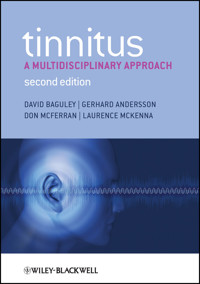
Tinnitus: A Multidisciplinary Approach provides a broad account of tinnitus and hyperacusis, detailing the latest research and developments in clinical management, incorporating insights from audiology, otology, psychology, psychiatry and auditory neuroscience. It promotes a collaborative approach to treatment that will benefit patients and clinicians alike.
The 2nd edition has been thoroughly updated and revised in line with the very latest developments in the field. The book contains 40% new material including two brand new chapters on neurophysiological models of tinnitus and emerging treatments; and the addition of a glossary as well as appendices detailing treatment protocols for use in an audiology and psychology context respectively.
Sie lesen das E-Book in den Legimi-Apps auf:
Seitenzahl: 739
Veröffentlichungsjahr: 2012
Ähnliche


















Contents
Foreword
Preface
Chapter 1 Introduction
Definitions
Historical aspects
Chapter 2 Prevalence and natural history
Is tinnitus a universal phenomenon?
Prevalence studies
Incidence
Prevalence of tinnitus in childhood
Tinnitus in older adults
Other risk factors
Longitudinal studies
Localization of tinnitus
Seeking help
Chapter 3 Anatomy and physiology
Anatomy of the ear
Central auditory anatomy
Interactions with other systems
Plasticity
Habituation
Chapter 4 Mechanisms of tinnitus
Tinnitus and the ear
Tinnitus mechanisms associated with the outer and middle ear
Tinnitus mechanisms associated with the cochlea
Neurotransmitters and their receptors
Tinnitus and the brain
Abnormal synchrony
Modified cortical tonotopic frequency maps
Medial efferent system
Somatic modulation
Analogies with pain
Gaze evoked tinnitus
Ephaptic coupling
Stochastic resonance
5HT
Auditory–limbic interactions
Chapter 5 Medical models of tinnitus
Drug-induced tinnitus
Otosclerosis
Other forms of conductive hearing loss
Ménière’s disease
Vestibular schwannomas and other cerebellopontine angle lesions
Pulsatile tinnitus
Vascular loops
Superior semicircular canal dehiscence
Myoclonus and allied conditions
Spontaneous otoacoustic emissions
Temporomandibular disorder and tinnitus
Unilateral sudden sensorineural hearing loss
Chapter 6 Objective correlates of tinnitus
Reaction time
Evoked response audiometry
Auditory brainstem responses
Cortical evoked potentials
Positron emission tomography and related methods
Studies on anatomical differences associated with tinnitus
Measures of neural activity associated with tinnitus
Integrating the findings and future directions
Chapter 7 Consequences and moderating factors
Tinnitus and thinking
Psychological state
Personality and coping style
Arousal level
Selective attention
Sleep
Family relationships
Work
Gender
Other somatic symptoms
Hearing impairment
Smoking, alcohol and caffeine
Environment
Chapter 8 Psychological models of tinnitus
Introduction
Behavioural theories
Cognitive theories
Acceptance-based theory
Emotion-based theory
Cognitive-affective links: the changing state theory
Moderators and mediators
Chapter 9 The Jastreboff neurophysiological model
Chapter 10 How tinnitus is perceived and measured
Sound quality
Pitch
Loudness
Maskability
Effects of masking
Chapter 11 Self-report and interview measures of tinnitus severity and impact
Structured interviews
Tinnitus self-report measures
Tinnitus-specific questionnaires
Open-ended approaches
Chapter 12 Hyperacusis
Definitions and related constructs
Prevalence
Measurements of hyperacusis
Causes and mechanisms
Mechanisms
Treatment
Chapter 13 Traditional treatments
Surgical treatment
Destructive operations
Decompressive operations
Pharmacological
Local anaesthetics
Psychoactive drugs
Antispasmodics
Neuropathic pain drugs
Glutamate antagonists
Acamprosate
Antiepileptics
Drugs acting on dopamine receptors
Melatonin
Drugs affecting the circulation
Botox
Intratympanic drugs
Otoprotective agents
Sound therapy for tinnitus
Hearing aids
Electrical stimulation and cochlear implants
Biofeedback
Relaxation training therapy
Hypnotherapy
Psychodynamic and supportive therapy
Individual or group care?
Chapter 14 Tinnitus retraining therapy
Clinical protocol of tinnitus retraining therapy
Criticism of tinnitus retraining therapy
Evidence of efficacy
Chapter 15 A cognitive behavioural treatment programme
The cognitive behavioural treatment model and its rationale
Psychological assessment
Applied relaxation
Distraction and focusing
Sound enrichment
Sleep management
Hearing tactics
Cognitive therapy
Relapse prevention
Self-help and use of the Internet
Evidence base for cognitive behaviour therapy
The third wave of behaviour therapy
Who should provide cognitive behaviour therapy?
Chapter 16 Emerging treatment approaches
Transcranial magnetic stimulation
Direct brain stimulation
Other brain stimulation
Phase shift
Laser therapy
Coordinated reset stimulation
Other sound-based emergent approaches
Acceptance-based treatments
Chapter 17 Complementary medicine approaches to tinnitus
Homeopathic remedies
Acupuncture
Ginkgo biloba
Other CAM approaches to tinnitus
Dietary supplements
Stimulation of the ear
Ear candles
Chapter 18 Tinnitus and hyperacusis in childhood and adolescence
Prevalence and incidence of childhood tinnitus
Prevalence of childhood hyperacusis
Impact of tinnitus
Associated conditions
Management
Chapter 19 Special populations
Acoustic shock
Single-sided deafness
Low-frequency noise complaint
Musical hallucination
Armed forces and combat veterans
Functional tinnitus
Chapter 20 A multidisciplinary synthesis
Appendix 1 A treatment protocol for use in primary care, audiology and otolaryngology
Primary care
Secondary care
Tertiary care
Frequent questions
Appendix 2 Cognitive behaviour therapy
Education
Relaxation training
The cognitive component
References
Index
This second edition is dedicated with love to Sheila and Bridget Baguley, Ebba, Edvin and Elsa Andersson, Tanya McFerran and Anne O’Sullivan
This edition first published 2013 © 2013 by David Baguley, Gerhard Andersson, Don McFerran, Laurence McKenna
Blackwell Publishing was acquired by John Wiley & Sons in February 2007. Blackwell’s publishing program has been merged with Wiley’s global Scientific, Technical and Medical business to form Wiley-Blackwell.
RegisteredOfficeJohn Wiley & Sons, Ltd, The Atrium, Southern Gate, Chichester, West Sussex, PO19 8SQ, UK
EditorialOffices9600 Garsington Road, Oxford, OX4 2DQ, UKThe Atrium, Southern Gate, Chichester, West Sussex, PO19 8SQ, UK111 River Street, Hoboken, NJ 07030-5774, USA
For details of our global editorial offices, for customer services and for information about how to apply for permission to reuse the copyright material in this book please see our website at www.wiley.com/wiley-blackwell.
The right of the author to be identified as the author of this work has been asserted in accordance with the UK Copyright, Designs and Patents Act 1988.
All rights reserved. No part of this publication may be reproduced, stored in a retrieval system, or transmitted, in any form or by any means, electronic, mechanical, photocopying, recording or otherwise, except as permitted by the UK Copyright, Designs and Patents Act 1988, without the prior permission of the publisher.
Designations used by companies to distinguish their products are often claimed as trademarks. All brand names and product names used in this book are trade names, service marks, trademarks or registered trademarks of their respective owners. The publisher is not associated with any product or vendor mentioned in this book. This publication is designed to provide accurate and authoritative information in regard to the subject matter covered. It is sold on the understanding that the publisher is not engaged in rendering professional services. If professional advice or other expert assistance is required, the services of a competent professional should be sought.
Library of Congress Cataloging-in-Publication Data
Tinnitus : a multidisciplinary approach / David Baguley ... [et al.]. – 2nd ed.p. ; cm.Includes bibliographical references and index.
ISBN 978-1-4051-9989-6 (pbk. : alk. paper)I. Baguley, David (David M.)[DNLM: 1. Tinnitus. WV 272]617.8–dc23
2012032714
A catalogue record for this book is available from the British Library.
Wiley also publishes its books in a variety of electronic formats. Some content that appears in print may not be available in electronic books.
Cover image: © Fotolia/philholCover design by Meaden Creative
Foreword
Clinicians and researchers who accept the challenge of helping patients suffering from tinnitus must be prepared to implement management strategies that are as varied and diverse as the population they serve. The notorious abundance of tinnitus ‘cures’ suggests that there are (at least) as many tinnitus causes, triggers and mechanisms. It will probably always be the case that no one-size-fits-all approach to tinnitus management will succeed, but it is equally likely that a variety of interventions may, in many cases, produce some amelioration of the patient’s distress. Most researchers and practising clinicians report that a combination of sound therapy and counselling facilitates the patient’s ability to manage the tinnitus experience. Psychotropic agents produce mixed success from which we infer that, at a minimum, such drugs work well for some patients regardless of whether the influence is upon the tinnitus sound, the patient’s psychological health or both. Herbal supplements, vitamins and alternative therapies such as acupuncture, biofeedback and hyperbaric oxygen therapy have produced mixed results that must be weighed against the potential, and substantial, risks associated with their use. What is the practitioner who answers the call, and decides to work with tinnitus patients, to make of this situation?
The second edition of Tinnitus: A multidisciplinary approach promotes tinnitus management strategies built upon the collaborative care for suffering patients and the preparation of clinicians for such practice. We have a set of authors uniquely qualified to tackle thorny tinnitus problems, and it is clear that their work as clinicians and researchers has crystallised in the group the certainty that our patients more often than not require care that knows no borders. The centrepiece of this text is its dispensing of practical, evidence-based information from the fields of audiology, otology, psychology, psychiatry and auditory neuroscience. Tinnitus distress may derive from several different factors simultaneously, and the authors remind us to weigh the potential risks and benefits of action and inaction. Throughout, they provide thorough and current reviews of material germane not just to clinical practice but to the educating of individuals who will conduct the practice.
The reader will find resources that facilitate the essential task of interacting with patients and determining a tinnitus management plan. To address the likelihood that all tinnitus patients present unique challenges to the clinician, the authors provide guideposts, evidence and thoughtful rationales for selecting a course of action tailored to each patient’s needs. For example, some tinnitus programmes focus on modifying a patient’s concept of tinnitus and its effects, thereby facilitating a change in the patient’s behaviour and approach to the problem (i.e. Cognitive Behavioural Therapy). Others utilise particular protocol-driven therapy, specifying more consistent application of sound levels and specific counselling components (i.e. Tinnitus Retraining Therapy). Others (i.e. Neuromonics) couple sound or music filtered specifically to account for each patient’s hearing sensitivity and loudness tolerance to counselling that varies little across patients. The reviews of these and other management protocols are of great value not only to present practitioners but also to the student or professional who considers working with tinnitus patients.
It is admittedly difficult to report clinical success when the approach to patient management is idiosyncratic and driven more by the patient’s needs than by a cookbook plan of action. Particularly at this time, when clinical success is defined in the context of evidence-based practice, an eclectic approach to management of a potentially disabling condition may provide benefit to patients but may be difficult to sell to peer reviewers and other clinicians. Yet, when we observe improvements in our patients, it is undeniable, and when we measure a patient’s self-assessment of handicap, we may measure statistically significant changes in the patient’s tinnitus experience. While it is difficult to define precise tinnitus distress or tinnitus relief, clinicians working with tinnitus patients see their share of both.
A clinician’s experience with suffering patients provides the impetus to adapt and adjust strategies in order to facilitate the patient managing the condition effectively. As the authors point out, some of these ‘real time’ adjustments may lead to novel methods for use with other patients. However, the clinician’s experience with tinnitus patients likely influences their willingness and ability to adapt clinical approaches with which they are comfortable. It is therefore important to gain, or help others achieve, the experience and confidence required to implement starkly different strategies for different patients. The authors have provided a rich inventory of management strategies that should foster a clinician’s flexibility in order to meet the diverse needs and challenges associated with the tinnitus patient population.
Unfortunately, as the professional training of individuals to join the ranks of tinnitus clinicians lags far behind the need for such providers, it is also the case that the need for multidisciplinary patient care goes unrecognised too often. In this second edition, the authors stress the need for professionals across the disciplines of neuroscience, psychology, medicine and audiology to collaborate in the clinic and the lab in order to meet patient needs. Audiologists and otologists have for years recognised that tinnitus is frequently complicated by psychological co-morbidities. It is imperative for hearing health care professionals to seek out practitioners from related clinical areas to whom patients whose tinnitus is complicated by other factors may be referred. Medical issues must also be acknowledged and managed. Recognising the signs that would trigger such referrals is the first step to providing comprehensive patient care. The authors provide the means by which tinnitus clinicians can place the patient’s needs in a broader context than would be available through the inherently limited view of tinnitus as exclusively an auditory problem. Because the needs of tinnitus patients are difficult to meet in many cases, clinicians must be versed in the literature and practice of related disciplines. Tinnitus distress is multidimensional and this book does not purport to solve the myriad problems that derive from that fact. However, it is hoped that a forthright discussion of the state of the art of tinnitus management will inspire clinicians across medicine, audiology and psychology to embark upon the journey of tinnitus therapy in concert.
Professor Marc FagelsonEast Tennessee State UniversityJohnson City, TN, USA
Preface
The field of tinnitus is resurgent, with very significant streams of research activity into mechanisms and treatments now in place. This is not restricted to the traditional themes of cochlear hair cells, and of sound-based and counselling-based therapies, but also involves robust pharmaceutical research, and also the design, implementation and evaluation of novel approaches to treatment.
Additionally there are indications that a multidisciplinary ethos is permeating the tinnitus world, with voices from neuroscience, pharmacology, psychology and audiology interweaving as we investigate this fascinating and sometimes debilitating symptom. Once characterised by opinion and a few isolated expert voices, the tinnitus community now look for evidence and consensus when it comes to both basic research and clinical perspectives.
With this in mind, the four of us thought it time to prepare and present a second edition of Tinnitus: A multidisciplinary approach. New findings abound, and there are new treatments to describe and novel perspectives through which to consider tinnitus. While the magic pill continues to elude us, there are indications that progress is being made in effective intervention and that many more patients are accessing clinical services.
The distinctive perspective of this book is that each of the four authors is a practising clinician while also involved in research. The emphasis for each of us is different, but being able to inhabit both worlds gives, we hope, insight into the translational nature of tinnitus work: that is, that the clinic must influence the research agenda and that research should underpin and inform clinical practice. Seeing tinnitus patients in the clinic on a regular basis also gives an authenticity to what one believes about tinnitus and how it can best be treated. Some of the insights in this book have been hard won.
Our Editors at Wiley-Blackwell are to be thanked, not least for the patience they have shown to four authors who have been weighed down at times with administrative and clinical responsibilities. Our colleagues too have been patient and supportive, but most of all our families and friends have been mainstays of support. We hope that the current vitality of the tinnitus field continues and that this second edition may help guide the interested scientist and/or clinician into the wealth of knowledge that is available about tinnitus.
David BaguleyGerhard AnderssonDon McFerranLaurence McKenna
Chapter 1
Introduction
Tinnitus and hyperacusis continue to intrigue patients, scientists and clinicians alike. That so many people can have some experience of these symptoms and not be distressed, while others are troubled to the point that they are no longer able to perform their normal daily activities remains paradoxical. Furthermore, researchers have reported that when tinnitus is matched in intensity in this troubled group of people, it has been indicated to match to sound of low intensity (though the complexities of such experiments will be discussed below). Despite this apparent low intensity the intrusiveness of the symptom in patients with severe tinnitus is remarkable. Given these paradoxes, it is unsurprising that no single approach to tinnitus and hyperacusis has been shown to be overwhelmingly stronger than any other in terms of understanding and managing these symptoms.
The aim of this book is to present a multidisciplinary approach to tinnitus and hyperacusis, incorporating insights from Audiology, Otology, Psychology, Psychiatry and Auditory Neuroscience. It is hoped that this will inspire a collaborative approach to tinnitus and hyperacusis management that will benefit patients and clinicians alike. There is already good evidence that such collaborative and multidisciplinary initiatives in other fields, such as chronic pain, have increased the efficacy of treatments.
Definitions
The word tinnitus derives from the Latin verb ‘tinnire’ meaning ‘to ring’, and in common English usage is defined as ‘a ringing in the ears’ (Concise Oxford English Dictionary, Allen, 1990). The first recorded use of the word occurred in 1693 in Blanchard’s Physician’s Dictionary, second edition as follows (Stephens, 2000):
Tinnitus Aurium, a certain buzzing or tingling in the Ears proceeding from obstruction, or something that irritates the Ear, whereby the Air that is shut up is continually moved by the beating of the Arteries, and the Drume of the Ear is lightly verberated, whences arises a Buzzing and a Noife (p. 201).
At the time that this Dictionary was compiled there were many conditions that were thought to be due to trapped air, and procedures were developed to address that. It is interesting that the Blanchard definition fits well with the experience of pulsatile tinnitus, where an individual becomes aware of the sound of arterial or venous blood flow (see Chapter 5).
Some other languages have a variety of words to describe the phenomenon of tinnitus (Stephens, 2000), notably French, where five words are in regular use, each describing a particular timbre or quality of sound. In Swedish the word for tinnitus used to be Öronsus, which in direct translation stands for ear breeze. Few patients would agree that their tinnitus sounds like a breeze and this word does not catch the emotional impact experienced by some. There have been various attempts at a scientific definition. McFadden (1982) considered that:
Tinnitus is the conscious expression of a sound that originates in an involuntary manner in the head of its owner, or may appear to him to do so.
This definition has been widely adopted (e.g. Coles, 1987; Davis and El Rafaie, 2000; Stephens, 2000) and has the benefit of brevity. Møller (2011b) distinguishes between objective tinnitus (which can be heard, measured or recorded by an external observer) and subjective tinnitus, which can be heard by the person alone. As will be shown below, this distinction was made in the work of Itard (1774–1838). Møller defines subjective tinnitus as follows:
Subjective tinnitus is a broad group of sensations that are caused by abnormal neural activity in the nervous system that is not elicited by sound activation of sensory cells in the cochlea (Møller, 2011b, p. 9).
This definition has some insights, as it implies that tinnitus can be varied, both within and between individuals. One might question whether anomalous might be a better word than abnormal, and this will be unpacked when we consider the neuroscience of tinnitus.
Definitions of hyperacusis have tended to illustrate the perspective of the author. For instance, Vernon (1987a) proposed an open definition as
… unusual tolerance to ordinary environmental sounds.
For Vernon the emphasis may have been upon the unusual, as he could only recall four such cases, having seen over 4000 persons with tinnitus. Modern epidemiology indicates that hyperacusis is a more common experience than that. A more pejorative view is that of Klein et al. (1990):
… consistently exaggerated or inappropriate responses or complaints to sounds that are neither intrinsically threatening or uncomfortably loud to a typical person.
Many persons with hyperacusis may have seen clinicians who would ascribe to this view and not been helped by the implied criticism. A less negative definition was proposed by Baguley and Andersson (2007):
… abnormal lowered tolerance to sound.
Attempts have been made more recently to differentiate between those individuals who have a general hypersensitivity to sound that most other people can tolerate (hyperacusis) and those who find specific sounds uncomfortable, perhaps because of emotional associations with that sound. In an initial differentiation between these two the second experience was entitled phonophobia, a term that is commonly used in neurology (Woodhouse and Drummond, 1993), in particular in association with migraine attacks. However, the inference that this phenomenon was essentially phobic in nature can be unhelpful to some patients. Definitions of hyperacusis are further explored in Chapter 10.
Historical aspects
The experience of the perception of sound generated internally has been mentioned in many historical medical texts. These original sources have been reviewed by Stephens (1987, 2000) and Feldmann (1997), and while these authors have many detailed issues upon which they are at variance, they are in broad agreement on the interest expressed in tinnitus by medical authors from historical times. A series of ancient Babylonian medical texts, inscribed upon clay tablets, were housed in the library of King Assurbanipal (668–626 BC) in Ninevah. These were translated by Thompson (1931) and were found to include 22 references to tinnitus, described variously as the ears ‘singing’, ‘speaking’ or ‘whispering’. Treatments are described, including whispered incantations, the instillation of various substances into the external auditory meatus and the application of charms (such as the tooth of a female ibex): specific treatments were advised for each experience of tinnitus as described above (Feldmann, 1997). The involvement of ghosts and spirits in the generation of tinnitus was described, and in particular a quiet incantation method of treatment was largely concerned with driving away such affliction, this being described as the basis of much human disease (Stephens, 1987).
Tinnitus has six mentions in the Corpus Hippocratum, a second century AD compilation of the works of Hippocrates of Kos (460–377 BC): each mention relates to a description of ear disease rather than of tinnitus as an experience in its own right. Other authors writing in Graeco-Roman times mentioning tinnitus include Celsus (25 BC–50 AD) who described treatments with diet and abstinence from wine and Pliny the Elder (23–79 AD) who advocated the use of wild cumin and almond oil in cases of tinnitus (Stephens, 2000). The use of sedative medication to treat persons suffering with tinnitus, still in common use in the United States of America and Western Europe, was first described by Galen (129–199 AD), who considered the benefits of opium and mandrake.
Dan (2005) considers a report that the Roman Emperor Titus (39–81 AD) experienced tinnitus. This is found in the Babylonian Talmud, and the tinnitus was considered to be punishment for the destruction of the Second Temple in Jerusalem (70 AD), though the report that at post mortem Titus was found to have a large intracranial tumour offers another perspective on this. Titus is said to have enjoyed some short-lived relief from sound therapy:
A gnat entered his nostril and pecked at his brain for seven years. One day Titus was passing by a blacksmith. He heard the noise of the sledgehammer and the gnat became silent. Titus thus said: ‘Here is the remedy’. Everyday he brought a blacksmith to bang in his presence…. For thirty days this worked fine but then the gnat became accustomed and resumed pecking (quoted in Dan, 2005).
There are mentions of tinnitus in texts within the Islamic medical tradition from the period following the decline of medicine in Rome (Stephens, 1987, 2000, and Feldmann, 1997). These include the first mention of the coincident complaint of tinnitus and hyperacusis (described as an ‘increased sensibility’) by Paul of Aegina (625–690 AD) (Stephens, 2000, after Adams, 1844).
Advances in the understanding and treatment of tinnitus were not to be seen until the seventeenth century, with the publication of the first text entirely dedicated to the ear and hearing. The Traite de l’Organe de l’Ouie by DuVerney (1683) was translated from the original French into Latin, German, Dutch and English and is recognised as a milestone in Otology (Weir, 1990). The insights into tinnitus represented a move away from the concept that tinnitus may arise from trapped air in the ear, this having persisted since Roman times, towards a model of tinnitus arising from diseases of the ear and disorders of the brain. The implication of the influence of the brain over the ear is prophetic of later concepts of the function of the efferent auditory system in humans. The treatments for tinnitus that are advocated by DuVerney are limited to treatment of the underlying disorder.
A further advance in understanding occurred in 1821 with the publication of Traite des Malades de l’Oreille et de l’Audition by Itard. This comprehensive text was based upon 20 years of experience in working with the deaf, and contained numerous case studies, including that of Jean-Jacques Rousseau (1712–1778), the eminent philsosopher who became afflicted by tinnitus in later life (Feldmann, 1997). Itard made the distinction between tinnitus experiences arising from sound, thus ‘objective tinnitus’ such as that caused by somatosounds, and that arising without any acoustic basis, ‘false tinnitus’ (now described as ‘subjective’ tinnitus). This distinction is still in use today. In addition to such medical insights Itard described the effect of tinnitus upon an individual: ‘an extremely irksome discomfort which leads to a profound sadness in affected individuals’ (translation by Stephens, 2000, p. 443). The treatment of tinnitus was, as with previous authors, based upon treatment of the underlying otological condition, though when such treatment failed, however, Itard advocated attention to the behavioural manifestation of tinnitus and in particular to sleep disturbance, when the use of external environmental sounds (such as a watermill for low-pitched tinnitus or an open fire burning damp wood for high-pitched tinnitus) to mask the tinnitus was suggested.
In the late nineteenth century the medical specialty of Otology underwent a renewal of interest and effort, and several individuals have been identified as leaders in this field. Joseph Toynbee (1815–1866) and William Wilde (1815–1876) (the father of Oscar Wilde) were pre-eminent in this regard and wrote extensively on ear disease, including consideration of tinnitus arising from such conditions. Toynbee experienced distressing tinnitus himself and died during an experiment in which he attempted to determine ‘the effect of inhalation of chloroform upon tinnitus, when pressed into the tympanum’ (Feldmann, 1997, p. 18). MacNaughton Jones (1981) has been credited (Stephens, 2000) with producingthe first book in English on tinnitus alone, which contained a classification of tinnitus based upon the site of origin and a review of contemporary treatments.
The ability to use electronic instruments to measure hearing thresholds accurately by audiometry, and the consequent ability to determine hearing status in patients with a complaint of tinnitus, was developed in the early twentieth century, and became widespread in Western Europe and the United States of America from the 1940s (Weir, 1990). At this time Fowler (1941) considered the characteristics of tinnitus and is credited with the first comprehensive attempts to determine the matching and masking characteristics of tinnitus (Stephens, 2000). Among the insights gleaned by Fowler were that subjectively loud tinnitus is often matched to a low-level stimulus, that tinnitus may be masked by a broad-band noise and that it is not possible to generate beats between tinnitus and externally generated tones (Fowler, 1941). In subsequent writings Fowler collaborated with his son, also an Otologist, and formulated a protocol for the examination of tinnitus patients considering the qualities of the sound, the distress associated, as well as the otological health of the patient (Fowler and Fowler, 1955).
In the late twentieth century there was little scientific or clinical interest in tinnitus and the field was kept alive by a small number of dedicated individuals. The work of Jack Vernon has already been cited: Vernon was a Professor of Audiology working for most of his career in Oregon, USA, and developed the first practical wearable masking devices for tinnitus. In the United Kingdom, Ross Coles was a prolific tinnitus researcher, clinician and teacher, and his influence and mentorship is still felt to this day. Coles worked as a Consultant Physician and academic at both Southampton and Nottingham Universities, and was the founder of the long-running European Tinnitus Course. Also from a medical background, though working as a surgeon rather than a physician, Jonathan Hazell specialised in tinnitus, and in his collaborations with Pawel Jastreboff (a neuroscientist) developed an influential model of tinnitus and a concomitant treatment protocol (Tinnitus Retraining Therapy). From an Audiology perspective, Richard Tyler, working at the University of Iowa, has written, researched and taught extensively on how tinnitus can be managed and has been extremely influential. In the early 1980s Richard Hallam, a psychologist working in London, proposed that the natural history of tinnitus is characterised by the process of habituation and pointed out the influence of psychological factors on this process. His work has had a major influence on the clinical management of tinnitus, particularly by psychologists.
Thus there has been evidence of input to tinnitus research from otology, audiology, and to some extent neuroscience. What has been missing until recently, however, has been substantial input from pharmacology, from psychiatry and from auditory neuroscience. There are indications that this is now underway and that the field is becoming characterised by collaboration and teamwork rather than a small number of experts.
Given the existence of tinnitus throughout history and the wide prevalence of tinnitus experience (see Chapter 11 for details), one should expect mentions in art and literature. In fact these are sparser than would be expected. A comprehensive survey of such mentions will have to await another day, but some can be considered here as examples. The Czech composer Smetana (1824–1884) suffered progressive, and eventually profound, hearing loss and associated tinnitus. He wrote his tinnitus into his string quartet ‘From my life’ (1876) as a prolonged sustained high violin note towards the end. Thomas Hardy (1840–1928) has a character named William Worm, in his novel the A Pair of Blue Eyes (1873), speak of tinnitus:
I’ve got such a noise in my head that there’s no living night nor day. ‘Tis just for all the world like people frying fish…. God A’mighty will find it out sooner or later, I hope, and relieve me (Chapter 4).
More recently, Woody Allen has the male lead, played by himself, in the film Hannah and Her Sisters (1986) experience unilateral tinnitus and hearing loss, and is investigated for an acoustic neuroma. The asute listener may pick up upon references to tinnitus in the lyrics of modern music: artists as diverse as Radiohead, Bob Dylan and the Broken Family Band mention the experience of tinnitus.
This short review of the historical understanding of tinnitus has three underpinning elements. The first is that any consideration of tinnitus and formulation of possible treatment should consider the otological status of the patient and thus involve the treatment of ear disease where indicated. The second is that this otological focus does not obviate the clinician of the responsibility to consider the distress caused by the tinnitus experience and, where significant behavioral manifestation of this is present, to treat that distress. The third is that the understanding and treatment of tinnitus is a changing and developing science.
Chapter 2
Prevalence and natural history
Knowledge of the epidemiology of tinnitus is fundamental to tinnitus clinicians’ and researchers’ understanding of the subject. Studies tell us that tinnitus is one of the most common physical symptoms experienced by humans, which inevitably leads to the question of why it is so common. One of the greatest challenges facing the tinnitus community is to understand why, if it is so common, do only some people suffer as a consequence of tinnitus? This question will be dealt with in other chapters, but knowledge of the epidemiology of tinnitus provides a backdrop against which to understand this fundamental issue. It also helps us to consider what health care services might be commissioned for persons who complain of tinnitus.
The epidemiology of tinnitus has been investigated in several studies over the years; these studies will be outlined and the implications of them considered.
Is tinnitus a universal phenomenon?
If the definition of tinnitus is expanded to include internal sounds that are perceived in silence, tinnitus becomes an almost universal experience. In the famous experiment by Heller and Bergman (1953), subjects were asked to enter a soundproof booth and to report all the sounds they could hear; 94% reported some form of tinnitus-like perception, using terms like buzz, hum and ring. Unfortunately, the conditions in which the Heller and Bergman (1953) study was conducted were not well controlled. It has been even suggested (Graham and Newby, 1962) that they did not assess subjects’ hearing audiometrically; the idea that the subjects had normal hearing is therefore only an assumption. Attempts to replicate the study have not revealed the same proportion of subjects reporting tinnitus-like experiences. A replication by Graham and Newby (1962) found that only 40% of their normal hearing subjects reported tinnitus. Levine (2001) found that 55% of his normal hearing subjects had ongoing tinnitus when they were placed in a low-noise room. In a study of 120 persons with normal hearing, Tucker et al. (2005) found that 64% reported tinnitus-like perceptions in silence: the proportion was slightly higher in persons of Afro-Carribbean heritage than Caucasians. This latter finding has not been replicated. In a variation upon a now familiar theme, Del Bo et al. (2008) placed 53 normally hearing Caucasian individuals in a soundproofed room and asked them to listen hard for two 4 minute sessions. When a (disconnected) loudspeaker was not present, 83% of the group reported tinnitus-like perception: this rose to 92% when the loudspeaker was present in the second session.
Lesen Sie weiter in der vollständigen Ausgabe!
Lesen Sie weiter in der vollständigen Ausgabe!
Lesen Sie weiter in der vollständigen Ausgabe!
Lesen Sie weiter in der vollständigen Ausgabe!
Lesen Sie weiter in der vollständigen Ausgabe!
Lesen Sie weiter in der vollständigen Ausgabe!
Lesen Sie weiter in der vollständigen Ausgabe!
Lesen Sie weiter in der vollständigen Ausgabe!
Lesen Sie weiter in der vollständigen Ausgabe!
Lesen Sie weiter in der vollständigen Ausgabe!
Lesen Sie weiter in der vollständigen Ausgabe!
Lesen Sie weiter in der vollständigen Ausgabe!
Lesen Sie weiter in der vollständigen Ausgabe!
Lesen Sie weiter in der vollständigen Ausgabe!
Lesen Sie weiter in der vollständigen Ausgabe!
Lesen Sie weiter in der vollständigen Ausgabe!
Lesen Sie weiter in der vollständigen Ausgabe!
Lesen Sie weiter in der vollständigen Ausgabe!
Lesen Sie weiter in der vollständigen Ausgabe!
Lesen Sie weiter in der vollständigen Ausgabe!
Lesen Sie weiter in der vollständigen Ausgabe!
Lesen Sie weiter in der vollständigen Ausgabe!




