


15,00 €
Mehr erfahren.
- Herausgeber: Fernhurst Books Limited
- Kategorie: Lebensstil
- Sprache: Englisch
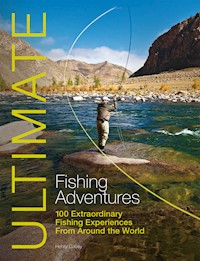
This book takes you on a remarkable journey visiting 100 destinations from Alaska to New Zealand. Fly, lure and bait fishing in rivers, oceans and lakes, from deftly dropping a fly in front of a hungry trout to shaking with fear at a rampaging giant trevally, this book covers it all._x000D_ Remarkable full-page images accompany each of the fishing adventures in this stunning coffee-table book. Written to inspire, excite and inform, there is plenty of information on the locations, the fish and how to catch them. Go on a voyage of discovery from secret African rivers to idyllic tropical islands, fight with monsters of the deep in Australia, get set for superb sport in the USA, or discover fishing delights in and around Britain and Europe._x000D_ Anglers of all sorts will treasure this inspirational collection of the world's most exceptional fishing adventures.
Das E-Book können Sie in Legimi-Apps oder einer beliebigen App lesen, die das folgende Format unterstützen:
Veröffentlichungsjahr: 2012
Ähnliche



















Table of Contents
Copyright
Title Page
Dedication
Chapter 1: Arctic char, Greenland
Chapter 2: Gaspé Peninsula, Canada
Chapter 3: Miramichi River, Canada
Chapter 4: Kasba Lake, Northwest Territories, Canada
Chapter 5: Bell Irving and Nass Rivers, British Columbia, Canada
Chapter 6: The Skeena Watershed, Canada
Chapter 7: Copper River, Canada
Chapter 8: Kobuk River and Selawik Drainages, Alaska, USA
Chapter 9: Fraser River, Canada
Chapter 10: Katmai National Park, Alaska, USA
Chapter 11: Christmas Island, Pacific Ocean
Chapter 12: DePuy Spring Creek, Montana
Chapter 13: Bighorn River, Montana
Chapter 14: Henry’s Fork, Snake River, USA
Chapter 15: Cape Cod, USA
Chapter 16: Sanibel and Captiva Islands, USA
Chapter 17: Montauk, Long Island, USA
Chapter 18: Martha’s Vineyard, USA
Chapter 19: Florida, USA
Chapter 20: Louisiana, USA
Chapter 21: The Florida Keys, USA
Chapter 22: Greater Inagua, Bahamas
Chapter 23: Campeche, Mexico
Chapter 24: Jardines de la Reina, Cuba
Chapter 25: Yucatan Peninsula, Mexico
Chapter 26: Rio Parismina, Costa Rica, Central America
Chapter 27: Los Roques Archipelago, Venezuela
Chapter 28: Guatemala, Central America
Chapter 29: Ambergris Caye, Belize
Chapter 30: Roraima State, Amazon Basin, Brazil
Chapter 31: Rio Urariquera, South America
Chapter 32: Jungle Rivers, Bolivia
Chapter 33: La Zona, Argentina
Chapter 34: Rio Gallegos, Argentina
Chapter 35: Patagonia, Chile
Chapter 36: Laxa I Adaldal River, Iceland
Chapter 37: West Coast Salmon Rivers, Iceland
Chapter 38: Saltstraumen, Norway
Chapter 39: Lofoten Islands, Norway
Chapter 40: Namsen River, Norway
Chapter 41: Västervik, Sweden
Chatper 42: Lough Mask and Lough Corrib, Ireland
Chapter 43: Shannon Estuary, Ireland
Chapter 44: Clare Coastline, Ireland
Chatper 45: The Beara Peninsula, Ireland
Chapter 46: West Coast Islands, Ireland
Chapter 47: Kerry, Ireland
Chapter 48: Baltimore, Ireland
Chapter 49: Copper Coast, Ireland
Chapter 50: South-East Coastline, Ireland
Chapter 51: River Spey, Scotland
Chapter 52: Southern Chalkstreams, England
Chapter 53: Chesil Beach, England
Chapter 54: River Wye, UK
Chapter 55: River Lyn, England
Chapter 56: Plymouth, England
Chapter 57: South-East Cornwall, England
Chapter 58: Isles of Scilly, England
Chapter 59: Denmark Coastline
Chapter 60: Lake Cassien, France
Chapter 61: Belle Île, France
Chapter 62: Asturias, Spain
Chapter 63: Strait of Gibraltar, Spain
Chapter 64: Slovenia, Europe
Chapter 65: Oman, Middle East
Chapter 66: Cape Verde, Atlantic Ocean
Chapter 67: Iguela Lagoon, Gabon
Chapter 68: Murchison Falls, Uganda
Chapter 69: Kwanza River, Angola, Africa
Chapter 70: Farquhar Atoll, Seychelles
Chapter 71: Skeleton Coast, Namibia
Chapter 72: Caprivi Strip, Zambia
Chapter 73: Mynera and Ruhudji Rivers, Tanzania
Chapter 74: Drakensberg Mountains, South Africa
Chapter 75: Vaal River, South Africa
Chapter 76: Lesotho, Africa
Chapter 77: Kosi Bay, South Africa
Chapter 78: Cape Town, South Africa
Chapter 79: Sodwana Bay, South Africa
Chapter 80: Bazaruto Archipelago, Mozambique
Chapter 81: Cosmoledo Atoll, Seychelles
Chapter 82: St Brandon’s Atoll, Mauritius
Chapter 83: Maldives, Indian Ocean
Chapter 84: Ascension Island, South Atlantic Ocean
Chapter 85: Kola Peninsula, Russia
Chapter 86: Kamchatka Peninsula, Russia
Chapter 87: Delger-Muron River, Mongolia
Chapter 88: Cauvery River, India
Chapter 89: Andaman Islands, Indian Ocean
Chapter 90: Marquesas Islands, Pacific Ocean
Chapter 91: South-West Coastline, Japan
Chapter 92: Coral Sea, Australia
Chapter 93: New Caledonia, Pacific Ocean
Chapter 94: Papua New Guinea
Chapter 95: Cape York, Australia
Chapter 96: Northern Territory, Australia
Chapter 97: Dirk Hartog Island, Australia
Chapter 98: Perth, Australia
Chapter 99: Tasmania, Australia
Chapter 100: The South Island, New Zealand
Picture Credits
This edition first published 2012
© 2012 Henry Gilbey
REGISTERED OFFICE
John Wiley & Sons Ltd, The Atrium, Southern Gate, Chichester, West Sussex, PO19 8SQ, United Kingdom
EDITORIAL OFFICE
John Wiley & Sons Ltd, The Atrium, Southern Gate, Chichester, West Sussex, PO19 8SQ, United Kingdom
For details of our global editorial offices, for customer services and for information about how to apply for permission to reuse the copyright material in this book please see our website at www.wiley.com
The right of the author to be identified as the author of this work has been asserted in accordance with the Copyright, Designs and Patents Act 1988.
All rights reserved. No part of this publication may be reproduced, stored in a retrieval system, or transmitted, in any form or by any means, electronic, mechanical, photocopying, recording or otherwise, except as permitted by the UK Copyright, Designs and Patents Act 1988, without the prior permission of the publisher.
Wiley publishes in a variety of print and electronic formats and by print-on-demand. Some material included with standard print versions of this book may not be included in e-books or in print-on-demand. If this book refers to media such as a CD or DVD that is not included in the version you purchased, you may download this material at http://booksupport.wiley.com For more information about Wiley products, visit www.wiley.com
Designations used by companies to distinguish their products are often claimed as trademarks. All brand names and product names used in this book are trade names, service marks, trademarks or registered trademarks of their respective owners. The publisher is not associated with any product or vendor mentioned in this book. This publication is designed to provide accurate and authoritative information in regard to the subject matter covered. It is sold on the understanding that the publisher is not engaged in rendering professional services. If professional advice or other expert assistance is required, the services of a competent professional should be sought.
Library of Congress Cataloging-in-Publication Data is available
A catalogue record for this book is available from the British Library.
ISBN 9781119962663 (pbk.); ISBN 9781119968009 (ebk.)
ISBN 9781119968016 (ebk.); ISBN 9781119968023 (ebk.)
Graphic Design by Holly Ramsay
Cover image: © Henry Gilbey
Wiley Nautical – sharing your passion.
At Wiley Nautical we're passionate about anything that happens in, on or around the water. Wiley Nautical used to be called Fernhurst Books and was founded by a national and European sailing champion. Our authors are the leading names in their fields with Olympic gold medals around their necks and thousands of sea miles in their wake. Wiley Nautical is still run by people with a love of sailing, motorboating, surfing, diving, kitesurfing, canal boating and all things aquatic.
Visit us online at www.wileynautical.com for offers, videos, podcasts and more.
Dedication
To my wife and two girls – travelling the world and doing what I do is just amazing, but the best bit about it is coming home and being enveloped by my family when the front door opens. You are the best and I am the luckiest man alive – Henry Gilbey
Chapter 1
Arctic char, Greenland
A short summer season beset with perfectly crazy numbers of fish
Time it right and the sheer numbers of Arctic char you can catch in Greenland can literally take your breath away. Generally, anglers interested in fishing for these char will fly in from Reykjavik in Iceland, so it is more than possible and also well worth combining a salmon fishing trip in Iceland with an Arctic char extravaganza in Greenland.
It is actually possible to fish for Arctic char from the coastline in early summer. From June to July, when the char have moved out of the rivers and lakes and into the fjords, you can fly fish or spin for these fish close to the river mouths. But from July into August, these vast waves of Arctic char migrate up the rivers on the high tides, so for the most part you will be fishing the areas around either the river mouth or more typically where the river meets a lake. The best all round time for chasing these prolific fish is in August when the greatest concentrations of fish have moved up the rivers and, importantly, when there are fewer mosquitoes around. On the whole, a Greenland Arctic char is going to weigh from 1-5lbs, but they can reach nearly 10lbs from time to time. Although the best of the fishing is in the middle of summer, local temperatures average around 10°C; hardly on the balmy side, but wrap up warm and this might well prove to be one of those world class fishing trips that is for some reason not well known about.
A river such as the Kangia is very cold and very clear, and in season there will literally be thousands and thousands of char in here. Fish of over 10lbs have been caught, and you will be able to see the fish you are going for. To fish many of the best char locations in Greenland will often require a combination of vehicles and then walking in, with fishing camps mainly being very remote. When the fish are on, they will happily take both wet and dry flies such as the Silver Doctor and Polar Shrimp. Char are known for very aggressively taking an unweighted fly that you skip across the surface, so you need to make sure that you up the breaking strain of your leader to cope with such savage takes. It is not considered desperately hard to catch over 100 char in a day’s fishing.
Summer might well be short, but the reason that Greenland is such a prime destination for Arctic char is the sheer number of healthy rivers full of so many fish. A local nickname for an Arctic char with those red bellies and dark backs is ‘Father Christmas’.
Best times to fish
The short summer season, with August being the prime time
Fishing methods
Fly and lure
Getting there
Generally from Iceland
Tips and tricks
It is vital to take serious mosquito prevention methods – sprays, nets, anything that might keep them away from you
Chapter 2
Gaspé Peninsula, Canada
One of the best kept secrets in Atlantic salmon fishing
The Miramichi river system might well be the most famous Atlantic salmon fishery on the east coast of Canada, but the stunning and wild Gaspé peninsula is utterly unique when it comes to its own salmon fishing. This peninsula extends around 220 miles into the Gulf of St Lawrence, and what makes the salmon fishing so different and attractive is the fact that the main rivers fished here are incredibly clear, to the point where you are actually sight-fishing to salmon most of the time. Don’t make the mistake though of thinking that just because you can see the fish they suddenly become much easier to catch, because this is not the case at all. However, to see individual fish and indeed shoals of them hanging in water sometimes so clear that it looks like there is none there is just incredible. To actually know that the fish are there certainly helps boost the confidence levels when chasing Atlantic salmon, yet for some reason this wonderful part of Canada does not seem to receive the same kind of salmon-related publicity that other parts do.
The fishing on these rivers in Quebec is run by the local ZEC, a not-for-profit organisation set up by the government to carefully monitor and manage local fishing and hunting activities. Fishing permits are not expensive and are allocated by ballot. Rivers such as the Grande Cascapedia, Bonaventure, St Jean, Petite Cascapedia, Dartmouth and York are all split up into zones or beats and the ZEC manages access so that there is never any kind of over-fishing pressure on these waterways. There are a number of fishing lodges with fully guided outfits that can take salmon anglers out on the main rivers, but also fly anglers are perfectly entitled to enter the ballot system themselves. With this much water, though, it does make sense to work with local outfitters who know exactly where the salmon are in the rivers from day to day. Some of the local guides have been working on these rivers nearly all their lives.
Three of the main rivers (Bonaventure, Grand and Petite Cascapedia) start from the Chic-Choc mountains and run cold and clear all year round. The Grand Cascapedia can produce salmon to over 40lbs. It is really quite something to watch when perhaps 30lbs of perfect Atlantic salmon refuses your flies for so many casts, but then suddenly charges across a pool and engulfs one. Sight-fishing to salmon is about as exciting as it gets, but the trick then is to calm your racing heart and go at it with a methodical approach that you might adopt when fishing on a Scottish or Russian salmon river, for example.
Best times to fish
The salmon season is 1 June to 30 September
Fishing methods
Fly fishing
Getting there
Various ways. By air from Montreal to Gaspé and Bathurst. Alternatively, how about the night train from Montreal to Bonaventure for a bit of fun
Tips and tricks
Do exactly as your guide says with regards to flies and where to cast them
Chapter 3
Miramichi River, Canada
The east coast of Canada could not be more wonderfully different to the west
There are few more famous areas to go and fish for Atlantic salmon than the Miramichi river system in New Brunswick on the east coast of Canada. It was in the mid-19th century that sport fishing for salmon really began to take off, and even in the 1960s it was estimated that the salmon run was around one million fish. The runs now are not as prolific as they once were, but still the Miramichi system is the place that produces the largest numbers of Atlantic salmon anywhere on earth. There are some stringent conservation efforts going on which are slowly but surely improving the runs of fish year on year. The rivers of New Brunswick average around 30,000 plus salmon per year to fly anglers.
Numerous salmon fishing lodges along the Miramichi provide fully guided fly fishing. Many of the guides come from families who have been guiding salmon fishing for generations. It is in fact law that anglers who come from outside of New Brunswick must be accompanied by a guide. The Miramichi has taken a lot of the traditions from salmon fishing in Scotland, in that many stretches of the river system are privately owned and then leased by various fishing clubs, outfitters and guides.
Salmon fishing starts on 15 April, with a run of fish that have mostly entered the river system late the previous summer and then remained under the ice. This is the time of year that a fly angler can expect to catch the largest numbers of fish. Much of this early season fly fishing is done from a boat. It is in mid-June that the summer influx of fresh fish really kicks in, and this run usually lasts until about the end of September. This is the best time to be in with a chance of landing a 30lb plus Atlantic salmon on the fly, and much of the fishing is either from the bank or via wading. Bag limits and/or catch and release regulations change each year, depending on the numbers of salmon that are counted entering the rivers. There is also a run of sea-run brook trout that tend to enter the system in late May and on into June.
Subject to which part of the system you end up fishing, you may need to be able to use both single-handed and double-handed fly rods to properly cover the water. Wade fishing will often require the use of a double-handed rod, but when fishing for the spring fish earlier in the season from the boat, then a single-handed rod is more applicable.
Best times to fish
Early summer into autumn is the best time for the larger fish, but spring usually throws up the numbers
Fishing methods
Fly fishing
Getting there
Easy access from airports such as Moncton, Halifax and Fredericton
Tips and tricks
Go prepared for some potentially seriously cold weather in the spring
Chapter 4
Kasba Lake, Northwest Territories, Canada
Big, wild, and full of serious numbers of hungry fish
The huge Kasba lake is just one of any number of lakes and rivers contained within the wild and vast Northwest Territories. An area of around 500,000 square miles, but with a population of roughly 50,000 people, it goes without saying that accessing most of the fishing requires a serious logistical undertaking. Luckily, though, there are several professional operators who can assist any angler with an urge to fish in the absolute wilderness.
Kasba lake is huge by most standards, but despite measuring 55 by 25 miles, with over 2,000 miles of shoreline and a healthy ecosystem full of a significant amount of smaller fish and crusta-ceans, it is only the 28th largest lake in Canada. There are also masses of islands, reefs, rivers and streams for some wonderfully varied freshwater fishing. Lake Kasba is a very good place to target big northern pike, lake trout and some serious Arctic grayling. The grayling around here are generally accepted as being the largest Arctic grayling in the world. The fish are very well looked after, with Kasba Lake Lodge having implemented a strict catch and release policy since 1975.
Perhaps the most exciting time to fish for the huge numbers of northern pike are when the ice melts in spring through to early August, when you can target the fish in the shallows on all manner of lures. Pike have been caught in Kasba lake to over 35lbs. Later on in the season these fish move into deeper water with plenty of cover, and this is when anglers tend to either troll or use large lures.
Lake trout need large waterways to grow really big, and on Kasba there are very good numbers of these incredible fish in the 20 to 50lb class. The biggest fish are usually taken via precise trolling methods or otherwise with large spoons and deep diving lures. You can often catch sizeable numbers of smaller lake trout in the shallow water bays where at times they will come and take off the top, but otherwise the more regular casting and jigging methods work well.
The Kazan river, which flows out of Kasba lake, is home to some of the best Arctic grayling fishing there is. A combination of serious numbers of fish and a healthy proportion of them coming in at over 3lbs is the reason why this is about as good as it gets on both flies and light spinning outfits. There are 4lb plus grayling taken every year.
Fly anglers should note that northern pike and lake trout can be very successfully targeted in the main lake. When the cisco baitfish are spawning in the shallows, for example, through August, you can catch plenty of lake trout which are of course well switched on to these ready meals.
Best times to fish
Around mid-June through to the end of August
Fishing methods
Lure, fly and bait
Getting there
Anglers tend to fly into the Kasba lake area out of Winnipeg
Tips and tricks
Take a look at the fly-out options to even more remote waters if you want to, although there is no real need with all that water around
Chapter 5
Bell Irving and Nass Rivers, British Columbia, Canada
A serious place to go and lose yourself to the drug that is steelhead fishing
Some 220 miles north of Terrace on the quiet Stewart-Cassiar highway, there is a remote heli-skiing lodge that for a few weeks each autumn offers fly fishing for the majestic steelhead on the stunning Bell Irving and Nass rivers. This is some of the most pristine and out of the way steelhead fishing there is, and with a high average size of fish and such perfect fly fishing conditions, it is no wonder that anglers return year after year.
The Bell Irving is a tributary of the extensive Nass river, and it’s in the autumn that the river flows tend to be the most stable and consistent for steelhead fishing. The guides at the lodge generally use shallow-draught jet boats to access and navigate the numerous fishing spots, and many clients also opt for perhaps a couple of days’ helicopter access to the upper stretches of the nearby Nass. It is perfectly possible to take a 15lb plus steelhead from the Bell Irving, with the most numbers of fish appearing from about mid-September and into October. True 20lb plus chrome steelhead are always on the cards. Average size fish from the Bell Irving might run to 8-10lbs, and from the even more remote Nass this might jump to 12-14lbs. You can get all kinds of weather at this time of year in British Columbia, so it is important to prepare for the worst and then layer down if and when it warms up.
The Bell Irving is just about the most perfect river for fly fishing in that there are numerous fairly shallow pools and runs that can be easily wade-fished. Although the areas of the river you fish are not particularly wide, it does help to be able to effectively cast with a double-handed rod to help avoid the trees behind you that often come right down to the riverbank. Takes from these very unpressurised steelhead are often on the savage side and, as much as it is important to be able to put a long line out across the cold waters, more than 50% of the steelhead caught here are taken on the dangle. Patience is the key when fly fishing for these magnificent ocean-going rainbow trout, but then just spending time amongst such a place is arguably as special as hooking one of these fish.
The Nass river is more unpredictable than the Bell Irving when it comes to flows and clarity, but with so much water surrounding the stunning Bell II lodge, there is usually somewhere to fish. This is true wilderness fly fishing, and at any time you might encounter moose, black and grizzly bears, wolves and eagles. Paying close attention to your guide goes without saying.
Best times to fish
A short season, generally mid-September until the end of October
Fishing methods
Fly fishing
Getting there
A roughly four-hour drive from Terrace or Smithers, but the lodge can arrange for a helicopter transfer
Tips and tricks
Take some time to really get to grips with double-handed or Spey casting
Chapter 6
The Skeena Watershed, Canada
Iconic steelhead and salmon fishing in the wild heart of British Columbia
Arguably the river system that is the world’s most famous destination for steelhead and Pacific salmon fishing, the Skeena river and its tributaries, such as the Kalum, Nass and Kitimat, offer some truly outstanding fishing nearly all year round, if you can brave the cold of early spring and late autumn (fall) into winter. The Skeena itself, at 354 miles long, is the second longest river in British Columbia, and over five million fish return to spawn in these cold waters each year. It is well known when the principal runs of the different fish occur, and there is a professional network of fishing lodges and guides who can take anglers out fishing with fly or conventional gear. Much of the fishing is based out of the town of Terrace, and to fish these rivers in the wilds of British Columbia is surely one of the great fishing experiences on this earth.
The Skeena watershed is generally accepted as offering the best fly fishing for steelhead in the world. These powerful ocean-going rainbow trout run back up the rivers at various times of year to spawn, with the autumn run being the most notable for visiting fly anglers. A spring run of steelhead takes place from around March to the end of May, and then the autumn (fall) run kicks in from around mid-August through to the end of the year. The most prized steelhead are those that are fresh from the sea and have a strong silver sheen to their body. These fish are hugely powerful and many fly anglers can’t help but fall hopelessly in love with fishing for them amongst such beautiful surroundings. The whole ‘steelhead-bum’ culture centres around the wilderness that is British Columbia.
The five species of Pacific salmon all run the Skeena watershed at different and generally very precise times of the year. The largest king or chinook salmon run the river from around mid-April through to the end of August. These fish grow seriously big and are almost horribly powerful. A chinook that weighs over the 30lb mark is known as a ‘tyee’, and every year there are chinooks over 60lbs taken from the Skeena river system. These mighty salmon can grow to over 100lbs and are often called spring salmon too because they return to the rivers for spawning before any of the other Pacific species.
The other Pacific salmon species fished for are the powerful coho, which are known for their aggressive nature (mid-August to mid-November), chum or dog salmon (mid-June to end of September, in the Kitimat especially), pink or humpback salmon (June to end of October, the smallest of the Pacific salmon species), and then sockeye or red salmon (mid-June to end of September). Time your fishing right and you can catch steelhead and various salmon species on the same trip. Don’t ignore the spring run of steelhead that can just about coincide with the first chinooks running the system.
Best times to fish
Steelhead and salmon all run at different, very specific times of the year
Fishing methods
Fly, lures and bait
Getting there
Terrace is a good base. Easy connections from Vancouver
Tips and tricks
Over 50 per cent of steelhead come ‘on the dangle’. Be in no hurry to get your fly out of the water to cast again
Chapter 7
Copper River, Canada




