


Erhalten Sie Zugang zu diesem und mehr als 300000 Büchern ab EUR 5,99 monatlich.
- Herausgeber: Fernhurst Books Limited
- Kategorie: Lebensstil
- Serie: Ultimate Adventures
- Sprache: Englisch
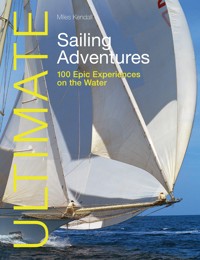
This new edition of Ultimate Sailing Adventures takes you on a thrilling ride around the world's best boats, locations and voyages – from amazing passages and destinations, through memorable races and rallies to special boats and sailing experiences. There are exciting adventures that will appeal to everyone from novice to expert. Stunning, full-page photographs put you at the heart of the action, while inspirational descriptions allow you to dream of being there. It's perfect for planning your next sailing adventure, or alternatively allows you to indulge in some armchair sailing in boats and places of your wildest dreams. As well as major expeditions, like crossing the Atlantic or sailing around the world, and classics like the Fastnet Race, there is a wealth of adventures in a wide variety of boats in amazing locations from Lake Titicaca to the Arctic Circle and from the turquoise waters of the Caribbean to the icebergs of the Southern Ocean. Every continent is covered, so expect to find places where you've sailed alongside those you never knew existed. Each entry is accompanied by useful information such as the degree of difficulty, best time of the year and similar adventures. Discover where you will sail next – in reality or in your imagination.
Sie lesen das E-Book in den Legimi-Apps auf:
Seitenzahl: 251
Veröffentlichungsjahr: 2023
Das E-Book (TTS) können Sie hören im Abo „Legimi Premium” in Legimi-Apps auf:
Ähnliche



















DEDICATION
In memory of my father, who taught me how to sail
Miles Kendall
CONTENTS
Anywhere
J Class yacht
Going aloft
Gunboat
Eating sushi
Exo
Liferaft
International Moth
Spinnaker swing
Kitesurf
America’s Cup
M5
Waterspout
Wayfarer cruising
Underwater light show
Maltese Falcon
SailGP
Windsurf in waves
Sail among whales
Scow bow
Survive a storm
Tall ships
Superyacht skipper
Ultim trimaran
Wakeboard behind a yacht
Set a world speed record
UK
Sail around Britain
Three Peaks Race
Whisky cruise
Ardnamurchan Point
The magic of the Swatchways
Sail up the Thames
Cross the English Channel
Cricket in the Solent
Round the Island Race
Portland Bill
Cowes Week
Frenchman’s Creek, Cornwall
Land’s End
Isles of Scilly
Fastnet Race
Race to the Azores
Europe
Northern lights, Norway
Archipelago Raid, Sweden
Viking boat to Ireland
Circumnavigate Ireland
French canals
Tour de France à la Voile
Golfe du Morbihan, France
Brest Maritime Festival, France
Bay of Biscay, France
Bonifacio, Corsica, France
Copa del Ray, Mallorca, Spain
Superyacht Cup, Mallorca, Spain
Race a TP52, Mediterranean
Straits of Gibraltar
Ionian Sea, Greece
Gulet, Turquoise Coast, Turkey
Africa, the Middle East & Asia
Cape Verde Islands
Cape of Good Hope, South Africa
Agulhas Current, South Africa
Surf safari, Maldives
Felucca on the Nile, Egypt
Sail a dhow, Dubai
Storm-bound in Hong Kong
Komodo National Park, Indonesia
Andaman Sea, Thailand
Hạ Long Bay, Vietnam
Australasia & the Pacific
Whitsunday Islands, Australia
Sydney Harbour, Australia
18-foot skiff, Sydney, Australia
Sydney-Hobart Race, Australia
Galapagos Islands, Pacific
Kon-Tiki in the Pacific
Flying fish on the Pacific
The Americas
Northwest Passage
Desolation Sound, Canada
Newport-Bermuda Race, USA
Roll a yole, Martinique
Cricket cruise, West Indies
Antigua Sailing Week
Transit the Panama Canal
Lake Titicaca, Bolivia
Amazon River, Brazil
Rio de Janeiro, Brazil
Cape Horn, Chile
Rest of the World
Ice wingsurfer
Mini-Transat
Cross the Atlantic in a bathtub-sized boat
Cross the Equator
Cross an ocean in a beach cat
Survive pirates
Follow in Shackleton’s wake
Go exploring among icebergs
Around the World
Hitchhike around the world
Rally around the world (World ARC)
Sail around the world
Clipper Round the World Race
Mini Globe Race
The Ocean Race
Vendée Globe
Anywhere
WHEN BIG IS VERY BEAUTIFUL
J Class yachts epitomise the glory of sail
Location
Worldwide
Difficulty
Moderate
Time
All year
Tempted by this?
Try racing in the modern-day America’s Cup (p24)
J Class yachts stir something deep within every sailor’s soul. The combination of power and elegance is utterly bewitching and the sight of one of these vessels under sail can never be forgotten. To helm one of the Js is to be a king of the yachting world, with dozens of courtiers trimming sheets and wrestling with vast expanses of canvas.
The first J Class yachts were built in 1930 and the design rule that brought them into existence was actually meant to promote more modest, affordable yachts. It is hard to believe, but these craft of up to 89 feet (27m) were small in comparison to the craft that had gone before them, such as the 148-foot (45m) Britannia that was built for King Edward VII when Prince of Wales in 1893 – and scuttled in 1936, as directed in his will.
These relatively smaller, cheaper craft were built under the International Rule that allowed yachts of different sizes and design to race against each other. A vessel’s various dimensions were fed through a formula and the resulting figure was the yacht’s ‘length’ under the rule. J Class yachts all had a comparable rating length and were the largest craft ever built under the International Rule.
Ten J Class yachts were built between 1930 and 1937, and all but one competed in the America’s Cup, the pinnacle of international yacht racing that had started in 1851. Enterprise, Whirlwind, Yankee, Weetamoe and Rainbow did battle for the Americans whereas Ranger, Shamrock V, Endeavour, Endeavour II and Velsheda represented Great Britain. The racing was tight but the Americans always retained the title due to a combination of brilliant design, smart sailing, deep pockets, luck and home advantage. The Stateside boats may have crossed the line first, but it is the British boats that have triumphed against time. All the American boats were scrapped in the late 1930s and 1940s, whereas three original British boats are still sailing.
The glorious sight of these classics under sail has whetted the appetite of those whose resources are as great as their passion for the sea. Reproduction Js such as Ranger are already competing in events in Europe and the Caribbean and more yachts are being built. As well as the recreation of yachts that were sailed then scrapped (all original J Class yachts were built of steel), there are several yachts that were designed but never built: vessels such as Svea, which was conceived in 1937 and was launched, finally, in 2017.
It is the combination of a rich history, breathtaking beauty and stunning speed that has ensured that the J Class can look forward to a sparkling future. The owners who pay for these yachts to be built, restored and maintained also look to cover some of their costs and many of the Js are available to charter, although if you need to ask how much, you simply can’t afford it.
GO ALOFT UNDER SAIL
Climb to the top of the towering mast
Location
Worldwide
Difficulty
Moderate
Time
Minutes
Tempted by this?
Try spinnaker swinging (p20)
There are two ways to fix a problem at the top of the mast: take the mast down or climb up it. Lowering a mast is a complicated and expensive procedure and so trips to the masthead become an inevitable part of sailing, especially offshore when there is simply no alternative.
Masts act as giant levers, exaggerating the movement of the yacht below. A faint rocking at deck level is translated into a much more violent swaying at the top of the mast. No wonder sailors prefer to climb the mast of a boat that’s securely tied up in a marina. Of course, it’s not always possible to make a pit stop, especially during a round-the-world race, and in such cases, there is no alternative but to make the ascent at sea. The first trick of going aloft at sea is to keep the sails up. It sounds odd to non-sailors, but the force of the wind on the sails actually steadies the boat. It may be heeled over but it’s not bobbing around on the ocean swell as it would be if under bare poles.
To climb the mast you need a harness or bosun’s chair to support your weight. On a fully crewed boat with big winches and plenty of muscle, the climber just has to sit and enjoy the ride. On solo voyages, skippers must haul themselves up. Some offshore yachts are equipped with small footholds on the mast to make climbing easier; others carry special climbing kit that allows sailors to push themselves up using the strength of their legs. Many yachts are equipped with powered anchor windlasses and these should not be overlooked as a quick and easy way to go aloft.
The skippers of Open 60 yachts are very accustomed to mast-climbing during their solo ocean races, but this doesn’t make the task any more enjoyable. Preparation is all important because they don’t want to climb a 27-metre (88.6ft) mast only to discover that they’ve taken the wrong-sized spanner.
Tools should be attached to ropes that are tied to the harness and there should be a backup system to allow you to get down in case your harness jams. Skippers wear crash helmets as they are often thrown around when at the masthead: bruises are inevitable, but concussion could be fatal. Indeed, some skippers tie themselves to the mast to stop them from being swung into mid-air above the ocean that is shooting past so far beneath them.
On a fine day – and with a strong crew to pull you up – there is an amazing sense of being on top of the world when at the top of the mast of a yacht under sail.
GET ALL FIRED UP ON A GUNBOAT
Luxury and speed combine on this high-tech catamaran
Location
Worldwide
Difficulty
Moderate
Time
All year
Tempted by this?
Try racing an Ultim trimaran (p50)
The ultimate sailing adventure requires the ultimate yacht: one that is fast, fun and capable of going anywhere. All sailors have their own idea of a perfect vessel but few will tick as many boxes as a Gunboat.
These remarkable catamarans combine a multitude of appealing features. What sets them apart from the competition is their speed, and this is a result of high-tech construction and some very clever design. Gunboats are extremely light with all excess weight engineered out of each component. Nomex, carbon and Kevlar are used throughout with structures made of honeycomb cores that are both incredibly strong and a fraction of the weight of their wooden or fibreglass equivalents. Even the furniture is cored with honeycomb to save vital ounces.
These modern materials are coupled with a powerful rig that allows Gunboats to cover huge distances in a day. This speed is maintained while the yacht stays on an even keel, allowing crew to live horizontally while their monohull mates are at a constant angle. Daggerboards extend from each hull to give the Gunboat additional stability, though they can be lifted to allow access to the shallowest of waters.
One big problem experienced by many catamaran owners is the inability to see what’s going on from the large aft deck. Gunboats counter this with a dedicated forward cockpit. The skipper can helm from here, and all sail controls are within easy reach; there is also much-improved visibility.
With the working cockpit out of the way, the rest of the boat is for pure pleasure. Catamarans make ideal living platforms where the indoors and outdoors can be integrated. The saloon and deck are all the same level and there’s always a 360-degree view.
The capability of catamarans to cope with severe storms is an issue that is often raised, but Gunboat’s designers say that her safety lies in her speed, which carries her quickly out of harm’s way. Being caught out in heavy weather is inevitable during any ocean adventure and the Gunboat team claim that with her daggerboards up, the round-bottomed hulls will skate sideways along waves preventing a capsize while the long, high bows offer plenty of buoyancy.
A range of Gunboats have been built, with designs getting bigger and bigger to meet the demands of high-end clients, many of whom have moved from racing large maxi yachts and are looking for something with speed and excitement but no need for a large crew.
Of course, there is a downside, and that comes when you turn over the label and look at the price. Such high performance costs (a lot) but several of these stunning cats are available to charter.
SUSHI AT SEA
Enjoy the freshest possible fish
Location
Worldwide
Difficulty
Simple
Time
All year
Tempted by this?
Try eating oysters on the Helford River (p78)
Fish come from the sea. Yachts sail on the sea. Put the two together and you have the potential for a meal that’s as delicious as it is free – and there’s no simpler way to eat fish than as sushi, or, more accurately, sashimi.
There are a few obstacles to overcome, however, before you can sit down to enjoy your sophisticated fish dinner. The greatest of these is the actual catching of the fish and the trick here is to reduce speed. Skippers hate going slow but if you want a decent chance of securing your supper, you have to do so. If the log is showing more than 4 knots (7.4kph) you’ll probably be looking at SPAM for supper rather than sushi.
Your target fish will largely depend on the waters in which you’re sailing. If cruising around the UK, why not set your sights on mackerel? It is not only the easiest fish to catch, it’s also at its most delicious when eaten raw. A medium-length line armed with shiny steel spinners is all you need. These little metal propellers spin around, catching the light and tempting the mackerel to bite. Brightly coloured feathers can prove an effective alternative and are also worth trying.
If you’re ocean sailing, why not be ambitious and try to catch a tuna? You’ll need a proper rod and some thick line or you’re likely to lose the fish or the reel before you can land it. Tuna can be very large and no one wants to waste fish or spend hours wrestling with a monster of the deep when you should be sailing. The trick is to choose a small lure but arm it with a big hook. Visit the angling store and find something resembling a small, psychedelic squid. Then buy a hook 50 percent larger than the one that comes with the squid and you’re ready to go.
The idea is that the small lure will be ignored by the largest fish while the big hook is more likely to stop fish that do bite from getting away.
Once the fish has been caught and brought on board you’ll need to kill it. A blow to the back of the head with a winch handle is the traditional method of dispatch, though sashimi literally means ‘pierced body’ and some believe that sashimi fish should be killed with a sharp spike passed through the brain.
Clean and gut the fish as quickly as possible and expect to get blood and scales everywhere. Cut away the fillets (tuna skin peels off remarkably easily before the fillet or loin has been cut away, whereas mackerel should be filleted and then de-skinned with a sharp knife).
Cut the raw fish into pieces about 1 inch (2.5cm) wide, 1.5 inches (4cm) long and 0.2 inches (0.5cm) thick. Serve with soy sauce mixed with a little wasabi paste and thinly sliced pickled ginger. English mustard or horseradish and cucumber make an excellent alternative, especially with mackerel sashimi.
REDEFINE THE POSSIBLE
Break with convention and commission a concept superyacht
Location
Your imagination
Difficulty
Extreme
Time
All year
Tempted by this?
Try racing a superyacht (p110)
How do designs make the leap from conceptual to actual? By someone with a vision and guts to make them a reality. And if you have a love of boats (and nature) then why not put your name down for an Exo?
This 46-metre (151ft) superyacht design takes the idea of a concept seriously. Inspiration came from the exoskeletons of microscopic marine creatures – could the same functionality, efficiency and aesthetics be used in naval architecture? After all, if these shapes were the result of millions of years of evolution, they must surely be highly refined. The teams at Dykstra Naval Architects and Claydon Reeves also considered how tall trees are supported by a network of roots – then applied that thinking to the yacht’s mast and the supporting ‘roots’ that wrap around the vessel.
Exo is remarkable in lacking the internal structures that give rigidity and strength to conventional designs. Her creators focused on the intelligent positioning of material, allowing superfluous elements to be removed. A rigorous mathematical approach (topology optimisation by the Alfred Wegener Institute in Germany) was then used to test assumptions and create a structure that would be both strong and beautiful. The resulting 3-D ‘skeleton’ takes into account the specific loads that come from components such as the deck, rigging and keel.
“Because the spaces in between the load paths are non-structural, you can create shapes in the hull that would not be possible with traditional frame construction,” says designer Thys Nikkels. “In the case of Exo, the large organic windows set into the hull are the direct result of this process – they are designed around the loads on the hull structure, not the other way around.”
Exo’s curved glass panels create a sensation of not just sailing on the water, but being within it. Marine life that would normally be hidden beneath the waves is part of your environment – now you can wave to the dolphins and make friends with the fish.
Down below she has all the features you would expect from a superyacht with luxurious accommodation and a giant aft deck. And her designers know something about R&D and creating yachts that sail well. While Exo is still at the concept stage, they are responsible for numerous J-Class rebuilds and superyachts like SY Black Pearl, Athena, Maltese Falcon, Sea Eagle, Hetairos and Aquarius, as well as a host of craft from square-rigged training vessels to globe-circling cruisers.
And the great thing about commissioning your own yacht is that you become part of the design process – how inspiring!
SURVIVE IN A LIFERAFT
Could you cope with 117 days adrift?
Location
Worldwide
Difficulty
Extreme
Time
117 days
Tempted by this?
Try crossing an ocean on a raft (p150)
How do you like your seagull: medium rare or well done? It’s not a question most people have to ask themselves but if you find yourself adrift in a liferaft with little chance of rescue, eating seagulls could be all that keeps you alive.
The most important thing to remember about abandoning ship and taking to the liferaft is that it is an absolute last resort. Sailors joke that one should only step up into a liferaft (as your yacht sinks beneath you), but the point is a serious one. Even a swamped or listing yacht is a safer refuge than a liferaft and is far easier for the rescue services to detect.
If the worst happens and you do have to inflate your liferaft, make sure that it’s tied on securely before you throw it over the side. You can’t be sure how long you’ll be adrift and having adequate water is the key to your survival. If there is time, fill jerry cans with spare drinking water, leaving good-sized air gaps to ensure they float. Take whatever you can that will prolong your life and aid your rescue. A hand-held VHF radio, emergency beacon, spare batteries, flares, foghorn, binoculars, first aid kit and a small mirror for signalling will all help get you noticed. As well as water you should take food and clothing to keep you warm or protect you from the sun. Even the best sailors can suffer from debilitating seasickness once in a liferaft and that in turn causes dehydration, and so anti-sickness pills are a must.
If you were able to broadcast a Mayday message before leaving your vessel and you know that it was received, the emergency pack that is contained within the liferaft should have enough to keep you going if help is on its way. If lightning destroyed your electronics and set fire to your boat, think about taking extra fishing gear.
One cruising couple, Maurice and Maralyn Bailey, spent almost four months floating around the Pacific in a liferaft after their yacht sank. In their book, 117 Days Adrift, they describe their life-or-death adventure and how they survived on a diet of seagull, turtle and rainwater.
If your yacht is about to sink, it may be sensible to take to the liferaft while remaining tied on the mother ship, thus making a larger target for the search and rescue team. Keep a sharp knife to hand to cut the rope should the yacht start to go down – but do be careful not to puncture your new craft.
TAKE TO THE AIR IN A MOTH
Rise above the waves in this extreme dinghy
Location
Worldwide
Difficulty
Extreme
Time
All year
Tempted by this?
Try sailing a foiling catamaran (p36)
It’s small, it’s very, very fast and it can fly. The Moth is a truly amazing sailing boat and is leading the way in hydrofoiling dinghies – in fact, it claims to be the fastest single-handed craft in the world. This is a development class, meaning that innovation is welcome and technology that will one day become mainstream is seen here first.
Moths are a modest 11 feet (3.4m) long and while their weight is unrestricted, most are under 22 pounds (10kg). They can reach speeds of over 30 knots (56kph), and their ability to rise out of the water is crucial because friction between the hull and the water is what slows boats down.
The hydrofoils that give Moths their lift may be marvels of carbon fibre, but some elements of their design are gloriously simple. Pioneering Moth designers had to overcome the problem of boats continuing to rise until the bottom of the main foil cleared the water with disastrous results. The solution was an ingenious mechanical device in the shape of a thin batten extending downwards into the water from the bow. The batten is connected to rods that adjust the angle of the foil. When water is flowing over the batten, the flap is angled so that the hull is pushed up. As the batten clears the water, pressure comes off it and it moves, causing the foil to become more level and thus maintain the desired ‘cruising altitude’. The helmsman can make further adjustments to fine-tune the centreboard and rudder foils.
It’s a lot to think about when you’re flying along at high speed, especially when you must also keep the dinghy balanced by adjusting the sails and shifting your weight on one of the outrigger wings. Capsizes are frequent, especially as sailors try to tack or gybe while keeping the boats airborne. The wide wings allow for sailors to balance large rigs, but every gust must be anticipated, and sheets adjusted to keep the boat balanced. Wipeouts are dramatic as the dinghies hit the water, depowering from more than 27 knots (50kph) to a standstill in seconds. Helms are not fixed to the boats so can find themselves hurtling through the air, taking the idea of flying to new extremes.
The Moth has experienced such radical developments because while there are restrictions on dimensions, almost anything else is permitted. Evolution is rapid because effective ideas are retained while those that never quite take off are allowed to sink.
The class first emerged in the 1920s and the less adventurous will be pleased to know that there are separate events for non-foiling and classic Moths.
The Dinghy Foiling Book (from which the photo is taken) provides more about sailing a foiling Moth.
SPINNAKER SWING
Let the wind take you higher
Location
Worldwide
Difficulty
Tricky
Time
All year
Tempted by this?
Try climbing the mast at sea (p8)
There’s always one more job to do on board a yacht. Ropes to splice, decks to swab or hatches to batten down. There does, however, come a time on every boat when the crew just wants to play and it’s a brave skipper who denies their wish.
Swimming is the most obvious leisure pursuit if the sun is out and the water warm. The yacht provides a perfect diving platform and there will soon be bodies leaping from stem to stern. Eventually the swimmers will start to look for more adventurous aquatic options and this is where the spinnaker swing comes in.
To start, the boat must be anchored from the stern so that its bow is pointing away from the wind. The spinnaker, a giant colourful sail that is used to power yachts downwind, is then hoisted to the top of the mast as usual but instead of its corners, or clews, being secured to the boat, they are attached to one another with a long loop of rope. As the wind fills the sail, the halyard that holds it to the top of the mast is slowly let out until the spinnaker is flying above open water.
It is now that the adventurous crew member sits in (or clings on to) the loop of rope and is lifted skyward as the sail fills. If you’re feeling fancy, use a plank or bosun’s chair to create a proper seat – though the ability to make a quick escape is crucial.
With the crew member in the loop, it is just a question of waiting for the wind to fill the sail. As the colourful canvas billows, it lifts the person out of the water and the swimmer becomes a swinger. The harder the wind blows, the higher the crew goes. If it all becomes a little scary the quick solution is to let go of the rope or slip from the swing and plunge into the water below. Those on the boat can also control the height of the swing by paying out more rope from the top of the mast. Extra lines led from the clews of the sail to the boat can also control the height of swing but will make the yacht start to sail.
Swinging beneath a spinnaker is an incredible sensation and is spectacular to watch. The forces exerted on the mast and rigging are similar to those experienced when flying the spinnaker conventionally, so next time the sun is out and the crew look bored, why not give it a try?
GO FLY A KITE
Kitesurfing takes sailing to new heights
Location
Worldwide
Difficulty
Tricky
Time
All year
Tempted by this?
Try wakeboarding behind a trimaran (p52)
Kitesurfing has turned the sailing world on its head. This most extreme of all nautical activities breaks almost every rule in the book – perhaps that’s why it’s so incredibly popular. Boats are meant to float, and yet kitesurfing boards sink the moment you stand on them. Traditional sailors rely on sails, masts, tillers and keels, yet kitesurfers put their faith in an air pump and a handlebar.
The disciplines are so different that some sailors deny that kitesurfing is sailing at all. Their refusal to welcome these newcomers into the fold may have something to do with jealousy. Kitesurfing has a lot going for it: the Holy Grail of sailing at 50 knots (93kph) was first achieved by a kitesurfer, the kit fits into a rucksack and is relatively inexpensive, and what other form of sailing allows you to take to the air and hang there for tens of seconds?
Kitesurfers have also earned themselves some bad press through a lack of consideration for other water users who may not be used to the speed with which these board riders skim across the sea. The greatest danger is from the kite strings, which have been known to slice ears off, though it is the riders themselves who are most at risk.
The kites have a surface area of 50-160 square feet (5-15m2) and are flown from two, four or five lines of around 80 feet (25m). These lines are connected to a control bar that is in turn linked to the kitesurfer’s harness. Tilt the bar in the direction you want the kite to go and keep it level if you want it to go straight up and so depower. All control systems have a fail-safe that depowers the kite if the rider loses control and lets go of the bar.
Boards are around 4.6 feet (1.4m) long and are shaped according to their principal use with disciplines including speed sailing, jumping, surf riding or upwind sailing. The majority of boards are symmetrical ‘twin-tips’ that allow either end to become the ‘bow’.
Modern kites are generally very forgiving to fly and will stay airborne even if the rider ends up in the sea. In this case the person merely powers up the kite by steering it across the wind and pops out of the water.
Once moving, the planing action keeps the kitesurfer afloat and then it’s time to try some jumps as the rider accelerates the kite to create maximum power and lift. Once aloft he or she can attempt a dazzling array of acrobatics before landing and, hopefully, continuing this high-adrenalin adventure.
There is some debate about the records for highest jump and longest time aloft, but one kite surfer in Hawai’i spent 39 seconds airborne and reached a dizzying height of 164 feet (50m) when caught in a freak thermal.
LIFT THE AULD MUG
Redefine the future of sailing in a century-old race
Location
Worldwide
Difficulty
Extreme
Time
Every 2-5 years
Tempted by this?
Try setting a world speed record (p54)
The America’s Cup, hailed as the oldest trophy in international sport, stands as a testament to the indomitable spirit of sailing and human ingenuity. With a rich history spanning over 170 years, this iconic competition has captivated audiences worldwide with its thrilling displays of skill, strategy and cutting-edge design.
The America’s Cup originated in 1851 when the yacht America triumphed over a fleet of British vessels in a competition around the Isle of Wight. Since then, this remarkable event has witnessed a continuous legacy of technological advancements and fierce competition. Each edition has seen teams push the boundaries of design, seeking the fastest, most powerful yachts to claim the coveted trophy.
Over the years, the America’s Cup has witnessed a diverse array of craft. From the J-Class yachts of the early twentieth century to high-tech catamarans, innovation has been a constant theme. The introduction of hydrofoils, which enable boats to lift out of the water, revolutionised the sport, enhancing speed and manoeuvrability. Today’s foiling monohulls seem to defy physics, sailing many times faster than the wind is blowing.




