


12,00 €
Mehr erfahren.
- Herausgeber: Fernhurst Books Limited
- Kategorie: Lebensstil
- Sprache: Englisch
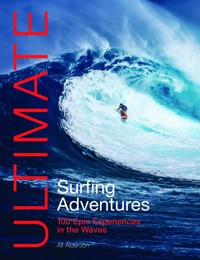
This new edition of Ultimate Surfing Adventures takes you on a thrilling ride around the world's best surfing spots – from tropical reefs, through temperate waters to ones where you will need a wetsuit. There are exciting adventures that will appeal to everyone from novice to expert. Stunning, full-page photographs put you at the heart of the action, while inspirational descriptions illustrate why each break is so unique. It's perfect for planning your next surfari, or alternatively allows you to indulge in some armchair surfing of breaks that only the most adventurous will ride. As well as classic waves around the Pacific, there is a wealth of more unusual surf spots from Antarctica to Bristol. Every continent is covered, so expect to find waves you've already ridden alongside those you never knew existed. Each entry is accompanied by useful information such as the best season to surf, hazards to consider, how to get there and what to do when you're all surfed out. Discover where you will surf next – in reality or in your imagination.
Das E-Book können Sie in Legimi-Apps oder einer beliebigen App lesen, die das folgende Format unterstützen:
Veröffentlichungsjahr: 2023
Ähnliche

















INTRODUCTION
What is the ‘ultimate surfing adventure’?
Well, that depends on who you are as a surfer. Non surfers might assume it’s riding the biggest, meanest, gnarliest wave on the planet, or a wave that booms ashore onto a palm-fringed beach and is surfed in boardshorts. Yet, as any surfer knows, not everyone wants to surf waves that could maim them and not everyone yearns for warm seas and the smell of sunscreen every time they paddle out.
There are plenty of people for whom surf heaven is a head-high Irish reef break or a mellow Victorian beach break, even if it does mean that they have to wear a wetsuit.
So what you’ll find in the pages of this book is a selection of waves to appeal to everyone, from those who would ride giants to those who would ride rivers and lakes. Hopefully a few will inspire you; maybe a few will surprise you. Perhaps a few will have you booking your next surf trip – whatever kind of surfer you are.
Alf Alderson
Pembrokeshire, UK
August 2023
CONTENTS
Europe
Lanzarote, Canary Islands
Faroe Islands, North Atlantic
Hossegor & Les Landes, France
La Torche, Brittany, France
Munich, Germany
Iceland
Bundoran, Country Sligo, Ireland
Mullaghmore, Country Sligo, Ireland
North-West Italy
Sardinia, Italy
Maderia
Lofoten Islands, Norway
Ericeira, Portugal
Southern Portugal
Mundaka, Northern Spain
Thurso East, Northern Scotland
Outer Hebrides, Scotland
Yorkshire Reefs, England
River Severn, England
Sennen Cove, Cornwall, England
Freshwater West, Pembrokeshire, Wales
The Wave, Bristol, England
Africa & Middle East
Cape Verde Islands
Ghana
Israel
Liberia
Mauritania
Morocco
Namibia
North Africa’s Mediterranean Coast
Oman & Dubai
São Tomé
Dakar, Senegal
Durban, Natal, South Africa
St Francis Bay, South Africa
Asia & Indian Ocean
Andaman Islands
China
Comoros Islands
Bay of Bengal, India
Mentawi Islands, Indonesia
One Palm Point, Western Java, Indonesia
Sumbawa, Indonesia
Desert Point, Lombok, Indonesia
Kyushu, Japan
Chiba Peninsula, Japan
Madagascar
Siargao, Philippines
Réunion Island
Jungmun Beach, Cheju-Do, South Korea
Sri Lanka
Taiwan
The Maldives
Australasia & Pacific
Northern New South Wales / Southern Queensland, Australia
Batavia Coast, Western Australia
Perth, Western Australia
Victoria, Australia
Cactus, South Australia
Shipsterns Bluff, Tasmania, Australia
Rarotonga, Cook Islands
Easter Island
Viti Levu, Fiji
Oahu North Shore, Hawai’i
Maui, Hawai’i
Micronesia
New Caledonia
Raglan, North Island, New Zealand
Mahia Peninsula, North Island, New Zealand
Papua New Guinea
Solomon Islands
Tahiti
Tongatapu, Tonga
Savai’l & Upolu Islands, Western Samoa
North America
Christina Lake, British Columbia, Canada
Tofino, Vancouver Island, Canada
Nova Scotia, Canada
The Great Lakes, USA / Canada
Outer Banks, North Carolina, USA
Orange County, California, USA
La Jolla, San Diego, California, USA
Alaska, USA
Washington State, USA
Santa Cruz, California, USA
Long Island, New York State, USA
Central America & Caribbean
Great Abaco & Eleuthera, Bahamas
Barbados
Caribbean Coast, Costa Rica
Pacific Coast, Costa Rica
El Salvador
Puerto Escondido, Mexico
Colima & North-West Michoacan, Mexico
Baja Peninsula, Mexico
Panama
South America & Antarctica
Mar del Plata, Argentina
Santa Catarina Island, Brazil
Iquique, Chile
Central Chile
Falkland Islands
Chicama, Peru
Uruguay
Antarctic Iceberg
Europe
LANZAROTE, CANARY ISLANDS
Come on in – join the crowds on Lanzarote’s north shore
Difficulty
Beginner – expert
Hazards
Big, heavy waves; shallow; rocks; sea urchins; irritating locals
Season
Winter
Water temperature
18 – 22°C (64 – 71°F)
Wetsuit
3/2 steamer or shortie; boots useful for rock hopping
Access
Very variable – good road access to some breaks; others may be down rough dirt tracks; getting in and out of the surf tricky at many breaks
Other local breaks
The nearby island of Fuerteventura has a fine range of breaks
While you’re there
Take a tour of Lanzarote’s unforgettable volcanic landscapes, or head to the fleshpots of the south coast for beer, clubs and general depravity
Like the Hawai’ian islands, the Canary Island archipelago, of which Lanzarote is part, is made from volcanic rocks thrusting up from deep ocean waters. In winter, the swells running into these mini landmasses have usually travelled from intense low pressure systems to the north, so that, once they trip over Lanzarote’s shallow reefs, they burst forward and explode with a power and grace that brings surfers flocking to the island from all over Europe.
It’s not all steep, fast reef breaks though. The massive crescent of black sand that is Famara Beach on the north coast also has consistent waves that go from almost flat at one end of the beach to head high-plus at the other end on a good swell, allowing beginners to choose the size they feel most comfortable with and making this probably the most popular novice beach in Europe in winter.
The consistently sunny conditions and warm waters of Lanzarote are another obvious attraction, although this should be tempered with the fact that it’s often windy and dusty here; it’s a rare surf trip to Lanzarote that doesn’t see dust and sand getting everywhere from inside your wettie to your bed.
The action for more experienced wave riders centres on the breaks around La Santa, also on the north coast, where you’ll find a selection of left- and right-hand reef breaks that can work on the biggest of swells and are rarely anything less than fast, hollow and shallow. And they’re invariably busy, with aggressive localism a common thing on Lanzarote’s north shore.
This is one place where localism seems to have won out, and many visitors simply choose to avoid surfing here as it’s just not worth the hassle. The irony of this is that the waves are still busy, even if the majority of the boorish contingent of surfers are locals enjoying a sport that was introduced to the island in the 1970s and 1980s by the kind of people they now regard as personae non gratae.
Indeed, few areas represent the unchilled side of surfing better than Lanzarote’s north shore on a busy day, but all is not lost as there are some fine waves to be had on the south-west and north-east coasts and even occasionally around the tourist hot spot of Arrecife for those who would rather avoid the rat pack.
It’s unlikely you’ll ever score much in the way of real solitude even in these locations, but if you’re looking to escape the damp, dark and cold of winter in Europe you may just consider busy waves to be a price worth paying for warm, fast, hollow rides.
FAROE ISLANDS, NORTH ATLANTIC
Feel like a surf hero in landscapes right out of the Nordic sagas
Difficulty
Expert
Hazards
Remoteness; cold air and water; some breaks shallow and rocky; currents
Season
Spring – autumn
Water temperature
4 – 16° C (39 – 60°F)
Wetsuit
Winter steamer, plus gloves, boots and hood outside summer
Access
Car ferry and flights to the island capital Torshavn; car essential
Other local breaks
Explore and you’ll find some
While you’re there
The cool capital of Torshavn (pop. 19,000) has some great bars and restaurants, and has produced a number of excellent indie bands such as Orca and Boys in a Band
It takes just one glance at an atlas to see that the Faroe Islands are smack bang in the way of almost every low pressure system and swell that rolls across the North Atlantic, and are thus pounded by surf year round.
It takes a second glance at an atlas to see that this far north there will never be a day in the year when the waters here feel anything less than ‘brisk’. But hey, modern wetsuits can deal just fine with such minor inconveniences, so bring your winter steamer with you and enjoy waves as they should be – empty of anyone other than you and your surf buddies.
This is only half of the Faroes’ surf experience though. Paddle out, catch a few waves, then take time to sit back on your board and take in the epic landscape that surrounds you.
This is nature on a mind-blowing scale, direct from the Nordic sagas. Gigantic sea cliffs and solitary sea stacks thrust up from the sea floor, ringed by seabirds tumbling and wheeling like rags thrown into the wind; misty waterfalls plummet hundreds of feet down black crags before being shredded apart by the winds; clouds spin around the snowy peaks of mountains that may never have had a human on their summit.
It’s enough to distract you from your surfing. But like the scenery, the waves here deserve respect. They’re cold, although not as cold as they might be, thanks to the Gulf Stream; they’re powerful; and they’re pretty incessant – it’s a rare day that wind and waves don’t bash into the Faroe Islands.
It is unlikely this remote enclave of Nordic civilisation will ever suffer from crowded waves. Indeed, it’s unlikely that all the breaks along the convoluted and often inaccessible 684 miles (1,100km) of coastline that make up the 18 islands of the Faroes will ever be discovered.
Don’t be put off by what you see on the map, though. The Faroe islanders have put large wads of European Union money to good use, building a superb network of roads and sub-sea tunnels that allows you to get around with surprising ease by car, so a decent surfari is perfectly viable.
And it’s not just the rare opportunity that the Faroes provide to find and even name an undiscovered break that makes the archipelago worth visiting. The locals – who almost all speak good English – are friendly enough anyway, but once they find out that you’re in the islands to surf you’ll get an extra warm welcome.
HOSSEGOR & LES LANDES, FRANCE
One good session here and you’ll understand why south-west France is the home of European surfing
Difficulty
Beginner – expert
Hazards
Crowds; currents and rips on bigger swells
Season
Year round
Water temperature
13 – 22°C (55 – 72°F)
Wetsuit
Steamer and boots in winter; shortie or boardshorts in summer
Access
Easy road access to all main breaks
Other local breaks
Head south to the world-class left at Mundaka (p34) or north to the similar but slightly colder and less consistent beach breaks of La Côte Sauvage
While you’re there
If the surf goes flat, head inland to the nearby Pyrenees for some great hiking, mountain biking and skiing
Is there a surfer around who has visited France and not surfed Hossegor? The deep water channel just offshore of France’s surf capital funnels in powerful swells from the Bay of Biscay. At their finest, these translate into gorgeous aquamarine barrels booming onto the sandy shores as a warm summer wind whisks their tops off. It’s hard to imagine a better surf experience.
Add to that the great selection of bars and restaurants in the area, surf boutiques galore for those who want to splash their euros around and an eclectic mix of surf frenzied visitors from around the world, and few would argue that the Hossegor region is not the focal point of European as well as French surfing.
Indeed, at peak season in late August and September a whole rash of pro surf contests descend on the surrounding coast and if you’re not a surfer you’re very much out of place, whether on the beach or on the street.
Of course this won’t appeal to everyone, but surf mania can be avoided easily enough with a short drive north. What is essentially one long golden beach extends for over 150 miles (240km) from Cap Breton in the south to the mouth of the River Gironde in the north, and all of it picks up pretty much the same swell as Hossegor – but without the crowds.
This general region, known as Les Landes, has been surfed since the ‘60s and many local families will have three generations riding the waves, while British surfers in particular have used the area’s warm, clean waves for over four decades as a refuge from the cold, wet and onshore conditions that they’re used to. So as a surfer, more than anywhere else in Europe, you really do feel at home here, even if you can’t speak French. (English is the lingua franca amongst surfers here anyway.)
Despite all this, you can still explore the region and discover your own break. In between access points to the coast are long stretches of virtually empty shoreline, reached down sandy dirt roads and winding paths through cool green forests and over hot dusty dunes. If you’re happy to take your chances and venture down one of these quiet trails, you may just find your own perfect beach break barrelling ashore in glorious solitude.
It can be difficult to find such breaks for a second time though – the dirt roads all look so similar and the sandbanks can change their shape on bigger swells and storms, so the peak you surfed one day may no longer be there the next – but isn’t it great to know that even in Europe’s most popular surf zone there are still waves to be discovered?
Not to mention some very fine wine and food when the sun sinks beneath the horizon …
LA TORCHE, BRITTANY, FRANCE
La Torche shines bright on France’s Celtic coastline
Difficulty
Beginner – expert
Hazards
Rocks around the point; rips on bigger swells
Season
Year round
Water temperature
8 – 18°C (46 – 64°F)
Wetsuit
Full steamer plus gloves, boots and hood in winter; 4/3 steamer, maybe shortie in midsummer
Access
Good road access to the beach
Other local breaks
Tronoën; Porzcarn
While you’re there
You could have a go at kiteboarding – lessons and hire available on the beach
La Torche is possibly the most popular break in Brittany, and there’s a reason for that: it’s good; it’s pretty consistent; it has a variety of breaks including Pors Carn, which works on the prevailing south-westerly winds; and it’s also a really nice beach irrespective of the surf.
But there’s more to La Torche than all of the above. This is just one of many good breaks in Brittany, and you may well come here strictly for the surf but you’ll probably leave having been seduced by the unique mix of culture and landscape that make up this most Celtic corner of France.
The links with the other Celtic surfing nations of Europe are palpable. Not only does Brittany have its own language (Breton, which has very obvious connections with Cornish in particular but also with Irish, Welsh and Gaelic), it also has land- and seascapes that have a very Celtic feel about them.
With its exposed, rocky and convoluted coastline (which means there’s always a reasonable chance of finding offshore conditions somewhere), hidden green valleys, mist-shrouded uplands and sturdily-built harbours, towns and villages designed to withstand the howling wind and rain that regularly sweep in from the sea, it will be familiar to surfers from all the Celtic regions, so much so that sometimes it’s easy to forget just which country you’re in when you’re sitting on your board and gazing shorewards.
But La Torche and Brittany do have one slight advantage over their counterparts to the north: year round it’s a degree or two warmer in this part of the world, which can mean the difference between chilly and frigid in winter and full suit or shortie in summer.
When La Torche is at its best, say in late summer, sun beaming from a cloudless sky and a clean, hurricane swell thumping into the beach, it’s comparable with anywhere in France. There’s a right-hand point break that can get as much size as most people are ever likely to want, while the banks on the beach can be punchy and fast – hollow even – and provide great fun rides that are often quite long too.
It’ll be busy in these conditions, and you may also have windsurfers and kiteboarders clogging things up if there’s a bit of a breeze, but if the crowds get too much there are plenty of other breaks in the region and a little exploration may well bring rewards.
For many surfers, a thorough exploration of Brittany will provide all the waves you’ll require of a surf trip. For others, it makes a great and conveniently short detour on the drive down to the more popular, warmer waves of south-west France.
Either way, La Torche is well worth including in your itinerary for an essential taste of Breton surfing.
MUNICH, GERMANY
Wetsuits among the city suits: river surfing on Munich’s standing wave
Difficulty
Intermediate – expert
Hazards
Shallow water; overhanging branches
Season
Year round but winter may be very cold
Water temperature
2 – 19°C (35 – 66°F)
Wetsuit
Full steamer plus gloves, boots and hood in colder months; boardshorts in midsummer
Access
Flights to Munich; public transport to city centre
Other local breaks
River Reuss, Bremgarten, Switzerland
While you’re there
Pop into the city’s beer halls, including the famous Hofbräuhaus am Platzl, for a few cold ones
There are plenty of rivers that hold surfable standing waves, but none is as well known as Munich’s River Eisbach (which translates as ‘Ice Brook’ – there’s a clue there as to what the water temperature is like).
Apparently, this tributary of the River Isar was first surfed as long ago as 1972, although it’s only in recent years that the landlocked surfers of Bavaria have regularly ridden the standing wave that is produced as the river bursts out from an underground tunnel at Haus der Kunst in the middle of the city. Indeed, there’s an annual surf contest on the river.
The Isar has probably become the world’s most famous surfable river wave thanks to its location in the middle of Munich, which means it is easily accessible as well as being a good stage for the exhibitionists and poseurs who invariably make up an unhealthy percentage of any local surfing population. Whatever the reason, whenever there’s a good ‘swell’ running – which in this case means a good flow of water – the waist high wave will have someone riding it.
This being Germany, things are done in an orderly fashion, one at a time. The wave is only big enough to hold one surfer so Munich’s surf dudes queue along the river bank while their buddies take their turn, watched by bemused onlookers from a bridge overlooking the ‘break’.
Depending on the skill of the surfer the ride may last a few seconds or a few minutes, with standard manoeuvres consisting of cutbacks, off-the-tops (not that there’s much of a top to go off), 360s and the like, and it’s even possible to buy locally manufactured boards that are specifically designed for this wave.
Surfing the Isar looks deceptively easy and most competent surfers will indeed find it straightforward enough after a little practice. The water is shallow, however, so wipeouts can hurt, there’s the prospect of bashing into the river bank to consider and, when you do eventually tire or wipeout, the rapid flow of the river will pop you out the back of the wave and carry you some distance downstream before you’ve gathered your wits and clambered back onto your board to paddle to the bank.
There’s a certain amount of localism here and fools may not be suffered too gladly. Fortunately, the city also has another river wave for less confident surfers a little further upriver, the Flosslande in Thalkirchen, which is smaller and has a less powerful flow.
Munich isn’t likely to be high on most surfers’ list of destinations. But hey, it’s a cool city with a fine beer festival every October, and if you’re paying a flying visit or passing through en route to a more regular surf destination, why not take your board and ride the urban wave?
ICELAND
The waves are only half the thrill in Iceland’s amazing landscapes
Difficulty
Good intermediate – expert
Hazards
Cold air and water; remote; currents; shallow lava reefs
Season
April – September
Water temperature
3 – 15°C (37 – 59°F)
Wetsuit
Full steamer plus gloves, boots and hood in colder months; boots useful year round, particularly for walking over sharp volcanic rocks
Access
Flights to Reykjavik; car hire (ideally four-wheel drive) essential
Other local breaks
n/a
While you’re there
Explore the geysers, hot springs, glaciers, volcanoes and mountains of this spectacular country
Like the Faroe Islands, Iceland lies in the path of virtually every storm and swell that tracks across the North Atlantic, and its rugged coastline is something of a surf magnet, albeit a cold, windswept and frequently inhospitable surf magnet.
Black volcanic sand beaches fringed by volcanic rock points and headlands create an often monochrome shoreline, enlivened by the shimmer of gin clear waters above a seabed that’s a mix of smooth black sand and jagged, solidified lava.
These somewhat challenging vistas are ameliorated by the warm welcome you’ll invariably receive from the score or so of local surfers, but don’t necessarily expect them to spill the beans on all the breaks.
It seems that these guys have learnt the lessons of the past, when information on surf spots once thought to be immune from overcrowding (such as those along Ireland’s west coast) was given freely and generously and, as a result, they now have dozens of riders out on a good swell.
Iceland’s locals clearly don’t want their waves to suffer the same fate, although it’s hard to imagine the country’s breaks ever seriously suffering from overcrowding. Factor in cold water, hostile weather, a relatively short surf season (unless you’re crazy enough to want to surf in the few hours of daylight available in the frigid winter months – some locals do …), inaccessibility and cost and everything mitigates against Iceland becoming the Hawai’i of the North Atlantic.
Visit in summer, however, when the water may be as ‘warm’ as 15°C (59°F), the air is milder and a clean, perfectly lined up groundswell is hitting the coast, and you may just think you’ve stumbled across a little surf nirvana.
Powerful, crystal clear overhead waves that barrel for hundreds of yards along points, reefs and beaches are not uncommon, but they can take some finding.
First port of call for visitors is the capital Reykjavik, easily one of the coolest cities in Europe and within easy reach of the eponymous Reykjanes Peninsula, the focal point of Icelandic surfing. You’ll find a selection of readily accessible waves, for instance, at Grindavik, a small, attractive fishing port close to the famous Blue Lagoon thermal pools.
Also close by are breaks along the Sandgerdi coast and a decent point break at Thorlakshofn to the south-east. Depending on your predilection for exploring, you could well discover enough waves (and fellow surfers to share them with) between here and Reykjavik to keep you satisfied.
On the other hand, you could rent a four-wheel drive and explore. Iceland is a rather bizarre mix of incredibly civilised, cosmopolitan towns and villages interspersed with some of the wildest volcanic, glaciated and mountainous landscapes on Earth, plunging down to a coastline that is equally savage; any surfari here requires you to be pretty self-sufficient both in and out of the water.
The north coast offers everything from the now well-known Ollie’s Point near Dalvik to reef, point and beach breaks that are yet to be named. But you don’t have to be an explorer to be captivated by this mind-blowing country. Surf here and you’ll still be one of very few to have done so – and, unlike most other surf spots in this book, that’s a situation that isn’t likely to change much any time soon.
BUNDORAN, COUNTY SLIGO, IRELAND
Enjoy the waves and the ‘craic’ in Ireland’s surf rich north-west
Difficulty
Beginner – expert
Hazards
Cold air and water (especially in winter); shallow and rocky on the reef breaks; powerful waves
Season
Year round but spring – autumn optimum
Water temperature
8 – 16°C (46 – 61°F)
Wetsuit
Full steamer plus gloves, boots and hood; in summer, a 4/3 steamer is fine
Access
Good road access to all breaks, although long paddle out to The Peak
Other local breaks
Rossnowlagh; Strandhill near Sligo town
While you’re there
Take a drive or a hike up into the impressive hills of Yeats Country, named after local poet William Yeats; the views from the summit of 1,725ft (525m) Benbulben are spectacular
Ireland is so spoilt for quality surf you could pretty much roll up anywhere on its west coast and have a good chance of catching world-class waves, but as a base Bundoran is hard to beat.
Right in front of the town is ‘The Peak’, a superb reef break that does just what it says on the tin – peaks up then peels both left and right as a fast, fun wave. The lefts are longer and you’ll rarely get it to yourself when it’s working. But don’t worry if it’s crowded, head north of the town to the lovely beach breaks of Tullan Strand, one of the most consistent beach breaks in Ireland and, although popular, it’ll be easier to get a wave here than at The Peak. People tend to park on the low cliffs above the beach and surf directly beneath them where the wave is more punchy but, if you want a little solitude, just walk along the beach for a few hundred yards to find quieter waves.
Or if you really want to test yourself, take the short drive south of Bundoran to Pampa Point, a shallow, hollow, screaming fast left that has snapped plenty of boards and bodies in the past and will no doubt continue to do so in the future. This is expert-only territory – if you’re in any doubt about your skills, give it a miss; there are plenty of other easier options in the area.
Were this all that Bundoran had to offer, you would be a happy surfer, but there’s more – there’s the ‘craic’. The town has a marvellous selection of bars, the best of which is Madden’s Bridge Bar. Fantastic breakfasts, great Guinness, fine live music and you can even check out The Peak from the bar.
So good, so consistent and so varied is the surf around Bundoran that these days the place has become a melting pot of surfers from all over the globe. The Masters World Championships were once held here and plenty of smaller events have taken place before and since on its shores.
This has good and bad points. On the positive side, you meet some real characters in the surf and the bars. On the negative side, some of these ‘real characters’ may also be world-class surfers so competition for waves can be tough.
But don’t let that put you off. When Bundoran is firing you’ll get your own great wave at some point and instantly realise why Ireland is the big thing in European cold water surfing these days.
MULLAGHMORE, COUNTY SLIGO, IRELAND
Go big – if you dare
Difficulty
Expert only
Hazards
Cold air and water, especially in winter; shallow and rocky; immensely powerful waves; long and possibly multi-wave hold downs
Season
Year round but winter offers the best chance of monster swells
Water temperature
8 – 16°C (46 – 60°F)
Wetsuit
Full steamer plus gloves, boots and hood in colder months; you’ll also need a partner, jet-ski and buoyancy aid
Access
Good road access to the headland for viewing; to surf the break you need to jet-ski out of Mullaghmore Harbour
Other local breaks
Bundoran; Strandhill near Sligo town
While you’re there
You’ll need a nice relaxing pint to recover, even if you’ve only been watching the action from the headland – head to Sligo town for a great collection of bars, restaurants and nightclubs
County Sligo does not have the best waves on the Emerald Isle but it does have the biggest. The county is home to the exposed Mullaghmore Head, which offers one of the surfing world’s biggest challenges – literally.
The huge waves that pound ashore at Aileens beneath the mighty Cliffs of Moher in County Clare are more famous, but Mullaghmore Head still boasts some of the biggest and gnarliest waves ever ridden in Ireland (if not Europe).
This is clearly the happy hunting ground of no one other than pro-surfers and nutters but for the rest of us it’s a fantasy that we can indulge in from time to time – that’s if you can imagine what it feels like to drop down the face of a dark grey, wind-lashed beast that’s just risen up out of the Atlantic like something from your worst nightmare.
And if you can’t, well, here’s what Gabe Davies, one of the first surfers to take on giant Mullaghmore, has to say about it: “Richie [Fitzgerald, his tow partner] and I had actually debated whether or not to go out at all as it was so big, but we’d been waiting for a swell like this for seven years, so in the end the decision was obvious.
“The biggest wave I caught was the biggest wave I’ve ever surfed anywhere – Hawai’i, Europe, Indonesia, you name it. It was both terrifying and exhilarating at the same time – the drop down the wave face seemed to last forever, and I reckon when I looked up the lip of the wave was maybe 50 feet [15m] above me.
“The wave was breaking in front of an exposed rock shelf and the water was a lot shallower than I expected, so if you’d fallen off a big one in the wrong place you’d have been in serious trouble.”
By ‘serious trouble’, Gabe means there was every chance of dying.
There are, of course, monster waves elsewhere in the world and all are an incredible challenge to those who take them on, but the combination of cold, shallow water and sea cliffs right in front of the break combined with the raw power of the ocean make Mullaghmore one of the more vicious of this particular breed.
And for those of us who would rather spectate, it’s also a great location – you’re literally right in front of and above the action. Which is probably as near as most people ever want to get.
NORTH-WEST ITALY
This unlikely surf zone has it all – when it’s on
Difficulty
Beginner – expert
Hazards
Possible crowds; currents and rips on bigger swells; rocks at some breaks; sea urchins; some spots suffer from pollution




