


18,99 €
Mehr erfahren.
- Herausgeber: John Wiley & Sons
- Kategorie: Geisteswissenschaft
- Sprache: Englisch
This new book provides an accessible and wide-ranging introduction to the main features of Chinese society. Drawing on a wealth of material, the author offers a fresh understanding of a unique society that has undergone continuous transformation and upheaval throughout the twentieth century.
Understanding Chinese Society looks in all its richness at the society with the largest population on earth. In order to explore long-term change and continuity, the book examines China from pre-revolutionary times to today's rapidly modernising society, although the focus is on recent change. Particular attention is paid to China's cultural traditions and hierarchical relationships in familial and wider social settings, and their fate in the modern world. Successive chapters investigate changes in the relations of rural and urban sectors of society; in the structure of families; in political and economic power; in cultural hegemony, education and the media; and in patterns of social inequality. A final chapter asks whether Chinese society is becoming more complex and differentiated in the course of modernisation and considers recent debates on the growth of civil society and democratisation.
This book will be indispensable for anyone studying Chinese society, Asian societies and comparative sociology.
Sie lesen das E-Book in den Legimi-Apps auf:
Seitenzahl: 558
Veröffentlichungsjahr: 2013
Ähnliche




















For Tina
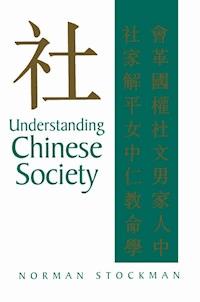
Understanding Chinese Society
Norman Stockman
Polity Press
Copyright © Norman Stockman 2000
The right of Norman Stockman to be identified as author of this work has been asserted in accordance with the Copyright, Designs and Patents Act 1988.
First published in 2000 by Polity Press in association with Blackwell Publishing Ltd
Reprinted 2003(twice), 2004
Polity Press
65 Bridge Street
Cambridge CB2 1UR, UK
Polity Press
350 Main Street
Maldon, MA 02148, USA
All rights reserved. Except for the quotation of short passages for the purposes of criticism and review, no part of this publication may be reproduced, stored in a retrieval system, or transmitted, in any form or by any means, electronic, mechanical, photocopying, recording or otherwise, without the prior permission of the publisher.
Except in the United States of America, this book is sold subject to the condition that it shall not, by way of trade or otherwise, be lent, re-sold, hired out, or otherwise circulated without the publisher’s prior consent in any form of binding or cover other than that in which it is published and without a similar condition including this condition being imposed on the subsequent purchaser.
ISBN 0–7456–1735–2
ISBN 0–7456–1736–0 (pbk)
ISBN 978–0–7456–6866–6 (ebook)
Library of Congress Cataloging-in-Publication Data
Stockman, Norman, 1944-
Understanding Chinese society / Norman Stockman.
p. cm.
Includes bibliographical references and index.
ISBN 0-7456-1735-2 (acid-free paper) -- ISBN 0-7456-1736-0 (pbk : acid-free paper)
1. China--Social conditions--1976- I. Title
HN733.5 .S76 2000
306’.0951--dc21
00-027691
A catalogue record for this book is available from the British Library.
Typeset in 10.5/12pt Sabon
by Kolam Information Services Pvt Ltd, Pondicherry, India
Printed and bound in Great Britain by Marston Book Services Limited, Oxford
This book is printed on acid-free paper.
For more information on Polity visit our website: www.polity.co.uk
Contents
Acknowledgements
Note on Romanization and Names
1 The Study of Chinese Society
2 Which China? Whose China?
3 Rural and Urban in China
4 Individual and Society in China
5 Chinese Family: Continuity and Change
6 Power and Revolution: Economic and Political
7 Power and Revolution: Cultural
8 Changing Patterns of Social Inequality
9 The Differentiation of Chinese Society
Notes
Glossary of Chinese Terms
Bibliography
Index
Acknowledgements
When people ask me how as a rogue sociologist I became interested in China, I tell them a rambling, picaresque story, if they can be bothered to listen. Among the cast of characters is Stan Rosen, a political scientist from the University of Southern California, whom I happened to meet in Beijing in 1987 when studying Chinese language at Beijing Normal University. He was interested at that time in street traders, and we spent some time together eating melon at street stalls and chatting about social studies of China. On one walk he prompted me to practice my Chinese by making inquiries about booking a room at a nearby hotel catering (as it turned out) exclusively for Chinese people, an incident that provoked more merriment than embarrassment. Perhaps on the same walk he asked, in passing, as one does, whether I had thought of ‘doing a China book’. I hadn’t. You should, he said. Clearly the remark stuck in my memory, working away at my subconscious. So here it is, my China book. My thanks to Stan Rosen for his initial encouragement.
The book emerged from teaching a course called ‘Chinese Society’ for the past ten years. It is a short course on an immense subject. Ten cohorts of students have passed through the course, and together we have grappled with the problems of understanding the twists and turns of revolutionary social change in twentieth-century China. The book could not have been written without those students, their enthusiasm and never-ending questions. As I did, they start off knowing almost nothing about China and, as I did, they assume that almost everything about Chinese society is very different from the western societies of Europe and America that they live in or have some familiarity with. Then they begin to find aspects they can recognize, and go through a stage in which all societies appear essentially the same, variations on a set of common themes. There is truth in both of these extreme positions, and we continue to oscillate between them and to search for more satisfactory middle ways.
The debts that I have accumulated in writing this book are extensive and unrepayable. My most general indebtedness is to the scholarly communities of sociologists and other social scientists who have conducted the research on which the generalizations and interpretations in this book rest. Part of the information I report derives from my own research activities and my own personal experience in China. A much greater part comes necessarily from the detailed investigations and analyses of a wide range of scholars, each expert in their own fields of study. I have, as is customary in academic circles, given full acknowledgement of the source of all specific research findings and all major contributions to analysis and argument, and I hope that readers will be encouraged to follow up the leads provided in my suggestions for further reading and in the full bibliography. They will quickly discover what should in any case be obvious, that I have been forced to simplify and condense the carefully and subtly wrought books and articles of many scholars into short paragraphs, sentences, or sometimes merely a phrase. The result, I hope, remains intelligible, but it cannot do justice to the complexity of empirical materials and their analysis that is now available in the scholarly literature, whether originating from within China or without.
I am indebted more specifically to my Chinese colleagues on particular research projects, especially Sheng Xuewen of the Institute of Sociology, Chinese Academy of Social Sciences, and Ding Jinhong of the Institute of Population Research, East China Normal University. Both of them patiently explained to me many aspects of everyday life in China as well as the workings of social processes, and Sheng Xuewen opened up the possibility for one of my most fruitful visits to China in 1992.
I should like to thank also the committee and members of the University of Aberdeen Chinese Studies Group which has been in existence since 1989. Ever since the group’s first public meeting, held fortuitously on 6 June 1989, and crammed with visiting Chinese students and scholars distraught at the news emanating from Beijing, the enthusiasm of the group’s members has made it possible to invite very many distinguished scholars to Aberdeen. I am grateful to all those members of the China studies community who have visited Aberdeen over the years and allowed me to pick their brains.
Collection of material for the book benefited greatly from the award of a Visiting Research Fellowship at the Institute of Development Studies at the University of Sussex in July 1996, generously sponsored by Gordon White, whose death in 1998 sadly robbed the China social science community of one of its most imaginative researchers. This fellowship also gave me the opportunity for stimulating discussions with members of the Institute.
I should like to acknowledge the support of the British Council in funding my trip to China in August–September 1997, and to thank my hosts and colleagues at Fudan University, Shanghai, for making the visit instructive and intellectually profitable.
Conversations with many people, both in person and by e-mail, have helped me to grapple with the topics dealt with in this book, and it is invidious to mention some and leave others out. None the less, I would particularly like to thank the following: Bob Benewick, Bian Yanjie, Flemming Christiansen, Vincent Yiu-kong Chu, Delia Davin, Stephan Feuchtwang, Rance Lee, Garland Ching-Mui Liu, Lu Hanlong, Caroline Hoy, Lu Jianhua, Geoffrey MacCormack, Tang Ning, Rodney Taylor, Wang Jufen, Heather Zhang, Zhang Ming and Zhao Minghua.
At Polity Press, Rebecca Harkin and Sue Leigh have acted as sympathetic, encouraging and helpful editors. I should also like to acknowledge the thorough work of Harriet Evans who, as a reader of the manuscript, provided very stimulating criticism and valuable advice and suggestions for revision. Another reader, who remains anonymous, also made useful comments. The final version, and any remaining inaccuracies or infelicities of interpretation, are of course my responsibility.
Finally, I owe a special debt of gratitude to Tina for her unflagging support. For too long now she has had to endure the excuse: ‘I can’t do that, I’ve got to work on the book.’ She put up with it with reasonably good grace, and will be pleased to get a respite from ‘the book’. As I will. Until the next one.
Notes on Romanization and Names
The Chinese language is written in characters that need to be transcribed into the roman alphabet for the benefit of readers of English and other languages. The internationally recognized standard system for this transcription is now the Hanyu Pinyin system used by the PRC. This book mostly follows this convention. However, the reader will also encounter other transcriptions, in particular the Wade–Giles system named after the two British sinologists of the nineteenth century who invented it. This is used in most writings published before the 1970s, and is still used by some historians, as well as in English-language texts produced in Taiwan. Quotations and bibliographical items therefore sometimes contain words and names in this system. Thus readers should realize that Fei Xiaotong (pinyin) and Fei Hsiaot’ung (Wade–Giles) are the same person, as are Mao Zedong and Mao Tse-tung. Similarly guanxi (pinyin) and kuan-hsi (Wade–Giles) are both the commonly used word for social connections (see chapter 4). There was also a postal system for transcribing place-names: Beijing (pinyin) is the same city as Peking (postal). Cantonese names and place-names are often transcribed to represent the different pronunciation of Cantonese; hence it is common to use Sun Yat-sen (rather than the pinyin Sun Yixian), Chiang Kai-shek (rather than the pinyin Jiang Jieshi), and Canton (in pinyin: Guangzhou for the city, Guangdong for the province).
Chinese people’s names usually consist of a family name (mostly one syllable, but occasionally two, as in my own given Chinese name Situ Nuoman) and a personal name (either one or two syllables). The family name is traditionally placed first. Examples are MAO Zedong, DENG Xiaoping, FEI Xiaotong, JIANG Qing. However, the situation is complicated by the fact that many Chinese scholars, especially but not exclusively those who work outside China, adopt the custom of placing their family name after their personal name in their publications, name-cards, and so on. For example, BIAN Yanjie now publishes in English under the name Yanjie Bian. In the bibliography, I omit the comma after the family name where the Chinese author retains the traditional order of names.
I
The Study of Chinese Society
The turn of the millennium is witnessing a radical change in perceptions of the world. The world of nation-states and power blocks, the division of capitalist and communist political economies, of industrialized and developing societies, of private and public spheres and sectors, which formed the framework of social thought up until the late 1980s, is giving way to a new global formation whose contours are still unclear. Politicians and electors, managers and workers, tourists and consumers, teachers and students, all find themselves in a world where old uncertainties are being overlaid by new ones. Those of us who work in the realms of social science and social thought are having to rethink and regroup even more than in previous decades.
In few spheres is this rethinking more active than in the case of China. For the first decades of the People’s Republic, relations between China and the outside world were sparse. Few foreigners had been to China or knew much about it. China after 1949 had been transformed from a weak and divided country, prey to western and Japanese imperialism, Christian missionaries and orientalist curiosity, to a communist regime shut off from the world except for its actual or potential allies in the communist or developing world, which after 1960 ceased to include the Soviet Union. The Chinese seat at the United Nations was occupied by the American-supported regime on Taiwan, and diplomatic links with the Communist People’s Republic were shaky. The regime closed down most trade relations with the outside world and abolished inward investment. The world’s media had little access to developments in China, nor did Chinese people have access to the world’s media, and the first thirty years’ post-war growth of the television audience took place without China either as viewing subject or, to a great extent, as object.
All of this has been transformed in the last twenty years or so, and the transformation proceeds at ever-increasing pace. More and more tourists, students, business people, media workers and researchers have taken the opportunity to visit China or to include China in their range of operations. The PRC, having replaced Taiwan at the UN in 1971, plays an increasingly important role in world and regional affairs. China has joined the global economy, transnational corporations have invested in China on a major scale, many residents of affluent industrialized countries now possess consumer items made in China, and some even possess some pension fund or personal investment holdings in the Chinese economy. China news appears regularly in the world’s media and TV programmes and films made in China by foreign or Chinese companies bring an increasingly wide range of images of China to the world’s viewers. Conversely, more and more Chinese people have the opportunity to travel or trade outside their country and to learn about global affairs through a variety of media. China, to a considerable degree, has joined the growing globalization of society.
Teaching and research in the social sciences are adapting to these new conditions. For a long time, China could appear on the curricula or the research agenda only in a small number of specialized institutions. Social science textbooks often ignored China altogether. Libraries outside the realms of sinology or international relations held few books on China, partly because there were few published. Most students could go through degree programmes in sociology, anthropology, economics or political science without encountering China. In the English-speaking world (which must provide the main readership for this book), and elsewhere too, this situation is changing. In North America, Britain and Australasia, national research agencies are encouraging the growth of knowledge of Chinese developments. Many universities have well-developed Asian Studies programmes with a strong emphasis on China. There is a rapid growth in the publication of monograph and periodical literature on China in the social sciences.
Yet China still appears to occupy a place on the margins of the social scientific consciousness. For some very good reasons, which will be explored later, China remains a subject for specialists, and has penetrated the mainstream of the social sciences only slightly. In major textbooks of sociology, for example, China appears, if at all, under certain specific headings, such as family life, population growth and control, or political and social revolution. Alternatively, China may be treated primarily as a developing society, and discussed under such typical rubrics as rural development or socialist industrialization. In recent years, China has also appeared in discussions of post-socialism, as a case of transition to a more market-led economy, albeit still under the control of a communist party, unlike most of the societies of the former Soviet bloc. This is all very worthwhile, and far better than ignoring the society altogether. Yet such textbook presentations give a very partial view of Chinese society, as an example of very specific problems or issues, rather than as a complex society with a structure of interrelated institutions and processes.
Lesen Sie weiter in der vollständigen Ausgabe!
Lesen Sie weiter in der vollständigen Ausgabe!
Lesen Sie weiter in der vollständigen Ausgabe!
Lesen Sie weiter in der vollständigen Ausgabe!
Lesen Sie weiter in der vollständigen Ausgabe!
Lesen Sie weiter in der vollständigen Ausgabe!
Lesen Sie weiter in der vollständigen Ausgabe!
Lesen Sie weiter in der vollständigen Ausgabe!
Lesen Sie weiter in der vollständigen Ausgabe!
Lesen Sie weiter in der vollständigen Ausgabe!
Lesen Sie weiter in der vollständigen Ausgabe!
Lesen Sie weiter in der vollständigen Ausgabe!




