


Erhalten Sie Zugang zu diesem und mehr als 300000 Büchern ab EUR 5,99 monatlich.
- Herausgeber: CICO Books
- Kategorie: Lebensstil
- Sprache: Englisch
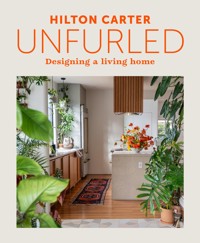
In his sixth—and most personal—book, Hilton Carter reveals his creative process for transforming his Baltimore house into a true home. In this behind-the-scenes tour, from the tranquil master bedroom to the plant-filled sunroom, he shares the inspiration behind each space, talking the reader through the mood boards he creates when embarking on a room renovation and explaining the thoughts behind a design, both functional and decorative. Hilton shares how each room has "unfurled" beautifully over time, discussing how to choose color and texture, offering practical tips on room layout, and showing how to use plants to breathe life into the home. Alongside personal stories and design insights, Unfurled shows how recreate these looks in your own home—whether you're working with a guest suite or a compact shower room. With Hilton's guidance, you'll learn how to incorporate thoughtful styling, select the right plants for your rooms, and cultivate a home that is personal, nurturing, alive, and dynamic.
Sie lesen das E-Book in den Legimi-Apps auf:
Seitenzahl: 216
Veröffentlichungsjahr: 2025
Das E-Book (TTS) können Sie hören im Abo „Legimi Premium” in Legimi-Apps auf:
Ähnliche



















HILTON CARTER
UNFURLED
HILTON CARTER
UNFURLED
Designing a living home
This book is dedicated to Holland, Vada, and Fiona—my heart, my home.
Photographer and stylist Hilton Carter
Senior designer Megan Smith
Senior commissioning editor Annabel Morgan
Creative director Leslie Harrington
Head of production Patricia Harrington
Published in 2025 by CICO Books
An imprint of Ryland Peters & Small Ltd
20–21 Jockey’s Fields
London WC1R 4BW
and 1452 Davis Bugg Road
Warrenton, NC 27579, USA
www.rylandpeters.com
10 9 8 7 6 5 4 3 2 1
Text © Hilton Carter 2025
Design and photography
© CICO Books 2025
The author’s moral rights have been asserted. All rights reserved. No part of this publication may be reproduced, stored in a retrieval system, or transmitted in any form or by any means, electronic, mechanical, photocopying, or otherwise, without the prior permission of the publisher.
A CIP catalog record for this book is available from the Library of Congress and the British Library.
ISBN: 978-1-80065-572-0
E-ISBN: 978-1-80065-541-6
Printed in China
ROOM ASPECT AND LIGHT LEVELS
Understanding the types of light you have in your home is essential when choosing the right plants for each space. Here’s a breakdown of the types of natural light your plants will typically receive if you live in the northern hemisphere like I do, depending on the direction in which a window is facing. (Note that these directions will be reversed if you live in the southern hemisphere)
NORTH-FACING ASPECT Receives low to medium indirect light
EAST-FACING ASPECT Receives direct morning sunlight to bright indirect light
SOUTH-FACING ASPECT Receives bright indirect light for most of the day
WEST-FACING ASPECT Receives bright indirect light to direct afternoon sunlight
Contents
A Home Unfurled
Home Lush Home
The Exterior
The Entryway
The Living Room
Designing lighting
The Kitchen
Styling floating shelves
The Dining Room
The Powder Room
The Sunroom
Styling a coffee table
Second Time Around
The Suite Entry
The Primary Bedroom
Designing a Gallery Wall
The Bathroom
The Dressing Room
The Toddler Room
The Nursery
The Guest Room
Floor Decor
The Studio
Last Thoughts
Credits
Index
Thanks
A HOME UNFURLED
I want to tell you a story about interior styling and design. I hate to admit this, but when I was younger, I didn’t know that styling a room was called interior design. I actually thought it was called—wait a minute, what’s that face you’re making? OK, I know what you’re thinking. “This book isn’t about plants?” But I hope that thought brings a smile of excitement to your face rather than a frown of disappointment. I get it. I’ve always dreamed of creating an interiors book, but I never imagined I’d have the chance to make one that wasn’t focused on plants. Listen, I never thought I would have the opportunity to write and photograph one book about plants, let alone five. But here we are.
While you’re seeing the interior stylist Hilton Carter in this book for the first time, this has been my reality for a while. You see, over the past ten years I’ve leaned into the idea of living a full life. One that is nurtured by the people and possibilities I seek out and which has unfurled slowly, like a poppy. You may have only one life, but you are not defined by just one thing. So while many might know me as the “plant guy,” others know me as the “film guy,” and some, from many years ago, as the “painter.” The truth is that we are never just one thing. Each of us has the ability to create and become whatever we dedicate our minds, hearts, and energy to. That might sound a little “woo woo,” but I know it to be true because that’s what happened to me.
From the age of four, I wanted to be an artist. I remember once crying to my mother when I couldn’t think of something to draw. When she tried to console me by suggesting I trace something, the mere suggestion sparked rage in my little four-year-old heart. “I am an artist, and artists don’t trace!” There was a fire in me driving me to create.
My passion led me to attend a magnet high school specializing in art, which paved the way for a Bachelor of Fine Arts degree in college. Before leaving Maryland Institute College of Art (MICA), I started to feel the draw of filmmaking. As a painter, my work was mainly figurative, telling a story with each piece. But I began to realize how limiting a single frame was for conveying a narrative. It wasn’t that way for filmmakers. They could take their audience through all the emotions, from beginning to middle to end. I loved that. And I loved movies. So after graduating from MICA, I moved to Los Angeles to attend graduate school for film.
It was here that I learned to participate in every aspect of filmmaking. Unlike painting, where you work alone, a filmmaker collaborates with other creatives to make a single piece of art. To become a director, I first had to master editing, acting, sound design, cinematography, and—most importantly— production design, which was the one that changed everything for me. In production design, everything comes down to the details. Everything you add to a space tells a story about the individuals who live in that space, without them even appearing on screen. I started to reflect on my own space and what it revealed about me. And that’s when I decided to “production design” my own home. Oh yeah, that’s what I was trying to say before you interrupted me with that look of surprise. That’s right—I thought when you designed or styled a space, you were “production designing” it.
I worked as a freelance filmmaker until ten years ago, when I was offered a job at an advertising agency. As a freelance artist, I had no idea what terms like PTO or 401(k) meant, but they sounded pretty good. You can live differently when you don’t have to worry about where your next paycheck is coming from. But it’s not as free as working for yourself, and I missed that freedom. After a year at the ad agency, I decided to start a side hustle in interior styling rooms, and this was when Fiona, then my girlfriend and now my wife, suggested I post images of our apartment on social media as it could lead to other opportunities. I took her advice and started posting on Instagram. But although my intention was to show off my interior styling, more and more people started to comment on the plant styling in our home. In 2019 my first book, Wild at Home, was published and I left my job. And while so many have enjoyed the ways that I’ve styled and nurtured plants in spaces all across the country, it’s the spaces that I’ve interior styled that truly bring everything to life for me.
When Fiona and I purchased our home in 2020, I had the opportunity to create a living space for my family. And with this opportunity came the knowledge that making something beautiful doesn’t happen overnight. Creating a home takes time. It can be slow and requires a lot of patience, planning, deliberation, and intentional decision-making. But eventually, given love and thought and care, that home will unfurl to reveal its true beauty.
We chose this home because we were ready to start a family, so when the time came to design and style it, I thought about how family life might evolve over time. That vision has guided many of my decisions, because, for me, the first step in designing a living home is to ensure that the choices made are practical ones, rooted in everyday life. The second step focuses on aesthetics. Before working on our home, I had never analyzed my signature style but now I’d define it as “modern lush.” It’s a combination of modern design styles with a strong emphasis on simplicity, functionality, and clean lines. Sleek forms are combined with organic shapes and abundant greenery unfurling all around. The advice I’d give to someone trying to find their own style is to lean toward what comes naturally. It should be something you feel instinctively connected to, not a box you’re trying to fit yourself into. I have always loved being surrounded by plants and blurring the line between being indoors and out, and in an interior, I will always find a place for greenery to add life and color.
My starting point when it comes to styling a space is the feeling I want that room to evoke. Once I’ve defined that feeling, I think about the colors that spark the same emotion and build a moodboard around that palette. This guides my design decisions about the colors, textures, shapes, and scale of the pieces in the room. I’m not afraid to admit that I design with my heart on my sleeve, seeking a balance between form and function and the emotional thread that ties a space together.
Just like us, our home is a work in progress. And as time passes, it will develop and evolve to meet our changing needs. The day Fiona and I moved in was the day a seed was planted. Since then, we have been nurturing it, watching the seed sprout and climb, put out branches and leaves and buds. Those buds started to unfurl and are still unfurling now. And while it may be years before our home is in full bloom, the plan is to enjoy every single moment of the process, because it is so precious, delicate, and fleeting.
HOME LUSH HOME
There are few things in life as sweet as tasting the fruits of your own labor. Fiona and I dreamed of one day having a home together and this is our dream realized. What you’re seeing here is the result of much time, money, effort, and, of course, love. Our home didn’t start out this way and I’m going to take you through the journey— the discussions, decisions, headaches, and achievements—that brought it to where it is today. The process has taken place over two separate renovations so far, beginning with the exterior and the first floor of the home. So that’s where we’ll start. As someone who loves being surrounded by greenery, living in a home that radiates lushness from the street instantly captured our hearts and became everything we wanted.
The exterior
The day you consider purchasing your first home is a special day, but the day you know you’ve found the home of your dreams, your “forever home,” is a day you’ll never forget. I know this because for Fiona and me, it feels as if it was yesterday. It was 2020 and we were in the midst of the Coronavirus pandemic. At the time, we were living in an apartment and life felt so uncertain. We had made an offer on another home earlier in the year, before the pandemic hit, but once everything shut down that March, we decided to pull out of the deal. This wasn’t a decision we made lightly and we were anxious we wouldn’t find anything else that we loved or even liked. However, at that moment, my work was on pause and Fiona, who is a dentist and has her own practice, had to close her doors.
A few months passed, life seemed to open up again, and we felt comfortable looking at houses. On a warm evening in July 2020, we decided to view our future home on a whim because it was close to Fiona’s dental practice and if we’re anything, we’re a family that believes in convenience. I mean, Fiona and I originally met because we were next-door neighbors, but that’s a story for another time.
The house had been on the market for a while and beyond the fact that we were deep in a pandemic, the only other reasons I can think it hadn’t sold were that it wasn’t easily viewable from the road and the online images of the home didn’t show the true charm of the interior and the incredible silhouette of the façade. When we pulled up on the driveway, it was early evening, and the sun and clouds were collaborating to create the most magical sunset. Between the trees I saw the front of the house and I was transfixed.
I can’t say that it was exactly love at first sight, but I could see the potential right there in front of my eyes. Now the house did have some cosmetic issues. The mixed flagstone entry terrace hadn’t been maintained in a while and was covered in moss and algae. The stucco facade was patchy and peeling. We liked the windows, but while they looked pretty from a distance, close up some of them were inoperable or broken. Book-ending many of them were shutters which, in a few cases, like the ones on the sides of the living-room window, served no purpose. The front yard was pleasant but many of the shrubs were sparse or dying back. The one plant that helped woo us was the sweet bay magnolia, or Magnolia virginiana, directly in front of the house. While the house had a great silhouette, many changes would be necessary to restore its glow.
THE BLANK CANVAS
This is the view that greeted us on the day we first drove up to the house. We were instantly pulled in by its charming silhouette and the lush greenery of the garden.
Concept and moodboard
When considering the look of the home from the outside, I appreciated the vibe that already existed. After all, it was the front of the house that pulled me in when we first saw it. The color palette was fine, but I wanted to turn the original colors from cool to warm, so the house felt welcoming and cared for. I decided to repaint the facade in a warm white (Greek Villa) and refresh the shutters, gable end, and front door with a brighter, warmer green (Basil) for a subtle lift. For the windows, I chose black frames to add a modern touch to the home’s timeless style.
When it came to planning the garden, the idea was simple—make it lush. In keeping with the style of the house, boxwoods and topiary trees felt like ideal partners for the sweet bay magnolia. We added more mixed flagstone and, at the back of the house, a deck of warm-toned wood. The thing we both knew the moment we laid eyes on the house was that it had a vibe, and our job was to enhance this.
MY CHOSEN PALETTE
The stucco is Sherwin-Williams 7551 Greek Villa and the gable end, doors, and shutters Sherwin-Williams 6194 Basil.
New boxwoods surround the existing sweet bay magnolia. In summer, I style my tropical plants on the entry terrace.
The old wooden window frames were replaced with black metal and we replaced the concrete path with new flagstone.
LOCATION BALTIMORE, MARYLAND
BUILT 1915
STYLE AMERICAN COLONIAL
SQUARE FOOTAGE 3,600 SQ FT/335 SQ M
BEDROOMS 4 (5 BEFORE RENOVATION)
BATHROOMS 2.5
Plan and layout
Many old, established neighborhoods like ours have a homeowners’ association that enforces the principle of keeping all the homes in the community looking as they did when first built. If you want to make alterations to the exterior of the home, you must submit a request, detailing your list of changes, and hope that those on the board will approve them. When we began house-hunting around Baltimore, neighborhoods with strict regulations on what could be done to the homes made it difficult for us to find our dream house. Luckily, in what has become our neighborhood, the rules weren’t as inflexible and mainly focused on the front and sides of the house. This meant the exterior paint color would have to stay close to the original, and any existing shutters would need to remain in situ.
The shutters on the living-room window didn’t fully cover the window when closed, so we requested permission to have them removed. The biggest ask that we put to the board was to replace all the windows with modern, black-framed ones, while adding a window to the front of the house and accordion-style doors at the rear, plus a raised deck. To improve our chances of selling this idea to the board, we hired architect Mark Mobley to design the windows. We went with Andersen Windows because of their ability to make any idea you have come to life. Mark drew up the images for the new windows, and added our request for the new paint colors and the deck. We submitted our request to the board and, after a week or so of crossed fingers and toes, received their approval. Now work could begin.
HOME GROWN
We knew we’d need to make a few cosmetic changes to the exterior of the house but wanted to keep its original shine. With new windows, fresh paint, and more greenery, you can really see the difference. Plans for the new windows.
BACKYARD BLISS
The back of the house felt a little unloved and unattractive to us when we viewed the home. Our exterior architect Mark Mobley sketched out the plan for the new exterior look of the house. The back would now have a deck and new windows—real bliss.
Knowing our limits, we hired professionals to do the building, the millwork, the general contracting, and project management. After considering a few options, the company we used was Guerrilla Construction. When they started work, it was so stressful to see a “move-in ready” home get torn apart, but what was to come would change our home and the way we live in it forever.
I’m aware of the debate about removing old windows—in my opinion, if it’s necessary and you have it in the budget, do what’s best for your home. It’s possible to donate old windows or utilize them in imaginative ways, like building a greenhouse. We had a large number of windows that needed to be replaced, so to make sure the look was consistent throughout, we decided to replace all of them. The new windows have transformed the appearance of the house, giving it a new youthful look, plus the light they let into the home is life itself!
Once the new windows were in, the patching of the stucco finish was carried out. There were just a few spots on the back of the house that needed to be fixed, but it’s a process-heavy job. After that we had the entire house—from the doors and shutters to the gable end—painted.
All it took for the flagstone on the entry terrace to look brand-new was a quick power wash. And if you’ve ever power washed something, you know the joy and satisfaction it brings. There’s something magical about watching years of grime blasted away in moments. When we purchased the house, we had no idea what the true color of the flagstone actually was, but once it was power washed, we were floored by the vibrant hues, variations, and sparkle. The issue with the flagstone was that it was only on the entry terrace and not along the entire walkway, so we called on Turner Landscaping to redo this using mixed flagstone, so that it would feel connected to the terrace.
As Turner were on site, we had them help with the landscaping as well. They removed everything except the magnolia and a laurel and used Buxus microphylla ‘Little Missy’ to create planting beds at the front of the house. Here we planted Japanese painted fern (Athyrium niponicum var. pictum), cinnamon fern (Osmunda cinnamomea), Allium ‘Ambassador’, Ligularia dentata ‘Desdemona’, a Japanese maple, and a pom-pom juniper. In winter, many of the plants lose their leaves, but from spring through fall, the greenery here is spectacular. During the warmer months, I add a little extra icing to the cake by styling some of my indoor plants on the entry terrace to make the space feel tropical and lush. The large spindle palm (Hyophorbe verschaffeltii), Swiss cheese plant (Monstera deliciosa), and Philodendron ‘Congo’ grow wild during their “summer break” and give our house a Southern California look right here in Baltimore.
TOP 5 IMPACTFUL ADDITIONS TO ENHANCE THE FRONT OF YOUR HOME
Statement plants! You knew I was going to start there. You can quickly make your home feel more expensive by adding cool, manicured plants. Pro-tip: adding symmetry around the front door can be boring and predictable, so make sure you’re creating that unexpected “wow” moment.
Paint the front door a bright, bold color. It’s a quick and inexpensive way to give the facade of your home a fresh focal point.
Power wash it. Over time everything gets a little grimy and mucky out in the elements. Power washing brings the life back to whatever you’re working on.
Lighting. This is one of the things that’s often forgotten, but having great sconces or garden lighting really makes a home stand out and feel good to come home to.
Stylish seating. Seating and tables provide a welcoming atmosphere. Give yourself a small area to enjoy a cup of coffee while doomscrolling on your phone.
The entryway
There are few things in life that you get a second chance at, and a first impression isn’t one of them. When you enter a home, the entryway needs to strike exactly the right welcoming note. On the day we came to view our house, I remember being so impressed that the front door didn’t open straight into the living room. Growing up in apartments, there was no such thing as an entryway, let alone a foyer. The entryway here was quaint and gracious—just what we were hoping for. This isn’t a part of the home where you’re going to spend a great deal of time, but it provides an important backdrop for hellos and goodbyes. It’s the opening moment. It sets the scene and provides a small vignette of what your design style is all about. We didn’t have much space here, but I wanted to make what we did have impactful.
SIZE 126 SQ FT/11.7 SQ M
CEILING HEIGHT 9 FT/2.7 M
ASPECT NORTH-FACING
THE BLANK CANVAS
This image shows how dark and gloomy the stairway was before we renovated. The staircase connects the house and should feel lively and welcoming. Even though it wasn’t what we wanted at first, the space was very workable.
Concept and moodboard
The entryway should be somewhere that features the colors and textures present in other main rooms in the house, giving an idea of what is to come and leading harmoniously into other spaces. When it came to creating a moodboard for this space, I waited until we had decided exactly what we were doing in the living room and kitchen, given that these two rooms lead off the entryway, which needed to play a supporting role to those two stars.
Once I had developed moodboards for the kitchen and living room, I knew colors like white and gray would complement the kitchen design, with stronger colors like red and black complementing the living-room decor. Various different types of wood would be prevalent throughout the house, with touches of rattan here and there, so I wanted to bring in these textures too. Overall, my vision was for a space that felt uncluttered, bright, and welcoming.
Plan and layout
There are many interesting ways that you could go about styling an entryway, but first and foremost the welcome it extends should always feel special. However, my first impression of our entryway was that it felt dark and a little gloomy, a situation that was not helped by the dated wallpaper. This space is north-facing, and the only window was the glazed panel in the front door, which itself is set under a covered entry, so there wasn’t much natural light making its way into the room. As a result, we made two changes to the entryway when we renovated. One was the removal of the old-fashioned wallpaper and the other, bigger change was the addition of a new window part way up the staircase, in order to bring more light into this space.
MY CHOSEN PALETTE
Once the adjoining rooms on this floor were styled, I took inspiration from them for the entryway palette.
During the first round of renovations we painted all the walls with Sherwin-Williams 7028 Incredible White and the ceilings in 7007 Ceiling Bright White.
Textures like brass, rattan, red oak, linen, and greenery all complement the reds in the painting by Emma Childs.
With these two alterations made, I was ready to get started on furnishing and decorating the space. This area would be where we took off or put on our shoes and coats when entering and exiting the house, so it needed to be practical as well as inviting. So I started with the perfect rug, given that this would be the first thing you saw as the door swung open and also necessary as we are a “shoe-off” household. A Persian rug exudes a sense of timeless elegance and I sourced a rich pomegranate-red Persian with a mix of colors that would reappear throughout the house (see pages 186–187 for more on Floor Decor).
Furniture




