


4,99 €
Mehr erfahren.
- Herausgeber: A.J.Kingston
- Kategorie: Geisteswissenschaft
- Sprache: Englisch
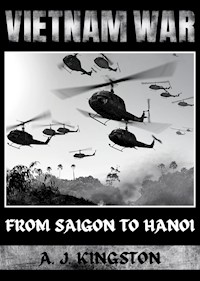
Introducing "Vietnam War: From Saigon to Hanoi," the definitive guide to one of the most complex and significant conflicts of the 20th century.
This meticulously researched book provides a comprehensive and nuanced analysis of the Vietnam War, exploring the political, social, and cultural factors that shaped the conflict. From the French colonial period to the fall of Saigon, "Vietnam War: From Saigon to Hanoi" offers an in-depth look at the events that led up to the conflict and its aftermath, as well as the military strategies and tactics employed by the combatants.
In addition to its historical analysis, "Vietnam War: From Saigon to Hanoi" also explores the cultural impact of the war, with an examination of literature, film, art, and photography. By delving into the cultural memory of those who experienced the war firsthand, this book provides a deeper understanding of the ways in which the conflict continues to shape the world today.
Whether you're a history buff, a student of international relations, or simply someone interested in understanding the complexities of the Vietnam War, "Vietnam War: From Saigon to Hanoi" is a must-read. With its engaging writing style and meticulous research, it is an authoritative and accessible guide to one of the most significant conflicts of the 20th century.
So why wait? Order your copy of "Vietnam War: From Saigon to Hanoi" today and discover the complex and tumultuous history of one of the most important events of the modern era.
Das E-Book können Sie in Legimi-Apps oder einer beliebigen App lesen, die das folgende Format unterstützen:
Veröffentlichungsjahr: 2023
Ähnliche


















Vietnam War
From Saigon to Hanoi
By A.J. Kingston
Copyright © 2023 by A. J. Kingston
All rights reserved. No part of this book may be reproduced or transmitted in any form or by any means, electronic or mechanical, including photocopying, recording, or by any information storage and retrieval system, without permission in writing from the publisher.
Published by A. J. Kingston
Library of Congress Cataloging-in-Publication Data
ISBN 978-1-83938-238-3
Cover design by Rizzo
Disclaimer
The contents of this book are based on extensive research and the best available historical sources. However, the author and publisher make no claims, promises, or guarantees about the accuracy, completeness, or adequacy of the information contained herein. The information in this book is provided on an "as is" basis, and the author and publisher disclaim any and all liability for any errors, omissions, or inaccuracies in the information or for any actions taken in reliance on such information.
The opinions and views expressed in this book are those of the author and do not necessarily reflect the official policy or position of any organization or individual mentioned in this book. Any reference to specific people, places, or events is intended only to provide historical context and is not intended to defame or malign any group, individual, or entity.
The information in this book is intended for educational and entertainment purposes only. It is not intended to be a substitute for professional advice or judgment. Readers are encouraged to conduct their own research and to seek professional advice where appropriate.
Every effort has been made to obtain necessary permissions and acknowledgments for all images and other copyrighted material used in this book. Any errors or omissions in this regard are unintentional, and the author and publisher will correct them in future editions.
Table of Contents
Introduction
Chapter 1 The Roots of the Conflict: French Colonialism and Vietnamese Nationalism
Chapter 2 The Arrival of the Americans: Early Involvement and Advisors
Chapter 3 Escalation: Johnson's Decision to Send Combat Troops
Chapter 4 The Ho Chi Minh Trail: The War in Laos and Cambodia
Chapter 5 Tet Offensive: A Turning Point in the War
Chapter 6 My Lai Massacre: Atrocities and War Crimes
Chapter 7 The Anti-War Movement: Protests and Dissent at Home
Chapter 8 Nixon's Vietnamization: The Withdrawal of American Troops
Chapter 9 The Secret War: Covert Operations and the CIA in Vietnam
Chapter 10 The Siege of Khe Sanh: One of the Deadliest Battles of the War
Chapter 11 Women in the War: Nurses, Correspondents, and Support Staff
Chapter 12 Fighting in the Mekong Delta: Riverine Warfare and Guerrilla Tactics
Chapter 13 POWs and MIAs: The Fate of American Prisoners and Missing Soldiers
Chapter 14 The Fall of Saigon: The End of the War and Aftermath
Chapter 15 Agent Orange and Napalm: The Devastating Effects of Chemical Weapon
Chapter 16 The Role of the Media: Reporting the War and Shaping Public Opinion
Chapter 17 The Tet Offensive and its Aftermath: Lessons Learned and Not Learned
Chapter 18 The Air War: B-52 Bombings and Aerial Assaults
Chapter 19 The Legacy of the Vietnam War: PTSD, Veterans' Issues, and Reconciliation
Chapter 20 International Responses to the War: Soviet, Chinese, and Southeast Asian Perspectives
Chapter 21 The War in Memory: Representations in Literature, Film, and Art
Conclusion
About A. J. Kingston
Introduction
The Vietnam War was a conflict that fundamentally altered the course of modern history, shaping the geopolitical landscape of Southeast Asia and leaving an indelible mark on the global consciousness. From the French colonial period to the fall of Saigon, the Vietnam War was a complex and multifaceted conflict that spanned over two decades and cost the lives of millions of people.
In "Vietnam War: From Saigon to Hanoi," we offer a comprehensive and nuanced examination of this pivotal moment in history. Our aim is to provide readers with a detailed understanding of the events that led up to the conflict, the military strategies and tactics employed by the combatants, and the cultural impact of the war on both Vietnam and the rest of the world.
The book begins by exploring the colonial history of Vietnam, tracing the roots of the conflict to the French colonization of the region in the 19th century. We examine the rise of Vietnamese nationalism and the various movements that emerged in response to French colonialism, laying the groundwork for the eventual conflict between North and South Vietnam.
From there, we delve into the military strategies and tactics employed by both sides during the conflict, examining the complex network of alliances and geopolitical interests that shaped the conflict. We examine the role of key players such as the United States, North and South Vietnam, and other nations involved in the conflict, highlighting the challenges and opportunities they faced in the course of the war.
Alongside our historical analysis, we also explore the cultural impact of the Vietnam War, with a detailed examination of the literature, film, art, and photography that emerged from the conflict. We examine the ways in which the war shaped the cultural memory of those who experienced it firsthand, both in Vietnam and around the world, and we explore the ways in which these cultural representations continue to shape our understanding of the war today.
Throughout the book, we strive to provide readers with a nuanced and balanced perspective on the conflict, examining the complexities and contradictions of the war from multiple angles. Our aim is to provide readers with a deep and comprehensive understanding of one of the most significant conflicts of the modern era, and to shed light on the ways in which the Vietnam War continues to shape the world today.
In summary, "Vietnam War: From Saigon to Hanoi" is a must-read for anyone interested in understanding the complexities and significance of the Vietnam War. Whether you're a history buff, a student of international relations, or simply someone interested in the impact of conflict on society and culture, this book offers a comprehensive and nuanced examination of one of the most important moments in modern history.
Chapter 1 The Roots of the Conflict: French Colonialism and Vietnamese Nationalism
The history of French colonialism in Vietnam is a complex and controversial topic, marked by a range of political, social, and cultural factors. French colonialism in Vietnam began in the 19th century, and continued until the mid-20th century. Next, we will examine the history of French colonialism in Vietnam, focusing on the conquest and control of the region.
The French conquest of Vietnam began in the mid-19th century, when French forces seized control of Saigon and other coastal areas. The French sought to establish a colony in Vietnam, and saw the region as a source of valuable resources and strategic influence. The French also sought to spread their language, culture, and religion in Vietnam, and saw the region as a way to extend their global power and influence.
The French conquest of Vietnam was not without its critics, however. Many Vietnamese saw the French as invaders and oppressors, and resisted their colonial rule through a range of means, including armed rebellion and cultural preservation. The French also faced significant challenges in terms of managing the diverse and complex social and cultural dynamics of the region.
The French colonial project in Vietnam was marked by a range of social and cultural factors. The French sought to spread their language, culture, and religion in Vietnam, and saw the region as a way to extend their global power and influence. The French also sought to establish a modern and rational administrative system in Vietnam, and saw themselves as bringing progress and civilization to the region.
The French colonial project in Vietnam also had significant economic dimensions. The French sought to extract valuable resources from Vietnam, including rubber, rice, and coal. The French also established a range of industries in Vietnam, including textile mills, mines, and plantations. These industries were staffed by both Vietnamese and French workers, and contributed to a complex and unequal system of economic relations.
The French colonial project in Vietnam faced significant challenges, however, including a range of social and cultural factors. Vietnamese resistance to French colonialism was strong, and took many forms, including armed rebellion and cultural preservation. The French also faced challenges in terms of managing the complex social and cultural dynamics of the region, and were often accused of cultural imperialism and oppression.
The French eventually lost control of Vietnam in the mid-20th century, following a long and bloody struggle for independence. The Vietnamese war of independence was marked by significant military, political, and cultural struggles, and involved a range of actors and forces. The Vietnamese ultimately emerged victorious, and established a socialist republic in the country.
The history of French colonialism in Vietnam is a complex and controversial topic, marked by a range of social, cultural, and economic factors. The French conquest of Vietnam began in the mid-19th century, and sought to establish a colony in the region. The French colonial project in Vietnam was marked by a range of social, cultural, and economic factors, and faced significant challenges in terms of managing the complex social and cultural dynamics of the region. The French eventually lost control of Vietnam in the mid-20th century, following a long and bloody struggle for independence. The legacy of French colonialism in Vietnam can still be seen today in the ongoing struggles for social and political justice in the region.
In the annals of history, few figures have captured the imagination of the masses quite like Ho Chi Minh. Born in 1890 in the village of Kim Lien, located in the heart of Annam, his early years were marked by poverty and struggle, yet his indomitable spirit would prove to be a harbinger of the Vietnamese nationalism that was to come.
At the time of Ho Chi Minh's birth, Vietnam was in the throes of colonialism, having been subjugated by the French during the latter half of the 19th century. The Vietnamese people, who had long been accustomed to self-rule, were not content to be ruled by foreign powers, and thus the seeds of nationalism were sown.
As a young boy, Ho Chi Minh was already displaying signs of the fiery spirit that would later come to define his character. He was the son of a Confucian scholar, and his upbringing was steeped in the traditions and values of Vietnamese culture. However, he was also exposed to Western ideas, which would prove to be a potent influence on his thinking in later years.
It was during his time in Saigon, where he worked as a pastry chef, that Ho Chi Minh first became involved in the burgeoning nationalist movement. He was drawn to the radical ideas of the day, which preached the need for Vietnamese self-determination and the overthrow of French colonial rule.
At this time, Ho Chi Minh also began to develop a keen interest in the writings of Karl Marx and Vladimir Lenin, whose works would prove to be instrumental in shaping his political philosophy. He became a staunch advocate of communism, seeing it as the only viable means of achieving true freedom and equality for the Vietnamese people.
However, it was not just Western thinkers who influenced Ho Chi Minh's thinking. He was also deeply inspired by the revolutionary struggles of his fellow Asians, such as the Chinese and the Indians. He saw the success of their movements as a template for the Vietnamese struggle, and he was determined to apply the lessons of their struggles to his own.
As he became more involved in the nationalist movement, Ho Chi Minh's charisma and natural leadership abilities began to shine through. He was a gifted orator, capable of inspiring large crowds with his fiery rhetoric and stirring speeches. His message of national liberation resonated deeply with the Vietnamese people, and he quickly emerged as a key figure in the movement.
In 1920, Ho Chi Minh attended the Congress of the Communist International in Moscow, where he met with other communist leaders from around the world. It was here that he began to formulate a more detailed plan for the Vietnamese nationalist movement, drawing on the experiences of other communist revolutions.
However, it was not until the 1940s that Ho Chi Minh was able to put his ideas into action. With the outbreak of World War II, the French were forced to withdraw from Indochina, leaving a power vacuum in their wake. Ho Chi Minh saw this as an opportunity to seize control and establish a provisional government in the north.
In 1945, he declared Vietnam's independence, stating that "All men are created equal. They are endowed by their Creator with certain inalienable rights; among these are Life, Liberty and the pursuit of Happiness." It was a bold move, and one that would set in motion a chain of events that would lead to the Vietnam War.
Ho Chi Minh's early years were marked by hardship and struggle, but they were also marked by an indomitable spirit and a burning desire for freedom. His exposure to Western ideas and his admiration for the revolutionary struggles of his fellow Asians would prove to be instrumental in shaping his political philosophy, which would later guide the Vietnamese nationalist movement.
The formation of the Indochinese Communist Party (ICP) was a significant event in the history of Vietnam and the wider region. The ICP was founded in 1930, and played a key role in the struggle for Vietnamese independence and the eventual establishment of the socialist republic. In this essay, we will examine the formation of the ICP, with a focus on the role of Ho Chi Minh and the broader political and social context of the time.
Ho Chi Minh was a key figure in the formation of the ICP, and played a significant role in the broader struggle for Vietnamese independence. Ho Chi Minh was born in Vietnam in 1890, and spent many years living and working abroad, including in France and the Soviet Union. Ho Chi Minh was deeply influenced by Marxist ideology, and saw the struggle for Vietnamese independence as part of a broader global struggle against imperialism and capitalism.
Ho Chi Minh played a key role in the formation of the ICP, which was established in Hong Kong in 1930. The ICP sought to unite the various communist and socialist groups in the region, and to provide a coherent and effective platform for the struggle against colonialism and imperialism. The ICP was marked by a commitment to Marxist ideology, and sought to establish a socialist state in Vietnam and the wider region.
The formation of the ICP was part of a broader wave of anti-colonial and anti-imperialist movements in the region. The ICP was influenced by the Chinese Communist Party, which had established a socialist republic in China in 1949. The ICP also drew support from a range of other socialist and communist groups in the region, including in Laos and Cambodia.
The ICP played a key role in the struggle for Vietnamese independence, and contributed to a broader sense of national and political identity in the region. The ICP was involved in a range of activities, including armed struggle, political organizing, and cultural preservation. The ICP was also involved in the broader struggle against colonialism and imperialism, and sought to establish solidarity and cooperation with other socialist and communist groups in the region.
The ICP was subject to significant government repression and harassment, and faced significant challenges in terms of organizing and mobilizing popular support. The ICP was also subject to significant internal divisions and disputes, which contributed to a sense of fragmentation and uncertainty within the organization.
Despite these challenges, the ICP played a key role in the struggle for Vietnamese independence, and contributed to the eventual establishment of the socialist republic. The legacy of the ICP can still be seen today in the ongoing struggles for social and political justice in the region.
The formation of the Indochinese Communist Party was a significant event in the history of Vietnam and the wider region. The ICP was established in 1930, and played a key role in the struggle for Vietnamese independence and the eventual establishment of the socialist republic. Ho Chi Minh was a key figure in the formation of the ICP, and played a significant role in the broader struggle for Vietnamese independence. The ICP was part of a broader wave of anti-colonial and anti-imperialist movements in the region, and contributed to a broader sense of national and political identity. The legacy of the ICP can still be seen today in the ongoing struggles for social and political justice in the region.
The emergence of Vietnamese nationalism in the early 20th century was a complex and tumultuous affair, marked by a host of different actors and movements. Yet, it was the rise of the Viet Minh that would prove to be the most significant and far-reaching development in the struggle for Vietnamese independence. Led by the charismatic figure of Ho Chi Minh, the Viet Minh would go on to achieve a stunning victory against the French, establishing Vietnam as an independent nation and setting the stage for the conflict that would come to be known as the Vietnam War.
The roots of the Viet Minh can be traced back to the early 1920s, when Ho Chi Minh began to organize Vietnamese workers and peasants into revolutionary cells. Building on his experiences with the communist movements in Russia and China, Ho Chi Minh sought to create a unified and disciplined organization that could effectively challenge French colonial rule.
The early years of the Viet Minh were marked by a series of setbacks and challenges. The French authorities were quick to crack down on the fledgling organization, arresting and imprisoning its leaders and agents. Nevertheless, Ho Chi Minh remained undaunted, and continued to work tirelessly to build up the organization and spread its message of national liberation.
In the late 1930s, the Viet Minh underwent a major transformation, as it shifted its focus from organizing workers and peasants to building a broader coalition of anti-colonial forces. Drawing on the ideas of the Indian nationalist leader Mahatma Gandhi, Ho Chi Minh began to advocate for nonviolent civil disobedience, and sought to build alliances with other Vietnamese nationalist groups.
Despite these efforts, the Viet Minh remained a relatively small and marginal force until the outbreak of World War II. With the French forced to withdraw from Indochina, Ho Chi Minh saw a unique opportunity to establish a provisional government in the north, and to launch a major offensive against the French.
In August 1945, Ho Chi Minh declared Vietnam's independence, and established the Democratic Republic of Vietnam. The French, however, were not prepared to relinquish their colonial claims, and quickly moved to reassert their authority. What followed was a long and bloody struggle, as the Viet Minh fought against the French in a guerrilla war that lasted for almost a decade.
Despite the overwhelming odds stacked against them, the Viet Minh were able to achieve a stunning victory against the French in 1954, culminating in the Battle of Dien Bien Phu. The French were forced to withdraw from Vietnam, and the Viet Minh emerged as the undisputed leaders of the newly independent nation.
The rise of the Viet Minh was a remarkable achievement, made possible by the tireless efforts of Ho Chi Minh and his dedicated followers. Through their revolutionary zeal and their unshakeable commitment to the cause of national liberation, they were able to overcome seemingly insurmountable obstacles and achieve a historic victory against one of the most powerful colonial powers in the world.
At the same time, however, the emergence of the Viet Minh also reflected the broader currents of nationalist sentiment that were sweeping through Southeast Asia in the early 20th century. With the collapse of the old imperial order, and the rise of new national and political movements, the Vietnamese people were no longer content to be ruled by foreign powers, and were determined to carve out their own destiny.
In the end, the rise of the Viet Minh was a triumph of the human spirit, a testament to the power of collective action and the transformative potential of revolutionary movements. It was a momentous achievement that would shape the course of Vietnamese history for generations to come, and would come to be seen as a symbol of hope and inspiration for oppressed peoples around the world.
The First Indochina War was a significant conflict in the history of Vietnam and the wider region, marking a key phase in the struggle for Vietnamese independence and the eventual establishment of the socialist republic. The First Indochina War was fought between French colonial forces and a range of Vietnamese nationalist and communist groups, and was marked by significant military, political, and cultural struggles. In this essay, we will examine the First Indochina War, focusing on the French attempt to regain control of the region.
The First Indochina War began in 1946, when Vietnamese nationalist and communist groups declared independence from French colonial rule. The French responded with a range of military actions, including aerial bombings, naval blockades, and ground offensives. The French were initially successful in regaining control of some parts of the country, but faced significant challenges in terms of managing the complex social and cultural dynamics of the region.
The French attempt to regain control of Vietnam was marked by a range of military and political strategies. The French sought to establish a modern and rational administrative system in Vietnam, and to spread their language, culture, and religion in the region. The French also sought to isolate and destroy the communist and nationalist groups that were opposed to their colonial rule, and to establish a system of client states and collaborators in the region.
The French attempt to regain control of Vietnam was also marked by significant challenges, including a range of social and cultural factors. Vietnamese resistance to French colonialism was strong, and took many forms, including armed rebellion and cultural preservation. The French also faced challenges in terms of managing the complex social and cultural dynamics of the region, and were often accused of cultural imperialism and oppression.
The First Indochina War was marked by a range of military, political, and cultural struggles. The war was characterized by significant military offensives and counter-offensives, including a range of aerial bombings, naval blockades, and ground offensives. The war was also marked by a range of political and diplomatic struggles, including efforts by the French to establish client states and collaborators in the region, and efforts by the Vietnamese to establish a unified and independent state.
The First Indochina War had significant consequences for the broader social and political dynamics of the region. The war contributed to a broader sense of national and political identity in Vietnam, and highlighted the challenges of colonialism and imperialism in the region. The war also contributed to a broader sense of solidarity and cooperation among socialist and communist groups in the region, and contributed to the eventual establishment of the socialist republic in Vietnam.
The First Indochina War was a significant conflict in the history of Vietnam and the wider region, marking a key phase in the struggle for Vietnamese independence and the eventual establishment of the socialist republic. The war was fought between French colonial forces and a range of Vietnamese nationalist and communist groups, and was marked by significant military, political, and cultural struggles. The French attempt to regain control of Vietnam was marked by a range of military and political strategies, but faced significant challenges in terms of managing the complex social and cultural dynamics of the region. The legacy of the First Indochina War can still be seen today in the ongoing struggles for social and political justice in the region.
The Battle of Dien Bien Phu, fought between the French Union forces and the Vietnamese People's Army, was one of the most decisive moments in the conflict that would come to be known as the First Indochina War. Fought over the course of several months in 1954, the battle would culminate in a stunning victory for the Vietnamese forces, and would ultimately lead to the withdrawal of French forces from Vietnam.
The origins of the battle can be traced back to the French decision to establish a fortified garrison in Dien Bien Phu, a small valley located in the northwestern corner of Vietnam. The French saw the garrison as a means of controlling the strategic highlands of Vietnam, and believed that it would serve as a potent deterrent against the advancing Vietnamese forces.
However, the reality of the situation would prove to be far more complex. The terrain around Dien Bien Phu was extremely difficult to navigate, and the garrison was surrounded by high mountains and dense jungle. Furthermore, the Vietnamese forces, led by General Vo Nguyen Giap, were highly skilled and motivated, and were determined to drive the French from Vietnam once and for all.
The battle began in earnest in March 1954, when the Vietnamese forces launched a massive assault on the French garrison. Over the course of the next several months, the two sides engaged in a series of bloody battles, with the French forces struggling to hold their ground against the relentless Vietnamese onslaught.
Despite their initial success, however, the French forces were quickly overwhelmed by the sheer size and ferocity of the Vietnamese forces. The Vietnamese, for their part, were able to use their knowledge of the terrain to their advantage, launching surprise attacks and infiltrating the French lines with ease.
As the battle wore on, the French forces began to suffer from a lack of supplies and reinforcements, and their morale began to plummet. The Vietnamese, on the other hand, were bolstered by their recent successes, and were determined to press their advantage.
In May 1954, the French were dealt a crushing blow, as the Vietnamese forces launched a massive assault on the garrison's central positions. In a series of bloody and chaotic battles, the French were pushed back and surrounded, and were ultimately forced to surrender.
The Battle of Dien Bien Phu was a turning point in the conflict, marking a decisive victory for the Vietnamese forces and a crushing defeat for the French. It was a momentous occasion that would shape the course of the war, and would ultimately lead to the withdrawal of French forces from Vietnam.
At the same time, however, the battle also reflected the broader geopolitical currents of the Cold War. The United States, which had been providing military and economic aid to the French, was forced to reassess its strategy in the region, and to consider the possibility of direct military intervention in Vietnam.
In the end, the Battle of Dien Bien Phu was a stark reminder of the futility and brutality of war, and of the immense human cost that is inevitably incurred when nations resort to violence. It was a moment of profound tragedy and loss, but also a moment of hope and transformation, as the people of Vietnam emerged from the ashes of conflict to build a new and independent nation.
The Geneva Accords, signed in 1954, marked a significant moment in the history of Vietnam and the wider region. The accords were designed to end the First Indochina War, and established a framework for the future political, social, and economic dynamics of the region. In this essay, we will examine the Geneva Accords and the partition of Vietnam, with a focus on the seeds of future conflict.
The Geneva Accords were signed by the French and Vietnamese governments, as well as by representatives of the United States, China, and other regional powers. The accords established a range of provisions, including a ceasefire, the withdrawal of foreign forces, and the partition of Vietnam into two separate states. The northern part of Vietnam was to be under the control of the communist government, while the southern part of Vietnam was to be under the control of a non-communist government.
The partition of Vietnam was a significant moment in the history of the region, and marked a key phase in the struggle for Vietnamese independence and the establishment of the socialist republic. The partition was a controversial and contested process, however, and was marked by a range of social, political, and cultural factors. Many Vietnamese saw the partition as a betrayal of the broader struggle for independence, and resisted the establishment of a separate southern state.
The partition of Vietnam also had significant consequences for the broader political and economic dynamics of the region. The establishment of a separate southern state was seen as a way for the United States and other Western powers to establish a foothold in the region, and to counter the influence of the communist bloc. The southern state was supported by a range of Western powers, including the United States, and received significant military, economic, and diplomatic aid.
The partition of Vietnam was also marked by significant challenges and conflicts. The southern state was subject to significant political and economic instability, and was marked by a range of internal divisions and disputes. The northern state, meanwhile, was subject to significant government repression and harassment, and faced significant challenges in terms of managing the complex social and cultural dynamics of the region.
The partition of Vietnam had significant consequences for the future of the region, and contributed to a range of social, political, and economic struggles. The partition established a legacy of division and conflict, and contributed to the eventual outbreak of the Vietnam War in the 1960s. The partition also contributed to a broader sense of political and cultural identity in the region, and highlighted the challenges of colonialism and imperialism in the region.
The Geneva Accords and the partition of Vietnam marked a significant moment in the history of the region, and established a framework for the future political, social, and economic dynamics of the region. The partition of Vietnam was a controversial and contested process, and was marked by a range of social, political, and cultural factors. The partition of Vietnam had significant consequences for the future of the region, and contributed to a range of social, political, and economic struggles. The legacy of the partition of Vietnam can still be seen today in the ongoing struggles for social and political justice in the region.
The formation of South Vietnam, which emerged as a separate state in the wake of the Geneva Accords of 1954, was a complex and tumultuous affair. At the heart of this process was the rise of Ngo Dinh Diem, a devout Catholic and ardent anti-communist who would go on to become the first President of South Vietnam. His ascent to power, however, was marked by a host of challenges and controversies, and would ultimately set the stage for the protracted conflict that would come to be known as the Vietnam War.
Born in 1901 in the city of Hue, Ngo Dinh Diem was the scion of a wealthy and influential family that had long been involved in Vietnamese politics. Educated in France and the United States, he was a devout Catholic and a fervent anti-communist, and believed that Vietnam's future lay in close alignment with the United States and other Western powers.
In the aftermath of the Geneva Accords of 1954, which effectively divided Vietnam into two separate states, Ngo Dinh Diem emerged as a key figure in the formation of South Vietnam. Despite the challenges and uncertainties of the situation, he was determined to establish a stable and independent state in the south, and to resist the communist forces that were seeking to extend their influence throughout the region.
To this end, Ngo Dinh Diem began to build a network of loyalists and supporters, drawing on his extensive connections within the Catholic Church and the military. He was a skilled and charismatic leader, and was able to inspire a deep sense of loyalty and commitment among his followers.
In 1955, Ngo Dinh Diem was appointed as the first President of South Vietnam, and began the difficult process of building a new state from scratch. The challenges were immense, as the country was still reeling from the aftermath of the French colonial period and the First Indochina War. Furthermore, the communist forces in the north were determined to undermine and destabilize the fledgling government in the south, and were actively seeking to gain control over the entire country.
Despite these challenges, Ngo Dinh Diem remained resolute and determined. He set about building a strong and centralized government, and embarked on a wide-ranging program of economic and social reforms. He was particularly keen to establish close ties with the United States, which he saw as a key ally in the fight against communism.
At the same time, however, Ngo Dinh Diem's rule was marked by a host of controversies and challenges. His government was accused of widespread corruption and human rights abuses, and there were growing concerns about the lack of democracy and civil liberties in the country. Furthermore, the communist forces in the north were becoming increasingly aggressive, launching a series of attacks and infiltrations that threatened to destabilize the entire region.
In the end, the rise of Ngo Dinh Diem and the formation of South Vietnam would set the stage for the protracted conflict that would come to be known as the Vietnam War. Despite his best efforts, Ngo Dinh Diem was unable to establish a stable and independent state, and the communist forces in the north continued to gain ground. The United States, for its part, became increasingly involved in the conflict, providing military and economic support to the government in the south.
The legacy of Ngo Dinh Diem and the formation of South Vietnam is a complex and controversial one. On the one hand, his efforts to establish a stable and independent state in the south were undoubtedly commendable, and he remains a figure of great significance in Vietnamese history. On the other hand, his government was marked by a host of controversies and challenges, and his legacy has been clouded by the tragic events that followed in the wake of the Vietnam War.
The Viet Cong and the National Liberation Front were key organizations in the struggle for Vietnamese independence and the establishment of the socialist republic. The Viet Cong and the National Liberation Front were both formed in the aftermath of the Geneva Accords, and played a key role in the struggle against the southern government and its Western backers. In this essay, we will examine the origins and objectives of the Viet Cong and the National Liberation Front, with a focus on their significance for the broader struggle for Vietnamese independence.
The Viet Cong was the armed wing of the National Liberation Front, and played a key role in the struggle against the southern government and its Western backers. The Viet Cong was formed in 1954, and was initially made up of a range of socialist and communist groups in the region. The Viet Cong sought to establish a socialist state in Vietnam, and to liberate the region from the influence of Western powers.
The National Liberation Front was a broader organization, and sought to establish a unified front of nationalist and communist groups in the region. The National Liberation Front was established in 1960, and played a key role in the broader struggle for Vietnamese independence. The National Liberation Front sought to establish a socialist state in Vietnam, and to counter the influence of Western powers in the region.
The Viet Cong and the National Liberation Front were both marked by a range of objectives and strategies. The organizations sought to establish a socialist state in Vietnam, and to create a system of government that was responsive to the needs and interests of the Vietnamese people. The organizations also sought to counter the influence of Western powers in the region, and to establish a sense of national and political identity in Vietnam.
The Viet Cong and the National Liberation Front were also marked by a range of challenges and conflicts. The organizations were subject to significant government repression and harassment, and faced significant challenges in terms of organizing and mobilizing popular support. The organizations were also subject to significant internal divisions and disputes, which contributed to a sense of fragmentation and uncertainty within the organizations.
Despite these challenges, the Viet Cong and the National Liberation Front played a key role in the struggle for Vietnamese independence and the establishment of the socialist republic. The organizations were involved in a range of activities, including armed struggle, political organizing, and cultural preservation. The organizations were also involved in the broader struggle against colonialism and imperialism, and sought to establish solidarity and cooperation with other socialist and communist groups in the region.
The Viet Cong and the National Liberation Front were key organizations in the struggle for Vietnamese independence and the establishment of the socialist republic. The organizations were formed in the aftermath of the Geneva Accords, and sought to establish a socialist state in Vietnam and to counter the influence of Western powers in the region. The organizations were marked by a range of objectives and strategies, and faced significant challenges and conflicts. The legacy of the Viet Cong and the National Liberation Front can still be seen today in the ongoing struggles for social and political justice in the region.
The early involvement of the United States in the conflict in Vietnam was marked by a complex set of political and strategic considerations. In the aftermath of the Second World War and the rise of the Cold War, the United States saw Vietnam as a key battleground in the struggle against communism, and was determined to prevent the spread of Soviet influence in the region. To this end, the United States began to provide military and economic support to the government of South Vietnam, and to deploy military advisors to the region in order to train and assist Vietnamese forces.
The first U.S. military advisors arrived in Vietnam in 1950, and were tasked with providing support and training to the fledgling Vietnamese army. Initially, the U.S. involvement was limited, with the advisors operating in a largely advisory capacity and avoiding direct involvement in combat operations. However, as the situation in Vietnam deteriorated, the U.S. began to expand its military presence in the country, deploying increasing numbers of advisors and providing ever-greater levels of support to the government of South Vietnam.
At the same time, the United States began to pursue a wider diplomatic and strategic agenda in the region. In 1954, following the conclusion of the First Indochina War, the United States joined with a number of other countries to form the Southeast Asia Treaty Organization (SEATO). The alliance was designed to provide a collective defense against communist aggression in the region, and represented a significant step in the U.S. commitment to Vietnam and its broader strategic interests in Southeast Asia.
Despite these efforts, however, the situation in Vietnam continued to deteriorate. The government of South Vietnam, led by President Ngo Dinh Diem, was widely perceived as corrupt and authoritarian, and was accused of widespread human rights abuses and other forms of repression. At the same time, the communist forces in the north were becoming increasingly aggressive, launching a series of attacks and infiltrations that threatened to destabilize the entire region.
In the midst of this turmoil, the United States found itself increasingly drawn into the conflict. Despite the efforts of U.S. military advisors, the situation in Vietnam continued to deteriorate, and the U.S. was forced to deploy increasing numbers of troops to the region in order to provide support and assistance to the government of South Vietnam.
By the mid-1960s, the United States had become fully embroiled in the conflict in Vietnam, with hundreds of thousands of U.S. troops deployed to the region and engaged in intense combat operations against the communist forces in the north. The war had become a highly divisive issue within the United States, with widespread protests and anti-war demonstrations sweeping the country.
In the end, the United States' early involvement in the conflict was marked by a complex set of political and strategic considerations, as the U.S. sought to prevent the spread of communism and to establish a stable and democratic government in South Vietnam. However, the war proved to be a costly and ultimately futile endeavor, as the U.S. was unable to defeat the communist forces in the north and was forced to withdraw from Vietnam in 1975.
The legacy of the United States' involvement in the conflict in Vietnam remains a contentious and divisive issue, with many questioning the wisdom and morality of the U.S. strategy in the region. Nevertheless, the early years of the conflict remain a testament to the complex and interconnected nature of global politics, and to the challenges that arise when powerful nations seek to impose their will on others in pursuit of their own interests.
Chapter 2 The Arrival of the Americans: Early Involvement and Advisors
The American intervention in Vietnam was a significant moment in the history of the region, and marked a key phase in the broader struggle for Vietnamese independence and the establishment of the socialist republic. The Eisenhower Administration was the first American administration to become involved in the conflict, and established a range of policies and strategies for dealing with the region. In this essay, we will examine the American intervention in Vietnam, with a focus on the Eisenhower Administration and its policy.
The Eisenhower Administration was a key player in the American intervention in Vietnam, and established a range of policies and strategies for dealing with the region. The administration sought to establish a system of government in Vietnam that was responsive to American interests, and sought to counter the influence of communist and nationalist groups in the region. The administration was also concerned with the broader implications of the conflict, and sought to maintain stability and security in the region.
The Eisenhower Administration was marked by a range of policies and strategies for dealing with the conflict in Vietnam. The administration sought to provide economic and military aid to the southern government, and sought to establish a range of diplomatic and economic ties with other countries in the region. The administration also sought to isolate and contain communist and nationalist groups in the region, and established a range of intelligence and military operations to deal with these groups.
The American intervention in Vietnam was also marked by significant challenges and conflicts. The intervention was subject to significant criticism and opposition, both within the United States and internationally. Many Americans saw the intervention as an unjust and imperialist act, and were concerned with the human toll of the conflict. The intervention was also subject to significant government corruption and mismanagement, and was marked by a range of human rights abuses and atrocities.
The American intervention in Vietnam also had significant consequences for the broader political and economic dynamics of the region. The intervention contributed to a sense of national and political identity in Vietnam, and highlighted the challenges of colonialism and imperialism in the region. The intervention also contributed to a broader sense of solidarity and cooperation among socialist and communist groups in the region, and contributed to the eventual establishment of the socialist republic in Vietnam.
The American intervention in Vietnam was a significant moment in the history of the region, and marked a key phase in the broader struggle for Vietnamese independence and the establishment of the socialist republic. The Eisenhower Administration was a key player in the intervention, and established a range of policies and strategies for dealing with the region. The intervention was marked by a range of challenges and conflicts, and had significant consequences for the political and economic dynamics of the region. The legacy of the American intervention in Vietnam can still be seen today in the ongoing struggles for social and political justice in the region.
The Strategic Hamlet Program, launched by the government of South Vietnam in 1961 with the support of the United States, was one of the most significant and controversial initiatives of the Vietnam War. Designed to pacify rural areas and provide a measure of security and stability to the population, the program was spearheaded by a group of American advisors who were tasked with implementing the initiative on the ground.
The origins of the program can be traced back to the early 1960s, when the government of South Vietnam was struggling to contain a growing insurgency in the rural areas of the country. The communist forces in the north were becoming increasingly aggressive, launching a series of attacks and infiltrations that threatened to undermine the stability of the entire region. To address this threat, the government of South Vietnam turned to the United States for support and assistance, and began to work closely with a group of American advisors who were tasked with developing a comprehensive strategy for pacifying the countryside.
The result of this collaboration was the Strategic Hamlet Program, which sought to create a series of fortified villages, or "hamlets," in the rural areas of South Vietnam. The idea was to create secure and defensible areas that could provide a measure of security and stability to the population, and which could serve as a base for the government's efforts to extend its control throughout the countryside.
To this end, the American advisors worked closely with the government of South Vietnam to establish a network of hamlets, providing training and assistance to local authorities and working to build support among the local population. The hamlets were designed to be self-sufficient and self-governing, with their own schools, markets, and other essential services.
Despite the initial promise of the program, however, the reality of the situation would prove to be far more complex. The hamlets were often poorly designed and badly located, and were vulnerable to attack from the communist forces in the north. Furthermore, the program was widely perceived as an attempt to impose a foreign and alien system of governance on the population, and was met with widespread resistance and opposition.
As the war in Vietnam escalated, the Strategic Hamlet Program became increasingly controversial, with many questioning the wisdom and morality of the initiative. Critics argued that the program was ineffective and counterproductive, and that it was exacerbating tensions and divisions within the population. Others questioned the role of the American advisors in the program, and accused them of imposing their own values and priorities on the people of Vietnam.
In the end, the Strategic Hamlet Program would prove to be a flawed and ultimately unsuccessful initiative, with the hamlets failing to provide the security and stability that they were intended to offer. The program would become emblematic of the broader failures of U.S. strategy in Vietnam, and would come to be seen as a symbol of the hubris and overreach that characterized American policy in the region.
Nevertheless, the program remains a testament to the complex and interconnected nature of global politics, and to the challenges that arise when powerful nations seek to impose their will on others in pursuit of their own interests. The Strategic Hamlet Program was an ambitious and well-intentioned initiative, but one that ultimately failed to deliver the results that its architects had hoped for.
The Gulf of Tonkin Resolution was a key moment in the history of the Vietnam War, and marked a significant escalation of American involvement in the conflict. The resolution was passed in 1964, and provided a legal basis for American military intervention in the region. In this essay, we will examine the Gulf of Tonkin Resolution, with a focus on its significance for the broader conflict in Vietnam.
The Gulf of Tonkin Resolution was passed in response to an alleged attack on American naval vessels in the Gulf of Tonkin. The resolution provided a legal basis for American military intervention in the region, and authorized the President to take "all necessary measures" to defend American forces and interests in the region. The resolution was passed with overwhelming support in both houses of Congress, and was seen as a necessary response to the challenges posed by the conflict in Vietnam.
The Gulf of Tonkin Resolution was a significant moment in the history of the Vietnam War, and marked a key phase in the escalation of American involvement in the conflict. The resolution paved the way for a range of military operations, including the deployment of American ground troops and the expansion of bombing campaigns in the region. The resolution also contributed to a broader sense of American exceptionalism and imperialism in the region, and highlighted the challenges of the broader Cold War context in which the conflict took place.
The Gulf of Tonkin Resolution was also marked by significant controversy and opposition. Many Americans saw the resolution as a pretext for unjust and imperialist military action, and were concerned with the human toll of the conflict. The resolution was also subject to significant government corruption and mismanagement, and was marked by a range of human rights abuses and atrocities. The resolution also had significant consequences for the broader political and economic dynamics of the region, and contributed to a sense of national and political identity in Vietnam.
The Gulf of Tonkin Resolution was a significant moment in the history of the Vietnam War, and marked a key phase in the escalation of American involvement in the conflict. The resolution provided a legal basis for American military intervention in the region, and authorized the President to take "all necessary measures" to defend American forces and interests in the region. The resolution was marked by significant controversy and opposition, and had significant consequences for the political and economic dynamics of the region. The legacy of the Gulf of Tonkin Resolution can still be seen today in the ongoing struggles for social and political justice in the region.
The "Americanization" of the war in Vietnam, which saw the United States commit ever-greater numbers of combat troops to the conflict, was one of the most significant and controversial aspects of the Vietnam War. At the heart of this process was President Lyndon B. Johnson, who made the fateful decision to send American combat troops to Vietnam in the mid-1960s.
The decision to send American combat troops to Vietnam was not made lightly. In the early years of the war, the United States had largely limited its involvement to providing military and economic aid to the government of South Vietnam, and had relied on a small number of military advisors to provide support and training to the Vietnamese army.
However, by the mid-1960s, the situation in Vietnam had deteriorated significantly. The communist forces in the north were becoming increasingly aggressive, launching a series of attacks and infiltrations that threatened to destabilize the entire region. At the same time, the government of South Vietnam was struggling to contain an insurgency in the rural areas of the country, and was widely perceived as corrupt and authoritarian.
Faced with these challenges, President Johnson made the decision to send American combat troops to Vietnam in order to bolster the government of South Vietnam and to push back against the communist forces in the north. In 1965, the first U.S. combat troops arrived in Vietnam, and the war began to escalate rapidly.
The decision to send American combat troops to Vietnam was deeply controversial, and was met with widespread opposition and protest in the United States. Critics argued that the war was immoral and unjust, and that the United States had no business intervening in the affairs of another nation. Others questioned the wisdom and effectiveness of the U.S. strategy in Vietnam, and accused the government of South Vietnam of being corrupt and authoritarian.
Despite these criticisms, however, President Johnson remained committed to the war effort, and continued to send increasing numbers of troops to Vietnam in the years that followed. The war became increasingly costly and protracted, with hundreds of thousands of U.S. troops deployed to the region and engaged in intense combat operations against the communist forces in the north.
The "Americanization" of the war in Vietnam would prove to be a defining moment in the conflict, setting the stage for a protracted and costly conflict that would continue for many years. It represented a significant shift in U.S. strategy and tactics, as the United States became ever more deeply involved in the conflict and increasingly committed to achieving a military victory.
In the end, however, the "Americanization" of the war would prove to be a costly and ultimately futile endeavor, as the U.S. was unable to defeat the communist forces in the north and was forced to withdraw from Vietnam in 1975. The legacy of the Vietnam War remains a contentious and divisive issue to this day, with many questioning the wisdom and morality of the U.S. intervention in the region.
Nevertheless, the "Americanization" of the war in Vietnam remains a testament to the complex and interconnected nature of global politics, and to the challenges that arise when powerful nations seek to impose their will on others in pursuit of their own interests. The decision to send American combat troops to Vietnam was a fateful and momentous one, and one that would shape the course of the conflict for many years to come.
The U.S. Military Advisors played a significant role in the early years of the Vietnam War, and contributed to the broader escalation of American involvement in the conflict. The U.S. Military Advisors were responsible for providing training and guidance to the southern government, and played a key role in the development of tactics and strategies for dealing with the conflict. In this essay, we will examine the role of the U.S. Military Advisors, with a focus on their tactics and strategy in the early years of the conflict.
The U.S. Military Advisors were sent to Vietnam in the early years of the conflict, and were responsible for providing training and guidance to the southern government. The advisors were experienced soldiers and officers, and brought a range of expertise and knowledge to the conflict. The advisors were initially tasked with providing support to the southern government in its efforts to combat communist and nationalist groups in the region.
The U.S. Military Advisors were responsible for developing a range of tactics and strategies for dealing with the conflict. The advisors developed a range of counterinsurgency tactics, including the use of small, mobile units to target communist and nationalist groups in the region. The advisors also developed a range of psychological and propaganda tactics, aimed at winning over hearts and minds in the region.
The U.S. Military Advisors were also responsible for developing a range of strategic plans for dealing with the conflict. The advisors developed a range of plans for establishing a stable, non-communist government in the region, and for isolating and containing communist and nationalist groups in the region. The advisors also developed plans for establishing a range of diplomatic and economic ties with other countries in the region, and for creating a system of government that was responsive to American interests.
The U.S. Military Advisors were also marked by significant challenges and conflicts. The advisors were subject to significant government corruption and mismanagement, and were often seen as a symbol of American imperialism and exceptionalism in the region. The advisors were also subject to significant government censorship and control, and were often unable to operate independently of government interference.
Despite these challenges, the U.S. Military Advisors played a significant role in the early years of the Vietnam War, and contributed to the broader escalation of American involvement in the conflict. The advisors developed a range of tactics and strategies for dealing with the conflict, and played a key role in the development of the broader American approach to the conflict. The advisors also contributed to a sense of American exceptionalism and imperialism in the region, and highlighted the challenges of the broader Cold War context in which the conflict took place.
The U.S. Military Advisors played a significant role in the early years of the Vietnam War, and contributed to the broader escalation of American involvement in the conflict. The advisors were responsible for developing a range of tactics and strategies for dealing with the conflict, and played a key role in the development of the broader American approach to the conflict. The advisors were also subject to significant challenges and conflicts, and had significant consequences for the political and economic dynamics of the region. The legacy of the U.S. Military Advisors can still be seen today in the ongoing struggles for social and political justice in the region.
The Army of the Republic of Vietnam (ARVN), the military arm of the government of South Vietnam, was a key player in the Vietnam War. As the conflict escalated in the mid-1960s and the United States became increasingly involved in the war effort, the ARVN became a crucial partner in the fight against the communist forces in the north.
However, the ARVN was a relatively weak and poorly equipped force in the early years of the conflict, and was in urgent need of training and support from the United States and other Western powers. To this end, a wide-ranging program of training and equipping the ARVN was launched, with the goal of transforming the force into a capable and effective fighting force.
The program was spearheaded by a group of U.S. military advisors, who were tasked with providing training and assistance to the ARVN on the ground. The advisors were drawn from a wide range of military specialties, and were tasked with teaching the ARVN a wide range of skills and techniques, from basic infantry tactics to more advanced techniques in logistics, intelligence, and counterinsurgency.
At the same time, the ARVN was in desperate need of equipment and weaponry, and the United States and other Western powers began to provide a wide range of military hardware to the South Vietnamese forces. This included everything from small arms and ammunition to more advanced equipment such as tanks, helicopters, and artillery.
Despite these efforts, however, the ARVN continued to face significant challenges on the ground. The force was widely perceived as corrupt and ineffective, and was accused of widespread human rights abuses and other forms of repression. Furthermore, the communist forces in the north were becoming increasingly aggressive, launching a series of attacks and infiltrations that threatened to destabilize the entire region.
In the midst of this turmoil, the U.S. continued to provide training and support to the ARVN, and to expand its military presence in the region. However, the war would prove to be a protracted and costly affair, with no clear end in sight.
The legacy of the ARVN remains a complex and controversial issue to this day. While the force was often criticized for its weaknesses and shortcomings, it nevertheless played a crucial role in the war effort and served as an important partner to the United States and other Western powers. The ARVN was a testament to the challenges of training and equipping a foreign military force, and to the complexities of global politics and military strategy in a rapidly changing world.
The CIA's involvement in Vietnam was a significant moment in the history of the region, and marked a key phase in the broader struggle for Vietnamese independence and the establishment of the socialist republic. The CIA was responsible for a range of covert operations and political intrigue in the region, and sought to establish a system of government that was responsive to American interests. In this essay, we will examine the CIA's involvement in Vietnam, with a focus on its covert operations and political intrigue.
The CIA's involvement in Vietnam was marked by a range of covert operations and political intrigue. The agency sought to establish a range of intelligence and military operations to deal with communist and nationalist groups in the region. The agency also sought to establish a range of diplomatic and economic ties with other countries in the region, and sought to isolate and contain communist and nationalist groups in the region.




