


Erhalten Sie Zugang zu diesem und mehr als 300000 Büchern ab EUR 5,99 monatlich.
- Herausgeber: BoD - Books on Demand
- Kategorie: Lebensstil
- Serie: Virus Australia
- Sprache: Englisch
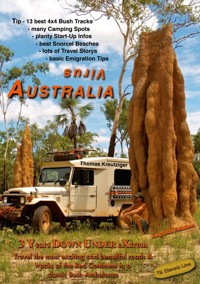
>VIRUS AUSTRALIA< is not just a summery of 3 full individual travel years , no, it is much more a very well-founded and extensive overall work, yes more a travel guide, which supports a colorful mix, from equipment councilor and route planner with many facts, numbers and own travel experiences, which supports an intended (planned) Australia tour. From the travel idee to the travel preparation and the many stages of implementation. Whether with your own vehicle suburb, right down to which vehicles you can best travel to Australia. The interested parties find many valuable, useful tips in this reference work, paired with dozens of travel photos (258) that match the stories. If you read the book thoroughly, it will be much easier to cut and plan your trip to your needs afterwards. All of this accompanied, with its own exiting travel stories from the author, who has driven all 13 most beautifull and most interesting 4x4 slopes & tracks of the entire continent. Information that the interested part will never find so extensively from an internet research forms the corset of this highly informative book projekt.
Sie lesen das E-Book in den Legimi-Apps auf:
Seitenzahl: 547
Veröffentlichungsjahr: 2025
Das E-Book (TTS) können Sie hören im Abo „Legimi Premium” in Legimi-Apps auf:
Ähnliche


















About the author:
Thomas Kreutziger, born in 1956, grown up as a real “Hamburg Northern Light”, dared to step out into the unknown at the age of 45 and “given up” his professional career & company "ALU-STAR" in special 4x4 adventure vehicle construction, in order to discover our stunning blue planet.
Instead of committing to decades of financing for "palaces", he tries to live out his youthful adult phase. If not now - then when?!
No insurance company in the world can guarantee that you will make it to the state-determined retirement age and that you will still be able to do so in good health.
So ask yourself what you realy wont in your life?
Foreword:
The first year of traveling in a self-converted Land Rover 110 all-wheel drive car. Then years later, twice a year in a 40-year-old, transformed Land Cruiser ambulance, we continued on the trail of the first pioneers, gold prospectors and opal diggers. With fun contacts with the natives, the Aborigines and all the facets of their unique, strongly spiritual culture.
And of course “fishing... until the Doctor comes”, because 25,760 km of coastline want to be discovered and conquered.
In one sentence - total camper freedom.
On his “journey around the world in slices” he was particularly impressed by two continents.
Alternating between Africa and Australia, Tom and his partner travel three times for a full year to the red continent "Pangea" - Australia - to experience what can hardly be found on our planet anymore,
VASTNESS & QUIETNESS & PEASE
On top of that, all of this without constant border changes, money hussel or language confusion, with the best infrastructure, perfect basic medical care and minimal national crime.
Prolog
"VIRUS AUSTRALIA"
You have to ask yourself, WHAT makes Australia so special, so interesting and especially so popular in terms of travel?
Everyone, but really everyone who has ever had the opportunity to experience even a brief contact with this fantastic continent, is usually thrilled, unless they didn't have enough time with them or they only hung around on the modern, busy and overcrowded east coast.
For me it's obvious...
If you compare Australia with Africa, South America, Europe or even the USA and Canada, Australia stands out in particular.
You only need one flight, just one visa, just one entry, just one customs clearance, just one language and just one currency - and this gigantic, reddish "floe of sand" is at your feet for the first 6 months of visa time. That's easy Incredible and ingenious. It's also amazing that Australia's residents are so friendly and helpful, and often like to have a joke, that you then have to ask yourself at home: why does it work so well for them and a lot works for us so tense, hectic and arousing envy, even though we Germans in particular live in the land of "milk and honey" globally.
This is also briefly explained...
With its huge land mass of 7.6 million km2 and a no less impressive coastline of 25,760 km, Australia is a size where our Europe would easily fit in. But only has a population density of around 26.01 million people. Compared to Europe with around 452.90 million inhabitants - a joke. Ergo, there is enough space for freedom and privacy. Where there are long distances between settlements and today there are more towns or cities, people are simply different and appreciate getting help as quickly as possible if it is urgently needed in whatever situation. This is shown, for example, by simple travel situations that have happened to us several times.
You're out there dusting the corrugated iron roads somewhere in the endless outback, for example to explore one of these many interesting off-road tracks, stopping here and there for a pee stop or for another photo of one of these colorfully blooming, botanical ones Photographing beauties along the way. As soon as you're done, a vehicle comes by, stops briefly and asks quite naturally...
<hey mate, everything all right?>
THIS is Australia, and it immediately gives you the feeling of security, oh, people look after each other here - what a brilliant feeling.
For comparison, traveling in Africa, the same situation... locals come by, ask if they can help, but usually want money immediately for even the smallest amount of help.
Or even stayed at home in the dark in bad rainy weather and tried to stop cars driving by for half an hour for a can of gasoline because you forgot to react to the warning signals on your fuel gauge. No, the ADAC Automobilclub has to come and sort out this embarrassing situation.
Okay, Africa is Africa, Europe is Europe and Australia is Australia, but it's just different,
“differently normal”.
So that this comes across as believable, I can reveal here that I've had the damn good luck so far.To be able to travel this extremely peaceful and colorful continent in my own vehicle three times for a whole year. The locals rarely manage to do something like this, even if only once in their entire lives.
"VIRUS AUSTRALIA"
It has an incurable grip on me ;-)
The first year I did the crazy thing to ship my Landrover 110 pickup (now called Defender) with a camping cabin, which I had just put together myself in Hamburg, from Hamburg to Freemantle/Perth and back from Sydney to Piraeus/GREECE.
At that time, this fun had cost me a utopian 12,000 DM and, on top of that, it also caused transport damage on each of the six-week ship passages.
During the second, one-year break, a good 12 years later, we took a much smarter approach and only booked the annual return flight and then bought a suitable four-wheel drive vehicle on site. Now we had previous knowledge and our first acquaintances were already in our address book.
Fortunately, the vehicle was discovered and chosen correctly and was bought on site and quickly and easily disassembled in front of the "Bunnings hardware store" within 2 weeks, because you don't really need much in Australia, you choose the right corner of the continent for your travel route, at the different times of the year out of - Ergo: permanent summer, if you wish ;-)
My third year off was a laughing stock in terms of preparation with the same off-road vehicle that was already tried and tested and mothballed on a farm until further notice.
So we were only able to fly in with an annual ticket. Simply stow our modest travel bags in the car, quickly clean the "can" and repair some damage, but then finally fill up the tank and restock with fresh provisions. Now we were able to dive into the depths of the primeval continent again. It couldn't be more convenient or safer.
Of course, there were also a few small preparations on the organizational list until we could finally fly off. The passports had to be renewed after a long time and appropriate booster vaccinations were also required.
But more details and more about that later.
Dear reader & travel friend,
how do you manage to make
such a journey and exit dream come true?
In this book I would like to try to give you some ideas and travel experiences that you will hardly come across without prior knowledge. Not even through the deepest internet research, because what I was able to experience cannot simply be found on other travelers' websites, not even among the thousands of YouTube self-promoters and "super travel professionals".
I would like to try my book to pass on this indescribable
"Virus Australia" to you - it's worth a try ;-)
Especially since it is a damn healthy “virus", in contrast to the current, global “corona pandemic".
Go Australia - Live Your Life, Live Your Dreams - Go Now!
Table of Contents
Prolog
Chapter Overview:
Chapter 01 - The impulse and thanks
Chapter 02 - How then, with what?
Chapter 03 - Vehicle selection
Chapter 03.1 - traveling by bike
Chapter 03.2 - traveling by motorcycle
Chapter 03.3 - traveling by car
Tip: Wicked Camper
Chapter 03.4 - traveling by midium size Truck
Chapter 03.5 - traveling by heavy Expedition Truck
Chapter 04 - Vehicle shipping or on-site purchase?
Chapter 05 - Vehicle Shipping
05.1 - Ship routes
05.2 - Shipping's inquiries
05.3 - Container shipping
05.4 - Ro-Ro shipping
05.5 - Transport insurance & tips
Tip: Expert Office - Appraisal Report
05.6 - Duty-free import of vintage vehicles
05.6.1 - Vehicle declaration & import proc.
Tip: Photo documentation
Tip: Quarantine Customs
Tip: Import customs
Note: "Carnet de Passage" term & extension
Tip: Vehicle deregistration
Tip. Vehicle owner
Tip: Motor vehicle insurance
Tip: Automobile Club's
Tip: Rental car or rental motorhome
Tip: Left-hand traffic
Tip: Best time to start your tripTip: Best New Year Scenic View
Chapter 06 - Australia's Camper Service
Chapter 07 - Long Term Visa
Tip: Credit rating unit/travel money
Chapter 08 - Flight arrival routes + ticket purchase
Tip: Flight route selection
Tip: Buy a plane ticket
Tip: Why is it so?
Tip: Flight/hand luggage details
Tip: Lost luggage
Chapter 09 - Import of goods
Chapter 10 - Entry tips with turbo customs clearens
Chapter 11 - Vehicle purchase on site
Tip: find & book a Down Town Hotel
Tip: rent a scooter or larger
Tip: GPS navigation
Tip: Private car or dealer purchase?
Tip: private workshop report
Tip: Dealer offers
Tip: Lane Cove Caravan Park Deal's
Tip: the possible " last minut change"
Chapter 12 - On-Site Vehicle Overhaul
Tip: the “non-screwdriver rail”
Tip: the “Handicrafts Rail”
Tip: Travel tools
Tip: Travel spare parts
Tip: Basic vehicle cleaning
Tip: logbook
Tip: Purchasing materials & sources of supply
Tip: Material Logistics
Tip: Transmission flushing & oils & more
Tip: Differentials & axles & oils
Tip: Fuel filter
Tip: Battery purchase
Tip: Battery types
Tip: LiFePo4 battery generation
Tip: Cool boxes
Tip: Fridge filling level
Tip: Refrigeration manufactur&market leader
Tip: Evaporative cooling
Tip: Wheel bearings
Tip: Brake system
Tip: Solar Technology
Tip: Solar rearward ventilation
Tip: LED lighting
Chapter 13 - Vehicle removal on site
Tip: the cheapest domel tent variant
Tip: the roof top tent sleeping variant
Tip: Vehicle interior sleep variantTip: Combi car sleeping variant
Tip: Weight distribution
Tip: Camping chairs & tables & more
Tip: Rear wing doors variant
Tip: Rear flap variant
Tip: Roof rack option
Tip: Gas cookers & gas bottles
Tip: Sund tarpolinor umbrella?
Tip: Moscito dome & boxnet protection?
Tip: Moscito Protection & head protection
Tip: Shower bag
Chapter 14 - Vehicle registration on site
Chapter 15 - Vehicle TÜV/Pink Slip on site
Chapter 16 - Vehicle resale & handover procedure
Tip: place advertising in good time
Tip: Material list
Tip: Sales point Lane Cove NP Camping
Tip: Airport Sales
Tip: Last Chance
Tip: local "Aftermarket Sales"
Chapter 17 - Travel Clothing
Chapter 18 - Off-Road Preparations & Tips
Tip: Corrugated iron slopes
Tip: let out air
Tip: Laundry campsite
Tip: Town Laundrette
Chapter 19 - Travel Pharmacy & Vaccinations
Tip: Our emergency medication
Chapter 20 - Travel Health Insurance
Tip: German DRF e.V. - Air Rescue
Chapter 21 - Royal Flying Doctor Service RFDS
Tip: RFDS Museum
Chapter 22 - Aboriginal Culture & Habitats
Tip: Dance & Cultur Festival
Chapter 23 - Country & People
Chapter 24 - Climate & Time Zones & Travel -Table
Chapter 25 - Rainy Season
Chapter 26 - Gas station network
Chapter 27 - Hardware stores & food discounters
Chapter 28 - Australia's 13 best 4x4 Tracks
Chapter 29 - Rock Art Art
Chapter 30 - Wanagarren Nature Reserve Test Site
Chapter 31 - The Pinnacles - Nambung N.P.
Chapter 32 - Snorkel Adventure - Ningaloo Reef
Chapter 33 - The Dolphins of Monkey Mia
Chapter 34 - The Road Train Story
Chapter 35 - Turtle Rescue
Chapter 36 - The collective mass madness
Chapter 37 - 24km between life and death
Chapter 38 - The Pancakes from Purululu N.P.
Chapter 39 - The Opal Tombs of Coober Pedy
Chapter 40 - Outback Art
Chapter 41 - The 12 Apostles
Chapter 42 - Ants & Termites and their Problems
Tip: Ant barrier
Chapter 43 - Crocodiles and their problems
Chapter 44 - Fishing & Golf & Water Sports & Tennis
Chapter 45 - Mailboxes
Chapter 46 - Beer & Wine & Mineral Water
Chapter 47 - Tire repair on the way
Chapter 48 - Emigration
Chapter 49 - Baking Bread & Pizza & Djapatties
Tip: Hole ground flour dough
Tip: Pizza dough
Tip: Djapati dough
Chapter 50 - Summary exploring Australia
Go AUSTRALIA, don't miss this Adventure!
Previous Book Publications
Chapter Overview:
About the author
ForewordPrologueChapter Overview
Chapter 01 - The impulse and thanks
Chapter 02 - How then, with what?
Chapter 03 - Vehicle selection
Chapter 03.1 - traveling by bike
Chapter 03.2 - traveling by motorcycle
Chapter 03.3 - traveling by car
Tip: Wicked Camper
Chapter 03.4 - traveling by midium size Truck
Chapter 03.5 - traveling by heavy Expedition Truck
Chapter 04 - Vehicle shipping or on-site purchase?
Chapter 05 - Vehicle Shipping
05.1 - Ship routes
05.2 - Shipping's inquiries
05.3 - Container shipping
05.4 - Ro-Ro shipping
05.5 - Transport insurance & tips
Tip: Expert Office - Appraisal Report
05.6 - Duty-free import of vintage vehicles
05.6.1 - Vehicle declaration & import proc.
Tip: Photo documentation
Tip: Quarantine Customs
Tip: Import customs
Note: "Carnet de Passage" term & extension
Tip: Vehicle deregistration
Tip. Vehicle owner
Tip: Motor vehicle insurance
Tip: Automobile Club's
Tip: Rental car or rental motorhome
Tip: Left-hand traffic
Tip: Best time to start your trip
Tip: Best New Year Scenic View
Chapter 06 - Australia's Camper Service
Chapter 07 - Long Term Visa
Tip: Proof of credit rating & travel money
Tip: Expert office
Tip: Shipping documents "Bill of Loading"
Tip: Credit rating unit/travel money
Chapter 08 - Flight arrival routes + ticket purchase
Tip: Flight route selection
Tip: Buy a plane ticket
Tip: Why is it so?
Tip: Flight/hand luggage details
Tip: Lost luggage
Chapter 09 - Import of goods
Chapter 10 - Entry tips with turbo customs clearens
Chapter 11 - Vehicle purchase on site -
Tip: start your trip in Sydney
Tip: find & book a Down Town Hotel
Tip: rent a scooter or larger
Tip: GPS navigation
Tip: Private car or dealer purchase?
Tip: private workshop report
Tip: Dealer offers
Tip: Lane Cove Caravan Park Deal's
Tip: the possible " last minut change"
Chapter 12 - On-Site Vehicle Overhaul
Tip: the “non-screwdriver rail”
Tip: the “Handicrafts Rail”
Tip: Travel tools
Tip: Travel spare parts
Tip: Basic vehicle cleaning
Tip: logbook
Tip: Purchasing materials & sources of supply
Tip: Material Logistics
Tip: Transmission flushing & oils & more
Tip: Differentials & axles & oils
Tip: Fuel filter
Tip: Battery purchase
Tip: Battery types
Tip: LiFePo4 battery generation
Tip: Cool boxes
Tip: Fridge filling level
Tip: Refrigeration manufactur&market leader
Tip: Evaporative cooling
Tip: Wheel bearings
Tip: Brake system
Tip: Solar Technology
Tip: Solar rearward ventilation
Tip: LED lighting
Chapter 13 - Vehicle removal on site
Tip: the cheapest domel tent variant
Tip: the roof top tent sleeping variant
Tip: Vehicle interior sleep variant
Tip: Combi car sleeping variant
Tip: Weight distribution
Tip: Camping chairs & tables & more
Tip: Rear wing doors variant
Tip: Rear flap variant
Tip: Roof rack option
Tip: Gas cookers & gas bottles
Tip: Sund tarpolinor umbrella?
Tip: Moscito dome & boxnet protection?
Tip: Moscito Protection & head protection
Tip: Shower bag
Chapter 14 - Vehicle registration on site
Chapter 15 - Vehicle TÜV/Pink Slip on site
Chapter 16 - Vehicle resale & handover procedure
Tip: place advertising in good time
Tip: Material list
Tip: Sales point Lane Cove NP Camping
Tip: Airport Sales
Tip: Last Chance
Tip: local "Aftermarket Sales"
Chapter 17 - Travel Clothing
Chapter 18 - Off-Road Preparations & Tips
Tip: Corrugated iron slopes
Tip: let out air
Tip: Laundry campsite
Tip: Town Laundrette
Chapter 19 - Travel Pharmacy & Vaccinations
Tip: Our emergency medication
Chapter 20 - Travel Health Insurance
Tip: German DRF e.V. - Air Rescue
Chapter 21 - Royal Flying Doctor Service RFDS
Tip: RFDS Museum
Chapter 22 - Aboriginal Culture & Habitats
Tip: Dance & Cultur Festival
Chapter 23 - Country & People
Chapter 24 - Climate & Time Zones & Travel -Table
Chapter 25 - Rainy Season
Chapter 26 - Gas station network
Chapter 27 - Hardware stores & food discounters
Chapter 28 - Australia's 13 best 4x4 Tracks
Chapter 29 - Rock Art Art
Chapter 30 - Wanagarren Nature Reserve Test Site
Chapter 31 - The Pinnacles - Nambung N.P.
Chapter 32 - Snorkel Adventure - Ningaloo Reef
Chapter 33 - The Dolphins of Monkey Mia
Chapter 34 - The Road Train Story
Chapter 35 - Turtle Rescue
Chapter 36 - The collective mass madness
Chapter 37 - 24km between life and death
Chapter 38 - The Pancakes from Purululu N.P.
Chapter 39 - The Opal Tombs of Coober Pedy
Chapter 40 - Outback Art
Chapter 41 - The 12 Apostles
Chapter 42 - Ants & Termites and their Problems
Tip: Ant barrier
Chapter 43 - Crocodiles and their problems
Chapter 44 - Fishing & Golf & Water Sports & Tennis
Chapter 45 - Mailboxes
Chapter 46 - Beer & Wine & Mineral Water
Chapter 47 - Tire repair on the way
Chapter 48 - Emigration
Chapter 49 - Baking Bread & Pizza & Djapatties
Tip: Hole ground flour dough
Tip: Pizza dough
Tip: Djapati dough
Chapter 50 - Summary exploring Australia
Chapter 01 - The Impulse and Thanksgiving
As already mentioned briefly in the prologue, it often takes a certain amount of encouragement to get something special going. My first thoughts about Australia came from my divorce, my first long-term relationship and also really fantastic love. You know how it is, you've finally found your "super pearl", you're living the first, exciting years of your "time of discovery" together, you're exploring the soft surfaces and depths of your body parts, you're carefully setting up your home nest and it's growing almost synchronously Pressure from the family to finally have to start a family.
But somehow that wasn't really my thing, "already on solid tracks now", bound to take on a massive obligation with all the consequences of raising children for the next, seemingly endless 20 - 25 years. An inner voice told me:
JUST NOT NOW!
This is how the great love of his youth and first marriage fell apart. I would rather discover the air of the big, wide world.
Is that reprehensible and selfish?!?
The good thing about the story: after an end there is always a beginning, a new start. This arose by chance from old Hamburg port contacts.
>Hey Thomas, a job is currently available in the Maldives, where a newly built tourism resort is to be completed and put into operation. That would definitely be something for you, as a flexible all-round technician with in-depth basic knowledge!<
No sooner said than done, to the great astonishment of my "HeWiMatic" boss, Herbert W., shortly before the 10th anniversary, he gave up his secure technician job, sublet the apartment and quickly packed two Zarges aluminum suitcases. Even if, to be honest, I only had a hint of what to expect there, it can only be exciting.
So let's go for fresh deeds with exciting adventures.
Only those who risk new things can do so Harvest the fruits of your experiences! You become smarter from setbacks, even if they hurt sometimes. So my job takes me to the Maldives for half a year and a maximum full-time job. More precisely "Villi Gandu Hura", a fried egg round palm jewel in the middle of the Indian Ocean of the North Male Atoll. Sea and air always around 29°C. So, from a global perspective, not the worst place to be able to think about your past and previous life. Furthermore, it's not really the most unpleasant place to spend your time working and earning money. Luckily, there is a job that keeps me as busy as possible and leaves little time for sadness and despair. Nose to the wind, work liberates and creates new space for fresh impulses.
While every morning, with my first cup of coffee, looking at my ADAC world map on the wall of my bungalow reminds me of where I am and what I have been able to experience so far globally, the more time I spend looking at it, so far away from my pearl of Hamburg, something more germinates in me and more a wish for:
Once I have survived this test, I will continue to save money and travel first to the continent that is furthest away from Hamburg. Australia & New Seeland will be the 1 desision!
That's pretty much what was going through my head on those magical tropical days at work. You can still look at Europe, Canada, the USA, and even South America as a full-time pensioner later, once you've hit 65. It is better to do what is strenuous and furthest away when you are young, as long as you still have enough drive, impartiality and energy in you. Assuming a small financial cushion.
Survived these 6 months of continuous working time in the Maldives unscathed and extremely educationally, learned some English on top of that and as a bonus even found a new love (thank you too, dear Marina, for the great time with you) and after a few months of being at home you can Make money, let's go.
As a North German proverb goes:
>One man, one word, one beer<...
Well, pretty much with this short version, my personal dream of Australia was born and could actually be put into practice barely a year and a half later.
Chapter 02 - How to travel With What?
After this 6-month "Maldives brain flash" with a "turbocharger and afterburner effect", like a bag full of new impulses, the first, one-year Australian exit was within reach. The whole thing is inspired by a new love.
Oh yes..., traveling Down Under in peace for a year...
YUP, THAT would be a JACKPOT!
So we agree and, after returning to our birthplaces of Basel/Hamburg, we both give full steam to our careers so that money flows into the newly founded travel idea, i.e. the cash register. Well, you wouldn't believe how quickly it happens when two people pull together to reach "the light at the end of the tunnel".
While I'm putting in a lot of work as a drive technician in Hamburg, Marina is working on her real estate clients in Basel in order to earn decent commissions on top of her basic salary.
If you continue to specifically avoid the usual big city after work frills such as going out to eat, going to the cinema, going to the discos and going on buddy tours, your travel fund will fill up even faster thanks to the “small change” you save. Men/women don’t have to constantly either buy new clothes like jeans, T-shirts and shoes, the current inventory will easily last another 2-3 good years before you really need a replacement, unless you want to be hip all the time.
The fact that we are both absolute non-smokers is also not entirely without reason. With 2 smokers per day x 2 packs x 365 days, that would be today Calculation example around €12,000. So a bunch of burned extra coal, which also has a positive impact. That's exactly how it works if you want it and have set yourself a goal and a start date. It's quite simple, one would think.
Unfortunately, only very few people manage that.
But here too, thanks to the Internet and its many self-promoting platforms, new “VAN-LIFE” forms of life are developing, which actually existed in a different form long before the fall of the Berlin Wall, just not in this mass and not with such a modern, German-English one Language combinations.
From the Berlin "Rollheimer scene" and the Hamburg "Hafenstrasse squatter scene" the very first generation of people moving out/switching to mobile housing is emerging, mostly in the form of converted trailers, coaches or ex-military vehicles. Today under the global term - Tinyhouse.
A few will certainly remember this unbridled, even crazy colorful time with a little smile.
During these strange, rebellious hippie and flowery times of the nuclear power opponents "NUCLEAR POWER - NO THANKS" old military, fire brigade, THW, ambulances, furniture transporters and special vehicles from Deutsche Bahn were decommissioned. For many with little money, it was the introduction to a "different life" by buying such a vehicle for little money and then converting it according to their own style.
Of course with a German TÜV blessing. But he was still very flexible. The HU (general inspection) was nowhere near as strict and sophisticated as it is practiced today and there were no emissions standards in those days. "It smokes, or runs smoothly and cleanly and immediately accelerates," were the clear statements from car mechanics.
The first courageous people bluntly welded another window structure onto the flexed roof of their newly acquired dream vehicle, often the top parts of disused VW buses or Beetles, in order to get more space and a feeling of light into the moving tin cans. For alternative insulation, cork and coconut mats or Styrofoam were often used for those who had little "coal". The man/woman has not yet thought deeply about the problems with condensation between the wall layers.
During the 70s/80s "Rollheimer Wagenburg" - Hamburg. It was to these days that the foundation for “Van-Life” was born.
Crazy people bought old trailers at auction and chugged through the countryside with them freshly converted into caravans and hitched to an old tractor. The whole thing is nice with a tax-exempt, "green number" (showman/agriculture) behind it and of course completely environmentally conscious, the towing vehicles are fueled with rapeseed or sunflower oil. That then smelled like a moving chip shop. Later, with the first oil crisis, the "Pöl- Generation". Driving with recycled fry fat.
Yes, something like that happened there.
There were also the extreme artists who thought one step further ahead, for the old days and bought 2-3 decommissioned Berlin or Lübeck double-decker buses in order to use them as a complete residential park when placed close together in a U. One bus unit was used for living, a second for working and the third was converted into temporary storage and guest rooms. In the middle is the wooden veranda with yucca and palm grove and self-built jacuzzi / whirlpool.
Nothing with industry plastic products from hardware stores.
Hey, there was something else going on and none of their ideas were copied from the internet, because that wasn't even born yet. Well, today there is a lot of hype about it, as if the wheel had just been reinvented and everyone had to force it down their throats.
It was simply about doing things, rediscovering yourself, living differently, like your parents or grandparents, and not about generating clicks with a thumbs up. You traveled to discover something new and then, months later, you talked about it around the campfire or at organized slide shows. That was pure “social life” - face to face.
But well, old times, now back to here and now in the 2024 time window and back to Australia. Well, we discover such artists of freedom on our first year-long break from Australia, in the Kimberley region of the Northern Territory.
Some former farmers and now seniors have easily upgraded their old diesel "sweethearts" into a reasonably comfortable touring tractor. It was properly insulated against the engine noise, a comfortable passenger seat was built in for mom and, importantly, a powerful sound system was integrated, so that the snail's pace ride brings real joy.
Well, you have to figure that out before you can travel with a tractor and caravan. In Europe would. That means constant traffic jams, but here in the outback, with the extensive, lonely cross roads, it works.
Tractor camping - the Australian way. “The power of recovery & freedom lies in slowness”.
Chapter 03 - Vehicle Selection
Of course, you should think more deeply in advance about what you would like to travel with on this huge continent in order to meet all of your needs and those of your partner, even at a minimum.
Women and men tend to have completely different views and different needs.
Basically, everyone should first ask themselves how much luxury they actually need in order to meet their sense of security and, more importantly, their in-house hygiene.
I know travelers where half the vehicle consists of lying space, i.e. a “playground”. There is hardly any space left for the kitchen or seating and an alternative wood stove is often in front of a shower and toilet room.
The “Spartanos”, on the other hand, get by with a few “Wettis” and a plastic bottle of sparkling water. For the others, a wetter washcloth with half a bowl of water is enough, according to the motto: 'Grandma & Grandpa didn't wash themselves any differently and were always clean', or our very modern newcomers who absolutely need their full shower every day, just like they do at home.
Should you start by bike? Or better with a motorcycle? Or would it be more convenient for two people in their own car? A few also undertake such travel projects using public transport. But Australia? The number 1 ring road might still work, as would the very straight and desolate Steward Highway between Darwin - Alice Springs - Adeleide, but certainly not all the way through the outback, because there is simply no means of transport.
Ha, the very clever ones will object now, but yes. Of course, you could book professional tour operators here and there to travel through the bush with their well-equipped four-wheel drive boxes, but something like this is only affordable for a few days, not for months. You wouldn't be alone to enjoy the beauties of this continent for yourself or as a couple, because THAT is pure luxury for me, according to the motto:
Less is more - but it should be intensive.
Chapter 03.1 -Traveling by Bicycle
Here I'll start with the smallest means of transport and also take up the story of our Uwe P. from B.. One day it occurred to him to finally do with his wife Nicole what they had been discussing on all the summer camper trips across Europe.
Finally do something for your health.
WHY not once in a lifetime
Cycling around Australia?!?
To anticipate it. Uwe & Nicole are only occasional cyclists, neither of them could have imagined such months until these days. Uwe's simple answer to my many questions about planning and subsequent implementation was completely sobering.
>Hey Tom, you just start pedaling, any idiot can do it and you don't need a mega expensive special bike. The first few days you can only manage a few kilometers, your ass burns like a baboon after a wrong climbing tour, but over the first 2-3 weeks you inevitably get more and more fit, until 30 kilometers a day suddenly turns into 100 or more. The main thing is that you drink enough and always have food with you, good sunglasses and head protection against the violent weather solar radiation. After such cycling days you will sleep as solid as a concrete slab.
Roughly Uwe's words.
Nothing with e-bikes! His encounters were great, because cyclists, especially Down Under with its enormous distances, are perceived as "poor pigs" and are therefore often pitied because they can't afford a car. Most of the time you are invited or supported in some other way.
It's very rare to come across bike haters, but
they exist here in Europe too - unfortunately.
Nicole & Uwe with their two steel bikes.
If you would like to find out more
about this... take a look here: https://www.karifa.de
Another story that happened to us on the 2nd year-long circumnavigation was the encounter with Heinz Stücke (2-time world circumnavigator in a class of his own with multiple entries in the Guinnes Book of Records) at the tip of Cape York Pininsular.
We are currently standing under coconut palms at the equatorial southernmost tip of Australia, in front of us the gentle surf of the turquoise Torres Street runs onto the snow-white coral beach, Papua New Guinea is almost in sight of us, I am just lighting our evening cooking/campfire and suddenly there it is, As if silently conjured up out of nowhere, Karl-Heinz with his heavily loaded folding bike, two palm trees away from us. I think to myself, well, he doesn't exactly look like a Chinese, he could be a crazy cheese man or a Frenchman, because how crazy do you have to be to ride a ridiculous folding bike in this tropical wasteland, in this heat to be.
His explanation later is also simple.
This time Karl-Heinz is traveling around the last corners of the earth with his folding bike in order to also work through the individual protectorates of various colonial states. All of this just to be able to enter it briefly so that he can make another entry in the "holy" Guinnes Book. Well, that's only possible by helicopter or mini plane and they only take compact folding bikes with them - that's logical, right?!?
Would you have thought of that?
Heinz ready to go again...
Here is the link to his impressive cycling life:https://www.radfahr.de/story/heinz-stuecke-im-interview/
Another encounter also comes to mind. Again, two years later in a beautiful, tropical region in Queensland, one day we meet the "Old Telegraph Track", which is very popular among off-roaders.
Two young students with their 26" inch mountain bikes including one-wheeled luggage trailer are behind them. First of all, I have to emphasize that there are very few off-road tracks where there is a constant supply of fresh water from small watercourses or springs. The "Old Telegraph Track " is part of it and offers this incredible and beautiful natural luxury. So during their break from studying, the two of them decided to follow this very bumpy four-wheel drive track for 1200km (both forwards and backwards). Most of the mainly dried food was pressed into vacuum bags, In addition to the fresh water, this could be done through small depots that were given to the vehicle travelers in front of them so that the stuff could be deposited high on trees according to GPS coordinates, safe from predators.
Well, things like that work in Australia.So that they can ride their bikes more agilely in very hilly, bumpy terrain and not be so "top-heavy" (increased risk of falling), they chose this trailer variant. Simply because the light aluminum trailers are well balanced and rotate like a pendulum, they follow the tow wheel in a self-supporting manner. Regardless of whether it was packed with 20, 30, 40 or more kilos, it makes sense. At least the two of them were very happy with their solution.
Ergo: Traveling by bike is also possible, but the clientele for this will only inspire a very small group of people who are hungry for travel.
However, the entire e-bike market is currently undergoing massive development. THAT is shaking up the purely manual bicycle market and giving rise to completely new bicycle combinations that now also allow normally fit, strong people to ride longer stages without having to be an extreme athlete.
If battery technology soon makes another quantum leap in terms of energy density and design to the LifPo4 generation, then cargo touring bikes will certainly soon be created that enable significantly more payload, range and comfort, as well as ultra-light trailer variations in which you can not only transport your luggage, but can also use them in combination for covered sleeping in any weather, would then be the perfect balancing act for camping on the ground.Because having to put up and take down the tent every day is very annoying after just a few days or weeks at the latest, especially when the weather doesn't cooperate and everything stays damp.
So, let's hope & pray... ;-))
There are now accompanied bike tours from Cairns up to the tip. What initially started with motorcycle tours is now also organized with bicycles.
Look here:
www.topbike.com.au
www.capeyorkemtb.com.au
www.mulgabicycletours.com.au
www.cycletrailsaustralia.com.au
Simon with his "off-road" bike & trailer combination.
Go there and click through their websites, everything is very inspiring. Cooking together as a small group in the evening and sitting around the campfire with a cold beer also has its charm. If you want, you can isolate yourself from time to time to enjoy your own personal time.
Everything is allowed and costs nothing extra.
For those who are looking for more security in a guided tour group so that they can sleep better, such a travel option is certainly the better choice. If you’ve been used to planning your bike routes and traveling on your own, this will definitely be the perfect adventure trip, as you’ll have access to fresh drinking water every day.
Always works every now and then - a round of Bubbu hammock in the partial shade of a tree - wonderful!
A great addition for relaxing between long drives is among other things, a nice hammock, a hanging chair with an extra leg rest arm, or a self-inflating air bag for stretching out now and then. Everyone should carry one of these things, because even in the deepest outback, there are plenty of places to secure something like this between the vehicle and a tree branch. Away from the ground is the best way to find relaxation moments without creepy crawlies.
Our nature always offers true works of art, like this twisted trunk of an almost withered tree.
Chapter 03.2 - On tour With Motorcycle
Let's move on to our motorized two-wheelers and throttle acrobats. Here too, size and total weight play a huge role, because performance alone with a great stud profile and a cool outfit is not really the decisive criterion for being able to travel easily and safely.
The following applies especially to all 2-wheeled vehicles:
Soil load per cm2, otherwise it's fine towards
the center of the earth and no longer forward!
Ergo: either a low overall weight or more speed. But that in turn worsens the control factor over your vehicle.
A well-loaded enduro, if you ride it alone, can easily bring 280 - 380 kg to the ground. Have you ever tried to lever such a weight ALONE back up to the vertical after a fall? So THAT only works if you get help or the buck is completely unloaded beforehand in order to get it lifted up again "blank" - NIGHTMARE!
So my beloved Suzuki DR350S was already a flyweight, but I still didn't manage to get it up again after a slight fall without unloading it.
However, even with the most meager inventory of tent, sleeping mat, sleeping bag, cooking utensils, spare parts, small tools and important fuel, water supplies and provisions, that adds up to huge kilos. Since the mouse bites from no thread. But the biggest enemy of all 2-wheelers is of a completely different dimension!
Despite all the skill in planning, choice of materials and minimalism, there are 3 very important parameters that are often forgotten and totally underestimated!!!
1. The extremely violent UV spray with its resulting high daytime temperatures for people and material...
2. the merciless corrugated iron roads, which often stretch across the country for hundreds of kilometers and are unfortunately far too rarely smoothed out (graded) in order to make driving pleasant, gentle on materials and safer...
3. the equally plentiful soft sand slopes, which unfortunately always come when you want to reach the most beautiful "slices" of Australia's dream beaches.
Especially as a biker on such lonely routes, just once and your vacation is suddenly over! It doesn't matter whether you have a fat BMW 1200GS, an almost equally heavy Honda Africa Twin or a highly aggressive KTM bumblebee under your ass. Quick help is far, far away!
Unless you drive such routes in a convoy or at least have an emergency tracking device (LUANDA 4G Pro) with you, which in turn activates the Coast Guard and the Royal Flying Doctor Service, as needed and of course only in a REAL EMERGENCY!!!
Provided you take out extra accident insurance in this regard, otherwise “the fun” will be extremely expensive.
"Honda Afrika-Twin" with jumbo tank &aluminum storage boxes.
A little Tip:
If you really want to do something like this with your own bike and can't get your own group together, or at least a second travel partner, you can also join professional tour companies. They accompany and care for a limited number of self-drivers, take their luggage with them and, in the event of a possible fall, provide first aid with return transport, including the damaged machine. In an emergency, they organize the medical return flight of those who have suffered serious injuries.
The advantage is that you only have a small, daytime emergency backpack with you, the heavy main luggage is driven from camp spot to camp spot in an off-road vehicle, as are all the drinks with the food. All the necessary resources are also transported for you, so you don't have to worry about anything anymore. However, this has its price.
But driving solo and almost naked is much more relaxed. It's a pure off-road experience with many beautiful camp spots, often along the rivers.
Look here:
www.moatours.com.au
www.trapptours.com.au
www.cairnsaustralia.com.au
www.trailbikeadventure.com.au
www.fairdinkumbiketours.com.au
www.capeyorkemotorcycles.com.au
A small, refreshing “Billabong bath” doesn’t hurt in between while you celebrate your tea & coffeee breaks on such lonely slopes.
Of course, this also applies to all cyclists and motorcyclists, because no one can tell you when there will be another opportunity like this, because there are simply too few vehicles on the road, out there in the bush. And any kind of refreshment, whether in rivers or clean billabongs, brings some variety to the daily travel routine. So we enjoyed such refreshing moments at any time over the day with a short coffee time on the way.
Chapter 03.3 - Traveling by Car
The safest means of transport is and remains a vehicle on 4 wheels because it offers enough reserves to be able to transport enough water, fuel and food including luggage for 2 - 4 people.
Another question arises about the type and drive of the vehicle. Is a normal car, whether a station wagon or a minibus, sufficient and with a 4x2 drive, or would it be better to have a full-fledged 4x4 off-road vehicle with a ultra strong chassis, good ground clearance and large tires?
For the completely untainted, I'll try to put it this way...
Do you want to explore Europe only on motorways and expressways? Or do you also want to be out and about on unpaved forest paths and stretches of beach in order to live out your own private urge for nature?
That's pretty much how it works on tour in Australia. The really interesting highlights can only be accessed with a 4x4 vehicle. For points of contact that are heavily frequented by tourists, this is specifically marked with clear warning signs at the technical entry points.
These include, to name a few:
deeper skiing in the "Bungle Bungle - Pancake Mountain Region", some access routes to the nationwide waterfalls "Twinn Falls", "Jim Jim Falls" in the Kimberlay Region and the Kakadu National Park with their branch routes and various criss-cross connections of extremely soft sandy coasts and beach trips, because there are plenty of them on the endlessly long 25,760 km of coastal regions (not counting Tasmania, Fraser Island and other offshore island groups).
The sand island “Fraser Island”, which is extremely popular with tourists, can only be accessed with an off-road vehicle, as entry via the ferry access ramps begins with extremely soft sand right on the wide beach. There is absolutely nothing you can do with a normal vehicle Camper, as the ground clearance is too low and the tires are too small do not do justice to the surface.
So if you don't have a vehicle yet, you should now think about what type of vehicle you would like to use on your tour of Australia. For me, this requires at least 9 logical criteria:
1. Do you have technical screwdriver knowledge?
2. maximum total travel time?
3. How many people are you traveling with?
4. maximum vehicle budget?
5. Already equipped to travel or not?
6. a simple station wagon?
7. a spacious van?
8. an empty SUV?
9. a fully converted four-wheel drive vehicle?
If you try to plan your tour in the best possible climate zones in order to avoid the rainy season, you hardly need any other clothing than a T-shirt, shorts and flip-flops.
Yes, sunscreen and lots of it! If you “just” want to concentrate on the Australian highlights first, you don’t necessarily need an off-road vehicle.
A normal car station wagon, which most low budget backpackers buy, would be enough and can be had for around AU$ 1,500 - 3,000. Put a mattress in there + 2 water canisters, 2 fuel canisters and 2 spare tires lashed to the roof, like a box for food, combinated whith a electric cooling box, with all luggage in the back and off we go.
Tip: Wicked Camper...
A now style of CamperVan was born to the millennium time. In 2000, John Webb founded his affordable camper van rental & chash back company, offering colorful, graffiti-style vans that had already been converted into simply motorhomes. It was a huge success and was extremely well-received by young students & travelers, including those in New Zealand, looking for an affordable minivan with fully equipped, basic camping gear.
Phone +61481606805 eMail: [email protected]
www.wickedcampers.com
To this time, Wicked Campers is now a global player.
Karin and Uta with their "Ford Falcon" station wagon, the two of them, if the chemistry is right, are completely sufficient.
The improvement to this would be a panel van or minibus, i.e. a disused craftsman's panel van, which of course offers significantly more space for extensive luggage, but ultimately cannot do more in terms of driving technology. You can get these vehicles between AU$3,000 and AU$6,000, and possibly even directly from companies that are currently decommissioning their old “cargo donkeys” and offering them for sale on the side of the road.
But if you seriously want to experience Down Under for a whole year, i.e. drive it, and don't just want to clock up the kilometers on the tarred and gravel main routes in order to explore the country more intensively, you simply can't avoid an SUV or real Off-Roader. “Butter by the fish,” as the North Germans say, otherwise the “yield of the catch will remain quite meager”.
Because the actual beauties, even "pearls” of this fantastic continent can unfortunately, or rather thank God, ONLY be reached via often fine sandy, narrow sand paths, which in the early days were laboriously used by anglers and protectors with axes, shovels by hand and with small four-wheel vehicles, as before were torn up, laid out and hit into the bush.
Here Sabine is traveling alone in her "Ford Ecovan" minibus, which offers an enormous amount of space for one person.
Sabine tells me how much space she enjoys in the van and how much more comfortable she can get dressed and undressed than other travelers in their flat-sided camper vans. And thanks to the increased interior height, it's not as stuffy to sleep in. This doesn't matter so much in the remote outback, where she can leave all the doors open, but not so much when she spends the night in cities, where the doors tend to stay closed. She also has a small Porta-Potti camping toilet with her, which is a great help, especially in cities.
The proud Gary with his VW T2 classic bus and veteran.
Lotti & Heike came by ferry direct from Germany with their VW T2.
The VW T2 (1967-1979) with its petrol rear-wheel drive engine, still gets away with it (with reduced tire pressure), where all front-wheel drive vehicles with quickly spinning front tires are out of the question.
Two types of minibuses with all-wheel drive offer a balancing act in gentle terrain. Unfortunately, VW has never really served the Australian market in this way, which means that you rarely come across VW minibuses - at least so far.
But the most exciting minibus with 4x4 all-wheel drive and good ground clearance is probably the Hyundai Starrex H1. A completely underestimated all-wheel drive vehicle with a self-supporting lightweight design. Perfect for 2 people.
HYUNDAI Starrex H1 4 cyl. / 2.5L turbo diesel 103kW / 140Hp / 392Nm
SUBARU is the only manufacturer to offer the mini dwarf among all-wheel-drive buses with its Libero 1200 model. A real space miracle in the most compact design, even delivered from the factory with rear seats that can be adjusted for sleeping and a huge glass sliding roof and two sliding doors opposite each other. Comes with permanent all-wheel drive and traction assistance and has a very solid chassis, even if the car looks so inconspicuous.
Add a roof rack with solar cells on it and you have good sun protection. Or just a roof tent and all the space below can be used for sitting, cooking and luggage. Simple options at an affordable price, where you can easily find a place to spend the night even in the middle of small towns.
SUBARU Libero 4x4 Minibus 3cyl. 1.2L petrol engine 38kW / 52Hp / 97Nm
But be careful, this tiny bus, which was equipped with a 3-cylinder petrol engine, is not a miracle running machine due to its construction. Similar to how today's "Smart's" were designed more for short trips and city tours. So it's always better to change the oil too early with the best synthetic oil and a new filter element than to be stranded in the outback later!
In terms of bodywork, SUBARU has put almost zero effort into combating rust in this model, which means that you can almost only find completely rotten Libero's on the open market. Unless one of the previous owners invested lot of money in a cavity wax seal in a timely manner.
Chapter 03.4 - traveling by Medium Size Truck
For all big ship friends now to the premier class. Whether it makes sense to convert a large truck, whether 2, 3 or 4 axles, in order to ultimately have a bed, a kitchen and a bathroom around, everyone has to answer this question for themselves or simply answer it once live through it in the most elaborate way. If you look more closely, most of your travel time takes place outside, next to the vehicle and in nature. But everyone as they like and financially can.
The big difference to driving on most beach access slopes is the different widths of the natural slopes. Here, 50- 80 cm more track width makes a huge difference, because it's not just the course of the slope that determines the real lane, but also the vegetation to the left and right of it, including possible rocks or trees, then separate the "wheat from the chaff". Unfortunately, you only notice when you're stuck whether you're still moving forward or whether you have to turn around and never reach the destination you're aiming for or the dream beach you're looking for.
Anyway, now to the medium-duty truck variants.
Unfortunately, Australia is different from Europe. There is also another fact: driving is on the left. This means that anyone who brings their own truck with them, i.e. ships it over, will receive little to no spare parts here Down Under, as left-hand drive vehicles are not structurally identical to right-hand drive vehicles of the same brand in many construction parts, as they are mirror-inverted. Ergo: If you want to ship your expedition truck and bring it with you, you should definitely stock up on all wear parts specific to your vehicle type at home!
Australia's most popular Truck Brands...
The smallest truck brand with a total weight of around 5.0 - 7.0 tons comes from the Australian manufacturer OKA. Unfortunately, the company went bankrupt, but was picked up by new investors and continued to operate. I can't say whether this is still the case at the moment.
But anyone who wants to purchase such a vehicle privately, or who happens to discover it for affordable money, must realize that they are buying a vehicle that is almost unique and can only use the OKA Headquarters in PERTH - Bibra Lake will receive the vehicle-specific spare parts. Only 500 modest units of this type of vehicle were ever built.
So everything has to be ordered by post or cargo shipping. Otherwise, the OKA is a great vehicle size so that it can be converted into a touring vehicle for 2 - 4 people and used for travel purposes. The installed 4.0L Cummings turbo diesel is perfect, extremely powerful and will last forever, unfortunately I can't report anything about the transmission.
OKA 4x4 with 4.0L / 129kW / 170Hp / 700Nm Cummings turbo diesei with intercooler, in the very last configuration version.
But the most common small truck in the 7.5T class are this MITSUBISHI-Canter 4x4. 4cyl./3.0L/128kW/175Hp/430Nm td.
MITSUBISHI - Canter, here with the first generation pop-up camper body, simply mounted on a platform.
If you need something bigger, you should look for a MITSUBISHI Fuso truck from 7.5T and larger (run under Mercedes since 2011), which is available in different chassis lengths and weight classes, as well as body variants. The cabs are also offered as double cabs, which certainly makes more sense and would be more practical for families.
If you look at what the tour organizers do on a daily basis and this amounts to a larger mass test, they almost exclusively use 4x4 HINO buses. Shortly before your arrival, everyone should research on the Internet whether such vehicles are available for private purchase at your local travel window.
ISUZU 4X4 12t Truck / 6cyl. Turbodiesel 7.8L/164kW / 223Hp / 668Nm
Used refrigerator/furniture cases when empty would also be very interesting, as they are perfectly insulated against heat and well prepared for quick conversion. But even these will rarely be available privately and if they do, then rarely with all-wheel drive.
Vintage Truck's...
I would also like to briefly touch on this topic, although Australia's vehicle market does not come close to the potential of decommissioned vehicles. Military and municipal vehicles, as we are used to in Germany. As always, isolated exceptions confirm the rule.
One of the first, old veterans, an ancient front-control 2-axle Volvo 4x4, which was also very often used as a 3-axle 6x6 for heavy howitzers and rocket launchers. The facets of the renovation are diverse. Here a very special combination of living cabin was fixed onto the existing platform.
Ex.Volvo 4x4 flatbed military truck with self-built living cabin.
Ex.Land Rover 6x6 Perentie military truck, 4L ISUZU Turbodiesel.
Here is a historic, Stone-Age bus from the 1960s that was converted into a mobile home. The main thing is that massiv Bullbar is at the front.
Unfortunately I didn't write down the name, but what's interesting is that the engine with clutch and transmission unit was arranged very centrally, at the bottom of the middle frame area.
At german home they would easily arrest us with such a huge bullbar and refuse any TÜV approval, but in Australia they are still completely relaxed about it, as collisions (usually at night) are not uncommon in the outback Kangaroo and thus a powerful crash barrier has its name bears right. Parking in big cities is of course a nightmare unless you have your passenger and guide with you or a front camera has been installed.
This is for the safety and protection of the driver!
But on to the most common 3.5t all-wheel drive class...
I'm now talking exclusively about "full-fledged 4X4 off-road vehicles" with box frames and transfer cases, from my time as an automotive technician and vehicle builder, as well as from purely personal conviction. So off-road vehicles with self-supporting, stable subframes and swinging, mounted bodies.
So what are the best four-wheel drive vehicles in the country for which spare parts are also widely available?
The Number 1 of my Off-Road Vehicle Choice...
Is for Australia, the TOYOTA Land Cruiser of the HZJ type is unrestricted, often called a "bush taxi", but in technical jargon it is listed as a "troop carrier" (originally used as a 10-person transporter for the military and mining companies) because it is technically ultra simple, without electronics. No frills and very robust. But it's not really comfortable because heavy leaf spring packages with drum brakes were and actually still are installed on the rear axle.
This off-road vehicle is the most common all-wheel drive vehicle in the world, as it is also often used as a maneuverable pick-up by camper conversion companies and farmers and, above all, in the military as a weapon carrier for heavy machine gun rifles and small rocket launchers and much more popular.
I could write an entire book about this type of car alone, but I refrain from doing so because my vehicle recommendations are only intended to reflect an overall overview of the local market. Have been highlighted since around two decades, the very first “BRITZ Cruisers” with a camper high roof, roof hatch and windows inside.
TOYOTA HZJ 78 from the car rental company BRITZ... 4.2L/6 cyl. naturally aspirated diesel /9 6kW/130Hp/285Nm/3,5t
Here with a fixed fiberglass sleeping high roof and camping extension, on the VA coil springs with disc brake, on the HA leaf springs with drum brake and around 200L fuel twin tank system for extra long ranges.
My number 2 of the 4x4 Vehicles...
is the now very popular TOYOTA Hi Lux, as it has been trimmed significantly more towards driving comfort and luxury. Of course always with air conditioning. The Hi Lux is also available as a cab chassis, pick-up or station wagon.
As you can see from the photo, the second largest car rental company "APOLLO" has chosen the High-Lux Cab-Chassie variant with its own construction, which is manufactured and marketed in Brisbane under its own direction - so far i now.
TOYOTA - Hi Lux from "Apollo Campers". Pop-up roof to keep the center of gravity low... 2.5L 4cyl turbo diesel / 105kW / 144 Hp / 344 Nm / 3.2T
An extremely popular "all-season" variant, here with a fully insulated parallel pop-up roof sandwich cabin, which is now available for private purchase as decommissioned vehicles. With Klimatronic and a softer chassis and a lot of living space, it's almost a full-fledged motorhome, just with permanent 4x4 drive.
To be honest, this would be my personal favorite at the moment, but it is still quite expensive.
My 3rd Choice...
would be the successor type, the sublime Land Cruiser HDJ80-GX-naturally aspireted (4.2L/135Hp) or VX-Turbo (4.2L/176Hp) also called "Amazon" in the UK and Australia is a running miracle and the perfect choice in an affordable size.




