


1,99 €
Mehr erfahren.
- Herausgeber: Publisher s22302
- Kategorie: Geisteswissenschaft
- Sprache: Englisch
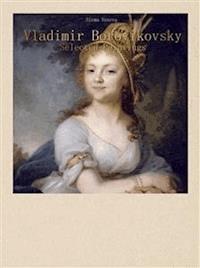
Vladimir Lukich Borovikovsky (1757 – 1825) was a Russian painter of Ukrainian origin who dominated portraiture in Russia at the turn of the 19th century.Vladimir Borovikovsky was born Vоlоdymyr Borovyk in Myrhorod (now Ukraine) on July 24, 1757. His father, Luka Borovyk was a Ukrainian Cossack and an amateur icon painter. According to the family tradition, all four of Borovyk's sons served in Myrhorod regiment, but Volodymyr retired early at the rank of poruchik and devoted his life to art — mostly icon painting for local churches.Borovikovsky may have lived the remainder his life as an amateur painter in a provincial town if not for an unexpected event. His friend Vasyl Kapnist was preparing an accommodation for Empress Catherine II in Kremenchuk during her travel to newly conquered Crimea. Kapnist asked Borovikovsky to paint two allegoric paintings (Peter I of Russia and Catherine II as peasants sowing seeds and Catherine II as a Minerva) for her rooms. The paintings so pleased the Empress that she requested that the painter move to Saint Petersburg.After September 1788 Borovikovsky lived in Saint Petersburg where he changed his surname from the Cossack "Borovyk" to the more aristocratic-sounding "Borovikovsky". For his first ten years in Saint Petersburg, he lived in the house of the poet, architect, musician and art theorist, Prince Nikolay Lvov, whose ideas strongly influenced Borovikovsky's art. At the age of 30 years, he was too old to attend Imperial Academy of Arts, so he took private lessons from Dmitry Levitzky and later from Austrian painter Johann Baptist Lampi.In 1795 he was appointed an academician. He became a popular portrait painter and created about 500 portraits during his lifetime, 400 of which survived to the 21st century. He had his own studio, and often relied on assistants to paint the less important parts of a portrait. His sitters included members of the imperial family, courtiers, generals, many aristocrats, and figures from the Russian artistic and literary worlds. Most of his portraits are intimate in style.
Das E-Book können Sie in Legimi-Apps oder einer beliebigen App lesen, die das folgende Format unterstützen:
Veröffentlichungsjahr: 2017
Ähnliche



















Vladimir Borovikovsky
Selected Paintings
By Sirma Veneva
––––––––
First Edition
*****
Copyright © 2017 by Sirma Veneva
Table of Contents
Title Page
Copyright Page
Foreword
Paintings
Contents
Foreword
Vladimir Lukich Borovikovsky (1757 – 1825) was a Russian painter of Ukrainian origin who dominated portraiture in Russia at the turn of the 19th century.
Vladimir Borovikovsky was born Vоlоdymyr Borovyk in Myrhorod (now Ukraine) on July 24, 1757. His father, Luka Borovyk was a Ukrainian Cossack and an amateur icon painter. According to the family tradition, all four of Borovyk's sons served in Myrhorod regiment, but Volodymyr retired early at the rank of poruchik and devoted his life to art — mostly icon painting for local churches.
Borovikovsky may have lived the remainder his life as an amateur painter in a provincial town if not for an unexpected event. His friend Vasyl Kapnist was preparing an accommodation for Empress Catherine II in Kremenchuk during her travel to newly conquered Crimea. Kapnist asked Borovikovsky to paint two allegoric paintings (Peter I of Russia and Catherine II as peasants sowing seeds and Catherine II as a Minerva) for her rooms. The paintings so pleased the Empress that she requested that the painter move to Saint Petersburg.
After September 1788 Borovikovsky lived in Saint Petersburg where he changed his surname from the Cossack "Borovyk" to the more aristocratic-sounding "Borovikovsky". For his first ten years in Saint Petersburg, he lived in the house of the poet, architect, musician and art theorist, Prince Nikolay Lvov, whose ideas strongly influenced Borovikovsky's art. At the age of 30 years, he was too old to attend Imperial Academy of Arts, so he took private lessons from Dmitry Levitzky and later from Austrian painter Johann Baptist Lampi.
In 1795 he was appointed an academician. He became a popular portrait painter and created about 500 portraits during his lifetime, 400 of which survived to the 21st century. He had his own studio, and often relied on assistants to paint the less important parts of a portrait. His sitters included members of the imperial family, courtiers, generals, many aristocrats, and figures from the Russian artistic and literary worlds. Most of his portraits are intimate in style.
Paintings
1. Portrait of Catherine II, Russian Empress, 1779, Oil on canvas, 227 x 156 cm
2. Portrait of Empress Maria Feodorovna, 1790s, Oil on canvas, 134 x 104 cm
3. Portrait of Elizabeth Markovna Olenina, 1791, Oil on cardboard, 20 x 16 cm




