


17,99 €
Mehr erfahren.
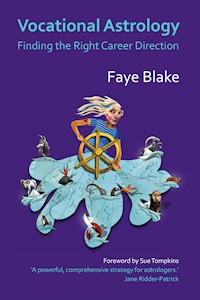
Vocational Astrology offers practical, innovative solutions for dealing with work, career and vocational questions – for both you and your clients. With the help of this groundbreaking guide, you can use astrology to: •Identify talents, motivations and blocks •Create a C.V., design a website and build a social media profile •Define tangible goals and awaken your life purpose and passion Along the way, Faye Blake shares valuable tips on how to develop your own career path, set up an astrology practice and dialogue with clients to help them reach their career goals.
Das E-Book können Sie in Legimi-Apps oder einer beliebigen App lesen, die das folgende Format unterstützen:
Veröffentlichungsjahr: 2020
Ähnliche
















Praise for Vocational Astrology
Faye brings a rare combination of insight, hands-on experience and astrological verve to her work on vocation. She can walk clients through a process that touches both outer necessities and inner calling. A valuable resource.
– Lynn Bell, author of Planetary Threads
Faye Blake’s excellent book is practical, very interesting, and fun to read. I am sure that many others will appreciate it as well.
– Mary Plumb in The Mountain Astrologer
It’s not only a terrific and much-needed resource from an expert in both fields – astrology and career guidance – it’s also a great read! I’ve taught for 20 years now and there’s been nothing like it for intelligence and usability.
– Kim Farley, author of Mind Maps
A most useful insight into the ways in which a counselling approach can be dovetailed with astrology. The style is lively, thoughtful and undogmatic.
– Garry Phillipson, author of Astrology in the Year Zero
Faye’s excellent book is tremendously well-conceived and full of good information. I really like her structured approach and thoughtful analysis.
– Christina Rodenbeck, The Oxford Astrologer
Thought-provoking, fascinating and wonderfully readable.
– John Green in The Astrological Journal
This book gave me a lot to think about on several levels, a real rarity among astrology books. The author’s ideas about structuring the consultation are worth the price of the book even if you aren’t interested in doing vocational astrology, but odds are you’ll find that vocation is an exciting possibility for your work as an astrologer after reading it. I highly recommend it.
– Armand Diaz, author of Integral Astrology
The book is authentic, it is Faye speaking. I really recognize the positive approach she has, which contributes so much to her style of astrology.
– Elizabeth Hathway in the Astrologie Blog
Faye, you’ve written one of the most useful and intelligent books I’ve seen on vocational astrology. What I especially appreciate is that you don’t provide a cookbook approach but really delve into the process work that people need to do to find the occupational path that’s right for them. I also find your writing style fluid, engaging, original, and highly expert. I am learning a lot studying your important text.
– Greg Bogart, author of Planets in Therapy
A terrific resource for astrologers and counselors interested in supporting clients to live their authentic career. Cossar offers a pragmatic strategy in assessing a person’s natural orientation to a public contribution … She brings many years of experience to this work, and writes in a witty and engaging style. This book is not only an enjoyable read for the astrologically-minded, it will help strengthen the tools to be an effective counselor.
– Eric Meyers, author of The Astrology of Awakening
When professional career advisors alight on this book it may inspire them to start using astrology in their work when they see how swiftly it delivers information about a client’s character qualities, aptitudes and blockages.
– Phoebe Wyss, author of Inside the Cosmic Mind
The book reflects (Faye’s) knowledge, skills and expertise. It contains a wealth of information and its contents aim at personal development as much as career development.
– Ghislane Adams in Conjunction
An innovative, practical and creative book presenting a skillful model of vocational astrology.
– Margaret Gray in the ISAR Journal
Faye Blake sets out a powerful and comprehensive strategy for identifying core factors essential to job satisfaction as well as for writing effective CVs to showcase unique abilities and personality traits to prospective employers. Her book also provides a deceptively simple but effective tool for choosing words and images for websites, marketing and other promotional material that authentically reflect the individual … Invaluable for astrologers who offer vocational counselling and anyone looking to clarify and polish their public profile.
– Jane Ridder-Patrick, author of A Handbook of Medical Astrology
Full reviews at www.fayesbook.co.uk
3
Vocational Astrology
Finding the Right Career Direction
Faye Blake
Flare Publications The London School of Astrology
5
For Zelda
whose warm, generous, loving and encouraging
Leo heart helped birth this book
My heartfelt thanks to:
Sue Tompkins For your Aquarian wake-up call. Attending your insightful, eccentric, laughter-packed classes back in 1984 in London helped me find my vocation (not to mention a friend) and literally changed the course of my life. Having you write the foreword to my first book feels like coming full circle.
Frank Clifford For your, as you put it, ‘gentle (Aries) kick’ to get me started on writing a book at all. Your help with this, the publishing (with your beady Virgo eye) and running training at the London School of Astrology are deeply appreciated. It’s nice to be so well looked after.
My example client Jackie (You know who you really are!) It was fun working with you on this project and I appreciated the time you put in to finish the homework — an achievement for an Aries. Your writing adds greatly to the book and I am so glad you are heading towards your true calling now.
My clients Without you I simply would not have learned so much about astrology or had so much fun along the way. Thanks for your trust.
CONTENTS
FOREWORD
The issue of work is so important that it demands that the whole horoscope be involved. So, good vocational advice requires much, much more from the astrologer than merely looking at the tenants and rulers of the 2nd, 6th and 10th houses. Given that an understanding of the entire area of vocation and employment is so essential to every astrologer’s toolkit, any help they can receive has to be a good thing. In Vocational Astrology: Finding the Right Career Direction, readers are taken gently through this whole process by Faye Blake, who is as well versed in non-astrological vocational models as she is in astrology.
Expertise in the areas of work and vocation is possibly the most important specialism for astrologers to have under their belt. This is because the principal areas that clients bring to astrologers concern either their career or their love life. To be human is to be concerned – even consumed – with matters of work and/or relationship. And even where an individual says they only want to talk about spiritual matters – or the meaning of life, their kids or their health – frequently there will be add-on questions regarding work.
For those with a strong sense of vocation, the choice of employment isn’t an issue. Their unconscious, if not conscious, self knows what they want to do and they follow their chosen path like a sniffer dog that’s picked up a scent. In such cases, the chosen vocation is usually pretty obvious to see in the horoscope. Such individuals may not need to discuss their choice of vocation but, as with everyone, there will inevitably be issues that arise from doing the actual job. For who among us has mastered all the skills necessary to do what we do and to work alongside colleagues, bosses and employees? Inevitably a degree of self-confidence and self-esteem informs everyone’s capacity to be effective in the workplace and justly remunerated.
It will come as no surprise that an individual’s entire psychological state can affect matters of work and vocation. One’s work is usually the best way of working through and making use of one’s psychological difficulties. For instance, imagine that, for whatever reason, you are a touchy person, one who feels easily 10threatened and exhibits an argumentative, militant attitude. No doubt these traits will have a history attached to them and might be ameliorated by therapeutic help – but that is not the issue here. Such traits may not make for easy personal relationships anywhere, but these qualities could be ideally utilized if your job were that of a trade union official engaged in defending workers’ rights. Work so often offers a socially acceptable outlet for psychological issues.
While some people say they follow a vocation, many more say they just ‘do a job’. Either way, whatever the individual does with him- or herself all day – even if it’s unpaid or not traditionally called a job – it should connect as many aspects of the individual’s psyche as possible. Ideally, each person should be doing whatever it is that makes their heart sing, even if it is in their spare time. Following their inner self as much as possible contributes hugely to both their inner psychological health and outer physical health.
This book does not assume that the astrologer should know everything. What I like about Faye’s work is that it is client-centred, as arguably all astrological consultations should be. The astrologer is in control of the actual process of the discussion but the client must always feel in control of the content of that conversation. In terms of vocation, most people (even those who don’t have a strong sense of which direction they want to pursue) know somewhere deep inside them what they want or need to be doing with their lives. What is sometimes more elusive is the name of that pursuit or the confidence or wherewithal to actually pursue it. A job may require a range of skills and at times we may have some of those skills but not all of them. However good we may be at our job, there are usually areas where we are stronger and others where we are weaker.
The topic of vocation isn’t just about the kind of work a person might pursue or even about which set of skills or qualities they personally may bring to their particular work table. It is about the journey of getting there and, having arrived, how to thrive and move forward. A clichéd line that is often linked to the success of a shop or a restaurant is ‘Location, location, location’. For success generally, I would say, ‘Preparation, preparation, preparation’. Success tends to come through preparing oneself adequately for a given role, coupled with the opportunity of that role presenting itself. Astrology is a tool for highlighting future opportunities as well as offering clues to an individual’s particular strengths and weaknesses. Weaknesses can be overcome and strengths can be celebrated. When it comes to personal growth, becoming more conscious of both can only be of benefit to us.
Sue Tompkins, April 2012
INTRODUCTION
Is that what they call a vocation, what you do with joy as if you had fire in your heart, the devil in your body?
Josephine Baker
My belief is that if we can hold our nerve and pursue what we love, we will be happier, more successful, develop our true talents and feel more fulfilled. Success for me is ‘doing your horoscope’ in the most positive and creative way possible. It has never been, is not, and never will be, about money!
The book’s title begs the question: What is a vocation? The Oxford Dictionaries Online (www.oxforddictionaries.com) states it to be:
I prefer Josephine Baker’s words above – they imply an engagement of the heart and the body for a true calling. As an Aquarian, I might also add that the mind needs to be fed, too.
The word ‘vocation’ has its roots in the Latin vocare, which means ‘to call’. Originally one was ‘called’ by God. Later, career advice came from ancient priests or religious leaders who could interpret the heavenly signs and state what an individual should do. Through time, the source of this advice changed, resulting in parents or teachers being the ones to provide guidance. Now, as well as parents and teachers, we have career counsellors and student advisory services. And of course astrologers.
Since Shirley MacLaine’s book Out on a Limb (1983) was made into a television series in 1987, the image of her repeating ‘I am God’ has affected the way many seek advice. In a paper I once wrote on this topic, I referred to this change through the ages as going from 12‘outside-in’ to ‘inside-out’. Perhaps it was easier when the decision of career was made for us and there were fewer professions. Now, there are so many options, it becomes very difficult to know what we really want to do with our working life. And the responsibility is clearly with the individual. We seem to be caught in the struggle of trying to follow our heart (inside) and fitting in with what the workforce (outside) is asking. This book is my attempt at solving this dilemma.
Some time ago, when I was a board member of the Dutch Astrological Association, which promotes education and quality in astrology, I was given an idea for a training course. I jumped at the chance to teach this course with two colleagues. One, who had suggested it, was an astrologer and the other was a career counsellor who knew nothing of astrology. I had seen the need for a course of this kind – one that took the knowledge acquired during the basic astrology classes and put it to use to help clients find their true calling and assist them with all manner of career questions.
Since those early days in 2001, the course has been run many times and different career counsellors have been involved. The content has developed substantially and, after much feedback and many enthusiastic responses, the method has proved to be a very worthwhile way of presenting this material.
This book is the result of these years, using a framework which has essentially been borrowed from the career advisors’ world. In Netherlands, and I imagine in other countries too, this area has a large market. Career advisors are very successful, being employed both in-company and out. They are often used in long-term outplacement situations where companies pay to help redundant staff members find work. In this case, clients have the advantage of several sessions with an advisor. These advisors have many clients, so they must be doing something right!
There were many things that I learned from working with career counsellors, but two stand out. One is that when you are dealing with questions relating to work, jobs, vocation – whatever you want to call it – you must get the client involved. The client has to take responsibility for the process and put in the necessary work. If they want to find a job, change jobs or set up their own enterprise, it must be the client who embraces the idea and puts in the effort to get there. It’s not that I didn’t know this, but the model I use in this book assumes that the client does all the writing, note-taking, research and anything else required. Generally, I am of the opinion that:13
ASTROLOGERS DO TOO MUCH WORK FOR THEIR CLIENTS!
The second lesson I learned is that as astrologers we have an absolutely wonderful tool for this kind of work. Again, it’s not that I didn’t know this already, but the career counsellors I have worked with were flabbergasted by how easily we can get information from a chart. They have to prise information out of clients with questionnaires and other forms of exercises. They all commented on what a fantastic tool astrology is and expressed a wish to learn more in order to make their lives easier.
So this book takes a framework and shows you how to get a result – a vocational profile (VP) – by using the horoscope. For each part of the profile, it offers a way of looking at the chart as well as giving some suggestions for getting your client involved. It also provides examples and case studies. The chart below is for Jackie, who is used as an example throughout the book. We did the whole process together and at the end of the book you will see the Vocational Profile she created.
At this point in the book, I believe I should state my philosophy and beliefs about career, vocation and work. In my view, most people are not fulfilling their potential. Many are just doing a job to fund the rest of their lives. They don’t have the confidence to dare to go for what they love, they believe it is too late or they think it isn’t even possible. They haven’t thought that a job could or should be something they love to do.
My hope is that this book will be a practical guide to working with career questions of all kinds and assist you in making the most of your astrology in this field. Along the way, you can encourage your clients to be who they truly are.
Faye Blake, July 2017
CHAPTER 1
WHY THIS BOOK?
The power to question is the basis of all human progress.
Indira Gandhi
One of the problems astrologers have, particularly when they are just beginning to work with clients, is where and how to start. There is so much information that can be found in a horoscope and usually a lot of time has been invested in preparing for any possible question that may arise. There is never enough time in a single session to cover every interesting thing you have discovered during the preparation phase. As I said, we work too hard. What is needed is a structure.
The beauty of the framework that career counsellors use is that it gives us a place to start and, more importantly, it has an end result. We know where we are heading and we know when we have arrived. The result is a vocational profile, also known as a PCP – a personal career profile. Well, that end result is as far as we can go as astrologers. Career advisors actually take it a step further and help to make appointments for interviews. They may also have contacts in the employment market. Career advisors have other skills. However, as astrologers, we have better tools for defining the three questions that this model is based on:
Who am I?
What can I do?
What do I want?
These are the areas we can help to define. I believe encouraging your client to clarify these three questions will help in any career or job question they might throw at you.
‘PCP’ is a term given in a very useful book (among others) by Gerald Sturman. In English it is called If You Knew Who You Were, You Could Be Who You Are,1 and is a self-help book. However, it 16provides exercises that are useful for you to give to clients, enabling them to get involved in the VP process. The other main way to get clients engaged, which astrologers don’t do often enough, is in a dialogue.
The power of the question
We need to ask the client, before they arrive, what their question actually is. Why are they coming and what are they expecting? By doing this we can manage expectations and can prepare what is necessary. During the session we can also ask clients, particularly when it comes to career areas, many questions regarding their working life. An astrologer ‘getting it right’ by identifying the current career or work area is not really adding much to the client’s knowledge or giving them much insight. So in the chapters that follow, I encourage you to use dialogue often with clients. Someone searching for help in their working life knows far more about their life and their situation than you ever will as an astrologer.
However, this doesn’t mean you can just listen and offer a few good suggestions. It means that you need to be able to listen with an astrological ear and translate what you hear back to the chart, so you can see how an area of the horoscope works. This takes practice, but the reward is that the horoscope can offer up suggestions that help the client to use the chart’s gifts more positively. You can and should be able to offer advice to clients who have job questions, but this needs to come from the chart, not from your own views. And remember the client is free to not take your advice. What they do after seeing you is always their responsibility.
I wanted to offer something very practical in this book, something that can help guide you through one of the pitfalls of working with clients: having too much information. When preparing a chart, and while working with clients, many topics can be covered. If you have ascertained that a client is coming for a career session, a framework is helpful for keeping your client from digressing into other areas. It will also help you to prepare in a more focused way by studying each section. Of course other topics can be discussed, and having a way of grouping issues together allows you to address these later in the session or during another appointment.
Another reason for writing this book is that, in my search for information on this topic, I found many astrology books to have good information on career/vocation, but they all start with the chart and go through the zodiac signs and the houses. Often there’s an emphasis on the MC or the so-called ‘work houses’. Many astrologers give career advice by looking at forecasting techniques 17such as transits and progressions. This provides suggestions as to when you can progress in your chosen profession. These methods are all valid. However, this book features the birth chart only. It’s not that forecasting techniques can’t show the timing of events or help with career questions – they can. But first you must know what fits the client.
More and more it has become obvious to me that as astrologers we need to go back to the birth chart to really look at vocation. Vocation will unfold through life and may take twists and turns, but the theme of the calling doesn’t change. So this book offers a model to help you, as an astrologer working with any career questions, to get a result. It begins with a non-astrological model – the vocational profile – a result that you are trying to achieve. And for this, you need to let go of the idea of starting with the chart. Instead, start with the idea of defining vocation and putting the client in the centre. Only then should you start looking at the chart to find the answers. This book also provides suggestions for getting the client involved in the process. Another benefit in using this method is that you will learn a lot of astrology. I hope that by working with astrology in this way, and being able to offer a concrete and tangible product, the image that astrology and astrologers have will be improved. More importantly, your clients should be a step closer to their true calling.
1.If You Knew Who You Were, You Could Be Who You Are, Gerald M Sturman, Bierman House, 2010.
CHAPTER 2
HOW TO USE THIS BOOK
It is nothing short of a miracle that modern methods of instruction have not yet entirely strangled the holy curiosity of inquiry.
Albert Einstein
Before I start with the actual process of working with clients, I want to give a few suggestions as to how to use this book. The structure follows one that some career advisors use. It is divided into three sections:
This process,1 which can be set in motion extremely well using the horoscope as a tool, is a means (divided into practical sections) of getting to know who you are so you can express your true self in your (working) world.
The ‘work’ chapters in my book are as follows:
Chapter 3 The start: using the biography
Who am I?
Chapter 4 Finding vocation and motivation
Chapter 5 Recognizing style and drive
Chapter 6 Expressing an authentic image
What can I do?
Chapter 7 Discovering talents and ways to make money
Chapter 8 Defining communication skills
Chapter 9 What can’t I do? Clarifying blocks 20
What do I want?
Chapter 10 Determining goals
Chapter 11 Defining norms and values
Chapter 12 Finding the ideal environment
The rest of the book puts it all together and suggests the next steps to take.
The Full Monty?
One way to use this book is to follow the whole trajectory, beginning with Chapter 3. You can then go through each chapter in any order to create a vocational profile and help your client make a new CV or website. However, most clients will not want or need every section. Although you should not automatically assume this, they probably won’t be prepared to pay for all the sessions that this would involve. Secondly, and more importantly, you will only need to use some parts of the process to solve their presenting problem. Be aware, though, that the presenting problem discussed in the initial contact may not be the real issue. In working with the example client I introduce throughout the book, you will see I have spent more time on some parts of the VP than others.
I suggest you try out all the steps for yourself to improve your own publicity material and clearly define who you are and what you want as an astrologer. And practise it on your friends. By doing this you will not only have a better website or brochure, you will also understand how the process feels for your clients.
Doing only a few sessions with a client
Chapter 3 describes how to use a client biography. If the client is prepared to come to you for more than one appointment, I suggest you ask the client to produce a bio. It is a valuable tool and gives you insight into the point the client has reached in their life. It also provides information about the expertise they have already built up.
All the chapters from 4 to 12 can be used in a stand-alone way, as each one describes a different part of the VP, such as talents or style. So you can work with one or maybe two chapters in a session, depending on how long your consultations are. I make appointments of approximately two hours. Any more than this is too long for most people to take in information.
Unless they specifically ask me not to, I always record discussions for clients to listen to again as no one can absorb all that is discussed 21in one go. Also, I have noticed that it is very valuable for a client to hear what they have said. Most people answer their own questions. It is our task to frame those answers in a way that helps our client to gain clarity on a particular issue.
Most popular sessions
The parts of the VP that I have worked through most frequently with clients are those that define vocation and motivation, talents and, particularly, blocks, although I don’t usually do blocks as a stand-alone element. As these issues can be quite challenging or painful, I like to work with a client in a session or two before tackling this area, although this does depend on the level of the client’s self-awareness.
My techniques… but use yours, too
In these chapters I offer you my techniques, but I stress throughout the book that you can use your own favourites. If they fit in with the structure, then please use them. You will probably find that you end up with your own way of working, with bits added and subtracted. This is my ideal outcome for you. There are many good techniques in astrology but some will speak to you more than others. What I want to get across is the structure involved in creating a VP. It doesn’t matter how you get there, although I hope you will try some of my ideas. With years of experience in both astrology and therapy behind me, I have found them to be really useful in providing a framework and, more importantly, in helping clients.
Typical questions and possible scenarios
Clients visit astrologers for myriad reasons, but career issues are some of the main ones. You need to decide for yourself which questions you want to handle. Clearly, the whole VP process is useful for everyone but, in case you don’t have the luxury of having several appointments with each client, here are some suggestions for sessions using a few typical presenting issues.
I have just finished studying but I am not really sure what I want to do. What would suit me?
This question usually comes from someone who is just finishing school and needs to choose a university (or further study) program, or someone who has completed their study and now needs to start applying for jobs. In this case, the vocation session is the only one I usually do, as it provides the 22opportunity to discuss various areas that have been studied already. It also provides confirmation and encouragement of what the student loves to do and might be good at (as opposed to what the parents might want). This helps to narrow down the choices that need to be made.
I am unhappy in my job but don’t know what I want.
This is a very broad issue but I would suggest a strategy that will first highlight whether the problem lies in the type of work your client does or whether it’s the environment that is unsuitable (and this can be the wrong country, company or people). I would ask for a bio and a CV first if the client is open to having at least two sessions with me. If not, I would do a vocation session. Usually it will become obvious to the client in this session where the problem lies.
I am at a crossroads in my life – what should I do?
This is similar to the question above but usually this type of question comes from someone who has looked at a few options. The vocation session, with the matrix I describe in this chapter, is a good place to start. There will often be issues other than work hidden in this question.
I have been made redundant and am not sure what I want.
People who have been made redundant are usually very worried about the future and feel very vulnerable. They need encouragement and someone to talk to about why they were made redundant. Clients often feel that somehow it is their fault, even though this is not usually the case. A blocks session is very worthwhile, but not as a first consultation. You may need to reframe the client’s question and turn it into a session about how they can make money/develop their talents, with a bit of vocation work thrown in. Often these clients need to feel financially secure before embarking on a journey of self-discovery. The other potentially good thing here is that companies often have a budget for outplacement. If your client wants to come to you, they may be able to apply for some of those funds to pay for you. You can suggest this to clients facing redundancy.
23I have had kids and am ready to get back into the workforce but am not sure how to go about it.
Women often ask this question once their children are at school or are old enough to look after themselves. One of the things I do is to get mothers (they are usually the ones asking this question, rather than fathers) to write up a biography that includes their skills. What I don’t want is a bio or CV that shows gaps in their working experience. The first thing potential employers seem to ask at an interview is what happened during gaps in employment. I like clients to be prepared for this by being able to quote skills they have gained while being in unpaid jobs, too. You can help your clients to get started by doing a talents session. Their write-up will include skills they have used at work but, most importantly, it will highlight skills they use daily simply by being mothers. Project management, budgeting, organizing, running an after-school swimming group – all of these things show valuable expertise. The fact that they are unpaid is irrelevant. Whatever these women are good at and have experience of should be included in their work experience. Mothers are better than a lot of people (probably most!) at managing input from several directions. And often mothers do many unpaid jobs, such as sitting on committees or fund-raising. This is all beneficial experience. Highlighting these talents makes mothers feel more valuable to the workforce. After going through that I would try a vocation session if only one more session is planned. That is always a good standard.
I have just lost my partner and need to earn more – but doing what?
With this type of question, this major issue must to be attended to first. Clients want to talk about their lost husband/wife/partner. And, as many people these days rely on two incomes, they need to talk about finances with someone who can be objective. There may, of course, be a lot of sadness here but, most of all, there is fear. And there’s often an urgent practical problem that needs to be sorted out. What I would do with this is try to gauge if the client is ready to look at the kind of job that really suits them. But I might simply need to listen and suggest a way of getting over any practical problems first. After that, the question becomes similar to any of the others.
24I am self-employed but that is difficult in the current climate. Should I take a salaried job?
At the time of writing I can certainly understand this question myself, as we are all in the middle of tricky economic times. This is a different kind of question, with the answer depending somewhat on your philosophy of life. I always state my philosophy (do what you love and what is authentic for you – and success will follow) to clients as I think it is relevant in this instance. Clients are always responsible for what they choose to do but my philosophy is to encourage people to hold their nerve if being self-employed fits their birth chart. The question stems from uncertainty. Helping your client to define his calling, using the vocation session, can often help. I would also do a mission and goals session plus the image one, if time allows, as this will help with any promotional material.
I really want to start my own business but am too scared.
This is really the same issue as above but stated in a different way. My strategy is the same: I would encourage clients to go for what they love and help them define their talents and money-making options, as well as offer them advice on PR material. If being self-employed is indeed a good idea I also look at the client’s blocks to see what might be holding them back.
I have noticed a pattern in my behaviour at work but don’t know how to change it.
I would offer a general session, spending a little time on each of the individual sections, and then use any remaining time to look at blocks. The question implies a certain amount of self-awareness. So dealing with blocks is often where this sort of client needs to focus. You can help to define what these patterns might be, guiding your client towards pursuing this area either with you (if you have the skills) or, if necessary, with a therapist.
More sessions
I want to add a note about doing more than one session. As astrologers we are often used to giving only a single consultation. This is a pity, for many reasons. One is that we don’t get any feedback so we don’t know how useful our sessions are (unless we send out questionnaires – which is a good idea but another topic 25altogether). Another reason is that we try to fit too much into the time available, so a lot of the good advice we can give gets buried or is skipped over.
On a business level it is far easier to get existing clients to come for more sessions (unless they disliked you) than it is to get new clients. So we need to learn to promote ourselves better. I have a client who refers her friends to me, telling them that ‘they should get it done’. This implies that once they have had a ‘reading’ they will have done what is necessary and all will then miraculously be OK! It sounds like having your teeth out, but I know she is joking. On a serious note, many people don’t understand that astrologers could offer more sessions. I’m not suggesting we get pushy and persuade people to spend a lot of money on appointments they don’t need. I believe that what is needed in the astrological field is to educate our clients about the possibilities of what astrology can offer. Clients often love to come a few times but they feel that it might not be ‘the done thing’. One of the offers I make is to give a good discount if a client pays up-front for five sessions. Many clients love this.
This book offers a way of structuring more than one session. You will probably find you need more than five sessions when you get going. Don’t underestimate the value of a listening ear for clients. We don’t need to talk at them for a full two hours! When they trust you, they will come back to you with all manner of questions.
Once you have carried out some sessions or have achieved what can be done with your expertise, you will find it useful to have tried-and-tested people in your network who you can recommend to clients. These might be career counsellors who take the steps to help get someone a job. They might be therapists or body-workers who can work with any deeper issues that need solving. They might be logo designers, website builders or communication experts who can write a good CV. In my opinion you need to have this type of network around you, and it has the added advantage of operating as a source of potential clients for you through recommendations.
Number of sessions – summary
Because you can get into therapeutic territory, the table below makes it clearer who can do what. It is good to be aware that there is a strong coaching movement aimed at all levels within organizations. This is your competition although, in my view, many (executive) coaches do not have the required skills for dealing with career counselling – especially for handling blocks.26
This book is intended mainly for use by astrologers with client experience, although others may learn a lot from it too. If you are going to fully embrace this work, I recommend that you get some sort of counselling training as you can then offer a better service.
Two special services
Because I have a practical approach, I like working with a set ‘product’, which works well for my own marketing. Clients know why they are coming and what they will get. There are two parts of the VP that operate extremely well on their own. The first one is image and is described in Chapter 6. This service works for individuals and companies as either personal or corporate branding. I cannot overemphasize what a useful and fun service this is. At the time of writing I am working with a logo and website designer to help create a house style that reflects an authentic image for both my client personally (for a website and blog) and for her company (website and publications). It is a very creative process, and since we started doing this the designer has seen the benefit that astrological archetypes provide in enabling discussion on images. She will now recommend me to others in a design project.27
The second service you can offer is one of the things I describe in Chapter 14, ‘What next?’ Every time one of my friends goes for a new job they get me to look at their CV. This ‘feedback session’ is a great service to offer, especially if you like writing. I work on this with a text writer. I have good contacts in my network with people who can write professional English and Dutch text. What I can offer is a quick scan of a CV or website and provide suggestions for improvement in line with the authentic nature of the client. Again, this is such a useful service that you can offer. Clients love it and it can be very quick once you get the hang of it. So, Chapter 14 tells you how to go about doing this.
I hope you enjoy this way of working with your clients. I have found it very rewarding and, in the process, I have learned a great deal more about astrology. I am very grateful to all my clients for the descriptions of astrological themes they have provided throughout the years and for their trust in me.
Now, down to work…
1. These questions sound more punchy in Dutch: Wie ben ik? Wat kan ik? Wat wil ik? However, the title of the book by Gerald Sturman that I mentioned earlier, which puts this idea of Adriaan Hoogendijk’s into practice, sounds better in English. Adriaan Hoogendijk is a well known figure in the career coaching world in the Netherlands. He is the author of several books, has given hundreds of lectures and now runs an organization that coaches at all levels. He has also trained many coaches to use his methodology. He is a member of many advisory boards that are concerned with career development and coaching. In case you have the English version of Sturman’s book, the structure of the Dutch book I use as a basis here has been modified slightly in the English version. In Dutch the title of Sturman’s book translates literally as ‘Wanted: a job that fits me’. The English title, If You Knew Who You Were, You Could Be Who You Are, actually better describes the process used in his book.
CHAPTER 3
THE START: USING THE BIOGRAPHY
An autobiography is an obituary in serial form with the last instalment missing.
Quentin Crisp
The first thing I do when asked to give advice on career is to ascertain whether the client wants a quick fix, a one-off consultation or a longer version. If what is required is simply a horoscope reading with career as a focus, then this is usually clear in the initial contact and we make an appointment. I also tell the client that I can offer further sessions, as many who visit astrologers have no idea about this possibility. As already mentioned, my view is that we need to market our services better. If more than one session is an option, I offer a free intake appointment. The goal of this is threefold:
To ascertain whether what I do fits the expectations of the client – including costsTo make a plan with an outline for the required number of possible sessionsTo determine whether I want to work with this clientThe last point is not unimportant, as we cannot be all things to all people, and to do our best work we need to feel comfortable with any contract we enter into. We should know it is feasible. I find a ‘contract’ (this can be verbal) very important so we both know where we are going with the work and we understand the desired result. After we have thought about it and agreed, the client must get to work.
The first exercise, before they come for the first session, is for them to write the biography. In truth it is autobiographical, as the client writes it about themselves, but everyone seems to use the term ‘bio’ these days, which I will do throughout this book. This is the information I give to the client:30
Biography exercise
When you ask, ‘What should I do about my career?’ or ‘How can I find a job that really suits me and that I love?’, then the past becomes really important.
How did you get to your current situation? What has contributed to your career in a positive or negative way? By answering a few questions, you can write a short biography. To help you discover what the patterns are in your career path, it is important for you to highlight themes and turning points in your career and in your life.
The following are questions that will help you do this. These are suggestions, but please use your own ideas and include what is important for you. Don’t make the story too long. Three A4 pages will suffice.
Your home life
What was your family like? What sort of relationship did you have with your parents? What sort of atmosphere was there at home? What role did you have? Were you the eldest? Youngest? What was your relationship like with your siblings? How did you get on with friends and classmates?
What sort of relationships have you had with partners and what is the situation now? Which roles do your partner, family and/or children play in your working life?
Your schooling
What was it like at primary school? What were the best and the worst experiences? What about high school? How did you choose subjects to study in your higher education? Which subjects were you good at when you were at school? What did you enjoy? What were your dreams? Did you have a role model? Was there someone you wanted to be like in terms of career or achievements?
Your working life
Make a note of the jobs you have had – both paid and non-paid. What are your hobbies or other interests? Where can you ‘lose yourself’? What was great and not so great? What were you good at? What were important decisions? Why did you leave a job or stop a hobby? What have you learned about yourself at work? What have you learned as a parent?




