


Erhalten Sie Zugang zu diesem und mehr als 300000 Büchern ab EUR 5,99 monatlich.
- Herausgeber: ESMOD
- Kategorie: Lebensstil
- Sprache: Englisch
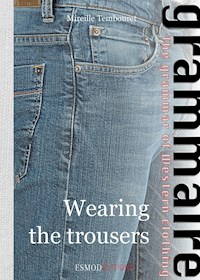
History, function, codes and characteristics of breeches and trousers.
The second volume of our ""Grammar of Western clothing” series. We continue with the rules, codes and characteristics of clothing from the past and the present.
Historically linked to the men’s fashion wardrobe, breeches and trousers have, more recently, seduced and become a part of women’s fashion as well. They originally wore them for sport activities but also when they replaced men at their jobs during wartime. Women adopted trousers as a key part of their wardrobe for their practicality and representation of women’s social evolution and even their independence. Breeches, pants for leisure wear and tailored trouser shapes, functions and details followed this direction, establishing a timeless wardrobe and defining a rich language that is often forgotten today.
In this second book, breeches and trousers deliver their secrets to illustrate this social evolution since today, both men AND women are... Wearing the trousers!
ABOUT THE AUTHOR
Originally a passionate collector of old fabrics and clothing,
Mireille Tembouret today oversees the enormous “Vestiaire” (wardrobe), a mix of civilian and religious garments from many eras. The company - with its surprising resources - provides clothing to film, television and theater professionals as well as special-event organizers or private individuals. After teaching fashion design at Esmod Paris and a design career in the Paris fashion industry. She now dedicates her energies to developing her company, based in Paris.
Sie lesen das E-Book in den Legimi-Apps auf:
Seitenzahl: 94
Veröffentlichungsjahr: 2021
Das E-Book (TTS) können Sie hören im Abo „Legimi Premium” in Legimi-Apps auf:
Ähnliche













Mireille Tembouret
Mireille Tembouret
Wearing the trousers
Our purpose
The option of wearing what we like, whenever we want, is relatively new.
The Western clothing codes which once identifed social status, various brotherhoods and professions have broken down in today’s world. We have long abandoned the strict rules that required a peasant to dress like a peasant or a bourgeois as a bourgeois. This incredible freedom has given us the opportunity to put together our own wardrobes. Though fashion dictates still exist and call for specific garments for certain uses or occasions, we can now whimsically mix different pieces of Western dress with traditional costumes from around the world. Luxury, designer or ready-to-wear boutiques, on-line stores and consignment shops with an abundance of used clothing now expand the field to everyone. We can browse at our leisure and indulge ourselves to express our personality.
Because of this, our wardrobe has opened up to the outside world and we often forget the origin and function of each garment. The beauty of the contemporary wardrobe is found in the history of clothing that reveals so many wonderful details.
This book is based on that premise : by constructing this “Grammar of Western Clothing” as a set of rules and codes which show how clothing was worn, we reveal their practical details and their history.
The fabulous clothing selection of “Le Vestiaire”, collected over the years by the author, was the impetus to write this book which has been conceived as a glossary.
The choice of garments shown is certainly not complete. Alongside historical, timeless pieces, we also include clothes that help explain fashion’s evolution in recent decades.
We decided to photograph these older pieces worn with modern clothes as outfits you would see them if you tried them on in a store.
This second book groups together, in alphabetical order, the three important categories of a garment generally referred to as “trousers” and which, though originally part of a man’s wardrobe, has conquered women’s fashion today thanks to our evolving lifestyles.
2
Breeches
3
3
2 straight pockets in side seams.
2 double-piped, buttoned, back pockets with stitched bars at each end to prevent tears and curved topstitching.
Adjustable tabs caught between back dart and side seam.
The metal buckles on the tabs are notched so they don’t slip.
Riding breeches
A silhouette with moderate fullness at hips and thighs. The comfortable shape and cut is ideal for all types of movement. Materials: heathered cotton cavalry twill.
These breeches were a civilian garment worn by gamekeepers or farmers who were often on horseback. They were not used for sports and were made in a ribbed cotton known as cavalry twill, often used for worker and peasant garments in the first half of the 20th century.
The straight waistband with loops closes at center front with a pant hook.
Buttoned fly front with straight under-placket.
Wide waistband lining in bias-cut, striped cotton sateen.
1910-30
Appliqued, self-fabric piece over crotch reinforces the breeches against wear-and-tear or rubbing.
A generous, full seat for comfort while riding a horse without tearing the fabric.
The bottom of the breeches are tighter at the calf so higher shoes or protective leggings can be worn over them.
Ankle width is adjusted by a slit with a self-fabric, protective under-placket closed with lacings passed through eyelets.
• Trouser hem edged with a bias trim.
Name of garment
Chapters
A brief history
Garment: front, profile and back
Line, shape, materials and colors
Details
Type of garment (masculine or feminine)
Inside of garment
Period of garment
How to read this book
3
Table of contents
4
Breeches and trousers 6
Bloomers.................................................10
French knee breeches............................12
Knee breeches, late 18th century.........14
Knee breeches, 19th century................16
Riding breeches......................................18
Military breeches...................................20
1920’s Jodhpurs......................................22
1970’s Jodhpurs......................................24
Knickers...................................................26
Motorcycle trousers...............................28
Riding trousers.......................................30
Grandfather trousers.............................32
Army trousers.........................................34
Harem pants...........................................36
Bathing costume....................................38
Casual pants 40
Baggies....................................................42
Battle dress trousers..............................44
Bermudas................................................46
Brees........................................................48
5
Cargo pants.............................................50
Chaps.......................................................52
Chinos......................................................54
Capri pants..............................................56
Cycling trousers .....................................58
1930’s Ski trousers.................................60
1970’s Ski trousers.................................62
Jeans........................................................64
History.....................................................66
Jeans cuts................................................68
Denims treatments.................................70
Jogging pants.........................................72
Leggings..................................................74
Cycling shorts.........................................75
Fisherman’s pants...................................76
Bellbottoms............................................78
Overalls....................................................80
Pregnancy shorts....................................82
Fatigue pants..........................................84
Carpenter’s pants...................................86
Tailored trousers 88
Pegged trousers.....................................90
Cigarette trousers..................................92
Short jumpsuit........................................94
1920’s pleated trousers.........................96
1940’s pleated trousers.........................98
Pleated trousers with a single pleat...100
Sailor trousers.......................................102
Side opening trousers..........................104
Tuxedo trousers....................................106
Flat trousers or slacks..........................108
Wrapped trousers................................110
Shorts....................................................112
Trumpet or Palazzo pants ...................114
Breeches and trousers
The difference between knee breeches (culottes in French) and trousers is often described in historical evolutions as being two garments worn by different social classes. This was seen in the late 18th century when knee breeches were worn in France by the aristocracy in contrast with the trousers worn by revolutionaries, who were known as the “sans-culottes”. More specifically, each garment was adapted to the lifestyle of its wearer, knee breeches were worn by men who traveled or rode horseback (and more recently motorcycles) while pants, worn by craftsmen over the centuries, corresponded to sedentary men of modest means. These garments didn’t require tailoring skills to make them, since they were made by women at home or dressmakers.
Though the details and fabrics are specific to each category, their cuts followed fashion’s evolution and, to this day, are still adapted to movement. Thus French knee breeches were followed by modern leisure pants with the same practical requirements. Full movement comes from a spread leg cut so the wearer can ride a horse or motorcycle without tearing the crotch seam. The fullness keeps the seat covered when a person is hunched down on a speeding motorcycle. The arrival of pants in a woman’s wardrobe for sport activities also met this practical demand.
The 20th century and its incredible explosion of ready-to-wear saw the “trouser” industry split in two sectors, today known as “casual” and “city”, referring either to fuller cut pants for sporty and job-specific movements or trousers where comfort works in tandem with an idea of “proper fit” for a more sedentary, formal lifestyle.
6
GLOSSARY
TABLE OF CONTENTS
Grandfather trousers
Jeans
Pleated, tailored trousers
The grandfather trouser (see page 32) from 1880-1900 shows an alternative to the older French knee breeches.
Cut like a tailored trouser, clean and without a leg spread in front, it has a full seat and wider leg spread in back, giving these peasant trousers more ease and fuller movement.
French knee breeches
Comparison of different flat sketches (front, profile, back)
In comparison, let’s look at the different leg spreads of the two trousers below :
The pleated, tailored trouser is cut for “proper fit”. Its more static profile is very clean and almost hides the body shape.
The shape of jeans is closer to a moving body with a crotch designed for spread legs, a more curved seat shape and a higher back to better accomodate movement, bending over, etc.
7
8
Breeches
French knee breeches
The selection of knee breeches described in the fol-lowing pages is not complete. However you will find knee breeches from different eras in this chapter to better understand how they evolved into the leisure pants, commonly referred to as “casual”, worn today.
Whether historical, job-specific, sporty or military, they all offer the same qualities: comfort and func-tionality. This chapter also includes more novelty, ful-ler breeches such as bloomers - the first “feminine” AND feminist pants - or harem pants that came from the Arabian wardrobe and have been adopted for city wear.
Bloomers
Riding breeches
Bloomers
French knee breeches
Riding breeches
Army breeches
Jodhpurs
Knickers
Motorcycle trousers
Riding trousers
Grandfather trousers
Army trousers
Harem pants
Bathing costume
GLOSSARY
TABLE OF CONTENTS
Jodhpurs
Riding trousers
Motorcycle trousers
Bathing costume
Harem pants
Military breeches
Grandfather trousers
Knickers
Breeches
9
GLOSSARY
TABLE OF CONTENTS
CHAPTER HEAD
10
A militant fighter for women’s rights and a also postal employee, Amelia Jenks Bloomer (1818-1894) published The Lily magazine, which often included articles by militant feminists. Famous for her effort to reform the woman’s wardrobe, she proposed an outfit composed of a short jacket worn over “Turkish style pants” which offered the ease of movement which the era’s crinolined dresses didn’t provide. These puffy pants, denounced for being inconvenient, were known as bloomers and ultimately found a place in the wardrobe as of 1890, especially for women who rode bicycles. They disappeared from the woman’s wardrobe in the 1920’s and 1930’s and then became part of the children’s wardrobe.
Bloomers
10
See theKEYWORDS
Bloomerskeywords
• Puffy pants
• Bubble line
• Mid-calf length
• Low crotch breech
• Wide pleats hiding legs
• Elasticized leg hems or held in by drawstring ties
11
Breeches
11
Bubble shape. Wide, puffy volume.
Materials: all fabrics except silk.
A wide, tie-shaped, buttoned tab on the left side of the waistband was a nod to menswear at the time these full trousers appeared for women.
Straight waistband with a double lining to hide buttonholes that keep the bodice in place when tucked in.
A wide fullness is created by set-apart pleats which accentuate the bubble shape and hide the body’s curves.
Very deep crotch.
The full, wide legs are held in by drawstring ties at the hem for comfort and movement.
GLOSSARY
TABLE OF CONTENTS
CHAPTER HEAD
12
French knee breeches
This garment for men that stopped just below the knee was tight at the bottom, a contrast with pants that continued to the ankles, worn from the late 17th to early 18th century. The difference between the two styles was crucial from the 17th century up to the French revolution when wearing either long pants or breeches (“culottes” in French) defined social classes. The 1789 French revolutionaries who rebelled against the nobility were even referred to as the “sans culottes”. The popularity of breeches diminished during the 19th century as their shape transformed and they completely disappeared by the 20th century when pants had become a standard part of the wardrobe.




