


14,99 €
Mehr erfahren.
- Herausgeber: John Wiley & Sons
- Kategorie: Geisteswissenschaft
- Serie: Where am I?
- Sprache: Englisch
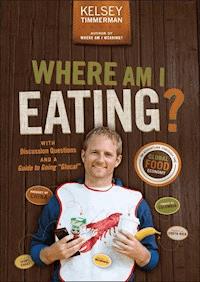
A deeply human-centered perspective on the origins of America's food Where Am I Eating? bridges the gap between global food producers and the American consumer, providing an insightful look at how our eating habits affect farmers and fishermen around the world. Follow the author on his global quest to meet the workers that nurture, harvest, and hunt our food, as he works alongside them--loading lobster diving boats in Nicaragua, harvesting bananas in Costa Rica, lugging cocoa beans in Ivory Coast with a modern-day slave, picking coffee beans in Colombia and hauling tomatoes in Indiana. This new edition includes a study guide, a deeper explanation of the "glocal" concept, and advice for students looking to become engaged as both local and global citizens. Arguing neither for nor against globalization, this book simply explores the lives of those who feed us. Imports account for eighty-six percent of America's seafood, fifty percent of its fresh fruit, and eighteen percent of its fresh vegetables. Where Am I Eating? examines the effects of this reliance on those who supply the global food economy. * Learn more about the global producers that feed our nation, and learn from their worldviews intensely connected to people and planet * Discover how food preferences and trends affect the lives of farmers and fishermen * Catch a boots-on-the-ground glimpse of the daily lives of food producers on four continents * Meet a modern-day slave and explore the blurred line between exploitation and opportunity * Observe how the poorest producers fare in the global food economy This book takes a human-centered approach to food, investigating the lives of the people at the other end of the global food economy, observing the hope and opportunity--or lack thereof--that results from our reliance on imports. Where Am I Eating? is a touching, insightful, informative look at the origins of our food.
Sie lesen das E-Book in den Legimi-Apps auf:
Seitenzahl: 522
Veröffentlichungsjahr: 2014
Ähnliche

















Table of Contents
Title Page
Copyright
Dedication
Introduction: Our Global Connection
Part I: Coffee: Product of Colombia
Chapter 1: The Starbucks Experience
Chapter 2: The Grande Gringo Picks Coffee
Chapter 3: The Cup of Excellence
Chapter 4: The Heart of the World
Part II: Chocolate: Product of West Africa
Chapter 5: Solo Man
Chapter 6: Slavery and Freedom
Chapter 7: Is It Peace?
Part III: Banana: Product of Costa Rica
Chapter 8: The Banana Worker's Commute
Chapter 9: Banana Worker for the Day
Chapter 10: Nowhere to Go But Bananas
Part IV: Lobster: Product of Nicaragua
Chapter 11: Life, Death, and Lobster
Chapter 12: The Lobster Trap
Chapter 13: The Future of Fish
Part V: Apple Juice: Product of
Michigan
China
Chapter 14: No Apples
Chapter 15: Mr. Feng's Apple Empire
Chapter 16: As American as Apple Juice Concentrate from China
Part VI: My Life: Product of USA
Chapter 17: Food as Faith
Chapter 18: Farmers No More
Chapter 19: Imagined Futures
Chapter 20: Decisions About Man and Land
Appendix A: A Guide to Ethical Labels
USDA Organic
Fair Trade Certified (Fair Trade USA, formerly TransFair USA)
Fairtrade International USA (Fairtrade International or FLO)
Rainforest Alliance
Fair for Life (IMO)
Whole Trade
Appendix B: The Journey Continues
Our Food Journey
Speaking of Eating
Teaching Eating
Appendix C: A Guide to Going Glocal
Be a Traveler
Be a Local Citizen
Be a Global Citizen
Be You
Chapter Discussion Questions
Your Story
Acknowledgments
End User License Agreement
Pages
3
4
5
6
7
8
9
10
11
12
13
14
15
16
17
18
19
20
21
22
23
24
25
26
27
28
29
30
31
32
33
34
35
36
37
38
39
40
41
42
43
44
45
46
47
48
49
50
51
52
53
54
55
56
57
58
59
60
63
64
65
66
67
68
69
70
71
72
73
74
75
76
77
78
79
80
81
82
83
84
85
86
87
88
89
90
91
92
93
94
95
96
97
98
99
100
101
102
103
104
105
106
107
108
109
110
111
112
113
114
115
116
117
118
119
120
122
124
125
126
127
128
129
130
131
132
133
134
135
136
137
138
139
140
141
142
143
144
145
146
147
148
149
150
151
152
153
154
155
156
157
158
159
160
161
162
163
164
167
168
169
170
171
172
173
174
175
176
177
178
179
180
181
182
183
184
185
186
187
188
189
190
191
192
193
194
197
198
199
200
201
202
203
204
205
206
207
208
209
210
211
212
213
214
215
216
217
218
219
220
221
222
223
224
225
226
227
228
229
230
231
232
233
237
238
239
240
241
242
243
244
245
246
247
248
249
250
251
252
253
254
255
256
257
258
259
260
261
262
263
264
265
266
267
268
Guide
Cover
Table of Contents
Introduction: Our Global Connection
Part I: Coffee: Product of Colombia
Begin Reading
WHERE AM I EATING?
WITH Discussion Questions AND A Guide to Going “Glocal”
KELSEY TIMMERMAN
Cover image: Brian MacDonald www.WonderkindStudios.com
Cover design: Rule29 Creative www.Rule.29.com
Copyright © 2014 by Kelsey Timmerman. All rights reserved.
Published by John Wiley & Sons, Inc., Hoboken, New Jersey.
Published simultaneously in Canada.
No part of this publication may be reproduced, stored in a retrieval system, or transmitted in any form or by any means, electronic, mechanical, photocopying, recording, scanning, or otherwise, except as permitted under Section 107 or 108 of the 1976 United States Copyright Act, without either the prior written permission of the Publisher, or authorization through payment of the appropriate per-copy fee to the Copyright Clearance Center, 222 Rosewood Drive, Danvers, MA 01923, (978) 750-8400, fax (978) 646-8600, or on the web at www.copyright.com. Requests to the Publisher for permission should be addressed to the Permissions Department, John Wiley & Sons, Inc., 111 River Street, Hoboken, NJ 07030, (201) 748-6011, fax (201) 748-6008, or online at www.wiley.com/go/permissions.
Limit of Liability/Disclaimer of Warranty: While the publisher and author have used their best efforts in preparing this book, they make no representations or warranties with respect to the accuracy or completeness of the contents of this book and specifically disclaim any implied warranties of merchantability or fitness for a particular purpose. No warranty may be created or extended by sales representatives or written sales materials. The advice and strategies contained herein may not be suitable for your situation. You should consult with a professional where appropriate. Neither the publisher nor the author shall be liable for damages arising herefrom.
For general information about our other products and services, please contact our Customer Care Department within the United States at (800) 762-2974, outside the United States at (317) 572-3993 or fax (317) 572-4002.
Wiley publishes in a variety of print and electronic formats and by print-on-demand. Some material included with standard print versions of this book may not be included in e-books or in print-on-demand. If this book refers to media such as a CD or DVD that is not included in the version you purchased, you may download this material at http://booksupport.wiley.com. For more information about Wiley products, visit www.wiley.com.
ISBN 978-1-118-96652-5 (paper); ISBN 978-1-118-96654-9 (ebk);
ISBN 978-1-118-96653-2 (ebk)
To Harper and Griffin
Introduction: Our Global Connection
Every person, even a slave, has a name. His was Solo.
And since meeting Solo, a day hasn't gone by that I haven't thought about him and what happened when I freed him, and how, if I could travel back in time to the cocoa field where it all went down, I would do everything differently.
I freed a slave. That sounds crazy, doesn't it? First, that slavery exists at all; second, that I was able to allow him the opportunity to act of his own free will; and third, that I could do so although I'm just some guy from Indiana who has a wife, two kids, a mortgage, and a cat named Oreo.
But to think that it's a novelty that my life intersected with slavery is to not have a handle on the world in which we live. You have a connection with slaves as well. We all do. If you eat, if you wear clothes, if you use something with a computer chip, you are connected with someone like Solo. And you are connected with mothers and fathers around the world trying to make ends meet the best way they can.
Once you see how connected we all are, you will never see the world, and your place in it, the same again.
* * *
Hershey, Pennsylvania
“Hello. I would like to take a bath in a big ol' tub of chocolate,” I said to the fella who answered the phone at The Hotel Hershey.
My request was met with silence on the other end of the phone.
“Huh,” I thought, “I guess I have to elaborate.”
“Uh, I saw on your website that you offer whipped cocoa baths,” I explained, toning down my request a bit. I figured the person answering the phones at the Chocolate Spa at The Hotel Hershey in Hershey, Pennsylvania, the center of the chocolate universe, would be used to such requests. Guess not, though.
“Sir,” he said, “the cocoa baths are only for women.”
“Why is that?”
“Sir, we have codes.”
For a moment I thought about taking a stand for all that is right. I wanted to shout, “Sexist pig!” I considered becoming the Gloria Steinem of whipped cocoa baths.
“Could I interest you in a cocoa massage or perhaps …”; he rattled off a long list of treatments. There was the 50-minute Gentlemen's Whiskey Body Scrub “for men who don't want rough skin” that “reverses signs of aging.” There was the stone pedicure, which is “a pedicure and hot stone massage for the feet all in one!” A gentleman can get a manicure or a facial, but ask for a cocoa bath, and you are one step above a prank caller.
“No, thanks. I don't like people touching me,” I said, wanting to ask more questions about these “codes” but deciding against it.
I had spent the day speaking at Cedar Crest College in Allentown, Pennsylvania. Cedar Crest selected my first book, Where Am I Wearing?, as a freshman common reader for all incoming first-year students to read over the summer. I always get so much out of these common read visits. It's a chance for me to chat with students and professors from many different backgrounds and fields of study.1
Campus visits allow me the chance to talk with a lot of really smart people. Meeting them has shaped much of my work. When discussing my travels through the West African cocoa industry with the director of the Cedar Crest program, it was suggested that I visit Hershey's Chocolate World.
Visiting a chocolate amusement park? For research? After what I had experienced in West Africa, after the close call I had, I was up for a little easy chocolate-filled research.
I called my wife, the most patient wife in the world, and told her that I had some super-important work to do at Chocolate World, and that I would be home two days later than expected. I prepared myself to have the cheesiest chocolate experience possible.
I had originally planned on getting a spa package during my stay at The Hotel Hershey; but then I discovered that the Hershey Sweet Retreat overnight package cost $818. $818?! That's about the deposit I would need on an apartment if Annie, my wife, heard that I spent $818 on a spa package for myself while she was at home rearing our two children alone.
So to preserve my marriage I stayed at a cheap hotel and tried to book a 15-minute, $50 whipped cocoa bath at the spa. I figured immersing myself in a tub of chocolate would be a nice addition to my experience of chocolate excess. After being thwarted by the Chocolate Spa code, I decided to tour the hotel and see what other chocolatey experiences I could have.
The Hotel Hershey overlooked Hershey, Pennsylvania, the town that Hershey's chocolate built, complete with Hershey Kiss street lamps. The palatial hotel was something that belonged in the French countryside, not in rural Pennsylvania. I walked up one arm of a sweeping staircase that reached out to the town. Once inside, I lost myself in the plush carpeted corridors before finding my way to the garden out back. There were pools, fountains, flowers, an ice-skating rink, and a restaurant.
The Harvest restaurant prides itself on featuring food from “field to fork.” At this restaurant, origin matters. A few days (or possibly weeks) ago, there was a pig walking around on some local farm. One day he was slaughtered. A chef mixed up some chocolate barbecue sauce and smothered the pig's ribs, someone put them on a plate, and a waitress brought them out to me.
Although the pig was local, the cocoa that went into the barbecue sauce sure wasn't—nor was the cocoa in my Hershey's Classic Chocolate Cream Pie with chocolate crumb crust, smothered in chocolate sauce. (My ordering strategy was to order the entrée and the dessert in which the word chocolate was used the most. I passed on the chocolate martini, though.)
Much of the world's—and most of Hershey's—cocoa comes from West Africa. I'm fresh off a trip to Ivory Coast and Ghana, the main suppliers of Hershey's cocoa. After witnessing the harsh realities of the lives of West African cocoa farmers firsthand, I would be lying to say that I didn't come here to compare those realities with the surrealism of Hershey, Pennsylvania, and Hershey's Chocolate World—a place where a two-hour chocolate-filled spa package costs more than most West African cocoa farmers earn in a single year.
The thing is, I loved Chocolate World. I took the Chocolate Tasting Adventure class, in which Dr. Livingston McNib shared his knowledge of chocolate via live satellite feed from the fictional chocolate-producing country of Ariba. My fellow classmates and I learned about chocolate's Incan origins (they called it “the fruit of the gods”), about the chocolate trees' biology, and, most important, how to eat chocolate: look, listen, smell, and taste. It's a fine art that doesn't involve chewing. And let me tell you something: if you've ever claimed to not like dark chocolate, you've been eating it wrong. Stop chewing it, let each bite melt on your tongue, and the flavors will slowly reveal themselves—sweet, bitter, fruity, nutty. Trust me on this, as at the end of the class I received an official master's degree in chocolate tasting from Hershey's University. I looked at my degree, looked at the eight-year-old to the left of me and the 10-year-old to the right of me, and, boy, we were all smiles.
I enrolled in the Chocolate Lab, where we discussed the origin of cocoa in more detail. We tasted chocolate and tried to guess whether it came from Jamaica, West Africa, New Guinea, or Mexico.
“Imagine every pod as a Hershey bar,” Gail, decked out in a white lab coat, said as she held up a cocoa pod that supplies enough cocoa for one bar of Hershey's milk chocolate. “One family can harvest only two times per year. They've always done harvesting by hand. Companies the size of Hershey send representatives to the farms to make sure that the farming is done correctly.”
Gail showed us pictures of farmers. They were nameless and storyless and happy and proud. However, I have to give Hershey credit for not pretending, in this class, that its most important ingredient doesn't just magically appear in its chocolate wonderland or come from the fictional country of Ariba.
And then Gail directed us in making our own chocolate bars. We added cocoa nibs and even hot pepper to our bars. I looked at the nine-year-old to my right and the 11-year-old to my left, and we were having the time of our lives.
And that's when I started to notice the looks I was getting from parents.
I was a lone 30-something man bouncing around Chocolate World with an irrepressible, sugar-high grin.
Finally, one of the parents was brave enough to ask me, “What brings you here?”
I told them that I was recently in Ivory Coast hanging out with cocoa farmers. Gail came over. She was interested in my experience but didn't want to ask too many questions. I discussed how the quality of farmers' lives was closely tied to the price of cocoa; however, I didn't tell them everything. We were all enjoying ourselves, and I didn't want to burst our chocolate bubble.
I expect that the company's founder, Milton Hershey, would have wanted to know about the farmers.
“[Milton Hershey] measured success, not in dollars, but in the usefulness of those dollars to the benefit of his fellow man,” Gordon Rentschler, director of National City Bank in the 1920s, was quoted as saying in the Hershey museum.
Hershey himself claimed, “I have always worked hard, lived rather simply, and tried to give every man a square deal.”
After the Chocolate Lab, I made my way to the Hershey factory tour. A few decades ago, visitors could tour the actual factory. Today, the “factory tour” has animatronic singing cows and is reminiscent of the Disney “It's a Small World” ride. I climbed into the second row of a chocolate-colored cart behind a mother and father and their young daughter. At this point I was feeling more than a little self-conscious, as the concerned looks from parents were beginning to add up.
We went past the cows and the river of flowing plastic chocolate. Near the end, there was a sign that informed us we were about to have our photo taken, which was a problem for me. I had no idea what to do with my face. If my smile was too big, I would risk looking like I was having too much fun. If I didn't smile at all … well, who doesn't smile at Chocolate World? The father leaned in with his daughter and gave a thumbs-up.
We walked off the ride and approached the bank of televisions where our photo was displayed and available for purchase. I had tried my best not to look like a major creeper while the photo was being taken, but, somehow, I had managed to look more so. The photo could've been captioned: “Don't turn around. He's behind you!”
My eyes were panicked and my smile calculated. I wish I could show you a copy of the photo, but the only thing creepier than a lone dude riding on the factory tour ride is if that lone dude steps off and spends $11 on a photo of you and your family posing for the camera unaware of his creepy presence behind you.
Finally, accompanied by some adults, I crammed into the last spot on the trolley tour of Hershey, Pennsylvania. The conductor was costumed in suspenders and a short-billed hat. As we rode through town, he told us Milton Hershey's story of bankruptcy and struggle before hitting it big by being the first person in the world to make milk chocolate. His wife Kitty couldn't have kids, so they built a school and took in orphans from around the area and, eventually, from around the country. Today the school has more than 1,800 students and spends about $110,000 per student per year.2
After Kitty died, Milton turned the majority of his fortune over to the school, but no one knew about it until five years later. The Milton Hershey School Trust has the majority of voting shares in the Hershey Company and has 100 percent control over the theme park and The Hotel Hershey. It has more than $7.5 billion in assets.
“Everything we do is for the kids,” the conductor said, as we parked in front of the school. And as the former school director, he should know. That's right—a former director of the wealthiest boarding school in the United States dresses up in period costume and gives tours on a trolley. The Hershey story and the school are that important to him. That's the kind of loyalty the Hershey story inspires.
Milton Hershey built a town complete with public transportation, parks, and schools. And then he built another such town in Cuba from which his company sourced sugar. He lived by the silver rule: “Do not do unto others as you would not have them do unto you.” He believed that business could be used as a force for good—and that treating your workers with respect would make them better workers.
I wasn't aghast at the excess and grandiosity of Chocolate World; rather, I was amazed at the excess and grandiose generosity of the man who built it.
So amazed, in fact, that I almost forgot—for just a few moments—about the slave I met in the cocoa fields of Ivory Coast.
* * *
This isn't a guilt trip. Guilt is the last thing I want you to feel or walk away with after reading the stories of the farmers and fishermen I met on my global journey.
This isn't to say that I didn't feel guilt when I met scuba divers in Nicaragua who had been paralyzed by the bends as they chased a declining population of lobster deeper and deeper to put luxurious lobster tails on the plates of American diners. Or depressed when I met Colombian coffee farmers whom Starbucks counted in its sustainability certification program, but who had never heard of Starbucks or received any assistance. Or anger when I learned that the glory days of working on a banana plantation in Costa Rica were when planes sprayed pesticides directly on top of the workers as they worked; that is, when workers could support their families. Or fear when I realized what might be in the “product of China” apple juice we were feeding our children.
I don't want you to feel guilty, depressed, angry, or afraid. I want you to feel connected.
I want you to see how connected our lives are with the rest of the world. How we have a lot to learn from one another. How we can live lives that either exploit others or provide others with opportunity. And how our local lives impact the lives of others around the globe. We aren't just local citizens; we are global citizens. We are glocals.
On Christmas Eve in 1967, Martin Luther King Jr. stood before a congregation in Atlanta and delivered “A Christmas Sermon” about peace, justice, and the need for us all to be aware of our glocal connections.
Dr. King said:
It really boils down to this: that all life is interrelated. We are all caught in an inescapable network of mutuality, tied into a single garment of destiny. Whatever affects one directly, affects all indirectly. We are made to live together because of the interrelated structure of reality. Did you ever stop to think that you can't leave for your job in the morning without being dependent on most of the world? You get up in the morning and go to the bathroom and reach over for the sponge, and that's handed to you by a Pacific islander. You reach for a bar of soap, and that's given to you at the hands of a Frenchman. And then you go into the kitchen to drink your coffee for the morning, and that's poured into your cup by a South American. And maybe you want tea: that's poured into your cup by a Chinese. Or maybe you're desirous of having cocoa for breakfast, and that's poured into your cup by a West African. And then you reach over for your toast, and that's given to you at the hands of an English-speaking farmer, not to mention the baker. And before you finish eating breakfast in the morning, you've depended on more than half the world. This is the way our universe is structured; this is its interrelated quality. We aren't going to have peace on Earth until we recognize this basic fact of the interrelated structure of all reality.
Once we recognize the common thread of humanity we all share—that we all want our children to live happier, healthier, and more fulfilling lives than our own—we interact with the world, not from a place of sympathy, but from one of empathy.
And when we empathize with others, we don't feel guilt; we feel responsibility. We don't feel sorry for them; we put ourselves in their shoes and look at the world from a new perspective. Not only do issues like slavery and child labor become important to us, but we're able to have a more nuanced understanding of them.
Uncomfortable things will happen in your mind and heart. At least they happened in mine. When you look at the world from Solo's perspective and see the lack of opportunities presented to him, the line between exploitation and opportunity blurs.
I'm not going to tell you what to think. I'm not going to tell you that how you live, eat, and consume is wrong. But I will ask you to care.
The only thing that scares me more than slavery is apathy—that we know injustices such as slavery exist and maybe we just don't care. What scares me is that one day I might drink a cup of coffee and not think of Flor in Colombia who doesn't want to move to the city but would do so for her son, or eat a banana and not think of Juan and his family in Costa Rica who spend Sundays playing soccer on a muddy field.
What scares me more than spitting cobras, paramilitary forces, and near-death scuba diving experiences, all which I encountered while living this book, is the fact that one day I might bite down into a bar of chocolate and not think of Solo in Ivory Coast.
Now more than ever before, we are sacrificing a smaller portion of our budgets for food; others sacrifice much more.
1
If you are reading this book as part of a common read or otherwise and have any thoughts or questions as you follow my global food adventure, feel free to reach out to me via e-mail:
; Twitter:
@kelseytimmerman
; or Facebook:
facebook.com/kelseytimmerman
.
2
http://articles.philly.com/2011-10-30/news/30339167_1_student-homes-milton-hershey-school-sexual-relations/2
.
Part I
Coffee: Product of Colombia
Chapter 1The Starbucks Experience
On most mornings, I drink Starbucks Colombian roast. I grind the beans and brew them in the French press my wife Annie bought me for Christmas.
I'm easily distracted and dangerously curious. One minute I was working, sipping on a fresh cup of coffee, and the next I was trying to figure out where exactly in Colombia my coffee came from. I found my way over to the Starbucks website looking for answers. Here's how Starbucks markets its Colombian roast.
How far do we go for a better cup of Colombian coffee?
Six thousand feet—straight up. Sounds extreme, we know. But high atop the majestic Andes, in a rugged landscape of simmering volcanoes, is where the finest coffee beans in Colombia like to grow. And just as there are no shortcuts through the dirt paths that crisscross the sheer slopes, we take none when it comes to nurturing these treasured cherries to gourmet perfection.
Lesen Sie weiter in der vollständigen Ausgabe!
Lesen Sie weiter in der vollständigen Ausgabe!
Lesen Sie weiter in der vollständigen Ausgabe!
Lesen Sie weiter in der vollständigen Ausgabe!
Lesen Sie weiter in der vollständigen Ausgabe!
Lesen Sie weiter in der vollständigen Ausgabe!
Lesen Sie weiter in der vollständigen Ausgabe!
Lesen Sie weiter in der vollständigen Ausgabe!
Lesen Sie weiter in der vollständigen Ausgabe!
Lesen Sie weiter in der vollständigen Ausgabe!
Lesen Sie weiter in der vollständigen Ausgabe!
Lesen Sie weiter in der vollständigen Ausgabe!
Lesen Sie weiter in der vollständigen Ausgabe!
Lesen Sie weiter in der vollständigen Ausgabe!
Lesen Sie weiter in der vollständigen Ausgabe!
Lesen Sie weiter in der vollständigen Ausgabe!
Lesen Sie weiter in der vollständigen Ausgabe!
Lesen Sie weiter in der vollständigen Ausgabe!
Lesen Sie weiter in der vollständigen Ausgabe!
Lesen Sie weiter in der vollständigen Ausgabe!
Lesen Sie weiter in der vollständigen Ausgabe!
Lesen Sie weiter in der vollständigen Ausgabe!
Lesen Sie weiter in der vollständigen Ausgabe!
Lesen Sie weiter in der vollständigen Ausgabe!
Lesen Sie weiter in der vollständigen Ausgabe!
Lesen Sie weiter in der vollständigen Ausgabe!
Lesen Sie weiter in der vollständigen Ausgabe!
Lesen Sie weiter in der vollständigen Ausgabe!
Lesen Sie weiter in der vollständigen Ausgabe!
Lesen Sie weiter in der vollständigen Ausgabe!




