


28,49 €
Mehr erfahren.
- Herausgeber: The Crowood Press
- Kategorie: Lebensstil
- Sprache: Englisch
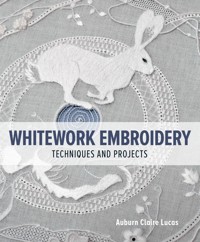
This practical guide covers a wide range of whitework stitches and techniques, and provides inspiration for all embroiderers, whatever their level of experience. Along with explaining the many stitches included under the definition of whitework, it goes further and demonstrates how to combine the stitches to make intricate and stunning pieces of embroidery. Packed with practical advice and instruction, it is the essential handbook that embroiderers need to enjoy and discover one of the oldest and most beautiful forms of embroidery techniques. Introduction to fabric, threads and equipment, as well as framing up . A detailed guide to individual whitework techniques, including stitch patterns Practical advice on how to combine techniques and to design pieces of your own. Two complete projects with step-by-step instructions . Instruction on washing, mounting and caring for your pieces
Das E-Book können Sie in Legimi-Apps oder einer beliebigen App lesen, die das folgende Format unterstützen:
Seitenzahl: 367
Veröffentlichungsjahr: 2023
Ähnliche



















CONTENTS
CHAPTER 1 Introduction and a Brief History of Whitework
CHAPTER 2 Materials and Equipment
CHAPTER 3 Framing Up and Transferring Your Design
CHAPTER 4 Pulled Thread
CHAPTER 5 Drawn Thread
CHAPTER 6 Cutwork
CHAPTER 7 Eyelets and Ladderwork
CHAPTER 8 Shadow-Work
CHAPTER 9 Surface and Decorative Stitches
CHAPTER 10 Satin Stitch
CHAPTER 11 Combining Techniques and Projects
CHAPTER 12 Designing and Planning for Whitework
CHAPTER 13 Washing and Mounting Whitework
Templates
Suppliers
Further Reading
Index
CHAPTER 1
INTRODUCTION AND A BRIEF HISTORY OF WHITEWORK
Whitework is an exquisite and ever-changing form of embroidery. The term whitework, in its broadest sense, covers any piece of embroidery that has been stitched in white thread onto a white fabric. However, there are certain techniques and stitches that are specific to whitework embroidery. There are many of these techniques and stitches. To attempt to include all of them in one book would be a lifetime’s worth of work, and if I had included everything, this book would be a weighty volume indeed.
The whitework techniques and stitches featured in this book are a mixture of those that I was taught when first learning whitework, and those that I have researched and experimented with for fun and for professional development. These techniques and stitches are what I and many of my contemporaries consider to be some of the basic and key whitework techniques and stitches. The chosen techniques are pulled thread, drawn thread, cutwork, eyelets and ladder stitch and shadow work.
Within these techniques, again, I have not been able to include every stitch and its variations because for some techniques, such as pulled thread, the opportunities are endless. For each technique I have therefore included a range of core stitches that covers the basic stitches for beginners, leading to more advanced and intricate stitches for already practising embroiderers.
I have also included some standard surface embroidery stitches. These surface stitches can and are used in many other embroidery techniques and are not necessarily specific to whitework, but I have included them for a number of reasons. First, they have historically been combined with whitework techniques. Second, they help to neaten off certain whitework stitches and finish edges. Mainly, however, they can be used to help bring together different whitework techniques and designs, creating interest and contrast within whitework embroidery.
For me, whitework is the most beautiful form of embroidery and that is because it is all about the stitches. Because everything is white, there is no contrasting colour or shiny piece of gold to distract the eye. This means that the stitches need to be incredibly neat, well planned and designed. Whitework is therefore a great technique for beginners and advanced stitchers alike. This is because it not only makes you think about the individual stitches themselves, but also how the stitches work as a whole when they are combined. Instead of using colour, whitework uses the combination of threads, materials and stitches to create interest, texture, depth and tone.
Trying whitework for the first time can seem a little daunting as there is so much to think about, so it is best to concentrate on the individual techniques first. This way you will learn how each technique is stitched, what preparation is needed and how the stitches in each technique can all work together. As you begin to advance and practise more techniques, you will soon learn and better understand how the different techniques and stitches can complement each other when combined.
Whitework moth, worked in various whitework techniques including pulled thread, satin, eyelets and cutwork. Stitched by the author.
USING THIS BOOK
The aim of this book is to be a practical handbook that will guide you through your journey into whitework embroidery. Whether you are just starting out on that journey or have experimented with whitework embroidery before, I hope this book inspires and enlightens, as you learn new stitches and techniques and gain the confidence to design and produce your own whitework embroideries.
Each chapter focuses on a different area of whitework, from the materials and tools needed to create even the simplest whitework embroidery, to the chapters on specific whitework techniques or types of stitch. As you work your way through this book I also give hints and tips on best working practice, and some practices I use in my daily stitching, that I hope will help you create perfect results.
Choosing the materials and threads for a piece of whitework may seem much easier than other techniques; after all, they all need to be white! But there is a huge array of options out there to choose from. The chapter on materials and equipment is by no means exhaustive and the materials and threads noted are in keeping with the more traditional materials used, though they are the modern derivatives and alternatives. Fine muslin is just not what it used to be! In each of the chapters I have also stated what materials and thread I used to stitch the samples. Again, I have tended to keep to the more traditional threads and materials for my samples, but feel free to experiment when stitching your own work, especially if you find certain threads difficult to use or certain materials difficult to count.
Eighteenth-century cap crown, worked in various whitework techniques including pulled thread, counted satin, shadow appliqué and buttonhole. Stitched by the author.
If starting whitework for the first time I would work your way through the book in order, learning and practising each technique in turn. This way you will build up your skills, improving all the time till you are ready to tackle the more advanced stitches and learn to combine techniques towards the end of the book.
For advanced stitchers and those who have done whitework before, feel free to pick up and start learning from wherever you choose. I have tried to include a variety of stitches varying from the simple to the more complex and intricate. You may also want to try experimenting with finer materials and threads, which give much more delicate results but are more of a challenge to work with. Imagine working a pulled-thread pattern on a cotton mousse of 106 threads per inch (TPI)!
One of the last chapters in the book is on designing and planning for whitework embroidery. On reflection, this was the most difficult chapter for me to write as design is very personal and everyone has their own style and types of images and motifs they like to stitch. I have tried to give as much information and detail as I can, but there is no one rule for designing whitework embroidery, and each design, stitch plan and order of work will be completely different. The best advice I can give is just give it a go! The more you do the more confident you will get and there is nothing quite like seeing your own design being transformed from pencil and paper into a beautiful piece of embroidery.
Most of the sample motifs and the projects have a template included at the back of the book so feel free to trace these and work the samples for yourself.
At the very end of the book there are chapters on washing your whitework and mounting. When you finish a piece of whitework embroidery, washing it then mounting it is not essential, especially if you are just sampling or practising. However, if you have worked on a piece of whitework for a long time, these steps are well worth the effort as a clean piece of whitework, mounted effectively, can really bring the embroidery to life.
From the RSN Collection (RSN2242). A cutwork tea cosy worked in Renaissance cutwork with a scalloped, buttonholed edge.
A final note on stitch names. During my time as a student and in the process of writing this book, I have read much on whitework embroidery. At times I found it very confusing as different books used different names and terminology for the same things, and in other books those same names were used for something entirely different again. In this book I have used the terminology I was taught and understand. This does not however make my terminology correct and you may find that some of the stitch names, especially in the pulled-thread and drawn-thread chapters, differ from other publications or names that you already know.
Finally, I hope you enjoy this book for all the things you will learn, and that it will inspire you whatever stage you are at on your journey into whitework embroidery.
HISTORY
The history of whitework embroidery is as varied as it is long. It is an ancient technique that has no one place in history, and in one form or another has been created and produced all over the world. Whitework was, and still is, ever evolving and adapting to the new tastes and ideas of the time in which it is being worked. This is why there are so many different whitework techniques, as one technique transformed into another. The first ever use of whitework embroidery is difficult to date exactly, but primitive forms of whitework on linen have been found in the tombs of Egyptian nobility as far back as 1500BC. Over its long history, whitework embroidery has been used to embellish and create many different items, from church hangings, clothing and accessories (both men’s and women’s), bed linen and tablecloths to christening gowns, bonnets, caps and tea cosies.
From the Olive Matthews Collection at Chertsey Museum. The shepherdess, items: M.2009.18 Floral silk brocade open robe dress with a closed bodice, accessorized with whitework, cuffs, kerchief and apron. (Image © The Olive Matthews Collection, Chertsey Museum. Photo: John Chase Photography)
For the purposes of this book I will mainly focus this brief history of whitework on the techniques covered. These techniques were traditionally used across European countries from as early as the medieval period, through to the late nineteenth and early twentieth centuries. Many of these techniques will have originally derived and been inspired by embroideries from places like India and China, but my focus will be on the Western European techniques and styles that inspired and informed the techniques included in this book.
OPUS TEUTONICUM
Although Opus Teutonicum is not included as a technique in this book, many of the stitches used to create a piece of Opus Teutonicum are, such as counted satin, early forms of pulled thread, buttonhole, stem and chain. I have therefore included it as part of this history as many of the stitches and techniques used in creating Opus Teutonicum clearly influenced and inspired whitework embroidery techniques in future centuries, as the stitches continue to be used in extremely similar ways.
Altar cloth c.1350 Germany, Altenberg on the Lahn, Premonstratensian Convent. Size overall: 154.3 × 374.5cm (60 × 147in). (Image: The Cleveland Museum of Art)
Opus Teutonicum is the term given to a form of whitework embroidery that was widely used across Europe, notably in and around the area we now call Germany. It can be said to be the first notable whitework technique used in Europe. Being produced as early as the twelfth century, it continued to be used through the thirteenth and fourteenth centuries, and its production was often associated with convents and other religious houses of the time. It was mainly produced for items that today we would term ‘church embroideries’, such as altar cloths, frontals, lectern veils and hangings. As Opus Teutonicum was almost exclusively used to create church embroideries, early examples depict biblical figures and religious imagery. However, by the fourteenth century secular motifs were being widely used, including non-religious figures alongside elements from nature such as animals, birds and foliage. Opus Teutonicum was originally created on a linen ground and stitched with linen thread, although later some light-coloured wools and silks began to be introduced.
There are two very different forms of Opus Teutonicum. The first was worked on a plain linen ground, where figures and motifs were filled with geometric patterns created using counted satin or brick stitches, along with Gobelin stitch and an early form of pulled thread. The outlines were often worked in chain or braided stitches, which we see later in Elizabethan embroidery worked in gold. The second form is where outlines are worked in buttonhole stitch. The inside of the motif is left mainly plain, with just a few stitches adding small details, while the surrounding area is made to look like net, using a simple pulled-thread technique.
Detail of the altar cloth showing chain stitch, pulled thread and counted satin stitches. (Image: The Cleveland Museum of Art)
DRAWN THREAD
Throughout history, drawn thread is a term that has been used to describe many different embroidery techniques, which has led to some confusion. In essence, drawn thread describes a technique where the threads of the ground fabric are withdrawn and cut away, or the ends woven in and secured. This could be as simple as a few threads being withdrawn to create a delicate hem or many more threads being withdrawn to create large bands or corners. It is impossible to give an exact date for when drawn-thread techniques were first introduced and it has been surmised that different variations of drawn-thread techniques were being created wherever cloth was being woven.
The most renowned early form of drawn-thread work is now known as reticella and was produced throughout Western Europe during the sixteenth century. This technique involved removing nearly all the warp (the vertical threads) and weft (the horizontal threads) threads from the linen, leaving only a basic grid structure. The design was pinned in place underneath the linen, so when the threads were removed the design was then revealed. Threads were then laid across the design lines and temporarily held in place with couching (seeChapter 9) stitches forming the foundation for the design. This foundation structure was then embellished further with buttonhole bars and fillings, picots (seeChapter 6), wheels and spider’s webs (seeChapter 6). Intricate and delicate curved shapes could be produced within designs; when the technique was more established, even pictorial designs showing animals and simple figures were created. When the design was complete, the couching stitches were cut and the embroidery could be lifted free from the design.
Reticella panels joined into a ‘collar’ with two akers. Origin: Italy. Date: c.1880–99. (Object ID: BK-14612. Rijksmuseum)
Reticella is most recognizable seen in portraits of the late sixteenth and early seventeenth centuries, where it has been depicted in spectacular detail, showing examples of ruffs, cuffs, collars and rebatos (standing collars) favoured by Elizabeth I. Reticella was also widely used in the decoration of cushion covers at this time, often having a brightly coloured fabric underneath the drawn-thread work. These cushions were not for sitting on, though; they were used as a way of presenting gifts and showing status.
Drawn-thread techniques are often associated with samplers and there must be thousands of drawn-thread samplers still in existence in museums and private collections alike. This is partly because few pattern books or prints for samplers were printed and also because the design possibilities and stitch variations were endless. A sampler was basically an embroiderer’s practice and developmental piece showing new and favoured stitches and designs. Embroiderers would show their samplers to each other so stitches, techniques and designs were passed around, learned and copied in this way.
Drawn detail of a reticella rebato worn by George Villiers, Duke of Buckingham, 1592–1628. From the painting by Michiel Jansz van Miereveld 1625–26. Currently held in the Art Gallery of South Australia.
Drawn thread continued to be worked in similar and various forms in the following centuries. However, not until the mid to late nineteenth century through to the twentieth century did it come back into such favour, and more like we know it today. At this point, being worked on both linen and cotton, it was used to create and decorate borders on bed linen, pillowcases, tablecloths and handkerchiefs. During the mid nineteenth century it was also used as a filling stitch for open areas within designs, as well as along the edges of under-sleeves, cuffs and collars.
From the Mark Wallis Collection. An eighteenth-century fichu, showing various pulled-thread stitches, counted satin, eyelets and chain stitch.
PULLED THREAD
Examples of pulled-thread embroidery can be dated as far back as the twelfth, thirteenth and fourteenth centuries, as seen in the examples of the church embroideries known as Opus Teutonicum. It was from this time that pulled-thread embroidery was developed as a technique in Europe, though still in a rather primitive and simple form, most notably in Italy during the seventeenth century. Though worked in brightly coloured silk threads like deep reds and greens, the background was worked in both vertical and horizontal rows of crossed stitches, pulled tightly, leaving designs and motifs plain in the middle.
Pulled thread did not really become a technique and style in its own right till the eighteenth century. At this time, lace in any form was in high demand, very expensive to buy and slow to produce. Because of this, ‘embroidered laces’ were created as a less expensive imitation, though no less beautiful. These ‘embroidered laces’, also known as Point de Dresde, Dresden lace and Ponte de Saxe, were much quicker to work; using a combination of intricate pulled-thread filling stitches, drawn-thread techniques, shadow work and decorative surface stitches, the intricate designs of the bobbin and needlepoint laces were easily recreated. Because of this, Dresden lace in all its forms became highly sought after and grew into a technique and skill in its own right, with pulled thread at its heart. It was worked on the finest muslin and linens, with designs varying from simple floral springs to elaborate and intricate scrolling edges to the tree of life.
Throughout the eighteenth century, Dresden lace can be seen worked on items of clothing and accessories worn by both men and women. There are many fichus, kerchiefs, aprons, caps and lappets found in museums and private collections all over the word showing beautiful pulled-thread filling stitches, worked by professionals and amateurs alike. Pulled-thread stitches can also be found on men’s waistcoats, being worked in combination with other forms of embroidery like quilting and decorative surface stitches.
From the RSN Collection (RSSN 635). Detail of a Dresden lace border showing a variety of pulled-thread stitches in combination with counted satin patterns. Buttonhole leaves and flowers, with eyelets and chain stitch stems.
From the Olive Matthews Collection at Chertsey Museum. Item M.1994.28 White muslin apron with scalloped edges, embroidered with floral sprigs and three rows of white silk thread swags, with upper-edge casement housing cream silk waist tapes; c. 1782–89.
Pulled-thread stitches and fillings continued to be used in the nineteenth century, though they became much less common, and a much less dominant stitch when worked in the styles of embroidery that were popular during that time, like Ayrshire and broderie anglaise.
From the RSN Collection (RSNL124). Panel of Venetian cutwork.
CUTWORK
Over the centuries, the term ‘cutwork’ has been used to describe many different embroidery techniques and styles. What they all have in common is that part of the foundation fabric they are worked on is ‘cut’ away, leaving solid areas of design, and that the main stitch being used to outline the cutwork is buttonhole stitch.
From the RSN Collection (RSN16). Detail of Renaissance cutwork on a nineteenth-century under sleeve.
The more modern cutwork styles and techniques, and the ones included in this book, get their form and inspiration from as early as the seventeenth century. They have many similarities both in style and technique to Venetian lace, which was popular at the time.
Cutwork as we know it today was introduced in the early nineteenth century and is often called Richelieu cutwork. This is thought to be because of Cardinal Richelieu, who was a prominent French politician in the early seventeenth century when Venetian lace was in fashion, especially in the French court. His name, Richelieu, seems to have been borrowed to give this style of embroidery its title, even though Cardinal Richelieu himself was known for his simple style of dress. However, there are four main types of cutwork, Richelieu being only one of them. All four styles of cutwork look very similar at a glance but it is the details and features that define them.
Cutwork in all its forms was very popular throughout the mid to late nineteenth century and was used in many ladies’ fashion garments and accessories, from collars and cuffs to dress fronts and plastrons. Items of homeware, such as table linens, bed linens and tea cloths, were also decorated with different forms of cutwork, the designs being mainly floral.
During the 1930s and 1940s, cutwork had a revival though the designs were much less intricate than those of previous years. Again being used for the cuffs and collars of dresses, cutwork was now mostly produced by machine, although patterns, kits and transfers to be worked at home were hugely popular and can still be bought today.
BRODERIE ANGLAISE
Originally known as ‘eyelet work’, the technique broderie anglaise became extremely popular in England around the mid 1800s, hence where it got its new name, ‘English embroidery’. It is thought however that the technique was being used much earlier in Eastern Europe.
From the Mark Wallis Collection. Detail of an unfinished length of broderie anglaise, possibly for a skirt or petticoat hem.
In its earliest form, broderie anglaise entirely consisted of eyelets, whether they be round, oval, teardrop or leaf shaped. These eyelets were designed in such a way to create swooping waves along borders, scalloped edges and eyelets decreasing in size to create the stalks and veins of flowers and leaves.
Broderie anglaise was the natural rival of Ayrshire needlework, which was hugely popular around the same time. It has been suggested that broderie anglaise started to introduce elements of surface stitches, such as satin stitch (seeChapter 10), trailing as a direct influence of the more intricate and floral designs of Ayrshire needlework.
Throughout the nineteenth century, broderie anglaise was widely used. However, it was during the 1850s and 1890s especially that it was most popular on fashion and costume accessories, such as dress sleeves, collars and cuffs, frills on petticoats, baby clothes and household linens. Though there were many professional embroiderers producing broderie anglaise, many women and girls were stitching their own pieces at home, as patterns and blocks were readily available to buy. Fabric could also be bought with the patterns already printed in washable ink to save the user the time of transferring the pattern themselves.
From the Mark Wallis Collection. Detail showing the reverse of a machine-made broderie anglaise border. Note that where the thread travels from one part of the design to the next is consistent on every motif.
Because of the simple repetitive nature of broderie anglaise, towards the later part of the century machines began producing broderie anglaise by the length, as they could easily, and much more quickly, replicate the hand work of rows of eyelets, satin-stitch flowers and buttonhole edges. To an untrained eye it is very difficult to know what has been worked by hand and what by machine. The easiest way of knowing is to turn the embroidery over and look at the back. In machine embroidery, the point where the thread travels across the back from one part of the design to another is the same every time. With hand work, the threads are usually finished well hidden or invisible on the back, but if they do travel from one shape to the next, these points are more random.
Broderie anglaise is still extremely popular in fashion today, with items of clothing for both female and children’s fashion being widely produced in spring and summer collections. This, however, will almost all be done exclusively by machine, excepting possible examples being produced for haute-couture fashion.
SHADOW WORK
The exact origins of shadow work are unknown. Some say that it was first introduced from Persia into India many centuries ago, and there are many romantic and mysterious stories of how it first flourished and became popular as a specific technique. One of those stories is that a weary traveller was passing through a village and, being thirsty, asked a peasant for a drink of water. The peasant gave the traveller a drink, who had nothing to give the peasant in return. As a way of saying thank you, the traveller taught the peasant the art of chikankari, giving the peasant a means of making money for the rest of his life. However it came in to being, it is an exquisite technique that is still a hugely popular embroidery style in India today, with chikankari meaning ‘fine embroidery’.
From the RSN Collection (RSN27). Detail of a length of cloth whose possible use may have been for an overskirt or front panel. Showing multiple whitework techniques on a fine cotton lawn. See multiple areas of shadow work on the flower petals, leaves and borders.
Shadow work was first introduced in Europe during the eighteenth century and was one of the combination of techniques used in the creation of Dresden lace, as it contrasted with the more open pulled- and drawn-thread stitches and eyelets that were also being used at the time. The fact the herringbone part of the stitch is on the reverse of the fabric means that the stitches themselves looked softened and lighter and more like lace.
From this introduction, even though tastes and fashions changed throughout the eighteenth and then the nineteenth century, shadow work continued to be used widely and can been seen on many types of ladies’ whitework garments and accessories, from chemisettes to cuffs and collars, all the way to 1900.
In the early twentieth century, and continuing through the 1930s, shadow work continued to be used, though at this point the fabrics and the colour changed. Having previously been worked on fine cotton muslins and linens, a stiffer crisper cotton called organdie was used, and rather than only white threads, coloured threads also began to be used. The use of coloured threads gives a lovely effect as the colours look shadowy and slightly muted as the stitches are worked on the reverse. During this later period and especially with the use of colour, shadow work was often seen being used to decorate and embellish children’s clothing.
From the RSN Collection (RSN183). Detail of a baby’s bonnet crown worked in Ayrshire whitework.
AYRSHIRE WHITEWORK
Although it has not been included in this book, Ayrshire is an extremely important whitework technique and is really the last original style of whitework to be created. I have decided to include it in this brief history of whitework as many of the stitches and techniques used in Ayrshire are included in this book, and are combined in Ayrshire embroidery in their finest and most delicate form.
From the RSN Collection (RSN1347). Detail of a baby’s christening robe worked in Ayrshire whitework. Showing the bottom front panel of the skirt.
The style and technique Ayrshire whitework gets its name from the place it originated, the county of Ayrshire in the south west of Scotland. However, in Ayrshire the technique was known as ‘sewed muslin’. It was first developed in the early 1800s and was extremely popular until the late 1860s when it fell into decline. This was due to the disruption of the cotton trade because of the American Civil War and the new machine-produced embroidery that quickly superseded the more time-consuming and expensive hand work.
Ayrshire seems to have been the perect place for a new style of fine embroidered cotton muslin to be developed, due to the many mills that opened in the area around the late 1700s; there were many mill streams that could power the machines that spun the raw cotton into yarn and weaving machines that then wove it into fine muslins.
The introduction of Ayrshire whitework can be credited to Lady Montgomerie, who travelled through Europe with her husband, an army officer, during the Napoleonic Wars. While abroad, she gave birth to a son for whom a christening robe was made using traditional whitework techniques already in practice in England but also the fine needle-lace fillings known to French needlewomen. When her husand died, Lady Montgomerie returned to Ayrshire with her son and this christning robe.
The development of Ayrshire whitework is credited to Mrs Jamieson, who at the time was one of the key organisers of the embroidered muslin trade. Mrs Jamieson was shown this christening robe, and she then went on to teach the fine needle-lace and buttonhole fillings to muslin embroiders, who developed these techniques further. These embroiderers were known as the ‘flowerers’.
Ayrshire whitework designs were ornate, delicate and always floral based, with trailing and curling stems and leaves surrounding and framing the large eyelets that were filled with the delicate needle-lace fillings. The stitches used to create Ayrshire whitework were many, the most defining feature being needle-lace fillings, of which there were endless opportunities as the workers would often invent their own. Other stitches include satin and padded satin, eyelets, trailing, stem, chain and seeding to name but a few. These fine and delicate floral designs were used to adorn babies’ garments, particularly christening robes of which there are many examples still in existence today, in museums and private collections all over the world. They were also used on women’s fashions accessories, from collars and cuffs to the frills on caps, to handkerchiefs and men’s shirts and collars.
CHAPTER 2
MATERIALS AND EQUIPMENT
Many embroidery techniques have a wide range of materials and threads you can choose to work with; when starting out it can be a little daunting knowing what material to start off with, never mind picking what colour to choose. With whitework, however, that decision has been made for you. All you need to start is white fabric and white thread. Some of the materials and equipment you will need for whitework are specialist but are easily sourced, while others you might already have at home. This chapter will explain the different types of fabrics, threads, tools and equipment you will need to create beautiful whitework embroideries, covering a range of techniques for beginners through to advanced embroiderers.
EMBROIDERY HOOPS AND FRAMES
It is very important to work any type of embroidery in a frame but especially so for whitework. Working your embroidery in a frame will prevent the fabric from distorting, wrinkling or puckering and helps to keep the threads from tangling as you work. It also helps to keep the embroidery stitches neat and the stitch tension even. Most importantly for whitework, it helps to keep your embroidery clean and white.
A pair of trestles and selection of different frames including a slate frame, roller frame and three ring frames. The three ring frames are attached to a floor stand, barrel clamp and seat frame.
There a many different types of frames available to choose from but it is important that you use a frame you are comfortable with. However, some frames are better suited to different whitework techniques, as some of those techniques need to be worked under a very tight tension, while others require a looser tension.
RING FRAMES
Ring frames or embroidery hoops are ideal for working small embroidery projects. They come in many different sizes and are easy to transport. Ring frames also come in a range of styles from simple, plain frames that are held in the hand to supported frames that have a barrel clamp, allowing you to clamp your frame to a table. Similar supporting ring frames are seat frames that have a paddle-like attachment that you sit on or ring frames with a floor stand. The supported ring frames are preferable as they allow you to use both hands while embroidering, which helps with speed, tension and when working intricate stitches.
Binding a Ring Frame
Binding a ring frame is very important as it protects the fabric from being damaged while it is in the frame. This is especially so in whitework as the fabrics are very easily marked and often delicate. Binding the frame also helps to keep the tension on the fabric for longer. Ideally you should wrap both the inner and outer rings.
To bind a ring frame, use a very long strip of white or cream fabric such as cotton, calico or bias binding. For the outer ring, start at the screw fastening and wrap the fabric around the ring frame, overlapping the fabric slightly with each new wrap. When you have wrapped a few times, secure the start with a few stitches. Continue to wrap the frame until the whole ring frame is covered. Cut off any excess fabric and secure the end with a few stitches. For the inner ring, start anywhere and wrap the frame till you get back to where you started. Overlap the starting and finishing wraps and secure with a few stitches.
Bound ring frames attached to a seat and barrel clamp.
Bound outer ring frame showing the securing stitches.
SLATE FRAMES
Slate frames are generally used for larger projects that will be worked over a longer period of time and embroideries that need to be worked under a very tight tension. Working on a slate frame does require more preparation but it is worth taking your time over. A badly framed-up slate frame means a wonky embroidery. Slate frames are made up of two rollers, which are the top and bottom of the frame, and two arms that slide through the rollers and form the sides. The two rollers have a length of webbing stapled along the middle and it is this webbing that you will sew the top and bottom edges of your fabric to. The arms have holes along both edges and when slotted through the rollers will stretch your fabric when held in place by split pins.
Using a slate frame allows the fabric to be pulled evenly in all directions and allows you to work with one hand above and one hand below the frame, which means faster stitching and an even stitch tension. Slate frames can be quite large and will need to be supported while you work. The best support for a slate frame is a pair of trestles that the slate frame can balance on. The height and angle of the trestles can be adjusted to your needs and comfort. Clamps can also be used to support a slate frame; either a sturdy floor clamp or a G-clamp can be used to clamp your frame to a table.
ROLLER FRAMES
Roller frames are very similar to slate frames in that they pull the fabric evenly within the frame. Roller frames are more affordable and more lightweight than slate frames. They come in a variety of sizes and will still allow you to work larger pieces of embroidery. A roller frame will need to be tightened more often than a slate frame but they are a good first step if you do not want to purchase a slate frame straight away. Like a slate frame, roller frames also need supporting. Trestles are the best option but, as roller frames are more lightweight, floor clamps or table clamps work well too.
FABRICS AND THREADS
One of the beautiful things about whitework is that all the ground fabrics and threads are white. In the absence of colour, it is the combination of these fabrics and threads that create the textures, contrasts and depth that will bring your whitework designs to life.
A selection of whitework embroidery threads, including stranded cotton, coton à broder, perle cotton and a selection of lace threads.
Whitework is traditionally worked on densely woven linen or cotton fabrics, which can be either heavy or fine in weight. Many of the techniques require an even-weave fabric. This is where the number of threads per inch (TPI) is the same for both the warp and weft of the fabric. There are many fabrics to choose from, and some are better suited to different techniques. This section will explain what fabrics and threads work well for each of the whitework techniques included in this book.
Threads Per Inch Explained
Threads per inch (TPI) is a term used to identify how many threads are in an inch of any chosen even-weave fabric. To work out the TPI, place a tape measure along the grain of the fabric. Then count the vertical threads that fit inside 1in of the tape measure. If you counted twenty-six threads, that fabric has a TPI of 26. A higher TPI means the fabric has been more densely woven; a lower TPI means the fabric has been more loosely woven. The main thing to think about when choosing fabric for counted whitework techniques is whether you can see the grain. If you cannot, it might be easier to choose a fabric with a lower TPI. This will make your embroidery easier to stitch and more enjoyable too.
A 28TPI even-weave linen.
PULLED THREAD
Materials
Pulled thread is a counted technique so therefore needs an even-weave fabric to be worked correctly. It can be worked on either cottons or linens with a slightly open weave. A more open weave will create a lacier effect.
Linen in different varieties with different TPIs, such as Edinburgh 36, Newcastle 40 and Quaker (Bantry) 28, are generally used for pulled thread. Kingston 55 can also be used but as this has a higher thread count, it will be more difficult to see the threads in order to count them. Working pulled thread on cotton fabrics will give a more delicate effect as cotton has a finer weave than linen. Cottons such as voile, mousse and muslin work very well with pulled thread. More densely woven linen and cottons can be used, like cotton lawn or cambric, or linen and cotton batiste. These however will be more of a challenge to work.
Threads
The thread you choose to work the pulled stitches should be a similar texture and thickness to one thread of the ground fabric. Cotton or linen threads work best, such as a Tanne or Cotona, but finer lace threads may also be used if they are strong. Threads that are slightly heavier, like coton à broder 16–30 or fine cotton perle 12, also work well for pulled stitches, but create a chunkier effect.
DRAWN THREAD
Materials
Drawn thread is a counted technique, where threads are removed from the ground fabric; it is therefore easier to work on an even-weave fabric. Linens or cotton fabrics work best, especially those with a slightly open weave as the threads are easier to see and withdraw. Bear in mind that the threads of the fabric need to be strong so they will not snap when being withdrawn.
Linens like Edinburgh 36, Newcastle 40 and Quaker (Bantry) 28 are generally used for drawn thread as the threads are easier to see and therefore remove. Finer linens and cottons such as Kingston 55, cotton lawn or cambric, or linen and cotton batiste can also be used but due to their higher thread count, the individual threads are much harder to see and can be trickier to withdraw. As they are finer they are also more likely to snap when being removed.
A selection of vintage needles and threads. Producers do not make threads as fine as they used to, so if you have or can source any vintage threads by all means use them in your embroideries. Just make sure that they are clean and not rotten before using them.
Threads
The thread you choose to embellish the drawn thread needs to be fine and strong, such as cotton and linen lace threads like Egyptian cotton, Tanne and Cotona. The weight of the thread should match the weight of the ground fabric, but finer or heavier threads can also be used. Coton à broder 16–30 or fine cotton perle 12 also work well for decorating the withdrawn area as do some novelty threads, beads and ribbons. Stranded cotton may also be used in some areas of drawn thread.
CUTWORK
Materials
The fabrics used for cutwork need to be densely woven linens or cottons. The fabric needs to be firm but can be either heavy or light in weight. It needs to be strong and dense enough to support heavier stitching and large holes. Dense, firm linens and cottons include cotton or linen batiste, Zula linen, cotton Kilberry, cotton cambric and fine embroidery linen.
Threads
The threads used to stitch cutwork need to be strong as it is supporting and keeping the shape of any cut-out areas. Threads such as stranded cotton, fine perle 12 and coton à broder 16–30 work really well for this technique.
EYELETS AND LADDERWORK
Materials
The fabric you choose for eyelets needs to be lightweight but firm, closely woven, fine cotton fabric or occasionally linen fabric. Cotton lawn, poplin, cambric or batiste fabrics are best for this technique but if you wish to use linen make sure the threads are very fine and densely woven, such as a fine embroidery linen. For ladderwork, most types of fabric would work well. Ladderwork is technically a pulled technique, but as it is not counted it also works well on finer-weave linens and cottons.
Threads
The threads used to work eyelets should be similar in texture and quality to the ground fabric. Smooth threads like stranded cotton, coton à broder 16–30 or fine perle 12 or floche create a smooth texture and clean edges. For ladderwork, a lace thread or Cotona thread work well for the initial backstitch as they are strong and fine, but you could use any type of thread for the couching; just make sure the thread you use is not too thick so that it does not fill up the holes – coton à broder 30 or 25, or even a few strands of stranded cotton as the core would work well.
SATIN
Materials
The fabrics best used for satin are densely woven linens or cottons. The fabric needs to be firm. It can be either heavy or light in weight but it needs to be strong and dense enough to support the heavy padding, and the final layer of satin on top. A more open-weave fabric can be used but when the satin is finished there tends to be larger holes around the edge of the satin stitch. Dense, firm linens and cottons include cotton or linen batiste, Zula linen, cotton Kilberry, cotton cambric and fine embroidery linen.
Threads
The threads used to stitch satin give very different effects. Stranded cotton gives a very shiny, smooth finish as all the stitches should blend into each other. Coton à broder and fine perle 12 also work really well but each stitch is more noticeable, but you should still get a smooth, shiny finish. If padding, use one of the chunkier threads like perle, coton à broder or even tapestry cotton.
A selection of whitework fabrics including cotton mousse, organza, Kingston linen, Zula linen, Newcastle linen and Edinburgh linen.
Thread Brands
You can use either Anchor or DMC threads for whitework; the quality is the same. However, whichever one you choose, make sure you only use that brand of thread on that piece. This is because the tone of the white threads differs slightly between the brands. There are also different shades of white in each brand, for example Anchor 00001 and 00002. Whichever brand you choose, you also need to make sure that all the threads you choose to use have the same colour code.
SHADOW WORK
Materials
Shadow work needs to be worked on a sheer, transparent or semi-transparent fabric that has a fairly dense weave. Organza, organdie or muslins work best. Cotton voile or fine cotton lawn work well too, though the shadow work is more subtle as the fabrics are not as transparent.
Threads




