


Erhalten Sie Zugang zu diesem und mehr als 300000 Büchern ab EUR 5,99 monatlich.
- Herausgeber: Crown House Publishing
- Kategorie: Ratgeber
- Sprache: Englisch
Why do people find it so difficult to change unwanted habits and behaviours? You can come up with all sorts of explanations, ranging from childhood trauma to genetics to personality types, but what it really boils down to is the fact that most people simply aren't skilled at managing their minds. When you try to break a habit your brain sends out signals of alarm and discomfort. To get past this, you must put your logical brain in charge. This can be achieved using self-hypnosis and Neuro-Linguistic Programming (NLP). This book will help you to: - End bad habits - Cure addictions - Get fit - Lose weight - Stop smoking - Feel more confident and motivated - Sleep better - and much more. Includes an audio relaxation CD.
Sie lesen das E-Book in den Legimi-Apps auf:
Seitenzahl: 407
Veröffentlichungsjahr: 2012
Das E-Book (TTS) können Sie hören im Abo „Legimi Premium” in Legimi-Apps auf:
Ähnliche



















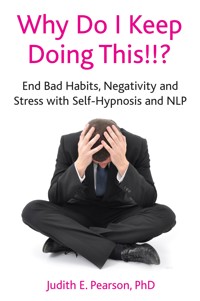
WHY DO I KEEP DOING THIS!!?
End Bad Habits, Negativity and Stress with Self-Hypnosis and NLP
Judith E. Pearson, Ph.D.
Audio Tracks
This book is dedicated to my mentor and cherished friend, Ron Klein, Director of the American Hypnosis Training Academy, who taught me hypnotherapy, neuro-linguistic programming, and much more.
Disclaimer
The contents of this book and the accompanying audio tracks are intended for educational and informational purposes only. The contents should not be applied for the diagnosis or treatment of any illness or mental condition. No guarantees of results are implied, expressed, or intended as a result of reading or listening to these materials. The material is not intended as a cure or remedy for any disease, illness, ailment, or mental health problem, nor as a substitute or replacement for appropriate medical intervention. Readers who are under the care of a physician or other healthcare professional for any condition should consult with that provider before changing or modifying any treatment program.
The methods described in this book and accompanying audio tracks are intended for use by adults and may not be suitable for children. The methods may also be inappropriate for people who experience hallucinations, delusions, psychotic episodes, or paranoia.
Author’s note
Wherever I have mentioned experiences or conversations with clients in this book, I have changed the names and consequential details to protect privacy. Some cases are represented as composites rather than the experience of any one individual.
In deference to gender equality in language, I use the pronouns “he” and “she” interchangeably in this book when giving examples and instructions for specific strategies and processes. I ask that readers understand that I am in no way stereotyping one gender over another in my choice of pronoun. In applying instructions in the text to themselves, readers should simply substitute the pronoun of their choice.
About the audio tracks which accompany this book
The audio tracks accompanying this book provide a guided introduction to the experience of hypnosis. This book contains two tracks, approximately 4 minutes and 37 minutes long, respectively. Track 1 gives general guidelines. Track 2 is a guided hypnosis session developed to help the listener acquire familiarity with the hypnosis process.
Track 2 teaches the induction/deepening methods found in Chapter 5: Eye Roll, Arm Drop, Counting, Eye Closure, Staircase, and Progressive Relaxation. In the Staircase induction, the listener imagines walking down a staircase onto a beach, and walking along the beach, seeing the sand, water, birds, and sky. Listeners with an aversion to staircases or to beach scenes are advised to forego listening to this track. A brief, generic mental rehearsal follows the induction/deepening portion. The track concludes with suggestions for future success with self-hypnosis and a reorientation, with which the listener can return to full alertness.
Foreword
Last night I finished reading Judy Pearson’s Why Do I Keep Doing This!!?, retired for the evening and slept very deeply. In my sleep I drifted and dreamed, and in the seemingly disconnected dream fragments a wise woman healer appeared amidst the saguaro cacti and blowing dust (I live in Tucson, Arizona after all!), and then the rain began, life-sustaining rain in the parched desert. Down from the mountains rushed the water, converging in the dry river beds, and throughout the land the shallow roots drank and drank. The healer gazed upon it all and smiled.
I have amnesia for the remainder of the dream but I can’t help but remember the varied contents of Judy’s book, which is nothing less than a remarkable achievement. If a person curious about hypnosis and self-improvement were to seek answers from only one source, it should be this book, which asks all the right questions and provides full and complete answers for one seeking solutions.
The companion audio tracks nicely round out the total package and makes possible a post-hypnotic suggestion often uttered by the famous Dr. Milton Erickson, “My voice will go with you.”
Now, learning self-hypnosis is not a magic bullet for, say, alcohol dependence or severe depression. With these and other common clinical disorders the author provides clear and careful explanations of other things the person should consider in addition to learning self-hypnosis. Judy, a seasoned practitioner who knows what she’s talking about, makes it clear that some people may require additional psychotherapy and/or clinical hypnosis from a licensed mental health professional. I customarily tell my students, “If they show up and walk through the door, they’re obviously interested, and the difficult part is out of the way.” Kind reader, you have picked up this book and read up to this point, so you have taken that initial important step. You have entered the room.
The solution to your problem or my problem lies in the unconscious mind, and rest assured, Judy considered the unconscious mind in devising her techniques in this book. The solid writing and copy-editing make this a well-organized book that is easy to read and apply to your personal situation. Hypnotic content in a book allows you to discover and grow long after you’ve read it. It reminds me of the painter, Ted DeGrazia, who painted those pictures of the little Indians with no faces. When he put the final touches on a painting he said, “This painting is complete but it is never finished.”
George Gafner, MSW, LCSWAuthor, Techniques of Hypnotic InductionTucson, Arizona
Acknowledgments
I wish to acknowledge the staff at Crown House Publishing for their help in bringing this book to publication. First, many thanks to the Mark Tracten, the U.S. distributor who alerted me in 2009 that Crown House was open to a proposal for a new book on self-hypnosis. Mark works diligently for Crown House authors in the U.S., not only marketing our books, but serving as a sounding board and as our “ear to the ground” in the publishing world.
My heartfelt gratitude goes to David Bowman for accepting my book proposal. Through his expert advice and marketing savvy, I simplified and improved on my original concept. I am grateful to David and his associates for their forbearance and patience with my delays in submitting the drafts, due to the demands of my busy work schedule. Additionally, no author could ask for better guidance than that I received from Beverley Randell who gently guided me through the details of copy-edits and permissions.
It was my good fortune to work with Cory Foley-Marsello, the audio technician at Bias Studios in Springfield, Virginia who applied his talented expertise in recording and editing the audio tracks that accompany this book. He is a paragon of patience, who gave meticulous attention to every detail of the project.
My appreciation goes to George Gafner, an established author, psychologist, and hypnotherapist who graciously agreed, without hesitation, to write the foreword. I also extend thanks to Bob Bodenhamer, D. Min. for his straightforward advice concerning the length of the first draft. Both of these fine authors shared their own publishing experiences and gave me encouragement.
Lastly, I thank my husband, John, for his unflagging confidence in my writing abilities and for his continuing optimism throughout the production of this book. As an author with a full-time practice, my biggest problem was finding sufficient blocks of time to capture ideas on a computer screen and let my thoughts flow freely, without interruption or distraction. John, an author himself, understood this. He demonstrated unparalleled devotion by taking over several household duties, allowing more time for me to hunker down over the keyboard. Such a sweetheart of a guy!
I am grateful to the following authors who gave permission to quote from and/or adapt material from their publications:
L. Michael Hall, Ph.D. who gave permission to adapt the Neuro-Semantics Meta No/Meta Yes pattern and the Neuro-Semantics Mind-to-Muscle pattern from Secrets of Personal Mastery, Bancyfelin, Wales: Crown House Publishing Ltd., 2000; and the NLP Self-esteem Pattern from the Accessing Personal Genius Training Manual, Clifton, Colorado: Neuro-Semantics Publications, 2000.
Steve Andreas who gave permission to adapt The NLP Slender Eating Strategy and the NLP Responding to Criticism pattern from Heart of the Mind, Boulder, Colorado: Real People Press, 1989.
Carol Goldsmith who gave permission to quote from The Book of Carols, Haverford, Pennsylvania: Infinity Publishing, 2003.
Robert Dilts who gave permission to adapt The Walking Belief Change Pattern from an audio-recording by the same name, by Robert McDonald, Boulder, Colorado: NLP Comprehensive, 1979.
Nick Kemp who gave permission to adapt a submodalities pattern for negative inner dialog, from an electronic newsletter issued by Steve Andreas, 2008.
Jon Connelly, Ph.D. who granted permission to paraphrase a metaphor from his Rapid Trauma Resolution Training Program, conducted at the Institute for Rapid Resolution Therapy, in Tampa, Florida, 2006.
Rue Ann Hass who granted permission to adapt What is Your Soul Dream? from an article by the same name in Anchor Point magazine, Boulder, Colorado, 2003.
Ron Klein, who granted permission to paraphrase a quote from his Ericksonian Hypnosis and Brief, Outcome-Oriented Psychotherapy training courses at the American Hypnosis Training Academy.
Contents
Title Page
Audio Tracks
Dedication
Author’s note
About the audio tracks which accompany this book
Foreword
Acknowledgments
Introduction: Are You Stuck In A Rut?
The Explanation Lies in Your Neurology
Why Self-Hypnosis?
The Better Question
Part I: What You Need to Know Before You Start Self-Hypnosis
Chapter 1: Hypnosis: Where Did it Come From?
Erickson and Elman
Hypnosis and Hypnotherapy Today
Chapter 2: What is Hypnosis Exactly?
What is Trance?
Levels of Trance
The Unconscious Mind
Hypnosis and the Brain
When Hypnosis Doesn’t Work
Hypnotizability: Do You Have It?
Mapping the Mind
Chapter 3: An Overview of NLP
What is Neuro-Linguistic Programming?
NLP is Process-Oriented
Four Reasons Why NLP is Useful in Behavioral Change
The Power of Intention
Chapter 4: Mind Magic: Affirmation and Visualization
The Art of Affirmation and Autosuggestion
The Magic of Visualization
Five Types of Visualization
Put Affirmations and Visualization to Work in Self-Hypnosis
Chapter 5: Inducing and Deepening Trance
General Considerations for Self-Hypnosis
Induction: Accessing Trance
Deepening Your Trance
Trance-Work
Reorientation: Coming Out of Trance
Recording Your Own Self-Hypnosis Sessions
Commercial Hypnosis Recordings
Working with a Professional Hypnotherapist
Now You have the Basics
Part II: Practical Applications in Self-Hypnosis
Self-Hypnosis: A Resourceful Self-Image
A Word about Personal Ecology
Chapter 6: Eliminate Unwanted Habits and Addictions
Assess Your Level of Readiness
Develop New Habits to Replace Old Ones
Self-Hypnosis: NLP Six-Step Reframing
Self-Hypnosis: Meta-NO/Meta-YES
Use Your Imagination
Chapter 7: Yes, You Can Stop Smoking!
Prepare to Stop Smoking
Self-Hypnosis: See Yourself Smoke-Free!
Preventing Relapse
Chapter 8: Achieve Your Ideal Weight
Get Smart about HGI Foods
Tips for Sensible Eating
Self-Hypnosis: Sensible Eating
Self-Hypnosis: The NLP Slender Eating Strategy
Change Your Thoughts about Food
Chapter 9: Quality Sleep
Tips for A Good Night’s Sleep
Self-Hypnosis: Restful, Restorative Sleep
Adequate Sleep Offers Many Advantages
Chapter 10: Start Exercising!
The Benefits of Exercise
Tips for Starting an Exercise Routine
Self-Hypnosis: Get Motivated with the NLP New Behavior Generator
Consider Additional Options for Exercise as You Age
Chapter 11: Maximize Your Motivation!
Tips to Maximize Motivation
Transform Failure into Feedback
Self-Hypnosis: A Conversation with Your “Future Self”
Self-hypnosis: Visualize Your Outcome with the “Miracle Question”
Self-Hypnosis: Learn from a Role Model with “Deep Trance Identification”
What is Your Motivation Strategy?
Chapter 12: Stop Procrastinating Once and for All!
Ten Common Reasons for Procrastination: What to do about Them
Self-Hypnosis: The NLP Godiva Chocolate Pattern
Self-Hypnosis: Get into Action with the Mind-to-Muscle Pattern
What Do You Deserve?
Chapter 13: Improve Your Performance
Tips for Abolishing Performance Anxiety
Self-Hypnosis: Access Optimum Confidence with the NLP Circle of Excellence
Self-Hypnosis: Achieve Your Personal Best in Sports
Self-Hypnosis: Recover Quickly from Mistakes
Self-Hypnosis: NLP Responding Resourcefully to Criticism Pattern
The NLP Success Formula
Chapter 14: Pass Your Polygraph Exam
What You Need to Know about the Polygraph
Self-Hypnosis: Pass Your Polygraph Exam Feeling Calm and Detached
Chapter 15: Give Your Self-Esteem a Lift!
Toxic Shame Creates Low Self-Esteem
A Philosophy of Loving Who You Are
Tips for Improving Your Self-Esteem
Self-Hypnosis: Increase Your Self-Esteem
Self-Hypnosis: Change a Limiting Belief about Yourself
Self-Hypnosis: See Yourself through the Eyes of Love
The Meaning of Self-Esteem
Chapter 16: Manage Your Emotions for Equanimity and Resilience
Tips for Stress Management: Improve Your Coping Skills
Get Past Anxiety-Producing Thoughts and Negative Inner Dialog
Self-Hypnosis: Stress Management with NLP – Anchor a New Response
Self-Hypnosis: Get Unstuck with the NLP Drop Down and Through Pattern
Self-Hypnosis: Banish Fear and Anxiety with a Protective Shield
Self-Hypnosis: Resolve Internal Conflict with the NLP Visual Integration Pattern
The Misguided Need for Control
Chapter 17: Pain Management and Relief
Hypnosis and Pain
Self-Hypnosis: Deep Relaxation
Self-Hypnosis: Imagery for Pain Reduction
Self-Hypnosis: Hypnotic Analgesia
Self-Hypnosis: Change the Submodalities of Pain
Self-Hypnosis: Comfort Transfer
The Six D’s of Pain Management
Chapter 18: Preparing for Surgery or Medical Procedures
Talk to Your Medical Team about the Value of Hypnosis
Self-Hypnosis: Preparation for Surgery
Self-Hypnosis: A Healing Visualization
Chapter 19: Heal Emotional Hurts Connected with the Past
A Brief History of NLP and Time Lines
Charting Your Time Line
Precautions about Working with Hurtful Memories
Self-Hypnosis: Healing a Memory – Variation 1
Self-Hypnosis: Healing a Memory – Variation 2
Self-Hypnosis: Bring a Resource Forward in Time
Another Way of Thinking about Trauma
Chapter 20: Access Your Intuitive Wisdom
Tips for Success with Intuition
Self-Hypnosis: Intuitive Guidance Method 1 – Message in a Memory
Self-Hypnosis: Intuitive Guidance Method 2 – Consult a Wisdom Figure
Self-Hypnosis: Intuitive Guidance Method 3 – Interpret a Dream
Moments of Inspiration
Chapter 21: Define Your Life Purpose
Traveling the Mythic Hero’s Journey
Self-Hypnosis: What is Your Soul Dream?
Self-Hypnosis: Confront a Challenge with Spiritual Companions
Self-Hypnosis: Align with Your Intention or Purpose
The Premises of the Hero’s Journey
Afterword
References
Also by Judith E. Pearson, Ph.D.
Copyright
INTRODUCTION
Are You Stuck In A Rut?
Do you keep doing a behavior that you dislike and want to stop? Do you have trouble getting motivated to do what you say you really want to do?
Do you, for example, want to stop smoking, yet you continue to smoke nevertheless – even when you know all the health-related dangers of smoking?
Or maybe you want to lose weight – which would entail that you stop eating the junk food and get yourself to the gym. Yet, in spite of the fact that you hate the way your belly resembles a kangaroo pouch, you nevertheless continue munching on the potato chips, slurping the sodas, and hanging out on the recliner.
Do you lose out on sleep because your mind-chatter begins in earnest when your head hits the pillow?
How about procrastination? Do you keep putting off that all-important project?
Do you worry needlessly, stewing in anxiety, when you could be relaxing and thinking productive thoughts?
And when it comes to performance challenges, like a job interview, public speaking, or sports, do you let your fears take over and ruin any chance of success?
Do you continually beat up on yourself and put yourself down, and then wish you didn’t?
Do you ever wonder, “Why do I keep doing this?” If so, you aren’t alone.
Even the saints, apparently, have wrestled with this all too common human dilemma. In the book of Romans, Paul wrote: “For that which I do, I allow not: for what I would, that I do not; but what I hate, that do I” (Romans 7:15, King James Bible).
I’m a licensed mental health counselor and life coach, specializing in hypnotherapy and neuro-linguistic programming (NLP). In over 20 years in practice, I’ve determined that most of my clients have one central problem: they say they want to stop a particular behavior and they want to start an alternative behavior, and they can’t bring themselves to do either one!
Most of my clients are people just like you. They are smart, accomplished individuals. Yet they have a behavior, or an emotion, or both, that has run amuck. Most of my clients have tried everything imaginable to stop smoking, stop eating junk food, stop feeling nervous, stop procrastinating, and so forth – and yet they get stuck in persistent, unwanted habits. It drives people to frustration! So they come to me and ask, “Why do I keep doing this?”
Well, there is a logical explanation. What prevents people from doing what they sincerely want to do? What prompts people to repeatedly do things they sincerely don’t want to do? To me, these two questions speak to a most perplexing facet of human nature that has bedeviled philosophers for centuries. Historically, scientists, psychologists, and physicians have offered all sorts of explanations, ranging from demon possession and childhood trauma, to irrational beliefs, personality types, genetics, and neurochemical imbalances. Some even attribute our neurotic compulsions to past lives or our astrological signs. To me, it all boils down to the fact that we aren’t very skilled at managing our minds.
The Explanation Lies in Your Neurology
The reason why we keep doing things we don’t want to do, or give in to inertia when we think about doing something new, can be found in our neurology. Even though most of us enter the world with a fully functioning nervous system, that system doesn’t come with a user’s manual. Even if it did, most people would never bother to read it. They’d stuff it away somewhere in the attic in that box of baby clothes and childhood toys.
The simple fact is this: neurology responds to repetition. Each time you repeat a particular behavior, or think a particular thought, or get into a particular emotion, your neurological system lays down a track in the brain’s amazingly complex web of neurons. Do it often enough and your brain forms a network of connections around that behavior, thought, or emotion. It becomes “programmed” so to speak. Even your cells create new protein receptors to receive the chemical equivalents of frequent emotional states, and will demand more of the same – very similar to the craving addicts get for their drugs. Gradually, it becomes easier and easier to follow the dictates of our neurological networks and biochemistry.
When we try to break out of a habit, the “emotional” brain – the limbic system – notices that something is disrupting the status quo. It sends out signals of alarm and discomfort. We feel confused, awkward, afraid, or tired. The brain’s language centers translate these signals into a form of self-talk that only reinforces the habit: “Oh, you don’t have start that diet today! It’s too inconvenient! Besides, it’s too cold outside to go for a walk! Do it tomorrow! Here, relax! Have a cookie and stop thinking about it.”
There is a solution, of course. This is to put the “logical” brain – your frontal lobe – in charge. The frontal lobe houses the brain’s “executive function” with which we reason, set goals, persevere through difficulty, and achieve the outcomes we desire. To empower the frontal lobe requires that we recognize the limbic brain self-talk for what it really is – the discomfort of newness. Second, we must balance the emotional self-talk with a more assertive inner dialog based on affirmations, self-instruction, encouragement, and images of our goals. This is what I call “mind management.”
Most of us don’t think about managing our thought processes until it’s too late – after addictions, habits, and emotions get out of control. Mind management isn’t easy because it requires conscious effort. We find it much more convenient to avoid challenges, put off difficult tasks, indulge our appetites, give in to our fears, pop a pill, wallow in despair, and endlessly complain. Wouldn’t it be nice if you could wave a magic wand and solve the problem? Well, we know that’s not possible – but there is a way to manage your mind effectively with self-hypnosis.
Why Self-Hypnosis?
I once had a booth at a local health fair where I displayed brochures about my practice and pamphlets about my upcoming self-hypnosis class. A nicely-dressed man walked by my table and said to his companion, “Hypnosis! No one can tell me how to think! I don’t want anyone messing with my mind!”
I said nothing and the man walked away. I felt sorry for him, in a way, because first of all, hypnosis is not “messing with the mind.” It’s a proven way for teaching people how to manage their thinking so that they achieve more of what they want out of life. It’s an established method for instilling confidence, releasing unwanted habits, managing pain, and promoting relaxation. It improves coping mechanisms, speeds healing from injury, and helps people acquire self-discipline. Hypnosis capitalizes on the magic of imagination, relying on self-talk and internal imagery, thereby facilitating mind-body communication. While most people think hypnosis takes away self-control, the opposite is true. Hypnosis restores self-control! That man didn’t know what he was missing out on!
Hypnosis is the best way I know to teach people how to manage their thinking and direct the mind productively. Hypnosis relaxes and quiets-the chatter of the mind, so that we can speak to ourselves logically and concentrate on solutions. Hypnosis has a specific positive effect on the brain and gives it a clear channel for communicating with the body. Hypnosis is an excellent vehicle for visualization – visualizing goals, new behaviors, and healing processes. Hypnosis allows people to interrupt the patterns that keep them stuck. Hypnosis provides strategies to manage-the mind to access the qualities and strengths you already possess.
NLP is the psychological approach that spells out those strategies step-by-step. NLP combines trance-work with specific cognitive processes that help people to access resourceful states, mentally practice those states, and apply those states, later, in real-life circumstances. In this book, I’ll explain how the concepts and mechanisms of hypnosis and the principles of NLP make for effective approaches to self-hypnosis.
Self-hypnosis costs nothing except the time it takes to do it. The tools of self-hypnosis are as close at hand as the next quiet moment. With self-hypnosis, you can learn how to manage your mind to stop doing what you don’t like and start doing what you say you want to do. With the focus that self-hypnosis provides, you can engage in the visualizations, the affirmations, and the mental practice that lays down new neurological connections and pathways.
The Better Question
It might surprise you to discover that when it comes to changing unwanted behaviors and emotions and adapting new ones, “Why do I keep doing this?” isn’t the best question. Knowing why doesn’t always lead to a solution. Having an explanation may help, but it doesn’t teach you what to do to solve the problem. Asking “Why?” will keep you focused on the problem, not the solution.
There is a better question that targets the solution, which is “How can I solve this?” That’s what this book is all about – solutions based on step-by-step self-hypnosis strategies. This book will give you the tools and processes for managing your mind so that you free yourself from unwanted habits, accomplish the outcomes you want, and utilize more of your talents and potentials.
In Part I of this book, you’ll find basic information about hypnosis and NLP. You’ll learn easy methods for going into trance, visualizing results, giving yourself suggestions, and coming out of trance. The audio tracks that accompany this book feature a self-hypnosis training trance that guides you through various methods of trance induction and deepening.
For Part II, I’ve chosen the 16 self-hypnosis applications that individuals most often bring to hypnotherapy. These are the typical problems and concerns that I’ve helped my clients solve for over two decades. With each application, I’ve included practical behavioral advice as well as step-by-step self-hypnosis strategies. The applications cover problematic issues such as habits and addictions, smoking, overeating, insomnia, procrastination, emotional difficulties, and pain management, as well as personal growth outcomes such as improved performance, better self-esteem, accessing your intuition, and discovering your life purpose.
I hope that when you read this book, you’ll bring to it a specific goal. Please look upon this book as an opportunity to come to terms with an unwanted habit, negative thinking, irrational fears, or some other form of self-sabotage. I also hope you’ll find in this book a number of simple guidelines for transforming the quality of your life. With the skills and information herein, you can learn to maintain equanimity in the face of challenges, direct your thinking more effectively, and develop resilience in response to adversity. I would feel gratified beyond measure if this book becomes one that you turn to, from time to time, as a trusted source of guidance for future issues as they arise.
PART I
What You Need to Know Before You Start Self-Hypnosis
If you decided to read this book to solve a specific problem, you’d probably like to jump ahead to Part II to get started on self-hypnosis right away. However, I invite you to read Part I first, for a fuller understanding about hypnosis than you might currently possess. I also suggest that you read these first five chapters before listening to the audio tracks that accompany the book. With this preliminary information, I believe you will approach self-hypnosis more confidently and competently than otherwise.
Of course, if you are trained in hypnosis, the initial five chapters will be “old hat” to you. You will probably want to skip them. However, if you are a novice to hypnosis, then Part I will simplify and demystify the hypnotic process for you.
Chapter 1 begins with a brief history of hypnosis, highlighting the work of two of the most influential hypnotherapists of the twentieth century: Milton H. Erickson and Dave Elman. Each had a unique approach to hypnosis. Their influence continues today, long after their deaths. Chapter 2 explores what hypnosis is, with information on trance, hypnosis and the brain, and hypnotizability. I will reveal to you how to avoid the one problem that will most likely defeat your attempts at self-hypnosis.
When I started training in clinical hypnosis over 20 years ago, I learned it through NLP practitioner training. Frankly, I can’t imagine doing hypnosis without knowing NLP, so that’s the topic of Chapter 3. NLP distills cognitive-behavioral change into a series of mental steps that produce reliable, time-tested strategies. Without such strategies, hypnosis gives people suggestions about what to do without telling them specifically how to organize their thinking in order to do it. With NLP, you’ll learn self-hypnosis strategies that bring real results!
Chapter 4 is about the nuts and bolts of hypnosis: affirmations and visualization. We think and communicate to ourselves and others through words and pictures. Affirmations are suggestions you’ll give yourself in trance. Visualization constitutes the pictures and movies you’ll make in your mind during self-hypnosis. With words and pictures, your mind reshapes physical responses in the brain and the body.
Chapter 5 is about inducing and deepening trance. This chapter explains the entire self-hypnosis process from beginning to end: how to get into trance, what to do in trance, and how to get out of trance. I’ll give you ideas for recording your own self-hypnosis sessions. I’ll also tell you how to locate a good hypnotherapist, in case you want to work with a professional.
In these first five chapters I’ve done my best to give solid, useful information, without getting too technical or overly academic. I’ve also made every effort to avoid the tawdry marketing hype and false claims made by so many self-proclaimed gurus of hypnosis. My intention is to teach you everything you should know, without teaching you everything I know. Nevertheless, I hope to convey to you my own fascination with NLP, hypnosis, and the mind. I hope you’ll come to share that fascination with me.
CHAPTER 1
Hypnosis: Where Did it Come From?
For centuries, various cultures have used trance and altered states of consciousness in ceremonial rituals and healing. The ancient Greeks, for example, erected healing temples where the weary and the sick could go to rest: where Hypnos, the god of sleep, removed their cares and pain. Egyptians and Hindus had similar customs.
Modern-day hypnosis began in France, with a German-born physician; Franz Anton Mesmer (1734–1815). He developed a therapeutic method in which he passed his hands over the body of a patient, at which point the patient swooned into trance. He believed his method balanced body energies – something he called “animal magnetism.” “Mesmerism,” as his work came to be called, brought about several cures. However, in 1784, the monarchy called for a commission to investigate Mesmer’s claims. After a number of inquiries, the commission concluded that there was no evidence for animal magnetism. Mesmer’s cures were attributed to “imagination” – what today, we might call “the placebo effect.” Mesmer soon retired and little is known about the remaining years of his life.
A few physicians throughout Europe continued to use Mesmer’s methods, finding that their patients would usually swoon into a sleep-like state and emerge feeling better. These physicians found that they could use trance-inducing methods to perform painless surgeries without anesthesia. In 1841, Scottish surgeon James Braid (1795–1860), upon witnessing a demonstration of mesmerism, renamed the process “hypnotism.” He was convinced that hypnotic trance was due to a natural psychological process involving concentration and visualization. He was right.
The First International Congress for Experimental and Therapeutic Hypnotism was held in Paris in 1889. In 1892, the British Medical Association endorsed hypnosis for therapeutic applications. Although hypnosis had promising beginnings, medical schools and universities largely ignored the subject.
Hypnosis lacked academic respectability mainly because of the way in which hypnotic methods had evolved. Traditional hypnosis consisted of a direct, authoritarian, repetitive approach. Patients were commanded to “sleep.” Few people could be hypnotized in this manner. With hypnosis seeming so unreliable, many physicians regarded it as useless. Others suspected that hypnotic subjects were faking trance or acting out of social compliance, or that hypnosis worked only on “imagined” illnesses.
However, in 1933, an American psychologist, Clark Hull (1884–1952), published Hypnosis and Suggestibility, a rigorous study of hypnosis, reporting on statistical and experimental analyses.1 Hull’s studies demonstrated that the hypnotic state was not sleep. He documented several effects of hypnosis, such as pain control, stating that suggestion and the subject’s motivation were major factors in the success of hypnosis.
From the 1930s onward, hypnosis became a topic of psychological research, particularly in the U.S., the U.K., and Europe. Researchers developed tests to measure suggestibility and hypnotizability. Hypnosis gradually found its way into the practice of general psychiatry, mostly for patients in inpatient settings and mental institutions.
Erickson and Elman
In the mid-twentieth century, two major figures revolutionized the practice of clinical hypnosis, propelling it into prominence as a recognized specialty in medicine and psychology. These influences came from Milton H. Erickson, M.D. (1901–1980) and Dave Elman (1900–1967).
Erickson was an innovative clinician. He was known for his “utilization” approach, in which he adapted his instructions, recommendations, and assignments to the personality, interests, and characteristics of each patient. He “utilized” whatever each patient presented, or whatever made each patient unique, as a vehicle for suggesting and influencing change. He gave his patients interesting and unusual assignments, implying that the tasks held valuable lessons. He advised patients to make small changes that often led to much more significant transformation.
Unlike traditional hypnotherapists, Erickson conducted hypnosis conversationally, often telling long, involved stories about situations that paralleled something in the patient’s life. He perfected the use of therapeutic metaphor. He made creative use of language with analogies, double meanings, puns, rhymes, guided memories, and humor.
His popularity and reputation followed him into semi-retirement in Phoenix, Arizona, where he saw private patients. Infirm and confined to a wheelchair with arthritis and the recurrence of childhood polio, Erickson held small training seminars in his home for doctors, graduate students, and mental health practitioners until his death.
Erickson was widely revered for the changes he inspired in countless lives. He professionalized hypnotherapy, establishing the American Society for Clinical Hypnosis in 1957 and publishing the first professional journals and monographs on therapeutic hypnosis. Today, the Milton H. Erickson Foundation continues his work through conferences, symposia, publications, and training programs. Erickson helped hypnotherapy gain wider acceptance as a clinical specialty.
Dave Elman was probably the best-known spokesperson for traditional hypnotherapy in the twentieth century. He wrote a leading book for practitioners, aptly titled Hypnotherapy.2 Elman was not a clinician, yet during his lifetime he was a highly influential force in medical hypnosis. He became interested in hypnosis as a teenager, when his father was suffering from terminal cancer. His father’s friend, a stage hypnotist, visited the Elman home and used hypnosis to alleviate the father’s pain. Elman read avidly about hypnosis and practiced on friends and family.
Elman began his career as a songwriter, performer, radio host, and producer for the Columbia Broadcasting System. Occasionally, he performed hypnosis demonstrations for groups. Several doctors saw him perform and asked him to teach them hypnosis. Elman created a course in medical hypnosis for physicians and dentists. Teaching that course eventually became his full-time occupation.
Elman was recognized for his rapid inductions, no-nonsense approach, and hypnoanalysis, in which an individual is regressed to find the underlying, psychological roots of neuroses and psychosomatic illnesses. He was best known for his method of trance induction, which relied on eye closure. Elman taught that all hypnosis is really self-hypnosis and a hypnotherapist merely facilitates the patient’s own trance-work.
Like Erickson, Elman did much to convince physicians that clinical hypnosis could make a contribution to the medical field. He also taught his audiences the value of self-hypnosis for pain management, stuttering, obesity, phobias and fears, allergies, and depression. His work remains an inspiration to hypnotherapists the world over.
Hypnosis and Hypnotherapy Today
Today, hypnotherapy has wide acceptance in medicine, mental health, and sports thanks to pioneers like Erickson and Elman. Many other outstanding practitioners have followed in their footsteps, continuing to shape the practice of clinical hypnosis and advance the teaching of self-hypnosis. Additionally, with advances in brain imaging, scientists have devoted thousands of studies to examining brain activity during hypnosis, discovering that trance accompanies specific changes in brain activity, while facilitating behavioral change, as well.
Here are a few facts about hypnosis and hypnotherapy:
Over the past half-century, reputable, licensed physicians, researchers, and mental health practitioners have written thousands of books and articles attesting to the efficacy and utility of hypnosis. Credentialing bodies in the U.S. and numerous professional boards throughout the U.K. and Europe maintain high certification standards and codes of conduct for hypnotherapists. Many hospitals and health clinics now employ hypnotherapists to teach patients how to manage pain, relax, prepare mentally for surgery, and overcome fears and phobias about medical procedures. For over four decades, professional training institutes for hypnotherapy have been established in Europe and the U.S., with recognition by professional associations. Professional hypnotherapy training conferences and seminars are held worldwide to help practitioners stay up-to-date with new applications, tools, and research. Numerous studies show that hypnosis is safe. Hypnotized subjects have consistently refused to perform immoral or anti-social acts.Despite these advances, the general public holds misconceptions about what hypnosis is and how it works. In my own practice, I’ve found that most clients seeking hypnotherapy have a certain mindset about what hypnosis ought to look like and feel like, mainly because they’ve been influenced by Hollywood movies. Films do not portray hypnotherapy accurately. Therefore, I do a lot of educating my clients about what hypnosis really is … and for that discussion, we go on to the next chapter.
Notes
1. Hull, C. 2002. Hypnosis and Suggestibility: An Experimental Approach (reprint edn). Bancyfelin, Wales: Crown House Publishing.
2. Elman, D. 1964. Hypnotherapy. Glendale, CA: Westwood Publishing Company.
CHAPTER 2
What is Hypnosis Exactly?
If you were to read 100 books about hypnosis or interview 100 hypnotherapists, you would probably get 100 different definitions of hypnosis. Sometimes hypnosis is defined as a state and other times as a process. Hypnotherapists employ a range of methods for hypnosis and a variety of criteria for determining that someone is hypnotized. Each practitioner has his or her own biases, beliefs, and theories about human psychology. What I tell you in this book is all about the way I understand hypnosis. So please bear with me and keep an open mind if what you’ve heard or read runs contrary to what you will learn here.
Here is my definition of hypnosis:
Hypnosis is a communication process for inducing, or bringing about, a state of trance, for directing mental activities toward an outcome.
That’s it! You might have expected something more complex. Most writers in the field of hypnosis use far more complicated descriptions. While my definition is very simple, it holds these four vital pieces of information:
Hypnosis is a process – a set of actions. The process is communication with another or with oneself. Hypnosis is a means to induce trance. It is not the only way to induce trance. Moreover, you don’t have to be formally hypnotized to go into trance. Anything that can capture and focus your attention and/or imagination can induce trance. Most of us go into trance spontaneously, several times a day. Trance often accompanies meditation, prayer, listening to music, romantic encounters, and watching movies or television. If you’ve ever been “lost in thought,” you’ve been in trance! Trance is a state. This means that trance is a mind–body experience. It is not just a thought process, a feeling, or a behavior. Trance can involve thinking, perceptions, emotions, behaviors, and physical responses, all at the same time. Hypnosis is a means of directing mental activities toward an outcome. Trance brings about neurological and cognitive changes. Brain activity slows down. The brain’s attentional mechanisms are enhanced, promoting concentration and suggestibility. Trance integrates the parts of the brain involved with problem-solving, motivation, and learning. Hypnosis calms the mind and directs mental activities (such as internal conversation and visualization) toward specific outcomes.So now let’s turn to the subject of trance because it is, after all, central to hypnosis.
What is Trance?
Imagine standing about chest-deep in a swimming pool. You clearly see and hear everything around you. You can wave your arms and talk. Now suppose you duck underwater. It’s different. You see people and objects through a watery translucence. It’s quieter because water muffles sound. Movement is different too – slower because of the water’s resistance. Your body feels buoyant. The difference between standing up and ducking underwater is similar to the difference between alertness and trance.
Trance, for many people, is accompanied by a sense of downward movement. Thus we say that trance can be “deepened.” Trance can often change perception. Anything external to self and external to the activity at hand can seem muted – less relevant to the moment. Trance is often said to be a way of connecting with the “unconscious” – that part of being and knowing which seems to operate below the surface of conscious awareness.
The trance state is ideal for relaxation, meditation, intuitive insight, creativity, and accelerated learning. When combined with imagination, trance helps people to visualize goals. Those who don’t know much about hypnosis sometimes think of trance as some zombie-like or “knocked out” state or a condition in which one feels weird and spacey. These ideas are highly inaccurate.
Conversely, people who are familiar with hypnosis often describe trance as state of suggestibility, concentration, and/or relaxation. These definitions are all correct because all are elements of hypnotic trance.
Levels of Trance
Trance varies from light to deep. Highly hypnotizable people seem to reach deep trance more often and easily than those who are less hypnotizable. Hypnotherapists generally judge depth of trance by two means: (1) the hypnotic phenomena they can observe or elicit while an individual is hypnotized and (2) the hypnotic effects that people report immediately following hypnosis.
With a client in trance, a hypnotherapist might observe facial relaxation, eyelid flutter, or rapid eye movements. The hypnotherapist might also test depth of trance by eliciting behaviors that often occur in response to hypnotic suggestion. Arm levitation, eyelid closure (inability to open the eyelids), and sensations of warmth, coolness, or numbness are common examples. Immediately following hypnosis, clients often report time distortion (they lose track of the passage of time while in trance) and “spontaneous amnesia” (they have only partial memory or no memory of what they heard while in trance) as indicators of trance depth.
There are no hard and fast rules as to what exactly constitutes a light trance or a deep trance. The most common means of explaining depth of trance is to describe what happens when hypnosis is used in conjunction with relaxation. As relaxation increases, trance goes deeper. While hypnotic responses vary from individual to individual, Table 1 shows how people generally experience each level of trance, when relaxation is the means of inducing trance. However, your own experience may differ.
I’ve encountered many lay people, and a few hypnotherapists, who believe trance must always be deep for hypnosis to be effective. I don’t accept that premise. To my thinking, the level of trance that works best depends on the intended outcome and the level of trance with which the individual is comfortable.
Table 1 Levels of Trance
Level of Trance DescriptionAwake and alertYou are awake, alert, interacting with the environment. Your conscious mind is fully engaged. Light tranceThis is a state of curiosity and/or concentration. You might feel calm. Irrelevant, external distractions are easily ignored. Your focus narrows. You might find it easier to access memories and images. You remain aware of your surroundings. You retain conscious control over your actions. Some people experience light trance and afterward swear they were not hypnotized because they were expecting something more strange or unusual. Medium tranceYou feel more relaxed. You might feel as though your body is floating or drifting. Concentration is keenly focused. It may be easier, at this level, to think creatively, make new associations, imagine, visualize, entertain new possibilities, and obtain insight. You remain aware of your surroundings, although you may lose track of time. You may or may not notice that you feel more compliant and suggestible. You don’t feel weird or spacey or zoned out. Deep tranceYour body feels heavy due to a hypnotic phenomenon called catalepsy (reduced muscle movement as the body prepares for sleep). You may be so absorbed in thought that you are not aware of any physical sensations. Any pain is significantly reduced. You might enter that twilight stage between waking and sleeping known as “hypnogognia.” SleepYou are in a light or deep sleep.In my opinion, if the outcome is to learn new behaviors and problem-solving strategies, then a certain amount of conscious, cognitive activity is required: a light trance is probably best. On the other hand, for influencing autonomic processes, such as sleep patterns, blood pressure, healing, or pain, then I prefer to use a deeper trance, if possible. Some hypnotherapists simply trust that the unconscious mind, like an ally, will guide the mind and body to whatever level of trance is suitable for the purpose at hand.
Many clients ask me to “put” them into deep trance because they believe that only a deep trance that will solve their problem. Maybe so, maybe not. Many people get fine results with light or medium trance. Ultimate responsibility for depth of trance does not rest with the hypnotherapist. I usually say, “I can tell you to go into deep trance, but it’s not up to me. How deep you go into trance is up to you, based on your ability to follow my instructions with an open mind.”
Light or medium trance usually works well for self-hypnosis, since these levels allow the ability to direct and monitor your own inner process. Deep trance, however, is ideal as a prelude to sleep. Your level of trance may vary from day to day.
As you acquire experience with self-hypnosis, you’ll recognize your own varying levels of trance. Don’t worry about whether your trance is “deep enough,” because many people accomplish good results even with light trance. Even if you think you are not highly hypnotizable, know that your skill will improve with practice.
By the way, you should know that hypnosis is only one way to achieve trance. Anything that can capture attention and imagination holds the potential to induce trance. Trance is common to everyday experience.
The Unconscious Mind
Hypnosis is regarded as a means of influencing the unconscious. After all, if a person wants to change a behavior, and can’t seem to do it through conscious effort, then it makes sense that the blockage exists in the unconscious. The key to success, then, would be to convince the unconscious. But you may be wondering, “What is the unconscious?”
The unconscious has two components. The first consists of biochemical information exchanges and involuntary physical processes that take place outside of conscious awareness. These processes, such as the immune response, are influenced by thoughts and emotions, even though we are not aware it. The communication between the mind and the body is unconscious. The second component of the unconscious consists of neurological processes and information structures that rise to awareness, but over which we have little cognitive control. Examples include obsessions, compulsions, impulses, mental blocks, runaway emotions, dreams, traumatic flashbacks, and deeply engrained habits. Insight, creativity, and intuition also seem to have some elements of unconscious neurological activity.
Self-hypnosis affords the opportunity to influence biochemical and involuntary physical processes through the imagination. Self-hypnosis also changes problematic thought patterns, troublesome emotional responses, and unwanted behaviors through calming brain activity, increasing suggestibility, and training the mind in new strategies. Additionally, self-hypnosis facilitates insight, creativity, and intuition.
Hypnosis and the Brain
Studies with brain scanning instruments show that hypnosis has real effects on the brain.3 The most consistent finding of these studies is that the brain slows down its electromagnetic activity in trance. This means that, under hypnosis, the brain operates at lower energy levels or electronic frequencies.
During normal wakefulness, the brain runs on 14 to 40 Hertz – the beta frequency. In trance, the brain slips into alpha (8 to 14 Hz – light trance) and theta (4 to 8 Hz – deep trance). The lowest frequency, delta (0.5 to 4 Hz), brings sleep. With this information, we know that hypnotic trance is not something people imagine or pretend.
Hypnosis brings about behavioral change because when brain activity slows, information held in dense neural patterns is less tightly bound. This means that thinking is less rigid and suggestibility increases. Hypnosis also directs brain activity away from the brain’s pain receptors, so people naturally feel less pain while in trance. Lower brain frequencies activate centers in the neocortex that allow for attention and focus, so concentration is improved. The relaxation achieved in trance directs energy away from the brain’s emotional centers in the limbic region (the midbrain), and allows more activity in the neocortex where reasoning and imagination take place. Additionally, hypnosis seems to strengthen the frontal cortex – the brain’s “executive function” – giving more control over motivation, self-discipline, and decision-making. So, you see, trance primes the brain for accelerated learning.
When Hypnosis Doesn’t Work
I once had a client who was terrified of flying insects. In warm weather she was afraid to go outdoors because she might encounter bees, wasps, cicadas – you name it. Her fear was apparently not related to any trauma. Her phobia seemed to have begun as a caution that intensified with time. I hypnotized her with the instruction that whenever she went outside and encountered a flying insect, she would remain calm and simply walk away.
She came back a couple of weeks later. I asked her how she was doing with the insect problem. “Well, I’m very disappointed,” she said.
“Oh, the hypnosis was not effective then?”
“Well, now when I go outside and see a flying insect, I’m not scared at all.”
I felt confused. “Well, then, isn’t that what you wanted? It seems that hypnosis did work for you, after all.”
“Well, yes, it did. But, last week a wasp came into the house and I freaked out!”
You see, to me, a bug is a bug, no matter where it is, but to her, a bug in the house was not the same as one in the yard! A flying bug in the house was still scary! Why? It was because I had said only that she would feel calm about insects that were outdoors. Her mind took that suggestion literally. Even though some people would have automatically generalized the instructions to include insects in the house, she didn’t. I didn’t anticipate




