


9,99 €
Mehr erfahren.
- Herausgeber: Allen & Unwin
- Kategorie: Ratgeber
- Sprache: Englisch
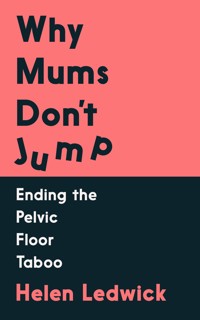
When Helen Ledwick discovered she had a prolapse after the birth of her second child, she was devastated, not just by the constant discomfort but also by the pervasive shame she felt and the lack of available information and support. When she learned that one in three women have pelvic floor disorders, she was horrified...and determined to do something about it. In this warm, factual and anecdote-rich look at a taboo subject, Helen shares her story along with those of many other women. From postpartum care to incontinence, with expert advice on returning to sport, the impact on sex and intimacy, and having another baby after pelvic floor injury, Why Mums Don't Jump is a groundbreaking book that will have readers laughing, crying and cringing as finally women come together to break the stigma around pelvic floor issues.
Das E-Book können Sie in Legimi-Apps oder einer beliebigen App lesen, die das folgende Format unterstützen:
Veröffentlichungsjahr: 2023
Ähnliche




















First published in Great Britain in trade paperback in 2023 by Allen & Unwin
Copyright © Helen Ledwick, 2023
Illustrations © Cat Pearson, 2023
The moral right of Helen Ledwick to be identified as the author of this work has been asserted by her in accordance with the Copyright, Designs and Patents Act of 1988.
All rights reserved. No part of this book may be reproduced or transmitted in any form or by any means, electronic or mechanical, including photocopying, recording or by any information storage and retrieval system, without prior permission in writing from the publisher.
Neither the publisher nor the author is engaged in rendering professional advice or services to the individual reader. The ideas, procedures and suggestions contained in this book are not intended as a substitute for consulting with your doctor. All matters regarding your health require medical supervision. Neither the author nor the publisher shall be liable or responsible for any loss or damage allegedly arising from any information or suggestion in this book.
Allen & Unwin
c/o Atlantic Books
Ormond House
26–27 Boswell Street
London WC1N 3JZ
Phone: 020 7269 1610
Email: [email protected]
Web: www.allenandunwin.com/uk
A CIP catalogue record for this book is available from the British Library.
Trade paperback ISBN 978 1 83895 849 7
E-book ISBN 978 1 83895 850 3
Printed in
10 9 8 7 6 5 4 3 2 1
For Dad,
who never gave up.
Contents
Introduction
Chapter 1: My Story
Chapter 2: Ainsley (The Doctor Will See You Now)
Chapter 3: Peace (Education, Education, Education)
Chapter 4: Sara (The Head Game)
Chapter 5: Chantelle (The Taboo)
Chapter 6: Sophie (Finding Fitness)
Chapter 7: Rachel (You Don’t Just Put Up With It)
Chapter 8: Emma (Mind the Gap)
Chapter 9: Gaynor (Pessaries and ‘Vadgets’)
Chapter 10: Jan (The M Word)
Chapter 11: POP Club! (Find Your People)
Resources
References
Acknowledgements
Index
Introduction
‘Mummy has a broken bottom,’ my son tells anyone at seemingly every possible opportunity. ‘My sister came out of her tummy. But I came out of her bottom and it broke.’
That’s what happens when you try to explain to a preschooler why they should absolutely not peep around the curtain during a hospital appointment for a ruined pelvic floor. A gynaecological investigation needs no witnesses, thank you. If you sit there and watch CBeebies you can have all the sweets later.
He may not be exactly anatomically correct, but you have to admire his ability to share this news so freely. He isn’t at all bothered by the taboo that surrounds leaks and lumps after childbirth – pelvic floor problems that stop us from trampolining and then sometimes change absolutely everything about the way we live our lives and feel about ourselves.
Incontinence. Prolapse. Pelvic pain. We don’t like to even speak these words because society has taught us that it’s all too shameful or that it’s just a part of motherhood to be endured. For most of us, it comes so far out of left field that we’re reeling from the idea of it, let alone ready to bust it out over dinner. I get it. I went to a Catholic school in Lancashire in the nineties. Discussing my vaginal woes is not in my DNA. It’s the last thing I ever thought I’d be saying out loud and the very last thing I ever thought I’d write a book about. But you know what? Bollocks to it. We can name these conditions without the sky falling in. And we have to, because, if we don’t, how will we ever shake off the shame so firmly attached to them? How will we ever get the research or the treatments we deserve? We’re just setting up another generation to suffer in silence.
Our bodies are amazing, but we’re not superhuman. We’re sold a dream of ‘bouncing back’ when, in reality, the damage that can happen in pregnancy and childbirth can be enduring, debilitating even. Sometimes we feel it straight away. Sometimes it shows up years later. Rarely is it properly discussed or understood. But I’m writing this book because I want you to know that, when we find a way to say the unsayable, there is community, there is hope, we are stronger and our voices are louder.
I’ll go first. I have pelvic organ prolapse. My pelvic organs fell out of place a couple of weeks after a gruelling second birth and ended up bulging into the wall of my vagina. I know. I had no idea it was possible either.
It turns out that your pelvic floor is made up of an amazing group of muscles and tissues that form a sort of hammock at the base of your pelvis. Among other things, they support the pelvic organs (like the bladder, bowel and uterus); they help keep you continent by controlling the openings to the bladder and bowel; and they’re important for sexual function too. But they can go wrong. They can become damaged, weak, overstretched or too tight – often during pregnancy and childbirth, as well as when your hormones change around menopause, or sometimes for other reasons like if you’re overweight or have chronic constipation. When these muscles are not working as they should, there is a knock-on effect. And it’s surprisingly common.
Researchers don’t always agree, but it’s estimated that one in three women have pelvic floor issues of some sort, making it more common than hay fever.1 Let that sink in for a minute: one in three. Maybe, like me, it’s prolapse, or maybe they leak wee or poo, while others will have pelvic pain, back pain or pain during sex. The umbrella term is ‘pelvic floor dysfunction’, though sometimes they’re called disorders, and some lucky people will have a delightful collection of the above. That’s around 10 million of us in the UK alone and, let’s be honest, it’s probably more, because so many of us don’t report it.
Of course, everyone’s experience will differ, and some symptoms are milder than others, but none of it should be taken lightly. Nobody wants to be left with wet knickers if they sneeze, cough or run; or to risk an ‘accident’ during their most intimate moments. They don’t want to live with discomfort or chronic pain, or feel afraid to lift their children, or give up a job they love because they can’t physically manage it. This is the thing about pelvic floor problems. They creep into every aspect of your life – parenting, work, fitness, body image, relationships – often on top of being an exhausted new mum and sometimes alongside other birth injuries. It’s no wonder one study found that women with these conditions were three times more likely to have symptoms of depression.2
If you consider the scale and impact of all this, you’d think it would be common knowledge throughout our lives: that you’d learn about it in school, hear about it in the news and read about it in the pregnancy books. But you don’t. You are, instead, side-swiped by this shocking thing that’s happened to a part of your body you know virtually nothing about. Treatments are limited, information is limited, support is limited. You are on your own.
In 2018 I did something completely out of character: I decided to share my story on Instagram – anonymously at first – reaching out to anyone who might be able to relate or offer some quiet reassurance. I don’t really know what I was expecting, except that I knew there must be others feeling the same way. I was right – total strangers understood perfectly and started talking about their own experiences. That’s when I decided to do something even more out of character: I put my name on it. You can’t smash taboos with a paper bag on your head, can you? Also, I’d just turned forty – if I couldn’t own it now, when would I ever? I was writing about my wonky vagina in a public forum, and I was terrified. But then I was angry because here we all were, having these hushed conversations online, quietly suffering, confused and anxious; hiding away and blaming ourselves even though it happened through no fault of our own. I’m still angry, for lots of reasons.
Angry because what if it could be prevented? I came out of surgery after having a baby and a serious perineal tear, yet I had no idea that straining, lifting and everyday exertion could be the last straw for my pelvic floor. How could I? I barely knew what one was. What if I’d left hospital armed with that information? Would my postpartum recovery have been any different? What if I’d gone into hospital armed with that information? Would I have made different choices during the birth? Would I have acted differently through pregnancy? I know, it might have happened regardless . . . but I can’t help but wonder.
Angry too because, when it does happen, some women spend years trying to persuade a doctor that things ‘down there’ aren’t right. Or are greeted with a shrug and told, ‘You’ve had a baby. What do you expect?’ Worse than that, in 2020 an inquiry ordered by the UK government which looked at pelvic mesh implants found that women with prolapse or stress incontinence had sometimes suffered ‘avoidable harm’, their concerns dismissed as ‘women’s problems’.3 It’s another example of how we have so far to go when it comes to women’s health; how not enough is known about conditions that only affect women; how the gender gap in health research is gaping; and how, in the words of Matt Hancock, the UK health secretary in 2021, ‘For generations, women have lived with a health and care system that is mostly designed by men, for men.’4
That’s assuming we even come forward to ask for help. Because how do you do that when you’re too embarrassed to even mention it? I’m angry because society has taught us that anything to do with our vaginas is shameful and should be hidden away. We’re talking centuries of shame – layer upon layer. It’s a lot to unpick. And anyway, we would need to have the right words, which we don’t. Don’t get me wrong, I love a good euphemism, but research suggests that one in three of us still can’t label the vulva on a simple diagram, let alone a urethra.5 I’ll admit I only learned in recent years that what most of us know as a vagina is a vulva. So let’s clear this up right now: your vulva is the external genitals – all the bits on the outside.
I made a podcast to try to change things. A place where we could laugh, cry and cringe our way towards recovery or acceptance. A place where we could find trusted information and where stonkingly brave women – you’ll meet some of them in this book – could share their stories. I cannot overstate the power in that, in knowing that you’re not alone in the world and hearing others express your deepest, unspoken thoughts and fears.
I’m a radio producer by trade, so I was comfortable with the technical stuff. Less so with the speaking-about-my-vagina-in-public stuff. I’m still working on that. But the response has blown me away. Messages started coming in from around the world and they haven’t stopped. Listeners have entrusted me with their own stories. They’ve told me how they’re grieving for their former selves; how they feel aged and isolated; and how they’re too embarrassed to discuss it with friends. But they’ve also told me how hearing from others has given them hope – that it’s inspired them to be more open with loved ones, or that they’ve sought medical help after years of suffering in silence. One woman said she had cried tears of relief into a chicken pie; another, that she made her partner listen to every single episode! (Kudos to them.)
This book is for women of all ages who have found themselves with pelvic floors that have gone awry. It’s also for their significant others and the people who love them and want to understand. It has grown out of my own experience as a woman and a mum, and you’ll hear those words a lot, but I know that not everyone who experiences these issues will identify as a woman and, if that’s you, I want you to know that you are also very welcome.
I’m not a medical expert, and you should absolutely seek out your own professional advice, but I do have a collection of rich narratives from the badass women I’ve had the privilege to meet. Strong women with tales that are as unique as they are universal. Women who have cried and laughed and screamed in the woods; asked themselves whether they would ever be normal again; battled to navigate the healthcare system; invented new treatments; fought chronic pain; and hidden leaks from loved ones. Women who have gone through the wringer and come out the other side; who have gone on to have more babies; who have found sisterhood and friendship; who have embraced their ‘feisty old crone’; and done it all with good humour and grace.
These voices need to be heard, and not just heard but amplified. Because if we want better treatment and research, more information and support, we have to find a way to talk about this. And what better time to do it than when conversations are beginning to open up about menopause, about periods, about gynaecological cancers and sexual health, about miscarriage and fertility treatment? I’m not saying you need to grab a megaphone and stand on your doorstep shouting it to the world, or make a podcast, or reveal all on social media. But do bend someone’s ear. I really think that’s how we start to end the stigma.
I’m not going to tell you how to do your Kegels. I’m not even going to tell you that you have to do your Kegels. But by sharing these stories I want to show you that you are not alone, that there is hope and that, when we come together, we are stronger, and much harder to ignore.
The Pelvic Floor
• The pelvic floor is made up of muscles and tissues that form a sort of hammock across the base of the pelvis.
• It helps to keep the internal organs in their correct position and is important for bladder, bowel and sexual function. It also works with the abdominal muscles to help support the spine.
• The pelvic floor can become weak, overstretched, damaged or too tight, often (but not always) because of pregnancy and childbirth.
• It’s estimated that one in three women experience problems with their pelvic floor – for example, incontinence, prolapse or pelvic pain.6
• These problems can be treated. Don’t be embarrassed to talk to your GP.
CHAPTER 1
MY STORY
Let me take you back to March 2015. I’m thirty-six years old. It’s the middle of the afternoon and I’m sitting half-naked on my bedroom floor with a make-up mirror in one hand and a phone in the other, wondering whether or not to call an ambulance.
I’d given birth to my son a couple of weeks earlier. He came crashing into the world, with his balled-up fists and white-blonde hair, almost exactly two years after his sister. It wasn’t the easiest of births. I wasn’t in great shape. I couldn’t sit down without a pillow. But this? This was new – a sudden feeling that something was blocking my vagina, like I was losing a tampon. So I’m looking. And my heart is pounding because, if I’m honest, I don’t really know what it’s all supposed to look like, but it definitely isn’t this. I google some words that describe what I see (I do not recommend that you do this!) and I eventually land on the term ‘pelvic organ prolapse’. I mean, really? My insides are falling out? Saggy boobs and stretch marks – that’s what I thought I’d be getting. Not this.
I didn’t know that the pelvic floor muscles are supposed to keep your pelvic organs in place. Or that supporting the weight of a growing baby puts a lot of strain on them. Or that they stretch during childbirth and can become too weak or damaged to work properly. Or that, when that happens, one or more of those organs can slip out of place and into the vaginal wall. I didn’t know that it can get worse over time, or that there is no reliable fix. I didn’t know that it could change how you feel about your body, how you move, how you live your life. I didn’t know that it could make you feel alone, broken, ashamed. I didn’t know any of this, because no one ever talks about it.
Common symptoms of prolapse include a vaginal bulge or lump, discomfort, heaviness or dragging, bladder or bowel problems, or pain during sex, but it’s hard to get a clear picture of how many people are affected. Not everyone with prolapse will experience symptoms, or at least not straight away; definitions vary; women are too embarrassed to report it; the research just isn’t there. But the National Institute for Health and Care Excellence (NICE), which puts together the official health guidance for England, says that prevalence is ‘high’. It says, when asked, 8.4 per cent of women reported feeling a bulge or lump, but that on examination, up to 50 per cent of all women will have some degree of prolapse. And it says one in ten will eventually need surgery for it.1
It’s widely agreed that this is a significant issue, not a rare condition that only affects a tiny section of society. And, while it’s not life-threatening, it can seriously affect your physical well-being and quality of life. So it’s kind of amazing that so few of us have heard about it before it happens. I was a second-time mum – you would think I’d have had a vague idea, but really, not a whisper.
My first child, my daughter, was born by elective caesarean after turning breech. Feet down. Legs crossed. We found out about her gymnastics on her due date and were advised that a C-section would be the safest option. So that was that. And thankfully it all went incredibly smoothly, but I had this sense that I’d cheated in some way because I hadn’t tried for a vaginal birth, that my body had failed me, or maybe I hadn’t given it a chance. I think I blamed the C-section for the breastfeeding difficulties and endless sleepless nights that nearly broke us. It sounds silly to me now, but it’s how I felt. So when I got pregnant for a second time I was determined to have the beautiful vaginal birth promised by the pregnancy books and antenatal classes. I wanted to at least try for the unmedicated water birth and the candles, the carefully chosen playlist and the faster recovery. It didn’t work out that way.
I’ll spare you the blow-by-blow, but I didn’t get anywhere near a birthing pool. It was a long labour with a lot of back pain and vomiting. Concern over my son’s heart rate meant my waters were broken for me and, from then on, it was like someone had turned up the dial to full power. My body was pushing, violently, and I had no control. I was really scared. He must have been stuck because somewhere in the haze I agreed to an episiotomy. A cut, a last push and then he was out – fighting fit and raring to go, unlike his mum, who was a bit of a wreck. I had torn badly: a third-degree tear from the vagina, through the perineum and into the anal sphincter – the muscle that controls the anus. I was whisked off for surgery straight away.
In the UK, it’s estimated that severe tears – third and fourth degree – happen in up to 6 per cent of first births.2 They’re known as obstetric and sphincter injuries (OASI) and are about as fun as they sound. They increase the risk of developing pelvic floor problems, and are known as a leading cause of bowel incontinence in women of reproductive age.3,4 After surgery to repair them, most women recover fully, but up to four in ten will go on to have lasting complications.5
The charity Mothers with Anal Sphincter Injuries in Childbirth (MASIC) supports women with severe tears, which it says can have a ‘devastating impact on quality of life’. It wants women to be told during pregnancy about the risk of having a serious tear.6 I know not everyone will agree – some will see it as scaremongering – but, to me, it’s just a sensible approach, because how can you make good birth choices if you don’t have all the information to hand? How can you give yourself the best chance of recovery? If you have a hip operation, you’re told there’s a 1 per cent chance of infection afterwards;7 if you have surgery for varicose veins, you’re told there’s a small risk of deep vein thrombosis (again, 1 per cent);8 so why on earth aren’t you warned about this?
It’s important, too, because these tears are often missed at the time of delivery, meaning they’re left unrepaired, which makes long-term problems even more likely.9 Professor Michael Keighley is a retired colorectal surgeon who set up MASIC. I spoke to him during my research for this book and he told me, ‘These injuries have a major impact on a woman’s life within the family and in social society. If they’re warned about it in pregnancy and it happens to them, they know they can go to their GP on the understanding that this isn’t normal.’ Women are not children. We can handle the truth. We shouldn’t be left asking, ‘Why did no one tell me?’




