


1,49 €
Mehr erfahren.
- Herausgeber: Maria Tsaneva
- Kategorie: Geisteswissenschaft
- Sprache: Englisch
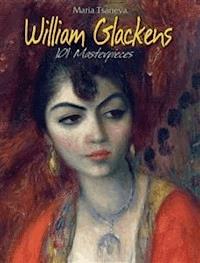
William James Glackens (1870 – 1938) was an American realist painter and one of the founders of the Ashcan School of American art. He is also known for his work in helping Albert C. Barnes to acquire the European paintings that form the nucleus of the famed Barnes Foundation in Philadelphia. His dark-hued, vibrantly painted street scenes and depictions of daily life in pre-World War I New York and Paris first established his reputation as a major artist. His later work was brighter in tone and showed the strong influence of Renoir. During much of his career as a painter, Glackens also worked as an illustrator for newspapers and magazines in Philadelphia and New York City. His legacy is linked to that of the Ashcan school and The Eight. Although he distanced himself from some of their ideals, William Glackens continued to be considered an integral part of the realist movement in American art.
Das E-Book können Sie in Legimi-Apps oder einer beliebigen App lesen, die das folgende Format unterstützen:
Veröffentlichungsjahr: 2014
Ähnliche

William Glackens: 101 Masterpieces
By Maria Tsaneva
First Edition
Copyright © 2014 by Maria Tsaneva
*****
William Glackens: 101 Masterpieces
*****
Foreword
William James Glackens (1870 –1938) was an American realist painter and one of the founders of the Ashcan School of American art. He is also known for his work in helping Albert C. Barnes to acquire the European paintings that form the nucleus of the famed Barnes Foundation in Philadelphia. His dark-hued, vibrantly painted street scenes and depictions of daily life in pre-World War I New York and Paris first established his reputation as a major artist. His later work was brighter in tone and showed the strong influence of Renoir. During much of his career as a painter, Glackens also worked as an illustrator for newspapers and magazines in Philadelphia and New York City.His legacy is linked to that of the Ashcan school and The Eight. Although he distanced himself from some of their ideals, William Glackens continued to be considered an integral part of the realist movement in American art.
Glackens' subject matter and style changed throughout his life. Influenced by the work he saw during his time in Europe, from Hals and Manet to Frank Duveneck and the Impressionists, Glackens’ early work uses dark, dramatic colors and slashing, overlapping brushstrokes. He depicted scenes of urban life in Paris and its suburbs and painted the theaters and parks of Manhattan. He continued this style and subject matter for some time until he began to break away from The Eight. At that point, his most common subject matter was landscapes, especially beach scenes. Later Glackens became best known for his portraits, and late in his life he focused on still lifes. Despite the changing subject matter, Glackens’ work was clearly the product of a man who loved the fluid, unrestrained quality of oil on canvas. Forbes Watson asserted that Glackens focused on strong color effects, above all else, because "the color of the world makes him thoroughly happy and to express that happiness in color has become his first and most natural impulse." His paintings are, paradoxically, "haunted by the spectre of happiness, obsessed with the contemplation of joy."
Glackens is sometimes criticized for his similarity to Renoir. He was branded an imitator. The charge was made that during the 1920s and 1930s “his once vigorous artistic personality had been blunted by too close an imitation of Renoir’s late style.” Glackens himself seems not to have been affected by any doubts about his own purpose and originality. His art did not reflect the social crises of the day, such as the Great Depression; rather, it offered a refuge from that darkness.
Glackens continued to travel to France between 1925 and 1935 to study the work of the Impressionists and the Post-Impressionists. His paintings received gold medals from annual exhibitions at the Pennsylvania Academy of Fine Arts in 1933 and again in 1936. In contrast to many of his friends among The Eight, such as Sloan and Luks, whose personal lives were turbulent and whose finances were uncertain, Glackens enjoyed a happy marriage, a contented home life, and a steady career, though by the 1930s he was seen by a younger generation interested in abstraction, surrealism, and political art as an old-fashioned artist.
Glackens died suddenly while vacationing in Westport, Connecticut on May 22, 1938. His posthumous retrospective at the Whitney Museum of American Art several months later, also shown at the Carnegie Institute at Pittsburgh, was well received.
Paintings and Drawings
Philadelphia Landscape, 1893
Oil on canvas
Girl with White Shawl Collar, 1894
Oil on canvas
Autumn Landscape, 1894
Oil on canvas
Figures in a Park, Paris, 1895
Oil on canvas
Oil La Villette, 1895
Oil on canvas
Sailing Boats - Paris, 1895
Oil on canvas




