


1,99 €
Mehr erfahren.
- Herausgeber: Publisher s13381
- Kategorie: Geisteswissenschaft
- Sprache: Englisch
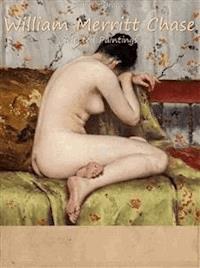
William Merritt Chase (1849 – 1916) was an American painter, known as an exponent of Impressionism and as a teacher. He is also responsible for establishing the Chase School, which later would become Parsons The New School for Design.Chase worked in all media. He was most fluent in oil painting and pastel, but also created watercolor paintings and etchings.He is perhaps best known for his portraits, and his sitters including some of the most important men and women of his time. His portrait of painter Lydia Field Emmet in 1892 depicts Emmet in a pose typically reserved for men in old masters' paintings. Emmet's hand is on her hip and she looks over her shoulder at the audience.Chase also frequently painted his wife Alice and their children, sometimes in individual portraits, and other times in scenes of domestic tranquility: at breakfast in their backyard, or relaxing at their summer home on Long Island, the children playing on the floor or among the sand dunes of Shinnecock. In an 1895 painting titled A Friendly Call, his wife is depicted wearing a yellow dress and entertaining a caller dressed in white.In addition to painting portraits and full-length figurative works, Chase began painting landscapes in earnest in the late 1880s. His interest in landscape art may have been spawned by the landmark New York exhibit of French impressionist works from Parisian dealer Durand-Ruel in 1886. Chase is best remembered for two series of landscape subjects, both painted in an impressionist manner. The first was his scenes of Prospect and Central Parks in New York; the second were his summer landscapes at Shinnecock. Chase usually featured people prominently in his landscapes. Often he depicted woman and children in leisurely poses, relaxing on a park bench, on the beach, or lying in the summer grass at Shinnecock. The Shinnecock works in particular have come to be thought of by art historians as particularly fine examples of American Impressionism.
Das E-Book können Sie in Legimi-Apps oder einer beliebigen App lesen, die das folgende Format unterstützen:
Veröffentlichungsjahr: 2017
Ähnliche




















William Merritt Chase
Selected Paintings
By Samuele Bronk
––––––––
First Edition
*****
Copyright © 2017 by Samuele Bronk
Table of Contents
Title Page
Copyright Page
Foreword
Paintings
Foreword
WILLIAM MERRITT CHASE (1849 – 1916) was an American painter, known as an exponent of Impressionism and as a teacher. He is also responsible for establishing the Chase School, which later would become Parsons The New School for Design.
Chase worked in all media. He was most fluent in oil painting and pastel, but also created watercolor paintings and etchings.
He is perhaps best known for his portraits, and his sitters including some of the most important men and women of his time. His portrait of painter Lydia Field Emmet in 1892 depicts Emmet in a pose typically reserved for men in old masters' paintings. Emmet's hand is on her hip and she looks over her shoulder at the audience.
Chase also frequently painted his wife Alice and their children, sometimes in individual portraits, and other times in scenes of domestic tranquility: at breakfast in their backyard, or relaxing at their summer home on Long Island, the children playing on the floor or among the sand dunes of Shinnecock. In an 1895 painting titled A Friendly Call, his wife is depicted wearing a yellow dress and entertaining a caller dressed in white.
In addition to painting portraits and full-length figurative works, Chase began painting landscapes in earnest in the late 1880s. His interest in landscape art may have been spawned by the landmark New York exhibit of French impressionist works from Parisian dealer Durand-Ruel in 1886. Chase is best remembered for two series of landscape subjects, both painted in an impressionist manner. The first was his scenes of Prospect and Central Parks in New York; the second were his summer landscapes at Shinnecock. Chase usually featured people prominently in his landscapes. Often he depicted woman and children in leisurely poses, relaxing on a park bench, on the beach, or lying in the summer grass at Shinnecock. The Shinnecock works in particular have come to be thought of by art historians as particularly fine examples of American Impressionism.
Chase continued to paint still lifes throughout his career as he had done since his student days. Decorative objects filled his studios and homes, and his interior figurative scenes frequently included still life images. He was particularly adept at capturing the effect of light on metallic surfaces such as copper bowls and pitchers. Perhaps Chase's most famous still life subject was dead fish, which he liked to paint against dark backgrounds, limp on a plate as though fresh from a fishmonger's stall. He was known for purchasing the dead fish at the market, painting them quickly, and then returning them before they spoiled.
Chase won many honors at home and abroad, was a member of the National Academy of Design, New York, and from 1885 to 1895 was president of the Society of American Artists. He became a member of the Ten American Painters after John Henry Twachtman died.
Chase's creativity declined in his later years, especially as modern art took hold in America, but he continued to paint and teach into the 1910s. During this period Chase taught such up and coming young artists as Wilhelmina Weber Furlong, Arthur Hill Gilbert, and Edward Hopper.
Paintings
Still Life with Hummingbird, 1870, oil on canvas
Sunlight and Shadow, Shinnecock Hills
1870 – 1916, oil on canvas, 889 x 1,016 mm
The King's Jester, 1875, oil on canvas, 46.99 × 33.02 cm




