


22,49 €
Mehr erfahren.
- Herausgeber: The Crowood Press
- Kategorie: Lebensstil
- Sprache: Englisch
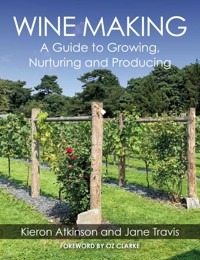
Wine Making – A Guide to Growing, Nurturing and Producing offers a personal yet practical guide for your grape to bottle journey. The book covers all aspects of wine production; whether it's a dozen bottles of wine created with love from your kitchen table, or thousands of cases produced from a commercial vineyard. It will guide you through the processes, the challenges, the fun and the satisfaction to expect as you 'grow your own wine'. Topics covered include grape production – vineyard site selection, choosing, planting and caring for vines; methods to maximize fruit production, and how best to harvest to minimize damage; the winemaking process – steering the producer through each stage in sparkling and still wine production; wine tasting – focusing on what flavours to seek and recognize, and which to avoid; the business of establishing a vineyard – expectations and costs involved and finally, terroir – and what it really means to winemakers and consumers today.
Das E-Book können Sie in Legimi-Apps oder einer beliebigen App lesen, die das folgende Format unterstützen:
Seitenzahl: 250
Veröffentlichungsjahr: 2022
Ähnliche



















WINE MAKING
A Guide to Growing,Nurturing and Producing
First published in 2021 byThe Crowood Press LtdRamsbury, MarlboroughWiltshire SN8 2HR
www.crowood.com
This e-book first published in 2021
© Kieron Atkinson & Jane Travis 2021
All rights reserved. This e-book is copyright material and must not be copied, reproduced, transferred, distributed, leased, licensed or publicly performed or used in any way except as specifically permitted in writing by the publishers, as allowed under the terms and conditions under which it was purchased or as strictly permitted by applicable copyright law. Any unauthorised distribution or use of this text may be a direct infringement of the author’s and publisher’s rights, and those responsible may be liable in law accordingly.
British Library Cataloguing-in-Publication DataA catalogue record for this book is available from the British Library.
ISBN 978 1 78500 970 9
Illustrations by Sara Naylor.
Cover design by Blue Sunflower Creative
CONTENTS
Foreword by Oz Clarke
Preface
Introduction
1 Grape Varieties and Site Selection
2 Vineyard Planning
3 Growing Vines
4 Fruit
5 The Harvest
6 Wine-Making Techniques
7 Fermentation
8 Sparkling Wine Production – Traditional Method
9 Wine Faults
10 Taste
11 The Business of Making Wine
12 Terroir and Conclusions
References
Glossary
Appendices
I Wine-making Log
II White Wine Production Table
III Sparkling Wine Production Table
IV Red Wine Production Table
Index
FOREWORD BY OZ CLARKE
In my lifetime, I am certain that there has never been a time like this, when we, as a nation and as individuals, need to be as self-sufficient as we can. Brexit became a reality in 2021. Regardless of our political views, this is a time when we must all set out to make the best of our country and one way we can do this is to support those who produce our national foods and drinks.
Oz Clarke OBE, author of English Wine: From Still to Sparkling.
There are many products that Britain creates to as high a standard as any in the world. Our fish, our shellfish, our grass-fed lamb and beef, our crisp, delicious fruits; our pies and our cheeses – we now have more different cheeses than France! When it comes to drink, no country in the world makes more types of drink to such a high standard. Beers, ciders, perries, gins, brandies and whiskies.
And wine. There has been a sea change in the quality of our wine, currently in England and Wales, but the Scots and the Northern Irish are not to be counted out in the near future. Not only is the quality of our sparkling wine unquestionably world class – even the French are having to admit that – but our still wines can now be breathtakingly good, pure and bright, as cool as winter sunshine, as fresh as springtime dew on an early daffodil. Climate change is a global threat, but in this small corner of the Earth it is creating possibilities to plant grapes and make wine in almost every English county and in many of those in Wales, too.
Kieron Atkinson is someone I have greatly enjoyed working with on English wine projects. Not only is he a supreme craftsman and expert, but he has a very special quality – a vision of flavour for each vineyard and each winery with whom he works. He takes the time and makes the effort to understand the vineyard and its possibilities, but also the hopes and aspirations of the owners.
English and Welsh wine has the chance to be unique in its character and flavour. Kieron understands this and achieves remarkable results across the length and breadth of the nation, from the banks of the River Tyne to Cornwall.
With this book, Kieron takes you on a journey, from choosing a site, to deciding which vine varieties are suitable, to considering what types of winery equipment are necessary or desirable and how to use them. And, above all, he helps you to visualize what flavours, what perfumes, what thrilling local, individual characteristics you might want your wine to possess.
Kieron works with projects both little and large. This book will be invaluable, even if you are only making a tiny splash of wine in a couple of demijohns. Every winemaker in our nation can be part of the Great British Wine Revolution, however great or small their enterprise.
This book shows you how to care for your vines and perfect your winemaking skills, but above all it will give you the confidence to grab the reins and ‘go for it’. With Kieron as your guide, you will be in for a fantastic ride.
Oz Clarke, 12 January 2021
PREFACE
ABOUT KIERON ATKINSON
In summer 2007, I was an Army officer serving in Afghanistan in the Upper Gereshk Valley. This was about as unforgiving a place as you can imagine and as extreme as it is beautiful. Whilst there and throughout that operational tour, I made a promise to myself that if I were to return home, I would go on to do whatever work I wanted, without too much consideration of the financial return, but focused on a way of life I wanted to follow.
As my considerations widened, I also decided that I wanted to make something and have an outdoor element to my work. I parked this thought for a further two years whilst becoming a tactics instructor at the Land Warfare School in Warminster and it was only by chance that my thoughts turned to wine production whilst visiting the south-west of France and a small producer, Jonathan Hesford at Domaine Treloar. Jon showed me and my wife around his winery and vineyard and offered that I should visit over the harvest period for an extended time. I returned two months later; I actually missed most of the harvest, but did get to see how the business operated and what this lifestyle entailed.
The following winter I volunteered at Renishaw Hall Vineyard, a modest in size yet historic vineyard situated under 10 miles from Sheffield city centre, then enrolled at Plumpton College on a two-year wine-production course. Whilst at Plumpton, I also worked for the Rothschilds and Waddesdon Wine under the excellent MD Christopher Campbell, who showed me what the world of wine sales involved and I carried out numerous tastings of the fantastic and celebrated Rothschild wines. By this stage, it was clear that I was bitten by the wine bug. However, it was in production and growing the vines where my passion lay – I was interested in how it got into the bottle, not just drinking it!
Kieron Atkinson, wine maker and vineyard consultant.
Whilst at college, a number of further opportunities presented themselves. First, I took on Renishaw Hall Vineyard as my own project – Renishaw Hall wine is now selling all over the country, winning national and international awards and being sold into major retailers. It is also a thriving tourism business that draws thousands of visitors each year. Second, I became a contract wine maker at Halfpenny Green Wine Estate in the West Midlands, owned by Clive Vickers. This experience meant that I was part of a team now producing well over 100,000 bottles per year and working with over twenty different vineyards in the process. It also meant that I got to produce just about every type of wine out there – from still and sparkling, through to Pét-Nat.
I combined these skills and experiences to start the English Wine Project. This is a consultancy business that covers all aspects of production from vineyard establishment, winemaking, wine sales, tourism and wider wine consultancy. We are expanding all the time and, at the time of writing, have a production facility producing English wines and ciders in Darley Abbey in Derbyshire.
I hope that this book helps you – and will allow you to get to grips with the basics of wine production. It is a truly exciting time to be involved in the industry as it grows and becomes the weighty international player that the weather, professional knowledge and consumer appeal predicts it will.
ABOUT JANE TRAVIS
Jane Travis has worked in writing and communications for over twenty years. She combines her love of working with words with working in the vineyard whenever time allows. Her career background is in heritage estates, travel and tourism, where she joins Kieron as an advocate for all the amazing food and drink experiences that the UK provides.
Jane Travis wrapping up as warm as possible in the vineyard.
When Jane is not out in the vineyard or at her desk writing, she loves countryside walks and exploring new places with her family, relishing the Great Outdoors whenever possible.
INTRODUCTION
‘Grow your own’ is seeing a renaissance, with households across the UK producing fruit and vegetables from their own garden plots, allotments or even a sunny windowsill. Grapes are no exception. Whether a single vine in a garden greenhouse or a full-blown vineyard of several acres, grape growing is on the rise. And from grapes, of course, comes the ancient and globally adored drink: wine.
Vines growing at Carlton Towers in Yorkshire.
Kieron and son Hugh bringing the harvest in at Renishaw Hall Vineyard.
There’s never been a stronger time for UK wine producers – long gone are the days of English wine being snorted at as nothing better than for use in cooking. There are currently over 700 vineyards1 across England and Wales and the industry is worth upward of £130 million, with more vineyard sites being planted each year. These slick, professional set-ups are producing globally award-winning wines that are regularly knocking the likes of Champagne off the top spot.
Additionally, the sometimes dubious label given to home-produced wine has also gradually faded, with the growth in popularity of artisan food and drink producers. Visit a food fair today, and locally made drinks sell as well as the jams, cheeses and pies. Go to a supermarket, and the number of ‘craft’ drinks vying for shelf space with bigger brands is clear. Consumers are recognizing that it is not only on trend to eat and drink produce made locally and in smaller batches, but kinder to the planet, too.
Whether it’s a dozen bottles of wine created with love from your kitchen table, or thousands of cases produced from a commercial vineyard; the care and attention are the same. This book will guide you through the processes, the challenges, the fun and the satisfaction to expect – as you ‘grow your own wine’.
A BRIEF HISTORY OF VINEYARDS IN BRITAIN
Wine has certainly been consumed, if not produced, in the UK since Roman times. From the early medieval era, vineyards were established on the sites of religious institutions, but not limited to these places – in fact, the Domesday Book lists over forty vine-growing locations across Britain during the eleventh century, of which only a dozen were of monastic origin.2
Hush Heath Vineyard with world-class facilities.
Pinot Noir grapes from Hattingley Valley Vineyard in Hampshire.
Over the centuries, however, vineyards declined and Britain became a country that concentrated its efforts on other crops, as well as the pastoral farming for which our countryside became so recognized right up to the present day. It was not until the 1950s that vineyards started developing in the UK as a commercial entity, with the seed of the industry beginning in the southern counties. By the end of the 1970s, there were over 475 acres of vineyard in England and Wales. By the 1990s, over 2,500 acres were established, with vineyards located as far north as Sheffield. Today, there are over 8,600 acres of vines across England and Wales producing grapes for commercial purposes, and this is set to rise.3
Entrance to the vineyard at Carlton Towers, Yorkshire.
Winter pruning at Renishaw Hall Vineyard.
And let’s not forget those artisan wine makers who, throughout the centuries, have produced wine from their garden or glasshouse-cultivated crops for people to enjoy. The cottage industry of home-grown wine has ticked over nicely throughout all the rises and falls of its bigger ‘commercial’ brother; and this book is aimed as much at these producers as it is those with a sizeable vineyard.
HOW TO USE THIS BOOK
This is your personal guide on your grape to bottle journey. The first section covers the establishment of vines and successful grape production – including choosing, planting and caring for vines, methods to maximize fruit production and how best to harvest to minimize damage.
The next section looks at the wine-making process – steering the producer through each stage in wine production from the pre-fermentation stage; covering the equipment and methods needed, with a few handy tricks of the trade thrown in. Finally, the all-important taste of wines is covered; focusing on what flavours to seek and recognize (and which to avoid) in your final product.
The book concludes with an introduction to the business of wine, covering the cost of production from grape to bottle and finally a personal take by the authors on the notoriously mysterious terroir and what it really means to wine makers and consumers today.
The hope of this book is to end up a well-thumbed, well-loved kitchen shelf or winery office tome; a constant companion for what the next harvest will bring.
CHAPTER 1
GRAPE VARIETIES AND SITE SELECTION
The classic sparkling wine varieties of Chardonnay, Pinot Noir and Pinot Meunier have captured the imagination with recent plantings in the UK. However, research into what will realistically grow in your vineyard location is of vital importance if your project is to be successful.
Greenhouse-grown Muscat.
Vines enjoying the glorious weather at Ashling Park, West Sussex.
If you are planting vines in the south/south-east of England, with a warm and sheltered site, all of the classic Champagne varieties should successfully ripen, plus varieties like Bacchus, Ortega and Pinot Gris. And, if the weather continues to become more suited to grape growing, then it is likely we will even see more Sauvignon Blanc and Riesling being planted and ripened with confidence in the south of the UK.
Camel Valley Vineyard in Cornwall grows a blend of French and Germanic varieties.
For people looking to grow and ripen those varieties in the midlands or north of England, success is likely to be far harder than if you were looking to grow early ripening varieties. There are, of course, exceptions – for example, Pinot Noir successfully growing in Yorkshire – but if you are seeking a commercially viable crop and tonnage to match, the crop size of these varieties will be significantly smaller. Hence, when growing fruit anywhere that is away from the south-east and southern zones of the UK, it is recommended to go for varieties like Seyval Blanc for sparkling, Rondo and Regent for red, and Solaris and Madeleine Angevine for white wine. These varieties, handled correctly, will yield well and will produce very nice wines: Seyval can produce fruit-driven wines, making it the ideal variety for sparkling wine; Rondo and Regent provide great colour, with hedgerow and blackberry flavours; whilst Solaris and Madeleine can be incredibly diverse, producing fruity Sauvignon Blanc style wines one year and then the next a more mineral flavour.
It is also important to plan your grape varieties with the user in mind. Are you planning to grow grapes solely for commercial reasons, or are these grapes going to be used for wine tailored to you and your taste? What volume are you producing? What proportions of your wine will be red, white or sparkling? These factors will have an impact on the your choice of vines, but, most importantly, what you plant should always be what is best suited to the location and not simply what you would like to grow, otherwise you may end up with a vineyard without much fruit.
If producing traditional-method sparkling wines, go for varieties that are relatively neutral in flavour with medium to high levels of acidity. These acids provide firm structure that can either soften over time, or will make the ideal vehicle for the secondary fermentation to add autolytic flavours (bread, biscuit, brioche, dough).
If you are producing tank-fermented wines or traditional-method wines with less lees ageing, the fruitier grapes from the Germanic varieties will be preferable, as you will be less concerned with autolysis and focusing instead on the enhancement of fruit.
When planting vines in cooler parts of the UK the following are recommended choices:
• Seyval Blanc – for the production of sparkling wine, also well suited to barrel ageing
• Reichensteiner – for the production of sparkling wine, but will also produce very nice still wines in warmer years
• Solaris – for production of dry white wine, very disease-resistant and a good cropping varietal
• Madeleine Angevine – for the production of dry white wine, well suited to barrel ageing
• Müller-Thurgau – for the production of a drier white wine
• Rondo – for the production of red or rosé wine
• Regent – for the production of red or rosé wine.
Breaky Bottom Vineyard hidden away in the South Downs growing some of the best grapes for wine in the UK.
Many of these varieties – Seyval Blanc in particular – benefit from being extremely hardy in tougher growing conditions and can be successfully grown almost anywhere in the UK. This fruit can be left on the vine for extended periods of time and it is not uncommon to be harvesting in November.
In slightly warmer locations, the next tranche of varietals include:
• Bacchus – for the production of dry white wine
• Ortega – for the production of dry white wine
• Pinot Noir Précoce – for the production of rosé and red wine.
For a site with guaranteed warmer/sunnier conditions:
• Chardonnay – for the production of sparkling wine and dry white wine
• Pinot Noir – a great all-rounder; could be used for white, red, rosé and sparkling; is clone-dependent
• Pinot Blanc – for the production of dry white wine and a good base for sparkling if a marginal site
• Pinot Gris – for the production of dry white wine
• Sauvignon Blanc – for the production of dry white wine; requires an excellent position.
As the weather gets warmer across the country and the planting of more varietals takes place, the crucial thing is still to plant the correct variety for your site.
ROOTSTOCKS AND CLONES
When choosing a vine, it is not simply a matter of selecting a varietal and putting it in the ground. A grapevine comes in two parts, one being the rootstock and the other the vine itself. The rootstock’s role is to protect the vine from disease, most famously phylloxera – a microscopic louse that lives on and eats the roots of grapevines. This insect decimated vineyards across Europe in the nineteenth century.
Since then, rootstocks have thankfully been adapted to be specifically resistant to this insect and now vines come grafted on to them. However, these rootstocks do not come in a ‘one size fits all’ situation and it is really important to match the rootstock to the soil – a key reason to carry out soil analysis before planting any vines. For example, a vigorous rootstock on a vigorous site is going to give the potential for a vine that is heavy in foliage, creating much work throughout the life cycle of the vine. The same idea goes for a low-vigour rootstock on a low-vigour site – inevitably an even worse scenario, as the vine will not be strong enough to support fruit. Therefore, a match and a balance must be made, specific to soil, climate and topography.
Chardonnay vines.
The choice of clone is also of great importance – there are over 1,000 different type of Pinot Noir clones, for example. Some will produce grapes that have tighter bunches with smaller grapes that result in lower yields and higher sugars; these clones are more suitable for red wine production and are associated with the Burgundy region. However, the clones that are most commonly planted in Champagne have larger berries, looser bunches (that result in being more disease-resistant) and lower sugars. Trying to produce red wine from these clones would struggle to be on a par with the Burgundian clones. Some growers will choose to plant a cross section of clones to create greater complexity with the resulting wine, as it is known that each clone has distinctive characteristics.
GROWING METHODS – BIODYNAMIC, ORGANIC OR IPM?
You have chosen your varietals, clone and rootstock; now to consider how you are going to grow your vines. Are you going to grow them traditionally using non-organic chemicals, or are you going to go down an organic and/or biodynamic route? There are many factors that will influence your decision on what is best for you and your site.
If you are producing small-batch wine from a greenhouse, back garden or allotment, it is possible to have more flexibility as you are clearly not going to be relying on selling the fruit or making the wine as your sole income. If, however, this is to be a venture to earn revenue, you will want to try to achieve more control over all of the possible predicaments that exist and – often – having control through the use of non-organic chemicals may be the better option for your site and your business.
An organic/biodynamic way of producing grapes can be more expensive and is certainly more time-consuming than using non-organic chemicals. If you are using organic sprays, for example, you will have to spray more often in the vineyard than with regular chemicals. It is important to research and weigh up different factors like this, as, if you are opting to have an organic site from a purely environmental perspective, but then are driving up and down the rows more times due to spraying more often, does the increase in diesel outweigh your original motives?
There is scepticism about biodynamic processes, as many of its practices and treatments can appear at times ‘mysterious’, such as practices linked to lunar cycles. However, it seems to be the case that biodynamic vineyards produce consistently higher-quality fruit than traditional and organic vineyards.
In brief, the father of the biodynamic movement was Rudolf Steiner and through a series of lectures he laid out his philosophy of the farm as a ‘living organism’ where everything is interconnected, thus any disease that the vine may encounter is an indication of a wider problem with the ecosystem of the entire vineyard and shows that poor practices are occurring in the vineyard as a whole.4
Sheep helping to keep the grass down at Blackdown Ridge Vineyard in Sussex.
Biodynamic – like organic – can make use of the same sprays and the only physical difference is the treatments. It has been shown that converting to biodynamics does not require a great deal more work than organic.
Without doubt, the key is to try to do everything we can to help the environment and the soils in the vineyard and to create a space that produces quality grapes, but in a harmonious way. Whatever route you take, you should be spraying minimally and using timings to produce the best possible results – not just applying a thick coat of chemicals. You should also ensure that all sprays are directed where they are needed and not being lost into the atmosphere (more on this below).
Finally, for the organic grape producer, ensure you select as disease-resistant varieties as possible. Grape varieties such as Solaris, Seyval Blanc and Rondo tend to do well with less spraying.
If organic or biodynamic is not really a viable option for your site, the approach you can adopt is integrated pest management (IPM). IPM is about being proactive in the vineyard and getting ahead of problems, as opposed to being reactive and using sprays to solve problems as they occur. It is a cultural method that looks at alternatives as much as possible to produce a viable vineyard, so combining the best of organic/biodynamic with traditional viticulture. IPM covers all aspects of the vineyard’s needs and, with timely applications of the correct sprays, this can go a long way to ensuring that your fruit and vineyard are in top condition.
SPRAY APPLICATION
Whatever method of growing vines you opt for, everything in the vineyard has to be about efficiency – so spraying has to be carried out at the correct time and also in the correct way. Nozzles should be checked prior to any spray operation to make sure that they are all working effectively. If you are using a boom sprayer this is especially important, as at the start of the growing season it is not necessary to use all of the nozzles and it is simply a waste of spray, as well as the potential damage being caused to the environment by emitting spray into the atmosphere.
The weather is critical when spraying and conditions need to be dry and calm to get the sprays on to the vine effectively or – again – they run the risk of being lost to the atmosphere. If your vineyard is under an acre in size – and you have the physical strength – then working with a knapsack sprayer means no vehicles and therefore no diesel being used on site; it is certainly a cost-effective way of managing small vineyards.
Before embarking on any spray operation, it is a requirement that you receive full training. In the UK, if you are using a professional pesticide you must hold a valid certificate, or be under the direct supervision of someone who has the certificate. Training is normally a day for the basic course, followed by further days depending on how you are spraying, and covers all of the major points in the vineyard. It’s recommended to do the training; it will help to keep both you and the environment within which you are operating safe.
CHAPTER 2
VINEYARD PLANNING
GROWING DEGREE DAYS
Growing degree days (GDDs) are a useful reference for whether or not an area could be suitable for grape growing, as they allow the vineyard owner to assess his or her site against any wine region in the world and draw a direct comparison. A growing degree day is a simple concept to understand and it is achieved by using the mean temperature of any given day in spring and summer, then subtracting 10°C; this gives the growing degree day figure for that day. For example, if the mean temperature of a day is 15°C minus 10°C, this leaves you with 5°C. If you were to have thirty days in the month at this temperature, there would then be 150 GDDs for the month.
Marked-out rows of vines in a grid system, all by hand; attention to detail is the key to success.
Close-up of nice straight rows at Astley Park Vineyard in Worcestershire.
In the UK, we often like to compare our GDDs with other regions and it is certainly interesting, especially when one considers that our GDDs now look very similar to our nearest recognized world-class wine-production region – Champagne. The GDDs in Champagne are between 900 and 1,050; in the UK we are now comfortably in that zone, with the best years touching 1,000 GDDs. This is certainly a very good indicator that the weather is becoming more suitable for grape growing and therefore the sparkling wine varietals associated with Champagne.
As well as comparing European wine regions, it is also interesting to compare other cool climate wine-producing regions to see what can be learnt from their experiences. For many years in the UK, the focus has been on New Zealand and Marlborough specifically. Marlborough has an interesting recent history, as it has come from having practically no wine industry to being a global player; of significance, the region has similar GDDs to the UK. However, it is important to read these figures with caution, as although our temperatures and rainfall levels are broadly similar, New Zealand has far more sunshine hours and far greater ultra-violet penetration than in the UK.
SOIL
One of the great advantages of UK grape growing is the variety of soil types and it is not the case that quality wines can only be made with certain soils, such as chalk, sand or loam. Like all plants, there are some conditions that a vine favours and others that should be avoided, such as heavy clays, shallow soils, poor drainage or high levels of salts for example. However, deep soils with gravel, sand or moderate chalk are ideal conditions for vines to flourish; too highly fertile soils can lead to excessive vegetative growth that may lead to more shade, potentially more disease, more sprays required and ultimately, less quality fruit. There are always exceptions and although the UK has the same band of chalk running through it as has Champagne, currently probably the most lauded of all UK fruit comes from the heavy clay soils of the Essex region.
Marking out the vines for a new vineyard on clay soils at Harbour Hills Vineyard near Bromsgrove, Worcestershire.
Before planting any vineyard, it is crucial to get the soil analysed for its qualities – pH




